- Product Description Description
- Table of Contents TOC
- List of Table & Figure LOT
- Get Free Sample PDF Sample PDF
Market Size, 2025
$1.13 BnMarket Estimate, 2026
$1.17 BnMarket Forecast, 2034
$1.59 BnCAGR, 2026–2034
3.9%Executive Summary: Asia Pacific Contrast Media Market
- Market Scope: Comprehensive regional contrast media market analysis covering medical procedures, indication sectors, route of administration types, country leadership frameworks, and diagnostic imaging trends.
- Market Valuation: Valued at USD 1.13 billion (2025), estimated at USD 1.17 billion (2026), and projected to reach USD 1.59 billion by 2034, registering a solid CAGR of 3.9% (2026–2034).
- Primary Growth Drivers: Rising prevalence of chronic diseases (cancer and cardiovascular disorders), healthcare infrastructure investments, safe iso-osmolar agent development, and AI-optimized contrast dosage.
Key Market Segment Metrics (2026–2034)
| Category | Leading Segment (Base Position) | Fastest-Growing Segment |
|---|---|---|
| By Medical Procedure | X-Ray/CT (dominated with 60.8% market share in 2025) | MRI Procedure Segment (predicted to witness the highest CAGR of 7.5%) |
| By Indication Sector | Oncology (held the largest indication share at 35.7% in 2025) | Cardiovascular Disorders (anticipated to grow at the fastest CAGR of 8.1%) |
| By Route of Administration | Injectable Contrast Media (led the route of administration segment) | Oral Contrast Media (estimated to register the fastest CAGR of 6.2%) |
| By Region / Country | China (led the regional market with a 35.9% share in 2025, followed by Japan at 18.5%) | Emerging regional markets expanding via diagnostic center proliferation and screening programs |
Major Market Players & Market Structure
Market Structure: Highly competitive regional pharmaceutical and medical imaging landscape where leading companies launch safer iso-osmolar agents, automated injection systems, and AI-driven diagnostic solutions.
Key Companies: CMC Contrast AB, Daiichi Sankyo, Bayer HealthCare, GE Healthcare, Guerbet Group, Bracco Imaging S.p.A., Lantheus Medical Imaging, nanoPET Pharma GmbH, and Subhra Pharma Private Limited.
Asia Pacific Contrast Media Market Size
The Asia Pacific contrast media market size was valued at USD 1.13 billion in 2025 and is anticipated to reach USD 1.17 billion in 2026 from USD 1.59 billion by 2034, growing at a CAGR of 3.9% during the forecast period from 2026 to 2034.
Contrast media, also known as contrast agents or dyes, are substances introduced into the body to enhance the visibility of internal structures, such as blood vessels, organs, and tissues, during diagnostic imaging tests like X-rays, CT scans, and MRIs. These agents which include iodinated gadolinium based and microbubble formulations are critical for accurate disease diagnosis and treatment planning. The region is witnessing a significant surge in demand driven by an aging population and a rising burden of chronic diseases that require precise imaging for management. According to the World Health Organization, non-communicable diseases (NCDs) now cause nearly two-thirds (approx. 66%) of all deaths in the South-East Asia Region, with cardiovascular diseases and cancers being the primary drivers. Data from the Ministry of Health, Labour and Welfare (MHLW) confirms that Japan's elderly population (65+) has hit a record 29.8% of the total demographic as of 2025, placing unprecedented pressure on diagnostic and long-term care services. Similarly, the National Cancer Center (NCC) of China reports that while prevention efforts have reduced specific incidence rates, the total burden remains heavy with an estimated 5.15 million new cancer cases in 2024, requiring expanded high-resolution imaging for early detection. The Asian Development Bank notes that healthcare expenditure in developing Asia is increasing as governments invest in infrastructure to meet these growing needs. These epidemiological and socioeconomic factors underscore the pivotal role of contrast media in modern healthcare systems across the Asia Pacific region facilitating early detection and improved clinical outcomes.
MARKET DRIVERS
Rising Prevalence of Chronic Diseases and Cancer
The escalating prevalence of chronic diseases ,particularly cancer and cardiovascular disorders, is a key driver for the Asia Pacific Contrast Media Market. Accurate diagnosis and staging of these conditions rely heavily on enhanced imaging techniques that utilize contrast agents to distinguish between healthy and pathological tissues. According to the World Health Organization cancer is a leading cause of death worldwide with the Asia Pacific region bearing a significant portion of this burden due to its large population and changing lifestyle factors. In China the National Cancer Center reports that lung liver and stomach cancers are among the most common necessitating frequent computed tomography and magnetic resonance imaging scans for effective management. According to the National Center for Cardiovascular Diseases (NCCD), the prevalence of cardiovascular diseases in China has reached 330 million people, with two out of every five deaths in the country now attributed to CVD-related complications. These conditions require detailed vascular imaging often facilitated by iodinated or gadolinium based contrast media to assess blockages and anomalies. While the Indian Council of Medical Research (ICMR) projects a 12.8% rise in cancer incidence by 2025, the International Agency for Research on Cancer (IARC) estimates that India will see a 57.5% increase in new cancer cases by 2040, reaching an estimated 2.08 million annual cases. This growing disease burden drives the volume of diagnostic procedures performed in hospitals and imaging centers. Consequently the demand for contrast media increases in tandem with the need for precise diagnostic information to guide therapeutic decisions. The integration of advanced imaging protocols in clinical guidelines further reinforces the reliance on these agents ensuring sustained market growth driven by medical necessity.
Expansion of Healthcare Infrastructure and Diagnostic Centers
The rapid expansion of healthcare infrastructure and the proliferation of diagnostic centers across the region significantly propel the growth of the Asia Pacific contrast media market. Governments and private investors are heavily investing in modernizing medical facilities to improve access to quality healthcare services. According to the Asian Development Bank public and private spending on health infrastructure in developing Asia has increased substantially to address the gaps in service delivery. Although the National Health Policy (2017) aimed for public health spending to reach 2.5% of GDP by 2025, combined expenditure remains at 1.9%, with recent Parliamentary Panel reports highlighting a 17% shortfall in expected funding for 2025–26. A study from CareEdge Ratings indicates the Indian diagnostic sector is expanding at a steady double-digit compounded annual growth rate, projected to reach a significant valuation by Fiscal Year 2030, driven by rising demand for preventive care, demographic shifts, and expanding health insurance coverage. In Southeast Asia countries like Vietnam and Thailand are upgrading their medical tourism facilities with state of the art imaging equipment. The Vietnamese Ministry of Health reports the medical equipment landscape is now the 8th largest in Asia-Pacific. Over 3,000 modern diagnostic devices were installed nationwide in 2023 alone to address the rising burden of chronic diseases. This infrastructure development directly correlates with increased utilization of contrast agents as more facilities become capable of performing advanced imaging procedures. Furthermore the availability of reimbursable diagnostic services under national insurance schemes in countries like Australia and Japan encourages patients to seek timely imaging. The widespread accessibility of these technologies ensures a consistent and growing consumption of contrast media across the region.
MARKET RESTRAINTS
Safety Concerns and Adverse Reactions
Safety concerns regarding adverse reactions to contrast agents are a major restraint to the Asia Pacific Contrast Media Market. Although generally safe contrast agents can cause allergic reactions nephrotoxicity and other complications which deter some patients and physicians from their use. According to the 2025 ACR Manual on Contrast Media, severe allergic-like reactions to modern non-ionic contrast agents are rare (0.01%–0.04%), while mild reactions have decreased to approximately 0.2%–0.5% due to improved molecular chemistry. In Japan the Japanese Society of Radiology emphasizes the risk of contrast induced nephropathy particularly in elderly patients and those with pre existing kidney conditions. The Japan Radiological Society (JRS) 2024 guidelines emphasize that contrast-induced acute kidney injury (CI-AKI) is negligible for patients with an eGFR ≥30 mL/min, allowing for streamlined screening and higher clinical throughput for low-risk demographics. In China the National Medical Products Administration has issued warnings about the potential risks associated with gadolinium based agents including nephrogenic systemic fibrosis. These safety concerns lead to cautious prescribing practices and may result in the selection of alternative diagnostic methods that do not require contrast enhancement. Additionally the fear of adverse events among patients can lead to refusal of contrast enhanced scans impacting the volume of procedures performed. The need for pre medication and post procedure monitoring adds to the complexity and cost of care further restraining market growth. Manufacturers face the challenge of developing safer formulations while maintaining efficacy to mitigate these risks and sustain market confidence.
Stringent Regulatory Approval Processes
Stringent regulatory approval processes for new contrast media formulations are a serious limitation for innovation and expansion in the Asia Pacific contrast media market. Each country has its own regulatory body with rigorous requirements for clinical trials safety data and manufacturing standards which can delay product launches. According to the Association of Southeast Asian Nations harmonizing medical device and pharmaceutical regulations remains a challenge leading to fragmented approval timelines across member states. Under NMPA Announcement No. 96 (2025), China has accelerated the importation of innovative contrast agents, often waiving extensive local clinical trials to address unmet medical needs. This, combined with Priority Review pathways, has reduced standard registration timelines for breakthrough agents. Despite the ASEAN Medical Device Directive, fragmented national timelines persist. Concurrently, India’s CDSCO has tightened compliance for generic manufacturers, mandating rigorous bioequivalence studies to match international safety profiles. In India the Central Drugs Standard Control Organization has tightened norms for drug approvals requiring additional bioequivalence studies for generic contrast media. These regulatory hurdles limit the speed at which innovative products reach the market reducing competition and keeping prices high. Smaller manufacturers may struggle to meet these demanding requirements limiting their ability to compete with established multinational corporations. The lack of a unified regulatory framework across the region creates operational complexities for companies seeking regional expansion. Consequently, the market sees slower adoption of advanced contrast technologies compared to regions with more streamlined approval processes such as North America or Europe.
MARKET OPPORTUNITIES
Development of Iso osmolar and Safer Contrast Agents
The development of iso osmolar and safer contrast agents offers a significant opportunity for the Asia Pacific Contrast Media Market. Innovations in formulation technology aim to reduce the risk of adverse reactions particularly nephrotoxicity and allergic responses thereby expanding the patient pool eligible for contrast enhanced imaging. According to the European Society of Urogenital Radiology iso osmolar contrast media have demonstrated superior safety profiles in high risk patients including those with renal impairment. In Japan the Japanese Society of Nephrology supports the use of low osmolar and iso osmolar agents to minimize the incidence of contrast induced acute kidney injury. In Japan, MHLW-approved clinical guidelines have accelerated the adoption of these agents, reducing the incidence of post-contrast acute kidney injury in the country's aging demographic. The Royal Australian and New Zealand College of Radiologists (RANZCR) 2024 guidelines mandate rigorous screening for contrast-induced nephropathy risk, supporting the transition to IOCM and high-stability macrocyclic gadolinium agents to minimize systemic retention. Manufacturers are investing in research and development to create agents with better pharmacokinetic properties and reduced side effects. This focus on safety aligns with the region's aging demographic where comorbidities are common. By offering products that mitigate risks companies can capture a larger share of the market particularly in segments serving elderly and chronically ill patients. This technological advancement drives differentiation and creates new revenue streams for industry participants.
Integration of Artificial Intelligence in Imaging Protocols
The integration of artificial intelligence in imaging protocols provides a substantial prospect for optimizing contrast media usage and improving diagnostic accuracy in the region, which is likely to accelerate the growth of the Asia Pacific contrast media market. AI algorithms can help determine the optimal dosage and timing of contrast administration based on individual patient characteristics reducing waste and enhancing image quality. Recent clinical trials published in IJCARS indicate that AI-powered image reconstruction allows for a 50% to 70% reduction in contrast media volume during CT procedures, significantly lowering costs and patient risk while maintaining high diagnostic signal-to-noise ratios. In South Korea the Ministry of Science and ICT is promoting the adoption of AI in healthcare including radiology departments. The Korean Society of Radiology (KSR), supported by the Ministry of Science and ICT, has implemented AI-driven "Smart Protocoling," which automates injection rates based on real-time patient hemodynamic data, standardizing care across Tier-1 hospitals. While the Health Sciences Authority (HSA) provides the regulatory framework for AI-enabled diagnostics, the Ministry of Health (MOH) Singapore is actively integrating these digital solutions into the national "Healthier SG" initiative to enhance diagnostic efficiency and precision. These technologies enable personalized medicine approaches ensuring that each patient receives the appropriate amount of contrast agent. This not only improves safety but also reduces costs for healthcare providers. The ability to leverage data analytics for protocol refinement appeals to hospital administrators seeking to optimize resource utilization. By partnering with technology firms contrast media manufacturers can offer comprehensive solutions that enhance clinical outcomes and drive market growth through value added services.
MARKET CHALLENGES
High Cost of Advanced Imaging Procedures
The high cost of advanced imaging procedures that utilize contrast media poses a major challenge to accessibility in the Asia Pacific contrast media market. While the cost of the contrast agent itself may be moderate the overall expense of computed tomography and magnetic resonance imaging scans including equipment maintenance and professional fees can be prohibitive for many patients. According to the World Bank out of pocket expenditure on healthcare remains high in many developing Asian countries limiting access to expensive diagnostic services. In Indonesia the Ministry of Health notes that despite universal health coverage limitations exist for high end diagnostic tests requiring additional payments. In India the National Sample Survey Office indicates that a significant portion of household health spending is directed towards outpatient care which may not fully cover advanced imaging. The financial burden discourages patients from undergoing necessary procedures reducing the volume of contrast media consumed. Additionally reimbursement rates for imaging services vary widely across the region creating uncertainty for providers. These economic constraints hinder the widespread adoption of contrast enhanced imaging particularly among lower income populations. Addressing this challenge requires policy interventions and innovative pricing models to make these essential diagnostic tools more accessible.
Environmental Concerns Regarding Gadolinium Deposition
Environmental concerns regarding gadolinium deposition in water systems and its potential ecological impact is a growing impediment for the Asia Pacific Contrast Media Market. Gadolinium based contrast agents are excreted unchanged by the body and can accumulate in wastewater treatment plants and natural water bodies raising environmental safety issues. The UN Environment Programme (UNEP) has flagged anthropogenic gadolinium as a rising aquatic contaminant. Studies in major Asian hubs, such as Tokyo and Singapore, show gadolinium anomalies in coastal waters, as standard wastewater treatment cannot remove these highly stable chelated agents. In Germany which often leads regulatory trends in Europe studies have shown elevated gadolinium levels in rivers prompting stricter disposal guidelines. Although Asia Pacific regulations are currently less stringent the awareness is growing. The Department of Climate Change, Energy, the Environment and Water (DCCEEW), alongside the Therapeutic Goods Administration (TGA), is increasingly reviewing the ecological footprint of pharmaceutical residues, including the long-term impact of contrast media on urban water systems. These environmental concerns may lead to future regulatory restrictions on the use or disposal of gadolinium based contrast media. Hospitals and imaging centers may face pressure to implement advanced filtration systems or switch to alternative agents. This potential regulatory shift creates uncertainty for manufacturers and providers. The industry must proactively address these environmental issues through sustainable practices and research into biodegradable alternatives to maintain social license to operate and ensure long term market viability.
REPORT COVERAGE
| REPORT METRIC | DETAILS |
| Market Size Available | 2025 to 2034 |
| Base Year | 2025 |
| Forecast Period | 2026 to 2034 |
| CAGR | 3.9% |
| Segments Covered | By Medical Procedure, Route of Administration, Type, Indication, Application and Region |
| Various Analyses Covered | Regional & Country Level Analysis, Segment-Level Analysis, DROC, PESTLE Analysis, Porter’s Five Forces Analysis, Competitive Landscape, Analyst Overview on Investment Opportunities |
| Countries Covered | India, China, Japan, South Korea, Australia, New Zealand, Thailand, Malaysia, Vietnam, the Philippines, Indonesia, Singapore, and the rest of Asia Pacific |
| Market Leaders Profiled | CMC Contrast AB (Sweden), Daiichi Sankyo (Japan), Bayer HealthCare (Germany), GE Healthcare (U.S.), Guerbet Group (France), Bracco Imaging S.p.A. (Italy), Lantheus Medical Imaging (U.S.), nanoPET Pharma GmbH (Germany), and Subhra Pharma Private Limited (India) |
SEGMENTAL ANALYSIS
By Medical Procedure Insights
The X-Ray and Computed Tomography segment dominated the Asia Pacific Contrast Media Market and accounted for a share of 60.8% in 2025. This dominance of the segment is driven by the widespread availability of CT scanners and their critical role in emergency diagnostics and trauma care across the region. The main driver for the dominance of the X-Ray and CT segment is the extensive installation base of computed tomography scanners and their indispensable role in emergency medicine and trauma care. CT scans provide rapid high resolution images that are crucial for diagnosing acute conditions such as strokes internal bleeding and fractures. According to the World Health Organization the burden of injury and trauma remains high in the Asia Pacific region necessitating quick and accurate diagnostic tools. The Indian Journal of Radiology and Imaging emphasizes that contrast enhanced CT is essential for evaluating abdominal and thoracic emergencies. The relatively lower cost of CT procedures compared to magnetic resonance imaging makes it more accessible to a broader demographic. Furthermore the integration of CT angiography in routine cardiac and vascular assessments has expanded its clinical applications. This ubiquity and clinical versatility ensure that iodinated contrast media used in CT remain the most consumed type in the market sustaining the segments leading position. A further key factor contributing to the leadership of the X-Ray and CT segment is the high volume of oncological and cardiovascular screenings performed using these modalities. Early detection of cancer and heart disease relies heavily on contrast enhanced CT scans which provide detailed anatomical information. According to the Global Cancer Observatory lung liver and stomach cancers are prevalent in Asia requiring frequent CT imaging for staging and monitoring. In South Korea the National Cancer Center reports that CT is the preferred modality for detecting and staging various malignancies due to its superior spatial resolution. The Korean Society of Radiology notes that the incidence of cardiovascular diseases is rising driving the use of coronary CT angiography. As per the Korean Society of Cardiology non-invasive cardiac imaging is becoming standard practice for risk assessment. The aging population in these countries further amplifies the demand for regular screening. The combination of high disease prevalence and established screening protocols ensures a consistent and large volume of contrast media consumption for CT procedures maintaining the segments market dominance.
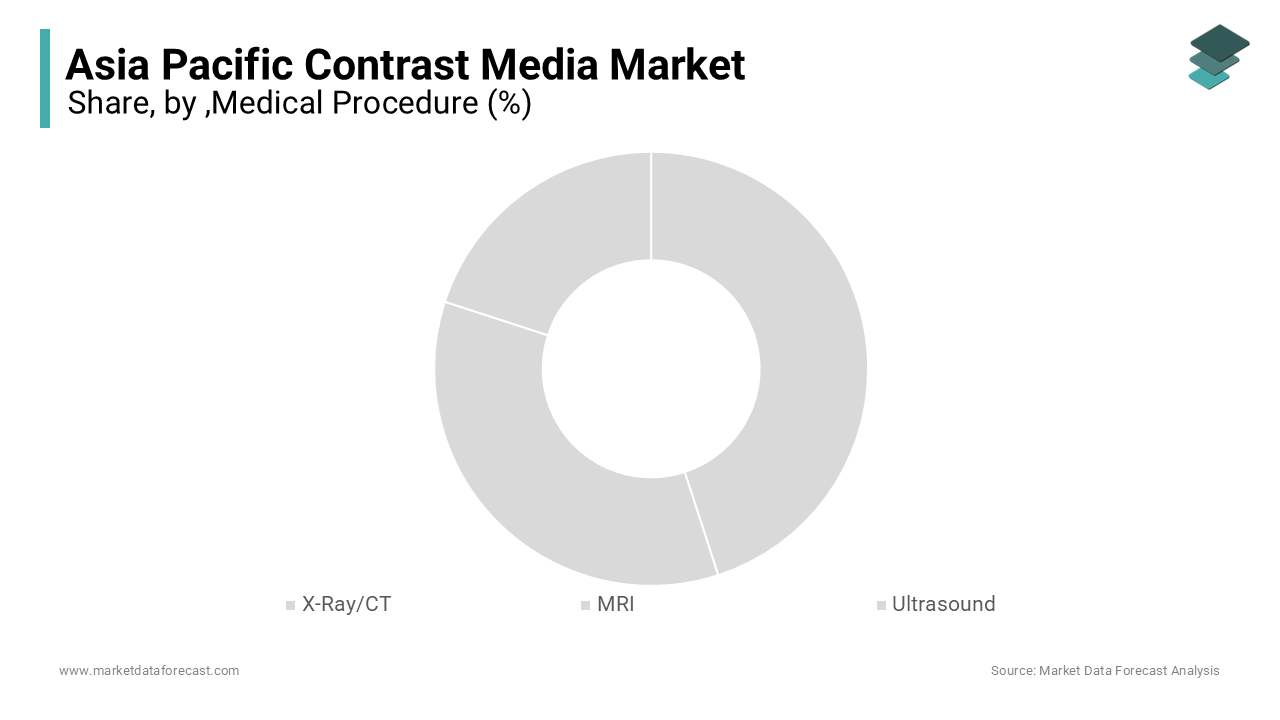
The Magnetic Resonance Imaging (MRI) segment is predicted to witness the highest CAGR of 7.5% from 2026 to 2034 due to the superior soft tissue contrast provided by MRI and the increasing adoption of advanced neurological and musculoskeletal imaging. Apart from these, this rapid growth of the segment is also driven by its unparalleled ability to provide detailed images of soft tissues particularly in the brain and spinal cord making it the gold standard for diagnosing neurological disorders. As the prevalence of stroke multiple sclerosis and brain tumors increases in the region the demand for gadolinium based contrast agents for MRI is surging. According to the World Stroke Organization the lifetime risk of stroke in Asia is among the highest globally necessitating precise imaging for diagnosis and treatment planning. As per the National Clinical Research Center for Neurological Diseases the number of MRI scanners in tertiary hospitals has grown substantially to meet this demand. The Australian Institute of Health and Welfare notes that neurological conditions are a leading cause of disability driving the need for advanced diagnostics. The superior sensitivity of MRI in detecting early pathological changes encourages clinicians to prefer it over CT for complex neurological cases. This clinical preference coupled with the increasing availability of high field MRI systems fuels the robust growth of the MRI contrast media segment. The increasing installation of high field 1.5 Tesla and 3.0 Tesla MRI systems across the Asia Pacific region is a key catalyst accelerating the growth of this segment. High field magnets offer improved signal to noise ratio and faster scanning times enhancing diagnostic confidence and patient throughput. In India the Federation of Indian Chambers of Commerce and Industry reports that private healthcare providers are investing heavily in advanced MRI technology to attract patients seeking premium care. Moreover, in Thailand the Ministry of Public Health highlights that medical tourism hubs are equipped with state of the art MRI facilities to serve international patients. The Thai Society of Radiology notes that high field MRI allows for more detailed visualization of joints and ligaments driving demand in orthopedics. Additionally government initiatives in countries like Vietnam and Indonesia are upgrading public hospital infrastructure with modern imaging equipment. The expansion of the installed base directly correlates with increased consumption of gadolinium based contrast agents. The volume of MRI procedures is rising as more facilities acquire these advanced systems. Consequently, this ensures sustained growth for the segment.
By Route of Administration Insights
The Injectable Contrast Media segment led the Asia Pacific Contrast Media Market and captured a significant share in 2025. This leading position of the segment is supported by the necessity of intravenous administration for most high resolution diagnostic imaging procedures including CT and MRI. One of the major drivers for the growth of the injectable segment is the clinical requirement for intravascular enhancement to achieve high quality diagnostic images in computed tomography and magnetic resonance imaging. Injected contrast agents distribute rapidly through the bloodstream allowing for clear visualization of blood vessels organs and tissues. According to the American College of Radiology intravenous administration is the standard route for most contrast enhanced studies due to its reliability and predictable pharmacokinetics. The inability of other routes to match the diagnostic utility of injection ensures that this segment remains the undisputed leader in the market. An additional factor contributing to the leadership of the injectable segment is the standardization of injection protocols and the widespread use of power injectors in radiology departments. Power injectors allow for precise control of flow rate and volume ensuring consistent image quality and reducing the risk of extravasation. According to the European Society of Radiology the use of automated injectors has become standard practice in high volume imaging centers. The reliance on these specialized delivery systems reinforces the demand for injectable formulations designed for high pressure administration. The convenience and safety offered by standardized injection practices make injectable contrast media the preferred choice for radiologists and technologists thereby maintaining the segments dominant market position.
The oral contrast media segment is estimated to register the fastest CAGR of 6.2% during the forecast period owing to the increasing utilization of CT enterography and the need for better gastrointestinal tract delineation. Besides this, the swift expansion of this media segment is further attributed to the rising utilization of CT enterography, a specialized imaging technique used to evaluate the small bowel and gastrointestinal disorders. Oral contrast agents help distend the bowel loops and provide negative or positive contrast improving the detection of inflammation tumors and strictures. According to the World Gastroenterology Organisation the prevalence of inflammatory bowel disease is increasing in Asia particularly in urban areas. The growing awareness among gastroenterologists about the benefits of CT enterography is leading to more frequent prescriptions of oral contrast media. This specific clinical application creates a niche but rapidly expanding market for oral formulations. Improved patient compliance and favorable safety profiles of modern oral contrast agents are key factors accelerating the growth of this segment. Traditional barium suspensions often caused discomfort and constipation whereas newer water soluble agents are better tolerated and safer for patients with potential bowel perforations. In Japan the Japanese Society of Gastroenterology emphasizes the use of low osmolar oral agents to reduce side effects such as nausea and diarrhea. The ease of administration and reduced risk of complications make oral contrast media an attractive option for clinicians. These advantages drive the preference for oral agents in specific gastrointestinal indications fueling the segments fast growth.
By Indications Insights
In 2025, the oncology segment held the majority share of 35.7% of the Asia Pacific Contrast Media Market. This supremacy of the segment is supported by the high prevalence of cancer in the region and the critical role of contrast enhanced imaging in cancer management. The commanding position of the oncology segment is largely because of the high incidence of cancer in the Asia Pacific region and the indispensable role of contrast media in tumor detection staging and treatment monitoring. Accurate characterization of malignancies requires enhanced imaging to differentiate tumor tissue from surrounding structures. According to the Global Cancer Observatory Asia accounts for nearly half of the global cancer burden with lung breast and liver cancers being predominant. In China the National Cancer Center reports that over 4.8 million new cancer cases are diagnosed annually each requiring multiple imaging sessions. As per the Chinese Society of Clinical Oncology contrast enhanced CT and MRI are standard for staging and assessing response to therapy. In India the Indian Council of Medical Research states that cancer rates are rising due to lifestyle changes and aging. The Tata Memorial Centre notes that advanced imaging is crucial for surgical planning and radiation therapy. In Japan the Ministry of Health Labour and Welfare highlights that cancer is the leading cause of death driving extensive diagnostic workups. The sheer volume of cancer patients and the frequency of imaging required throughout their care journey ensure that oncology remains the largest consumer of contrast media. This sustained demand solidifies the segments leading position in the market. Also, a key driver keeping this segment on top is the expansion of national cancer screening programs and early detection initiatives across the region. Governments are implementing systematic screening to reduce cancer mortality through early diagnosis. According to the World Health Organization early detection significantly improves survival rates and reduces treatment costs. In South Korea the National Cancer Screening Program provides free or subsidized screenings for gastric liver colorectal breast and cervical cancers. The Japanese Respiratory Society notes that this has led to high detection rates of early stage tumors. Cancer Council Australia reports that participation rates are increasing leading to more diagnostic scans. In China the Healthy China 2030 initiative includes cancer prevention and control as a key priority. The National Health Commission supports the establishment of screening centers in rural areas. These organized efforts create a steady stream of patients requiring contrast enhanced imaging for confirmation and staging. The institutional support for early detection ensures consistent and high volume usage of contrast media in oncology.
The Cardiovascular Disorders segment is anticipated to witness the fastest CAGR of 8.1% between 2026 and 2034. This quick surge of the segment is fueled by the rising burden of heart disease and the increasing adoption of cardiac imaging techniques. The rising prevalence of coronary artery disease and cardiac dysfunction is accelerating the growth of the cardiovascular disorders sector throughout the Asia Pacific region. Lifestyle changes including poor diet and sedentary behavior have led to a surge in cardiovascular risk factors. According to the World Heart Federation cardiovascular diseases are the leading cause of death globally with Asia experiencing a rapid increase in prevalence. In India the Indian Heart Association reports that coronary artery disease affects a significant portion of the population often at a younger age than in Western countries. Also, in China the Chinese Society of Cardiology states that the number of patients with hypertension and diabetes which are risk factors for heart disease is enormous. The National Center for Cardiovascular Diseases notes that cardiac CT is increasingly used for non invasive assessment of coronary arteries. In Japan the Japanese Circulation Society highlights that aging population contributes to higher incidence of heart failure and valvular diseases. The need for precise visualization of coronary anatomy drives the consumption of iodinated contrast media. This growing clinical need ensures that the cardiovascular segment grows at the fastest rate. The increasing adoption of non invasive cardiac imaging techniques such as coronary CT angiography and cardiac MRI is a key catalyst accelerating the growth of this segment. These methods provide detailed information about heart structure and function without the risks associated with invasive catheterization. According to the Society of Cardiovascular Computed Tomography coronary CTA is becoming a first line test for evaluating chest pain in many centers. In South Korea the Korean Society of Cardiology reports that the use of cardiac CT has increased significantly due to its high negative predictive value. As per the Ministry of Health and Welfare insurance coverage for cardiac imaging has expanded making it more accessible. The Heart Foundation of Australia supports the integration of these technologies into routine care. In Singapore the National Heart Centre utilizes advanced imaging for complex cases. The shift towards non invasive diagnostics reduces hospital stays and complications appealing to both patients and providers. This trend drives the demand for high quality contrast media optimized for cardiac imaging fueling the segments robust expansion.
By Application Insights
The Radiology segment was the largest segment in the Asia Pacific Contrast Media Market and occupied a substantial share in 2025. This prominence of the segment is attributed to the high volume of diagnostic imaging procedures performed in radiology departments across hospitals and clinics. A key force behind the spearheading of the radiology segment is the sheer volume of diagnostic imaging procedures including CT, MRI, and X rays performed daily in radiology departments. These procedures are essential for diagnosing a wide range of conditions from trauma to chronic diseases. According to the World Health Organization the demand for diagnostic services is increasing globally due to aging populations and rising disease prevalence. In China the National Health Commission reports that millions of imaging exams are conducted annually in public and private hospitals. As per the Chinese Society of Radiology radiology departments are the backbone of hospital diagnostic services handling the majority of contrast enhanced studies. In India the Ministry of Health and Family Welfare notes that the expansion of diagnostic centers has increased access to imaging services. The Indian Radiological and Imaging Association highlights that radiologists perform a vast number of contrast enhanced scans for various indications. In Japan the Ministry of Health Labour and Welfare indicates that health checkups and disease screenings contribute to high imaging volumes. The Japanese Society of Radiology emphasizes the central role of radiology in modern medicine. The routine nature of these diagnostic tests ensures a consistent and large consumption of contrast media. This fundamental dependency on radiological imaging for patient care maintains the segments leading position in the market. Further supporting this segment's lead is the integration of radiology services into multidisciplinary care teams for comprehensive patient management. Radiologists collaborate closely with surgeons oncologists and other specialists to guide treatment decisions. According to the European Society of Radiology multidisciplinary team meetings often rely on contrast enhanced images for planning surgeries and therapies. In Australia the Royal Australian and New Zealand College of Radiologists promotes the role of radiologists in clinical decision making. Also, in South Korea the Korean Society of Radiology notes that radiologists are integral to cancer boards and trauma teams. In Singapore the Ministry of Health encourages the use of imaging in chronic disease management programs. The Health Sciences Authority regulates contrast media to ensure safety in these diverse applications. The centrality of radiology in coordinating care across specialties ensures that contrast media are used extensively. This collaborative approach reinforces the demand for high quality imaging agents sustaining the segments dominance.
The Interventional Cardiology segment is likely to experience the fastest CAGR of 9.4% over the forecast period. This rapid growth of the segment is propelled by the rising incidence of heart disease and the increasing number of minimally invasive cardiac procedures. Rising cardiovascular disease prevalence and the shift towards minimally invasive interventions, specifically stents and angioplasty, are driving rapid growth in the interventional cardiology market. These procedures require the use of iodinated contrast media to visualize coronary arteries in real time. According to the World Heart Federation cardiovascular diseases are a major health challenge in Asia with increasing rates of myocardial infarction. In India the Indian Heart Association reports that the number of percutaneous coronary interventions is growing rapidly due to the high burden of coronary artery disease. The real time visualization provided by contrast media is critical for the success of these procedures. This clinical necessity drives the robust growth of contrast media consumption in interventional cardiology. The expansion of catheterization labs in regional and district hospitals is a key catalyst accelerating the growth of the interventional cardiology segment. Governments and private investors are investing in infrastructure to bring advanced cardiac care closer to patients. According to the Asian Development Bank healthcare infrastructure investment in developing Asia includes upgrading cardiac care facilities. In Indonesia the Ministry of Health reports that the number of hospitals with catheterization labs has increased to improve access to emergency cardiac care. As per the Indonesian Heart Association this expansion reduces referral times for heart attack patients. In Vietnam the Ministry of Health highlights that provincial hospitals are being equipped with interventional capabilities. The Vietnamese Society of Cardiology notes that this decentralization increases the volume of procedures performed outside major cities. In Thailand the Ministry of Public Health supports the establishment of cardiac centers in rural areas. The Thai Society of Cardiology reports that increased accessibility leads to higher procedure rates. Each intervention requires a significant amount of contrast media for visualization. The geographic expansion of interventional services ensures that more patients receive timely care driving the demand for contrast agents. This infrastructure development fuels the fast growth of the segment.
REGIONAL ANALYSIS
China Contrast Media Market Analysis
China was the top performer in the Asia Pacific Contrast Media Market and accounted for a 35.9% share in 2025. The dominance of the Chinese market is driven by the high prevalence of chronic diseases and the government's investment in healthcare. The market status in China is characterized by a massive patient volume and rapid modernization of healthcare infrastructure. As per the Chinese Society of Radiology the volume of contrast enhanced imaging procedures is among the highest globally. The National Cancer Center reports that cancer incidence is rising driving demand for diagnostic imaging. The government's Healthy China 2030 initiative prioritizes early diagnosis and treatment. The National Medical Products Administration has streamlined approval processes for new contrast agents encouraging innovation. Local manufacturers are gaining market share by offering cost effective alternatives. The expansion of tier three hospitals in smaller cities increases access to advanced imaging. These factors combine to sustain Chinas dominant position driven by scale and policy support.
Japan Contrast Media Market Analysis
Japan was the next prominent country in the Asia Pacific Contrast Media Market and captured a share of 18.5% share in 2025. The market status is mature with high adoption of advanced imaging technologies and an aging population. The key driver is the high prevalence of age related diseases and comprehensive health screening programs. According to the Ministry of Health Labour and Welfare the population aged 65 and older constitutes nearly 30 percent of the total. As per the Japanese Society of Radiology the per capita usage of contrast media is high due to frequent diagnostic checks. The government mandates annual health checkups for employees which often include imaging. The Japanese Society of Nephrology emphasizes the use of safer contrast agents to protect kidney function. The market is characterized by a preference for high quality iso osmolar agents. Strict regulatory standards ensure product safety and efficacy. The presence of leading domestic and international manufacturers fosters competition and innovation. These factors maintain Japans stable and sophisticated market position focused on quality and safety.
India Contrast Media Market Analysis
India is another significant market in the Asia Pacific region due to the growing middle class and expansion of private healthcare facilities. The market status is emerging with significant growth potential driven by increasing healthcare access and rising disease burden. According to the Ministry of Health and Family Welfare the number of diagnostic centers has increased significantly in recent years. As per the Indian Council of Medical Research the prevalence of cancer and cardiovascular diseases is rising. The Indian Society of Radiology and Imaging notes that the adoption of CT and MRI is accelerating in tier two cities. The government initiatives to improve public health infrastructure are enhancing access. The Central Drugs Standard Control Organization regulates contrast media to ensure quality. Local manufacturing is reducing costs making imaging more affordable. Medical tourism also contributes to demand for advanced diagnostic services. These dynamics position India as a high growth market with a focus on volume and accessibility.
South Korea Contrast Media Market Analysis
South Korea grew steadily in the Asia Pacific Contrast Media Market owing to the well-established national health insurance system which covers most diagnostic imaging procedures. The market status is advanced with high technological adoption and comprehensive insurance coverage. According to the Ministry of Health and Welfare the utilization rate of CT and MRI is among the highest in the OECD. As per the Korean Society of Radiology the density of imaging equipment is very high. The Korean Society of Cardiology notes that the incidence of cardiovascular diseases is driving demand for cardiac imaging. The government supports research and development in medical technology. The presence of leading pharmaceutical companies fosters innovation. The culture of preventive health checks contributes to high imaging volumes. These factors contribute to South Koreas significant market share characterized by high utilization and advanced technology.
Australia Contrast Media Market Analysis
Australia is predicted to expand notably in the Asia Pacific Contrast Media Market from 2026 and 2034 due to the aging population and the prevalence of chronic diseases. The market status is developed with high healthcare standards and robust regulatory frameworks. As per the Royal Australian and New Zealand College of Radiologists the use of contrast media is standard in many diagnostic protocols. The Therapeutic Goods Administration ensures strict safety standards for contrast agents. The Medicare Benefits Scheme provides rebates for imaging services enhancing accessibility. The high prevalence of cancer and cardiovascular diseases drives demand. The presence of major international manufacturers ensures supply of high quality products. These factors maintain Australias stable market position driven by quality care and regulatory oversight.
COMPETITIVE LANDSCAPE
The competition in the Asia Pacific Contrast Media Market is characterized by the presence of established multinational corporations and emerging local manufacturers vying for dominance through innovation and strategic expansion. Leading companies differentiate themselves by integrating advanced technologies such as automated injection systems and AI driven imaging protocols into their offerings. This technological edge allows for personalized treatment plans and improved patient outcomes which are key competitive advantages. The market sees intense rivalry in the iodinated contrast segment where brands compete on safety efficacy and price. Local manufacturers in countries like China and India are gaining traction by offering affordable alternatives that cater to price sensitive consumers. Strategic collaborations with healthcare providers and imaging centers are common tactics to enhance market penetration. Furthermore companies are investing in direct to consumer marketing and digital platforms to reach a broader audience. The rise of medical tourism in countries like Thailand and India adds to the competitive dynamics as clinics seek premium products. Regulatory variations across countries also influence competitive strategies requiring firms to adapt their approaches to local requirements. Overall the market remains dynamic with continuous innovation and strategic initiatives shaping the competitive landscape.
KEY MARKET PLAYERS
A few of the notable companies operating in the APAC contrast media market include
- CMC Contrast AB
- Daiichi Sankyo
- Bayer HealthCare
- GE Healthcare
- Guerbet Group
- Bracco Imaging S.p.A.
- Lantheus Medical Imaging
- nanoPET Pharma GmbH
- Subhra Pharma Private Limited
Top Players in the Market
Bayer AG
Bayer AG is a global life science company with a strong presence in the Asia Pacific Contrast Media Market through its pharmaceutical division. The company offers a comprehensive portfolio of iodinated and gadolinium based contrast agents used in computed tomography and magnetic resonance imaging. Bayer contributes to the global market by driving innovation in diagnostic imaging solutions that enhance patient safety and image quality. In the Asia Pacific region the company has strengthened its position by expanding manufacturing capabilities and forming strategic partnerships with local distributors. Recent actions include launching next generation contrast media with improved safety profiles and investing in digital health platforms to support radiologists. Bayer also engages in extensive educational programs for healthcare professionals to promote best practices in contrast administration. These initiatives help the company maintain its leadership and address the growing demand for high quality diagnostic tools in the region.
GE HealthCare Technologies Inc
GE HealthCare Technologies Inc is a leading medical technology company that plays a significant role in the Asia Pacific Contrast Media Market. The company provides a wide range of contrast media products alongside advanced imaging equipment such as CT and MRI scanners. GE HealthCare contributes to the global market by integrating contrast agents with imaging systems to optimize diagnostic workflows and outcomes. In the Asia Pacific region the company has expanded its footprint by establishing research and development centers and collaborating with local healthcare providers. Recent actions include introducing automated injection systems and AI driven imaging solutions that enhance the precision of contrast delivery. The company also focuses on sustainability initiatives and supply chain resilience to ensure consistent product availability. GE HealthCare is leveraging its technological expertise and strong distribution network to strengthen its market position. This strategic approach supports the advancement of diagnostic care across diverse healthcare settings in the region.
Bracco Imaging SpA
Bracco Imaging SpA is a specialized diagnostic imaging company with a robust presence in the Asia Pacific Contrast Media Market. The company is renowned for its innovative contrast media solutions including iso osmolar iodinated agents and gadolinium based formulations. Bracco contributes to the global market by setting high standards for safety and efficacy in diagnostic imaging. In the Asia Pacific region the company has strengthened its position through strategic acquisitions and partnerships with local distributors. Recent actions include launching new contrast agents designed for specific clinical applications and investing in research to develop safer formulations. Bracco also prioritizes professional education and training for radiologists and technologists to ensure optimal use of its products. The company’s commitment to innovation and patient care helps it maintain a competitive edge. Bracco continues to drive growth and improve diagnostic capabilities in the Asia Pacific healthcare landscape. They are achieving this by focusing on high-value segments and expanding their product portfolio.
Top Strategies Used by the Key Market Participants
Key players in the Asia Pacific Contrast Media Market primarily focus on product innovation and strategic partnerships to enhance their competitive positions. Companies are increasingly investing in research and development to create safer and more effective contrast agents with reduced side effects. Expanding distribution networks through collaborations with local distributors and healthcare providers helps reach broader customer bases in diverse geographic regions. Educational initiatives aimed at radiologists and technologists raise awareness about best practices and drive product adoption. Regulatory compliance and obtaining approvals from local health authorities remain critical strategies for market entry and expansion. Manufacturers also emphasize branding and marketing campaigns that highlight clinical evidence and safety profiles to build trust. Additionally companies are exploring mergers and acquisitions to broaden their product portfolios and access new technologies. These multifaceted approaches enable participants to navigate the complex regulatory landscape and meet the growing demand for high quality diagnostic solutions in the region.
MARKET SEGMENTATION
This research report on the Asia Pacific contrast media market has been segmented and sub-segmented into the following categories
By Medical Procedure
- X-Ray/CT
- MRI
- Ultrasound
By Route of Administration
- Injectable Contrast Media
- Oral Contrasts Media
- Rectal Contrast Media
- Urethral Contrasts Media
By Type
- Iodinated
- Gadolinium-Based
- Microbubble
- Barium-Based
By Indications
- Cardiovascular Disorders
- Oncology
- Neurological Disorders
- Gastrointestinal Disorders
- Nephrological Disorders
- Musculoskeletal Disorders
By Application
- Radiology
- Interventional Radiology
- Interventional Cardiology
By Country
- India
- China
- Japan
- South Korea
- Australia
- New Zealand
- Thailand
- Malaysia
- Vietnam
- Philippines
- Indonesia
- Singapore
- Rest of APAC