- Product Description Description
- Table of Contents TOC
- List of Table & Figure LOT
- Get Free Sample PDF Sample PDF
Asia Pacific Copper Pipes And Tubes Market Summary
The Asia Pacific copper Pipes and tubes market was valued at USD 5.89 billion in 2025 and is anticipated to reach USD 6.35 billion in 2026, to USD 11.66 billion by 2034, growing at a CAGR of 7.88% during the forecast period from 2026 to 2034.
Key Market Trends & Insights
- China stood as the dominant force in the Asia Pacific Market in 2025.
- India has emerged as the second-largest market in the Asia Pacific region in 2025.
- Japan holds the third-largest share and leads the Asia Pacific market in 2025.
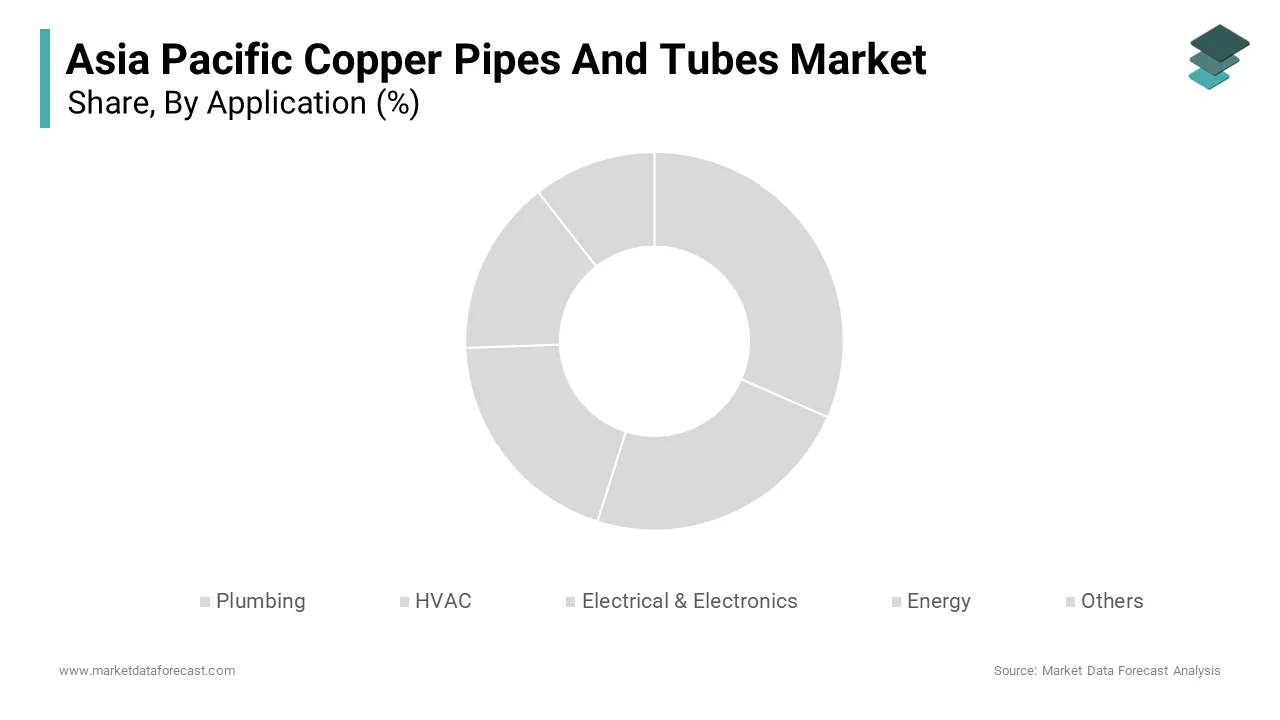
- Based on the Application, the HVAC held the largest revenue share of over 39% in 2025
Market Size & Forecast
2026 Market Size: USD 6.35 Billion
2034 projected Market Size: USD 11.66 Billion
CAGR (2026 to 2034): 7.88%
China: Largest Market in 2026
India: Strongest Growth Region
Asia Pacific Copper Pipes Market Size
The Asia Pacific copper Pipes and tubes market was valued at USD 6.35 billion in 2025 and is anticipated to reach a valuation of USD 6.35 billion in 2026 and USD 11.66 billion by 2034, growing at a CAGR of 7.88% during the forecast period from 2026 to 2034.
Copper pipes and tubes are copper-based tubular products utilized predominantly in plumbing, HVAC systems, and industrial processes across residential, commercial, and infrastructure sectors. Characterized by high thermal conductivity, corrosion resistance, and malleability, copper tubing remains a preferred material in critical installations requiring durability and hygiene. The region’s expanding urban fabric, coupled with rising investments in water supply networks and energy-efficient buildings, has reinforced demand for reliable conduit materials.
Furthermore, China alone accounts for nearly 50% of regional copper fabrication capacity, as noted by the China Nonferrous Metals Industry Association, positioning it as a central hub for downstream processing. Additionally, stringent building codes in countries like Japan and South Korea mandate the use of non-combustible, long-life materials in high-rise constructions, further entrenching copper’s relevance. With rapid industrialization in Southeast Asia and increasing focus on sustainable infrastructure, the integration of copper piping in green building frameworks continues to gain momentum, supported by lifecycle assessments highlighting its recyclability, as emphasized by the United Nations Environment Programme.
MARKET DRIVERS
Accelerated Urbanization and Housing Infrastructure Expansion
Urban transformation across the Asia Pacific region is a pivotal force behind the escalating demand for copper pipes and tubes, particularly in emerging economies where mass housing and civic infrastructure projects are underway. According to the United Nations Department of Economic and Social Affairs, the urban population in Asia is projected to add 2.5 billion by 2050, with a major share of the region’s total population residing in cities. This demographic shift necessitates the construction of new residential complexes, sanitation systems, and centralized water distribution networks, all of which rely heavily on corrosion-resistant and hygienic piping materials. In India, the Pradhan Mantri Awas Yojana has facilitated the completion of millions of affordable housing units since its inception, each requiring extensive plumbing networks where copper tubing is increasingly specified for internal water lines due to its antimicrobial properties. Similarly, Indonesia’s Ministry of Public Works reports that over 15 million new housing units are needed by 2030 to meet urban demand, driving procurement of long-lasting plumbing solutions. Given copper’s compliance with international plumbing standards such as ASTM B88 and ISO 6708, developers and municipal authorities are prioritizing its use in pressurized water systems. The material’s longevity—often exceeding 50 years without degradation—reduces lifecycle maintenance costs, a factor increasingly weighed in public infrastructure planning.
Expansion of HVAC and Refrigeration Systems in Commercial and Industrial Sectors
The proliferation of energy-efficient heating, ventilation, air conditioning (HVAC), and refrigeration systems across the Asia Pacific is significantly amplifying demand for precision-drawn copper tubes. These systems rely on copper’s superior thermal conductivity and compatibility with refrigerants, making it indispensable in heat exchangers, condensers, and evaporator coils. As per the International Energy Agency, electricity consumption for space cooling in the region is expected to triple by 2050 due to rising temperatures and increased building density, particularly in tropical climates such as those in Thailand, Malaysia, and the Philippines. In response, governments are enforcing stricter energy performance standards. Additionally, the cold chain logistics industry, essential for pharmaceutical and food preservation, is expanding rapidly; India’s cold storage capacity is substantial and has been growing, much of it dependent on copper-based refrigeration loops. The transition to low-global-warming-potential (GWP) refrigerants like R-32 also favors copper due to its chemical stability, unlike aluminum, which is prone to corrosion under certain conditions. This technical advantage ensures sustained integration of copper tubing in next-generation cooling systems.
MARKET RESTRAINTS
Volatility in Copper Raw Material Prices and Supply Chain Disruptions
The Asia Pacific copper pipes and tubes market faces persistent pressure from fluctuations in copper commodity prices, driven by geopolitical tensions, mining output instability, and speculative trading on global exchanges. In early 2025, the London Metal Exchange recorded copper prices exceeding USD 9,000 per metric ton, a level that significantly impacts manufacturing margins for downstream fabricators in cost-sensitive markets such as India and Bangladesh. Smaller pipe extruders often lack hedging mechanisms, leaving them exposed to input cost shocks that can erode profitability or force price pass-throughs, deterring price-conscious developers. Additionally, logistical bottlenecks persist; disruptions in Panama Canal transits during 2023-2025 due to drought conditions delayed shipments of copper cathodes from South America to Asian smelters. This led to inventory shortfalls at processing plants in Guangdong and Jiangsu provinces, temporarily constraining tube output. Furthermore, China’s reliance on imported copper heightens vulnerability to trade policy shifts and freight cost volatility. These factors collectively impede consistent production planning and investment in capacity expansion, especially among mid-tier manufacturers lacking vertical integration.
Increasing Substitution with Alternative Piping Materials in Construction
The adoption of non-metallic and alternative metallic piping solutions is eroding copper’s dominance in certain segments of the Asia Pacific construction industry, particularly in cost-driven residential developments. Materials such as cross-linked polyethylene (PEX), chlorinated polyvinyl chloride (CPVC), and stainless steel are gaining traction due to lower installation costs and ease of handling. Moreover, in water-scarce regions like northern China, aggressive water treatment processes involving chloramines have led to instances of copper tube pitting, prompting some municipalities to mandate protective linings or switch to alternative materials. These shifts, though incremental, signal a structural challenge to copper’s market share, especially in applications where performance differentials are narrowing due to advancements in polymer technology.
MARKET OPPORTUNITY
Integration of Copper Piping in Green Building and Sustainable Infrastructure Initiatives
The growing emphasis on sustainable construction across the Asia Pacific presents a significant opportunity for copper pipes and tubes, particularly due to their recyclability, energy efficiency, and compliance with green building certifications. Copper, with a global recycling rate around 40%, qualifies under multiple sustainability frameworks. Moreover, Australia’s National Construction Code now includes provisions for water efficiency, prompting developers to adopt copper-based recirculating hot water systems that reduce waste. With cities like Jakarta and Manila grappling with aging water networks, copper’s durability and leak resistance position it as a strategic material for sustainable urban renewal, supported by lifecycle assessments from the United Nations Environment Programme that confirm its low environmental footprint over decades of service.
Rising Demand for High-Purity Copper Tubes in Emerging High-Tech Industrial Applications
Beyond traditional plumbing and HVAC, the Asia Pacific region is witnessing a surge in demand for high-purity, precision-engineered copper tubes in advanced industrial and technological applications, creating a niche yet high-growth segment. Semiconductor manufacturing, a cornerstone of regional industrial policy in Taiwan, South Korea, and China, requires ultra-clean copper tubing for gas delivery systems in fabrication plants. In medical technology, copper’s biostatic properties are being leveraged in hospital HVAC and oxygen delivery systems. Additionally, the expansion of hydrogen infrastructure, particularly in Australia and South Korea, is fostering demand for copper-based heat exchangers capable of withstanding cryogenic temperatures in liquefaction plants. Furthermore, electric vehicle (EV) battery cooling systems increasingly use micro-channel copper tubes for thermal management. These high-value applications not only diversify demand but also insulate manufacturers from price volatility in commodity-grade segments.
MARKET CHALLENGES
Regulatory Fragmentation and Divergent Building Standards Across Regional Markets
The lack of harmonized regulatory frameworks and building codes across countries, complicating compliance and increasing operational complexity for multinational suppliers, is a critical challenge confronting the Asia Pacific copper pipes and tubes market. While nations like Japan and Australia enforce stringent material specifications under national standards such as JIS H3300 and AS 1566, many Southeast Asian countries apply inconsistent or outdated plumbing regulations. This fragmentation forces manufacturers to maintain multiple product variants, increasing production costs and inventory burdens. Moreover, in rapidly urbanizing areas such as Myanmar and Cambodia, informal construction practices often bypass formal material certifications, undermining demand for standardized copper products. Even in regulated markets, delays in updating standards to reflect technological advances, such as the performance of thin-walled copper systems, hinder innovation adoption. The absence of a unified conformity assessment system within ASEAN, despite commitments under the ASEAN Mutual Recognition Arrangement, further impedes cross-border trade. Consequently, producers face prolonged certification timelines and elevated legal risks, limiting scalability and discouraging investment in localized manufacturing.
Skilled Labor Shortage in Copper Tube Installation and Fabrication
The Asia Pacific copper pipes and tubes market is increasingly constrained by a deficit of trained technicians capable of precision installation, soldering, and brazing of copper systems, particularly in high-pressure and high-efficiency applications. This gap is exacerbated by the aging workforce in developed markets. The complexity of modern copper systems, such as those used in variable refrigerant flow (VRF) HVAC or medical gas networks, demands advanced training in leak testing, pressure balancing, and clean-room protocols, which are not uniformly available. Vocational training institutions in Thailand and the Philippines have only recently introduced copper-specific curricula, with limited industry collaboration. Moreover, the rise of prefabricated plumbing modules in China, while improving efficiency, requires workers skilled in automated brazing and quality inspection, a capability still concentrated in a few coastal provinces. Without systemic investment in technical education and certification, the labor shortage threatens to delay project completions and diminish confidence in copper-based systems, ultimately constraining market growth.
REPORT COVERAGE
| REPORT METRIC | DETAILS |
| Market Size Available | 2025 to 2034 |
| Base Year | 2025 |
| Forecast Period | 2026 to 2034 |
| CAGR | 7.88% |
| Segments Covered | By Application Country |
| Various Analyses Covered | Global, Regional, and Country Level Analysis; Segment-Level Analysis; DROC; PESTLE Analysis; Porter’s Five Forces Analysis; Competitive Landscape; Analyst Overview of Investment Opportunities |
| Regions Covered | India, China, Japan, South Korea, Australia, New Zealand, Thailand, Malaysia, Vietnam, Philippines, Indonesia, Singapore, and the Rest of APAC |
| Market Leaders Profiled | Cambridge-Lee Industries LLC, Cerro Flow Products LLC, KME Group S.p.A., Kobe Steel, LUVATA, MetTube Berhad, MM Kembla, Mueller Industries Inc., Shanghai Metal Corporation, Wieland Group. |
SEGMENT ANALYSIS
By Application Insights
COUNTRY ANALYSIS
China Copper Pipes and Tubes Market Analysis
China stood as the dominant force in the Asia Pacific copper pipes and tubes market by commanding an estimated 44.1% share of regional consumption in 2025. As the continent’s largest industrial and construction hub, China’s position is underpinned by its vast manufacturing base, extensive urbanization programs, and leadership in HVAC equipment production. The country produced a substantial quantity of refined copper in 2023, accounting for nearly half of global output. A key driver is the continued expansion of residential and commercial infrastructure. This scale of construction necessitates high volumes of durable plumbing and refrigerant tubing. Additionally, China leads globally in air conditioning production, manufacturing millions of units per year, many of which incorporate copper microchannel heat exchangers. The government’s dual-circulation strategy also emphasizes domestic infrastructure upgrades, including water supply modernization in second- and third-tier cities, where aging networks are being replaced with corrosion-resistant copper systems. Furthermore, stringent energy efficiency standards under the China National Standard GB 21454 have accelerated the adoption of copper-based HVAC systems in commercial buildings, reinforcing demand. These interconnected industrial, regulatory, and urban development factors solidify China’s preeminent role.
India Copper Pipes and Tubes Market Analysis
India has emerged as the second-largest market for copper pipes and tubes in the Asia Pacific region. The country’s ascent is fueled by a confluence of large-scale urban development, rising living standards, and policy-driven infrastructure modernization. With a projected urban population of 600 million by 2030, according to the Ministry of Housing and Urban Affairs, India is undergoing one of the most aggressive city-building phases in history. The Pradhan Mantri Awas Yojana has already facilitated the construction of over 28 million affordable homes, many of which now specify copper plumbing due to its longevity and resistance to bacterial growth. Moreover, the expansion of organized retail and commercial real estate, evidenced by a year-on-year increase in mall construction, has driven demand for high-efficiency HVAC systems reliant on copper tubing. The refrigeration sector is also expanding rapidly. Additionally, the government’s push for “green buildings” under the Energy Conservation Building Code is encouraging the use of recyclable, low-maintenance materials like copper. Despite cost sensitivity in rural markets, rising awareness of lifecycle savings and water safety is shifting preferences in urban centers, positioning India as a critical growth engine for the regional copper tubing industry.
Japan Copper Pipes and Tubes Market Analysis
Japan holds the third-largest share in the Asia Pacific copper pipes and tubes market. The country’s mature yet technologically advanced infrastructure sector sustains consistent demand for high-performance copper products, particularly in seismic-resistant plumbing and precision HVAC applications. Japan’s building codes, among the strictest in the world, mandate the use of non-combustible, durable materials in high-rise constructions, favoring copper over combustible polymers. Additionally, Japan remains a leader in energy-efficient technologies. The country’s aging population has also spurred investment in healthcare infrastructure, where copper’s antimicrobial properties are leveraged in hospital ventilation and oxygen delivery systems. Furthermore, Japan’s commitment to decarbonization under its Green Growth Strategy includes hydrogen energy development, where copper-based heat exchangers are critical in liquefaction and storage systems. These factors, regulatory rigor, technological sophistication, and public health integration, anchor Japan’s sustained demand despite slower population growth.
South Korea Copper Pipes and Tubes Market Analysis
South Korea occupied a notable position in the regional copper pipes and tubes market. The nation’s demand is driven by its advanced industrial base, high urban density, and leadership in electronics and semiconductor manufacturing, sectors that require ultra-pure copper tubing for specialized applications. In semiconductor fabrication, where contamination control is paramount, copper conduits are used in gas delivery systems. The country’s construction sector also favors copper in high-rise residential complexes due to its fire resistance and durability. Additionally, South Korea’s Green New Deal initiative has accelerated the deployment of energy-efficient HVAC systems in public buildings. Moreover, the country’s push into hydrogen energy relies on copper components in cooling and power distribution systems. These high-tech and policy-driven applications ensure that South Korea remains a critical, innovation-led market for advanced copper tubing solutions.
Australia Copper Pipes and Tubes Market Analysis
Australia ranks fifth in the Asia Pacific copper pipes and tubes market. The country’s demand is characterized by a strong emphasis on sustainable building practices, stringent plumbing regulations, and growing investment in mining and industrial infrastructure. The national plumbing code (AS/NZS 3500) mandates the use of materials resistant to corrosion and microbial growth, favoring copper in both residential and healthcare facilities. Additionally, Australia’s commitment to hydrogen export requires extensive use of copper in electrolyzers and liquefaction plants. Urban water security is another driver. Thus, the material aligns with national circular economy goals, reinforcing its long-term viability.
COMPETITIVE LANDSCAPE
The competitive landscape of the Asia Pacific copper pipes and tubes market is characterized by a blend of large multinational corporations, regional powerhouses, and agile local manufacturers vying for dominance across diverse application sectors. Incumbents leverage technological superiority, supply chain efficiency, and brand trust to maintain influence, particularly in high-value segments such as HVAC, electronics cooling, and medical systems. Chinese and Japanese firms lead in production scale and R&D, while Indian and Southeast Asian players are rapidly modernizing to meet quality benchmarks. Price competition remains intense in commodity-grade plumbing tubes, prompting manufacturers to differentiate through certifications, durability claims, and lifecycle cost messaging. The rise of alternative materials like PEX and stainless steel has intensified pressure, compelling copper producers to emphasize hygiene, recyclability, and energy efficiency. Strategic investments in automation, recycling infrastructure, and localized production are redefining competitive advantage. Moreover, the shift toward green buildings and smart cities is favoring companies that integrate sustainability into their value chain. As urbanization and industrial modernization continue across the region, competition is evolving from cost-based rivalry to innovation-driven positioning, with leaders focusing on niche applications, technical support, and long-term partnerships to secure market relevance.
KEY MARKET PLAYERS
These are the market players that are dominating the Asia Pacific copper pipes and tubes market.
- Cambridge-Lee Industries LLC
- Wieland Electric GmbH (Asia Operations)
- Cerro Flow Products LLC
- Zhejiang Hailiang Co., Ltd.
- Mitsubishi Materials Corporation
- KME Group S.p.A.
- Kobe Steel
- LUVATA
- MetTube Berhad
- MM Kembla
- Mueller Industries Inc.
- Shanghai Metal Corporation
- Wieland Group.
Top Players In The Market
- Wieland, through its extensive Asian manufacturing and distribution network, plays a pivotal role in advancing high-precision copper tubing for industrial and HVAC applications across the Asia Pacific. The company’s facility in Malaysia serves as a regional hub for producing seamless copper tubes compliant with ISO and JIS standards, catering to automotive, refrigeration, and electronics cooling systems. In recent years, Wieland has intensified its collaboration with Japanese and South Korean HVAC OEMs to co-develop microchannel heat exchangers for energy-efficient air conditioning units. In 2023, the company launched a new R&D center in Yokohama focused on thermal management solutions, reinforcing its technological leadership. Wieland has also expanded its recycling operations in Thailand, aligning with regional sustainability mandates. By integrating digital quality control systems in its production lines, the company ensures consistency for high-end clients in the semiconductor and medical equipment sectors, solidifying its reputation for precision and reliability in critical applications.
- Mitsubishi Materials is a cornerstone in the Asia Pacific copper tubing landscape, leveraging Japan’s advanced metallurgical expertise to supply high-purity copper pipes for industrial, electronics, and infrastructure applications. The company’s product portfolio includes specialized oxygen-free copper tubes used in semiconductor manufacturing and vacuum systems, where contamination control is critical. In 2023, Mitsubishi enhanced its production capabilities at its Niihama plant by implementing AI-driven monitoring systems to optimize extrusion efficiency and reduce material waste. It has also deepened partnerships with South Korean battery manufacturers to supply copper components for EV thermal management systems. The company actively participates in Japan’s Green Innovation Fund projects, focusing on hydrogen-compatible copper alloys for next-generation energy systems. Additionally, Mitsubishi has expanded its technical service teams across Southeast Asia to support HVAC and industrial clients with on-site engineering guidance. Its emphasis on R&D, regulatory compliance, and supply chain resilience has enabled sustained influence in high-performance segments, distinguishing it from commodity-focused competitors.
- Zhejiang Hailiang, headquartered in China, is a leading manufacturer of copper pipes and tubes with a robust footprint across the Asia Pacific, particularly in the HVAC and plumbing sectors. The company operates large-scale production facilities in Zhejiang and Guangdong, equipped with automated drawing and annealing lines to ensure high throughput and consistency. In 2023, Hailiang invested in a new digital twin system to simulate production workflows, improving yield rates and reducing energy consumption by 15%. It has also strengthened export channels to India and Vietnam, where rising construction activity fuels demand for cost-effective yet durable copper tubing. The company has partnered with Indian HVAC firms to localize supply and reduce lead times. Hailiang actively promotes recyclable copper solutions, sourcing over 60% of its raw material from recycled scrap, as reported in its 2023 sustainability report. Its focus on lean manufacturing, environmental compliance, and strategic regional partnerships has solidified its position as a key enabler of infrastructure development across emerging markets in the region.
Top Strategies Used By The Key Market Participants
Key players in the Asia Pacific copper pipes and tubes market are deploying vertical integration, technological innovation, regional expansion, strategic partnerships, and sustainability-driven production to strengthen their competitive edge. Companies are investing in backward integration to secure raw material supply amid copper price volatility, with several establishing joint ventures with mining and refining entities. Advanced manufacturing technologies such as AI-based quality control, digital twins, and automated tube drawing lines are being adopted to enhance precision and reduce waste. Firms are expanding production and distribution networks in high-growth markets like India and Vietnam to capitalize on urbanization. Collaborations with HVAC OEMs and construction firms are enabling the co-development of application-specific tubing. Additionally, companies are emphasizing circular economy models by increasing the use of recycled copper and obtaining environmental certifications to meet green building standards, thereby aligning with regional decarbonization goals and differentiating their offerings in a price-sensitive yet quality-conscious market.
RECENT MARKET NEWS
- In January 2023, Zhejiang Hailiang launched a digital twin-enabled production line at its Shaoxing facility to optimize tube drawing processes, improve yield rates, and reduce energy consumption by 15%, enhancing operational efficiency and product consistency for HVAC and plumbing clients across the Asia Pacific.
- In June 2023, Mitsubishi Materials expanded its technical support team in South Korea and Taiwan to provide on-site engineering services for semiconductor and battery cooling system manufacturers, strengthening client relationships and enabling faster adoption of high-purity copper tubing in advanced industrial applications.
- In September 2023, Wieland Electric inaugurated a new R&D center in Yokohama, Japan, focused on developing next-generation copper-based thermal management solutions for electric vehicles and high-efficiency HVAC systems, reinforcing its technological leadership in the Asia Pacific region.
- In February 2025, Zhejiang Hailiang established a strategic supply partnership with a major Indian HVAC OEM to localize copper tube procurement, reducing lead times and logistics costs while supporting India’s domestic manufacturing push under the PLI scheme.
- In May 2025, Mitsubishi Materials initiated a pilot project with Japan’s New Energy and Industrial Technology Development Organization to test hydrogen-compatible copper alloys in liquefaction systems, positioning itself at the forefront of emerging clean energy infrastructure demands in the Asia Pacific market.
MARKET SEGMENTATION
This research report on the Asia Pacific copper pipes and tubes market is segmented and sub-segmented into the following categories.
By Application
- Plumbing
- HVAC
- Electrical & Electronics
- Energy
- Others
By Country
- India
- China
- Japan
- South Korea
- Australia
- New Zealand
- Thailand
- Malaysia
- Vietnam
- Philippines
- Indonesia
- Singapore
- Rest of APAC