- Product Description Description
- Table of Contents TOC
- List of Table & Figure LOT
- Get Free Sample PDF Sample PDF
Market Size, 2025
$0.84 BnMarket Estimate, 2026
$0.91 BnMarket Forecast, 2034
$1.80 BnCAGR, 2026–2034
8.88%Executive Summary: Asia Pacific Dairy Blends Market
- Market Scope: Comprehensive Asia-Pacific dairy blends market analysis covering applications (butter/cheese blends, infant formula), product forms (powder, liquid), types (dairy mixtures, functional ingredients), and country-level landscapes across China, India, Japan, and Australia.
- Market Valuation: Valued at USD 0.84 billion in 2025, estimated at USD 0.91 billion in 2026, and projected to reach USD 1.80 billion by 2034, registering a compound annual growth rate (CAGR) of 8.88% during the forecast period.
- Primary Growth Drivers: Economic volatility driving cost-sensitivity and demand for affordable nutrition, rapid expansion of the processed food and beverage sector, and technological innovations in fat structuring and emulsification. Key restraints include stringent labeling regulations, raw material price volatility, and high lactose intolerance prevalence across the region.
Key Market Segment Metrics (2026–2034)
| Category | Leading Segment (2025 Position) | Fastest-Growing Segment |
|---|---|---|
| By Application | Butter and Cheese Blends (captured the highest share due to food service expansion and cost efficiency) | Infant Formula (projected to record a CAGR of 8.1% driven by rising birth rates and premium nutrition awareness) |
| By Form | Powder Form (led the market owing to exceptional shelf-life, lower transit costs, and climatic stability) | Liquid Form (estimated to showcase a CAGR of 7.4% driven by urban convenience and ready-to-use product trends) |
| By Type | Dairy Mixtures (dominated market share due to high cost-efficiency and functional versatility) | Dairy as Functional Ingredient (estimated at a CAGR of 9.1% backed by health-fortified and wellness demands) |
| By Country / Region | China (leads the regional market with a 31.1% share supported by massive scale, rising dairy intake, and e-commerce) | India (robust growth expected through modernizing organized food sectors and high milk production capacity) |
Major Market Players & Market Structure
Market Structure: Highly competitive regional market featuring global dairy cooperatives, specialized food ingredient suppliers, and multinational nutrition enterprises focusing on cost-effective formulation and functional product differentiation.
Key Companies: SPX Flow, Anchor, Abbott Nutrition, Cape Food Ingredients, Agropur Ingredients, Hormel Specialty Products, Friesland Campina, and Cargill Inc.
Asia Pacific Dairy Blends Market Size
The Asia Pacific Dairy Blends Market size was calculated to be USD 0.84 billion in 2025 and is anticipated to be worth USD 1.80 billion by 2034, from USD 0.91 billion in 2026, growing at a CAGR of 8.88% during the forecast period.

The Asia Pacific dairy blends market is characterized by a significant gap between domestic milk production and rising consumption levels, necessitating innovative solutions to meet demand. According to the Food and Agriculture Organization of the United Nations, Asia accounts for approximately 40% of global milk consumption, yet local production often fails to keep pace due to fragmented supply chains and limited arable land for fodder. Countries like China, India, and Indonesia are witnessing rapid urbanization, which drives the adoption of processed food products containing dairy blends. As per data from the Asian Development Bank, the middle class in the region is expanding rapidly, with millions of households gaining disposable income to spend on packaged foods and beverages. Regulatory frameworks vary significantly across nations, with some countries strictly defining dairy content while others allow flexible labeling for blended products. This regulatory diversity influences product formulation strategies for multinational manufacturers. The increasing prevalence of lactose intolerance in certain Asian populations further accelerates the shift toward blends that incorporate lactose-free or plant-based components. Technological advancements in emulsification and homogenization have improved the sensory profile of these blends, making them indistinguishable from pure dairy in many applications, thereby enhancing consumer acceptance.
MARKET DRIVERS
Rising Cost Sensitivity and Demand for Affordable Nutrition Drive Adoption
Economic volatility and inflationary pressures across several Asia Pacific nations have fuelled consumer sensitivity toward food prices, which is driving the adoption of cost-effective dairy blends and a key market driver. In countries like India and Vietnam where a large portion of the population belongs to lower and middle-income brackets, affordability remains a primary determinant of purchasing decisions. According to the World Bank, consumer price inflation in several emerging Asian economies has trended significantly in recent years, eroding household purchasing power and forcing consumers to seek cheaper alternatives to premium pure dairy products. Dairy blends, which typically replace a portion of expensive milk fat with vegetable oils such as palm oil or coconut oil, offer a significantly lower price point without compromising on taste or texture. This cost advantage allows manufacturers to produce affordable cheese spreads, yogurts, and confectionery items that remain accessible to mass-market consumers. Retailers report strong sales growth for private-label products containing dairy blends as shoppers prioritize value for money. The ability to maintain consistent pricing despite fluctuations in global milk powder prices makes dairy blends an attractive option for food processors. Government subsidies for local oilseed production in countries like Indonesia and Malaysia further reduce the cost of vegetable oil inputs, enhancing the economic viability of these blends. This driver ensures sustained demand as manufacturers continue to innovate ways to reduce formulation costs while meeting basic nutritional requirements for growing populations.
Expansion of Processed Food and Beverage Industry Fuels Ingredient Demand
The rapid expansion of the processed food and beverage industry in the Asia Pacific region is further boosting theAsia-Pacificc dairy blends market growth. As urban lifestyles become busier, consumers increasingly rely on ready-to-eat meals, baked goods, and packaged snacks, which heavily utilize dairy blends for texture enhancement and shelf-life extension. According to Euromonitor International, the retail sales value of the packaged food market in Asia Pacific is projected to grow steadily, driven by changing dietary habits and increased retail penetration. Dairy blends provide superior melting properties in pizza cheeses, better whipability in toppings, and improved mouthfeel in ice creams compared to pure dairy counterparts. Food manufacturers prefer these blends because they offer consistent performance across varying temperature conditions, which is crucial for large-scale industrial production. The growth of quick-service restaurant chains in countries like China, Japan, and Australia further amplifies demand for standardized ingredients that ensure uniform product quality across multiple outlets. Dairy blends allow these chains to manage costs effectively while delivering consistent taste experiences to customers. Innovation in blend formulations has led to products that mimic the flavor profile of pure butter or cream closely, reducing consumer resistance. The ability to customize blends for specific applications such as high-heat stability for baking or freeze-thaw stability for frozen desserts makes them indispensable for modern food processing. This driver sustains market growth as the processed food sector continues to expand its footprint across the region.
MARKET RESTRAINTS
Stringent Labeling Regulations and Consumer Perception Hinder Market Growth
One of the major restraints facing the Asia Pacific dairy blends market is the presence of stringent labeling regulations and negative consumer perceptions regarding artificial or non-dairy ingredients. In countries like India and Australia, regulatory bodies enforce strict definitions for dairy products, requiring clear distinction between pure milk products and those containing vegetable fats. According to the Food Safety and Standards Authority of India, products containing vegetable oil cannot be labeled as pure cheese or butter, leading to mandatory disclosure that may deter health-conscious consumers. Many shoppers associate vegetable oils, particularly palm oil, with unhealthy trans fats and environmental degradation, creating a stigma around dairy blends. Surveys indicate that a significant percentage of consumers in developed markets like Japan and South Korea prefer clean-label products with minimal additives and natural ingredients. This preference limits the adoption of dairy blends in premium segments where purity is valued over cost savings. Misinformation about the nutritional value of blended products further exacerbates consumer hesitation, despite scientific evidence showing that modern blends can be formulated to be healthy. Manufacturers face challenges in marketing these products without triggering regulatory scrutiny or consumer backlash. The need to invest in extensive consumer education campaigns to clarify the benefits and safety of dairy blends adds to operational costs. This restraint slows down market penetration, particularly in affluent urban areas where health trends dominate purchasing decisions.
Supply Chain Volatility of Key Raw Materials Impacts Production Stability
The Asia Pacific dairy blends market faces significant constraints due to the volatility in supply and pricing of key raw materials such as skim milk powder and vegetable oils. The region relies heavily on imports for skim milk powder from countries like New Zealand and Europe, making it susceptible to global market fluctuations and logistical disruptions. According to the Global Dairy Trade index, prices for milk powder have experienced sharp swings in recent years due to weather conditions, disease outbreaks, and trade policies affecting major exporting nations. Similarly, vegetable oils used in blends, such as palm, soybean, and sunflower oil, are subject to price volatility driven by geopolitical tensions, climate change impacts on crop yields, and export restrictions from producing countries like Indonesia and Malaysia. These fluctuations make it difficult for manufacturers to maintain stable pricing and profit margins, forcing them to frequently adjust formulations or pass costs onto consumers. Supply chain disruptions caused by port congestion or transportation bottlenecks further exacerbate the issue, leading to production delays and inventory shortages. Small and medium-sized enterprises lack the bargaining power to secure long-term contracts at fixed prices, leaving them vulnerable to spot market volatility. The unpredictability of raw material availability complicates strategic planning and investment decisions for processors. This restraint forces companies to maintain higher safety stocks or diversify sourcing strategies, which increases working capital requirements and operational complexity.
MARKET OPPORTUNITIES
Growing Demand for Plant-Based and Hybrid Products Creates New Avenues
The rising interest in plant-based diets and hybrid food products presents a significant opportunity for the Asia Pacific dairy blends market as manufacturers seek to combine dairy and non-dairy ingredients. Consumers in countries like China, Singapore, and Thailand are increasingly adopting flexitarian lifestyles, reducing meat and dairy consumption while still seeking familiar tastes and textures. According to NielsenIQ, the retail sales of plant-based alternatives in Asia Pacific are growing at a steady double-digit rate, indicating a shifting consumer preference toward sustainable and ethical food choices. Dairy blends that incorporate plant proteins such as soy, pea, or almond offer a bridge between traditional dairy and fully plant-based options, appealing to this emerging demographic. These hybrid products provide the creamy mouthfeel and nutritional benefits of dairy while reducing the environmental footprint associated with livestock farming. Manufacturers can leverage this trend to develop innovative products such as plant-dairy blended yogurts, cheeses, and ice creams that cater to health-conscious and environmentally aware consumers. Regulatory support for sustainable food production in countries like Japan and South Korea further encourages innovation in this space. Partnerships with plant protein suppliers enable the creation of proprietary blends with enhanced nutritional profiles and functional properties. This opportunity allows companies to differentiate their portfolios and tap into new customer segments who might otherwise avoid traditional dairy products due to lactose intolerance or ethical concerns.
Technological Advancements in Fat Structuring Enhance Product Quality
Advancements in food technology, particularly in fat structuring and emulsification techniques,s offer substantial opportunities for improving the quality and appeal of dairy blends in the Asia Pacific market. Modern technologies allow manufacturers to create structured vegetable fats that mimic the crystalline behavior and melting profile of milk fat more accurately than before. According to research published by the Journal of Food Science, these innovations enable the production of dairy blends with superior sensory attributes, including smoother texture, better spreadability, and enhanced flavor release. This technological progress helps overcome previous limitations where dairy blends were perceived as inferior in taste and mouthfeel compared to pure dairy products. Companies can now produce high-quality cheese analogs and creamers that perform exceptionally well in culinary applications such as baking and cooking. The ability to customize fat structures for specific applications allows manufacturers to target niche markets such as artisanal bakeries or premium coffee shops. Investment in research and development facilities in hubs like Singapore and Australia facilitates the rapid commercialization of these advanced blends. Collaboration between academic institutions and industry players drives continuous improvement in formulation science. This opportunity enables manufacturers to command higher price points for premium blended products and expand into segments previously dominated by pure dairy. The improved quality also helps in gaining regulatory approval and consumer trust by demonstrating technical superiority and safety.
MARKET CHALLENGES
Lactose Intolerance Prevalence Complicates Formulation and Marketing Strategies
A significant challenge in the Asia Pacific dairy blends market is the high prevalence of lactose intolerance among the adult population, which complicates product formulation and marketing strategies. Studies indicate that a high percentage of adults in East and Southeast Asia have some degree of lactose malabsorption, making pure dairy products difficult to digest for a large segment of consumers. According to the National Institutes of Health, this biological trait necessitates the use of lactose-free ingredients or alternative carbohydrates in dairy blends to prevent gastrointestinal discomfort. However, removing lactose or replacing milk solids with plant-based alternatives can alter the taste, texture, and browning properties of the final product, requiring complex reformulation efforts. Manufacturers must balance the need for digestibility with consumer expectations for authentic dairy flavor, which is often derived from lactose during heating processes. Educating consumers about the benefits of lactose-reduced blends versus fully plant-based options requires nuanced messaging to avoid confusion. The lack of standardized testing methods for lactose content in blended products across different countries creates regulatory ambiguity. Companies face the challenge of developing versatile blends that cater to both lactose-tolerant and intolerant consumers without maintaining separate production lines, which would increase costs. This biological constraint limits the universal appeal of standard dairy blends and forces manufacturers to invest in specialized enzymatic treatments or alternative sweeteners.
Inconsistent Regulatory Frameworks Across Countries Hinder Regional Expansion
The lack of harmonized regulatory frameworks across Asia Pacific countries poses a major challenge for manufacturers aiming to distribute dairy blends regionally. Each country has its own specific standards regarding the permissible percentage of vegetable fat in dairy products, labeling requirements, and health claims. According to the Asia-Pacific Economic Cooperation forum, discrepancies in food standards create non-tariff barriers that complicate cross-border trade and increase compliance costs. For instance, what is classified as a dairy blend in one country may be prohibited or required to be labeled as an imitation product in another, causing marketing difficulties. Manufacturers must navigate a complex web of regulations requiring different packaging formulations and legal reviews for each market entry. This fragmentation prevents economies of scale and slows down the launch of new products across the region. Small and medium-sized enterprises often lack the resources to manage such regulatory complexity, limiting their growth potential. Frequent changes in food safety laws and import tariffs add uncertainty to business planning. The absence of a unified regional standard for dairy blends means that companies must maintain multiple product variants, increasing inventory management challenges. This regulatory heterogeneity stifles innovation and discourages investment in regional supply chains as companies struggle to achieve consistent compliance. Overcoming this challenge requires extensive lobbying and collaboration with regional bodies to promote standardization.
REPORT COVERAGE
| REPORT METRIC | DETAILS |
| Market Size Available | 2025 to 2034 |
| Base Year | 2025 |
| Forecast Period | 2026 to 2034 |
| CAGR | 8.88% |
| Segments Covered | By Application, Form, Type, and Region |
| Various Analyses Covered | Global, Regional & Country Level Analysis; Segment-Level Analysis; DROC, PESTLE Analysis; Porter’s Five Forces Analysis; Competitive Landscape; Analyst Overview of Investment Opportunities |
| Regions Covered | India, China, Japan, South Korea, Australia, New Zealand, Thailand, Malaysia, Vietnam, Philippines, Indonesia, Singapore and Rest of APAC |
| Market Leaders Profiled | SPX Flow, Anchor, Abbott Nutrition, Cape Food Ingredients, Agropur Ingredients, Hormel Specialty Products, Friesland Campina, And Cargill Inc |
SEGMENTAL ANALYSIS
By Application Insights
The butter and cheese blends segment dominated the market and captured the highest share of the regional market in 2025. The dominanceof thef butter and cheese blends segment in the Asia-Pacific market is primarily due to the explosive growth of the food service industry, which prioritizes cost efficiency without compromising on sensory appeal. Quick-service restaurants, bakeries, and hotels across the region extensively utilize these blends for pizza toppings, sandwich spreads, and pastry laminations because they offer superior heat stability and melting characteristics at a fraction of the cost of pure dairy butter or cheese. According to the Asian Development Bank, the food service sector in developing economies like India and Vietnam is expanding at a robust rate, driven by rising urbanization and disposable incomes. This expansion creates a massive demand for standardized ingredients that ensure consistent product quality across multiple outlets. Cheese blends containing vegetable oils provide the necessary stretch and browning properties required for popular dishes such as pizza and baked pasta, which are increasingly consumed by younger demographics. The ability of these blends to withstand high-temperature processing without separating makes them ideal for industrial kitchen operations where speed and reliability are paramount. Manufacturers benefit from the lower volatility of vegetable oil prices compared to global milk fat markets, allowing for more predictable budgeting and pricing strategies. This economic advantage, coupled with functional performance, ensures that butter and cheese blends remain the preferred choice for commercial food operators seeking to maximize profit margins while meeting consumer expectations for taste and texture.
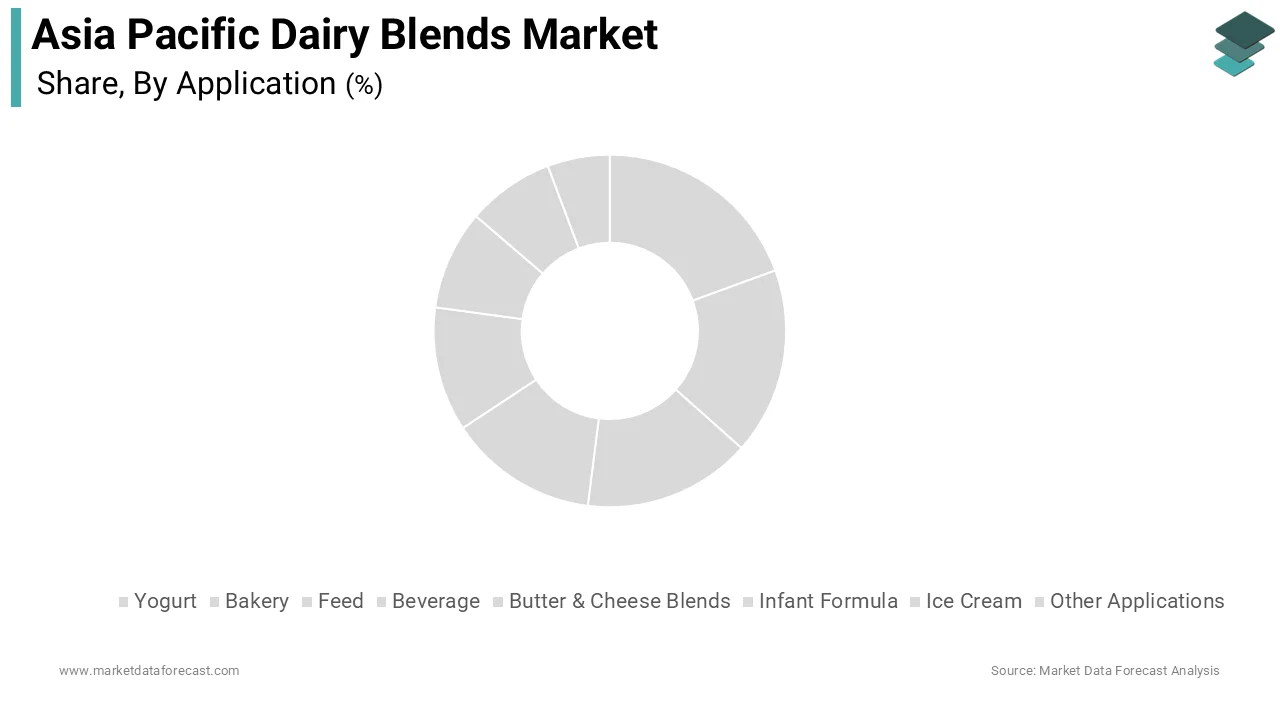
On the other side, the infant formula segment is projected to register the highest CAGR of 8.1% over the forecast period in the regional market owing to the rising birth rates in emerging economies and increasing parental awareness regarding premium nutrition. In countries like India and Indonesia, which have large young populations, parents are increasingly willing to invest in high-quality nutritional products that support early childhood development. According to the United Nations Population Fund, Asia continues to account for a significant proportion of global births, creating a vast base of potential consumers for specialized infant nutrition. Dairy blends in infant formula are engineered to closely mimic the composition of human breast milk by combining dairy proteins with specific vegetable oils rich in essential fatty acids such as DHA and ARA. These blends enhance digestibility and nutrient absorption, addressing concerns about lactose intolerance and allergic reactions, which are prevalent in certain Asian demographics. The shift toward nuclear families and working mothers has increased reliance on formula feeding, driving demand for scientifically formulated products that ensure comprehensive nutritional coverage. Regulatory bodies in countries like China have tightened standards for infant formula safety, prompting manufacturers to invest in high-quality blended ingredients that meet stringent requirements. This focus on safety and efficacy, combined with aggressive marketing by major brands, fuels rapid growth in this segment as parents seek trusted solutions for their infants' dietary needs.
By Form Insights
The powder form segment led the market by holding the largest share of the regional market in 2025. The growth of the powder form segment in the Asia-Pacific market is attributed to its exceptional shelf life and logistical advantages, which are critical in a region characterized by diverse climatic conditions and varying infrastructure levels. Powdered dairy blends are less susceptible to spoilage and do not require continuous refrigeration during transport and storage, making them ideal for distribution to remote areas in countries like India, Indonesia, and the Philippines. According to the Food and Agriculture Organization, post-harvest losses for perishable dairy products are significantly higher than for dried alternatives, highlighting the economic importance of powder forms in reducing waste. The lightweight nature of powder reduces shipping costs and carbon footprint, aligning with the sustainability goals of major manufacturers. Retailers prefer powdered blends because they occupy less shelf space and have lower risk of inventory loss due to expiration. Consumers in rural areas appreciate the convenience of storing powder for extended periods without electricity-dependent cooling. The versatility of powder allows it to be reconstituted into various liquid forms or used directly in baking and cooking applications, providing flexibility for both household and industrial users. Established manufacturing capabilities for spray drying in major dairy-producing nations ensure consistent quality and supply. This logistical efficiency combined with cost-effectiveness ensures that powder remains the preferred form for dairy blends across the diverse and expansive Asia Pacific region.
However, the liquid form segment is estimated to showcase a CAGR of 7.4% over the forecast period in the regional market owing to the increasing demand for convenience and ready-to-use products among busy urban consumers in Asia Pacific. As lifestyles become faster-paced in metropolitan areas like Shanghai, Tokyo, and Singapore, consumers prefer liquid dairy blends that require no preparation time and can be consumed directly or added easily to beverages and cereals. According to NielsenIQ, the retail sales value of ready-to-drink dairy products is rising steadily as shoppers prioritize time-saving solutions without compromising on nutrition. Liquid blends offer superior solubility and immediate usability compared to powder forms, which require mixing and can sometimes result in clumping. The perception of liquid products as fresher and more natural also contributes to their growing popularity, despite higher logistics costs. Retailers are expanding chilled sections to accommodate the growing variety of liquid dairy blends, including flavored milks, creamers, and drinking yogurts. The rise of coffee culture in countries like South Korea and Australia drives demand for liquid creamers that provide consistent texture and taste in specialty drinks. Packaging innovations such as aseptic cartons and re-sealable bottles enhance convenience and portability, appealing to on-the-go consumers. This shift toward convenience-oriented consumption patterns ensures that the liquid segment continues to expand rapidly as urbanization deepens across the region.
By Type Insights
The dairy mixtures segment led the market by capturing the major share of the regional market in 2025. The growth of the dairy mixtures segment in the regional market can be credited to its cost efficiency and functional versatility, which appeal to a broad range of manufacturers and consumers. Dairy mixtures typically combine milk solids with vegetable fats and other ingredients to create products that offer similar sensory attributes to pure dairy at a lower cost. According to regional industry analysis, the price differential between pure dairy and blended mixtures can be up to 30%, making them an attractive option for price-sensitive markets in Southeast Asia and India. These mixtures are widely used in the production of ice cream, yogurt, and baked goods, where they provide desirable texture, stability, and mouthfeel. The ability to customize the ratio of dairy to non-dairy components allows manufacturers to tailor products to specific regional preferences and regulatory requirements. For instance, in countries with strict labeling laws, dairy mixtures can be formulated to meet minimum dairy content thresholds while maximizing cost savings. The widespread availability of raw materials such as skim milk powder and palm oil in the region supports consistent production and supply. Consumer acceptance of dairy mixtures has grown over time as quality improvements have minimized taste differences from pure dairy. This combination of economic advantage and functional performance ensures that dairy mixtures remain the dominant type in the market, serving as a backbone for the affordable dairy industry in Asia Pacific.
On the other end, the dairy as functional ingredient segment is estimated to showcase a promising CAGR of 9.1% over the forecast period owing to the rising demand for health-fortified products in the Asia Pacific region. Consumers are increasingly seeking foods that offer additional health benefits beyond basic nutrition, such as improved immunity, bone health, and digestive wellness. According to the Global Nutrition Report, the prevalence of lifestyle-related diseases in Asia is increasing, prompting a shift toward functional foods that can help mitigate health risks. Dairy serves as an excellent carrier for functional ingredients such as probiotics, prebiotics, vitamins, and minerals due to its neutral flavor and high bioavailability. Manufacturers are incorporating dairy-based functional ingredients into a wide range of products, including beverages, snacks, and supplements, to meet this demand. The scientific validation of health claims associated with dairy-derived peptides and bioactive compounds enhances consumer confidence and drives purchase decisions. Regulatory support for health claims in countries like Japan and South Korea facilitates the marketing of functional dairy products. The aging population in developed markets further amplifies the need for functional ingredients that support healthy aging. This trend toward preventive healthcare positions dairy as a key component in functional food formulations, driving rapid growth in this segment as manufacturers innovate to deliver targeted health benefits.
REGIONAL ANALYSIS
China Dairy Blends Market Analysis
China dominated the market by capturing 31.1% of the regional market share in 2025 and is expected to remain the dominant market for dairy blends in the region over the next few years due to its massive scale and evolving dietary preferences, as well as its massive population and rapidly evolving dietary habits. The country has witnessed a significant shift toward Western-style diets, including increased consumption of cheese, yogurt, and baked goods, which utilize dairy blends extensively. According to the National Bureau of Statistics of China, per capita dairy consumption has doubled in the past decade, indicating strong growth potential. The government’s emphasis on food security and self-sufficiency has led to policies supporting local dairy processing and blending industries. Chinese consumers are increasingly health-conscious, driving demand for fortified dairy blends with added nutrients. The e-commerce boom facilitates direct access to a wide variety of dairy products for urban consumers. Major international and domestic players compete fiercely in this market, investing in innovation and marketing to capture share. Regulatory standards for dairy products have become stricter, ensuring higher quality and safety, which boosts consumer confidence. The rise of middle-class households with higher disposable incomes supports premiumization trends in the dairy sector. China’s vast manufacturing base allows for cost-effective production of dairy blends for both domestic use and export. This combination of demand drivers and supportive policies maintains China’s leading position in the regional market.
India Dairy Blends Market Analysis
India is likely to maintain robust growth and remain a key market for dairy blends as its organized food sector continues to modernize over the coming years. India accounts for a prominent share of the market owing to its status as the world’s largest milk producer yet facing a deficit in processed dairy products. The country has a huge potential for dairy blends due to the large population and growing preference for affordable processed foods. According to the Department of Animal Husbandry and Dairying, the organized dairy sector is expanding rapidly with increased investment in processing infrastructure. Dairy blends are widely used in the confectionery and bakery industries, which are growing at double-digit rates. The price sensitivity of Indian consumers makes cost-effective dairy blends an attractive alternative to pure dairy fats. Government initiatives such as the National Dairy Plan aim to modernize the sector and improve supply chain efficiency. The rising middle class is driving demand for value-added dairy products including ice cream and flavored milk. Cultural preferences for sweets and snacks utilizing dairy fats support steady demand for blends. Local manufacturers are innovating with indigenous flavors to appeal to regional tastes. The expansion of modern retail and quick-service restaurants further boosts consumption. India’s large domestic market and growing export capabilities ensure its significant role in the Asia Pacific dairy blends landscape.
Japan Dairy Blends Market Analysis
Japan is expected to see steady demand for specialized, high-quality, and functional dairy blends as the country focuses on health and wellness over the next few years. Japan holds a noteworthy share of the market due to its mature dairy industry and high consumer demand for premium and functional products. The aging population in Japan drives demand for dairy blends fortified with nutrients that support healthy aging, such as calcium and protein. According to the Ministry of Agriculture, Forestry and Fisheries, Japanese consumers prioritize quality, safety, and functionality in their food choices. Dairy blends are extensively used in the bakery and confectionery sectors, which are known for their innovation and high standards. The prevalence of lactose intolerance has led to increased adoption of lactose-free and plant-dairy blended products. Japanese manufacturers are leaders in technology for extracting bioactive components from dairy for functional applications. Strict regulatory standards ensure high quality and transparency in labeling, building strong consumer trust. The convenience store culture supports sales of ready-to-eat dairy products containing blends. Innovation in texture and flavor profiles keeps the market dynamic and responsive to changing tastes. Japan’s focus on health and wellness continues to drive growth in specialized dairy blend segments. The country’s advanced infrastructure and high purchasing power sustain its prominent position in the regional market.
Australia Dairy Blends Market Analysis
Australia is likely to focus on high-value, sustainable, and innovative dairy blend exports as it adapts to global market demands over the coming years. The country is a major supplier of high-quality dairy ingredients including milk powder and butter, which are used in blends globally. According to Dairy Australia, the industry focuses on sustainability and innovation to maintain its competitive edge. Domestic demand for dairy blends is driven by the thriving food service and bakery sectors. Australian consumers are increasingly interested in clean-label and natural products, influencing formulation trends. The free trade agreements with Asian countries facilitate easy export of dairy blends and ingredients. Investment in research and development leads to novel dairy blend applications in health and wellness products. The robust regulatory framework ensures high safety standards, enhancing global reputation. Climate challenges pose risks to production, but adaptation strategies are being implemented. The strong brand image of Australian dairy supports premium positioning in export markets. Collaboration between farmers, processors, and exporters ensures a cohesive and efficient supply chain. Australia’s role as a key exporter and innovator maintains its significance in the Asia Pacific dairy blends market.
New Zealand Dairy Blends Market Analysis
New Zealand is expected to maintain its status as a premium, quality-focused supplier of dairy components for the regional blends market in the next few years. New Zealand accounts for a steady share of the market and is known for its pasture-based dairy system and high-quality exports. The country is a leading global supplier of milk powder and butter, which are key components in dairy blends. According to Stats NZ, the dairy sector is a cornerstone of the national economy with a strong focus on sustainability. New Zealand dairy blends are prized for their natural quality and consistency, appealing to premium markets in Asia. The proximity to Asian markets allows for efficient logistics and timely delivery. Domestic consumption is stable with a focus on high-value-added products. Innovation in functional dairy ingredients supports growth in health-oriented segments. The government supports research into sustainable farming practices to reduce environmental impact. Strong relationships with Asian importers ensure steady demand for New Zealand dairy products. The reputation for purity and safety enhances consumer trust in New Zealand-sourced blends.
COMPETITION OVERVIEW
The Asia Pacific dairy blends market features intense competition characterized by a mix of global multinational corporations and agile local manufacturers vying for dominance. Large players leverage economies of scale, advanced technology, and strong brand recognition to maintain leadership positions while smaller firms compete through niche specialization and cost-effectiveness. Price sensitivity remains a critical factor in many developing nations, prompting companies to balance affordability with quality. Innovation in product formulation, particularly in health-focused and plant hybrid blends, serves as a key differentiator. Regulatory heterogeneity across countries creates barriers to entry, requiring robust compliance capabilities. Supply chain efficiency and raw material sourcing strategies significantly impact competitive advantage. Mergers and acquisitions are common as companies seek to expand geographic reach and product portfolios. Consumer education plays a vital role in overcoming skepticism about blended products versus pure dairy. Retailer relationships and shelf space allocation influence visibility and sales volume. The dynamic nature of consumer preferences demands continuous adaptation and innovation to sustain market relevance and profitability in this fragmented yet rapidly growing region.
KEY MARKET PLAYERS
A few major key players in the Asia Pacific Dairy Blends Market include
- SPX Flow
- Anchor
- Abbott Nutrition
- Cape Food Ingredients
- Agropur Ingredients
- Hormel Specialty Products
- Friesland Campina
- Cargill Inc
Top Strategies Used by Key Market Participants
Key players in the Asia Pacific dairy blends market prioritize localization and product customization to align with diverse regional tastes and dietary preferences. Companies invest in research and development to create blends that mimic the sensory attributes of pure dairy while offering cost advantages. Strategic partnerships with local suppliers ensure stable raw material availability and reduce logistical complexities. Sustainability initiatives such as eco-friendly packaging and responsible sourcing appeal to environmentally conscious consumers and regulators. Digital transformation enhances supply chain visibility and customer engagement through data-driven insights. Expansion into emerging markets via joint ventures or acquisitions accelerates growth and market penetration. Focus on health and wellness drives innovation in fortified and functional dairy blends catering to rising health awareness. Compliance with varying regulatory frameworks across countries ensures seamless market access and brand credibility. These combined approaches enable manufacturers to build resilience and capture value in the dynamic Asia Pacific landscape.
Leading Players in the Asia Pacific Dairy Blends Market
- Fonterra stands as a global dairy powerhouse with deep roots in New Zealand and extensive operations across the Asia Pacific region. The company supplies high-quality milk powders, butter, and specialized dairy ingredients that serve as foundational components for various dairy blends. Recent strategic actions include expanding its production facilities in China to cater to the growing demand for infant formula and nutritional products. Fonterra actively collaborates with local farmers and processors to ensure sustainable sourcing and consistent quality. The company invests heavily in research and development to create innovative functional ingredients that enhance the nutritional profile of dairy blends. Digital supply chain initiatives improve transparency and efficiency, ensuring timely delivery to customers. Partnerships with major food manufacturers facilitate the integration of Fonterra ingredients into diverse product lines. These efforts reinforce its reputation for reliability and quality, strengthening its position as a preferred supplier in the competitive Asia Pacific market.
- Nestlé leverages its vast global network and local expertise to maintain a strong presence in the Asia Pacific dairy blends market. The company offers a wide range of dairy-based products, including coffee creamers, infant nutrition, and culinary solutions that utilize advanced blending technologies. Recent initiatives involve launching plant-dairy hybrid products in countries like Japan and Australia to meet evolving consumer preferences for sustainable and healthy options. Nestlé invests in local manufacturing hubs to reduce logistics costs and respond quickly to market trends. The company focuses on fortifying dairy blends with essential vitamins and minerals, addressing regional nutritional deficiencies. Strategic acquisitions of local brands enhance its portfolio and distribution reach. Digital engagement platforms provide consumers with personalized nutrition advice, building brand loyalty. Compliance with strict regulatory standards ensures product safety and trust. These actions enable Nestlé to deliver tailored solutions that resonate with diverse Asian consumers while maintaining operational excellence.
- Lactalis Group utilizes its extensive dairy processing capabilities to supply high-quality ingredients and finished products to the Asia Pacific market. The company specializes in cheese, butter, and milk powder formulations that are integral to dairy blend applications in bakery and food service sectors. Recent actions include strengthening partnerships with distributors in Southeast Asia to expand market access for its premium dairy ingredients. Lactalis focuses on sustainability by implementing eco-friendly practices in its supply chain and production facilities. The company introduces innovative cheese blends tailored to local tastes in countries like India and Thailand, enhancing culinary versatility. Investment in technical support services helps customers optimize the use of dairy blends in their formulations. Collaborations with chefs and food developers drive product innovation and application diversity. Regulatory compliance and quality assurance measures build trust among industrial clients. These strategies position Lactalis as a key partner for businesses seeking reliable and high-performance dairy solutions in the region.
MARKET SEGMENTATION
This research report on the Asia Pacific dairy blends market has been segmented and sub-segmented based on application, form, type, and region.
By Application
- Yogurt
- Bakery
- Feed
- Beverage
- Butter & Cheese Blends
- Infant Formula
- Ice Cream
- Other Applications
By Form
- Powder
- Liquid
- Spreadable
By Type
- Dairy/Non-Dairy Ingredients
- Dairy as Carrier
- Dairy as Functional Ingredient
- Dairy Mixtures
- Others
By Region
- India
- China
- Japan
- South Korea
- Australia
- New Zealand
- Thailand
- Malaysia
- Vietnam
- Philippines
- Indonesia
- Singapore
- Rest of APAC