- Product Description Description
- Table of Contents TOC
- List of Table & Figure LOT
- Get Free Sample PDF Sample PDF
Market Size, 2025
$2.73 BnMarket Estimate, 2026
$3.03 BnMarket Forecast, 2034
$6.92 BnCAGR, 2026–2034
10.88%Executive Summary: Asia Pacific Diabetes Pen Market
- Market Scope:Comprehensive regional analysis of Asia Pacific's diabetes pen sector, detailing product types, reusable vs. disposable usage models, application types, distribution channels, and country-level profiles.
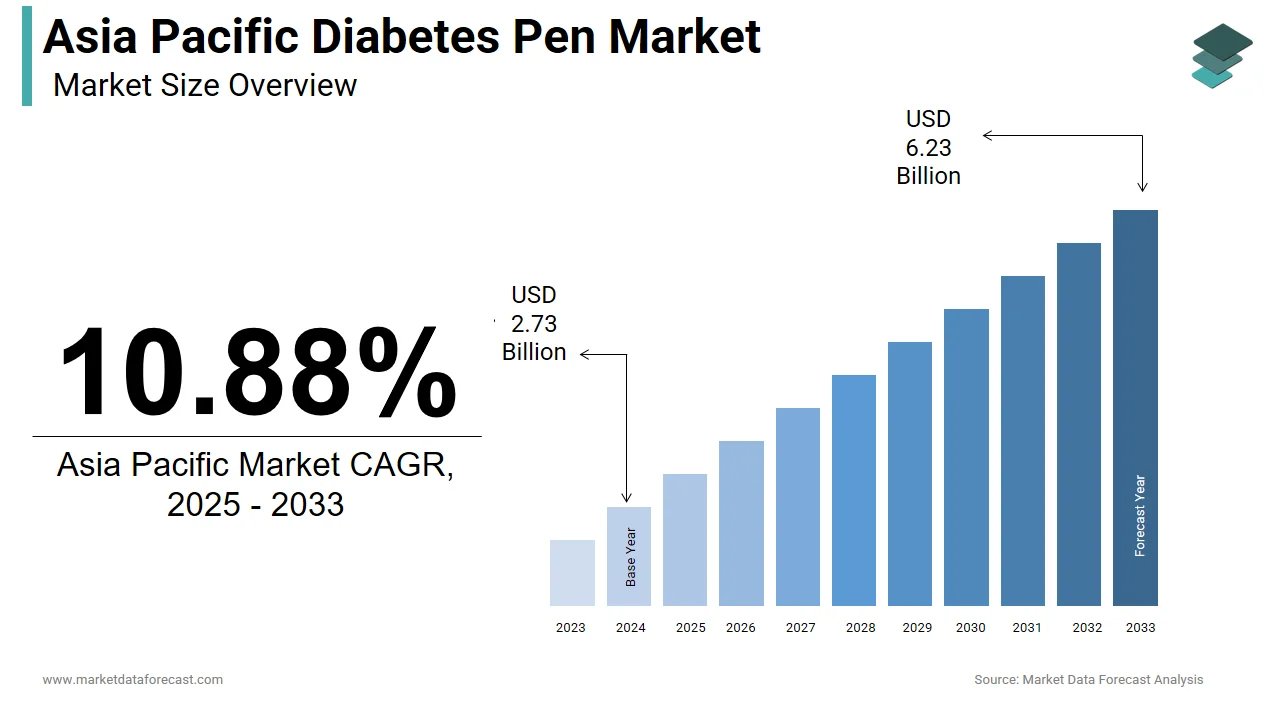
- Market Valuation:Valued at USD 2.73 billion in 2025, reaching USD 3.03 billion in 2026, and projected to expand to USD 6.92 billion by 2034, growing at a robust CAGR of 10.88% from 2026 to 2034.
- Primary Growth Drivers:Escalating burden and prevalence of type 1 and type 2 diabetes driven by urbanization and lifestyle changes, alongside technological innovations in smart, digitally integrated insulin delivery systems.
Key Market Segment Metrics
| Category | Leading Segment (Base Position) | Fastest-Growing / High-Growth Segment |
|---|---|---|
| By Product Type | Insulin Pens (dominated total revenue in 2025, anchored by user-friendly, portable designs and high adoption rates in developed markets) | Insulin Pen Needles (projected at the fastest CAGR of 12.3%, driven by frequent injection frequency and ultra-thin comfort technologies) |
| By Usage | Reusable Pens (captured 65.4% share, supported by long-term cost-effectiveness, durability, and subsidized national insurance schemes) | Disposable Pens (expected to grow at the highest CAGR of 13.6%, fueled by first-time users, travel convenience, and hygiene needs) |
| By Distribution Channel | Retail Pharmacies (accounted for 48.5% of sales, serving as the primary accessible point of purchase for out-of-pocket consumers) | Online Sales (emerging as the fastest-growing segment at a CAGR of 15.2%, driven by internet penetration, e-commerce, and telemedicine) |
| By Country | India & China (largest consumer bases and revenue contributors, backed by massive diabetic patient populations and government healthcare initiatives) | South Korea & Japan (high-tech digital health hubs advancing smart connected pens, AI-assisted tracking, and telehealth integration) |
Major Market Players & Industry Landscape
Market Structure:Competitive and dynamic landscape featuring global pharmaceutical leaders and regional manufacturers competing through product innovation, digital health integration, and localized pricing strategies.
Key Companies:Novo Nordisk A/S, Sanofi, Eli Lilly and Company, AstraZeneca, BD, Biocon, Wockhardt Limited, and Terumo Corporation.
 Download Free Sample Report
Asia Pacific Diabetes Pen Market Size
The size of the Asia Pacific diabetes pen market was worth USD 2.73 billion in 2025. The regional market is anticipated to grow at a CAGR of 10.88% from 2026 to 2034 and be worth USD 6.92 billion by 2034 from USD 3.03 billion in 2026.
Diabetes pen is a medical device designed for the self-administration of insulin via disposable or reusable pen injectors. These pens offer a more convenient, discreet, and accurate alternative to traditional vial-and-syringe methods, making them increasingly popular among diabetic patients requiring regular insulin doses. With the rising prevalence of type 1 and type 2 diabetes across the region, the demand for user-friendly insulin delivery systems has surged.
Diabetes has become a major public health concern in the Asia Pacific, driven by sedentary lifestyles, urbanization, and changing dietary patterns. According to the International Diabetes Federation, over 215 million adults in the region were living with diabetes in 2023, with India and China alone accounting for nearly half of this figure. This growing patient pool has significantly increased the need for effective disease management tools, including diabetes pens.
Moreover, increasing awareness about glycemic control, coupled with improvements in healthcare infrastructure and insurance coverage, is encouraging greater adoption of modern insulin delivery methods. In countries like Japan and Australia, where healthcare standards are high, diabetes pens have been widely integrated into standard treatment protocols. Meanwhile, emerging markets such as Indonesia, Vietnam, and the Philippines are witnessing gradual but steady growth in usage, supported by government initiatives aimed at improving access to chronic disease care.
MARKET DRIVERS
Rising Prevalence of Diabetes Across the Region
The escalating burden of diabetes, particularly in populous nations like India and China, is among the main factors behind the growth of the Asia Pacific diabetes pen market. The rapid pace of urbanization, lifestyle changes, and genetic predispositions have contributed to an alarming rise in both type 1 and type 2 diabetes cases.
In India, where diabetes has reached epidemic proportions, as per the Indian Council of Medical Research, over 100 million individuals had either diabetes or pre-diabetic conditions in 2023. This has led to a surge in demand for advanced insulin administration tools, with diabetes pens being preferred for their ease of use, portability, and dosing accuracy, especially among elderly and pediatric patients.
Similarly, in China, the Chinese Center for Disease Control and Prevention highlighted that nearly 140 million adults were affected by diabetes in 2023. With the country’s aging population and expanding middle class, there is a growing preference for premium diabetes care products, including insulin pens, which are seen as more hygienic and less painful than conventional syringes.
Technological Advancements in Insulin Delivery Systems
Technological innovation in diabetes care has played a crucial role in driving the adoption of diabetes pens across the Asia Pacific. Manufacturers are continuously enhancing pen designs to improve usability, safety, and patient compliance. Features such as dose memory, digital connectivity, and tactile feedback mechanisms are increasingly being incorporated into next-generation insulin pens.
Japan, known for its cutting-edge healthcare technology, has been at the forefront of integrating smart features into diabetes pens. Companies like Terumo and Sanwa Kagaku Kenkyusho have introduced Bluetooth-enabled pens that sync with mobile apps, allowing users to track insulin doses and receive reminders.
In South Korea, pharmaceutical firms are partnering with tech startups to develop AI-assisted injection devices that help users monitor dosage history and detect irregularities. As per the Korean Food and Drug Administration, several new connected diabetes pen models received regulatory approval in 2023, reflecting growing interest in smart insulin delivery solutions.
Even in developing economies like Thailand and Malaysia, advancements in pen needle technology, such as ultra-thin needles and pain-reduction mechanisms, are making insulin therapy more acceptable and easier to manage, further boosting the regional market for diabetes pens.
MARKET RESTRAINTS
High Cost of Insulin Pens Compared to Traditional Methods
The relatively high cost of diabetes pens compared to traditional vial-and-syringe methods remains a significant barrier to widespread adoption in the Asia Pacific region. While insulin pens offer greater convenience and precision, they often come with higher upfront expenses, making them less accessible to low-income populations in emerging economies. This financial burden discourages many patients from opting for pen-based therapy, especially in rural areas where affordability is a key concern.
In countries like Indonesia and the Philippines, where out-of-pocket healthcare expenditure remains high, cost sensitivity plays a decisive role in treatment choices. As per a study conducted by the University of the Philippines College of Medicine, over 60% of surveyed diabetic patients preferred cheaper alternatives despite recognizing the benefits of insulin pens.
Moreover, generic insulin manufacturers and public health programs often prioritize cost-effective distribution models that favor vials over pens, limiting penetration in national health schemes.
Limited Awareness and Education Among Patients and Healthcare Providers
The lack of awareness and education regarding the benefits of pen-based insulin delivery, particularly in rural and semi-urban regions, is also a major restraint affecting the Asia Pacific diabetes pen market. Many patients and even some healthcare professionals remain unfamiliar with the advantages of diabetes pens, leading to underutilization of these devices.
In Bangladesh and Nepal, where primary healthcare services are limited, physicians often prescribe vials and syringes due to familiarity and availability rather than recommending more user-friendly pen options. Also, low rate of surveyed healthcare providers in rural India routinely recommended insulin pens to newly diagnosed patients, citing lack of training and product knowledge.
Furthermore, misconceptions about pen reuse, maintenance, and proper disposal contribute to resistance among both patients and caregivers. Targeted educational campaigns, training for healthcare workers, and stronger patient engagement strategies are required to fill these knowledge gaps.
MARKET OPPORTUNITIES
Growing Adoption of Smart Diabetes Pens and Digital Integration
The integration of digital technologies and the development of smart insulin pens is a major opportunity in the Asia Pacific diabetes pen market. These next-generation devices feature wireless connectivity, dose tracking, and mobile app integration, offering real-time insights into insulin usage and helping patients maintain better glycemic control.
In Japan, where digital health adoption is well-established, companies like Medtronic and Novo Nordisk have launched smart pens compatible with smartphone applications that record injection history, set reminders, and provide analytics.
South Korea has also emerged as a hub for digital diabetes management, with local startups collaborating with global pharmaceutical firms to introduce AI-powered injection pens. The Korean Ministry of Food and Drug Safety approved multiple connected pen models in 2023, signaling growing acceptance of smart insulin delivery solutions.
In addition, telemedicine platforms in India and Indonesia are incorporating smart pen data into virtual consultations, enabling remote monitoring of diabetic patients.
Expansion of Government and Private Insurance Coverage for Insulin Delivery Devices
The increasing inclusion of insulin pens in government-sponsored healthcare schemes and private insurance plans is an emerging opportunity for the Asia Pacific diabetes pen market. As diabetes management becomes a priority for public health authorities, efforts to improve access to advanced treatment options are gaining momentum.
In Australia, the Pharmaceutical Benefits Scheme (PBS) covers certain types of insulin pens, reducing out-of-pocket costs for patients and encouraging wider adoption. India’s Ayushman Bharat scheme has started incorporating diabetes-related consumables, including insulin pens, into its coverage list, making them more accessible to lower-income groups. Similarly, in China, some provincial health insurance programs have expanded to include pen-based insulin therapies.
Private insurers across Southeast Asia are also recognizing the long-term cost benefits of promoting pen use over vials, as it reduces complications associated with improper dosing.
MARKET CHALLENGES
Regulatory Hurdles and Approval Delays Across Diverse Markets
The variability in regulatory requirements and prolonged approval timelines across different countries is one of the key challenges facing the Asia Pacific diabetes pen market. Unlike in the United States or Europe, where regulatory frameworks are standardized, the Asia Pacific region consists of multiple jurisdictions with differing compliance standards, complicating market entry for manufacturers.
In countries like Indonesia and Vietnam, the approval process for medical devices, including diabetes pens, can take up to 18–24 months, delaying product launches and limiting patient access. According to the ASEAN Harmonisation Task Force, inconsistencies in documentation, clinical testing requirements, and labeling regulations create significant barriers for multinational companies seeking regional expansion.
In India, while the Central Drugs Standard Control Organization has made progress in streamlining approvals, delays persist due to frequent guideline revisions and backlog in processing submissions. As per the Indian Medical Device Industry Association, several foreign insulin pen manufacturers faced extended timelines before receiving market authorization, impacting their ability to compete effectively.
Competition from Alternative Insulin Delivery Methods
The Asia Pacific diabetes pen market faces stiff competition from alternative insulin delivery methods, including traditional vials and syringes, inhalable insulin, and continuous subcutaneous insulin infusion (CSII) pumps. While pens offer superior convenience and accuracy, other modalities continue to hold significant market share due to factors such as cost, familiarity, and patient preference.
In low-income segments of the region, particularly in rural areas of India, Pakistan, and the Philippines, vials and syringes remain the most commonly used method due to their lower cost and widespread availability.
Meanwhile, in more developed markets like Japan and Australia, insulin pump adoption is gradually increasing, especially among younger patients with type 1 diabetes who prefer automated, continuous delivery. With multiple delivery options available, diabetes pen manufacturers must differentiate themselves through innovation, affordability, and targeted patient education to maintain and expand their market presence across the diverse Asia Pacific landscape.
REPORT COVERAGE
| REPORT METRIC | DETAILS |
| Market Size Available | 2025 to 2034 |
| Base Year | 2025 |
| Forecast Period | 2026 to 2034 |
| Segments Covered | By Product Type, Usage, Distribution Channel, and Region. |
| Various Analyses Covered | Global, Regional and Country-Level Analysis, Segment-Level Analysis, Drivers, Restraints, Opportunities, Challenges; PESTLE Analysis; Porter’s Five Forces Analysis, Competitive Landscape, Analyst Overview of Investment Opportunities |
| Countries Covered | India, China, Japan, South Korea, Australia, New Zealand, Thailand, Malaysia, Vietnam, Philippines, Indonesia, Singapore, Rest of APAC |
| Market Leaders Profiled | AstraZeneca, BD, Lilly, Biocon, Sanofi, Jiangsu Delfu Medical Device Co., Ltd., Owen Mumford Limited, Wockhardt Limited, Smiths Group plc, Nipro Europe Group Companies, Novo Nordisk A/S, MannKind Corporation, Bristol-Myers Squibb Company, F. Hoffmann-La Roche Ltd., Nemera, Ypsomed AG, Medical Technology and Devices S.p.A., Merck & Co., Inc., and Bayer AG. |
SEGMENTAL ANALYSIS
By Product Type Insights
The insulin pens segment prevailed in the Asia Pacific diabetes pen market by accounting for a substantial portion of total revenue in 2025. Increasing preference for user-friendly, accurate, and portable insulin delivery systems among diabetic patients across the region is driving the dominance of the insulin pens segment. In countries like Japan and Australia, where healthcare infrastructure is well-developed, insulin pens are widely prescribed due to their ease of use and reduced risk of dosing errors. According to the Japanese Diabetes Society, over 90% of insulin-dependent patients in Japan utilize pen devices rather than traditional vials and syringes, reflecting a strong adoption trend. Similarly, in India and China, rising awareness about diabetes management has led to greater acceptance of pen-based therapy, particularly among urban populations. As per the Indian Journal of Endocrinology and Metabolism, pen prescriptions increased by nearly 25% between 2020 and 2023, especially among type 1 diabetes patients and those requiring multiple daily injections. Besides, leading pharmaceutical companies have been expanding their insulin pen portfolios with features such as dose memory, digital tracking, and pre-filled cartridges, further reinforcing the segment’s leadership in the regional market.
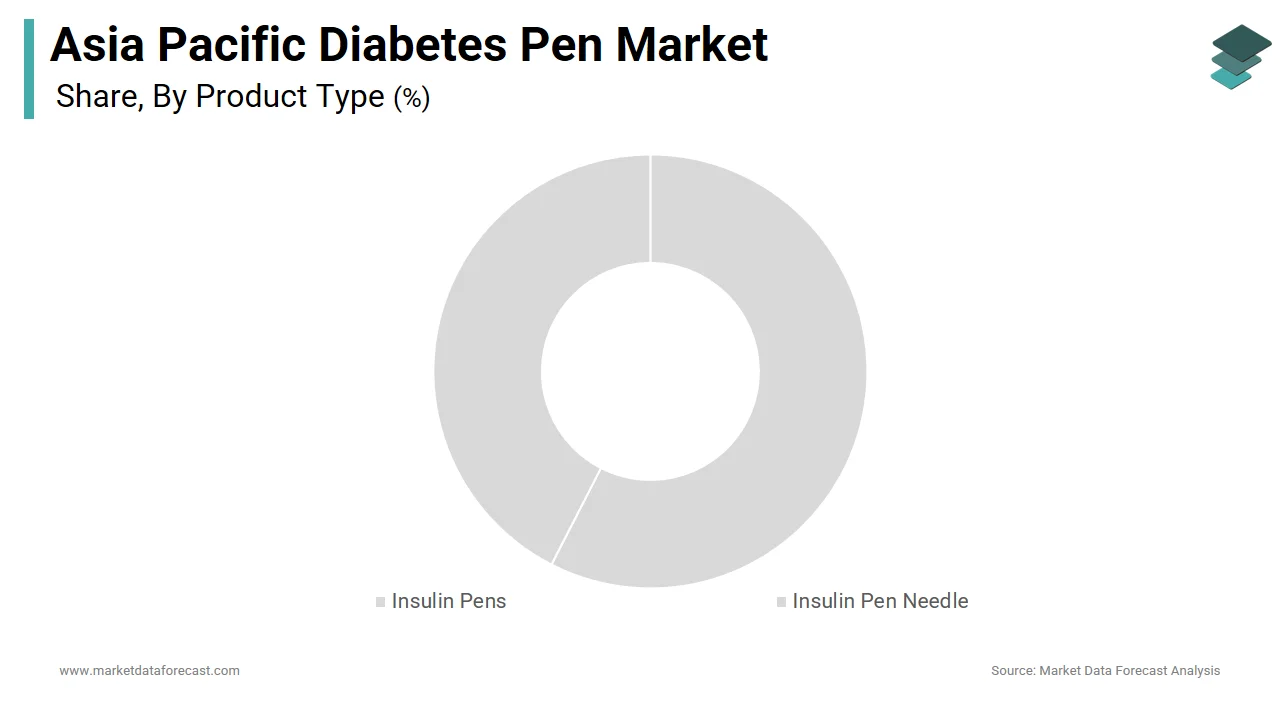
The insulin pen needles segment is projected to grow at the fastest CAGR of 12.3% from 2026 to 2034. This rapid expansion is fueled by the Rising frequency of insulin injections per patient, coupled with the need for regular needle replacement to ensure hygiene and reduce injection site complications is fuelling the rapid expansion of the insulin pen needles segment. In South Korea and Singapore, where diabetes prevalence is high and health consciousness is growing, there is a strong emphasis on using new needles for each injection to prevent infections and pain. Moreover, manufacturers are launching ultra-thin, coated needles designed to enhance comfort and compliance, particularly among pediatric and elderly patients. Companies such as Becton Dickinson and Terumo have introduced fine-gauge needles tailored for the Asia Pacific market, contributing to higher demand.
By Usage Insights
The reusable diabetes pen segment dominated the Asia Pacific market by capturing 65.4% of the total share in 2024. The long-term cost-effectiveness of reusable pens, particularly in developed markets where patients seek durable and feature-rich insulin delivery solutions, is one of the main reasons behind this widespread adoption of reusable diabetes pen. Japan stands out as a major contributor to this segment’s growth, with a majority of insulin-dependent patients preferring refillable pens due to their durability and compatibility with various insulin types. In Australia, where healthcare costs are partially subsidized through national insurance schemes, reusable pens are commonly prescribed to minimize recurring expenses associated with disposable alternatives. Apart from these, in emerging markets like Malaysia and Thailand, reusable pens are gaining traction due to affordability concerns and the increasing availability of locally manufactured refillable cartridges, making them a preferred option for long-term diabetes management.
The disposable diabetes pen segment is expected to grow at the highest CAGR of 13.6% during the forecast period, which is driven by increasing adoption among first-time users, travelers, and patients seeking convenience and hygiene without the burden of maintenance. Unlike reusable pens, disposable models come pre-filled with insulin and are discarded after use, eliminating the need for cartridge refills or cleaning. In India, where rural access to medical supplies remains limited, disposable pens are increasingly being used by newly diagnosed patients who find them easier to handle and less intimidating. China is also witnessing a surge in disposable pen adoption, especially among urban consumers who prioritize portability and sterility. As per the Chinese Medical Device Industry Association, disposable pen sales grew significantly in regions with high rates of gestational diabetes, where short-term insulin therapy is common.
By Distribution Channel Insights
The retail pharmacies segment accounted for the largest share of the Asia Pacific diabetes pen market with 48.5% of total sales in 2024. This dominance stems from the accessibility and convenience offered by retail outlets, which remain the primary point of purchase for most diabetic patients across both urban and semi-urban areas is propelling the growth of the retail pharmacies segment. In India, where a large portion of healthcare spending is out-of-pocket, retail pharmacies serve as the main channel for purchasing insulin pens and related consumables. According to the Indian Pharmaceutical Association, over 70% of insulin pen transactions occur through independent and chain chemists, highlighting the importance of this distribution mode in reaching a broad consumer base. Australia also relies heavily on retail pharmacy networks for diabetes care products. As per the Pharmacy Guild of Australia, community pharmacies dispensed nearly 60% of all prescribed insulin pens in 2023, benefiting from strong patient trust and proximity to residential areas. Moreover, in Southeast Asian countries like Indonesia and the Philippines, where e-commerce penetration is still developing, retail pharmacies continue to be the go-to source for immediate access to diabetes pens, ensuring consistent demand and reinforcing the segment’s leadership in the regional market.
The online sales channel is emerging as the fastest-growing segment in the Asia Pacific diabetes pen market and is anticipated to expand at a CAGR of 15.2% from 2026 to 2034. This rapid growth is driven by increasing internet penetration, smartphone adoption, and the convenience of home delivery, particularly among younger and tech-savvy consumers is fuelling the swift rise of online sales channels. In China, online platforms such as JD Health and Alibaba Health have become significant channels for diabetes product sales, offering competitive pricing, bulk discounts, and subscription-based insulin pen deliveries. India has also seen a notable rise in online diabetes pen purchases, especially in Tier-II and Tier-III cities where physical pharmacy access may be limited. In addition, telemedicine integration with online pharmacies is enabling remote consultations followed by direct delivery of prescribed diabetes pens, enhancing accessibility.
COUNTRY LEVEL ANALYSIS
India Diabetes Pen Market Insights
India led the Asia Pacific diabetes pen market by contributing 23.2% of total demand in 2024. With over 100 million people affected by diabetes, India faces one of the highest disease burdens globally, driving demand for effective insulin delivery solutions. According to the Indian Council of Medical Research, the number of insulin-requiring patients has surged in recent years, particularly among individuals with type 2 diabetes experiencing beta-cell failure. This has resulted in a shift toward pen-based therapy, especially in urban centers where awareness and affordability are improving. Government initiatives such as Ayushman Bharat and state-sponsored diabetes control programs have contributed to better access to modern treatment options. Further, private sector investments in digital health platforms have facilitated remote monitoring and prescription fulfillment of diabetes pens. Despite challenges such as cost sensitivity and uneven healthcare access, India continues to lead the regional diabetes pen market, with significant growth potential remaining in rural and underserved segments.
China Diabetes Pen Market Insights
China is witnessing a strong growth in the Asia Pacific diabetes pen market and is propelled by its vast diabetic population, rising disposable incomes, and improvements in healthcare infrastructure. With nearly 140 million adults living with diabetes, the country represents a major consumer base for advanced insulin delivery technologies. Generally, in China, the rate of insulin pen adoption has increased in urban areas, where healthcare facilities emphasize patient education and adherence to structured diabetes management plans. In contrast, rural regions are gradually transitioning from vial-and-syringe methods to more convenient pen-based therapies. The Chinese government has expanded coverage under the National Reimbursement Drug List to include select insulin pens, reducing financial barriers for patients. Moreover, domestic manufacturers such as Gan & Lee Pharmaceuticals have launched affordable biosimilar insulin pens, supporting broader market penetration. Private health insurance schemes and online pharmacy networks have further boosted accessibility.
Japan Diabetes Pen Market Insights
Japan is maintaining a strong position due to its advanced healthcare system and high adoption rates of modern diabetes care products. The country has one of the highest penetrations of insulin pen usage globally, driven by an aging population and well-established diabetes management protocols. According to the Japan Diabetes Society, over 90% of insulin-dependent patients in Japan use pen devices, largely due to physician recommendations and favorable insurance coverage. The Ministry of Health, Labour and Welfare includes several insulin pen brands under the national health insurance scheme, making them accessible even to elderly patients. Japanese pharmaceutical and medical device firms are also at the forefront of innovation, introducing smart pens with Bluetooth connectivity, dose tracking, and mobile app integration. Companies like Sanwa Kagaku Kenkyusho and Terumo have played a crucial role in advancing diabetes care technology.
Australia Diabetes Pen Market Insights
Australia is distinguished by its high healthcare standards and comprehensive insurance coverage for diabetes care products. The country’s regulatory environment supports widespread adoption of insulin pens through favorable reimbursement policies and patient education initiatives. Under the Pharmaceutical Benefits Scheme (PBS), several insulin pens are listed for subsidized access, ensuring affordability for patients. Public health campaigns and collaborations between medical associations and pharmaceutical companies have enhanced awareness about the benefits of pen-based therapy. Moreover, the integration of diabetes pens into telehealth services has improved remote monitoring and medication adherence.
South Korea Diabetes Pen Market Insights
South Korea occupies a significant share of the Asia Pacific diabetes pen market and is driven by a growing diabetic population, increasing healthcare expenditure, and strong interest in technologically advanced medical devices. The country’s digital health ecosystem has played a pivotal role in accelerating the adoption of smart insulin pens. Like, the number of insulin-dependent patients in South Korea has risen significantly in recent years, particularly among the aging demographic. To meet this demand, local and international manufacturers have introduced innovative pen models featuring wireless connectivity, dose tracking, and AI-assisted analytics. Besides, partnerships between tech startups and pharmaceutical firms have led to the development of integrated diabetes management platforms that link pen usage data with mobile applications.
COMPETITIVE LANDSCAPE
The competition in the Asia Pacific diabetes pen market is characterized by a blend of global pharmaceutical giants and emerging regional players striving to capture market share through innovation, pricing strategies, and enhanced patient engagement. Established multinational companies dominate due to their extensive R&D capabilities, established supply chains, and strong brand recognition. These firms continue to introduce next-generation insulin pens with improved ergonomics, digital integration, and cost-effective refill options to maintain their leadership.
At the same time, local and regional manufacturers are gaining traction by offering affordable alternatives tailored to price-sensitive markets. These players are leveraging domestic production capabilities and government-backed health programs to increase penetration in lower-income segments. Apart from these, collaborations between tech startups and pharmaceutical firms are giving rise to smart insulin pens integrated with digital health platforms, adding a new dimension to the competitive landscape.
Market participants are also focusing on strengthening after-sales services, including customer support, online prescription renewals, and educational outreach to build trust among healthcare providers and patients. As demand for advanced diabetes management solutions grows, only those companies that combine product excellence with localized strategies will sustain long-term success in this evolving market.
KEY MARKET PLAYERS
Some of the noteworthy companies in the Asia Pacific diabetes pen market profiled in this report are
- AstraZeneca
- BD
- Lilly
- Biocon
- Sanofi
- Jiangsu Delfu Medical Device Co., Ltd.
- Owen Mumford Limited
- Wockhardt Limited
- Smiths Group plc
- Nipro Europe Group Companies
- Novo Nordisk A/S
- MannKind Corporation
- Bristol-Myers Squibb Company
- F. Hoffmann-La Roche Ltd.
- Nemera
- Ypsomed AG
- Medical Technology and Devices S.p.A.
- Merck & Co., Inc.
- Bayer AG
TOP LEADING PLAYERS IN THE MARKET
One of the leading players in the Asia Pacific diabetes pen market is Novo Nordisk, a global leader in diabetes care. The company has been instrumental in shaping insulin delivery standards with its innovative reusable and disposable pen systems. Novo Nordisk’s FlexTouch and NovoPen models are widely used across the region, offering user-friendly features that enhance patient adherence and convenience.
Sanofi is another key player contributing significantly to the regional diabetes pen market. Known for its SoloSTAR disposable insulin pens, Sanofi has played a crucial role in improving access to modern insulin therapy, particularly in emerging markets where ease of use and sterility are critical considerations for first-time users.
Eli Lilly and Company holds a strong presence in the Asia Pacific through its Humalog and HumaPen product lines. The company focuses on affordability and technological enhancements, ensuring broader access to insulin pens in both developed and developing economies. Eli Lilly’s commitment to research and collaboration with local healthcare providers continues to strengthen its position in the regional diabetes pen landscape.
TOP STRATEGIES USED BY KEY MARKET PARTICIPANTS
A primary strategy employed by key players in the Asia Pacific diabetes pen market is product innovation and digital integration. Companies are continuously enhancing pen designs with smart features such as dose memory, Bluetooth connectivity, and mobile app synchronization to improve patient compliance and data tracking.
Another major approach is expanding distribution networks and partnerships with local players. By collaborating with regional distributors, pharmacies, and telemedicine platforms, manufacturers ensure wider accessibility and availability of insulin pens, particularly in rural and underserved areas.
Lastly, investing in patient education and awareness campaigns has become a strategic priority. Leading firms engage in training healthcare professionals and launching initiatives to inform patients about the benefits of pen-based therapy over traditional methods, thereby driving adoption and long-term brand loyalty across diverse healthcare ecosystems in the Asia Pacific.
RECENT MARKET DEVELOPMENTS
- In April 2024, DynaTouch, a kiosk solutions provider, acquired KioWare, a kiosk management software company. This acquisition is anticipated to allow DynaTouch to offer more comprehensive kiosk solutions and strengthen their market presence.
- In March 2024, Novo Nordisk launched a new patient support program in India aimed at increasing awareness and accessibility of its insulin pen products, particularly in Tier-II and Tier-III cities, targeting improved treatment adherence and physician engagement.
- In February 2024, Sanofi partnered with a leading Indonesian e-pharmacy platform to expand direct-to-consumer sales of its disposable insulin pens, enhancing digital reach and improving access for urban and semi-rural diabetic patients.
- In January 2024, Eli Lilly announced a joint venture with a South Korean biotech firm to develop locally adapted insulin formulations compatible with its HumaPen devices, aiming to cater to specific genetic and lifestyle factors affecting diabetes management in the region.
- In May 2024, a major Japanese medical device manufacturer introduced an AI-integrated diabetes pen system designed for seamless integration with national telehealth platforms, allowing real-time monitoring and personalized dose adjustments for diabetic patients across Japan and select APAC markets.
MARKET SEGMENTATION
This Asia Pacific diabetes pen market research report is segmented and sub-segmented into the following categories.
By Product Type
- Insulin Pens
- Insulin Pen Needle
By Usage
- Reusable Pens
- Disposable Pens
By Application
- Type 1 Diabetes
- Type 2 Diabetes
By Distribution Channel
- Hospital Pharmacy
- Retail Pharmacy
- Online Sales
- Diabetes Clinics
By Country
- India
- China
- Japan
- South Korea
- Rest Of APAC