- Product Description Description
- Table of Contents TOC
- List of Table & Figure LOT
- Get Free Sample PDF Sample PDF
Market Size, 2025
$4.32 BnMarket Estimate, 2026
$4.63 BnMarket Forecast, 2034
$8.01 BnCAGR, 2026–2034
7.10%Executive Summary: Asia Pacific Food Thickeners Market
- Market Scope: Comprehensive regional analysis of the Asia Pacific food thickeners sector, covering traditional natural hydrocolloids, modified starches, functional texturizing agents, application verticals, and country-level profiles.
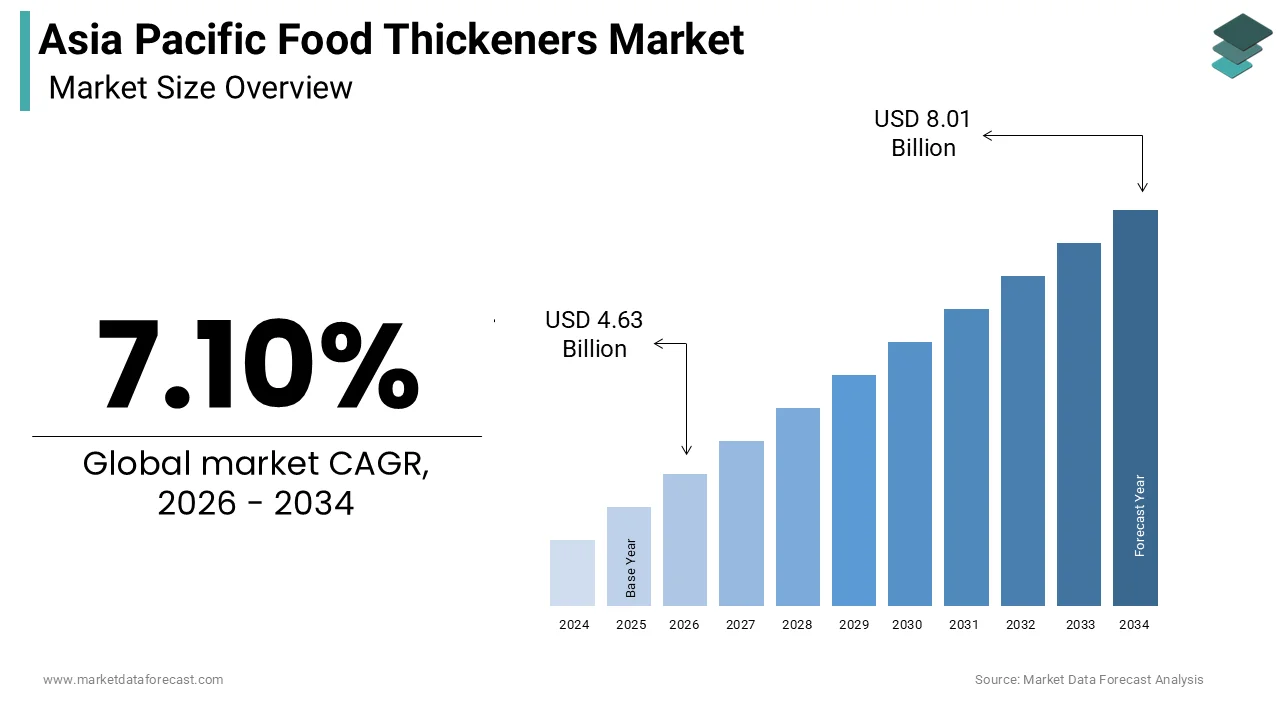
- Market Valuation: Valued at USD 4.32 billion in 2025, reaching USD 4.63 billion in 2026, and projected to expand to USD 8.01 billion by 2034, growing at a robust CAGR of 7.10% across the forecast period.
- Primary Growth Drivers: Rapid expansion of the processed food and beverage sector, rising demand for clean-label and plant-based alternative proteins, urbanization, and shifting consumer preferences toward low-fat and convenient ready-to-eat meals.
Key Market Segment Metrics
| Category | Leading Segment (Base Position) | Fastest-Growing / High-Growth Segment |
|---|---|---|
| By Type & Source | Starch & Plant-based Sources (dominated regional market shares in 2025, driven by abundance, cost-effectiveness, and deep agricultural integration) | Hydrocolloids & Microbial Sources (projected to register the highest CAGR, fueled by clean-label, natural trends and fermentation performance) |
| By Application | Dairy (led regional demand in 2025, supported by widespread consumption of yogurts, ice cream, and nutritional dairy formulations) | Convenience Foods (estimated to grow at a healthy CAGR, driven by urban lifestyles and surging ready-to-eat meal consumption) |
| By Region | China (market leader holding the largest share of regional revenue and consumption, backed by massive food processing output) | India & Southeast Asia (key high-growth regional hubs fueled by organized retail expansion, rising disposable incomes, and food processing investments) |
Major Market Players & Industry Landscape
Market Structure: Competitive landscape featuring major global agricultural processors, ingredient corporations, and specialized hydrocolloid manufacturers focusing on clean-label innovation and functional versatility.
Key Companies: Sigma-Aldrich Company LLC, Cargill, Archer Daniels Midland Company, Ingredion Incorporated, Kerry Group PLC, Tate and Lyle PLC, TIC Gums, Ashland Specialty Ingredients, Simply Thick LLC, Walgreen Company, and Hormel Foods Corporation.
Asia Pacific Food Thickeners Market Size
The Asia Pacific Food Thickeners Market size was expected to be worth USD 4.32 billion in 2025 and is anticipated to be worth USD 8.01 billion by 2034 from USD 4.63 billion In 2026, growing at a CAGR of 7.10% during the forecast period.
The Asia-Pacific food thickeners market is characterized by a blend of traditional natural thickeners such as agar and konjac, which have deep cultural roots in Asian cuisine, and modern industrial ingredients like xanthan gum and modified starches. According to the United Nations Population Fund, the Asia Pacific region accounts for 60% of the global population, driving immense demand for processed and convenience foods that rely on these texturizing agents. As per the World Bank, the urbanization rate in East Asia and the Pacific has reached approximately 60%, leading to lifestyle changes that favor ready to eat meals where thickeners play a critical role in maintaining quality during shelf life. The increasing prevalence of lifestyle diseases has also shifted consumer preference towards low fat and sugar reduced products, which require thickeners to compensate for the loss of body and richness. Furthermore, European Commission standards often influence export oriented manufacturers in the region to adopt high purity and sustainable thickening solutions. This dynamic landscape is further shaped by stringent food safety regulations in countries like China and Japan, which mandate rigorous quality control for food additives, ensuring that only safe and effective thickeners enter the supply chain.
MARKET DRIVERS
Rapid Expansion of the Processed Food and Beverage Industry
The exponential growth of the processed food and beverage sector in the Asia Pacific region is majorly fuelling the food thickeners market growth in this region. As urbanization accelerates and disposable incomes rise, consumers are shifting away from home cooked meals toward convenient packaged foods that offer consistent taste and texture. According to Statista, the revenue in the packaged food segment in Asia Pacific is projected to show a CAGR of 5% to 7% over the next several years in major economies like India and China. Food thickeners are indispensable in these products as they prevent phase separation, improve shelf stability, and enhance sensory appeal in items such as soups, sauces, dressings, and dairy alternatives. As per industry reports, sales of ready to eat meals and snacks have surged by double digits in Southeast Asian markets, driven by busy lifestyles and smaller household sizes. Manufacturers rely on thickeners like carrageenan and guar gum to maintain product integrity during transportation and storage in tropical climates, where temperature fluctuations can degrade food quality. The proliferation of quick service restaurants and cloud kitchens further amplifies demand for standardized ingredients that ensure uniformity across multiple outlets. Additionally, the rise of private label brands in supermarkets has intensified competition, prompting manufacturers to use advanced thickening systems to differentiate their products through superior texture and mouthfeel. This structural shift in dietary habits ensures a sustained and growing demand for food thickeners across the region.
Growing Demand for Plant Based and Alternative Protein Products
The surging popularity of plant based diets and alternative protein sources in the Asia Pacific region is significantly driving the adoption of specialized food thickeners, which is another major market driver. Consumers are increasingly seeking meat and dairy alternatives due to health concerns, environmental awareness, and ethical considerations, creating a niche but rapidly expanding market segment. According to Bloomberg Intelligence, the global plant based food market is expected to grow significantly, with Asia Pacific capturing a substantial portion of this trend as meat substitutes gain traction in China and Australia. These products often lack the natural binding and textural properties of animal proteins, necessitating the use of thickeners such as methylcellulose, pea protein isolates, and konjac glucomannan to mimic the fibrous structure and juiciness of meat. As per the Good Food Institute, Asia Pacific investment in alternative protein startups has been strong, indicating significant industry confidence and future growth potential. In the dairy sector, plant based milks and yogurts require stabilizers and thickeners to prevent sedimentation and provide a creamy consistency comparable to cow's milk. Ingredients like gellan gum and locust bean gum are frequently used to achieve the desired viscosity without altering the flavor profile. The regulatory support for sustainable food production in countries like Singapore and Japan further encourages innovation in this sector. Manufacturers are developing clean label thickening solutions that align with the natural image of plant based products, thereby driving the demand for high quality and functional hydrocolloids in this burgeoning market segment.
MARKET RESTRAINTS
Volatility in Raw Material Prices and Supply Chain Disruptions
Fluctuations in the prices of key raw materials and ongoing supply chain disruptions pose a significant restraint to the growth of the Asia-pacific food thickeners market. Many food thickeners are derived from agricultural commodities such as corn, cassava, guar beans, and seaweed, whose yields are highly susceptible to weather conditions, climate change, and geopolitical factors. According to the World Bank, global food price indices remain volatile, influenced by extreme weather events and logistical bottlenecks affecting agricultural outputs. For instance, droughts in India have impacted guar gum production, while typhoons in Southeast Asia have disrupted seaweed harvesting for carrageenan and agar. As per the Asian Development Bank, supply chain inefficiencies in the region lead to increased logistics costs and delays, which exacerbate price instability for manufacturers. The reliance on imports for certain specialty thickeners exposes local producers to currency fluctuations and trade tariffs, which is further complicating cost management. Small and medium sized enterprises often lack the financial resilience to absorb these sudden cost increases, leading to reduced profit margins or passed on costs that may dampen consumer demand. Additionally, the concentration of production in specific geographic areas creates vulnerability to regional disruptions such as pandemics or political unrest. These uncertainties force manufacturers to constantly adjust their pricing strategies and sourcing plans, which can disrupt long term contracts and customer relationships. The inability to predict raw material costs accurately hinders strategic planning and investment in capacity expansion, thereby restraining market growth.
Stringent Regulatory Standards and Labeling Requirements
The implementation of rigorous food safety regulations and complex labeling requirements across different Asia Pacific countries acts as a major restraint for market participants. Each country in the region has its own regulatory framework governing the approval, usage levels, and labeling of food additives, which creates a fragmented and challenging compliance landscape. According to the Codex Alimentarius Commission, while international standards exist, national implementations vary significantly, requiring manufacturers to navigate a web of diverse legal requirements. In China, the National Health Commission regularly updates the list of permitted food additives, necessitating continuous monitoring and reformulation of products to remain compliant. As per the Food Safety and Standards Authority of India, recent amendments to labeling regulations mandate clearer disclosure of additive functions and origins, which increases packaging complexity and costs. Japan and South Korea also enforce strict purity and safety standards for imported hydrocolloids, requiring extensive documentation and testing. Non compliance can result in product recalls, fines, and reputational damage, which deter smaller players from entering the market. The lack of harmonization across the region means that companies must maintain separate formulations and inventory for different markets, reducing economies of scale. Additionally, the growing consumer demand for clean label products pressures manufacturers to remove synthetic or chemically modified thickeners, even if they are legally permitted. This regulatory and consumer pressure limits the portfolio of available thickeners and increases the cost of research and development for compliant and transparent ingredients.
MARKET OPPORTUNITIES
Innovation in Clean Label and Natural Thickening Solutions
Consumers are increasingly scrutinizing ingredient lists and avoiding artificial or chemically modified additives, which is driving demand for natural thickeners derived from plants, seeds and seaweed and is a notable opportunity for the regional market. According to Mintel, over 70% of consumers in Asia Pacific prefer products with simple and recognizable ingredients, creating a strong market pull for clean label solutions. This trend encourages manufacturers to develop and promote thickeners such as pectin, agar, and tapioca starch, which are perceived as natural and wholesome. For instance, launches of food and beverage products with clean label claims have shown consistent annual growth in the region, highlighting the commercial viability of this segment. Companies can differentiate themselves by sourcing ingredients from sustainable and organic farms, thereby appealing to environmentally conscious consumers. The development of enzyme modified starches and fermented hydrocolloids offer functional benefits similar to synthetic thickeners while maintaining a natural status. Furthermore, partnerships with local farmers for sourcing raw materials can enhance supply chain transparency and support rural economies. Brands that effectively communicate the natural origin and health benefits of their thickening ingredients can command premium pricing and build strong brand loyalty. This shift towards transparency and naturalness allows innovative players to expand their market share and drive growth in a competitive landscape.
Expansion of E Commerce and Direct to Consumer Channels
The rapid growth of e-commerce and direct-to-consumer sales channels offers a significant opportunity for food thickener manufacturers to reach new customers and gather valuable data. Online platforms enable brands to bypass traditional retail intermediaries and engage directly with health conscious consumers and small scale food artisans who seek specialized thickening ingredients. According to research by Google and Temasek, the e-commerce sector in Southeast Asia has grown significantly, reflecting the rapid digital shift in purchasing behavior. This digital presence allows manufacturers to educate consumers about the benefits and uses of different thickeners through content marketing and interactive tools. As per industry analysis of the Shopee platform, e-commerce penetration continues to rise, providing access to millions of potential customers in underserved areas. Direct to consumer models facilitate the launch of niche products such as keto friendly or gluten free thickening blends that may not have sufficient shelf space in physical stores. Additionally, online sales generate rich data on consumer preferences and buying patterns, which can inform product development and targeted marketing strategies. Social media integration allows for viral marketing campaigns that highlight recipe ideas and culinary applications of specific thickeners. By leveraging digital channels, manufacturers can build communities around their brands, foster loyalty, and respond quickly to emerging trends. This digital transformation opens new revenue streams and enhances brand visibility in a crowded marketplace.
MARKET CHALLENGES
Complexity of Sourcing Sustainable and Ethical Raw Materials
Ensuring a consistent supply of sustainable and ethically sourced raw materials presents a major challenge for the Asia-pacific food thickeners market. Many natural thickeners are sourced from smallholder farmers in developing regions where practices may not align with global sustainability standards or labor rights expectations. According to the Rainforest Alliance, certification and verification of sustainable practices remain a goal for many small scale producers of guar gum and locust bean gum in South Asia. This lack of traceability makes it difficult for multinational food companies to guarantee that their supply chains are free from deforestation, child labor, or unfair wages. As per the Sustainable Agriculture Network, meeting international sustainability criteria requires significant investment in training and infrastructure, which many small farmers cannot afford. Climate change further exacerbates this challenge by altering growing conditions and reducing yields of key crops like cassava and corn. Manufacturers face pressure from investors and consumers to demonstrate corporate social responsibility, yet securing certified sustainable supplies is logistically complex and costly. The fragmentation of the supply chain, involving multiple intermediaries, increases the risk of contamination and fraud. Additionally, the competing demand for these crops for industrial non-food uses, such as biofuels, creates price volatility and supply shortages. Balancing cost efficiency with ethical sourcing requirements forces companies to make difficult trade-offs that can impact their brand reputation and operational stability.
Technical Limitations in Formulating for Diverse Culinary Traditions
Adapting food thickeners to meet the diverse and complex culinary traditions of the Asia Pacific region is further challenging the regional market expansion. The region boasts a wide variety of textures and consistencies preferred in traditional dishes, which differ markedly from Western palates. According to the Culinary Institute of America, Asian cuisines often require thickeners that provide specific mouthfeels, such as the slippery texture of konjac in Japanese dishes or the gelatinous consistency of bird's nest soup in Chinese cuisine. Standardized industrial thickeners may fail to replicate these nuanced textures, leading to consumer rejection. As per industry expert analysis, formulating products that maintain authenticity while ensuring industrial scalability requires extensive research and customization. The interaction of thickeners with local ingredients, such as soy sauce, fish sauce, and various spices, can also affect stability and flavor release in unpredictable ways. High humidity and temperature conditions in tropical countries further complicate formulation as they can accelerate degradation or alter viscosity. Manufacturers must invest in localized research and development centers to understand these unique requirements and develop tailored solutions. The lack of universal standards for texture perception makes it difficult to create one size fits all products. Additionally, the need to cater to religious dietary restrictions such as halal and kosher adds another layer of complexity to ingredient selection and processing. Overcoming these technical hurdles requires deep cultural understanding and scientific expertise, which can be resource intensive.
REPORT COVERAGE
| REPORT METRIC | DETAILS |
| Market Size Available | 2024 to 2033 |
| Base Year | 2024 |
| Forecast Period | 2025 to 2033 |
| CAGR | 7.10% |
| Segments Covered | By Type, Application, Source, and Region |
| Various Analyses Covered | Global, Regional & Country Level Analysis; Segment-Level Analysis; DROC, PESTLE Analysis; Porter’s Five Forces Analysis; Competitive Landscape; Analyst Overview of Investment Opportunities |
| Regions Covered | China, India, Japan, Singapore, Korea, Australia, New Zealand, And Other countries |
| Market Leaders Profiled | Sigma-Aldrich Company LLC, Cargill, Archer Daniels Midland Company, Ingredion Incorporated, Kerry Group PLC, Tate and Lyle PLC, TIC Gums and Ashland Specialty Ingredients. Other companies include Simply Thick LLC, Walgreen Company and Hormel Foods Corporation |
SEGMENTAL ANALYSIS
By Type Insights
The starch segment dominated the market by holding the major share of the Asia-pacific market in 2025. The dominance of starch segment in the Asia-pacific market can be credited to its abundance, cost effectiveness, and versatility in various food applications. This dominance is further driven by the widespread availability of raw materials such as corn, cassava, potato, and wheat across the region, which ensures a stable and affordable supply chain. According to the Food and Agriculture Organization of the United Nations, Asia Pacific produces over 60% of the world's cassava and a significant portion of global corn output, providing a robust foundation for starch based thickener production. The familiarity of starch among local manufacturers and consumers further supports its widespread adoption in traditional and modern food products. As per the International Starch Institute, modified starches are increasingly used in processed foods to improve texture, stability, and shelf life, making them indispensable in the growing convenience food sector. The ability of starch to provide viscosity, clarity, and gel formation at a lower cost compared to hydrocolloids makes it the preferred choice for mass market products. Additionally, government initiatives in countries like Thailand and Vietnam to promote cassava and tapioca processing have enhanced the production capacity and quality of starch derivatives. The continuous innovation in enzyme modified and cross linked starches has expanded their functional properties, allowing them to withstand high temperature and acidic conditions common in industrial food processing. These factors collectively sustain the leadership of the starch segment in the regional market.
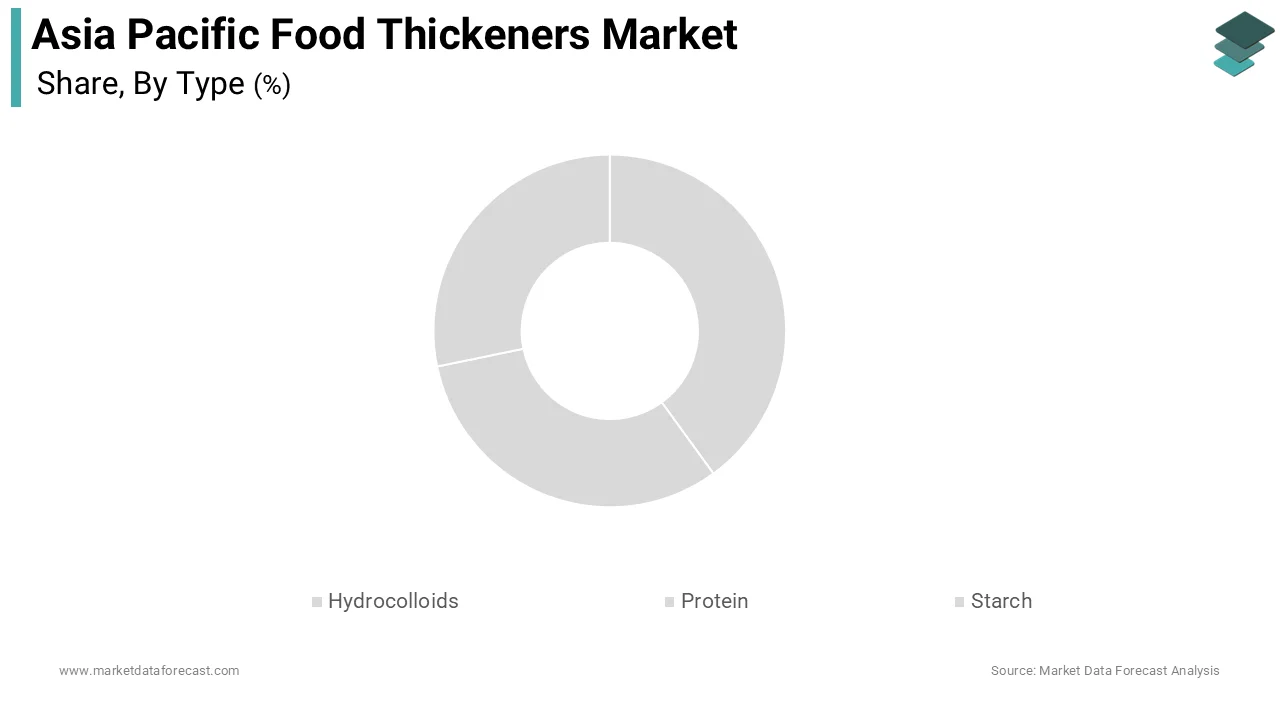
On the other hand, the hydrocolloids segment is projected to register the highest CAGR during the forecast period in the Asia-pacific market owing to the rising demand for clean label, natural, and plant based ingredients that offer superior textural properties with lower usage levels. For instance, the number of product launches featuring hydrocolloids such as agar, pectin, and guar gum in Asia Pacific has increased by 15% annually, reflecting consumer preference for natural additives. Hydrocolloids are essential in the formulation of low fat and sugar reduced products where they compensate for the loss of mouthfeel and body. As per the Good Food Institute, the rise of plant based meat and dairy alternatives drives the demand for specialized hydrocolloids like methylcellulose and carrageenan to mimic animal protein textures. The functional versatility of hydrocolloids in stabilizing emulsions, preventing syneresis, and controlling water activity makes them critical in high value applications such as dairy desserts and beverages. Furthermore, the expansion of the healthcare and wellness sector promotes the use of dietary fiber rich hydrocolloids like konjac and psyllium, which offer health benefits alongside textural functions. Technological advancements in extraction and purification processes have improved the quality and consistency of hydrocolloids, making them more attractive to premium food manufacturers. These trends ensure that the hydrocolloids segment experiences robust growth, outpacing traditional starches in value terms.
By Source Insights
The plant segment had the major share of the regional market in 2025 and is anticipated to experience steady growth as domestic production capacities improve over the next few years. This dominance is driven by the extensive cultivation of crops such as corn, cassava, seaweed, and guar beans, which serve as primary raw materials for thickeners like starch, agar, carrageenan, and guar gum. According to the Food and Agriculture Organization, the region accounts for the majority of global seaweed production, particularly in Indonesia and the Philippines and is providing a steady supply of marine hydrocolloids. The preference for vegetarian and vegan diets in countries like India and China further boosts the demand for plant derived thickeners over animal based alternatives. As per the Ministry of Agriculture in China, government policies supporting the cultivation of industrial crops have increased the domestic production of corn and potato starch, reducing reliance on imports. Plant based thickeners are perceived as natural and safe by consumers, aligning with the clean label trend that is gaining momentum across the region. The established infrastructure for processing plant materials into food grade thickeners ensures cost efficiency and scalability. Additionally, the export orientation of countries like Thailand and Vietnam in tapioca and cassava products strengthens the regional supply chain. The versatility of plant sources allows for the production of a wide range of thickeners with varying functional properties, catering to diverse food applications from bakery to beverages.
On the other end, the microbial segment is expected to register a promising CAGR in the Asia-pacific market during the forecast period owing to the rising popularity of xanthan gum and other fermentation derived thickeners that offer consistent quality and high performance in extreme conditions. For instance, the demand for microbial thickeners is surging due to their ability to provide stable viscosity across a wide range of pH and temperature levels, which is crucial for industrial food processing. Xanthan gum, produced by the fermentation of glucose or sucrose by the bacterium Xanthomonas campestris, is widely used in gluten free baked goods, sauces, and dressings. As per the European Food Safety Authority, microbial thickeners are recognized as safe and effective alternatives to plant based gums that may suffer from seasonal variability in quality. The scalability of fermentation processes allows for year round production independent of weather conditions, ensuring a reliable supply chain. Additionally, the development of novel microbial exopolysaccharides with unique rheological properties opens new avenues for application in specialty foods and pharmaceuticals. The increasing investment in biotechnology and fermentation facilities in countries like Japan and South Korea supports the expansion of this segment. The ability of microbial thickeners to synergize with other hydrocolloids to enhance texture and stability further drives their adoption in complex food formulations.
By Application Insights
The dairy segment led the market in 2025 and is expected to remain stable with a focus on functional product development over the next few years. This dominance is driven by the growing awareness of the nutritional benefits of dairy and the increasing disposable income that allows consumers to purchase value added dairy products. According to the International Dairy Federation, per capita milk consumption in Asia Pacific has been rising steadily, with countries like China and India driving global demand growth. Thickeners such as carrageenan, locust bean gum, and pectin are essential in dairy applications to prevent whey separation, improve mouthfeel, and enhance stability during storage. As per Nielsen IQ, sales of flavored yogurts and drinking yogurts have seen double digit growth in Southeast Asia, where thickeners are used to create smooth and creamy textures that appeal to local palates. The expansion of the cold chain infrastructure has facilitated the distribution of frozen dairy products like ice cream, which rely heavily on stabilizers to maintain texture and prevent ice crystal formation. Additionally, the rise of lactose free and plant based dairy alternatives requires specialized thickeners to replicate the sensory attributes of traditional dairy. The continuous innovation in dairy product formats such as Greek yogurt and kefir further sustains the demand for high performance thickening agents. The strong cultural tradition of dairy consumption in South Asia combined with modern processing techniques ensures the dairy segment remains the largest application area for food thickeners.
However, the convenience foods segment is estimated to grow at a healthy CAGR in the Asia-pacific market during the forecast period owing to the busy lifestyles of urban consumers who increasingly rely on ready to eat and ready to cook meals for convenience. For instance, the sales of packaged convenience foods in Asia Pacific are projected to grow at a CAGR of 6%, driven by urbanization and smaller household sizes. Thickeners play a critical role in these products by maintaining sauce consistency, preventing ingredient settlement, and ensuring product quality after reheating. As per Statista, the instant noodle market in Asia Pacific remains the largest globally, with manufacturers using modified starches and gums to improve noodle texture and soup viscosity. The proliferation of quick service restaurants and cloud kitchens also contributes to this growth as they require standardized ingredients that deliver consistent results. The demand for frozen meals, snacks, and canned soups has surged, particularly among working professionals and students who seek quick meal solutions. Manufacturers are innovating with clean label thickeners to meet consumer demands for healthier convenience options. The ability of thickeners to extend shelf life and reduce food waste in convenience products further enhances their value proposition. These factors collectively drive the rapid adoption of food thickeners in the convenience food sector across the region.
REGIONAL ANALYSIS
China Food Thickeners Market Analysis
China held the dominant position in the Asia-pacific food thickeners market by accounting for the largest share of regional revenue and consumption. This leadership is driven by the country's massive population, rapidly expanding middle class, and robust food processing industry. According to the National Bureau of Statistics of China, the output of processed food products has grown consistently, reflecting the high demand for additives including thickeners. The presence of major domestic manufacturers and international players ensures a competitive and innovative market environment. As per the China Food Additive and Ingredient Association, the regulatory framework for food additives has become stricter, promoting the use of high quality and safe thickeners. The growing popularity of hot pot sauces, dairy products, and baked goods drives the consumption of starches and hydrocolloids. Government initiatives to modernize the agricultural sector have improved the supply of raw materials such as corn and potato. The e commerce boom in China has also facilitated the distribution of specialty thickeners to small and medium enterprises. The focus on food safety and quality assurance by Chinese consumers encourages manufacturers to invest in premium thickening solutions. Additionally, the export oriented nature of China's food industry requires compliance with international standards, further driving the adoption of advanced thickeners. These factors establish China as the cornerstone of the regional market with sustained growth potential.
India Food Thickeners Market Analysis
India is likely to witness significant growth in the processing and packaging sector, fueled by an increase in organized retail over the next few years. India represents a significant and rapidly growing market for Food Thickeners, characterized by its large agricultural base and evolving consumer preferences. The country is a major producer of guar gum and starch, which serves as a key source for both domestic use and export. According to the Ministry of Food Processing Industries, the Indian food processing sector is expanding at a double digit rate, driven by government support and increasing urbanization. The rising demand for packaged snacks, biscuits, and dairy products fuels the consumption of thickeners. As per the Confederation of Indian Industry, the shift towards organized retail and e commerce has increased the availability of processed foods requiring stable and appealing textures. The vegetarian diet prevalent in India favors plant based thickeners such as pectin and agar. The growing health consciousness among consumers has led to increased demand for low fat and sugar free products, which rely on thickeners for body and mouthfeel. Local manufacturers are investing in technology to produce high purity thickeners that meet global standards. The government's Make in India initiative encourages local production of food ingredients, reducing dependence on imports. Additionally, the expansion of the food service sector, including quick service restaurants and cafes, drives demand for consistent and high quality thickening agents. These dynamics position India as a key growth engine in the Asia Pacific market.
Japan Food Thickeners Market Analysis
Japan is expected to maintain its position as a center for high-value R&D, focusing on health-oriented functional ingredients over the next few years. Japan holds a mature and technologically advanced position in the Asia Pacific Food Thickeners Market, driven by high consumer expectations for quality and innovation. The country is a leader in the development and application of specialized hydrocolloids such as agar and konjac, which have deep cultural roots. According to the Ministry of Agriculture, Forestry and Fisheries of Japan, the demand for functional foods and health oriented products supports the use of advanced thickeners with added benefits. The aging population in Japan increases the need for easy to swallow and digestible foods, which often utilize thickeners to modify texture. As per the Japan Food Additives Association, strict safety standards and labeling regulations ensure that only high purity ingredients are used in food products. Japanese manufacturers are at the forefront of developing clean label and natural thickeners that cater to health conscious consumers. The strong research and development capabilities of Japanese companies lead to continuous innovation in texture modification technologies. The popularity of convenience store foods and ready to eat meals drives steady demand for stabilizers and thickeners. Additionally, the export of Japanese food products globally requires compliance with international standards, further driving quality improvements. The focus on sustainability and waste reduction also encourages the use of efficient thickening systems. These factors maintain Japan's status as a key innovator and consumer in the regional market.
Australia Food Thickeners Market Analysis
Australia is likely to continue its focus on premium, organic, and ethically sourced ingredients to meet high domestic standards over the next few years. Australia represents a developed market for Food Thickeners with a focus on premium natural and organic ingredients. The country's strong agricultural sector provides high quality raw materials such as starch and pectin. According to the Australian Bureau of Statistics, the food and beverage manufacturing industry is a significant contributor to the economy, with a focus on export markets. The growing demand for clean label and plant based products drives the adoption of natural thickeners. As per Food Standards Australia New Zealand, rigorous regulatory standards ensure the safety and quality of food additives, influencing manufacturer practices. The popularity of health and wellness trends among Australian consumers supports the use of functional thickeners with dietary fiber benefits. The expansion of the craft food and beverage sector, including artisanal cheeses and beers, creates niche demand for specialized thickeners. Local manufacturers prioritize sustainability and ethical sourcing, aligning with consumer values. The strong trade relationships with Asia Pacific countries facilitate the export of Australian food products and ingredients. Additionally, the increasing diversity of the population introduces new culinary traditions that require specific textural attributes. The focus on innovation and quality ensures that Australia remains a key player in the premium segment of the regional market.
COMPETITION OVERVIEW
The competition in the Asia Pacific Food Thickeners Market is characterized by the presence of large multinational corporations and numerous regional players who compete on price quality and innovation. Global leaders leverage their extensive resources and technological expertise to offer comprehensive solutions while local manufacturers focus on cost effectiveness and deep understanding of regional tastes. Competitive dynamics are driven by the increasing demand for clean label and natural ingredients which forces companies to innovate continuously. Price sensitivity remains a key factor especially in emerging economies where manufacturers seek affordable alternatives without compromising performance. The market sees frequent product launches and collaborations aimed at addressing specific application needs in dairy bakery and convenience foods. Regulatory compliance and food safety standards vary across countries creating barriers to entry for smaller firms. Companies differentiate themselves through superior technical support custom formulation services and sustainable sourcing practices. The rise of e commerce and direct to consumer channels also influences competitive strategies as brands seek to build direct relationships with end users. Consolidation through mergers and acquisitions is common as larger firms aim to strengthen their market position and expand their geographic footprint in this rapidly growing region.
KEY MARKET PLAYERS
A few major key players in the Asia Pacific Food Thickeners Market include
- Sigma-Aldrich Company LLC
- Cargill
- Archer Daniels Midland Company
- Ingredion Incorporated
- Kerry Group PLC
- Tate and Lyle PLC
- TIC Gums
- Ashland Specialty Ingredients
- Simply Thick LLC
- Walgreen Company
- Hormel Foods Corporation
Top Strategies Used by Key Market Participants
Key players in the Asia Pacific Food Thickeners Market primarily focus on vertical integration to secure raw material supplies and reduce production costs. Companies invest heavily in research and development to create innovative clean label and natural thickening solutions that meet evolving consumer preferences. Strategic partnerships with local distributors and food manufacturers are essential to expand market reach and understand regional culinary nuances. Manufacturers also prioritize sustainability by adopting eco friendly sourcing practices and reducing environmental impact in their operations. Expansion of production facilities in key growth markets such as Southeast Asia and India helps companies meet rising demand and improve supply chain efficiency. Additionally key participants engage in mergers and acquisitions to acquire specialized technologies or broaden their product portfolios. Digital transformation initiatives including advanced data analytics and customer engagement platforms are increasingly adopted to enhance service delivery and operational efficiency. These strategies collectively enable companies to maintain competitiveness and drive growth in the dynamic Asia Pacific market.
Leading Players in the Asia Pacific Food Thickeners Market
- Ingredion Incorporated is a global leader that significantly contributes to the Asia Pacific food thickeners market through its extensive portfolio of starches and hydrocolloids. The company leverages its strong presence in China and Southeast Asia to provide customized texture solutions for local cuisines and processed foods. Ingredion has recently strengthened its position by expanding its application centers in the region to support customers with product development and innovation. Their focus on sustainable sourcing and clean label ingredients aligns with growing consumer preferences for natural additives. The company actively collaborates with local manufacturers to develop cost effective and high performance thickening systems. Ingredion continues to invest in research and development to create novel starch modifications that enhance stability and mouthfeel in diverse food applications ensuring they remain a preferred partner for major food brands across the region.
- Cargill Incorporated plays a vital role in the Asia Pacific market by offering a wide range of texturizing solutions including starches pectins and carrageenan. The company utilizes its integrated supply chain to source raw materials from key agricultural regions in Asia ensuring consistent quality and availability. Cargill has recently focused on enhancing its production capabilities in Thailand and Indonesia to meet the rising demand for convenience foods. Their strategic initiatives include developing plant based alternatives and clean label thickeners that cater to health conscious consumers. Cargill emphasizes sustainability by working closely with farmers to implement responsible agricultural practices. The company also provides technical expertise and regulatory support to help clients navigate complex food safety standards in various Asian countries thereby strengthening its reputation as a reliable and innovative supplier in the competitive regional landscape.
- CP Kellogg is a prominent player known for its specialized hydrocolloids such as carrageenan alginate and pectin which are essential for dairy and beverage applications. The company has a strong footprint in Asia Pacific particularly in markets like Japan and China where demand for premium texturizers is high. CP Kellogg has recently invested in expanding its manufacturing facilities and research capabilities in the region to better serve local customers. Their focus on innovation drives the development of unique blending solutions that improve product stability and sensory attributes. The company actively engages with industry partners to address emerging trends such as plant based diets and reduced sugar formulations. CP Kellogg prioritizes quality and consistency ensuring that their products meet the stringent requirements of global and local food manufacturers. This commitment to excellence and customer collaboration reinforces their leading position in the Asia Pacific food thickeners market.
MARKET SEGMENTATION
This research report on the Asia Pacific Food Thickeners market has been segmented and sub-segmented based on type, application, source, and region.
By Type
- Hydrocolloids
- Protein
- Starch
By Application
- Bakery
- Confectionery
- Sauces
- Marinades & Gravies
- Beverages
- Dairy
- Convenience Foods
By Source
- Plant
- Animal
- Microbial
By Region
- China
- India
- Japan
- Singapore
- Korea
- Australia
- New Zealand
- Other countries