- Product Description Description
- Table of Contents TOC
- List of Table & Figure LOT
- Get Free Sample PDF Sample PDF
Market Size, 2025
$0.32 BnMarket Estimate, 2026
$0.36 BnMarket Forecast, 2034
$0.87 BnCAGR, 2026–2034
11.60%Asia Pacific HEOR Services Market Size
The Asia Pacific HEOR Services Market size was calculated to be USD 0.32 billion in 2025 and is anticipated to be worth USD 0.87 billion by 2034, from USD 0.36 billion in 2026, growing at a CAGR of 11.60% during the forecast period.
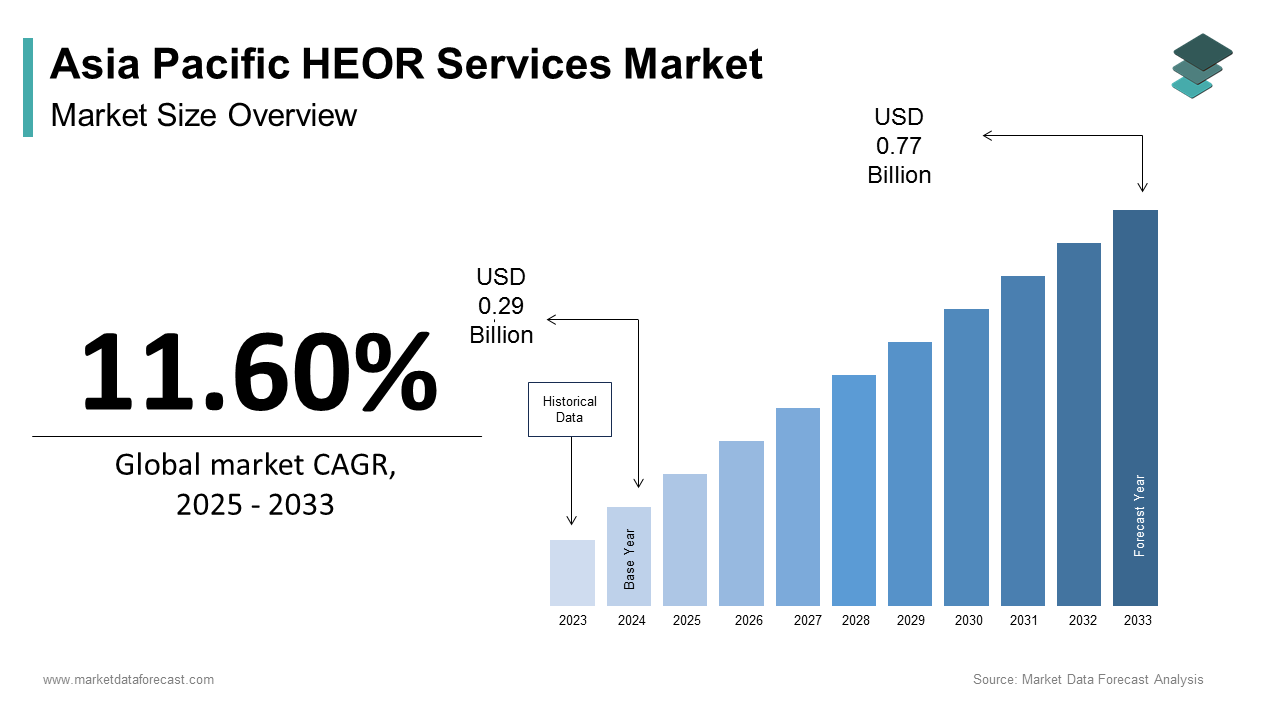
Health Economics and Outcomes Research (HEOR) services play a crucial role in shaping healthcare decision-making by generating evidence on the clinical, economic, and humanistic value of medical interventions. The Asia Pacific HEOR services market encompasses a wide range of analytical and consulting activities that support pharmaceutical, biotechnology, and medical device companies in demonstrating product value to regulators, payers, and healthcare providers.
As healthcare systems across the region grapple with rising costs and the need for efficient resource allocation, HEOR has become instrumental in informing pricing, reimbursement, and market access strategies. Countries such as Japan, Australia, South Korea, and India are witnessing increasing adoption of HEOR due to evolving regulatory landscapes and growing emphasis on real-world evidence.
Besides, these developments underscore the expanding relevance of HEOR services in supporting informed, data-driven healthcare decisions across the Asia Pacific region.
MARKET DRIVERS
Rising Demand for Real-World Evidence in Regulatory Decision-Making
The increasing reliance on real-world evidence (RWE) by regulatory bodies and health technology assessment (HTA) organizations is one of the key drivers of the Asia Pacific HEOR services market. Governments and healthcare payers across the region are under pressure to make cost-effective treatment options available while ensuring patient access and affordability. This has led to a growing demand for post-market studies, observational trials, and retrospective analyses that complement traditional clinical trial data.
In Japan, the Pharmaceuticals and Medical Devices Agency (PMDA) has actively encouraged the use of RWE in regulatory submissions, particularly for orphan drugs and advanced therapies. Similarly, Australia’s Pharmaceutical Benefits Advisory Committee (PBAC) has mandated the inclusion of real-world data in reimbursement applications for high-cost specialty medicines. As per the Asia Pacific Biopharma Innovation Forum, nearly 70% of new drug dossiers submitted in 2023 included some form of real-world evidence, up from 40% in 2018.
This shift toward evidence-based regulatory pathways is significantly boosting the demand for HEOR services across the Asia Pacific region.
Expansion of Value-Based Healthcare Models
The gradual transition toward value-based healthcare models is another significant driver fueling the growth of the Asia Pacific HEOR services market. Governments and private payers in the region are increasingly prioritizing outcomes over volume when determining reimbursement and coverage policies. This shift necessitates robust economic evaluations, burden-of-illness studies, and quality-of-life assessments—core components of HEOR services.
South Korea has been at the forefront of this transformation, with the National Evidence-based Healthcare Collaborating Agency (NECA) mandating cost-effectiveness analyses for all major drug and device approvals. According to a 2023 report by the Korean Health Insurance Review & Assessment Service (HIRA), over 80% of newly approved oncology drugs were evaluated using formal economic modeling, reflecting the deep integration of HEOR insights into policy decisions.
Similarly, Thailand’s Universal Health Coverage scheme has begun incorporating patient-reported outcome measures (PROMs) into its decision-making framework. In India, the National Health Authority has launched pilot programs to assess treatment efficacy beyond clinical endpoints, further expanding the scope of HEOR engagement.
These systemic changes are compelling life sciences companies to invest heavily in HEOR capabilities to support market access and pricing negotiations, thereby driving sustained demand for specialized HEOR service providers across the Asia Pacific region.
MARKET RESTRAINTS
Lack of Standardized HTA Frameworks Across the Region
The absence of standardized health technology assessment (HTA) frameworks across different countries is a major restraint affecting the Asia Pacific HEOR services market. Unlike Europe, where centralized bodies like NICE and IQWiG provide relatively uniform evaluation criteria, the Asia Pacific region is characterized by fragmented regulatory landscapes, varying methodological expectations, and inconsistent data requirements.
In countries such as Indonesia, the Philippines, and Vietnam, HTA processes remain nascent or inconsistently applied, making it difficult for HEOR service providers to develop universally applicable models. According to the Asia Pacific Observatory on Health Systems and Policies, only six out of 21 economies in the region had fully operational HTA agencies as of 2023.
Even among more developed markets, differences persist. For example, Japan’s Ministry of Health, Labor and Welfare applies strict cost-effectiveness thresholds, whereas Australia’s PBAC places greater emphasis on budget impact and equity considerations. These variations complicate cross-border submissions and require customized HEOR approaches for each jurisdiction.
The lack of harmonization increases both time-to-market and development costs for pharmaceutical firms, limiting the scalability of HEOR initiatives.
Limited Availability of Local Clinical and Economic Data
The scarcity of high-quality, locally generated clinical and economic data is another critical constraint facing the Asia Pacific HEOR services market. While HEOR relies heavily on real-world datasets to build accurate models and inform policy decisions, many countries in the region lack comprehensive electronic health records, patient registries, and longitudinal databases.
India, despite being one of the largest pharmaceutical markets in the region, faces significant challenges in accessing structured health data due to fragmented healthcare delivery systems and limited digitization. According to the Indian Council of Medical Research (ICMR), less than 15% of hospitals maintain standardized electronic medical records, hampering the ability to generate reliable real-world evidence.
Similarly, in Southeast Asian nations such as Malaysia and the Philippines, the availability of population-level health expenditure data remains inconsistent. As per a 2023 report by the ASEAN Working Group on Health Economics, most HEOR studies in these countries rely on extrapolated data from Western populations, which may not accurately reflect local disease patterns or treatment behaviors.
This data deficiency limits the credibility and applicability of HEOR findings, discouraging investment from global pharmaceutical companies and slowing down the integration of HEOR into national healthcare planning across the Asia Pacific.
MARKET OPPORTUNITIES
Increasing Adoption of Digital Health Technologies
The rapid adoption of digital health technologies, including telemedicine, mobile health apps, and wearable devices, is a significant opportunity emerging in the Asia Pacific HEOR services market. These innovations are generating vast amounts of real-time, patient-centric data that can be leveraged to enhance health economic modeling, improve treatment adherence analysis, and refine patient-reported outcome measures.
China has emerged as a leader in digital health infrastructure, with platforms like WeDoctor and Ping An Good Doctor collecting extensive patient interaction data that can be integrated into HEOR studies. According to the Chinese Academy of Medical Sciences, over 200 million digital consultations were recorded in 2023 alone, offering valuable insights into treatment pathways and patient behavior. In South Korea, the government’s push toward AI-driven healthcare analytics has enabled the creation of large-scale digital biomarker datasets.
Growth of Biosimilars and Specialty Therapies Requiring Robust Value Dossiers
The expanding pipeline of biosimilars and specialty therapies in the Asia Pacific region presents a substantial opportunity for HEOR services. As governments seek to balance innovation with affordability, manufacturers are increasingly required to submit comprehensive value dossiers demonstrating cost-effectiveness, budget impact, and comparative effectiveness. Japan, for instance, has witnessed a surge in biosimilar introductions following regulatory reforms aimed at reducing healthcare expenditures. The Pharmaceuticals and Medical Devices Agency (PMDA) mandates detailed pharmacoeconomic analyses before granting market access, creating a strong demand for HEOR expertise. In Australia, the introduction of the Biosimilar Awareness Initiative by the Therapeutic Goods Administration (TGA) has emphasized the need for robust economic evaluations to support prescribing confidence.
MARKET CHALLENGES
High Cost and Complexity of Conducting Multi-Country HEOR Studies
The high cost and complexity associated with conducting multi-country health economics and outcomes research studies are one of the primary challenges facing the Asia Pacific HEOR services market. Given the region’s diverse healthcare systems, regulatory environments, and patient demographics, designing unified HEOR protocols that meet local requirements while maintaining scientific rigor is extremely challenging. For multinational pharmaceutical companies, the need to customize study designs for each country significantly increases project timelines and expenses. Further, language barriers, differing data privacy laws, and variations in clinical practice complicate cross-border research collaborations. These complexities not only slow down the generation of actionable insights but also deter smaller players from investing in HEOR initiatives.
Shortage of Skilled HEOR Professionals in Emerging Markets
The shortage of trained and experienced HEOR professionals, particularly in emerging economies, is a pressing challenge confronting the Asia Pacific HEOR services market. Despite rising demand for health economics and outcomes research, there remains a significant gap in local talent capable of executing sophisticated analyses, interpreting complex datasets, and aligning findings with regulatory expectations.
In countries like Indonesia, Vietnam, and the Philippines, academic institutions offer limited specialized training in pharmacoeconomics and health outcomes research.
Even in more developed markets such as India and China, the supply of qualified HEOR experts fails to match industry demand. As per a 2023 workforce analysis by McKinsey & Company, over 60% of HEOR departments in Asia-Pacific-based pharmaceutical firms faced recruitment difficulties, citing a lack of domain-specific expertise and experience with international modeling standards.
This talent deficit hampers the ability of both domestic and multinational companies to conduct high-quality HEOR studies locally, leading to increased reliance on external consultants and delays in market access strategies.
REPORT COVERAGE
| REPORT METRIC | DETAILS |
| Market Size Available | 2025 to 2034 |
| Base Year | 2025 |
| Forecast Period | 2026 to 2034 |
| CAGR | 11.60% |
| Segments Covered | By Service Type, Service Provider, End User, and Country |
| Various Analyses Covered | Regional and Country Level Analysis; Segment-Level Analysis; DROC; PESTLE Analysis; Porter’s Five Forces Analysis; Competitive Landscape; Analyst Overview of Investment Opportunities |
| Regions Covered | India, China, Japan, South Korea, Australia, New Zealand, Thailand, Malaysia, Vietnam, Philippines, Indonesia, Singapore, And the Rest Of Asia-Pacific |
| Market Leaders Profiled | IQVIA, Optum, ICON plc, Syneos Health, Evidera, Parexel International, PharmaLex, McCann Health, HealthCore Inc., Precision Value & Health, RTI Health Solutions, BresMed, Genesis Research |
SEGMENTAL ANALYSIS
By Service Type Insights
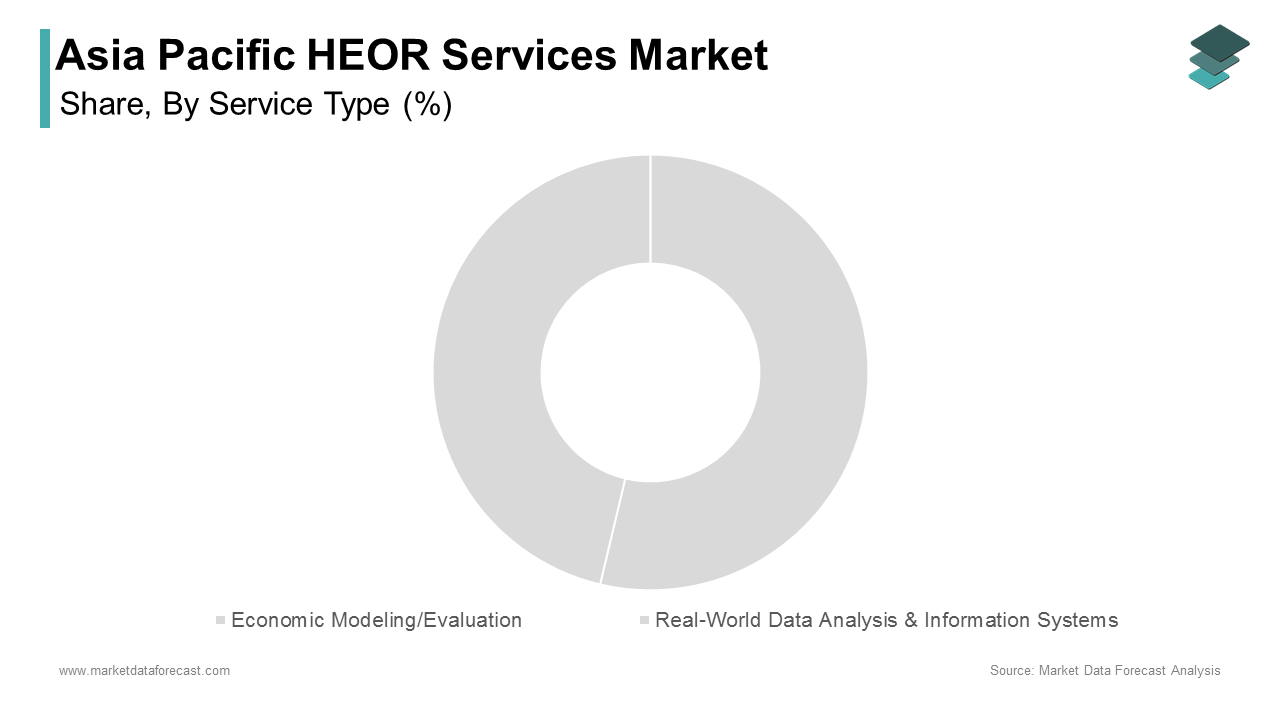
The economic modeling and evaluation segment held the largest share of the Asia Pacific HEOR services market with 35.6% of total revenue in 2025. The critical role these models play in demonstrating the cost-effectiveness of pharmaceutical products, especially in markets where health technology assessment (HTA) processes are well-established, is primarily attributed to the dominance of the economic modeling and evaluation segment. Japan has been a major contributor to this segment’s growth, with regulatory bodies such as the Ministry of Health, Labor, and Welfare mandating formal economic evaluations for high-cost therapies. Similarly, Australia’s Pharmaceutical Benefits Advisory Committee (PBAC) requires comprehensive economic dossiers for reimbursement decisions, reinforcing the necessity of advanced modeling capabilities.
The real-world data analysis and information systems segment is the fastest-growing category in the Asia Pacific HEOR services market and is projected to expand at a CAGR of 14.6% between 2023 and 2030. This rapid expansion is driven by the rising importance of real-world evidence (RWE) in regulatory and reimbursement decision-making. China has emerged as a key growth driver, with the National Medical Products Administration (NMPA) updating its guidelines in 2022 to accept real-world studies for certain imported oncology drugs. India is also witnessing increased adoption, particularly through digital health initiatives like the Ayushman Bharat Digital Mission, which aims to standardize electronic medical records nationwide.
By Service Provider Insights
The Contract research organizations (CROs) segment dominated the Asia Pacific HEOR services market by capturing an estimated 54.5% of the total share in 2023. Their ability to offer end-to-end HEOR solutions, including clinical outcome assessments, economic modeling, and regulatory submission support, all under one integrated framework, is one of the main reasons behind the lead position of the CROs segment. CROs such as IQVIA, Parexel, and ICON have expanded their presence across key markets in the region, leveraging established global expertise while adapting to local regulatory landscapes. In China, domestic CROs like WuXi AppTec and Pharmaron have built specialized HEOR divisions to cater to both multinational and homegrown biopharma firms seeking localized insights. Moreover, CROs benefit from strong relationships with academic institutions and government agencies, enabling seamless access to real-world data and patient registries. These advantages continue to reinforce their dominant position in the regional HEOR services ecosystem.
The consultancy firms segment represents the fastest-growing segment in the Asia Pacific HEOR services market and is likely to expand at a CAGR of 12.9% from 2026 to 2034. The increasing need for expert guidance in navigating complex reimbursement pathways and developing compelling value propositions is fuelling the rise of the consultancy firms segment. Unlike traditional CROs focused on clinical trial execution, consultancy firms specialize in strategic advisory, policy development, and value demonstration frameworks tailored to evolving payer and regulatory expectations. In Australia, consultancies are increasingly engaged to support early-stage product planning, helping manufacturers align development programs with PBAC requirements. Moreover, the rise of digital health consulting and AI-driven analytics platforms has further enhanced the appeal of consultancy-led HEOR engagements, making this segment a rapidly growing force in the regional market.
By End User Insights
The pharmaceutical and biotechnology companies segment accounted for the largest share of the Asia Pacific HEOR services market with 62.5% of total spending in 2025. Increasing regulatory requirements for economic and outcomes data to support market access, pricing, and reimbursement strategies are driving the growth of the pharmaceutical and biotechnology companies segment. Across the region, governments are tightening evidence standards before approving reimbursements, pushing pharmaceutical firms to invest heavily in HEOR. In Japan, the Pharmaceuticals and Medical Devices Agency (PMDA) mandates comprehensive pharmacoeconomic dossiers for orphan drugs and specialty therapies. According to the Japan Pharmaceutical Manufacturers Association (JPMA), over 85% of new drug applications in 2023 included HEOR components. In China, the National Medical Products Administration (NMPA) revised its guidelines to incorporate real-world evidence, prompting pharmaceutical companies to collaborate with HEOR service providers for local data generation. As per a report by the China International Medical Device Industry Association (CIMDIA), HEOR budgets among multinational firms grew by 30% in 2023. India’s domestic pharma industry is also embracing HEOR, with leading firms like Dr. Reddy’s Laboratories and Sun Pharma investing in internal HEOR teams and external partnerships.
The healthcare payers segment represented the fastest-growing end-user segment in the Asia Pacific HEOR services market and is expanding at a CAGR of 15.3% between 2026 and 2034. The increasing burden of chronic diseases, rising healthcare costs, and the need for efficient resource allocation in public and private insurance schemes are propelling the surge of the healthcare payers segment. In Thailand, the Universal Coverage Scheme (UCS) has mandated the use of cost-effectiveness analyses for new drug approvals, driving demand for HEOR inputs from insurers and health ministries. Australia’s health insurers have also ramped up investments in outcomes research to assess the long-term value of treatments covered under the Pharmaceutical Benefits Scheme (PBS).
REGIONAL ANALYSIS
Japan HEOR Services Market Insights
Japan led the Asia Pacific HEOR services market by commanding 25.5% of total regional revenue in 2025. As one of the most mature healthcare markets in the region, Japan has a well-developed regulatory environment that places a strong emphasis on health economics and outcomes research. The Ministry of Health, Labor and Welfare mandates formal economic evaluations for high-cost medications, particularly in oncology and rare diseases. Besides, the Pharmaceuticals and Medical Devices Agency (PMDA) has updated its guidelines to incorporate real-world evidence, encouraging pharmaceutical companies to engage HEOR service providers for localized data generation. Domestic consultancies and global CROs have expanded their operations in response to this demand.
China HEOR Services Market Insights
China remains a significant player in the Asia Pacific HEOR services market. The country's growing pharmaceutical industry, coupled with evolving regulatory requirements, has spurred demand for health economics and outcomes research. The National Medical Products Administration (NMPA) revised its policies in 2022 to accept real-world evidence for regulatory and reimbursement decisions, particularly for imported oncology drugs. According to the China National Health Development Research Center, over 200 HEOR-based submissions were processed in 2023, reflecting a significant uptick in demand. Multinational pharmaceutical companies operating in China are increasingly relying on local and international HEOR partners to navigate the complex reimbursement landscape.
India HEOR Services Market Insights
India occupies a notable position in the Asia Pacific HEOR services market. The country's pharmaceutical industry is transforming, with increasing emphasis on generating evidence to support pricing and reimbursement strategies. Regulatory bodies such as the Central Drugs Standard Control Organization (CDSCO) are exploring ways to integrate health economics into drug approval processes. Major Indian companies like Dr. Reddy’s Laboratories and Cipla have started building internal HEOR teams or partnering with external consultants to strengthen their market access strategies. Apart from these, the Ayushman Bharat Digital Mission is facilitating better access to real-world data, enhancing the scope of HEOR applications.
South Korea HEOR Services Market Insights
South Korea holds a key share of the Asia Pacific HEOR services market. The country’s structured healthcare system and strong emphasis on evidence-based decision-making have positioned it as a key player in regional HEOR activities. The National Evidence-based Healthcare Collaborating Agency (NECA) plays a central role in evaluating the cost-effectiveness of new therapies before they are included in the national reimbursement list. South Korean pharmaceutical firms are increasingly collaborating with global HEOR consultancies to prepare dossiers aligned with international standards.
Australia HEOR Services Market Insights
Australia is another key player in the Asia Pacific HEOR services market. The country’s well-established health technology assessment (HTA) framework and strong regulatory oversight make it a leader in HEOR adoption. The Pharmaceutical Benefits Advisory Committee (PBAC) mandates comprehensive economic evaluations for reimbursement decisions, requiring manufacturers to submit detailed cost-effectiveness analyses. Australian health insurers and government agencies are also investing in real-world evidence generation to inform policy decisions.
LEADING PLAYERS IN THE ASIA-PACIFIC HEALTHCARE SERVICES MARKET
IQVIA
IQVIA is a global leader in healthcare data science and clinical research, with a strong presence in the Asia Pacific HEOR services market. The company offers end-to-end solutions, including real-world evidence generation, health economics modeling, and outcomes research tailored to regional regulatory landscapes. IQVIA plays a pivotal role in helping pharmaceutical companies navigate complex reimbursement frameworks across countries like Japan, China, and Australia. Its deep analytics capabilities, combined with extensive local partnerships, enable it to deliver actionable insights that support pricing, policy, and market access strategies.
Parexel International Corporation
Parexel has established itself as a key player in the Asia Pacific HEOR services market by offering strategic consulting, pharmacoeconomic modeling, and value-based evidence development. With a strong footprint in Japan and expanding operations in India and Southeast Asia, Parexel assists biopharma firms in aligning their product development pathways with payer and regulatory expectations. The company's integration of digital tools and patient-reported outcomes into HEOR studies enhances its ability to provide comprehensive evidence packages that drive decision-making in dynamic healthcare environments.
ICON plc
ICON is a major contributor to the growth of HEOR services in the Asia Pacific region, providing specialized support in health economics, outcomes research, and market access strategy. The company works closely with pharmaceutical and biotech clients to generate robust evidence for regulatory submissions and reimbursement dossiers across diverse therapeutic areas. ICON’s localized expertise in markets such as South Korea and Australia positions it well to meet the growing demand for high-quality, region-specific HEOR data that supports informed healthcare decisions.
TOP STRATEGIES USED BY KEY MARKET PARTICIPANTS
One major strategy employed by leading players in the Asia Pacific HEOR services market is expanding local presence through regional hubs and partnerships. Companies are establishing dedicated offices and collaborating with academic institutions and local consultancies to better understand country-specific regulatory requirements and payer dynamics.
Another widely adopted approach is integrating advanced analytics and digital technologies into HEOR workflows. By leveraging artificial intelligence, machine learning, and real-world data platforms, HEOR service providers are enhancing the accuracy and relevance of economic models and outcomes assessments, enabling more precise decision-making.
Lastly, developing specialized expertise in emerging therapy areas —such as oncology, rare diseases, and biosimilars—is a key focus. As these fields grow in importance, HEOR firms are tailoring their offerings to address the unique challenges associated with demonstrating value in highly specialized and often high-cost treatment domains.
KEY MARKET PLAYERS AND COMPETITIVE OVERVIEW
Major Players of the Asia Pacific HEOR Services Market include IQVIA, Optum, ICON plc, Syneos Health, Evidera, Parexel International, PharmaLex, McCann Health, HealthCore Inc., Precision Value & Health, RTI Health Solutions, BresMed, and Genesis Research.
The competition in the Asia Pacific HEOR services market is marked by a mix of global CROs, regional consultancies, and niche service providers striving to capture a growing demand for evidence-based healthcare decision-making. As regulatory bodies and payers in the region increasingly require robust economic and outcomes data, HEOR service providers must differentiate themselves through domain expertise, methodological rigor, and regional adaptability. While large multinational firms bring scale and global best practices, regional players are gaining traction by offering cost-effective, culturally attuned solutions that align with local healthcare priorities. The market is also witnessing an influx of boutique consultancies specializing in specific therapeutic areas or analytical methodologies, further intensifying competition. Strategic investments in digital infrastructure, talent development, and cross-border collaborations are shaping the competitive dynamics. Success in this evolving landscape depends on the ability to navigate diverse regulatory ecosystems, build trusted relationships with stakeholders, and deliver actionable insights that influence market access and policy outcomes.
RECENT HAPPENINGS IN THE MARKET
- In March 2025, IQVIA launched a dedicated HEOR center of excellence in Singapore aimed at supporting drug manufacturers in generating region-specific evidence for regulatory and reimbursement purposes.
- In February 2025, Parexel announced a strategic collaboration with a leading Japanese university to develop localized health economic models that align with the country’s evolving HTA framework.
- In January 2025, ICON expanded its operations in South Korea by hiring a team of local HEOR experts to enhance its capabilities in conducting pharmacoeconomic evaluations for international biopharma clients.
- In December 2023, Syneos Health initiated a partnership with an Indian digital health startup to integrate real-world data into HEOR studies for chronic disease therapies, improving outcomes assessment precision.
- In November 2023, PwC Health Services launched a new advisory division focused on HEOR and market access in Southeast Asia, recognizing the growing need for strategic health economics support in the region.
MARKET SEGMENTATION
This research report on the Asia Pacific HEOR Services Market has been segmented and sub-segmented based on service type, service provider, end user, and region.
By Service Type
- Economic Modeling/Evaluation
- Real-World Data Analysis & Information Systems
By Service Provider
- Contract Research Organizations (CROs)
- Consultancy Firms
By End User
- Pharmaceutical and Biotechnology Companies
- Healthcare Payers
By Region
- India
- China
- Japan
- South Korea
- Australia
- New Zealand
- Thailand
- Malaysia
- Vietnam
- Philippines
- Indonesia
- Singapore
- Rest of Asia-Pacific