- Product Description Description
- Table of Contents TOC
- List of Table & Figure LOT
- Get Free Sample PDF Sample PDF
Market Size, 2025
$5.85 BnMarket Estimate, 2026
$6.43 BnMarket Forecast, 2034
$13.90 BnCAGR, 2026–2034
10.12%Executive Summary: Asia Pacific Immunoassay Market
- Market Scope: Comprehensive Asia-Pacific immunoassay market analysis covering technologies, application sectors, end-user settings, country-level insights, and in-vitro diagnostics (IVD) demand trends.
- Market Valuation: Valued at USD 5.85 billion (2025), estimated at USD 6.43 billion (2026), and projected to reach USD 13.90 billion by 2034, registering a robust CAGR of 10.12% (2026–2034).
- Primary Growth Drivers: Escalating prevalence of chronic and infectious diseases (including tuberculosis, hepatitis, and diabetes), rapidly aging regional population, expansion of healthcare infrastructure, and rising investments in preventive care and personalized medicine.
Key Market Segment Metrics (2026–2034)
| Category | Leading Segment (2025 Position) | Fastest-Growing Segment |
|---|---|---|
| By Technology | Chemiluminescent Immunoassays (held 41.4% market share in 2025, valued for superior sensitivity and automation compatibility) | Fluorescent Immunoassays (growing at a CAGR of 10.6%, driven by point-of-care testing and rapid emergency/primary care demands) |
| By Application | Infectious Diseases (led with 34.3% market share in 2025, fueled by high regional burdens of hepatitis, HIV, and tuberculosis) | Oncology (expected to grow at the fastest CAGR of 11.5%, driven by rising cancer incidence and personalized medicine adoption) |
| By End User | Hospitals (dominated with 46.1% market share in 2025, supported by high patient volumes and advanced diagnostic infrastructure) | Independent & Reference Laboratories (growing at a CAGR of 9.4%, driven by outsourcing trends and private laboratory expansions) |
| By Country | China (led the regional market with 33.1% share in 2025, propelled by healthcare modernization and volume-based procurement) | India (recording a promising CAGR driven by government health schemes like Ayushman Bharat and growing private diagnostic chains) |
Major Market Players & Market Structure
Market Structure: Highly competitive diagnostics landscape featuring multinational medtech corporations and indigenous manufacturers competing on automation, pricing strategies, assay sensitivity, and expanding distribution networks across emerging economies.
Key Companies: Roche Diagnostics, DiaSorin S.p.A, Beckman Coulter, Siemens Healthcare, Ortho Clinical Diagnostics, bioMérieux, Thermo Fisher Scientific, Abbott Laboratories, Akers Biosciences, Inc., Becton Dickinson and Company, Devon Medical Products, EDP Biotech Corporation, Hologic (Gen-Probe), and Intrinsic LifeSciences.
Asia Pacific Immunoassay Market Size
The immunoassay market size in the Asia Pacific was worth USD 5.85 billion in 2025 and is estimated to reach USD 13.90 billion by 2034 from USD 6.43 billion in 2026, growing at a CAGR of 10.12% during the forecast period.

Immunoassays comprises a critical segment of the in-vitro diagnostics industry dedicated to the detection and quantification of specific analytes such as hormones, proteins, drugs, and infectious agents in biological samples. These techniques rely on the specific binding between an antibody and its antigen to identify disease markers with high sensitivity and specificity. The market includes various formats such as enzyme linked immunosorbent assays, chemiluminescent immunoassays, and rapid diagnostic tests. The clinical significance of these tools is underscored by the rising burden of chronic and infectious diseases across the region. As per the World Health Organization, non-communicable diseases are estimated to cause 80% of all deaths in the South East Asia Region, necessitating precise diagnostic capabilities for early intervention. Furthermore, according to the International Agency for Research on Cancer, Asia accounts for 49.3% of global cancer cases, which is driving the demand for tumor marker testing. The aging population further amplifies this need, as the United Nations Department of Economic and Social Affairs projects that the number of people aged 60 years or older in Asia will reach 1.3 billion by 2050. Governments are increasingly investing in healthcare infrastructure to support preventive care and personalized medicine. Regulatory bodies in countries like Japan and Australia enforce stringent quality standards, ensuring the reliability of diagnostic results. The integration of automation and digital health technologies is transforming laboratory workflows, enhancing throughput and accuracy. This market plays a pivotal role in enabling timely diagnosis, monitoring treatment efficacy, and improving patient outcomes across diverse healthcare settings in the Asia Pacific region.
MARKET DRIVERS
Rising Prevalence of Infectious and Chronic Diseases
The escalating prevalence of infectious and chronic diseases is fuelling the expansion of the Asia-pacific immunoassays market. Infectious diseases such as hepatitis, HIV, and tuberculosis remain significant public health challenges, requiring accurate and rapid diagnostic tools for effective management. According to the World Health Organization, the South East Asia and Western Pacific regions combined accounted for more than 60% of the global tuberculosis burden in recent years, highlighting the urgent need for sensitive diagnostic assays. As per the World Health Organization, China alone has an estimated 86 million people living with chronic hepatitis B, necessitating regular monitoring through serological tests. Additionally, the rise in lifestyle related conditions such as diabetes and cardiovascular diseases drives the demand for biomarker testing. According to the International Diabetes Federation, the Western Pacific Region is home to 206 million adults with diabetes, representing 38% of the global total. Immunoassays are essential for measuring glycated hemoglobin and cardiac troponins, which are critical for diagnosis and management. According to the Indian Council of Medical Research, non-communicable diseases including cardiovascular diseases contribute to approximately 66% of all deaths in India. This epidemiological landscape creates a sustained demand for high throughput immunoassay systems in hospitals and diagnostic centers. The ability of these tests to provide quantitative data enables clinicians to make informed decisions, thereby improving patient outcomes and reducing the burden on healthcare systems.
Expansion of Healthcare Infrastructure and Diagnostic Accessibility
The significant expansion of healthcare infrastructure and improved accessibility to diagnostic services across the Asia Pacific region is a major driver for the immunoassays market in this region. Governments and private investors are heavily investing in the establishment of new hospitals, clinics, and reference laboratories to meet the growing healthcare needs of the population. According to the Asian Development Bank, the region requires an estimated 1.7 trillion USD in annual infrastructure investment through 2030, with a substantial portion allocated to the health sector. In Indonesia, the Ministry of Health has launched initiatives to upgrade primary healthcare facilities with modern diagnostic equipment, including automated immunoassay analyzers. This decentralization of diagnostic services ensures that patients in rural and semi urban areas have access to timely testing. In Vietnam, the government’s National Health Insurance program has expanded coverage to include more diagnostic tests, increasing affordability and utilization. The proliferation of private diagnostic chains in countries like India and Thailand has further enhanced accessibility, offering standardized and high quality testing services. The adoption of laboratory information systems and automation technologies improves efficiency and reduces turnaround times, making immunoassays more attractive to healthcare providers. As healthcare spending per capita increases, particularly in emerging economies, the demand for advanced diagnostic tools continues to grow. This infrastructural development supports the widespread adoption of immunoassay technologies, facilitating early detection and better management of diseases across the region.
MARKET RESTRAINTS
High Cost of Automated Immunoassay Systems and Reagents
The high cost associated with automated immunoassay systems and proprietary reagents is primarily hindering the growth of the Asia-pacific immunoassays market. Advanced chemiluminescent immunoassay platforms require substantial capital investment, often exceeding 100,000 USD per unit, which is prohibitive for smaller healthcare facilities. According to the World Bank, current health expenditure per capita in lower middle income countries in the East Asia and Pacific region was approximately 97 USD in 2021, limiting the budgetary capacity for expensive diagnostic equipment. In rural areas of India and the Philippines, primary health centers often lack the funds to purchase automated systems, relying instead on manual or semi-automated methods that are less efficient. Furthermore, the recurring cost of proprietary reagents and calibration materials adds to the financial burden, as these consumables are often priced at a premium by original equipment manufacturers. According to the Asian Hospital Federation, operational costs for diagnostic laboratories can account for up to 40% of total expenses, with reagents being a major component. This economic barrier forces many facilities to limit their test menus or refer samples to external reference laboratories, delaying diagnosis. The lack of comprehensive reimbursement policies for advanced diagnostic tests in several countries further discourages investment. Without adequate financial support or subsidies, the adoption of high end immunoassay systems remains slow in price sensitive markets, restricting overall market expansion despite the clinical benefits of these technologies.
Shortage of Skilled Laboratory Professionals and Technicians
A critical shortage of trained laboratory professionals and technicians poses a major impediment to the effective utilization of advanced immunoassay systems in the Asia Pacific region, which is further impeding the regional market expansion. The operation and maintenance of sophisticated automated analyzers require specialized skills in quality control, troubleshooting, and data interpretation. According to the World Health Organization, the global shortage of health workers is projected to reach 10 million by 2030, with a significant impact on the Asia Pacific region where many countries have fewer than 23 health workers per 10,000 population. This scarcity is particularly acute in laboratory sciences, where specialized training is required. In China, the Chinese Society of Laboratory Medicine reports that there is a significant imbalance in the distribution of laboratory professionals, with most concentrated in urban tertiary hospitals, leaving rural areas underserved. Similarly, in Indonesia, the Ministry of Health highlights that many peripheral laboratories lack qualified personnel to operate complex immunoassay instruments, leading to potential errors and inconsistent results. The lack of standardized training programs and continuous professional development opportunities exacerbates the problem. This workforce gap leads to bottlenecks in diagnostic services, as available experts are overwhelmed by patient volumes. The risk of operational errors due to inadequate training undermines confidence in test results, affecting clinical decision making. Healthcare facilities hesitate to invest in advanced equipment if they cannot staff them adequately, thereby restraining market growth. Until this human resource challenge is addressed through targeted education and training initiatives, the full potential of the immunoassays market will remain constrained.
MARKET OPPORTUNITIES
Integration of Artificial Intelligence and Automation in Diagnostics
The integration of artificial intelligence and advanced automation into immunoassay workflows presents a substantial opportunity for market growth in the Asia Pacific region. AI algorithms can optimize laboratory processes, enhance quality control, and assist in the interpretation of complex diagnostic data. According to the Journal of Clinical Laboratory Analysis, the implementation of AI driven middleware can reduce turnaround times by up to 30% and minimize human error in result validation. In Singapore, the Health Sciences Authority supports the adoption of smart laboratory technologies, encouraging hospitals to integrate AI with their diagnostic systems. The National University Hospital in Singapore has implemented automated workflows that use machine learning to predict instrument maintenance needs, reducing downtime and improving efficiency. Similarly, in Japan, the Ministry of Health, Labour and Welfare promotes the use of robotics and AI in healthcare to address labor shortages and improve precision. These innovations offer a pathway to overcome workforce limitations and enhance diagnostic accuracy. AI can also help identify patterns in large datasets, facilitating personalized medicine and early disease detection. Manufacturers who incorporate AI capabilities into their immunoassay platforms can differentiate their products and appeal to tech savvy healthcare providers. The growing interest in precision medicine and digital health initiatives across the region supports the adoption of these smart technologies. By enhancing operational efficiency and diagnostic confidence, AI integrated immunoassay systems open new avenues for market expansion and improved patient care.
Growth of Point of Care Testing in Remote Areas
The expansion of point of care testing using rapid immunoassay formats offers a significant opportunity to extend diagnostic services to underserved rural and remote populations in the Asia Pacific region. Geographic barriers and limited healthcare infrastructure often prevent individuals in remote areas from accessing centralized laboratory services. Rapid immunoassay devices, such as lateral flow assays, provide quick and accurate results at the site of care, enabling immediate clinical decision making. According to the United Nations Economic and Social Commission for Asia and the Pacific, approximately 51% of the population in the region lives in rural areas, where access to specialized medical care is limited. In India, organizations such as the Foundation for Innovation and Technology Transfer have developed low cost rapid diagnostic kits for infectious diseases, which are deployed in village health centers. The Indian Council of Medical Research supports such initiatives as part of its strategy to improve healthcare accessibility. In Australia, the Royal Flying Doctor Service utilizes point of care testing devices to provide diagnostic services in outback communities, demonstrating the viability of this model. Rapid immunoassays are cost effective, easy to use, and do not require sophisticated infrastructure, making them ideal for resource limited settings. Governments and non-governmental organizations are increasingly funding these programs to improve health equity. By bridging the urban rural divide, point of care testing solutions create a new market segment for manufacturers. This approach not only expands the customer base but also contributes to public health goals by ensuring earlier detection and better outcomes for marginalized populations.
MARKET CHALLENGES
Regulatory Heterogeneity and Complex Approval Processes
The fragmented regulatory landscape across the Asia Pacific region is a significant challenge for manufacturers seeking to launch immunoassay products uniformly. Each country maintains distinct regulatory requirements, approval timelines, and quality standards, which complicates market entry strategies and increases compliance costs. For instance, while Japan’s Pharmaceuticals and Medical Devices Agency has a rigorous and well defined approval process, emerging markets like Vietnam and Thailand have evolving regulatory frameworks that can be unpredictable. According to the Association of Southeast Asian Nations, efforts to harmonize medical device regulations are ongoing but face implementation hurdles due to differing national capacities and priorities. This lack of harmonization means that manufacturers must navigate multiple submission processes, often requiring local clinical data or specific labeling requirements. The National Medical Products Administration in China has implemented stricter registration rules, requiring more comprehensive clinical evaluations for imported in vitro diagnostic devices, which can delay market access by several months. Such regulatory bottlenecks hinder the rapid dissemination of innovative products and create barriers for small and medium sized enterprises. Additionally, post market surveillance requirements differ significantly, demanding tailored compliance strategies. This regulatory complexity not only increases operational costs but also creates uncertainty regarding product launch timelines. Companies must invest heavily in regulatory affairs teams to manage these diverse requirements, which can strain resources and slow down the introduction of new technologies, thereby restraining market agility and growth potential across the diverse Asia Pacific region.
Risk of Counterfeit Diagnostic Products and Quality Variability
The prevalence of counterfeit diagnostic products and variability in quality standards pose a significant challenge to the integrity and growth of the immunoassays market in the Asia Pacific region. The high demand for affordable diagnostic tests has led to the proliferation of substandard and falsified medical products, particularly in online marketplaces and unregulated supply chains. According to the World Health Organization, it is estimated that 1 in 10 medical products in low and middle income countries are substandard or falsified, with in vitro diagnostics being a notable category. In countries with less stringent enforcement mechanisms, counterfeit immunoassay kits may lack the necessary sensitivity and specificity, leading to false negative or false positive results. This compromises patient safety and erodes trust in diagnostic services. In India, the Central Drugs Standard Control Organization has reported numerous cases of spurious diagnostic kits being seized, highlighting the scale of the problem. The presence of low quality products undermines the reputation of legitimate manufacturers and creates confusion among healthcare providers. Furthermore, the lack of standardized quality control measures in some regional laboratories exacerbates the issue, as variations in testing procedures can lead to inconsistent results. Ensuring the authenticity and quality of immunoassay products requires robust supply chain monitoring and strict regulatory enforcement. Until these issues are effectively addressed, the risk of unreliable diagnostics will remain a barrier to market confidence and widespread adoption of advanced immunoassay technologies.
REPORT COVERAGE
| REPORT METRIC | DETAILS |
| Market Size Available | 2025 to 2034 |
| Base Year | 2025 |
| Forecast Period | 2026 to 2034 |
| CAGR | 10.12% |
| Segments Covered | By Technology, Application, End Users and Region |
| Various Analyses Covered | Regional & Country Level Analysis, Segment-Level Analysis, DROC, PESTLE Analysis, Porter’s Five Forces Analysis, Competitive Landscape, Analyst Overview on Investment Opportunities |
| Countries Covered | India, China, Japan, South Korea, Australia, New Zealand, Thailand, Malaysia, Vietnam, the Philippines, Indonesia, Singapore, and the Rest of Asia Pacific. |
| Market Leaders Profiled | Roche Diagnostics, DiaSorin S.p.A, Beckman Coulter, Siemens Healthcare, Ortho Clinical Diagnostics, bioMerieux, Thermo Fisher Scientific and Abbott Laboratories, Akers Biosciences, Inc, Becton Dickinson and Company, Devon Medical Products, EDP Biotech Corporation, Hologic (Gen-Probe) and Intrinsic LifeSciences. |
SEGMENTAL ANALYSIS
By Technology Insights
The chemiluminescence immunoassays segment held the leading position in the Asia Pacific market by accounting for 41.4% of the regional market share in 2025. The dominance of chemiluyminescence immunoassays segment in the Asia-pacific market is driven by their superior sensitivity, wide dynamic range, and automation capabilities, which are essential for high volume diagnostic laboratories. The technology has largely replaced radioimmunoassays and enzyme immunoassays in clinical settings due to its safety profile and efficiency. The primary factor driving the dominance of chemiluminescence immunoassays is their exceptional sensitivity and compatibility with fully automated platforms. These assays can detect analytes at very low concentrations, which is critical for early diagnosis of conditions such as cardiac events and hormonal imbalances. According to the Clinical Chemistry journal, chemiluminescence offers a detection limit that is up to 100 times lower than enzyme linked immunosorbent assays, enabling more accurate diagnosis of diseases in their initial stages. In China, the National Center for Clinical Laboratories reports that over 80% of tertiary hospitals have adopted automated chemiluminescence systems for routine testing due to their high throughput and reduced manual error. The ability to process hundreds of samples per hour meets the demands of large population centers in countries like India and Indonesia. Furthermore, the absence of radioactive materials eliminates the safety hazards and disposal costs associated with radioimmunoassays. The Japanese Society of Laboratory Medicine emphasizes that automation reduces turnaround time by 50%, improving patient flow in busy hospitals. This combination of precision, speed, and safety makes chemiluminescence the preferred technology for clinical diagnostics, sustaining its market leadership across the region.
However, the fluorescent immunoassays segment is projected to be the fastest growing segment and grow at a CAGR of 10.6% over the forecast period in this regional market owing to the increasing adoption of point of care testing devices and the demand for rapid, quantitative results in emergency and primary care settings. These assays are widely used in portable handheld devices that provide quick and accurate results at the patient's bedside or in community clinics. According to the Asian Hospital Federation, the deployment of point of care testing units in emergency departments and rural health centers has increased by 15% annually over the past five years. In India, the Ayushman Bharat program aims to establish 150,000 health and wellness centers, many of which are equipped with rapid diagnostic devices using fluorescence technology. The Indian Council of Medical Research supports the use of these devices for immediate decision making in resource limited settings. Fluorescent immunoassays offer higher sensitivity than traditional lateral flow assays, providing quantitative data that aids in precise diagnosis. In Thailand, the Ministry of Public Health has integrated point of care testing into its primary care strategy to manage chronic diseases such as diabetes and hypertension. The convenience and speed of these devices reduce the need for sample transportation to central laboratories, improving access to care in remote areas. As healthcare systems prioritize decentralization and rapid response, the demand for fluorescent immunoassay based point of care devices is expected to surge, driving the segment's high growth rate.
By Application Insights
The infectious diseases segment led the market by accounting for 34.3% of the regional market share in 2025. The high prevalence of endemic infections such as hepatitis, HIV, and tuberculosis, as well as the recurring threat of emerging viral outbreaks in the region is majorly driving the growth of the infectious diseases segment in the regional market. The Asia Pacific region bears a significant burden of chronic viral infections, particularly hepatitis B and C. According to the World Health Organization, the Western Pacific Region is home to approximately 115 million people living with chronic hepatitis B infection. In China, the National Health Commission estimates that nearly 86 million individuals are living with hepatitis B virus, requiring regular screening and monitoring. Similarly, India has a substantial population affected by tuberculosis, as according to the World Health Organization, India accounts for 27% of the global tuberculosis incidence. Routine screening for these conditions relies heavily on immunoassays for accurate detection of antigens and antibodies. In Southeast Asian countries like Vietnam and Indonesia, national control programs mandate widespread testing to curb transmission rates. The persistent presence of these diseases ensures a steady and high volume demand for diagnostic tests. Hospitals and public health laboratories prioritize infectious disease screening to prevent outbreaks and manage chronic cases. The sheer scale of the affected population in the Asia Pacific region makes infectious diseases the largest application segment for immunoassays, driving consistent market growth.
On the other end, the oncology segment is expected to grow at the fastest CAGR of 11.5% over the forecast period owing to the rising incidence of cancer in the region, increased awareness of early detection, and the adoption of personalized medicine approaches that rely on precise biomarker testing. According to the International Agency for Research on Cancer, Asia accounts for 49.3% of global cancer cases and 58.3% of cancer deaths, with lung, breast, and liver cancers being the most common. In China, the National Cancer Center reports that there were approximately 4.8 million new cancer cases in 2022, which is creating a vast demand for diagnostic services. Immunoassays are essential for detecting tumor markers such as prostate specific antigen, carcinoembryonic antigen, and alpha fetoprotein, which aid in early diagnosis and monitoring of treatment response. According to the Indian Council of Medical Research, cancer incidence in India is projected to increase by 12.8% by 2025 compared to 2020 due to aging and lifestyle changes. Early detection through screening programs is crucial for improving survival rates, driving the adoption of sensitive immunoassay tests. In Japan, the Ministry of Health, Labour and Welfare promotes regular cancer screening for the elderly population, further boosting demand. The increasing availability of affordable screening tests in emerging markets is expanding access to early diagnosis. As healthcare systems prioritize cancer control strategies, the demand for oncology related immunoassays is expected to rise significantly, propelling the segment’s high growth rate.
By End User Insights
The hospitals segment dominated the market by accounting for 46.1% of the regional market share in 2025. The leading position of hospitals segment in this regional market is attributed to the high volume of patient visits, the availability of advanced diagnostic infrastructure, and the comprehensive range of services offered by hospital laboratories. Hospitals serve as the primary point of care for acute and chronic conditions, generating a substantial demand for diagnostic testing. According to the World Health Organization, the South East Asia and Western Pacific regions saw an increase in hospital beds and healthcare utilization over the past decade due to the rising burden of non communicable diseases. In China, the National Health Commission reports that tertiary hospitals perform millions of immunoassay tests annually to support clinical decision making. These facilities are equipped with high throughput automated analyzers that can process large sample volumes efficiently. In India, the Association of Healthcare Providers India notes that private hospitals are expanding their laboratory services to attract patients seeking one stop diagnostic solutions. The ability to offer a wide range of tests, from routine screenings to specialized assays, makes hospitals the preferred choice for patients and referring physicians. The integration of laboratory information systems with hospital electronic health records streamlines workflow and improves result accessibility. This operational efficiency and capacity to handle complex cases ensure that hospitals remain the largest consumers of immunoassay products in the region.
However, the independent and reference laboratories segment is anticipated to grow at a CAGR of 9.4% over the forecast period in this regional market due to the rising trend toward outsourcing diagnostic services, the expansion of private laboratory chains, and the increasing demand for specialized testing. Many hospitals and clinics are partnering with independent reference laboratories to reduce operational costs and improve efficiency. According to the McKinsey Company, the laboratory outsourcing market in Asia is gaining momentum as healthcare providers seek to optimize resource allocation. In India, large diagnostic chains such as Dr Lal PathLabs and Metropolis Healthcare are expanding their networks, offering centralized testing services to smaller clinics and nursing homes. The Indian Journal of Clinical Biochemistry highlights that outsourcing allows smaller facilities to access advanced testing capabilities without significant capital investment. In China, the National Health Commission encourages the development of independent clinical laboratories to alleviate the burden on public hospitals. These reference laboratories benefit from economies of scale, allowing them to offer competitive pricing and faster turnaround times. In Thailand, the Department of Medical Sciences supports the accreditation of private laboratories to ensure quality standards. The convenience of sample collection centers and home collection services further drives patient preference for independent laboratories. As healthcare systems become more fragmented and cost conscious, the reliance on specialized laboratory services is expected to increase, which is fuelling the segment's high growth rate.
REGIONAL ANALYSIS
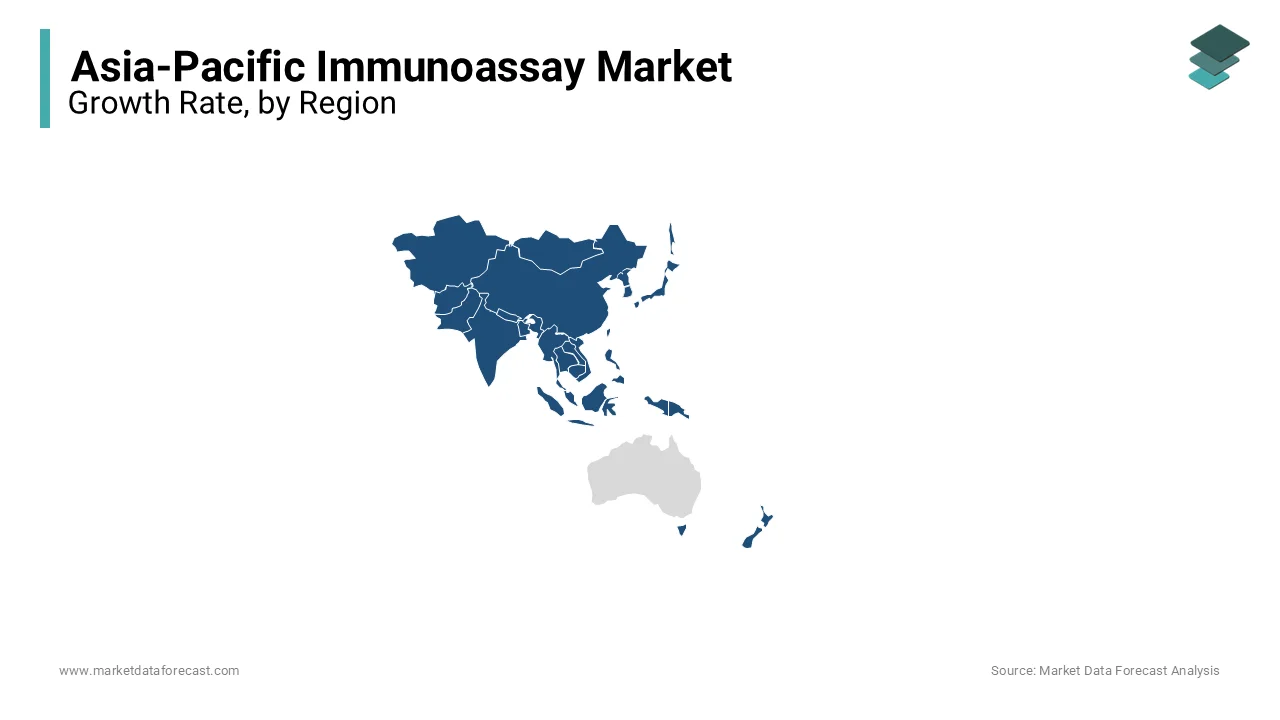
China Immunoassays Market Analysis
China led the immunoassays market in Asia-pacific in 2025 with 33.1% of the regional market share. Factors such as the rapid modernization of healthcare infrastructure, strong government support for domestic diagnostic industries, the vast population and the increasing prevalence of chronic and infectious diseases are driving the dominance of China in the Asia-pacific market. According to the National Health Commission of China, the country has over 1.4 billion people, with a growing burden of cancer and cardiovascular diseases. The Healthy China 2030 initiative prioritizes early diagnosis and preventive care, leading to increased investment in laboratory services. The National Medical Products Administration has streamlined approval processes for in vitro diagnostic products, encouraging innovation and market entry. Domestic manufacturers such as Mindray and Autobio Diagnostics are gaining market share by offering cost effective alternatives to imported systems. The expansion of tier three hospitals and the establishment of regional medical centers drive demand for high throughput immunoassay analyzers. The government’s volume based procurement policies are reducing prices, making advanced diagnostics more accessible. The rising middle class is also demanding higher quality healthcare services, fueling the adoption of premium diagnostic technologies. China’s focus on self-sufficiency in medical technology and the scale of its healthcare needs make it the dominant force in the regional market. The integration of artificial intelligence in diagnostics is further enhancing efficiency and accuracy.
Japan Immunoassays Market Analysis
Japan occupied the second largest share of the Asia-pacific immunoassays market in 2025. The Japanese market is stable and is driven by an aging population and a strong emphasis on precision medicine. According to the Statistics Bureau of Japan, 29.1% of the population was aged 65 or older as of 2023, creating a significant need for regular health screenings. The Ministry of Health, Labour and Welfare mandates specific cancer screening programs, which utilize advanced immunoassay techniques. Japanese companies such as Sysmex and Fujirebio are global leaders in diagnostic innovation, contributing to the high quality standards of the market. The universal health insurance system covers a wide range of diagnostic tests, ensuring consistent demand. The Pharmaceuticals and Medical Devices Agency maintains rigorous regulatory standards, fostering trust in diagnostic results. Hospitals and clinics are increasingly adopting automated laboratory systems to address workforce shortages. The culture of preventive healthcare and regular check ups supports steady consumption of immunoassay products. Japan’s focus on high quality and reliability sustains its position as a key market. The integration of robotics and AI in laboratories enhances operational efficiency. The market values innovation and precision, driving the adoption of next generation diagnostic technologies.
India Immunoassays Market Analysis
India is anticipated to record a promising CAGR in the Asia-pacific immunoassays market during the forecast period. The Indian market is emerging and rapidly growing, driven by increasing healthcare awareness and the expansion of private diagnostic chains. According to the World Health Organization, India faces a significant burden of tuberculosis and diabetes, accounting for 27% of global tuberculosis cases. The government’s Ayushman Bharat scheme aims to provide health coverage to 500 million people, increasing access to diagnostic services. The proliferation of private laboratory chains such as Dr Lal PathLabs and SRL Diagnostics has expanded reach to tier two and three cities. The Central Drugs Standard Control Organization is strengthening regulatory oversight to ensure quality and safety. The growing middle class is willing to pay for preventive health check ups, driving demand for comprehensive diagnostic panels. The availability of cost effective indigenous manufacturing reduces dependency on imports. The Indian Society of Laboratory Medicine promotes standardization and quality assurance in diagnostic practices. The market is price sensitive, with competition driving innovation in affordable testing solutions. Digital health initiatives are integrating laboratory services with telemedicine platforms. India’s large population and improving healthcare infrastructure present substantial opportunities for market growth. The focus on accessibility and affordability defines the market dynamics.
Australia Immunoassays Market Analysis
Australia is expected to exhibit a healthy CAGR in the Asia-pacific immunoassays market over the forecast period owing to a highly regulated and advanced healthcare market, the aging population and the high prevalence of chronic conditions such as cardiovascular diseases. According to the Australian Institute of Health and Welfare, 80% of Australians aged 65 and over have at least one chronic condition, driving consistent demand for diagnostic monitoring. The Medicare system provides universal access to essential diagnostic tests, ensuring widespread utilization of immunoassays. Regulatory oversight by the Therapeutic Goods Administration ensures that diagnostic products meet high safety and performance standards. Australia’s commitment to healthcare innovation is reflected in the adoption of digital health solutions and point of care testing. The market is characterized by a strong presence of international diagnostic companies and a focus on high precision technologies. National health strategies prioritize early detection and management of diseases, supporting the market's stability. Australia’s advanced research capabilities also contribute to the development of new diagnostic biomarkers. The integration of pathology services with primary care enhances patient outcomes and diagnostic efficiency. This mature market environment ensures steady growth and high clinical standards for immunoassays.
COMPETITIVE LANDSCAPE
The competitive landscape of the Asia Pacific immunoassays market is characterized by the presence of established multinational corporations and emerging local manufacturers who compete on technology innovation price and service quality. Global leaders leverage their extensive research and development capabilities to introduce advanced automated systems and comprehensive assay menus. These companies benefit from strong brand recognition and robust distribution networks that facilitate widespread adoption in large hospitals and reference laboratories. Local players are gaining traction by offering cost effective alternatives that appeal to budget constrained healthcare facilities in emerging markets. The intensity of competition is heightened by the rapid technological advancements in diagnostic precision and throughput which require continuous investment. Companies differentiate themselves through value added services such as laboratory automation consulting remote monitoring and technical support. Regulatory compliance remains a critical factor with firms navigating diverse approval processes across different countries. Strategic collaborations with local distributors and healthcare institutions are common tactics to enhance market penetration. The market is also witnessing a shift toward point of care testing driving competition in portable and rapid diagnostic segments. This dynamic environment encourages constant adaptation and innovation to maintain competitive advantage and meet the evolving needs of the healthcare industry in the Asia Pacific region.
KEY MARKET PLAYERS
Companies playing a prominent role in the Asia Pacific immunoassay market include
- Roche Diagnostics
- DiaSorin S.p.A
- Beckman Coulter
- Siemens Healthcare
- Ortho Clinical Diagnostics
- bioMerieux
- Thermo Fisher Scientific
- Abbott Laboratories
- Akers Biosciences, Inc.
- Becton Dickinson and Company
- Devon Medical Products
- EDP Biotech Corporation
- Hologic
- Intrinsic LifeSciences
Top Players in the Market
F. Hoffmann La Roche Ltd
F. Hoffmann La Roche Ltd is a global leader in diagnostics with a dominant presence in the Asia Pacific immunoassays market. The company offers the Elecsys portfolio which is widely recognized for its high throughput and accuracy in clinical laboratories. Roche contributes significantly to the global market by setting standards for automation and quality in diagnostic testing. Recently the company has strengthened its position in the region by expanding manufacturing capabilities in Singapore and enhancing distribution networks in China and India. Roche actively collaborates with local healthcare providers to implement total laboratory automation solutions. The company focuses on integrating digital health tools with its diagnostic platforms to improve workflow efficiency. By prioritizing innovation and customer support Roche ensures reliable access to critical diagnostic tests. Their commitment to personalized healthcare drives the development of specialized assays for oncology and infectious diseases. This strategic focus reinforces their leadership in the Asia Pacific market.
Siemens Healthineers AG
Siemens Healthineers AG is a major player in the Asia Pacific immunoassays market offering advanced diagnostic solutions through its Atellica and Advia Centaur systems. The company contributes to the global market by delivering high performance instruments that enhance laboratory productivity and result accuracy. In the Asia Pacific region Siemens Healthineers focuses on strengthening partnerships with hospitals and reference laboratories to expand its installed base. Recent actions include launching new assay menus for cardiac and infectious disease markers tailored to regional health needs. The company invests in digitalization by connecting its devices to cloud based platforms for remote monitoring and data analytics. Siemens Healthineers also emphasizes sustainability by designing energy efficient instruments and reducing waste. Through continuous innovation and strong technical support the company builds trust with healthcare providers. Their integrated approach to diagnostics and therapy supports better patient outcomes. This comprehensive strategy solidifies their competitive position in the dynamic Asia Pacific landscape.
Abbott Laboratories
Abbott Laboratories is a key participant in the Asia Pacific immunoassays market known for its Alinity i series and rapid diagnostic tests. The company plays a vital role in the global market by providing accessible and accurate diagnostic solutions for diverse healthcare settings. Abbott has recently strengthened its market position in Asia by expanding production facilities in Vietnam and India to meet local demand. The company focuses on point of care testing innovations enabling faster diagnosis in remote and resource limited areas. Abbott collaborates with governments and non governmental organizations to support public health initiatives such as hepatitis and HIV screening programs. The integration of digital connectivity in their devices facilitates seamless data sharing and improved patient management. By offering a broad range of assays from routine to specialized tests Abbott addresses varied clinical needs. Their commitment to affordability and quality ensures widespread adoption. These efforts enhance their reputation as a trusted partner in the Asia Pacific healthcare ecosystem.
Top Strategies Used by the Key Market Participants
Key players in the Asia Pacific immunoassays market primarily focus on product innovation by developing high sensitivity assays and automated platforms to meet growing diagnostic demands. Companies strategically expand their manufacturing and distribution networks in emerging economies to enhance accessibility and reduce costs. They invest heavily in research and development to introduce novel biomarkers for early disease detection. Strategic partnerships with local healthcare providers and governments help navigate regulatory landscapes and promote public health initiatives. Firms emphasize digital integration by connecting instruments to laboratory information systems for improved workflow efficiency. Pricing strategies are adapted to local economic conditions to remain competitive in price sensitive markets. Regulatory compliance is prioritized to ensure uninterrupted supply and market entry. Training programs for laboratory staff enhance product utilization and customer loyalty. These multifaceted approaches enable companies to address diverse regional needs while maintaining competitive advantage in a rapidly evolving healthcare environment.
MARKET SEGMENTATION
This research report on the Asia-Pacific immunoassay market is segmented & sub-segmented the market into the following categories.
By Technology
- Enzyme Immunoassays
- Fluorescent Immunoassays
- Chemiluminescence Immunoassays
- Nephelometric Immunoassays
- Radio Immunoassays
- Counting Immunoassays
- Turbidimetric Immunoassays
By Application
- Oncology
- Cancer
- Hematology
- Cardiology
- Thyroid
- Infectious diseases
- Allergies
By End User
- Hospitals
- Clinics
- Academic Research Institute
- Pharmaceutical
- Biotech vendors
- Laboratories
By Country
- India
- China
- Japan
- South Korea
- Australia
- New Zealand
- Thailand
- Malaysia
- Vietnam
- Philippines
- Indonesia
- Singapore
- Rest of APAC