- Product Description Description
- Table of Contents TOC
- List of Table & Figure LOT
- Get Free Sample PDF Sample PDF
Market Size, 2025
$28.79 BnMarket Estimate, 2026
$31.61 BnMarket Forecast, 2034
$66.78 BnCAGR, 2026–2034
9.8%Executive Summary: Global Immunoassay Market
- Market Scope: Comprehensive global immunoassay market analysis covering technology types, clinical application segments, end-user settings, and regional leadership frameworks for diagnostic testing worldwide.
- Market Valuation: Valued at USD 28.79 billion (2025), estimated at USD 31.61 billion (2026), and projected to reach USD 66.78 billion by 2034, expanding at a strong CAGR of 9.8% (2026–2034).
- Primary Growth Drivers: Rising prevalence of chronic diseases (such as diabetes and cardiovascular disorders), recurring infectious disease outbreaks requiring rapid diagnostics, and technological advancements in laboratory automation and multiplexing. Key trends include point-of-care/home testing adoption, AI integration for data analysis, and expansion of high-sensitivity assays for personalized medicine.
Key Market Segment Metrics (2026–2034)
| Category | Leading Segment (2025 Position) | Fastest-Growing Segment |
|---|---|---|
| By Technology & Assay Type | Chemiluminescence immunoassay (CLIA) segment (dominated due to superior sensitivity, wide dynamic range, and high-throughput automation) | High-sensitivity multiplex assays and decentralized point-of-care immunoassay systems |
| By Clinical Application | Oncology application segment (held largest share for early cancer detection and therapeutic monitoring) | Infectious disease diagnostics, cardiac biomarker testing, and personalized medicine profiling |
| By End-User & Care Setting | Hospitals end-user segment (accounted for the largest share due to high patient volumes and comprehensive diagnostics) | Ambulatory care centers, specialized diagnostic clinics, and home testing environments |
| By Region / Country | North America (led the market in 2025 backed by advanced healthcare infrastructure and high expenditure, followed by Europe) | Asia-Pacific region (identified as the fastest-growing market due to rapid healthcare modernization) |
Major Market Players & Market Structure
Market Structure: Highly competitive global diagnostics industry driven by strategic biomarker validation partnerships, emerging market expansions, and integrated digital health platforms designed to improve laboratory workflow efficiency and clinical decision-making.
Key Companies: Roche Diagnostics, DiaSorin S.p.A., Beckman Coulter, Siemens Healthineers AG, Ortho Clinical Diagnostics, bioMérieux, Thermo Fisher Scientific, Abbott Laboratories, Akers Biosciences, Inc., Becton, Dickinson and Company, and Devon Medical Products.
Global Immunoassay Market Size
The global immunoassay market size was valued at USD 28.79 billion in 2025. The immunoassay market is estimated to grow at a CAGR of 9.8% during the forecast period. As a result, the market size is estimated to be USD 66.78 billion by 2034 and USD 31.61 billion by 2026.
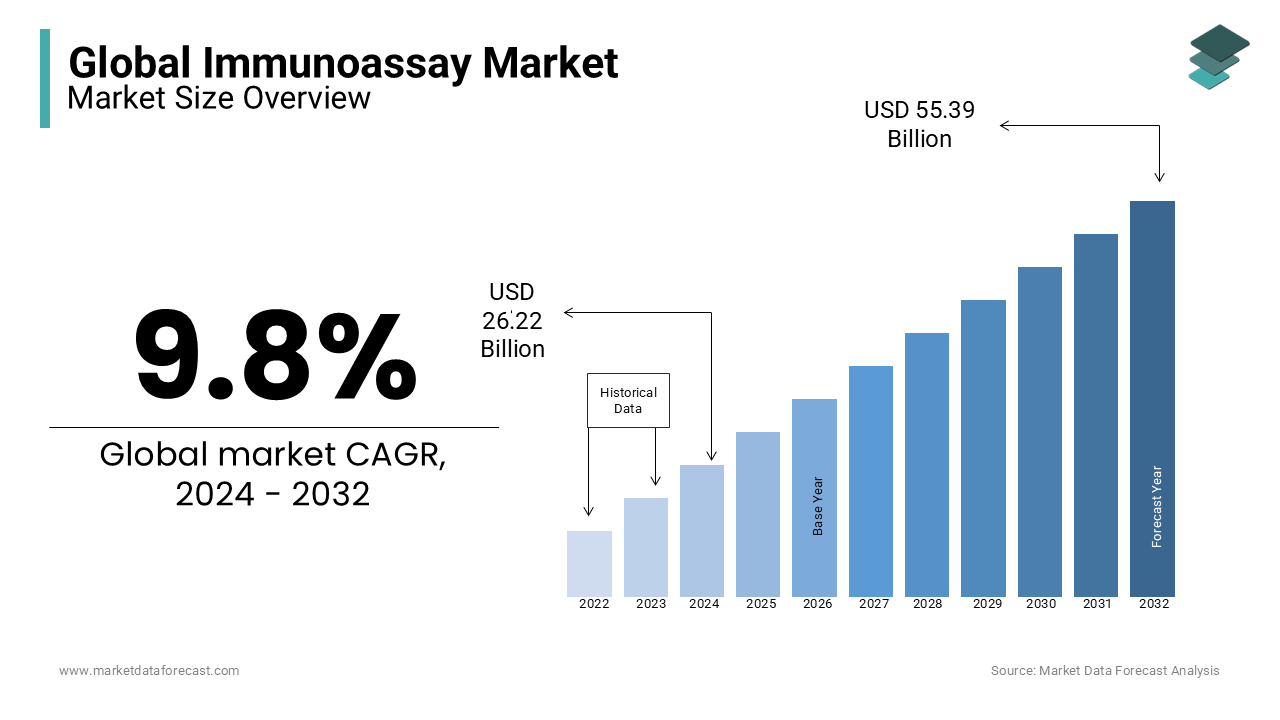
Immunoassay comprises a critical segment of the diagnostic industry focused on detecting and quantifying specific analytes such as hormones, proteins, antibodies, and drugs in biological samples using antigen-antibody reactions. These tests are fundamental to clinical diagnostics, drug development, and food safety testing, providing high sensitivity and specificity for disease management. The technology encompasses various formats including enzyme-linked immunosorbent assays, radioimmunoassays, and fluorescence immunoassays, which are integral to modern laboratory workflows. According to the World Health Organization, non-communicable diseases account for 74% of all deaths globally, necessitating precise diagnostic tools for early detection and monitoring of conditions like diabetes, cardiovascular diseases, and cancer. As per the Centers for Disease Control and Prevention, chronic liver disease remains a significant public health concern requiring regular serological testing to monitor disease progression and treatment efficacy. Furthermore, the European Centre for Disease Prevention and Control emphasizes the role of rapid immunoassays in managing infectious disease outbreaks by enabling quick identification of pathogens. As healthcare systems transition towards personalized medicine, the demand for highly accurate quantitative data increases, driving innovation in assay design and automation. The integration of immunoassays with automated platforms enhances throughput and reduces human error, supporting the growing volume of diagnostic tests performed annually. This technological evolution ensures that immunoassays remain indispensable in maintaining public health standards and improving patient outcomes through timely and accurate diagnosis.
MARKET DRIVERS
Rising Prevalence of Chronic Diseases and Infectious Outbreaks
The escalating global burden of chronic diseases and the recurring threat of infectious outbreaks is propelling the expansion of the global immunoassay market. Conditions such as diabetes, cardiovascular disorders, and cancer require continuous monitoring through biomarker analysis, which relies heavily on immunoassay technologies. According to the International Diabetes Federation, approximately 537 million adults were living with diabetes in 2021, which is a figure projected to rise to 643 million by 2030, creating sustained demand for glycated hemoglobin and insulin assays. Similarly, the World Health Organization reports that cardiovascular diseases are the leading cause of death globally, accounting for an estimated 17.9 million deaths each year and this requires routine cardiac marker testing such as troponin and B-type natriuretic peptide. Infectious diseases also drive demand, particularly during pandemics where rapid antigen and antibody tests are crucial for surveillance and containment. According to the Centers for Disease Control and Prevention, there were 51 million influenza-related illnesses during the 2024–2025 seasons and this requires widespread diagnostic testing to guide treatment decisions. The ability of immunoassays to provide rapid and accurate results makes them essential for both chronic disease management and acute infection control. As healthcare providers prioritize early intervention and preventive care, the volume of diagnostic tests continues to grow, reinforcing the central role of immunoassays in modern medical practice and public health infrastructure.
Technological Advancements in Automation and Multiplexing
Rapid technological advancements in automation and multiplexing capabilities are further contributing to the growth of the global immunoassay market. Modern automated immunoassay analyzers offer high-throughput processing, which is reducing turnaround times and minimizing manual errors associated with traditional methods. According to research published in the National Library of Medicine, total laboratory automation can increase the number of tests performed per worker by an average of 1.4 to 3.7 times in clinical chemistry and serology sections and this allows laboratories to handle increasing test volumes without proportional increases in staffing. Multiplex immunoassays enable the simultaneous detection of multiple analytes from a single sample, providing comprehensive diagnostic profiles while conserving specimen volume and reagents. The National Institutes of Health supports research into multiplex technologies for complex disease profiling, such as cytokine panels in immunology, which enhance understanding of disease mechanisms. These advancements appeal to large hospital networks and reference laboratories seeking to optimize workflow and reduce costs per test. Additionally, the integration of artificial intelligence in data interpretation improves accuracy and identifies subtle patterns that may be missed by manual review. As laboratories face pressure to deliver faster results with higher precision, the shift towards advanced automated and multiplexed immunoassay platforms accelerates. This technological evolution not only enhances diagnostic capabilities but also supports the scalability required to meet the growing demands of personalized medicine and population health screening programs.
MARKET RESTRAINTS
High Cost of Advanced Immunoassay Systems and Reagents
The substantial financial investment required for acquiring and maintaining advanced immunoassay systems is a significant impediment to the global market growth, particularly in resource-constrained healthcare settings. High-end automated analyzers and specialized reagents often come with premium price tags that can strain the budgets of small hospitals and independent laboratories. According to the World Bank, low-income economies often face significant barriers in health spending per capita, limiting their ability to invest in sophisticated diagnostic infrastructure. The recurring cost of proprietary reagents and calibration materials further adds to the total cost of ownership, making long-term sustainability challenging for facilities with limited funding. According to the Healthcare Financial Management Association, laboratory departments often face pressure to reduce operational expenses, leading to delays in upgrading outdated equipment. Additionally, the complexity of these systems requires specialized training for personnel, which is adding to labor costs. In developing regions, the lack of reliable electricity and cold-chain infrastructure for reagent storage further complicates implementation. These financial and logistical barriers restrict access to high-quality diagnostic testing for underserved populations. Manufacturers face the challenge of balancing innovation with affordability to make these critical tools accessible globally. Until cost-effective solutions are developed, the high expense of advanced immunoassay technologies will continue to limit their widespread adoption in emerging markets.
Regulatory Complexity and Standardization Issues
Navigating the complex regulatory landscape and addressing standardization issues present major restraints to the global expansion of the immunoassay market. Regulatory bodies such as the Food and Drug Administration in the United States and the European Medicines Agency in Europe impose stringent requirements for assay validation, clinical performance, and manufacturing quality. According to the International Organization for Standardization, variations in assay protocols and reference materials across different manufacturers can lead to inconsistent results, complicating clinical decision-making. The lack of universal standards for certain biomarkers means that results from one platform may not be comparable to another, which is hindering data integration and longitudinal patient monitoring. The Clinical and Laboratory Standards Institute emphasizes the need for harmonization to ensure reliability and reproducibility across laboratories. Obtaining regulatory approval for new assays is a time-consuming and costly process involving extensive clinical trials and documentation. Changes in regulations, such as the European Union In-Vitro Diagnostic Regulation have introduced stricter requirements for post-market surveillance, which is increasing the burden on manufacturers. These regulatory hurdles slow the introduction of innovative tests and increase compliance costs. Additionally, differences in regulatory frameworks across regions require manufacturers to adapt products for specific markets, further delaying global launch. Until greater harmonization is achieved, the regulatory complexity will continue to impede the rapid deployment of new immunoassay technologies.
MARKET OPPORTUNITIES
Expansion into Point of Care and Home Testing Markets
The growing demand for decentralized diagnostics presents a substantial opportunity for the immunoassay market through the expansion of point-of-care and home testing solutions. Patients and healthcare providers increasingly seek rapid results outside traditional laboratory settings to facilitate immediate clinical decisions and improve convenience. For instance, the demand for point-of-care testing is growing rapidly as demand for quick testing and early-stage diagnosis rises. The rise of telemedicine and remote patient monitoring further drives the need for portable immunoassay devices that can be used in home settings. The Food and Drug Administration has authorized numerous over-the-counter immunoassays for conditions such as pregnancy, ovulation, and infectious diseases, empowering consumers to manage their health proactively. Technological miniaturization enables the development of handheld devices that offer laboratory-grade accuracy with ease of use. This shift aligns with the broader trend towards patient-centered care and value-based healthcare models that prioritize accessibility and efficiency. Manufacturers can capitalize on this opportunity by developing user-friendly devices with intuitive interfaces and connectivity features for data sharing. Partnerships with digital health platforms can enhance the utility of home testing by integrating results into electronic health records. As consumer awareness of health metrics grows, the market for portable and home-based immunoassays is poised for significant expansion.
Integration of Artificial Intelligence and Digital Health Platforms
The integration of artificial intelligence and digital health platforms offers a prominent opportunity for the immunoassay market by enhancing data analysis and clinical utility. AI algorithms can process large volumes of immunoassay data to identify patterns, predict disease risk, and optimize test interpretation. According to the National Institutes of Health, machine learning applications in diagnostics are improving the accuracy of biomarker detection and reducing false-positive rates. Digital platforms enable seamless connectivity between immunoassay devices and electronic health records, facilitating real-time data sharing and collaborative care. According to the Healthcare Information and Management Systems Society, interoperable systems improve workflow efficiency and reduce administrative burdens for healthcare providers. Cloud-based analytics allow for centralized monitoring of test performance and quality control across multiple locations to ensure consistency and compliance. Additionally, AI-driven insights can support personalized medicine by correlating immunoassay results with genetic and lifestyle data to tailor treatment plans. Manufacturers who embed smart capabilities into their systems can offer value-added services such as predictive maintenance and automated reporting. This digital transformation opens new revenue streams through software subscriptions and data analytics services. As healthcare systems increasingly rely on data-driven decision-making, the convergence of immunoassays with AI and digital health creates significant growth potential for innovative market participants.
MARKET CHALLENGES
Interference from Heterophilic Antibodies and Matrix Effects
The presence of heterophilic antibodies and matrix effects in patient samples is challenging the global market expansion. Heterophilic antibodies are endogenous antibodies that can bind to assay reagents, causing false-positive or false-negative results independent of the target analyte. According to scientific literature in Clinical Chemistry, interference from heterophilic antibodies affects a notable number of immunoassay results, potentially leading to misdiagnosis and inappropriate treatment. Matrix effects caused by substances such as lipids, bilirubin, or hemoglobin in the sample can also alter assay performance, affecting signal detection. These interferences are difficult to predict and vary between individuals, making standardization challenging. Laboratories must implement additional steps, such as sample pre-treatment or the use of blocking agents, to mitigate these effects, increasing complexity and cost. The lack of universal solutions for interference means that each assay requires specific validation for robustness. Clinicians may lose confidence in test results if interference issues are not adequately addressed, leading to repeat testing and delayed care. Manufacturers face the ongoing challenge of developing assays with higher specificity and resistance to interference. Until more robust methods are widely adopted, the risk of analytical errors due to sample matrix issues remains a persistent concern affecting clinical trust and operational efficiency.
Shortage of Skilled Laboratory Personnel and Technical Expertise
The global shortage of skilled laboratory professionals and technical expertise is further challenging the global immunoassay market growth. Operating sophisticated immunoassay analyzers and interpreting complex results require specialized training and experience, which is becoming increasingly scarce. According to the American Society for Clinical Laboratory Science, there is a substantial workforce gap in the United States where academic programs are producing only about 5,000 of the 10,000 new medical laboratory professionals needed annually. This shortage leads to increased workload for existing staff, higher error rates, and longer turnaround times for test results. In many developing regions, the lack of trained personnel limits the adoption of advanced immunoassay technologies despite the availability of equipment. Training new staff is time-consuming and expensive, requiring investment in education and certification programs. The complexity of new multiplex and automated systems further exacerbates the skills gap, as traditional training may not cover advanced troubleshooting and maintenance. High turnover rates in laboratory positions disrupt continuity and institutional knowledge, affecting operational stability. Healthcare facilities struggle to recruit and retain qualified personnel due to competitive job markets and burnout. Addressing this human capital challenge requires concerted efforts in education, automation, and workflow simplification. Without adequate skilled personnel, the full potential of advanced immunoassay technologies cannot be realized, hindering diagnostic capacity and patient care quality.
REPORT COVERAGE
| REPORT METRIC | DETAILS |
| Market Size Available | 2025 to 2034 |
| Base Year | 2025 |
| Forecast Period | 2026 to 2034 |
| Segments Covered | By Technology, Application, End Users, and Region |
| Various Analyses Covered | Global, Regional & Country Level Analysis, Segment-Level Analysis; DROC, PESTLE Analysis, Porter's Five Forces Analysis, Competitive Landscape, Analyst Overview of Investment Opportunities |
| Regions Covered | North America, Europe, APAC, Latin America, Middle East & Africa |
| Market Leader Profiled | Roche Diagnostics, DiaSorin S.p.A, Beckman Coulter, Siemens Healthcare, Ortho Clinical Diagnostics, bioMerieux, Thermo Fisher Scientific, Abbott Laboratories, Akers Biosciences, Inc., Becton Dickinson and Company, Devon Medical Products. |
SEGMENTAL ANALYSIS
By Technology Insights
The chemiluminescence immunoassay segment dominated the market by capturing the largest share of the global market in 2025. The dominance of chemiluminescence immunoassay segment in the global market is driven by its superior sensitivity, wide dynamic range, and automation compatibility, which are essential for high-volume clinical laboratories. This technology utilizes light emission from chemical reactions to detect analytes, offering lower detection limits compared to enzyme or fluorescence-based methods. According to research published in the Journal of Clinical Laboratory Analysis, high-throughput chemiluminescent systems demonstrate stable performance with within-run coefficients of variation typically below 4% and accuracy verification meeting external quality assessment criteria for various biomarkers. The primary driver for this dominance is the widespread adoption of fully automated analyzers in hospital settings that require rapid turnaround times and minimal manual intervention. For instance, chemiluminescence platforms can process hundreds of tests per hour, significantly improving laboratory throughput and operational efficiency. Additionally, the stability of chemiluminescent reagents allows for longer shelf life and reduced waste, contributing to cost-effectiveness for large healthcare facilities. The ability to integrate multiple test panels on a single platform further enhances its appeal for comprehensive diagnostic workflows. As demand for high-sensitivity testing grows for oncology and infectious diseases, chemiluminescence remains the preferred technology for reference laboratories and major hospital networks, ensuring its continued market leadership through robust performance and scalability.
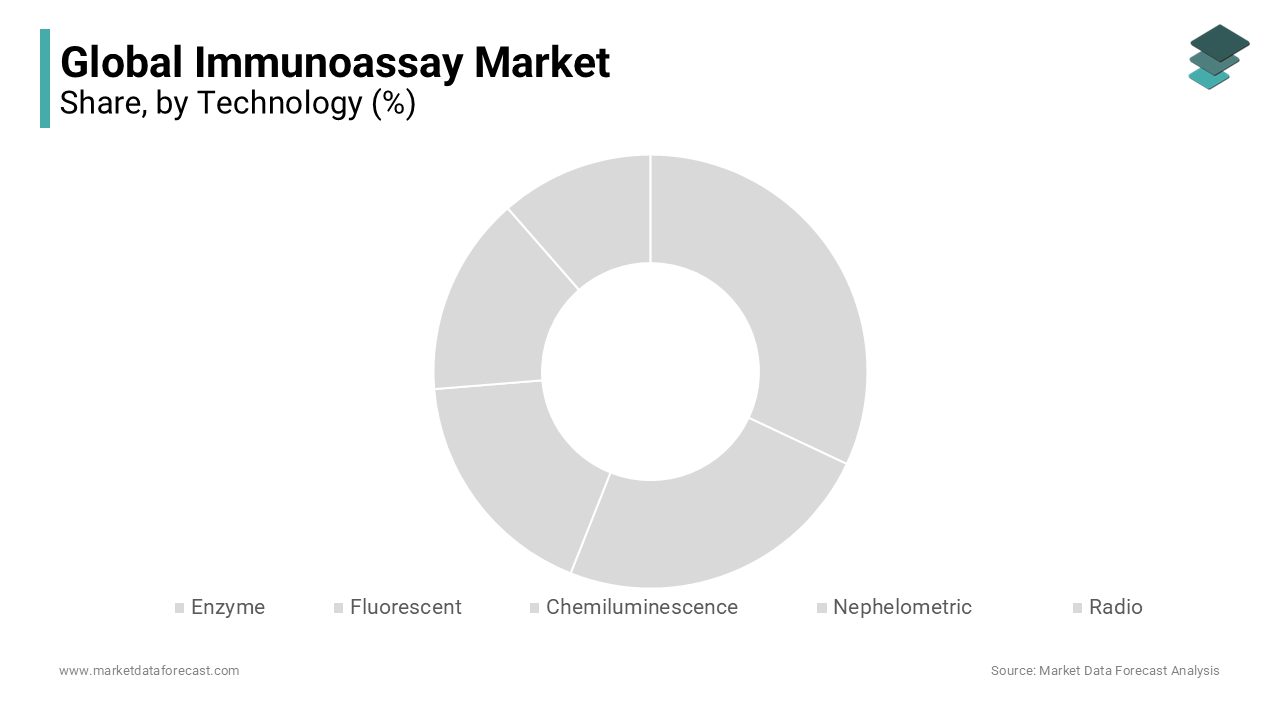
On the other side, the fluorescence immunoassay segment is the fastest growing segment in the market and is estimated to record a CAGR of 9.4% over the forecast period owing to its versatility and application in point-of-care testing. This technology uses fluorescent labels to detect analytes that offer high sensitivity and the ability to perform multiplex analysis where multiple targets are measured simultaneously. According to the National Institutes of Health, fluorescence-based techniques are increasingly used in research and clinical settings for detecting cytokines and other complex biomarkers due to their broad linear range and specificity. The miniaturization of fluorescence detectors that enable their integration into portable handheld devices for bedside and home use is further aiding the fluorescence immunoassay segment in the global market. According to the World Health Organization, rapid diagnostic tools are critical in resource-limited settings where fluorescence-based lateral flow assays provide quick and accurate results for infectious diseases. Additionally, advancements in quantum dot technology have improved the brightness and stability of fluorescent labels, enhancing signal-to-noise ratios. The rise of personalized medicine requires detailed profiling of patient samples, which fluorescence immunoassays facilitate through multiplexing capabilities. As healthcare systems shift towards decentralized testing, the demand for compact and sensitive fluorescence devices increases and is driving rapid adoption in clinics, emergency rooms and remote health centers.
By Application Insights
The infectious diseases segment dominated the market by holding the major share of the global market in 2025. The leading position of infectious diseases segment in the global market is attributed to the high global burden of viral, bacterial, and parasitic infections requiring rapid and accurate diagnosis. The prevalence of diseases such as HIV, hepatitis, influenza, and sexually transmitted infections drives consistent demand for serological and antigen testing. According to the World Health Organization, infectious diseases remain a significant cause of morbidity and mortality globally, necessitating widespread screening and monitoring. The COVID-19 pandemic further accelerated the adoption of immunoassays for mass surveillance, highlighting their critical role in public health response. As per the Centers for Disease Control and Prevention, timely diagnosis of infectious agents is essential for initiating appropriate treatment and preventing transmission within communities. Immunoassays offer the speed and sensitivity required for detecting acute infections, which is allowing for immediate isolation and care. Additionally, routine screening programs for blood donations and prenatal care rely heavily on immunoassay technologies to ensure safety and prevent the vertical transmission of pathogens. The recurring nature of seasonal outbreaks and the emergence of new pathogens ensure a steady and often surging demand for infectious disease testing. This segment’s dominance is reinforced by government funding for disease control initiatives and the integration of rapid tests into primary care protocols worldwide.
On the other end, the oncology segment is predicted to showcase a promising CAGR of 10.2% over the forecast period owing to the rising incidence of cancer and the shift towards early detection and personalized therapy. Cancer biomarkers such as prostate-specific antigen, carcinoembryonic antigen, and CA-125 are routinely monitored using immunoassays to assess treatment response and detect recurrence. According to the International Agency for Research on Cancer, the number of new cancer cases is expected to increase by approximately 47% by 2040, creating an urgent need for sensitive diagnostic tools. The primary factor fueling this growth is the development of targeted therapies that require precise quantification of specific proteins to guide treatment decisions. The National Cancer Institute supports the use of liquid biopsies and circulating tumor markers detected via immunoassays as less invasive alternatives to tissue biopsies. Additionally, awareness campaigns and screening programs for breast, cervical, and colorectal cancers have increased the volume of routine testing in asymptomatic populations. Advances in multiplex immunoassays allow for the simultaneous detection of multiple cancer markers, improving diagnostic accuracy and prognosis. As healthcare systems prioritize value-based care and early intervention, the demand for oncology immunoassays continues to surge, driving innovation and expansion in this high-value segment.
By End User Insights
The hospitals segment led the market with the leading share of the global market in 2025. The dominance of the hospitals segment is primarily attributed to their high patient volume, comprehensive diagnostic capabilities, and integration with electronic health records. Large medical centers perform a vast array of tests daily, ranging from emergency diagnostics to routine monitoring, requiring high-throughput automated immunoassay systems. According to American Hospital Association data, hospitals remain the primary hubs for patient care and the most significant consumers of laboratory testing, maintaining high demand for immunoassay reagents and instruments. The primary driver for this dominance is the need for rapid and accurate results to support critical clinical decisions in emergency departments, intensive care units, and operating theatres. Hospitals also serve as referral centers for complex cases requiring specialized testing such as tumor markers and hormonal assays, which are pre-dominantly, performed using immunoassays. The consolidation of healthcare systems has led to the establishment of central laboratories within hospital networks, further concentrating demand. Additionally, regulatory requirements for quality control and accreditation ensure that hospitals invest in state-of-the-art immunoassay platforms to maintain standards. The availability of skilled laboratory personnel and infrastructure supports the efficient operation of these systems. As hospitals expand their service lines and adopt integrated diagnostic solutions, their position as the leading end-user remains unchallenged.
However, the diagnostic laboratories segment is estimated to record a CAGR of 8.1% over the forecast period in the global market owing to the outsourcing of testing services by hospitals and clinics. Independent and reference laboratories offer specialized testing capabilities and economies of scale that allow them to process large volumes of samples efficiently. According to the Association for Diagnostics and Laboratory Medicine, the trend towards centralized testing is accelerating as healthcare providers seek to reduce operational costs and improve turnaround times. The primary factor fueling this growth is the increasing complexity of diagnostic panels, which require advanced immunoassay platforms that smaller facilities may not afford. Reference laboratories invest heavily in automation and multiplexing technologies to handle diverse test requests from multiple clients. The rise of telemedicine and direct-to-consumer testing has also expanded the customer base for diagnostic labs, requiring robust logistics and high-capacity processing. Additionally, partnerships with insurance providers and healthcare networks favor consolidated laboratory services for standardized reporting and cost management. As the demand for specialized and high-volume testing grows, diagnostic laboratories are expanding their infrastructure and adopting next-generation immunoassay technologies to meet market needs.
REGIONAL ANALYSIS
North America Immunoassay Market Analysis
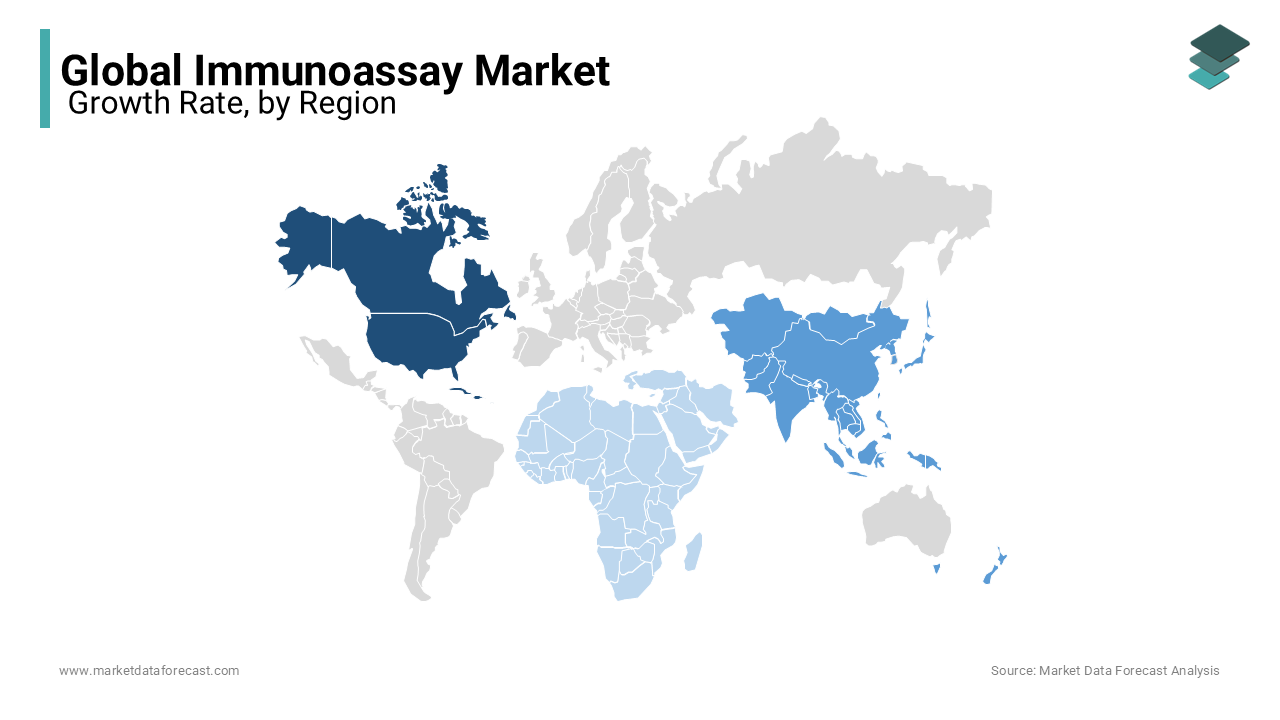
North America accounted for the dominant share of the global market in 2025 and is likely to maintain its market dominance for the next few years due to continued high healthcare spending and ongoing investment in diagnostic innovation. The region holds the largest share of the global immunoassay market characterized by advanced healthcare infrastructure, high healthcare expenditure, and a strong presence of key market players. The region benefits from a well-established network of hospitals and reference laboratories that widely adopt automated immunoassay systems. According to the Centers for Medicare and Medicaid Services, healthcare spending in the United States remains substantial, reflecting consistent investment in diagnostic technologies. The high prevalence of chronic diseases such as cancer and cardiovascular conditions drives consistent demand for routine monitoring and early detection tests. Regulatory support from the Food and Drug Administration ensures high standards for assay quality and safety, fostering trust in diagnostic results. Additionally, the region is a hub for innovation with significant research and development activities focused on novel biomarkers and multiplex technologies. The adoption of electronic health records facilitates seamless integration of laboratory data, improving clinical decision-making. With a strong focus on personalized medicine and preventive care, North America remains the dominant force in the immunoassay market, setting trends for technological advancement and clinical application.
Europe Immunoassay Market Analysis
Europe is expected to witness steady growth in the coming years as regional healthcare systems continue to prioritize standardized, high-quality diagnostic protocols. Europe occupies a significant position in the immunoassay market driven by universal healthcare systems, stringent regulatory frameworks, and aging population demographics. The European Union’s In Vitro Diagnostic Regulation imposes rigorous requirements for product performance and clinical evidence, ensuring high-quality standards across member states. According to Eurostat, healthcare expenditure in the EU accounts for approximately 10% of GDP, supporting robust diagnostic infrastructure in countries like Germany, France, and the United Kingdom. The aging population increases the incidence of chronic diseases and cancer, driving demand for regular monitoring and screening programs. Public health initiatives focused on infectious disease control and vaccination coverage further sustain demand for serological testing. The region is also a leader in adopting sustainable practices in laboratory operations, influencing product design and waste management. Collaborative research projects funded by the European Commission promote innovation in biomarker discovery and assay development. With a strong emphasis on quality assurance and patient safety, Europe continues to be a key market for high-performance immunoassay solutions.
Asia-Pacific Immunoassay Market Analysis
The Asia-Pacific region is poised to experience rapid expansion over the next few years as infrastructure development and increased healthcare access continue to drive market demand. The region is the fastest-growing market for immunoassays fueled by rapid healthcare infrastructure development, increasing healthcare access, and rising awareness of preventive care. Countries such as China, India, Japan, and Australia are witnessing significant investments in hospital construction and laboratory modernization. According to World Bank data, healthcare spending in Asia has been growing steadily as governments prioritize improving diagnostic capabilities for their large populations. The rising middle class and increasing prevalence of non-communicable diseases drive demand for advanced diagnostic tests including tumor markers and cardiac profiles. In China, the Healthy China 2030 initiative promotes early screening and disease prevention, leading to higher utilization of immunoassay services. India is seeing a boom in private diagnostic chains that are adopting automated platforms to improve efficiency and accuracy. Japan’s advanced technological landscape supports the adoption of high-sensitivity assays for elderly care. Additionally, medical tourism in Southeast Asia drives demand for internationally accredited laboratories. With supportive government policies and expanding insurance coverage, the Asia-Pacific region presents immense opportunities for immunoassay manufacturers.
Latin America Immunoassay Market Analysis
Latin America is likely to see gradual development over the next few years as private sector investment and healthcare reforms improve diagnostic accessibility. The region represents an emerging segment in the immunoassay market with growth driven by healthcare reforms, increasing private insurance coverage, and urbanization. Brazil, Mexico, and Argentina are the largest markets in the region with ongoing efforts to improve public health infrastructure and diagnostic access. According to the Pan American Health Organization, strengthening laboratory networks is a priority for many Latin American countries to address the burden of infectious and chronic diseases. The expansion of private hospital chains and diagnostic centers is driving the adoption of automated immunoassay systems to enhance service quality. However, economic volatility and budget constraints in the public sector limit the pace of technology adoption compared to North America and Europe. Nevertheless, international collaborations and aid programs are helping to introduce advanced diagnostic tools for disease surveillance. The growing awareness of preventive healthcare among the middle class is increasing the volume of outpatient testing. As healthcare systems continue to evolve, Latin America offers promising growth potential for immunoassay providers who can offer cost-effective and reliable solutions.
Middle East and Africa Immunoassay Market Analysis
The Middle East and Africa region is expected to undergo targeted growth in the next few years as government-led health initiatives and infrastructure projects mature. The region presents diverse opportunities in the immunoassay market driven by government investments in healthcare infrastructure in the Gulf states and international aid initiatives in Africa. Countries in the Gulf Cooperation Council such as Saudi Arabia and the United Arab Emirates are heavily investing in world-class medical facilities, creating demand for advanced diagnostic technologies. According to the World Health Organization, improving access to essential diagnostic services is a key goal for many African nations, leading to increased demand for basic and rapid immunoassays. In the Middle East, the focus on medical tourism and specialized care drives the adoption of high-sensitivity assays for oncology and genetics. In Africa, the challenge lies in establishing reliable supply chains and ensuring the quality of testing in remote areas. Non-governmental organizations play a crucial role in supplying rapid diagnostic tests for infectious diseases such as malaria and HIV. As political stability improves and healthcare spending increases, the region is expected to witness steady growth in the adoption of standardized immunoassay solutions supported by capacity building and infrastructure development.
COMPETITIVE LANDSCAPE
The competition in the immunoassay market is intense and characterized by the presence of established multinational corporations and specialized diagnostic companies who compete on technology accuracy and service quality. Major players leverage their extensive research and development capabilities to innovate in assay design automation and biomarker discovery. The market sees frequent collaborations between device manufacturers and pharmaceutical companies to develop companion diagnostics for targeted therapies. Price competition is significant particularly for routine tests where standardization allows for multiple suppliers. However differentiation through superior sensitivity speed and comprehensive test menus helps premium suppliers maintain higher margins. The shift towards personalized medicine has intensified competition as companies race to provide specialized assays for niche indications. Regulatory compliance across different regions adds complexity requiring companies to maintain robust quality management systems. Supply chain resilience for reagents and components has become a key competitive advantage as disruptions can significantly impact laboratory operations. Companies that successfully balance innovation reliability and customer support are best positioned to thrive in this dynamic and essential market sector.
KEY MARKET PLAYERS
Some of the most promising companies leading the Global Immunoassay Market include
- Roche Diagnostics
- DiaSorin S.p.A.
- Beckman Coulter
- Siemens Healthcare
- Ortho Clinical Diagnostics
- bioMérieux
- Thermo Fisher Scientific
- Abbott Laboratories
- Akers Biosciences, Inc.
- Becton, Dickinson and Company
- Devon Medical Products
- EDP Biotech Corporation
- Hologic (Gen-Probe)
- Intrinsic LifeSciences
Top Players in the Global Immunoassay Market
F Hoffmann La Roche Ltd
F Hoffmann La Roche Ltd is a global leader in diagnostics providing comprehensive immunoassay solutions through its Elecsys platform. The company specializes in high throughput automated systems for clinical chemistry and immunology serving hospitals and reference laboratories worldwide. Roche strengthens its market position by continuously expanding its test menu to include novel biomarkers for oncology cardiology and infectious diseases. Recent actions include integrating artificial intelligence into laboratory workflows to enhance data interpretation and operational efficiency. The company focuses on strategic partnerships with healthcare providers to develop personalized diagnostic algorithms. By investing in research and development Roche delivers innovative assays that meet stringent regulatory standards while improving patient outcomes. Its commitment to quality and reliability ensures that Roche remains a trusted partner for clinical decision making and disease management globally.
Siemens Healthineers AG
Siemens Healthineers AG is a prominent player in the immunoassay market offering advanced diagnostic platforms such as Atellica and Dimension systems. The company provides a wide range of reagents and instruments designed for high performance and workflow integration in clinical laboratories. Siemens Healthineers strengthens its position by focusing on digitalization and connectivity solutions that streamline laboratory operations and reduce turnaround times. Recent initiatives include launching new assays for early disease detection and monitoring chronic conditions with improved sensitivity. The company collaborates with academic institutions to validate new biomarkers and expand its clinical utility. By emphasizing automation and customer support Siemens Healthineers enables laboratories to handle increasing test volumes efficiently. Its robust portfolio and technological innovation ensure that it meets the evolving needs of modern healthcare systems while maintaining high standards of accuracy and reliability.
Abbott Laboratories
Abbott Laboratories is a key contributor to the immunoassay market known for its diverse portfolio including Alinity and Architect systems. The company offers specialized tests for infectious diseases cardiac markers and therapeutic drug monitoring catering to various clinical needs. Abbott strengthens its market position through aggressive expansion in point of care testing and rapid diagnostic solutions. Recent actions include developing high sensitivity troponin assays and expanding its molecular diagnostic capabilities to complement immunoassay offerings. The company invests heavily in manufacturing capacity to ensure global supply chain resilience and product availability. Abbott also focuses on educational programs for healthcare professionals to optimize assay utilization and interpretation. By combining scientific expertise with accessible technologies Abbott delivers reliable diagnostic tools that support timely and accurate patient care across diverse healthcare settings worldwide.
Top Strategies Used by Key Market Participants
Key players in the immunoassay market employ several strategic approaches to maintain competitiveness and drive growth. Product innovation is a primary strategy where companies develop high sensitivity assays and multiplex panels to address unmet clinical needs. Strategic partnerships with research institutions allow firms to validate new biomarkers and accelerate regulatory approvals. Geographic expansion is another critical approach enabling companies to establish presence in emerging markets with growing healthcare infrastructure. Additionally companies focus on digital integration by connecting immunoassay analyzers with laboratory information systems for seamless data flow. Sustainability initiatives are increasingly important as manufacturers adopt eco friendly packaging and waste reduction practices. These strategies collectively help market participants adapt to changing regulatory requirements and customer preferences while delivering value through enhanced diagnostic capabilities.
RECENT HAPPENINGS IN THE MARKET
- In 2019, Abbott Laboratories developed a fully automated immunoassay analyzer called Abbott Prism and worked on Chia technology. It is beneficial for screening blood with practical outcomes. Other benefits of these systems are cGMP compliance, error reduction owing to the network's tamper resistance, less human intervention as the system takes care of the monitoring, processing, and documentation, and improved lab efficiency.
- In July 2018, Cygnus Technologies collaborated with Gyros Protein Technologies to develop immunoassay kits to detect biotherapeutics' impurities. The strategic partnership between the two will focus mainly on providing customers with bioanalytical solutions and enhancing biotherapeutics manufacturing productivity.
MARKET SEGMENTATION
This research report on the global immunoassay market has been segmented and sub-segmented based on technology, application, end-user and region.
By Technology
- Enzyme
- Fluorescent
- Chemiluminescence
- Nephelometric
- Radio
- Counting
By Application
- Oncology
- Cancer
- Hematology
- Cardiology
- Thyroid
- Infectious diseases
- Allergies
By End User
- Hospitals
- Clinics
- Academic Research Institute
- Pharmaceutical
- Biotech vendors
- Laboratories
By End User
- Hospitals
- Clinics
- Academic Research Institute
- Pharmaceutical
- Biotech vendors
- Laboratories
By Region
- North America
- Europe
- Asia Pacific
- Latin America
- Middle East & Africa