- Product Description Description
- Table of Contents TOC
- List of Table & Figure LOT
- Get Free Sample PDF Sample PDF
Market Size, 2025
$519.01 MnMarket Estimate, 2026
$681.10 MnMarket Forecast, 2034
$5990.68 MnCAGR, 2026–2034
31.23%Executive Summary: Asia-Pacific Liquid Biopsy Market
- Market Scope: Comprehensive regional market evaluation of the Asia-Pacific liquid biopsy sector covering cancer types, diagnostic approaches, end-users, and country-level distribution frameworks.
- Market Valuation: Valued at USD 519.01 million in 2025, estimated at USD 681.10 million in 2026, and projected to reach USD 5,990.68 million by 2034, registering an extraordinary CAGR of 31.23% from 2026 to 2034.
- Primary Growth Drivers: Escalating burden of malignancies and cancer mortality across the region, urgent clinical need for early detection tools, and a strategic healthcare shift toward precision oncology and personalized medicine.
Key Market Segment Metrics (2026–2034)
| Category | Leading Segment (2025 Position) | Fastest-Growing / Preferred Segment |
|---|---|---|
| By Cancer Type | Lung Cancer (dominated with a 35.9% share in 2025 due to high regional incidence and targeted mutation profiling needs) | Pancreatic Cancer (predicted to witness the highest CAGR driven by critical early detection needs and poor late-stage prognoses) |
| By Diagnostic Approach | Circulating Tumour DNA (ctDNA) (captured 50.7% share in 2025 as the gold standard with extensive clinical validation) | RNA in Exosomes (estimated to register the fastest CAGR of 16.2% owing to superior stability and early screening utility) |
| By End-User | Reference Laboratories (held the majority share of 45.8% in 2025 backed by specialized expertise, advanced NGS, and economies of scale) | Hospital/Physician Laboratories (expanding rapidly as decentralized molecular testing capabilities integrate into clinical care workflows) |
| By Region / Country | China & Japan (major regional revenue hubs driven by high patient populations, national cancer centers, and policy support) | India & South Korea (accelerating adoption due to rising molecular diagnostic investments and expanding national health coverage) |
Major Market Players & Market Structure
Market Structure: Highly competitive landscape featuring global diagnostics leaders and specialized genomic firms competing on assay sensitivity, companion diagnostic approvals, automation, and clinical validation across diverse regulatory frameworks.
Key Companies: F. Hoffmann-La Roche Ltd, Guardant Health, Thermo Fisher Scientific Inc., Exact Sciences Corporation, Illumina Inc., Qiagen, Myriad Genetics, Natera, Bio-Rad Laboratories, Inc., and NeoGenomics Laboratories.
Asia Pacific Liquid Biopsy Market Size
The liquid biopsy market size in Asia-Pacific was valued at USD 519.01 million in 2025. The Asia-Pacific market is predicted to experience a CAGR of 31.23% from 2026 to 2034 and be worth USD 5990.68 million by 2034 from USD 681.10 million in 2026.
A liquid biopsy is a simple and non-invasive medical test that detects signs of cancer or other diseases using a sample of bodily fluid, most commonly blood. This non invasive approach offers a dynamic alternative to traditional tissue biopsies enabling real time assessment of tumor heterogeneity and treatment response. The region is witnessing accelerated adoption driven by the escalating burden of malignancies and the urgent need for precision oncology solutions. According to the World Health Organization, cancer is a primary cause of mortality in the Western Pacific Region, representing a significant portion of annual deaths across the continent. In China the National Cancer Center reports that there were 4.82 million new cancer cases in 2022, emphasizing the critical demand for early detection tools. Similarly in Japan the Ministry of Health Labour and Welfare indicates that cancer has been the top cause of death for over three decades necessitating advanced monitoring strategies. : The International Agency for Research on Cancer anticipates a significant rise in cancer incidence across Asia over the coming decades, primarily attributed to an aging population and changing lifestyle patterns. These epidemiological trends underscore the limitations of invasive procedures and the potential of liquid biopsy to improve patient outcomes. The market is thus propelled by the convergence of technological advancements increasing healthcare expenditure and a strategic shift towards personalized medicine across major economies in the Asia Pacific region.
MARKET DRIVERS
Rising Prevalence of Cancer and Demand for Early Detection
The escalating prevalence of cancer across the Asia Pacific region serves as a primary driver for the Asia Pacific liquid biopsy market. This creates an urgent demand for sensitive and non invasive diagnostic tools. As the population ages and lifestyles westernize the incidence of malignancies such as lung liver and colorectal cancer is surging. According to the Global Cancer Observatory, lung cancer continues to be a major health challenge in Asia, representing one of the highest burdens of new diagnoses and mortality across the continent. In China the National Cancer Center states that the five year survival rate for many cancers remains low due to late stage diagnosis emphasizing the need for early detection methods. Liquid biopsy offers the ability to detect molecular alterations before tumors are visible on imaging scans. In India the Indian Council of Medical Research reports that one in nine Indians will develop cancer in their lifetime driving the adoption of screening technologies. The Ministry of Health and Family Welfare emphasizes that identifying cancer at its earliest stages is the most effective way to improve patient outcomes and increase the likelihood of successful treatment. In Japan the Ministry of Health Labour and Welfare highlights that the aging demographic contributes to higher cancer rates with over 30 percent of the population aged 65 or older. The Japanese Society of Clinical Oncology emphasizes the role of liquid biopsy in monitoring minimal residual disease. This growing disease burden coupled with the clinical need for timely intervention ensures sustained demand for liquid biopsy solutions across the region.
Advancements in Precision Oncology and Personalized Medicine
The rapid advancement of precision oncology and the shift towards personalized medicine significantly propel the Asia Pacific Liquid Biopsy Market. Healthcare providers are increasingly relying on molecular profiling to tailor treatments to individual patient profiles improving efficacy and reducing adverse effects. According to the American Society of Clinical Oncology liquid biopsy enables the identification of specific genetic mutations such as EGFR ALK and ROS1 which are critical for selecting targeted therapies in non small cell lung cancer. In South Korea the Korean Society of Medical Oncology reports that the adoption of next generation sequencing combined with liquid biopsy has become standard practice for managing advanced cancers. The Ministry of Health and Welfare supports reimbursement for genomic testing enhancing accessibility. In Australia the Royal College of Pathologists of Australasia notes that liquid biopsy is integral to monitoring treatment resistance and disease progression. The Therapeutic Goods Administration approves various companion diagnostics that rely on liquid biopsy data. In Singapore the Agency for Science Technology and Research invests heavily in biomarker discovery to support personalized therapy development. The Ministry of Health promotes the integration of genomic data into clinical decision making. This alignment of diagnostic innovation with therapeutic strategy drives the widespread adoption of liquid biopsy as a cornerstone of modern cancer care in the Asia Pacific region.
MARKET RESTRAINTS
High Cost of Testing and Limited Reimbursement Coverage
The high cost of liquid biopsy tests and limited reimbursement coverage act as major restraints to the Asia Pacific liquid biopsy market expansion. Advanced genomic profiling and circulating tumor DNA analysis are expensive procedures often costing several thousand dollars per test which places them out of reach for many patients. According to the World Bank out of pocket expenditure on healthcare remains high in many developing Asian countries limiting access to premium diagnostic services. In India the National Health Policy aims to reduce financial burden but comprehensive coverage for molecular diagnostics is still lacking. As per the Indian Society of Medical Oncology only a small fraction of patients can afford regular liquid biopsy monitoring without insurance support. In China the National Healthcare Security Administration has begun including some genetic tests in provincial insurance schemes but national coverage remains fragmented. The Chinese Society of Clinical Oncology notes that cost barriers prevent widespread adoption in rural areas. In Indonesia the Ministry of Health indicates that basic health insurance does not cover advanced cancer diagnostics forcing patients to pay fully out of pocket. The Indonesian Society of Internal Medicine highlights that affordability is a major challenge for middle and lower income families. In Thailand the National Health Security Office provides limited coverage for targeted therapy diagnostics. These financial constraints restrict market penetration to affluent urban populations slowing down overall industry growth and limiting equitable access to innovative cancer care solutions.
Lack of Standardization and Regulatory Heterogeneity
The lack of standardized protocols and heterogeneous regulatory frameworks across the region further hinders the growth of the Asia Pacific liquid biopsy market. Each country has distinct requirements for the validation approval and quality control of in vitro diagnostic devices creating complexities for manufacturers. According to the Association of Southeast Asian Nations harmonizing medical device regulations remains an ongoing effort with varying timelines and standards among member states. In China the National Medical Products Administration requires extensive local clinical data for foreign manufactured liquid biopsy kits increasing the time and cost for market entry. As per the China Chamber of Commerce for Import and Export of Medicines and Health Products the registration process can take several years hindering the availability of newer technologies. In India the Central Drugs Standard Control Organization has tightened norms for diagnostic approvals requiring additional bioequivalence studies. These regulatory hurdles limit the speed at which innovative products reach the market reducing competition and keeping prices high. In Japan the Ministry of Health Labour and Welfare maintains strict guidelines for laboratory developed tests which can be a barrier for smaller innovators. The lack of unified analytical and clinical validation standards leads to variability in test performance and interpretation. This fragmentation increases operational costs and delays product launches hindering the rapid dissemination of reliable liquid biopsy solutions across the diverse Asia Pacific landscape.
MARKET OPPORTUNITIES
Integration of Artificial Intelligence and Big Data Analytics
The integration of artificial intelligence and big data analytics offers a significant opportunity for the Asia Pacific Liquid Biopsy Market. This is achieved by enhancing the accuracy and interpretability of complex genomic data. AI algorithms can analyze vast amounts of circulating tumor DNA sequences to identify rare mutations and predict treatment responses with greater precision. In China the Ministry of Science and Technology supports research into AI driven diagnostics encouraging collaboration between tech firms and healthcare providers. As per the Chinese Society of Bioinformatics AI enabled platforms are being developed to streamline data analysis for liquid biopsy results. In Singapore the Agency for Science Technology and Research is pioneering machine learning models that interpret liquid biopsy data for early cancer detection. Moreover, in South Korea the Ministry of Science and ICT fosters innovation in AI healthcare applications leading to the development of sophisticated diagnostic tools. The Korean Food and Drug Administration has approved several AI based medical devices reflecting regulatory support. These technological advancements enable more precise and proactive healthcare management attracting both consumers and healthcare providers. Manufacturers can differentiate their products by offering predictive insights and efficient data processing. This approach drives adoption among tech-savvy medical institutions.
Expansion of Multi Cancer Early Detection Tests
The development and commercialization of multi cancer early detection MCED tests provide a potential prospect for the Asia Pacific Liquid Biopsy Market. These tests can screen for multiple types of cancer simultaneously from a single blood sample addressing the need for comprehensive screening programs. According to the American Cancer Society early detection is key to improving survival rates and MCED tests have the potential to revolutionize population level screening. In Japan the Ministry of Health Labour and Welfare is exploring the inclusion of MCED tests in national health checkups to address the high cancer burden. As per the Japanese Society of Clinical Oncology pilot studies are underway to validate the efficacy of these tests in asymptomatic populations. In Australia the Royal College of Pathologists of Australasia supports research into multi analyte liquid biopsy panels for broader cancer detection. The Medical Services Advisory Committee evaluates new technologies for public funding. In China the National Cancer Center is investing in large scale clinical trials to assess the performance of MCED tests in diverse populations. The National Health Commission emphasizes preventive care as a priority in the Healthy China 2030 initiative. The ability to detect multiple cancers early appeals to health conscious consumers and healthcare systems seeking cost effective screening solutions. This innovation opens new market segments beyond oncology monitoring driving significant growth potential for liquid biopsy providers in the region.
MARKET CHALLENGES
Technical Limitations and Sensitivity Issues
Technical limitations regarding the sensitivity and specificity of liquid biopsy assays are a major challenge to the Asia Pacific Liquid Biopsy Market. Detecting low levels of circulating tumor DNA in early stage cancer or minimal residual disease requires highly sensitive technologies that are not yet universally available or affordable. In India the Indian Journal of Medical Research highlights that variations in pre analytical handling of blood samples can affect test accuracy. As per the All India Institute of Medical Sciences standardization of sample collection and processing is lacking in many laboratories. In China the National Center for Clinical Laboratories notes that inter laboratory variability remains a concern affecting clinical confidence. The Chinese Society of Laboratory Medicine emphasizes the need for rigorous quality control measures. In Australia the Royal College of Pathologists of Australasia points out that current technologies may struggle to detect certain types of mutations or structural variants. The Therapeutic Goods Administration requires robust validation data to ensure reliability. These technical hurdles limit the clinical utility of liquid biopsy in certain scenarios and require continuous investment in research and development. Until sensitivity and standardization issues are fully addressed healthcare providers may remain cautious about relying solely on liquid biopsy for critical clinical decisions.
Shortage of Skilled Professionals and Infrastructure Gaps
The shortage of skilled professionals and infrastructure gaps in genomic medicine pose serious barriers to the Asia Pacific Liquid Biopsy Market. Interpreting complex liquid biopsy results requires specialized expertise in bioinformatics molecular biology and clinical oncology which is scarce in many parts of the region. According to the World Health Organization there is a severe global shortage of healthcare workers with the lowest ratios found in low and middle income countries in Asia. In Indonesia the Ministry of Health indicates that the number of certified molecular pathologists is insufficient to meet the growing demand for genomic testing. As per the Indonesian Society of Pathologists many hospitals lack the infrastructure to perform advanced liquid biopsy analyses locally. In Vietnam the Ministry of Health notes that training programs for genomic medicine are limited resulting in a reliance on overseas reference laboratories. The Vietnamese Society of Clinical Oncology highlights that turnaround times are prolonged due to logistical challenges. In the Philippines the Department of Health reports that few facilities are equipped with next generation sequencing capabilities. The Philippine Society of Medical Oncology emphasizes the need for capacity building initiatives. In Malaysia the Ministry of Health supports training but retention of skilled staff remains a challenge. These human resource and infrastructure constraints limit the scalability of liquid biopsy services and affect the consistency of test results hindering market growth and accessibility for patients in underserved regions.
REPORT COVERAGE
| REPORT METRIC | DETAILS |
| Market Size Available | 2025 to 2034 |
| Base Year | 2025 |
| Forecast Period | 2026 to 2034 |
| CAGR | 31.23% |
| Segments Covered | By Cancer Type, Diagnostic Approach, End-Users and Region |
| Various Analyses Covered | Global, Regional, & Country Level Analysis; Segment-Level Analysis, Drivers, Restraints, Opportunities, Challenges, PESTLE Analysis, Porter’s Five Forces Analysis, Competitive Landscape, Analyst Overview of Investment Opportunities |
| Regions Covered | India, China, Japan, South Korea, Australia, New Zealand, Thailand, Malaysia, Vietnam, the Philippines, Indonesia, Singapore, and the rest of APAC. |
| Key Market Players | F. Hoffmann-La Roche Ltd, Guardant Health, Thermo Fisher Scientific Inc., Exact Sciences Corporation, Illumina Inc., Qiagen, Myriad Genetics, Natera, Bio-Rad Laboratories, Inc., and NeoGenomics Laboratories. |
SEGMENTAL ANALYSIS
By Cancer Type Insights
The lung cancer segment dominated the Asia Pacific Liquid Biopsy Market and accounted for a share of 35.9% in 2025. This dominance of the segment is driven by the high prevalence of lung cancer in the region and the critical role of liquid biopsy in identifying actionable mutations for targeted therapy. The primary driver for the dominance of the lung cancer segment is the exceptionally high incidence of the disease in the Asia Pacific region coupled with the necessity for precise molecular profiling to guide treatment. Lung cancer remains the leading cause of cancer death globally and in Asia due to factors such as smoking air pollution and genetic predispositions. The Chinese Society of Clinical Oncology emphasizes that non small cell lung cancer patients require testing for EGFR ALK and ROS1 mutations to determine eligibility for tyrosine kinase inhibitors. Liquid biopsy offers a less invasive alternative to tissue biopsy for obtaining this crucial genetic information. In Japan the Ministry of Health Labour and Welfare indicates that lung cancer screening programs are expanding due to the aging population. The Japanese Society of Clinical Oncology notes that liquid biopsy is increasingly used to monitor resistance mechanisms during treatment. In India the Indian Council of Medical Research highlights rising lung cancer rates among non smokers particularly women. The Tata Memorial Centre states that access to tissue samples is often limited in advanced stages making liquid biopsy a vital diagnostic tool. This clinical imperative ensures that lung cancer remains the largest application area for liquid biopsy technologies. A further key factor contributing to the leadership of the lung cancer segment is the regulatory approval and reimbursement of liquid biopsy based companion diagnostics for specific targeted therapies. Regulatory bodies in key markets have recognized the clinical utility of circulating tumor DNA tests in guiding treatment decisions for lung cancer patients. In China the National Medical Products Administration has approved several liquid biopsy kits for detecting EGFR mutations in non small cell lung cancer. As per the Chinese Society of Pathology these approvals have standardized the use of liquid biopsy in clinical practice and facilitated insurance coverage in certain provinces. In Australia the Therapeutic Goods Administration includes liquid biopsy assays in the list of approved in vitro diagnostics for lung cancer management. The Medical Services Advisory Committee evaluates the clinical effectiveness of these diagnostics for public funding. In South Korea the Ministry of Food and Drug Safety has fast tracked approvals for next generation sequencing panels that include liquid biopsy components. The Korean Society of Medical Oncology reports that reimbursement policies are evolving to cover these tests for eligible patients. In Japan the Ministry of Health Labour and Welfare covers specific liquid biopsy tests under national health insurance for lung cancer patients progressing on prior therapy. These regulatory and reimbursement advancements remove financial and administrative barriers driving widespread adoption and sustaining the segments market dominance.
The pancreatic cancer segment is predicted to witness the highest CAGR of 14.5% from 2026 to 2034 due to the urgent need for early detection tools and the poor prognosis associated with late stage diagnosis. This rapid growth of the segment is driven by the critical unmet need for early detection methods given that pancreatic cancer is often diagnosed at advanced stages when treatment options are limited. Liquid biopsy offers the potential to detect biomarkers such as circulating tumor DNA and exosomes before tumors are visible on imaging scans. In Japan the Ministry of Health Labour and Welfare reports that pancreatic cancer incidence is rising among the elderly population. The Japanese Society of Hepato Biliary Pancreatic Surgery emphasizes the importance of developing sensitive screening tools for high risk individuals. In China the National Cancer Center states that pancreatic cancer mortality rates have increased significantly in recent years. The Chinese Society of Clinical Oncology notes that liquid biopsy is being investigated as a tool for screening individuals with family history or chronic pancreatitis. In India the Indian Journal of Gastroenterology highlights that late presentation is a major challenge. The All India Institute of Medical Sciences is conducting studies on liquid biopsy markers for early detection. In Australia the Pancreatic Cancer Foundation supports research into blood based tests for early diagnosis. This urgent clinical need drives intense research and commercialization efforts fueling the segments robust expansion. Technological advancements in biomarker discovery and the development of multi analyte liquid biopsy panels are key catalysts accelerating the growth of the pancreatic cancer segment. Researchers are identifying novel biomarkers such as KRAS mutations glypican 1 positive exosomes and microRNAs that are specific to pancreatic cancer. In South Korea the Agency for Science Technology and Research is pioneering the use of artificial intelligence to analyze complex liquid biopsy data for pancreatic cancer. The Korean Society of Medical Oncology reports that clinical trials are underway to validate these multi marker panels. In Singapore the National University Hospital is collaborating with tech firms to develop proprietary algorithms for early detection. The Health Sciences Authority supports the regulatory pathway for these innovative diagnostics. In China biotechnology companies are investing heavily in developing proprietary liquid biopsy tests for pancreatic cancer. The Chinese Society of Clinical Oncology notes that these innovations are moving from research to clinical application. In Australia the Garvan Institute of Medical Research is leading global efforts in pancreatic cancer genomics. The Medical Research Future Fund provides grants for translational research. These scientific breakthroughs enhance the clinical utility of liquid biopsy for pancreatic cancer driving adoption and market growth.
By Diagnostic Approach Insights
The Circulating Tumour DNA (ctDNA) segment led the Asia Pacific Liquid Biopsy Market and captured a 50.7% share in 2025 because of its widespread clinical validation ease of analysis and established role in guiding targeted therapy. Apart from these, a major driver for the dominance of the ctDNA segment is its extensive clinical validation and the increasing standardization of testing protocols which have established it as the gold standard in liquid biopsy. Numerous large scale clinical trials have demonstrated the utility of ctDNA in detecting mutations monitoring minimal residual disease and assessing treatment response. In Japan the Ministry of Health Labour and Welfare has included ctDNA testing for EGFR mutations in lung cancer in national guidelines. The Japanese Society of Clinical Oncology reports that ctDNA is routinely used in major cancer centers for treatment decision making. In China the National Medical Products Administration has approved multiple ctDNA based kits for clinical use. The Chinese Society of Clinical Oncology emphasizes the reliability of ctDNA for genomic profiling. In Australia the Therapeutic Goods Administration regulates ctDNA assays ensuring quality and accuracy. The Royal College of Pathologists of Australasia provides guidelines for laboratory standards. In South Korea the Ministry of Food and Drug Safety has streamlined approvals for ctDNA tests. The Korean Society of Medical Oncology notes that reimbursement coverage is expanding. This robust clinical evidence and regulatory support build confidence among physicians and payers driving widespread adoption and maintaining the segments leading position. An additional factor contributing to the leadership of the ctDNA segment is its versatility and applicability across a wide range of cancer types including lung colorectal breast and melanoma. Unlike other biomarkers that may be specific to certain cancers ctDNA can be analyzed for a broad spectrum of genetic alterations. According to the American Society of Clinical Oncology ctDNA profiling is recommended for patients with advanced solid tumors to identify actionable mutations. In India the Tata Memorial Centre utilizes ctDNA testing for various malignancies to guide personalized therapy. The Indian Society of Medical Oncology notes that the ability to test for multiple genes simultaneously makes ctDNA cost effective. In China the National Cancer Center employs ctDNA panels for comprehensive genomic profiling. The Chinese Society of Clinical Oncology emphasizes its utility in monitoring disease progression. In Australia the Peter MacCallum Cancer Centre uses ctDNA for clinical trials and routine care. The Royal College of Pathologists of Australasia supports its use in diverse indications. In Singapore the National Cancer Centre Singapore integrates ctDNA into multidisciplinary tumor boards. The Health Sciences Authority recognizes its broad clinical utility. This adaptability allows healthcare providers to use a single technology platform for multiple patient populations enhancing operational efficiency and driving consistent demand for ctDNA assays.
The RNA in Exosomes segment is estimated to register the fastest CAGR of 16.2% during the forecast period owing to the unique biological properties of exosomes and their potential for early cancer detection and functional insights. This swift expansion of the is supported by the superior stability of exosomal RNA compared to free circulating RNA and its rich content of biological information including mRNA miRNA and lncRNA. Exosomes protect their cargo from degradation by RNases in the bloodstream allowing for more reliable detection. In Japan the University of Tokyo is conducting groundbreaking research on exosomal miRNAs as biomarkers for early cancer detection. The Japanese Society of Clinical Oncology notes that exosomal RNA offers higher sensitivity than ctDNA in certain contexts. In China the Chinese Academy of Sciences is developing proprietary technologies for isolating and analyzing exosomal RNA. The National Natural Science Foundation of China funds extensive research in this area. In South Korea the Seoul National University Hospital is validating exosomal RNA signatures for various cancers. The Korean Society of Laboratory Medicine highlights their potential for non invasive diagnosis. In Australia the University of Queensland is a global leader in exosome research. The Royal College of Pathologists of Australasia acknowledges the emerging clinical value of exosomal biomarkers. In Singapore the Agency for Science Technology and Research is commercializing exosome based diagnostic platforms. The Health Sciences Authority is preparing regulatory frameworks for these novel tests. This scientific advantage drives intense innovation and investment fueling the segments fast growth. The potential of exosomal RNA for early cancer detection and monitoring minimal residual disease is another key factor accelerating the growth of this segment. Exosomes are released by tumor cells at early stages of carcinogenesis making them ideal candidates for screening asymptomatic individuals. In China biotechnology startups are launching multi cancer early detection tests based on exosomal RNA. The National Medical Products Administration is reviewing these innovative products. The Chinese Society of Clinical Oncology emphasizes their promise for population screening. In Japan the Ministry of Health Labour and Welfare supports pilot studies for exosome based screening programs. The Japanese Society of Clinical Oncology notes their potential to reduce cancer mortality. In India the Indian Council of Medical Research is funding research on exosomal biomarkers. The All India Institute of Medical Sciences is exploring their utility in resource limited settings. In Australia the Commonwealth Scientific and Industrial Research Organisation is developing scalable exosome isolation methods. The Medical Research Future Fund supports commercialization efforts. In South Korea the Ministry of Science and ICT prioritizes exosome technology as a national strategic initiative. The Korean Food and Drug Administration is facilitating fast track approvals. These applications expand the market beyond advanced disease management into preventive care driving robust expansion.
By End-Users Insights
The reference laboratories segment held the majority share of 45.8% of the Asia Pacific Liquid Biopsy Market in 2025. This position of the segment is supported by the specialized expertise advanced infrastructure and economies of scale offered by these centralized facilities. A key force behind the dominance of reference laboratories is their possession of specialized expertise and advanced infrastructure required for complex liquid biopsy analyses such as next generation sequencing and digital PCR. These laboratories employ skilled bioinformaticians molecular pathologists and technicians who ensure high quality results. In China major reference labs like BGI Genomics and KingMed Diagnostics have established nationwide networks with state of the art sequencing capabilities. The National Clinical Laboratory Center mandates rigorous quality control measures. The Chinese Society of Laboratory Medicine notes that reference labs handle the majority of high complexity tests. In India Metropolis Healthcare and Dr Lal PathLabs operate large central labs with advanced molecular diagnostics units. The National Accreditation Board for Testing and Calibration Laboratories accredits these facilities ensuring reliability. The Indian Society of Pathologists and Microbiologists highlights their role in serving smaller hospitals. In Australia Sonic Healthcare and CSL Limited operate reference labs with comprehensive genomic services. The Royal College of Pathologists of Australasia accredits these laboratories. In Japan SRL Inc and BML Inc provide specialized liquid biopsy services. The Japanese Society of Laboratory Medicine emphasizes their technical proficiency. This concentration of expertise and technology makes reference laboratories the preferred choice for clinicians seeking accurate and reliable results. Also helping them lead is the cost efficiency and economies of scale they achieve by centralizing testing operations. By processing large volumes of samples reference laboratories can reduce the per test cost making liquid biopsy more accessible. According to the McKinsey Company centralization of diagnostic services leads to significant cost savings through bulk purchasing of reagents and optimized workflow automation. In China the volume of tests processed by major reference labs allows for competitive pricing. The National Healthcare Security Administration encourages centralized testing to control healthcare costs. The Chinese Hospital Association notes that outsourcing to reference labs reduces capital expenditure for hospitals. In India the Federation of Indian Chambers of Commerce and Industry highlights that reference labs offer affordable packages for genetic testing. The Indian Medical Association supports outsourcing to reduce patient burden. In Australia the private health insurance rebates favor accredited reference laboratories. The Department of Health promotes efficient service delivery. In South Korea reference labs like Seegene benefit from high throughput capabilities. The National Health Insurance Service reimburses tests performed in accredited facilities. In Thailand Bumrungrad International Hospital partners with reference labs for specialized tests. The Thai Ministry of Public Health supports cost effective diagnostic models. This economic advantage drives hospitals and clinics to outsource liquid biopsy tests sustaining the segments dominant market position.
The Hospital/Physician Laboratories segment is anticipated to witness the fastest CAGR of 13.5% between 2026 to 2034. This quick surge of the segment is fueled by the trend towards point of care testing and the desire for faster turnaround times. In addition, the rapid growth of the hospital and physician laboratories segment is driven by the increasing demand for faster turnaround times and integrated care pathways where diagnostic results are immediately available to treating physicians. Rapid results enable timely clinical decisions and treatment initiation which is critical in oncology. In Japan large university hospitals are establishing in house next generation sequencing facilities to accelerate reporting. The Ministry of Health Labour and Welfare supports the development of core laboratories within hospitals. The Japanese Society of Clinical Oncology notes that in house testing facilitates multidisciplinary team discussions. In China top tier tertiary hospitals are investing in molecular pathology departments. The National Health Commission encourages hospitals to enhance diagnostic capabilities. The Chinese Society of Pathology highlights the benefit of integrated workflows. In Australia major cancer centers like Peter MacCallum are expanding internal liquid biopsy capabilities. The Royal College of Pathologists of Australasia supports laboratory accreditation within hospitals. In South Korea Samsung Medical Center operates advanced molecular labs. The Korean Society of Medical Oncology emphasizes the importance of rapid results for personalized therapy. In Singapore Singapore General Hospital has established a precision medicine laboratory. The Ministry of Health promotes integrated care models. This shift towards decentralized testing within hospitals drives the acquisition of liquid biopsy instruments and reagents fueling segment growth. Technological advancements in automation and the development of user friendly liquid biopsy platforms are key factors accelerating the growth of the hospital and physician laboratories segment. Newer instruments require less specialized training and can be operated by general laboratory staff making in house testing feasible. In China domestic manufacturers are launching compact NGS platforms suitable for hospital labs. The National Medical Products Administration approves these user friendly systems. The Chinese Society of Laboratory Medicine notes increased adoption in secondary hospitals. In India Apollo Hospitals and Fortis Healthcare are installing automated molecular diagnostic systems. The Indian Society of Pathologists and Microbiologists emphasize the ease of integration. In Australia Thermo Fisher Scientific and Illumina provide streamlined workflows for hospital labs. The Therapeutic Goods Administration regulates these instruments for safety. In Japan Sysmex and Canon Medical Systems offer automated solutions. The Japanese Society of Laboratory Medicine supports standardization. In South Korea Macrogen provides turnkey solutions for hospitals. The Korean Food and Drug Safety facilitates approvals. In Thailand Bangkok Dusit Medical Services is upgrading lab infrastructure. The Thai Ministry of Public Health supports modernization. These technological improvements lower the barrier to entry for hospitals enabling them to perform liquid biopsy tests internally and driving the segments rapid expansion.
REGIONAL ANALYSIS
China Liquid Biopsy Market Analysis
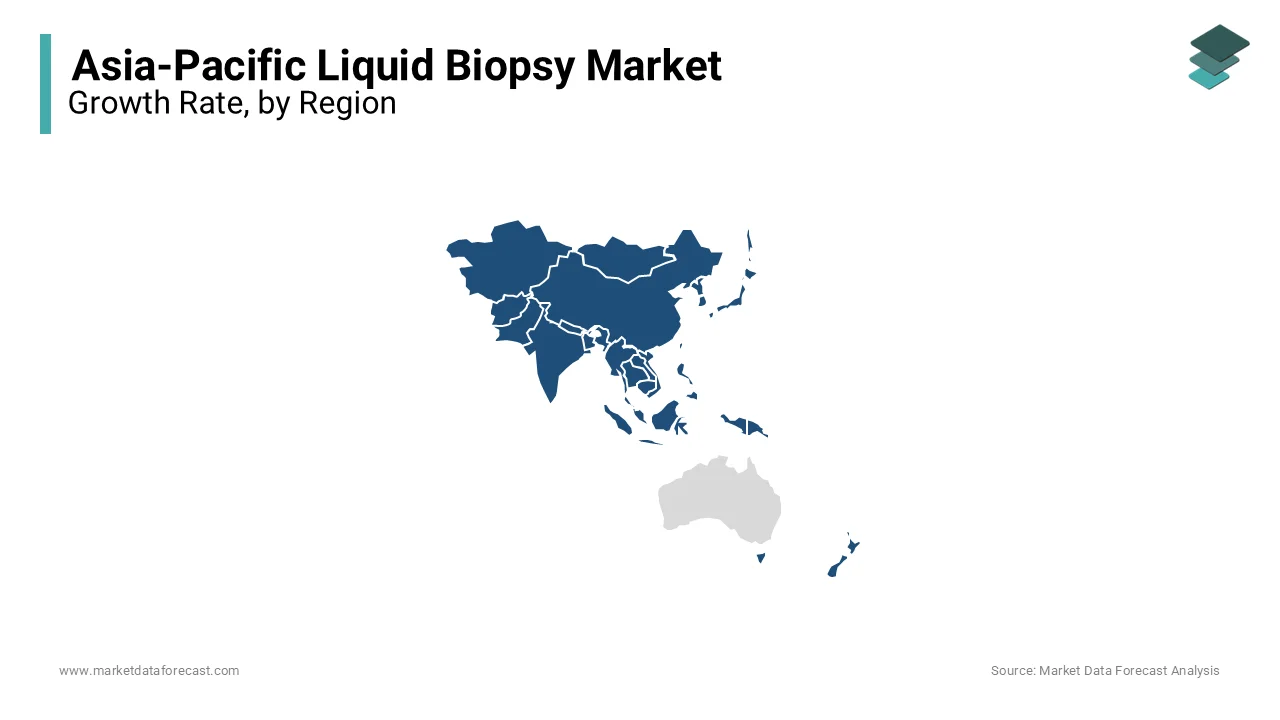
China was the top performer in the Asia Pacific Liquid Biopsy Market and captured a 35.6% share in 2025. This growth of the Chinese market is driven by the high cancer burden and government support for precision medicine. The market status in China is characterized by rapid technological innovation and a massive patient pool. As per the National Health Commission the Healthy China 2030 initiative prioritizes early diagnosis and treatment. The National Medical Products Administration has accelerated approvals for liquid biopsy kits. Local companies like BGI Genomics and Burning Rock Biotech are leading innovators. The Chinese Society of Clinical Oncology promotes the use of liquid biopsy in clinical guidelines. Insurance coverage is expanding in major cities. The Chinese Internet Network Information Center notes that digital health platforms facilitate access. These factors combine to sustain Chinas dominant position driven by scale policy support and domestic innovation.
Japan Liquid Biopsy Market Analysis
Japan was the second largest country in the Asia Pacific Liquid Biopsy Market and occupied a share of 18.6% in 2025. The key driver is the aging population and advanced healthcare infrastructure. Besides, the market status is mature with a focus on high quality and regulatory compliance. As per the Japanese Society of Clinical Oncology liquid biopsy is integrated into standard care for lung cancer. The Ministry of Health Labour and Welfare covers specific tests under national health insurance. The Pharmaceuticals and Medical Devices Agency maintains strict safety standards. Companies like Sysmex and Canon are developing innovative solutions. The Japanese Society of Laboratory Medicine emphasizes quality control. The culture of preventive health checks drives demand. These factors maintain Japans stable and sophisticated market position focused on quality and clinical utility.
India Liquid Biopsy Market Analysis
India is another key market in the Asia Pacific region due to the rising cancer incidence and expansion of diagnostic networks. The market status is emerging with significant growth potential driven by increasing awareness and affordability. As per the Tata Memorial Centre liquid biopsy is gaining acceptance for targeted therapy. The Central Drugs Standard Control Organization regulates diagnostic devices. Local players like Strand Life Sciences and MedGenome are offering affordable tests. The Federation of Indian Chambers of Commerce and Industry notes growth in medical tourism. The Indian Society of Medical Oncology promotes education and training. These dynamics position India as a high growth market with a focus on volume and accessibility.
Australia Liquid Biopsy Market Analysis
Australia holds a noteworthy position in the Asia Pacific Liquid Biopsy Market owing to the well established healthcare system and focus on personalized medicine. The market status is developed with high healthcare standards and robust regulatory frameworks. As per the Royal College of Pathologists of Australasia liquid biopsy is widely used in clinical practice. The Therapeutic Goods Administration ensures product safety and efficacy. The Medical Services Advisory Committee evaluates new technologies for reimbursement. Major reference laboratories dominate the market. The Commonwealth Scientific and Industrial Research Organisation supports research. These factors contribute to Australias significant market share characterized by quality and regulatory oversight.
South Korea Liquid Biopsy Market Analysis
South Korea is predicted to grow significantly in the Asia Pacific Liquid Biopsy Market from 2026 to 2034 due to the high adoption of innovative diagnostics and national health insurance coverage. The market status is advanced with strong government support for biotechnology. According to Statistics Korea cancer incidence is rising among the elderly. As per the Korean Society of Medical Oncology liquid biopsy is standard for lung cancer management. The Ministry of Food and Drug Safety fast tracks approvals for innovative tests. Companies like Seegene and Macrogen are global leaders. The Ministry of Science and ICT invests in R&D. The National Health Insurance Service covers genomic testing. These factors position South Korea as a technologically advanced market with strong policy driven demand.
COMPETITIVE LANDSCAPE
The competition in the Asia Pacific Liquid Biopsy Market is characterized by the presence of established global diagnostics giants and innovative regional biotechnology firms vying for dominance through technological advancement and clinical validation. Leading companies differentiate themselves by offering comprehensive multi gene panels and highly sensitive assays for early cancer detection. This technological edge allows for precise monitoring of treatment response and resistance which are key competitive advantages. The market sees intense rivalry in the circulating tumor DNA segment where accuracy and turnaround time are critical factors. Local manufacturers in countries like China and South Korea are gaining traction by offering cost effective solutions tailored to regional genetic profiles. Strategic collaborations with pharmaceutical companies for companion diagnostic development are common tactics to secure long term contracts. Furthermore companies are investing in artificial intelligence to enhance data interpretation and clinical decision support. Regulatory heterogeneity across countries influences competitive strategies requiring firms to adapt to local compliance requirements. Overall the market remains dynamic with continuous innovation and strategic partnerships shaping the competitive landscape and driving the adoption of liquid biopsy in routine oncology care.
KEY MARKET PLAYERS
Some promising companies operating in the Asia Pacific Liquid Biopsy Market include
- F. Hoffmann-La Roche Ltd
- Guardant Health
- Thermo Fisher Scientific Inc.
- Exact Sciences Corporation
- Illumina Inc.
- Qiagen
- Myriad Genetics
- Natera
- Bio-Rad Laboratories, Inc.
- NeoGenomics Laboratories
Top Players in the Market
F Hoffmann La Roche Ltd
F Hoffmann La Roche Ltd is a global pioneer in diagnostics and pharmaceuticals with a significant footprint in the Asia Pacific Liquid Biopsy Market. The company contributes to the global market through its cobas liquid biopsy tests which are widely used for detecting EGFR mutations in lung cancer. In the Asia Pacific region Roche has strengthened its position by obtaining regulatory approvals in China and Japan for its companion diagnostics. Recent actions include expanding manufacturing capabilities in Singapore and partnering with local hospitals to integrate liquid biopsy into routine clinical practice. The company also invests heavily in research collaborations with academic institutions to validate new biomarkers. By leveraging its extensive distribution network and robust regulatory expertise Roche ensures widespread access to high quality diagnostic solutions. These strategic initiatives reinforce its leadership in precision oncology and drive the adoption of liquid biopsy technologies across diverse healthcare settings in the region.
Illumina Inc
Illumina Inc is a leading biotechnology company that dominates the next generation sequencing sector essential for liquid biopsy analysis. The company contributes to the global market by providing advanced sequencing platforms and reagents that enable comprehensive genomic profiling. In the Asia Pacific region Illumina has strengthened its market position by establishing partnerships with key diagnostic laboratories and research centers in China India and Australia. Recent actions include launching the TruSight Oncology Comprehensive panel which supports liquid biopsy applications for multiple cancer types. The company also focuses on educating healthcare professionals through workshops and training programs to enhance technical proficiency. By offering scalable and accurate sequencing solutions Illumina empowers laboratories to perform complex liquid biopsy assays efficiently. These efforts facilitate the integration of genomic data into clinical decision making thereby advancing personalized medicine and solidifying its role as a critical enabler in the Asia Pacific liquid biopsy ecosystem.
Burning Rock Biotech Limited
Burning Rock Biotech Limited is a prominent Chinese precision oncology company specializing in next generation sequencing based diagnostics including liquid biopsy. The company contributes to the global market by developing innovative multi gene panels for cancer detection and monitoring. In the Asia Pacific region Burning Rock has established a strong presence through its extensive network of hospital collaborations and reference laboratories. Recent actions include obtaining National Medical Products Administration approval for its liquid biopsy kits and expanding its testing services to Southeast Asian markets. The company also engages in large scale clinical trials to validate the clinical utility of its assays. By focusing on localized solutions and rapid turnaround times Burning Rock addresses the specific needs of Asian patients. These strategic moves enhance its competitive edge and promote the widespread adoption of liquid biopsy technologies in China and surrounding countries driving growth in the regional market.
Top Strategies Used by the Key Market Participants
Key players in the Asia Pacific Liquid Biopsy Market primarily focus on strategic partnerships and regulatory approvals to enhance their competitive positions. Companies are increasingly collaborating with local hospitals and diagnostic laboratories to integrate liquid biopsy tests into standard clinical workflows. Expanding research and development efforts to validate novel biomarkers drives product innovation and clinical utility. Obtaining regulatory clearances from national health authorities such as the NMPA in China and PMDA in Japan is critical for market entry. Educational initiatives aimed at oncologists and pathologists raise awareness about the benefits of liquid biopsy. Manufacturers also emphasize building robust distribution networks to ensure timely delivery of samples and results. Additionally companies are investing in automation technologies to improve testing efficiency and reduce costs. These multifaceted strategies enable participants to navigate complex regulatory landscapes and meet the growing demand for precision oncology solutions in the region.
MARKET SEGMENTATION
This research report on the Asia-Pacific liquid biopsy market is segmented and sub-segmented market into the following categories.
By Cancer Type
- Lung Cancer
- Pancreatic Cancer
- Leukemia
- Other Visceral Cancers
By Diagnostic Approach
- Circulating Tumour cells (CTC)
- Circulating Tumour DNA (ctDNA)
- RNA in exosomes
- Extra-Cellular Vesicles
By End-Users
- Reference Laboratories
- Hospital/Physician Laboratories
- Academic and Research Centers
- Other End Users
By Country
- India
- China
- Japan
- South Korea
- Australia
- New Zealand
- Thailand
- Malaysia
- Vietnam
- Philippines
- Indonesia
- Singapore
- Rest of Asia-Pacific