- Product Description Description
- Table of Contents TOC
- List of Table & Figure LOT
- Get Free Sample PDF Sample PDF
Market Size, 2025
$0.41 BnMarket Estimate, 2026
$0.47 BnMarket Forecast, 2034
$1.44 BnCAGR, 2026–2034
14.86%Asia-Pacific Mental Health Software Market Report Summary
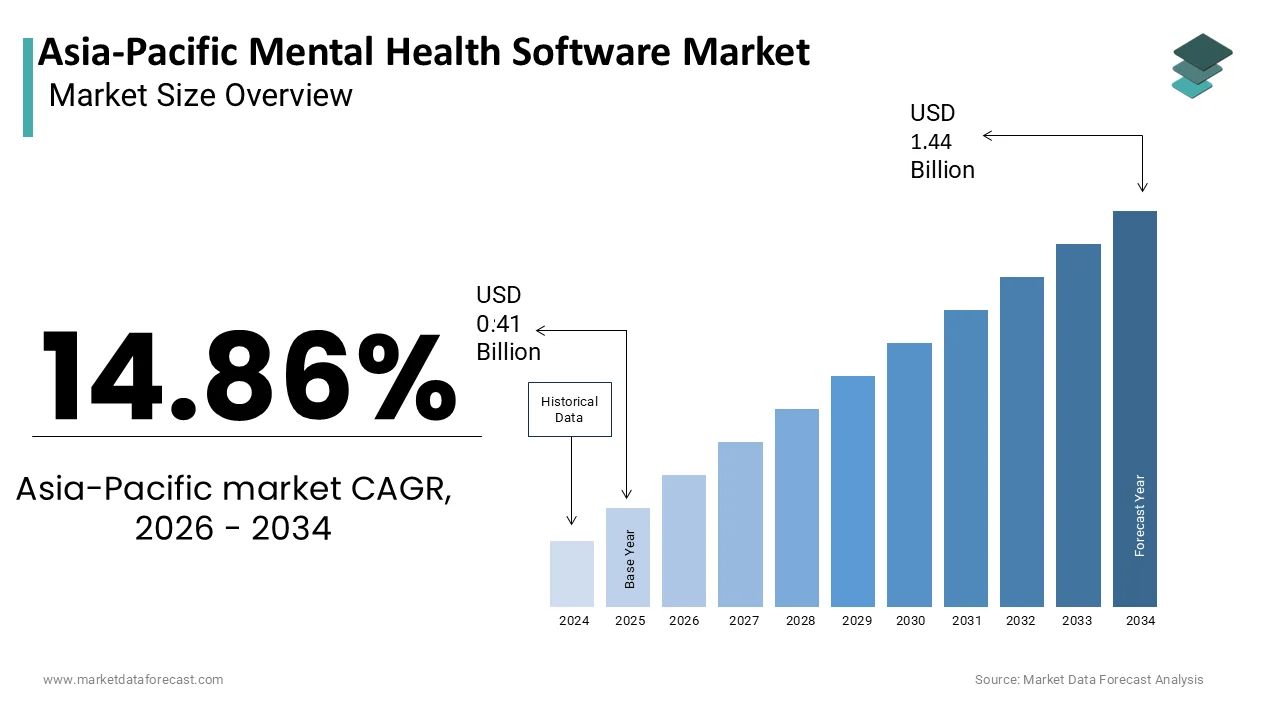
The Asia-Pacific Mental Health Software Market was valued at USD 0.41 billion in 2025 and is projected to reach USD 1.44 billion by 2034, growing from USD 0.47 billion in 2026 at a CAGR of 14.86% during the forecast period. Growth is driven by the shortage of mental health professionals, increasing smartphone penetration, rising digital literacy, and growing demand for accessible mental healthcare solutions. Cultural stigma and fragmented regulatory frameworks remain key market restraints.
Key Market Trends
- Increasing adoption of AI-powered, culturally adapted mental health interventions.
- Growing integration of telepsychiatry, remote monitoring, and digital therapeutics.
- Expansion of corporate wellness platforms as employers prioritize employee mental health.
- Rising adoption of multilingual mobile mental health applications for younger populations.
- Increasing focus on secure, evidence-based digital mental health platforms with enhanced cybersecurity and privacy features.
Segmental Insights
- Based on component, support services held the largest market share in 2025, driven by increasing demand for implementation, integration, training, and ongoing technical support.
- Based on functionality, clinical functionality dominated the market in 2025, supported by electronic treatment planning, risk assessment, clinical documentation, and standardized mental health screening tools.
- Standalone behavioural health software is the fastest-growing component segment, projected to register a CAGR of 13.1%, driven by increasing demand for specialized mental health applications, AI-enabled therapy, and consumer-focused digital solutions.
Regional Insights
- China led the market in 2025, supported by large-scale government investment in digital healthcare, AI-enabled mental health platforms, and widespread smartphone adoption.
- Japan holds a significant share, driven by an aging population, advanced healthcare digitization, and growing adoption of digital therapeutics.
- India is a prominent market, supported by a severe shortage of mental health professionals, increasing smartphone penetration, and expanding telemedicine initiatives.
- Australia contributes notably through strong regulatory support, validated digital mental health platforms, and government reimbursement initiatives.
- India is the fastest-growing country market, driven by Digital India initiatives, increasing youth adoption of mental health applications, expanding telepsychiatry services, and rising government support for digital healthcare.
Competitive Landscape
The market is highly competitive, with global healthcare software providers, regional startups, and digital health companies competing through AI innovation, clinical validation, localized content, multilingual platforms, and strategic partnerships. Companies are investing in culturally adapted digital therapeutics, enterprise wellness platforms, electronic health record integration, cybersecurity, and evidence-based mental healthcare solutions to strengthen their regional presence.Prominent players in the market include Oracle Health (formerly Cerner Corporation), Core Solutions, Inc., Credible Behavioral Health, Inc., MindLinc (NextGen Healthcare), Epic Systems Corporation, Netsmart Technologies, Inc., NextGen Healthcare, Inc., Qualifacts Systems, LLC, The Echo Group, Valant Medical Solutions, Inc., and Welligent, Inc. (Spectrum Health Care).
 Download Free Sample Report
Asia-Pacific Mental Health Software Market Size
The Asia-Pacific mental health software market size was valued at USD 0.41 billion in 2025 and is expected to grow at a 14.86% CAGR from 2026 to 2034 and be worth USD 1.44 billion by 2034, up from USD 0.47 billion in 2026.
According to the World Health Organization, approximately 86% of people with mental disorders in low- and middle-income countries within the Western Pacific region do not receive adequate care. This massive treatment gap creates an urgent imperative for scalable software solutions that can bridge geographical and resource limitations. Furthermore, the Lancet Regional Health journal indicates that depression and anxiety disorders cost the Asia Pacific economy over 1.3 trillion dollars annually in lost productivity, which indicates the economic burden of untreated conditions. As per the Asian Development Bank, the region is also experiencing rapid demographic shifts, with aging populations in nations like Japan and South Korea increasing the prevalence of dementia and geriatric mental health issues. Digital tools offer a viable pathway to address these complex challenges by providing remote monitoring, early screening, and continuous support where traditional infrastructure remains insufficient or stigmatized.
MARKET DRIVERS
Acute Shortage of Mental Health Professionals Driving Digital Adoption
The severe deficit of qualified mental health practitioners across the Asia Pacific is propelling the mental health software market growth in Asia-Pacific as nations seek technological substitutes for human capital. According to the World Health Organization, there are fewer than 2 psychiatrists per 100,000 population in many Southeast Asian countries, compared to over 15 per 100,000 in high-income Western nations. This stark disparity makes it physically impossible to deliver face-to-face care to millions of individuals suffering from psychological distress. Mental health software platforms enable task-shifting, where non-specialist health workers can deliver evidence-based interventions under the supervision of remote specialists via digital dashboards. As per the United Nations Economic and Social Commission for Asia and the Pacific, over 60% of the population in the region lives in rural areas where specialist clinics are virtually non-existent. Software-enabled tele-consultations and automated triage systems allow limited specialist resources to be allocated more efficiently across vast geographic distances. In India, the National Mental Health Survey revealed that nearly 85% of individuals with common mental disorders received no treatment, primarily due to workforce shortages. Consequently, governments and private entities are investing heavily in digital therapeutics and AI-driven chatbots to provide immediate first-line support while patients await professional care.
Rising Smartphone Penetration and Digital Literacy among Youth
The exponential growth of smartphone usage and internet connectivity among younger demographics in the Asia Pacific is further contributing to the regional market expansion. According to the International Telecommunication Union, mobile broadband subscriptions in the Asia Pacific region have surpassed 4 billion, which is creating a ubiquitous infrastructure for delivering software-based mental health interventions. Young people aged 15 to 29 represent a significant portion of this connected population and are statistically more likely to seek help through anonymous digital channels than traditional clinical settings due to cultural stigma. As per the United Nations Children's Fund, suicide is the fourth leading cause of death among adolescents in the East Asia and Pacific region, and this requires accessible crisis intervention tools available on personal devices. Mobile applications offering self-guided cognitive behavioural therapy, mood tracking, and peer support communities meet this generation where they already spend their time. According to a study published in the Journal of Medical Internet Research, 78% of university students in China preferred using mobile apps for mental health support over visiting campus counselling centers. This digital nativity drives demand for user-centric, gamified, and culturally adapted software solutions that resonate with local youth cultures. Developers are increasingly leveraging artificial intelligence to provide personalized content at scale, making mental wellness tools as accessible as social media platforms.
MARKET RESTRAINTS
Persistent Cultural Stigma Hindering User Engagement and Disclosure
Deep-rooted cultural stigma surrounding mental illness remains a significant restraint on theAsia-Pacificc mental health software market by discouraging individuals from downloading or actively engaging with digital mental health tools. In many societies across the region, mental health struggles are viewed as personal weakness, family shame, or spiritual failing rather than legitimate medical conditions requiring treatment. According to a survey conducted by the Institute of Mental Health in Singapore, over 50% of respondents believed that people with mental illness could snap out of it if they wanted to, reflecting widespread misconceptions that undermine the perceived value of therapeutic software. This stigma extends to digital spaces where users fear that app usage might be discovered by family members or employers, leading to privacy concerns even when platforms are secure. The World Health Organization highlights that in several Asian countries, less than 10% of individuals with depression seek any form of help due to fear of discrimination. Software developers face the unique challenge of designing interfaces that feel discreet and non-clinical to avoid triggering shame responses. Marketing messages must navigate delicate cultural sensitivities, often framing products as wellness or performance enhancement tools rather than psychiatric treatments. Until societal attitudes shift significantly, software adoption will remain suppressed among those who need it most but fear the social consequences of association with mental healthcare.
Fragmented Regulatory Frameworks across Diverse Jurisdictions
The absence of harmonized regulatory standards for digital mental health technologies across the Asia Pacific creates significant operational barriers for software providers seeking regional expansion. Unlike pharmaceutical drugs, which follow relatively standardized approval pathways, digital mental health tools face inconsistent classification ranging from unregulated wellness apps to strictly controlled medical devices, depending on the country. According to the Asian Development Bank, only 30% of Asia Pacific nations have specific legislation governing digital health, leaving vast markets operating in legal gray zones. In Australia, digital mental health programs must undergo rigorous evaluation to be listed on national platforms, whereas in other neighboring countries, similar products operate without any clinical validation requirements. This fragmentation forces companies to develop multiple compliance strategies, increasing development costs and delaying time to market. The World Health Organization notes that data privacy laws vary drastically across the region, with some nations enforcing strict localization requirements while others lack comprehensive protection frameworks entirely. Investors perceive this regulatory uncertainty as a major risk factor limiting capital inflow into the sector. Healthcare institutions hesitate to integrate unvalidated software into clinical workflows, fearing liability issues. Without regional harmonization efforts or mutual recognition agreements, the market will remain balkanized, preventing economies of scale and limiting patient access to best-in-class solutions regardless of their origin.
MARKET OPPORTUNITIES
Integration of Artificial Intelligence for Culturally Adapted Interventions
The application of artificial intelligence to create culturally nuanced and linguistically diverse mental health interventions presents a promising opportunity for the Asia Pacific market. Traditional Western-developed therapies often fail to resonate with Asian users due to differences in emotional expression, help-seeking behaviors, and conceptualizations of distress. According to research published in Nature Digital Medicine, AI models trained on local datasets can detect subtle linguistic markers of depression in Mandarin, Hindi, and Bahasa Indonesia with accuracy rates exceeding 85%. This capability enables software to deliver interventions that respect cultural norms around collectivism, filial piety, and somatic symptom presentation. The United Nations Educational, Scientific and Cultural Organization emphasizes that language barriers exclude billions from accessing English-centric mental health resources, which is making multilingual AI essential for equitable care. Startups are developing chatbots that understand local idioms of distress and reference culturally relevant metaphors rather than importing Western psychological frameworks directly. Machine learning algorithms can also adapt content difficulty and pacing based on user engagement patterns specific to different cultural groups. Governments in South Korea and Japan are actively funding AI research initiatives to address national mental health crises, recognizing technology as a strategic asset. By embedding cultural intelligence into software architecture, companies can unlock vast underserved populations who previously found digital mental health tools alienating or irrelevant to their lived experiences.
Corporate Wellness Programs Expanding B2B Revenue Streams
The rapid expansion of corporate mental wellness programs across the Asia Pacific offers a substantial business-to-business opportunity for mental health software vendors seeking sustainable revenue models beyond direct consumer sales. Employers are increasingly recognizing the financial impact of employee burnout and presenteeism, particularly in high-pressure work cultures prevalent in countries like Japan, South Korea, and China. According to the International Labour Organization, workplace stress costs Asia Pacific businesses an estimated 1.5% of regional GDP annually, prompting multinational corporations to invest in digital mental health benefits as part of talent retention strategies. The Confederation of Indian Industry reports that 70% of large Indian enterprises now include mental wellness platforms in their employee assistance programs, representing a significant shift from previous years. Software providers can offer scalable subscription models that integrate with existing human resources systems, providing anonymized analytics on organizational well-being trends. Government initiatives in Singapore and Australia are subsidizing employer investments in mental health technology, further stimulating demand. Unlike consumer markets where churn rates are high, corporate contracts provide predictable recurring revenue and higher lifetime value. Companies are also customizing platforms to address industry-specific stressors, such as manufacturing shift work or tech sector burnout. This enterprise channel allows vendors to reach employees who might never independently seek mental health support, thereby expanding the total addressable market significantly.
MARKET CHALLENGES
Ensuring Clinical Efficacy Amid Proliferation of Unvalidated Apps
The saturation of the marketplace with unvalidated mental health applications is a major challenge to the Asia-Pacific mental health software market growth. Thousands of apps claim to treat anxiety, depression, or insomnia, yet fewer than 5% have undergone rigorous randomized controlled trials to verify their therapeutic efficacy, according to a comprehensive review in the British Medical Journal. This abundance of low-quality products erodes trust among both consumers and healthcare professionals, who struggle to distinguish evidence-based tools from pseudoscientific offerings. The World Health Organization warns that ineffective apps may delay appropriate treatment, causing harm to vulnerable users who believe they are receiving valid care. Regulatory bodies in the region lack the resources to evaluate every new entrant, creating a Wild West environment where marketing claims often exceed scientific reality. Academic institutions face funding constraints that limit independent validation studies for commercially available software. Users who try ineffective apps and experience no improvement may become disillusioned with digital mental health entirely, reducing future adoption rates even for proven solutions. Developers of legitimate evidence-based products must invest heavily in clinical trials and marketing to differentiate themselves, raising customer acquisition costs. Establishing industry-wide certification standards and transparent efficacy ratings is essential to restore confidence and ensure that software genuinely contributes to public health outcomes rather than merely generating downloads.
Data Privacy Concerns and Cybersecurity Vulnerabilities in Sensitive Health Data
Protecting highly sensitive mental health information against breaches and misuse represents an existential challenge for the Asia Pacific mental health software market given varying cybersecurity maturity levels across the region. Mental health data carries unique risks, including potential for employment discrimination, insurance denial, or social ostracization if exposed, making security paramount for user trust. According to Interpol, cybercrime targeting healthcare organizations in Asia Pacific increased by 40% in recent years, with mental health platforms being particularly attractive targets due to the intimate nature of stored conversations and assessments. Many startups prioritize rapid feature development over robust security infrastructure, leaving vulnerabilities that sophisticated attackers can exploit. The United Nations Conference on Trade and Development notes that only 19 of 33 Asia Pacific countries have comprehensive data protection legislation, creating inconsistent safeguards for cross-border data flows. Users in countries without strong legal recourse may hesitate to share honest disclosures, fearing permanent exposure. High-profile breaches in adjacent health sectors have amplified public skepticism about digital confidentiality. Compliance with emerging regulations like Thailand’s Personal Data Protection Act and China’s Data Security Law requires significant ongoing investment that strains startup budgets. Building end-to-end encryption, obtaining international security certifications, and conducting regular penetration testing are essential but costly measures. Failure to maintain impeccable security standards could trigger regulatory crackdowns and irreversible reputational damage, undermining the entire digital mental health ecosystem in the region.
REPORT COVERAGE
| REPORT METRIC | DETAILS |
| Market Size Available | 2025 to 2034 |
| Base Year | 2025 |
| Forecast Period | 2026 to 2034 |
| Segments Covered | By Component, Delivery Model, Functionality,End User and Region. |
| Various Analyses Covered | Global, Regional and Country-Level Analysis, Segment-Level Analysis, Drivers, Restraints, Opportunities, Challenges; PESTLE Analysis; Porter’s Five Forces Analysis, Competitive Landscape, Analyst Overview of Investment Opportunities |
| Countries Covered | India, China, Japan, South Korea, Australia, New Zealand, Thailand, Malaysia, Vietnam, Philippines, Indonesia, Singapore, Rest of APAC. |
| Market Leaders Profiled | Oracle Health (formerly Cerner Corporation), Core Solutions, Inc., Credible Behavioral Health, Inc., MindLinc (NextGen Healthcare), Epic Systems Corporation, Netsmart Technologies, Inc., NextGen Healthcare, Inc., Qualifacts Systems, LLC, The Echo Group, Valant Medical Solutions, Inc., Welligent, Inc. (Spectrum Health Care). |
SEGMENTAL ANALYSIS
By Component Insights
The support services segment dominated the market by commanding the largest share of the Asia-Pacific market in 2025. The dominance of the support services segment in this regional market is attributed to the critical need for implementation training and ongoing technical assistance in regions with varying levels of digital literacy. Healthcare institutions often lack the internal expertise to deploy complex behavioral health platforms effectively, requiring external vendors to provide comprehensive onboarding and continuous support. According to the World Health Organization, nearly 60% of healthcare facilities in low- and middle-income countries in the Western Pacific region struggle with maintaining digital infrastructure without external aid. This dependency drives demand for managed services that ensure system uptime, data integrity, and user adoption. The Asian Development Bank reports that investment in human capital and technical support accounts for over 40% of total digital health expenditure in Southeast Asia, reflecting the high operational burden. Support services also include clinical consulting to help providers integrate software workflows into existing patient care pathways, which is essential for reducing resistance among staff. As governments push for nationwide electronic health record interoperability, the complexity of integration increases, necessitating specialized service providers. The shortage of IT professionals in rural areas further exacerbates the reliance on vendor-provided support teams. These factors collectively ensure that support services remain a dominant revenue stream as organizations prioritize successful deployment and sustained usage over mere software acquisition.
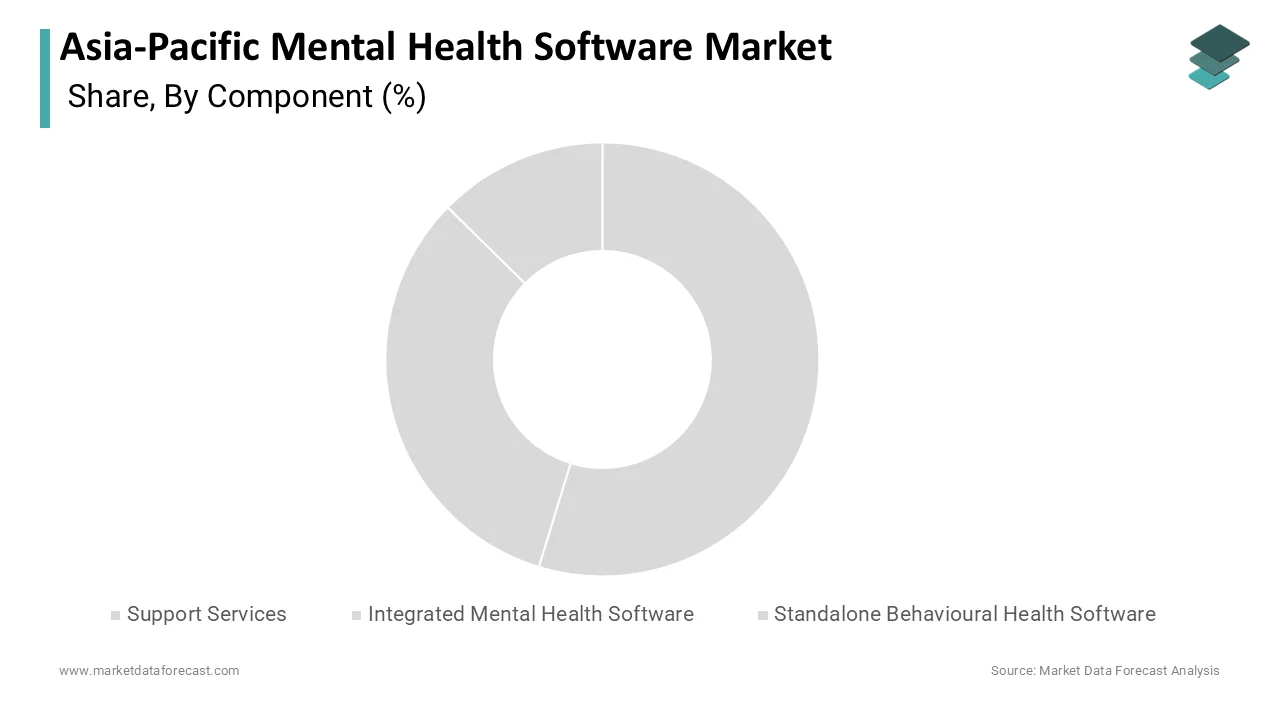
However, the standalone behavioural health software segment is projected to register the highest CAGR of 13.1% during the forecast period owing to the increasing preference for specialized solutions that address specific mental health conditions rather than generic electronic health records. Standalone platforms offer advanced features such as cognitive behavioral therapy modules, mood tracking algorithms, and telepsychiatry interfaces that are often absent in broader hospital information systems. According to the Journal of Medical Internet Research, specialized mental health apps demonstrate 30% higher patient engagement rates compared to generalist healthcare applications due to their tailored user experiences. The rising prevalence of anxiety and depression among youth has created a surge in demand for accessible consumer-facing tools that operate independently of clinical settings. According to the United Nations Children’s Fund, over 20% of adolescents in the Asia Pacific region experience mental health disorders, driving the adoption of direct-to-consumer software solutions. Startups are leveraging artificial intelligence to provide personalized interventions at scale, making standalone software more effective and affordable. Regulatory bodies in countries like Australia and Singapore are increasingly recognizing digital therapeutics as valid treatment options, facilitating reimbursement and insurance coverage. The flexibility of standalone systems allows for rapid updates and innovation, keeping pace with evolving clinical guidelines and patient preferences.
By Functionality Insights
The clinical functionality segment accounted for the major share of the regional market in 2025. The growth of the clinical functionality segment in the regional market is attributed to its direct impact on patient outcomes and therapeutic efficacy. This segment includes features such as electronic progress notes, treatment planning, risk assessment tools, and outcome measurement scales, which are essential for evidence-based practice. According to the World Federation for Mental Health, accurate clinical documentation improves diagnostic accuracy by 25% and enhances continuity of care across different providers. The growing emphasis on value-based healthcare requires robust clinical data to demonstrate treatment effectiveness and justify reimbursement claims. The Lancet Psychiatry states that standardized digital assessments can reduce diagnosis time by 40%, allowing clinicians to see more patients efficiently. In regions with severe specialist shortages, clinical decision support systems embedded in software help general practitioners manage common mental health conditions safely. The integration of validated screening tools for depression, anxiety, and suicide risk ensures early identification and intervention. Governments in Japan and South Korea are mandating the use of standardized clinical protocols in digital formats to improve national mental health statistics. The ability to track longitudinal patient data enables personalized treatment adjustments, improving long-term recovery rates. These clinical capabilities form the core value proposition of mental health software, driving widespread adoption among hospitals and private practices seeking to enhance quality of care.
However, the financial functionality segment is the fastest-growing segment and is estimated to grow at a CAGR of 12.1% during the forecast period in the regional market owing to the increasing complexity of billing codes, insurance claims, and reimbursement processes in the Asia Pacific region. As more countries introduce mental health parity laws and expand insurance coverage for psychological services, the need for automated financial management tools has intensified. According to the Asian Development Bank, administrative costs associated with manual billing account for up to 15% of total healthcare expenditure in developing nations, creating a strong incentive for automation. Financial modules streamline claim submission, eligibility verification, and payment posting, reducing denial rates and accelerating cash flow for providers. As per the National Health Insurance Administration in Taiwan, digital billing systems have reduced claim processing errors by 35%, improving efficiency for mental health clinics. Private practices particularly benefit from integrated revenue cycle management that handles multiple payer requirements and patient co-payments seamlessly. The rise of out-of-pocket payments in countries like India and Indonesia necessitates transparent pricing and easy payment gateways within software platforms. Automated reporting features help administrators analyze financial performance and identify revenue leakage. As healthcare systems move toward prospective payment models and bundled care arrangements, sophisticated financial tools become indispensable for sustaining practice viability.
By End User Insights
The hospitals segment dominated the market by capturing the highest share of the regional market in 2025. The growth of the hospitals segment in the Asia-Pacific market is attributed to their role as primary centers for acute psychiatric care and complex case management. Large hospital networks require comprehensive software solutions that integrate mental health records with general medical data to address comorbidities effectively. According to the World Health Organization, over 70% of psychiatric beds in the Asia Pacific region are located in general hospitals, necessitating robust interoperable systems. The increasing volume of emergency psychiatric admissions requires efficient triage and documentation tools to manage patient flow and ensure safety. The Australian Commission on Safety and Quality in Health Care mandates strict reporting standards for mental health incidents in hospitals, driving the adoption of specialized compliance software. Hospitals also serve as teaching institutions where digital platforms facilitate training for residents and nurses in psychiatric assessment techniques. The consolidation of healthcare providers into large groups has increased purchasing power for enterprise-level software licenses. Government initiatives in China and India to upgrade public hospital infrastructure include significant allocations for digital mental health systems. The need for real-time data analytics to monitor population health trends within hospital catchment areas further supports market dominance. These institutional drivers ensure that hospitals remain the largest consumers of advanced mental health software technologies.
However, the private practices segment represents the fastest-growing segment and is predicted to grow at a CAGR of 14.1% during the forecast period in the European market owing to the proliferation of independent psychologists, psychiatrists, and counselors who seek affordable, scalable tools to manage their operations. According to the International Practice Management Association, the number of solo and small group mental health practices in the Asia Pacific has increased by 20% in recent years as professionals move away from institutional employment. Private practitioners require user-friendly software that combines scheduling, telehealth, and billing in a single interface to minimize administrative overhead. The rise of gig economy platforms connecting therapists with clients has spurred demand for cloud-based solutions that allow remote access from anywhere. The American Psychological Association notes that private practitioners using integrated software report 30% higher productivity due to automated reminders and note templates. Regulatory changes in countries like Singapore and Malaysia have simplified licensing for private clinics, encouraging entrepreneurship in the mental health sector. Telehealth regulations expanded during the pandemic have enabled private practitioners to reach wider audiences, requiring robust digital infrastructure. Subscription-based pricing models make advanced software accessible to smaller budgets, lowering entry barriers. The desire for professional autonomy and personalized patient care drives independents to adopt technology that enhances their competitive edge against larger institutions.
COUNTRY LEVEL ANALYSIS
China Mental Health Software Market Analysis
China dominated the market with the leading share of the Asia-Pacific market in 2025 and is likely to maintain a dominant position in the regional market for the next few years due to the massive government investments in digital health infrastructure and a growing awareness of mental health issues. The National Health Commission of China has launched initiatives to integrate mental health services into primary care, requiring digital tools for screening and monitoring. According to the Chinese Center for Disease Control and Prevention, the prevalence of adult mental disorders has risen to 16.6%, creating urgent demand for scalable software solutions. The country’s advanced telecommunications network supports widespread adoption of mobile mental health apps among its billion-strong internet user base. Tech giants like Alibaba and Tencent are investing heavily in AI-driven counselling platforms, leveraging big data to personalize interventions. Regulatory frameworks are evolving to standardize digital therapeutics, ensuring quality and safety for millions of users. The aging population and increasing urban stressors further accelerate market growth as individuals seek discreet online support. Government subsidies for smart hospital projects include mental health modules, promoting institutional adoption. The sheer scale of the population offers unparalleled opportunities for software vendors to achieve economies of scale. However, data localization laws require foreign companies to partner with local entities, influencing market entry strategies.
Japan mental health software market Analysis
Japan is expected to experience steady, tech-driven expansion over the coming years owing to the high technological adoption and aging demographic requiring specialized geriatric mental health solutions. The Ministry of Health, Labour and Welfare has prioritized digital transformation in healthcare to address workforce shortages and improve efficiency in psychiatric care. According to the Japanese Society of Psychiatry and Neurology, over 3 million elderly people suffer from dementia, necessitating remote monitoring and caregiver support software. The country leads in robotics and AI integration, with virtual companions providing emotional support for isolated seniors. Strict privacy laws under the Act on Protection of Personal Information ensure high security standards for mental health data, fostering trust among users. Corporate wellness programs are widely adopted due to high work-related stress levels, driving B2B software sales. Reimbursement policies are gradually expanding to cover digital therapeutics for depression and insomnia, encouraging clinical validation. The high smartphone penetration rate facilitates access to self-care apps for younger generations. Collaboration between universities and tech firms promotes evidence-based development of mental health tools. The market is stable but growing steadily as societal stigma decreases and digital literacy remains high across all age groups.
India mental health software market Analysis
India is anticipated to register rapid, accelerated growth in the digital health sector over the next few years due to a severe shortage of mental health professionals and increasing smartphone penetration. The National Mental Health Program aims to integrate mental health into primary care using digital tools to bridge the gap between supply and demand. According to the National Institute of Mental Health and Neurosciences, there is only one psychiatrist for every 300,000 people, making software-mediated task-shifting essential for service delivery. Mobile health applications offering counseling in local languages are gaining traction among the youth, who constitute over 50% of the population. The Digital India initiative supports the development of secure health data infrastructure, enabling telepsychiatry services in rural areas. Startups are innovating with low-cost subscription models, making therapy accessible to the middle class. Government partnerships with tech companies aim to create national helplines and screening platforms. The rising incidence of stress-related disorders in urban centers drives corporate adoption of wellness apps. Regulatory clarity on telemedicine guidelines has boosted confidence among practitioners to use digital platforms. Despite challenges in internet connectivity in remote areas, the market is expanding rapidly due to high demand and low competition.
Australia mental health software market Analysis
Australia is projected to maintain its position as a regional benchmark for regulatory maturity and clinical innovation over the next few years. The Department of Health operates the Digital Mental Health Gateway, which evaluates and lists evidence-based apps, ensuring quality for consumers and clinicians. According to Beyond Blue, one in five Australians experiences a mental health condition each year, driving consistent demand for reliable digital tools. The Medicare Benefits Schedule reimburses certain digital mental health services, encouraging provider adoption and patient access. High internet connectivity and digital literacy facilitate widespread use of telehealth platforms, especially in rural and remote communities. The National Digital Health Strategy prioritizes interoperability, allowing mental health data to flow securely between providers. Universities conduct rigorous research on digital interventions, contributing to a robust evidence base. Corporate sectors actively invest in employee assistance programs featuring premium software subscriptions. The market is characterized by high trust in validated products and strong consumer protection laws. Innovation focuses on integrating physical and mental health data for holistic care. Government funding supports pilot projects for new technologies, ensuring sustainable growth and high standards of care.
South Korea mental health software market Analysis
South Korea is likely to witness sustained high-tech market momentum over the coming years, driven by advanced IT infrastructure and high smartphone usage among its population. The Ministry of Health and Welfare has implemented smart healthcare initiatives that include mental health monitoring through wearable devices and apps. According to Statistics Korea, suicide rates remain a significant public health concern, prompting government investment in digital crisis intervention tools. The country leads in 5G technology, enabling real-time high-quality video counseling and augmented reality therapies. Cultural stigma is gradually decreasing among younger generations who prefer anonymous online counseling services. Major telecom companies collaborate with healthcare providers to offer bundled mental health packages. The National Health Insurance Service is exploring reimbursement models for approved digital therapeutics. Gaming and entertainment industries are integrating mental wellness features into popular platforms, reaching millions of users. Data analytics are used to predict mental health trends and allocate resources efficiently. The market is highly competitive, with local startups innovating rapidly to meet specific cultural needs. Strong intellectual property protection encourages foreign and domestic investments alike.
COMPETITIVE LANDSCAPE
The competition within the Asia Pacific mental health software market is characterized by a dynamic mix of global technology giants, regional startups,s and established healthcare providers entering the digital space. Large multinational corporations leverage their extensive resources and brand recognition to secure enterprise contracts with governments and large employers. Meanwhile, local startups compete by offering highly specialized,d culturally nuanced solutions that resonate deeply with specific national contexts. Competitive dynamics are increasingly influenced by the ability to demonstrate clinical efficacy through rigorous data and real-world evidence. Price sensitivity varies significantly across the region, with developed markets willing to pay for premium validated tools while emerging economies demand affordable scalable options. Regulatory fragmentation poses a challenge but also creates opportunities for first movers who navigate compliance successfully. Partnerships with insurance providers and telecom operators serve as key differentiators,s enabling wider distribution channels. Intellectual property protection and data security standards are critical factors influencing buyer decisions. The market sees frequent collaborations rather than pure competition as stakeholders recognize the need for ecosystem development. Innovation in artificial intelligence and personalized care pathways drives differentiation. User experience and ease of access remain paramount for consumer-facing applications. Trust and credibility built through clinical endorsements significantly impact market share acquisition in this sensitive healthcare sector.
KEY MARKET PLAYERS
Some of the companies that are playing a dominant role in the Asia Pacific Mental Health Software Market include
- Oracle Health (formerly Cerner Corporation)
- Core Solutions, Inc.
- Credible Behavioral Health, Inc.
- MindLinc (NextGen Healthcare)
- Epic Systems Corporation
- Netsmart Technologies, Inc.
- NextGen Healthcare, Inc.
- Qualifacts Systems, LLC
- The Echo Group
- Valant Medical Solutions, Inc.
- Welligent, Inc. (Spectrum Health Care)
TOP LEADING PLAYERS IN THE MARKET
- InnoWell Pty Ltd stands as a premier provider of digital mental health solutions in Australia and the broader Asia Pacific region. The company partners closely with government health departments to deliver evidence-based online therapy programs for anxiety and depression. InnoWell has recently expanded its platform capabilities to include personalized care pathways that integrate seamlessly with primary care services. Their focus on clinical governance and rigorous outcome measurement ensures high-quality patient support. By collaborating with leading research institutions, InnoWell continuously updates its therapeutic content to reflect current best practices. This commitment to scientific validity strengthens trust among healthcare providers and policymakers. The company also invests in user experience design to improve engagement rates among diverse populations. These strategic initiatives reinforce its position as a trusted partner in public health digital transformation efforts across the region.
- Mindset Health Inc contributes significantly to the market through its innovative digital therapeutics focused on gastrointestinal and mental health conditions. The company leverages cognitive behavioral therapy principles delivered via mobile applications to help patientsmanage stress-relatedd symptoms. Mindset Health has recently secured regulatory approvals in multiple Asia Pacific countries, validating its clinical efficacy and safety profile. Their technology uses artificial intelligence to personalize treatment plans based on individual patient data and progress. Strategic partnerships with pharmaceutical companies enable integrated care models that address both physical and psychological aspects of health. The company actively engages in clinical trials to generate robust real-world evidence supporting its interventions. Expansion into corporate wellness programs allows Mindset Health to reach employees suffering from work-related stress. These actions demonstrate a strong commitment to scalable and accessible mental health solutions tailored to modern lifestyle challenges.
- Lyra Health operates as a global mental health benefits platform with a growing presence in the Asia Pacific corporate sector. The company provides employers with access to a network of licensed therapists and coaches through a unified digital interface. Lyra Health has recently enhanced its platform with advanced matching algorithms that connect users to culturally competent providers quickly. Their solution includes self-care resources and live workshops designed to build resilience and prevent burnout. The company focuses on data analytics to help organizations understand workforce mental health trends and measure return on investment. By offering multilingual support and localized content, Lyra Health addresses the diverse needs of employees across different Asian markets. Recent expansions into Singapore and Japan highlight their strategy to capturehigh-growthh enterprise segments. These efforts strengthen their reputation as a leader in employer-sponsored mental health care innovation.
TOP STRATEGIES USED BY THE KEY MARKET PARTICIPANTS
Key players in the Asia Pacific mental health software market primarily employ strategies focused on clinical validation and strategic local partnerships to build trust and ensure cultural relevance. Companies invest heavily in randomized controlled trials to demonstrate efficacy, which is crucial for gaining acceptance from healthcare providers and regulators. Collaborating with local telecommunications firms and super apps enables broader distribution and easier access for consumers in diverse markets. Developing multilingual and culturally adapted content helps overcome stigma and improves user engagement among specific demographic groups. Integration with existing electronic health record systems facilitates seamless data exchange and encourages adoption by hospitals and clinics. Offering flexible pricing models such assubscription-basedd or pay-per-use options makes solutions accessible to varying economic segments. Continuous investment in artificial intelligence enhances personalization and scalability, allowing providers to manage larger patient volumes efficiently. These combined approaches drive sustainable growth and competitive advantage in a rapidly evolving digital health landscape.
MARKET SEGMENTATION
This research report on the Asia-Pacific mental health software market has been segmented and sub-segmented into the following categories.
By Component
- Support Services
- Integrated Mental Health Software
- Standalone Behavioural Health Software
By Delivery Model
- Subscription Models
- Ownership Models
By Functionality
- Clinical Functionality
- Administrative Functionality
- Financial Functionality
By End User
- Hospitals
- Community Clinics
- Private Practices
- Residential
- Payers
By Country
- India
- China
- Japan
- South Korea
- Australia
- New Zealand
- Thailand
- Malaysia
- Vietnam
- Philippines
- Indonesia
- Singapore
- Rest of APAC