- Product Description Description
- Table of Contents TOC
- List of Table & Figure LOT
- Get Free Sample PDF Sample PDF
Market Size, 2025
$1.96 BnMarket Estimate, 2026
$2.06 BnMarket Forecast, 2034
$3.03 BnCAGR, 2026–2034
4.91%Executive Summary: Asia Pacific Non-Dairy Creamer Market
- Market Scope: Comprehensive regional Asia Pacific non-dairy creamer market analysis covering application sectors, product types, distribution channels, geographic leadership frameworks, key growth drivers, market trends, and strategic industry developments.
- Market Valuation: Valued at USD 1.96 Bn (2025), estimated at USD 2.06 Bn (2026), and projected to reach USD 3.03 Bn by 2034, registering a robust CAGR of 4.91% (2026–2034).
- Primary Growth Drivers: Pervasive lactose intolerance across Asian populations, rapid expansion of café culture and ready-to-drink beverages, and deep-rooted tea and coffee consumption traditions adapting to modern convenience formats. Notable trends include plant-based and clean-label formulations using coconut and oat sources, and shelf-stable product expansion into rural markets.
Key Market Segment Metrics (2026–2034)
| Category | Leading Segment (2025 Position) | Fastest-Growing Segment |
|---|---|---|
| By Application & Product Type | Beverages segment (major share due to tea, coffee, and bubble tea growth) and others product type (led due to availability and affordability) | Food segment (promising CAGR) and Coconut milk creamers (fastest-growing product type) |
| By Distribution & Region | Supermarkets and hypermarkets (leading distribution share) and China (dominated market supported by >500,000 tea-drink stores) | Online stores (promising CAGR expansion) |
Major Market Players & Market Structure
Market Structure: Highly competitive dairy alternative and food ingredient landscape featuring major global enterprises competing through clean-label formulations, plant-based product launches, regional innovation center expansions, and localized supply chain partnerships.
Key Companies: Nestlé, The WhiteWave Foods Company, Cargill, Kerry Group plc, Sugar Foods Corporation, Rich Products, Pulmuone Foods, Fonterra Co-operative Group Limited, Organic Valley Crop Cooperative, Bigtree Group, Wenhui Food, Dean Foods, and Ingredion Incorporated.
Asia Pacific Non-Dairy Creamer Market Size
The Asia Pacific non-dairy creamer market was valued at USD 1.96 billion in 2025 and is expected to reach USD 3.03 billion by 2034 from USD 2.06 billion in 2026. The market is growing at a CAGR of 4.91%.
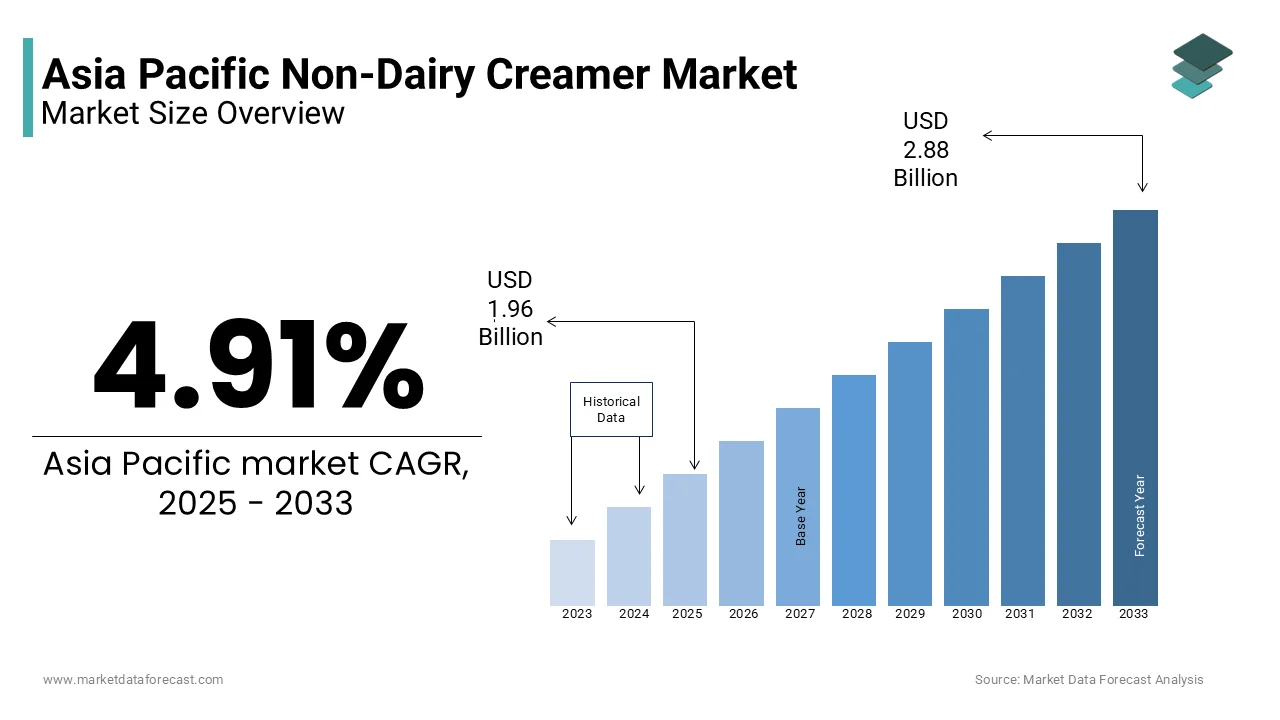
Asia-Pacific serves as a critical growth engine due to its deep-rooted tea and coffee consumption cultures, which are increasingly adapting to modern convenience formats. According to the International Coffee Organization, coffee consumption in Asia has risen by approximately 2% annually over the last decade, driven by urbanization and the proliferation of café culture. Simultaneously, as per the Food and Agriculture Organization of the United Nations, Asia accounts for over 90% of global tea production, creating a massive inherent demand for whitening agents. The prevalence of lactose intolerance further accelerates adoption, with studies indicating that up to 90% of adults in East Asian populations exhibit some degree of lactase non-persistence. This physiological reality compels consumers and foodservice providers to seek reliable dairy-free options. Regulatory bodies in key markets, such as China and India, are also tightening labeling standards for dairy analogs, ensuring transparency and driving innovation in clean-label formulations. The convergence of traditional beverage habits with modern health consciousness and dietary restrictions defines the current landscape of this dynamic sector.
MARKET DRIVERS
Pervasive Lactose Intolerance and Dairy Allergies Drive Substitution
The widespread prevalence of lactose intolerance across Asian populations is one of the key factors propelling the growth of the Asia-Pacific non-dairy creamer market. Unlike Western markets, where dairy consumption is historically high, many individuals in Asia lack the enzyme lactase necessary to digest milk sugar, leading to gastrointestinal distress. As per the National Institutes of Health, approximately 90% of adults in East Asia, including China, Japan, and Korea, are lactose intolerant, creating a substantial addressable market for dairy-free alternatives. This physiological constraint extends to Southeast Asia, where rates remain significantly higher than the global average. Consumers actively seek creamers that provide the desired creamy texture in tea and coffee without triggering adverse health reactions. The rise in diagnosed milk allergies among children further prompts parents to choose plant-based or synthetic creamers for household use. Foodservice establishments, particularly bubble tea shops and cafés, recognize this demographic reality and standardize non-dairy options to accommodate customer needs. Medical professionals increasingly recommend lactose-free diets for digestive health, reinforcing consumer behavior. The availability of affordable and palatable non-dairy creamers allows individuals to maintain their cultural beverage rituals without compromising comfort. This health-driven necessity ensures consistent demand regardless of economic fluctuations, making it a foundational pillar of market growth. Manufacturers respond by formulating products that mimic the sensory profile of dairy while ensuring the complete absence of lactose, thereby capturing a loyal consumer base that views these products as essential rather than optional.
Expansion of Café Culture and Ready-to-Drink Beverage Sector
The rapid expansion of café culture and the ready-to-drink beverage sector is further contributing to the Asia-Pacific non-dairy creamer market expansion. Urbanization and rising disposable incomes have transformed coffee and tea from simple commodities into lifestyle experiences, particularly among millennials and Gen Z consumers. As per Euromonitor International, the number of coffee shops in China and Southeast Asia has grown exponentially, with major chains expanding their footprint in tier-2 and tier-3 cities. These establishments rely heavily on non-dairy creamers for consistency, cost-efficiency, and shelf stability compared to fresh milk. The bubble tea phenomenon, which originated in Taiwan, has spread across the region, which is creating a massive industrial demand for specialized creamers that provide rich mouthfeel and foam stability. Ready-to-drink bottled teas and coffees also utilize powdered or liquid non-dairy creamers to enhance flavor and texture during manufacturing. The convenience of non-dairy creamers allows businesses to streamline operations, reduce waste, and maintain uniform product quality across multiple outlets. Furthermore, the trend toward premiumization in beverages drives demand for high-quality creamers that can withstand high temperatures and acidic environments without curdling. This commercial reliance ensures steady bulk purchases from foodservice providers and manufacturers. The integration of non-dairy creamers into innovative beverage formats, such as cheese teas and latte art, further cements their role in the modern beverage ecosystem. This structural shift in consumption patterns creates a robust and sustained demand channel for the regional market.
MARKET RESTRAINTS
Health Concerns Regarding Trans Fats and Hydrogenated Oils
Persistent health concerns regarding the presence of trans-fats and hydrogenated oils in traditional non-dairy creamers is a significant restraint on the regional market growth. Many conventional creamers rely on partially hydrogenated vegetable oils to achieve stability and texture, which are linked to increased risks of cardiovascular diseases. As per the World Health Organization, trans-fat intake leads to more than 500,000 deaths globally each year, prompting strict regulatory actions in several Asia-Pacific countries. Governments in Thailand, Singapore, and South Korea have implemented bans or strict limits on industrially produced trans-fats, which is forcing manufacturers to reformulate their products. However, replacing hydrogenated oils with healthier alternatives often increases production costs and can compromise sensory qualities, such as mouthfeel and solubility that consumers expect. Health-conscious shoppers increasingly scrutinize ingredient labels, avoiding products with artificial additives and unhealthy fats. This shift in consumer preference creates a barrier for standard non-dairy creamers that fail to meet clean-label expectations. The negative perception associated with processed ingredients discourages regular consumption among wellness-oriented demographics. Manufacturers face the challenge of balancing cost-effectiveness with health compliance, which can limit profit margins. Until the industry widely adopts healthier fat sources without compromising performance or price, the market will struggle to capture the full potential of health-focused consumers. This regulatory and consumer pressure necessitates continuous innovation but currently restricts the appeal of traditional formulations.
Perception of Artificial Ingredients and Lack of Nutritional Value
The widespread perception that non-dairy creamers are highly processed and lack nutritional value compared to natural dairy or plant-based milks restrains their broader acceptance, which is further hindering the regional market expansion. Consumers increasingly associate non-dairy creamers with artificial chemicals, preservatives, and empty calories rather than wholesome nutrition. As per surveys conducted by the International Food Information Council, a significant portion of Asian consumers prefer natural ingredients and view synthetic creamers as inferior substitutes. This stigma is particularly strong in markets with strong traditions of fresh food consumption, such as Japan and Australia. The presence of additives like sodium caseinate and dipotassium phosphate raises concerns among individuals seeking clean-label products. Many consumers believe that non-dairy creamers offer no health benefits and may even contribute to weight gain due to their carbohydrate and fat content. This negative perception limits their usage to occasional indulgence rather than daily staple status. Competitors such as oat milk, almond milk, and coconut milk are perceived as healthier and more natural alternatives, gaining market share at the expense of traditional creamers. The lack of protein and micronutrients in standard non-dairy creamers further diminishes their appeal to health-conscious buyers. Overcoming this image requires significant marketing efforts and product reformulation, which can be costly and time-consuming. Until the category successfully rebrands itself as a nutritious or at least neutral option, it will face resistance from the growing segment of wellness-focused consumers.
MARKET OPPORTUNITIES
Innovation in Plant-Based and Clean-Label Formulations
The shift toward plant-based and clean-label formulations is a substantial opportunity for the Asia-Pacific non-dairy creamer market. Consumers are increasingly demanding products derived from recognizable, natural sources, such as coconut, almond, oats, and soy, rather than synthetic blends. As per the Plant Based Foods Association, sales of plant-based foods in Asia-Pacific are growing at double-digit rates, reflecting a strong preference for natural ingredients. Manufacturers can capitalize on this trend by developing creamers that use cold-pressed oils and natural emulsifiers to achieve desirable textures without artificial additives. Coconut-based creamers, in particular, offer a rich flavor profile that aligns well with Asian culinary preferences and tropical beverage trends. Oat-based creamers provide a neutral taste and creamy consistency that appeal to coffee enthusiasts seeking a premium experience. Clean-label certifications, such as non-GMO, organic, and gluten-free, enhance product credibility and allow brands to command premium prices. Innovations in encapsulation technology enable the creation of stable plant-based powders that dissolve easily and resist heat degradation. By positioning these products as wholesome and natural, companies can attract health-conscious consumers who previously avoided traditional creamers. This strategic pivot aligns with global sustainability goals and ethical consumption patterns. The opportunity lies in creating diverse portfolios that cater to specific dietary needs, such as keto, vegan, or paleo diets. Successfully launching these innovative products can expand the total addressable market and drive long-term growth.
Expansion in Emerging Economies and Rural Markets
The expansion into emerging economies and rural markets within Asia-Pacific offers significant growth potential for the Asia-Pacific non-dairy creamer market growth. Countries such as India, Vietnam, Indonesia, and the Philippines are experiencing rising incomes and urbanization, which drive the adoption of packaged food and beverage products. As per the Asian Development Bank, the middle class in these regions is expanding rapidly, increasing purchasing power for convenience items. Non-dairy creamers provide an affordable and shelf-stable alternative to fresh milk, which may be scarce or expensive in rural areas. The long shelf life of powdered creamers makes them ideal for distribution through extensive general trade networks, including small kiosks and local grocery stores. Tea remains a staple beverage in these countries, creating a consistent baseline demand for whitening agents. Manufacturers can introduce smaller, affordable pack sizes to penetrate price-sensitive segments and encourage trial. Localized flavor profiles, such as cardamom- or ginger-infused creamers, can resonate with regional tastes and differentiate products. Government initiatives to improve rural infrastructure and logistics further facilitate market access. By focusing on affordability and accessibility, companies can tap into the vast, untapped population in these emerging markets. This geographic expansion diversifies revenue streams and reduces dependency on saturated urban markets. The opportunity exists to build brand loyalty early in these developing economies as consumption habits evolve.
MARKET CHALLENGES
Volatility in Raw Material Prices and Supply Chain Disruptions
Fluctuations in the prices of key raw materials, such as vegetable oils, glucose syrup and milk proteins pose a significant challenge to the Asia-Pacific non-dairy creamer market growth. The industry relies heavily on agricultural commodities, which are subject to weather conditions, geopolitical tensions, and global supply chain disruptions. As per the Food and Agriculture Organization of the United Nations, prices of palm oil and soybean oil have experienced significant volatility in recent years due to climate change and trade policies. These fluctuations directly impact production costs, making it difficult for manufacturers to maintain consistent pricing strategies. Small and medium-sized enterprises often lack the financial resilience to absorb sudden cost increases, leading to margin compression. Supply chain bottlenecks further exacerbate the issue, causing delays in raw material procurement and production schedules. The dependence on imported ingredients in some countries adds currency exchange risk to the equation. Manufacturers must engage in complex hedging strategies and long-term contracts to mitigate these risks, which require sophisticated financial management. Passing cost increases to consumers can reduce demand in price-sensitive markets, leading to volume declines. The unpredictability of raw material availability forces companies to maintain higher inventory levels, tying up working capital. This operational complexity hinders agility and innovation, as resources are diverted to risk management. Ensuring a stable and cost-effective supply chain remains a critical challenge for sustained growth.
Intense Competition from Fresh Milk and Alternative Plant Milks
The intense competition from fresh milk and newer alternative plant milks, such as oat, almond, and coconut milk challenges the dominance of traditional non-dairy creamers. Consumers are increasingly viewing fresh milk as a healthier and more natural option due to improved cold-chain infrastructure and retail availability. As per NielsenIQ data, sales of fresh milk and plant-based milk alternatives have grown significantly in urban Asia-Pacific markets, outpacing traditional powdered creamers. These alternatives offer perceived nutritional benefits, such as protein and vitamins, which standard non-dairy creamers lack. The rise of specialty coffee shops and home-brewing equipment encourages the use of fresh barista-style milks that provide superior foam and taste. Plant-based milk brands invest heavily in marketing and innovation, creating strong brand equity and consumer loyalty. Non-dairy creamers are often perceived as outdated or inferior in comparison to these modern alternatives. The convenience of ready-to-drink plant milks reduces the need for powder mixing and preparation. Retailers allocate prime shelf space to fresh and chilled alternatives, limiting visibility for powdered creamers. Manufacturers face pressure to innovate and differentiate their products to remain relevant in this competitive landscape. The shift in consumer preference toward whole-food ingredients threatens the core value proposition of processed creamers. Adapting to this changing dynamic requires significant investment in product development and branding, which may not yield immediate returns.
REPORT COVERAGE
| REPORT METRIC | DETAILS |
| Market Size Available | 2025 to 2034 |
| Base Year | 2025 |
| Forecast Period | 2026 to 2034 |
| CAGR | 4.91% |
| Segments Covered | By Application, Product Type, Fat Content, Distribution Channel, and Region |
| Various Analyses Covered | Regional & Country Level Analysis, Segment-Level Analysis, DROC, PESTLE Analysis, Porter’s Five Forces Analysis, Competitive Landscape, Analyst Overview on Investment Opportunities |
| Regions Covered | India, China, Japan, South Korea, Australia, New Zealand, Thailand, Malaysia, Vietnam, Philippines, Indonesia, Singapore, and the Rest of Asia-Pacific |
| Market Leaders Profiled | Nestlé, The WhiteWave Foods Company, Cargill, Kerry Group plc, Sugar Foods Corporation, Rich Products, Pulmuone Foods, Fonterra Co-operative Group Limited, Organic Valley Crop Cooperative, Bigtree Group, Wenhui Food, Dean Foods, and Ingredion Incorporated |
SEGMENTAL ANALYSIS
By Application Insights
The beverages segment dominated the market by holding the major share of the regional market in 2025. The dominance of beverages segment in the Asia-pacific market is attributed to the region's profound cultural affinity for tea and coffee consumption. This segment dominates because non-dairy creamers are primarily used as whitening and texturizing agents in hot and cold beverages, where they provide a rich mouthfeel without the spoilage risks of fresh milk. As per the International Coffee Organization, coffee consumption in Asia has grown by approximately 2% annually, driven by urbanization and the proliferation of café culture. Furthermore, the Food and Agriculture Organization reports that Asia accounts for over 90% of global tea production, creating an inherent and massive demand for creaming agents. The bubble tea industry, which relies heavily on specialized creamers for foam stability and flavor enhancement, has exploded in popularity across China, Taiwan, and Southeast Asia. According to Euromonitor International, the number of specialty beverage outlets has increased significantly, providing a robust business-to-business channel for creamer manufacturers. The convenience of powdered and liquid creamers allows cafes and street vendors to maintain consistent quality and reduce operational costs compared to handling perishable dairy. Consumer preference for customized beverages, such as lattes and milk teas, further drives the usage of various creamer types. The ability of non-dairy creamers to withstand high temperatures without curdling makes them indispensable for hot beverage preparations. This deep integration into daily drinking habits ensures that the beverage segment remains the primary driver of volume and revenue in the regional market.
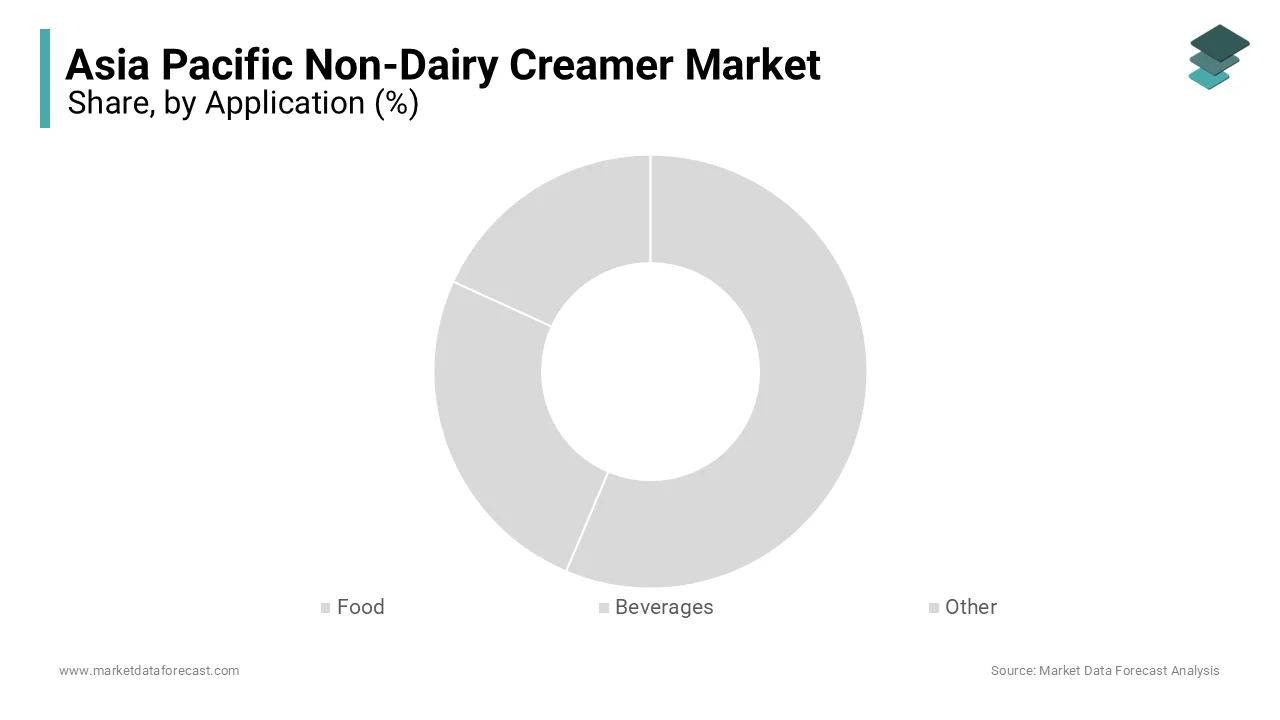
On the other side, the food segment is expected to record a promising CAGR in this regional market during the forecast period owing to its expanding use in culinary and processed food applications. This segment is accelerating as manufacturers increasingly incorporate non-dairy creamers into soups, sauces, desserts, and baked goods to enhance texture and flavor while reducing costs. As per the Food Industry Asia report, the processed food sector in the region is expanding rapidly due to changing lifestyles and increased demand for convenience foods. Non-dairy creamers provide a stable and consistent source of fat and protein that improves the mouthfeel of instant noodles, creamy soups, and confectionery items. The versatility of these ingredients allows food technologists to create rich and indulgent products without the logistical challenges of fresh dairy. The rise of ready-to-eat meals and meal kits has further boosted demand, as creamers offer ease of formulation and extended shelf life. Consumers are seeking affordable indulgence in their daily meals, driving manufacturers to use creamers as a cost-effective alternative to butter or heavy cream. The ability of non-dairy creamers to withstand high-temperature processing makes them ideal for sterilized canned foods and retort pouches. This functional advantage, combined with cost-efficiency, positions the food segment as a dynamic growth engine in the market.
By Product Type Insights
The others segment led the market by capturing the largest share of the regional market in 2025. This segment dominates because of its widespread availability, affordability, and extensive use in the mass-market foodservice sector. For instance, conventional creamers account for the largest volume share because they are the most cost-effective option for large-scale beverage preparation. These products are deeply entrenched in the supply chains of tea stalls, cafes, and institutional catering services across developing economies. The long shelf life and ease of storage make powdered creamers ideal for regions with limited cold-chain infrastructure. Consumers in price-sensitive markets prefer these creamers for their ability to provide a creamy texture at a fraction of the cost of fresh milk or premium plant-based alternatives. The familiarity with traditional creamer flavors ensures steady demand among older demographics that are less influenced by health trends. Manufacturers benefit from economies of scale in producing these standard formulations, allowing for competitive pricing. The extensive distribution network for powdered creamers reaches even remote rural areas, ensuring universal accessibility. This combination of low-cost convenience and established usage habits secures the leading position of the others segment in the regional market.
On the other end, the coconut milk creamers segment is expected to register the fastest CAGR in the regional market over the forecast period owing to the rising consumer preference for natural and tropical flavors. This segment is expanding rapidly as shoppers seek clean-label alternatives that align with regional culinary traditions. As per the Global Coconut Association, coconut production in Asia-Pacific is robust, providing a reliable supply of raw materials for creamer manufacturing. Coconut creamers offer a rich and distinct flavor that complements coffee, tea, and Asian desserts, making them highly appealing to local palates. The perception of coconut as a natural and healthy ingredient drives adoption among health-conscious consumers who avoid synthetic additives. The rise of vegan and plant-based diets further boosts demand for coconut-based products, as they are free from dairy and soy allergens. Manufacturers are innovating with organic and cold-pressed coconut creamers to capture the premium segment. The versatility of coconut creamers in both beverages and culinary applications expands their usage occasions. Marketing campaigns highlighting the sustainability and natural origin of coconut resonate with environmentally aware buyers. This combination of taste, health, and cultural relevance positions coconut milk creamers as a dynamic growth leader in the market.
By Distribution Channel Insights
The supermarkets and hypermarkets segment dominated the market by holding the leading share of the regional market in 2025. The dominance of this segment is primarily attributed to their extensive reach, wide product assortment, and ability to attract large foot traffic. This channel dominates because it offers consumers the convenience of one-stop shopping for all grocery needs, including beverages and pantry staples. As per Kantar Worldpanel, modern trade accounts for a significant share of packaged food sales in urban Asia, providing brands with high visibility. Shoppers prefer supermarkets for the assurance of product quality, freshness, and authentic branding. The dedicated aisles for coffee, tea, and dairy alternatives allow for effective merchandising and promotional activities. Private-label brands offered by major retail chains also contribute to volume sales by providing affordable options. The ability to compare different brands and read nutritional labels influences purchasing decisions in this environment. Supermarkets often run discounts and bundle offers that drive impulse purchases and trial of new products. The presence of knowledgeable staff and sampling stations further enhances consumer engagement. This structured retail environment supports the sale of both conventional and premium creamer variants. The trust associated with established supermarket chains ensures consistent sales volumes. This combination of convenience, variety, and trust secures the leading position of supermarkets and hypermarkets in the distribution landscape.
However, the online stores segment is anticipated to showcase a promising CAGR in the regional market over the forecast period owing to the digital adoption and convenience. This channel is expanding rapidly as consumers increasingly prefer the ease of home delivery and access to a wider variety of products. As per eMarketer, e-commerce penetration in Asia-Pacific is the highest globally, with grocery and beverage categories seeing significant growth. Online platforms allow brands to showcase detailed product information, reviews, and comparisons, aiding informed decision-making. Subscription models offered by online retailers ensure regular replenishment and build habit formation. The ability to reach remote areas where physical retail presence is limited expands market reach. Digital marketing and influencer collaborations drive traffic to online stores, converting social media engagement into sales. The convenience of browsing and buying from home appeals to busy urban consumers. This digital shift transforms how consumers discover and purchase non-dairy creamers, fueling rapid channel expansion.
COUNTRY LEVEL ANALYSIS
China dominated the market by holding the leading share of the regional market in 2025 and is likely to experience robust expansion and maintain a leading trajectory over the next few years due to its massive population, booming coffee and tea industries and rapid urbanization and the proliferation of cafe chains. The explosive growth of the bubble tea sector that relies heavily on specialized creamers is further contributing to the dominance of China in the regional market. As per the China Chain Store and Franchise Association, the number of tea-drink stores has exceeded 500,000, creating immense B2B demand. Rising disposable incomes enable consumers to purchase premium plant-based creamers. Government initiatives promoting domestic agriculture support local production of soy and coconut ingredients. E-commerce platforms facilitate direct-to-consumer sales of niche brands. The young demographic is highly receptive to new flavors and health trends. This dynamic environment ensures China remains the dominant force in the regional market.
India is expected to witness steady growth and continuous development in the coming years, representing a rapidly emerging segment of the Asia-Pacific non-dairy creamer market driven by its deep-rooted tea culture and high-volume consumption of powdered creamers in households and small tea stalls. The affordability and shelf stability of conventional creamers that suit the price-sensitive mass market is further aiding the position of India in the regional market. As per the Tea Board of India, India is one of the largest consumers of tea globally, ensuring steady baseline demand. Rising awareness of lactose intolerance drives interest in plant-based alternatives. Urbanization leads to increased cafe visits, boosting demand for barista-style creamers. Local manufacturers are expanding capacity to meet growing needs. The vast rural population provides a large untapped market for basic creamer products. These factors position India as a key volume driver.
Japan is projected to maintain a steady and sophisticated growth path over the next few years, holding a mature and specialized segment of the Asia-Pacific non-dairy creamer market characterized by high quality standards, an aging population and strong health consciousness and the growing demand for clean-label and functional creamers with added benefits. As per the Ministry of Health, Labour and Welfare, Japanese consumers actively seek low-calorie and additive-free options. The well-established coffee culture supports demand for premium barista creamers. Retailers offer a wide range of plant-based options, including almond and oat. Strict regulatory frameworks ensure product safety and transparency. Innovation in packaging and portion control appeals to single-person households. This focus on quality and health sustains steady market growth.
South Korea is anticipated to show consistent and trend-focused growth over the next few years, representing a trend-sensitive segment of the Asia-Pacific non-dairy creamer market driven by beauty and wellness cultures, high adoption of plant-based and vegan products and the popularity of cafe hopping and specialty coffee among young consumers. As per the Korea Consumer Agency, demand for aesthetically pleasing and healthy beverage ingredients is rising. Coconut and oat creamers are gaining traction due to their perceived health benefits. Social media influencers play a crucial role in promoting new products. Local brands innovate quickly with unique flavors and packaging. The strong digital infrastructure supports online sales growth. This synergy between lifestyle and health drives robust demand.
Australia is likely to sustain stable and premium advancement over the next few years, holding a mature and premium segment of the Asia-Pacific non-dairy creamer market driven by environmental consciousness, high willingness to pay for sustainable and organic products and the widespread adoption of vegan and flexitarians diets. As per the Australian Bureau of Statistics, plant-based food sales are growing significantly. Consumers prefer creamers made from locally sourced ingredients like macadamia and oats. Retailers emphasize eco-friendly packaging and ethical sourcing. The strong coffee culture supports demand for high-performance barista creamers. Regulatory standards ensure high quality and safety. This values-driven consumption pattern supports steady growth for premium brands.
KEY MARKET PLAYERS
Key players in the Asia Pacific non-dairy creamer market are
- Nestle
- The WhiteWave Foods Company
- Cargill
- Kerry Group plc
- Sugar Foods Corporation
- Rich Products
- Pulmuone Foods
- Fonterra Co-operative Group Limited
- Organic Valley Crop Cooperative
- Bigtree Group
- Wenhui Food
- Dean Foods
- Ingredion Incorporated
Top Players in the Market
- Kerry Group plc is a leading global provider of taste and nutrition solutions with a significant footprint in the Asia Pacific non dairy creamer market. The company specializes in developing high performance plant based creamers that offer superior stability and mouthfeel for coffee and tea applications. Kerry recently expanded its innovation center in Singapore to better serve regional customers with tailored formulations. The company focuses on clean label ingredients and sustainable sourcing practices which resonate with health conscious Asian consumers. Strategic partnerships with major beverage chains enable Kerry to co create unique flavor profiles and textures. Their investment in advanced emulsification technologies ensures consistent quality across diverse product lines. By prioritizing sustainability and sensory excellence Kerry strengthens its position as a trusted partner for food and beverage manufacturers seeking premium non dairy solutions in the rapidly evolving Asia Pacific landscape.
- Fonterra Co-operative Group Limited contributes significantly to the Asia Pacific non dairy creamer market through its extensive dairy expertise and plant based innovations. Although traditionally known for dairy Fonterra has diversified into non dairy alternatives to meet changing consumer preferences. The company leverages its robust supply chain and manufacturing capabilities to produce high quality soy and oat based creamers. Fonterra recently launched new plant based products under its Anchor brand targeting the growing cafe sector in China and Southeast Asia. The company emphasizes nutritional benefits and functional properties such as foam stability and heat resistance. Collaborations with local distributors ensure wide market reach and availability. Fonterra’s commitment to research and development allows it to innovate rapidly in response to regional trends. This strategic pivot towards plant based options enhances its competitiveness and relevance in the dynamic Asia Pacific market.
- Ingredion Incorporated plays a pivotal role in the Asia Pacific non dairy creamer market by providing specialized texturants and stabilizers that enhance product performance. The company supplies key ingredients that enable manufacturers to create creamy and stable non dairy creamers from various plant sources. Ingredion recently invested in expanding its technical service centers in Thailand and India to support local clients with formulation expertise. The company focuses on developing clean label solutions that meet regulatory standards and consumer expectations for natural ingredients. Strategic acquisitions have strengthened its portfolio of plant based proteins and fibers. Ingredion collaborates with food producers to optimize texture and mouthfeel while reducing costs. Their emphasis on sustainability and innovation helps brands differentiate their products in a crowded marketplace. By offering comprehensive technical support and high quality ingredients Ingredion solidifies its position as a critical enabler of growth in the Asia Pacific non dairy creamer sector.
Top Strategies Used by the Key Market Participants
Key players in the Asia Pacific non dairy creamer market primarily focus on product innovation and localization to meet diverse regional tastes. Companies invest heavily in research and development to create clean label and plant based formulations that appeal to health conscious consumers. Strategic partnerships with local suppliers and distributors enhance supply chain efficiency and market penetration. Expansion into emerging economies through targeted marketing and affordable pricing strategies drives volume growth. Sustainability initiatives including eco friendly packaging and ethical sourcing resonate with environmentally aware buyers. Digital engagement and e commerce platforms facilitate direct consumer interaction and brand loyalty. Obtaining certifications such as halal organic and non GMO builds trust and facilitates cross border trade. These multifaceted approaches enable participants to adapt to changing preferences and maintain competitive advantage in the dynamic Asia Pacific region.
COMPETITIVE LANDSCAPE
The competition in the Asia Pacific non-dairy creamer market is characterized by a mix of multinational ingredient suppliers and regional manufacturers vying for dominance in a rapidly evolving landscape. Large global players leverage their technological expertise and extensive distribution networks to offer premium and specialized products. Local competitors often compete on price and cultural relevance catering to specific taste preferences and traditional beverage habits. The market sees intense rivalry in terms of product quality functionality and clean label credentials. Innovation in plant based sources such as oat coconut, and almond serves as a key differentiator as consumers seek healthier alternatives. Regulatory compliance and certification requirements create barriers to entry but also opportunities for established brands with robust quality systems. Price sensitivity remains a factor in developing markets while premiumization drives growth in mature economies. Collaborations with food service providers and retailers enhance visibility and brand loyalty. The entry of private label offerings adds pressure on branded players to demonstrate value. This dynamic environment fosters continuous improvement and diversification benefiting consumers through greater choice and enhanced product quality across the region.
MARKET SEGMENTATION
This Research Report on Asia Pacific non-dairy creamer market is segmented, and sub segmented into following categories
By Application
- Food
- Beverages
- Other Segments
By Product Type
- Soy
- Almond
- Coconut Milk Creamers
- Others
By Fat Content
- Low Fat
- Medium Fat
- High Fat
By Distribution Channel
- Hypermarkets
- Supermarkets
- Convenience Stores
- Pharmacies
- Drugstores
- Online
- Others
By Country
- UK
- France
- Spain
- Germany
- Italy
- Russia
- Sweden
- Denmark
- Switzerland
- Netherlands
- Turkey
- Czech Republic
- Rest of Europe