- Product Description Description
- Table of Contents TOC
- List of Table & Figure LOT
- Get Free Sample PDF Sample PDF
Market Size, 2025
$1.11 BnMarket Estimate, 2026
$1.18 BnMarket Forecast, 2034
$1.88 BnCAGR, 2026–2034
6%Asia Pacific Orthopedic Braces and Supports Market Summary
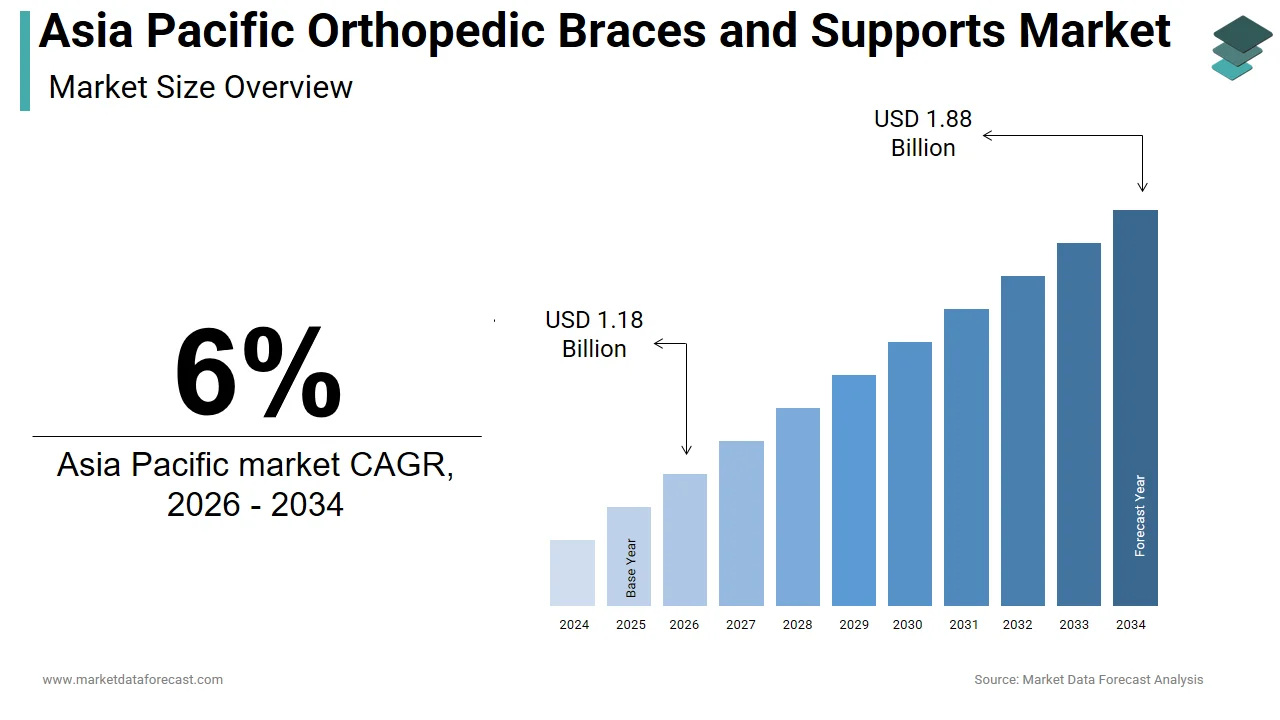
The Asia Pacific orthopedic braces and supports market was valued at USD 1.11 billion in 2025, is estimated to reach USD 1.18 billion in 2026, and is projected to reach USD 1.88 billion by 2034, growing at a CAGR of 6% from 2026 to 2034. The rising prevalence of musculoskeletal impairments, aging populations, and sedentary lifestyles are key growth factors.
Key Market Trends & Insights
- China held the largest share of the Asia Pacific orthopedic braces and supports market in 2025.
- Japan and South Korea remain high-value markets due to aging demographics and advanced healthcare systems.
- Based on product, the knee braces and supports dominated the market in 2025.
- Based on type, the soft and elastic braces captured the largest share in 2025.
- Based on end-user, the hospitals remained the leading segment in 2025.
Market Size & Forecast
- 2025 Market Size: USD 1.11 Billion
- 2026 Estimated Size: USD 1.18 Billion
- 2034 Projected Market Size: USD 1.88 Billion
- CAGR (2026–2034): 6%
- China: Largest market in 2025
- Japan & South Korea: Strong growth regions
Asia Pacific Orthopedic Braces and Supports Market Size
The Asia Pacific orthopedic braces and supports market was valued at USD 1.11 billion in 2025, is estimated to reach USD 1.18 billion in 2026, and is projected to reach USD 1.88 billion by 2034, growing at a CAGR of 6% from 2026 to 2034.
Orthopedic braces and supports refer to the medical devices designed to stabilize, align, protect, or improve the function of musculoskeletal structures, particularly joints and the spine. These devices are employed across clinical settings to manage conditions arising from trauma, degenerative disorders, sports injuries, and post-surgical rehabilitation. As populations across the region experience prolonged life expectancy and increasingly sedentary lifestyles, the prevalence of musculoskeletal impairments has surged.
According to the World Health Organization, musculoskeletal conditions affect more than 1.7 billion people globally, with a significant concentration in the Asia Pacific, where aging demographics and rising physical inactivity amplify demand. Countries such as Japan and South Korea report high incidences of osteoarthritis. Additionally, workplace-related musculoskeletal disorders are increasingly recognized, particularly in industrializing nations like India and Indonesia, where ergonomic deficiencies contribute to chronic back and joint ailments. The integration of orthopedic supports into both clinical and home-based care models has been accelerated by growing awareness and the expansion of outpatient rehabilitation services. As healthcare systems in the region prioritize non-invasive interventions, orthopedic braces and supports are becoming essential tools in conservative treatment protocols, reflecting a shift toward preventive and sustained musculoskeletal health management.
MARKET DRIVERS
Rising Prevalence of Osteoarthritis and Degenerative Joint Diseases
The escalating burden of osteoarthritis and degenerative joint diseases across the Asia Pacific region serves as a critical catalyst for the orthopedic braces and supports market. With aging populations expanding rapidly, particularly in high-income economies such as Japan and Singapore, the incidence of joint deterioration has intensified. This demographic shift is mirrored across South Korea. The condition leads to chronic pain, reduced mobility, and functional limitations, prompting a growing reliance on non-surgical interventions such as knee braces, lumbar supports, and ankle stabilizers. These devices offer pain alleviation and improved joint mechanics, enabling patients to maintain independence and delay surgical procedures. Moreover, public health initiatives in Australia and New Zealand have begun emphasizing conservative management of osteoarthritis, integrating bracing into national care pathways. The increasing adoption of biomechanically engineered supports, combined with rising geriatric healthcare expenditure, further reinforces market expansion. As life expectancy continues to rise and age-related musculoskeletal decline becomes more widespread, the demand for orthopedic supports is poised for sustained growth across both urban and rural healthcare ecosystems.
Surge in Sports-Related Injuries and Active Lifestyle Trends
A significant upswing in sports participation and physically active lifestyles across the Asia Pacific region has led to a parallel rise in musculoskeletal injuries, directly fueling demand for orthopedic braces and supports. In countries such as India, China, and Australia, government-backed fitness campaigns and urban wellness movements have encouraged millions to adopt regular physical activity. Athletes and active individuals increasingly rely on prophylactic and rehabilitative braces to prevent re-injury and accelerate recovery. Innovations such as dynamic knee stabilizers and compression-based supports have gained traction among amateur and professional athletes alike. Furthermore, the proliferation of sports medicine clinics and specialized rehabilitation centers in cities like Sydney, Mumbai, and Bangkok has enhanced access to advanced bracing solutions. As physical activity becomes deeply embedded in public health strategies, the need for performance-oriented and injury-mitigating orthopedic supports continues to expand, shaping a robust market trajectory.
MARKET RESTRAINTS
Limited Reimbursement Coverage for Orthopedic Support Devices
The inconsistent and often inadequate reimbursement framework across public and private health insurance systems is a major impediment to the widespread adoption of orthopedic braces and supports in the Asia Pacific region. In several emerging economies, including Indonesia, the Philippines, and Vietnam, orthopedic supports are classified as ancillary or non-essential medical devices, resulting in minimal or no insurance coverage. Even in more developed markets like Japan and South Korea, reimbursement policies are restrictive, typically covering only post-surgical or severe pathology-related bracing, excluding preventive or mild-to-moderate condition management. This financial burden discourages long-term use, particularly among rural and low-income populations. Additionally, the absence of standardized coding for orthopedic supports in national health databases complicates claims processing and provider adoption. Without comprehensive insurance integration, the scalability of orthopedic bracing solutions remains constrained, limiting market penetration despite high clinical need.
Low Awareness and Misconceptions in Rural and Underserved Areas
Despite technological advancements and increasing product availability, a substantial portion of the Asia Pacific population, particularly in rural and remote regions, remains unaware of the therapeutic benefits of orthopedic braces and supports. Cultural beliefs often prioritize traditional remedies over evidence-based orthopedic interventions, leading to delayed or inappropriate treatment. This results in underutilization of clinically validated supports. Moreover, healthcare infrastructure in these areas lacks trained orthotists and rehabilitation specialists. Without professional guidance, patients may misuse or abandon braces due to discomfort or incorrect fitting. Educational campaigns remain sparse, and digital health outreach is hindered by poor internet penetration in remote zones. These systemic gaps in awareness and access significantly dampen market growth potential, particularly in regions where the burden of musculoskeletal disorders is highest.
MARKET OPPORTUNITIES
Expansion of Tele-Rehabilitation and Digital Health Integration
The rapid advancement of telehealth and digital rehabilitation platforms across the Asia Pacific region presents a transformative opportunity for the orthopedic braces and supports market. As internet penetration surges in countries like Malaysia, Thailand, and India, digital health solutions are increasingly being adopted to bridge gaps in physical therapy access. Companies are leveraging this shift by integrating smart sensors into braces that sync with mobile apps to track posture, movement patterns, and compliance. As healthcare systems prioritize cost-effective, patient-centric models, the convergence of wearable bracing technology with tele-rehabilitation is poised to redefine musculoskeletal management, unlocking scalable, data-driven solutions across urban and rural populations.
Growing Geriatric Infrastructure and Age-Friendly Healthcare Initiatives
The institutionalization of age-friendly healthcare systems and elderly-centric infrastructure across the Asia Pacific region is creating fertile ground for the orthopedic braces and supports market. Governments are increasingly investing in geriatric care facilities, fall prevention programs, and mobility enhancement initiatives to address the needs of aging populations. These institutional frameworks not only enhance access but also normalize the use of orthopedic supports as part of routine senior care. Thus, the integration of braces into geriatric wellness programs represents a strategic growth avenue for manufacturers and healthcare providers alike.
MARKET CHALLENGES
Regulatory Fragmentation Across National Markets
The lack of harmonized regulatory frameworks governing medical devices is one of the most formidable challenges confronting the orthopedic braces and supports market in the Asia Pacific region. Each country maintains distinct approval processes, classification systems, and quality standards, complicating market entry and product standardization. Countries like Indonesia and Vietnam have recently introduced new regulatory regimes, creating uncertainty for manufacturers. Additionally, post-market surveillance requirements vary widely, with limited enforcement in some jurisdictions leading to concerns over counterfeit or substandard products. This regulatory disarray increases compliance costs, delays innovation diffusion, and undermines consumer trust. Without regional alignment, such as through the ASEAN Medical Device Directive, which remains inconsistently implemented, companies face a fragmented landscape that hampers scalability and equitable access.
Shortage of Trained Orthotists and Rehabilitation Professionals
The scarcity of qualified orthotists and musculoskeletal rehabilitation specialists poses a critical barrier to the effective deployment of orthopedic braces and supports across the Asia Pacific region. Proper fitting and customization of braces require specialized clinical expertise, yet many countries face a severe workforce deficit. This shortage leads to improper brace application, reduced patient compliance, and diminished therapeutic outcomes. Even in advanced healthcare systems like Australia, rural areas suffer from a shortfall in allied health professionals. The absence of standardized training programs exacerbates the issue; only seven countries in the region offer formal orthotics education at the university level. Consequently, many patients rely on off-the-shelf products without professional guidance, increasing the risk of complications such as skin irritation or joint misalignment. Addressing this human resource gap requires coordinated investment in education, certification, and tele-support systems, but progress remains slow. Until the clinical workforce expands, the full potential of orthopedic bracing technologies will remain unrealized.
REPORT COVERAGE
| REPORT METRIC | DETAILS |
| Market Size Available | 2025 to 2034 |
| Base Year | 2025 |
| Forecast Period | 2026 to 2034 |
| Segments Covered | By Product, Type, Application, End-user, and Region. |
| Various Analyses Covered | Global, Regional and Country-Level Analysis, Segment-Level Analysis, Drivers, Restraints, Opportunities, Challenges; PESTLE Analysis; Porter’s Five Forces Analysis, Competitive Landscape, Analyst Overview of Investment Opportunities |
| Countries Covered | India, China, Japan, South Korea, Australia, New Zealand, Thailand, Malaysia, Vietnam, Philippines, Indonesia, Singapore, Rest of APAC |
| Market Leaders Profiled | DJO Global, Ossur Corporate, Bauerfeind AG, Breg, Inc., BSN Medical GmbH, DeRoyal Industries, Inc., Otto Bock Healthcare GmbH, Alcare Company Ltd., Oppo Medical, and Trulife, among others. |
SEGMENTAL ANALYSIS
By Product Insights
The knee braces and supports segment dominated the market by accounting for 34.6% of total revenue in 2024. This segment’s position is underpinned by the high prevalence of knee-related musculoskeletal disorders, particularly osteoarthritis and sports-induced ligament injuries. The knee joint, being the largest and most mechanically stressed articulation in the human body, is inherently vulnerable to degeneration and trauma. This widespread pathology necessitates long-term conservative management, where knee braces serve as primary non-surgical interventions. The increasing geriatric population across high-income Asia Pacific nations amplifies demand, as age-related cartilage wear drives functional dependency on stabilizing devices. Moreover, the integration of biomechanically advanced unloader braces into national treatment guidelines, such as in Australia’s Osteoarthritis Management Framework, has institutionalized their clinical use. These devices reduce medial compartment loading, enhancing mobility and delaying total knee replacement. Coupled with rising awareness and product availability through retail and e-health platforms, the knee brace segment remains entrenched as the market leader.
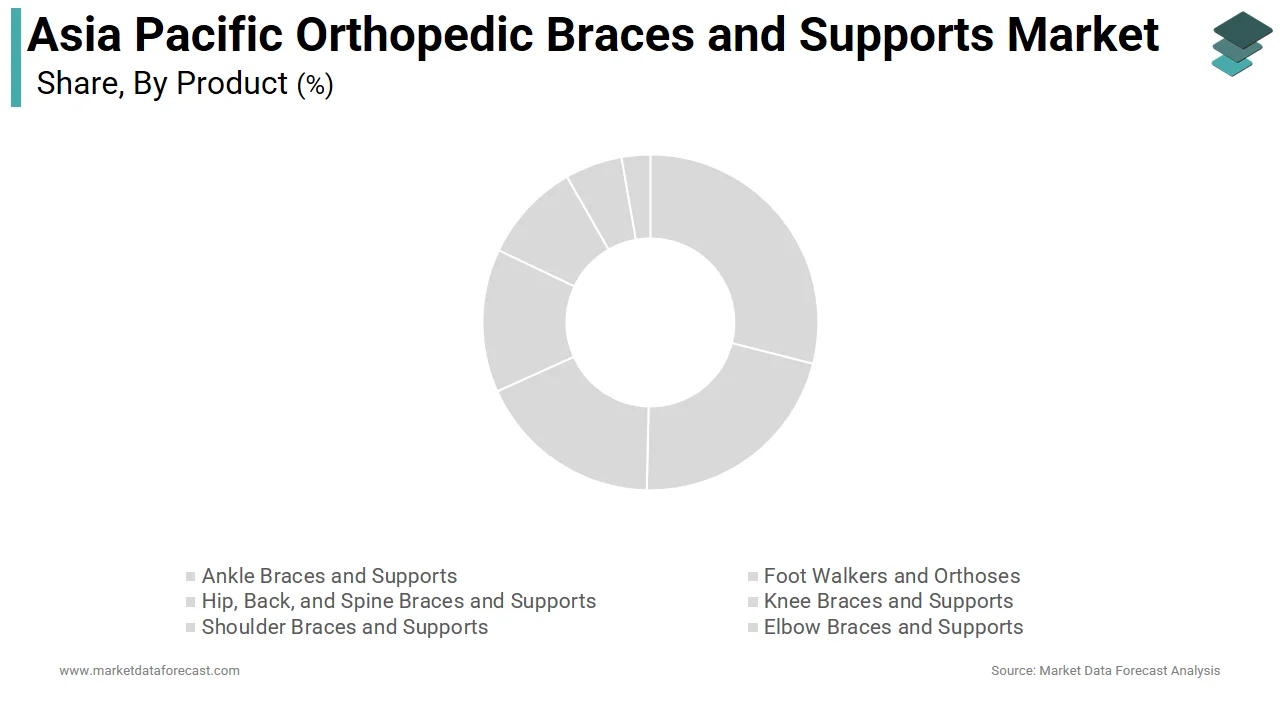
The hip, back, and spine braces and supports segment is the fastest-growing product and is projected to expand at a CAGR of 8.7% during the forecast period. This accelerated growth is driven by escalating rates of spinal disorders and post-surgical rehabilitation needs. A primary factor is the rising incidence of lumbar disc herniation and degenerative spondylolisthesis, particularly in aging populations and sedentary urban workforces. Additionally, workplace ergonomics remain suboptimal across manufacturing and logistics sectors in countries like India and Vietnam, contributing to occupational spinal strain. A further critical driver is the surge in spinal surgeries. Post-operative bracing is standard protocol, ensuring spinal stability during recovery. Furthermore, innovations in dynamic trunk supports with posture correction sensors are gaining traction in corporate wellness programs, particularly in Singapore and Australia. These technological enhancements, combined with rising clinical validation and insurance coverage in select markets, are propelling the segment’s rapid expansion.
By Type Insights
The soft and elastic braces and supports segment led the Asia Pacific orthopedic braces and supports market by capturing 52.6% of total revenue in 2024. This dominance is due to their widespread applicability in both acute and chronic musculoskeletal conditions, particularly in outpatient and home-based care settings. Soft braces are preferred for their comfort, flexibility, and ease of use, making them ideal for long-term wear in managing conditions such as tendonitis, mild ligament sprains, and early-stage joint instability. Their non-invasive nature aligns with regional healthcare preferences for conservative treatment, especially among elderly patients averse to surgical intervention. Additionally, soft braces are increasingly used in preventive care among athletes and industrial workers. The low manufacturing cost and scalability of textile-based supports also enable mass distribution through pharmacies and e-commerce platforms. Platforms like Alibaba Health and PharmEasy have reported a year-on-year increase in soft brace sales across China and India, reflecting strong consumer demand. Coupled with minimal training requirements for application and broad regulatory acceptance, the accessibility and versatility of soft braces solidify their position as the most widely adopted orthopedic support type.
The hinged braces and supports segment is the fastest-growing segment by type and is anticipated to grow at a CAGR of 9.3% during the forecast period. This growth is fueled by their superior biomechanical functionality and increasing adoption in post-injury and post-surgical rehabilitation. Hinged braces provide controlled joint motion, medial-lateral stability, and load redistribution, features critical for recovery from anterior cruciate ligament (ACL) tears and meniscal injuries. These devices reduce re-injury rates. An additional driving factor is the rising demand for custom-fitted hinged orthoses in sports medicine clinics across Australia and Japan, where elite and amateur athletes seek performance optimization and injury prevention. The integration of adjustable polycentric hinges and lightweight composite materials has enhanced patient compliance and functional outcomes. Furthermore, advancements in 3D scanning and digital fitting technologies have streamlined production, reducing lead times and costs. In Singapore, Tan Tock Seng Hospital’s orthotics unit has adopted AI-driven hinge calibration systems, improving fit accuracy by 28%. As clinical evidence reinforces their efficacy and insurance coverage expands in select markets, hinged braces are emerging as the gold standard in dynamic joint stabilization.
By End User Insights
The hospitals segment prevailed in the Asia Pacific orthopedic braces and supports market by commanding 46.3% of total revenue in 2024. This dominance is rooted in the centralized role of hospitals in diagnosing musculoskeletal conditions and initiating post-surgical or trauma-related bracing protocols. In high-volume surgical centers across Japan, China, and South Korea, orthopedic braces are routinely prescribed immediately after joint replacement, spinal fusion, or fracture fixation procedures. Hospitals also serve as primary procurement hubs for institutional-grade supports, often purchasing in bulk from medical device suppliers under long-term contracts. Additionally, tertiary care centers are increasingly integrating orthotists into multidisciplinary teams, ensuring precise fitting and follow-up. The presence of advanced imaging and gait analysis facilities within hospitals further enhances the customization and clinical appropriateness of prescribed braces. With rising surgical volumes and the institutionalization of standardized rehabilitation pathways, hospitals remain the principal point of entry for high-value, medically necessary orthopedic supports, reinforcing their market leadership.
The home healthcare segment is the fastest-growing end-user and is projected to expand at a CAGR of 10.2% during the forecast period. This surge is driven by a paradigm shift toward decentralized, patient-centric care models and the growing preference for self-management of chronic musculoskeletal conditions. An increasing number of patients in urban centers such as Shanghai, Mumbai, and Jakarta are opting for home-based rehabilitation to avoid hospital overcrowding and reduce infection risks. The proliferation of e-pharmacies and direct-to-consumer medical device platforms has further accelerated access. Additionally, aging-in-place initiatives in countries like Singapore and Japan encourage elderly individuals to use orthopedic supports at home to maintain mobility and prevent falls. Coupled with rising health literacy and insurance coverage for home medical equipment in select markets, the home healthcare segment is rapidly transforming into a primary distribution channel for orthopedic supports.
COUNTRY-LEVEL ANALYSIS
China Orthopedic Braces and Supports Market Insights
China stood as the largest national market for orthopedic braces and supports in the Asia Pacific region at 30.2% of the total value in 2024. The country’s dominance is anchored in its vast population, rising healthcare expenditure, and growing burden of musculoskeletal disorders. With a significant number of people and a rapidly aging demographic, the prevalence of osteoarthritis, spinal degeneration, and post-traumatic injuries is escalating. The Chinese government has prioritized musculoskeletal health through its Healthy China 2030 initiative, which includes expanded access to rehabilitation services and medical devices. Additionally, the National Healthcare Security Administration has expanded reimbursement for certain orthopedic supports, particularly post-surgical knee and spinal braces, increasing affordability. The rise of domestic manufacturers such as Aeonmed and Winner Medical has also driven down prices and improved product availability. With increasing urbanization, sedentary lifestyles, and government support, China’s market is poised for sustained expansion.
Japan Orthopedic Braces and Supports Market Insights
Japan is another key player in the Asia Pacific orthopedic braces and supports market. The country’s leadership is underpinned by one of the world’s most aged populations. This demographic profile creates immense demand for devices that support mobility and manage age-related joint deterioration. The Long-Term Care Insurance system plays a pivotal role by covering the rental and partial purchase of orthopedic braces, ensuring accessibility for seniors. Moreover, Japan’s advanced healthcare infrastructure includes specialized orthotics clinics and a high density of rehabilitation professionals, facilitating proper device fitting and follow-up. Domestic innovation is also a key driver; companies like Nakamura Brace have pioneered smart braces with posture feedback systems, now integrated into corporate wellness programs. With one of the highest per capita healthcare expenditures in Asia, Japan remains a high-value market for premium orthopedic supports.
India Orthopedic Braces and Supports Market Insights
India emerges as a lucrative market. Positioned as a high-growth emerging market, India’s orthopedic braces sector is fueled by a combination of rising injury rates, increasing health awareness, and expanding healthcare access. With over 1.4 billion people and a young, active population, sports and workplace-related musculoskeletal injuries are on the rise. Urbanization and sedentary office jobs have also contributed to a surge in back pain, affecting a notable share of working adults in major cities. Government initiatives such as Ayushman Bharat and the National Programme for Health Care of the Elderly are improving access to orthopedic care, while private insurance penetration is rising. The e-health sector is a major growth engine. Domestic manufacturers are producing cost-effective soft braces, making them accessible to middle- and lower-income groups. As healthcare infrastructure expands and product awareness grows, India’s market is on a steep growth trajectory.
Australia Orthopedic Braces and Supports Market Insights
Australia holds a notable share of the Asia Pacific orthopedic braces and supports market. As a high-income nation with a well-developed healthcare system, Australia exhibits strong demand for premium, technologically advanced orthopedic devices. The country has one of the highest rates of sports participation globally. This active lifestyle contributes to a high incidence of sports injuries, particularly ACL tears and shoulder dislocations, driving demand for hinged and performance-oriented braces. The public healthcare system, Medicare, provides partial reimbursement for orthopedic supports prescribed by specialists, enhancing affordability. Additionally, Australia’s robust regulatory framework ensures high product quality and patient safety, fostering consumer trust. Private health insurers increasingly cover orthotic devices as part of ancillary benefits. The presence of innovative local manufacturers and strong clinical research institutions further supports market maturity. With high health literacy and a focus on preventive care, Australia remains a key market for advanced bracing solutions.
South Korea Orthopedic Braces and Supports Market Insights
South Korea accounts for a notable position in the regional market. The country’s orthopedic braces market is characterized by rapid technological adoption, high surgical volumes, and strong government support for healthcare innovation. With one of the fastest-aging populations in the world, the demand for joint and spinal supports is intensifying. The National Health Insurance Service covers a wide range of orthopedic braces, particularly post-operative devices, reducing out-of-pocket costs. Additionally, South Korea is a hub for medical device innovation; companies like Mediplus Global have developed AI-integrated smart braces that monitor patient movement and compliance. These devices are increasingly used in tele-rehabilitation programs, which have expanded following the success of pandemic-era digital health initiatives. The country’s dense network of specialized orthopedic clinics and high physician-to-patient ratio ensures proper prescription and fitting. With strong R&D investment and a culture of technological acceptance, South Korea is a leader in next-generation orthopedic support solutions.
COMPETITIVE LANDSCAPE
The competitive landscape of the Asia Pacific orthopedic braces and supports market is marked by a blend of multinational corporations, regional specialists, and emerging local manufacturers vying for strategic advantage. Established players such as Ossur, DJO Global, and Medtronic leverage technological innovation, clinical partnerships, and extensive distribution networks to maintain influence across high-income markets like Japan, Australia, and South Korea. At the same time, domestic companies in China, India, and Malaysia are gaining traction by offering cost-effective alternatives tailored to local healthcare budgets and patient preferences. The market is witnessing intensified rivalry in product differentiation, particularly in smart braces with digital monitoring capabilities, where integration with tele-rehabilitation platforms is becoming a key differentiator. Regulatory agility and speed to market are critical, as countries implement evolving medical device standards. Competitive dynamics are further shaped by collaborations between device makers and healthcare providers to establish evidence-based usage protocols. While Western firms dominate in premium segments, regional players are capturing volume-driven opportunities in soft braces and home-use supports. The absence of a single dominant market leader fosters continuous innovation, pricing adjustments, and strategic positioning, making the region a dynamic and rapidly evolving hub for orthopedic support solutions.
KEY MARKET PLAYERS
Some of the noteworthy companies in the Asia Pacific orthopedic braces and supports market profiled in this report are
- DJO Global
- Össur Corporate
- Bauerfeind AG
- Breg, Inc.
- BSN Medical GmbH
- DeRoyal Industries, Inc.
- Otto Bock Healthcare GmbH
- Alcare Company Ltd.
- Oppo Medical
- Trulife
TOP LEADING PLAYERS IN THE MARKET
- Ossur Asia Pacific operates as a pivotal force in the region’s orthopedic braces and supports landscape, delivering advanced non-invasive solutions for joint stability and rehabilitation. The company has deepened its footprint through localized distribution networks in Japan, Australia, and Southeast Asia, ensuring rapid access to its portfolio of knee, back, and ankle supports. Ossur has intensified collaboration with physiotherapy clinics and sports medicine centers, particularly in Singapore and South Korea, to integrate its products into structured rehabilitation protocols. In 2023, the company launched its Flex膝 (Flex-Knee) smart brace in China, embedded with motion sensors that transmit real-time data to clinicians via a secure cloud platform. This innovation aligns with regional demand for digital health integration. Ossur also sponsored the Asia-Pacific Sports Injury Symposium in Sydney, reinforcing its commitment to clinical education and evidence-based practice. By investing in tele-rehabilitation partnerships and AI-driven fitting tools, Ossur is positioning itself at the forefront of personalized orthopedic care, enhancing patient adherence and long-term outcomes across diverse healthcare ecosystems.
- DJO Global (Enovis Corporation) maintains a strong operational presence across the Asia Pacific by delivering a comprehensive range of soft, rigid, and hinged braces tailored to both clinical and consumer needs. The company has strategically expanded its distribution in high-growth markets such as India and Indonesia through alliances with regional medical device distributors and e-health platforms. In 2022, DJO introduced its patented FullForce Knee Brace in Japan, designed for osteoarthritis patients, which demonstrated a 32% reduction in pain during a multicenter trial conducted with Tokyo Medical University. The company has also enhanced its digital footprint by integrating its braces with mobile apps that track usage and recovery progress, particularly in Australia and South Korea. DJO actively participates in orthopedic conferences such as the Asia Pacific Arthroplasty Society meeting, showcasing its innovations and strengthening relationships with key opinion leaders. Furthermore, the company has invested in localized manufacturing support in Malaysia to reduce lead times and comply with country-specific regulatory standards. These initiatives underscore DJO’s focus on clinical efficacy, accessibility, and technological advancement in shaping the region’s orthopedic support ecosystem.
- Medtronic’s Restorative Therapies Group plays a critical role in advancing spine and neuromuscular support solutions across the Asia Pacific. While traditionally known for implantable devices, Medtronic has expanded its non-surgical orthopedic offerings, particularly in back and trunk stabilization systems used post-spinal surgery. The company has established clinical training centers in Thailand and India to educate surgeons and rehabilitation specialists on integrated care pathways involving bracing. In 2023, Medtronic partnered with the National Spine Institute of Malaysia to develop standardized protocols for post-operative TLSO (thoracolumbosacral orthosis) use, improving patient compliance and recovery outcomes. It also launched a patient support program in Australia that provides digital monitoring tools alongside prescribed braces, enabling remote follow-ups. Medtronic’s emphasis on multidisciplinary care, regulatory alignment, and real-world clinical data collection has strengthened its credibility among healthcare providers. By focusing on high-acuity applications and evidence generation, the company is broadening its influence beyond surgical interventions into the broader musculoskeletal management continuum.
TOP STRATEGIES USED BY KEY MARKET PARTICIPANTS
Key players in the Asia Pacific orthopedic braces and supports market are deploying targeted strategies to consolidate their presence and capture emerging opportunities. Product innovation remains a dominant approach, with companies integrating smart technologies such as motion sensors, AI-driven fit algorithms, and mobile connectivity into braces to enhance functionality and patient engagement. Strategic partnerships with hospitals, rehabilitation centers, and sports medicine clinics enable direct access to prescribers and improve clinical validation. Market expansion through localized distribution networks in high-growth economies like India, Indonesia, and Vietnam ensures broader reach and regulatory compliance. Companies are also investing in digital marketing and e-commerce collaborations to increase consumer awareness and direct-to-patient sales. Additionally, capacity-building initiatives, including training programs for orthotists and physicians, strengthen professional adoption. Mergers and acquisitions are employed to gain technological advantages, while participation in regional medical conferences enhances brand visibility and thought leadership. Regulatory alignment with national health authorities facilitates faster approvals and reimbursement inclusion. Collectively, these strategies reflect a shift toward integrated, patient-centric solutions that combine medical efficacy with digital convenience and accessibility across diverse healthcare settings.
RECENT MARKET DEVELOPMENTS
- In June 2023, Ossur launched its sensor-embedded Flex-Knee brace in Shanghai, integrating real-time gait analytics with a clinician dashboard to support remote rehabilitation monitoring for osteoarthritis patients across urban China.
- In September 2022, DJO Global partnered with Apollo Hospitals in India to distribute its FullForce and Reaction Web knee braces through a nationwide network of orthopedic clinics, enhancing access in tier-1 and tier-2 cities.
- In April 2023, Medtronic collaborated with the National Spine Institute of Malaysia to standardize post-surgical TLSO brace protocols, improving clinical outcomes and reinforcing its position in spinal support care.
- In January 2024, DJO introduced a mobile application in Australia that syncs with its hinged knee braces, enabling patients to track usage, receive physiotherapy reminders, and share data with healthcare providers.
- In August 2023, Ossur established a regional training hub in Singapore to certify physiotherapists and orthotists in advanced bracing techniques, strengthening professional adoption across Southeast Asia.
MARKET SEGMENTATION
This Asia Pacific orthopedic braces and supports market research report is segmented and sub-segmented into the following categories.
By Product
- Ankle Braces and Supports
- Foot Walkers and Orthoses
- Hip, Back, and Spine Braces and Supports
- Knee Braces and Supports
- Shoulder Braces and Supports
- Elbow Braces and Supports
- Hand/Wrist Braces and Supports
- Facial Braces and Supports
By Type
- Soft and Elastic Braces and Supports
- Hard and Rigid Braces and Supports
- Hinged Braces and Supports
By Application
- Preventive Care
- Ligament Injury
- Post-Operative Rehabilitation
- Osteoarthritis
- Compression Therapy
- Others
By End User
- Hospitals
- Clinics
- Home Healthcare
- Others
By Country
- India
- China
- Japan
- South Korea
- Rest Of Asia Pacific