- Product Description Description
- Table of Contents TOC
- List of Table & Figure LOT
- Get Free Sample PDF Sample PDF
Market Size, 2025
$63.09 MnMarket Estimate, 2026
$68.37 MnMarket Forecast, 2034
$130.06 MnCAGR, 2026–2034
8.37%Asia-Pacific Pea Protein Market Size, Trends, and Forecast (2026–2034)
The Asia-Pacific pea protein market size was calculated to be USD 63.09 million in 2025, stands at USD 68.37 million in 2026, and is anticipated to be worth USD 130.06 million by 2034, growing at a compound annual growth rate (CAGR) of 8.37% during the forecast period from 2026 to 2034. Growth is primarily driven by rising demand for plant-based diets rooted in cultural traditions and health consciousness, alongside the fast-growing adoption of high-protein, hypoallergenic sports nutrition alternatives across affluent and emerging markets.
Key Executive Metrics (At-a-Glance)
- 2025 Base Valuation: USD 63.09 Million
- 2026 Current Valuation: USD 68.37 Million
- 2034 Forecast Valuation: USD 130.06 Million
- Forecast Period: 2026–2034
- Compound Annual Growth Rate (CAGR): 8.37%
- Leading Industry Player / Segment Share: Roquette Frères (35.4% share in 2025)
- Fastest-Growing Segment / Player: Burcon NutraScience Ltd. (projected 12.5% CAGR)
- Leading Country Market: India (25.4% share in 2025)
- Key Growth Country: China (20.4% share in 2025 with rapid urban surge)
Core Market Drivers
- Rising Plant-Based Diets: Strong cultural traditions favoring vegetarianism in countries like India and Thailand, amplified by global wellness movements and influencer-driven campaigns.
- Sports Nutrition Expansion: Rising popularity of fitness centers and gyms, with urban consumers in Australia and South Korea turning to dairy-free, high-protein supplements.
Primary Market Restraints & Challenges
- Limited Consumer Awareness: Low recognition and retail penetration of pea protein in rural areas, compounded by traditional cultural perceptions.
- Raw Material Cost Volatility: Vulnerability of yellow pea crops to extreme weather events, droughts, and trade barriers that inflate production costs.
Asia-Pacific Pea Protein Market Segmentation Breakdown
| Segment Category | Leading / Dominant Sub-Segment | Fastest-Growing / Key Highlight |
|---|---|---|
| By Industry Player / Source | Roquette Frères (35.4% share) | Burcon NutraScience Ltd. (12.5% CAGR) |
| By Region / Country | India (25.4% share in 2025) | Australia & South Korea (Fitness & e-commerce) |
Major Industry Players Profiled
Key companies shaping the Asia-Pacific pea protein landscape include Roquette Frères, Puris, Cosucra, Nutri-Pea Limited, Axiom Foods, Inc., Glanbia Nutritionals, Burcon NutraScience Ltd., Yantai Shuangta Food, ET-Chem, The Green Labs, Shandong Jianyuan Foods, and Ingredion.
Asia Pacific Pea Protein Market Size
The Asia Pacific pea protein market size was calculated to be USD 63.09 million in 2025 and is anticipated to be worth USD 130.06 million by 2034, from USD 68.37 million in 2026, growing at a CAGR of 8.37% during the forecast period.
MARKET DRIVERS
Rising Demand for Plant-Based Diets
The rising demand for plant-based diets serves as a major driver propelling the Asia Pacific pea protein market forward, driven by health consciousness and ethical considerations. Over 60% of consumers in the region actively seek plant-based alternatives to animal-derived products in countries like India and Thailand, where vegetarianism is deeply ingrained in cultural traditions. This trend is further amplified by the growing influence of global wellness movements, which emphasize the nutritional benefits of plant-based proteins like pea protein.
The integration of pea protein into Western-inspired dishes, such as plant-based burgers and protein shakes, has broadened its appeal among urban professionals. Moreover, collaborations with celebrity chefs and food influencers have further amplified this trend. A study by McKinsey highlights that influencer-driven campaigns promoting pea protein have increased sales by 40% in markets like Malaysia and Singapore.
Increasing Adoption in Sports Nutrition
The increasing adoption of pea protein in sports nutrition represents another significant driver for the Asia Pacific pea protein market, fueled by its high protein content and hypoallergenic properties. This trend is particularly evident in affluent markets like Australia and South Korea, where exposure to global fitness trends through social media and streaming platforms has reshaped dietary preferences. For example, as per a survey by Kantar, 70% of urban millennials in cities like Sydney and Seoul consider pea protein supplements a convenient way to meet their daily protein requirements without the digestive issues associated with dairy-based alternatives. Additionally, collaborations between sports brands and nutrition companies have further amplified this trend. A report by Hootsuite had revealed that influencer-driven campaigns promoting pea protein supplements have boosted online sales by 50% in markets like Thailand and Indonesia. Another significant factor is the rise of fitness centers and gyms, which have normalized the use of plant-based protein powders.
MARKET RESTRAINTS
Limited Consumer Awareness
Limited consumer awareness about the benefits of pea protein poses a significant restraint to the Asia Pacific pea protein market in rural and underdeveloped areas. According to a study by Nielsen, only 30% of households in rural Southeast Asia recognize pea protein as a viable alternative to traditional protein sources, with the majority still prioritizing animal-based options due to lack of education and exposure. These inconsistencies directly translate into lower retail penetration rates. Additionally, cultural perceptions also play a role. For instance, a study by the Indian Council of Agricultural Research notes that traditional beliefs associating plant-based proteins with inferior quality deter regular consumption ssamong older generations. Compounding these challenges, inadequate retail infrastructure in remote areas restricts product availability will escalate the growth of the market. The market risks alienating a significant segment of the population without targeted educational campaigns and affordable pricing strategies tailored to rural demographics.
Fluctuating Raw Material Costs
Fluctuating raw material costs present another critical restraint hampering the Asia Pacific pea protein market, which is impacting production timelines and profitability. The reliance on key ingredients like yellow peas makes the industry vulnerable to price volatility, especially in regions prone to extreme weather events. According to the Food and Agriculture Organization (FAO), global pea prices surged by 15% in 2022 due to droughts and export restrictions, which is directly affecting pea protein manufacturers.
These inconsistencies translate into higher retail prices, deterring price-sensitive consumers in emerging markets. Additionally, as per the International Trade Centre, import tariffs and trade barriers further complicate cross-border movement of raw materials, which is resulting in financial losses for exporters. For instance, stringent quality certifications required by countries like Japan and South Korea delay shipments by exacerbating operational inefficiencies. Such challenges not only inflate production costs but also limit market penetration in high-demand areas, threatening the market's ability to sustain growth amidst rising consumer expectations.
MARKET OPPORTUNITIES
Expansion into Emerging Markets
The expansion into emerging markets offers a lucrative opportunity for the Asia Pacific pea protein market, driven by untapped consumer bases and evolving purchasing power. Countries like Vietnam, Indonesia, and the Philippines present fertile ground for growth, with their expanding middle-class populations increasingly gravitating toward healthier and sustainable food options.
Companies investing in localized distribution networks stand to capture significant market share, particularly through partnerships with small retailers and cooperatives. Moreover, as per the International Finance Corporation, government initiatives promoting agribusiness in Southeast Asia have facilitated the establishment of new pea farms, ensuring a steady supply of high-quality raw materials. For instance, Vietnam’s recent focus on sustainable agriculture has led to a 25% increase in pea protein production over the past three years.
Innovation in Product Offerings
Innovation in product offerings represents a transformative opportunity for the Asia Pacific pea protein market by enabling brands to differentiate themselves and attract diverse consumer segments. As consumer preferences evolve, there is a growing appetite for value-added variants such as organic, fortified, and specialty pea protein products tailored to specific dietary needs. Over 70% of consumers in the region express interest in food products that combine nutrition with additional health benefits, such as probiotics or omega-3 enrichment. Moreover, as per the Beverage Marketing Corporation, the introduction of eco-friendly packaging, such as biodegradable cartons and reusable containers, has resonated strongly with environmentally conscious buyers, boosting brand loyalty by 25% in urban areas. Innovations in processing techniques, such as cold-pressed extraction, have also enhanced product quality by preserving natural nutrients while extending shelf life. For instance, a report by the Australian Institute of Food Science and Technology notes that cold-pressed pea protein retains 40% more antioxidants compared to conventionally processed variants by appealing to health enthusiasts. The companies can carve out a competitive edge is driving both market penetration and premiumization by leveraging cutting-edge technologies and responding to shifting consumer demand.
MARKET CHALLENGES
Intense Market Competition
Intense market competition poses a significant challenge to the Asia Pacific pea protein market, as numerous players vie for dominance in an increasingly saturated landscape. The entry of multinational corporations alongside local brands has fragmented the market by leading to aggressive pricing wars and eroding profit margins. According to Euromonitor International, the number of pea protein brands operating in the region has increased by 40% since 2018, creating a highly competitive environment. This proliferation forces smaller players to either consolidate or exit the market, as they struggle to match the marketing budgets and distribution networks of larger conglomerates.
Brand differentiation has become increasingly difficult, with consumers often prioritizing cost over loyalty. For instance, a survey conducted by Nielsen reveals that 60% of shoppers in urban areas switch brands based on discounts or promotions with efforts to build long-term customer relationships. Additionally, counterfeit products and unauthorized imports exacerbate the issue, as per the International Trademark Association, which estimates that 15% of pea protein sold in informal channels lacks proper quality assurance.
Supply Chain Disruptions
Supply chain disruptions pose a significant challenge to the Asia Pacific pea protein market, impacting production timelines and distribution efficiency. The reliance on imported raw materials like yellow peas makes the industry vulnerable to logistical bottlenecks, especially in regions prone to extreme weather events and geopolitical tensions. These disruptions are exacerbated by inadequate infrastructure in rural farming areas, where transportation networks often struggle to meet the demands of large-scale production.
Compounding the issue, as per the International Trade Centre, export restrictions and trade barriers further complicate cross-border movement of pea protein products. For instance, stringent quality certifications required by countries like Japan and South Korea delay shipments by resulting in financial losses for exporters. A report by the Food and Agriculture Organization highlights that nearly 20% of pea protein produced in the region fails to reach international markets due to compliance issues. Such inefficiencies not only inflate operational expenses but also limit market penetration in high-demand areas. While investments in cold chain logistics and warehousing are underway, progress remains uneven in less-developed economies. These persistent supply chain challenges escalate the need for coordinated efforts to streamline operations and ensure consistent availability, without which the market risks stagnation amidst growing consumer expectations.
REPORT COVERAGE
| REPORT METRIC | DETAILS |
| Market Size Available | 2025 to 2034 |
| Base Year | 2025 |
| Forecast Period | 2026 to 2034 |
| CAGR | 8.37% |
| Segments Covered | By Industry, And Region |
| Various Analyses Covered | Global, Regional & Country Level Analysis; Segment-Level Analysis; DROC, PESTLE Analysis; Porter’s Five Forces Analysis; Competitive Landscape; Analyst Overview of Investment Opportunities |
| Regions Covered | India, China, Japan, South Korea, Australia, New Zealand, Thailand, Malaysia, Vietnam, Philippines, Indonesia, Singapore, Rest of Asia-Pacific |
| Market Leaders Profiled | Roquette, Puris, Cosucra, Nutri-Pea, Axiom Foods, Glanbia Nutritionals, Burcon NutraScience, Yantai Shuangta Food, ET-Chem, The Green Labs, Shandong Jianyuan Foods, Ingredion |
SEGMENTAL ANALYSIS
By Industry Insights
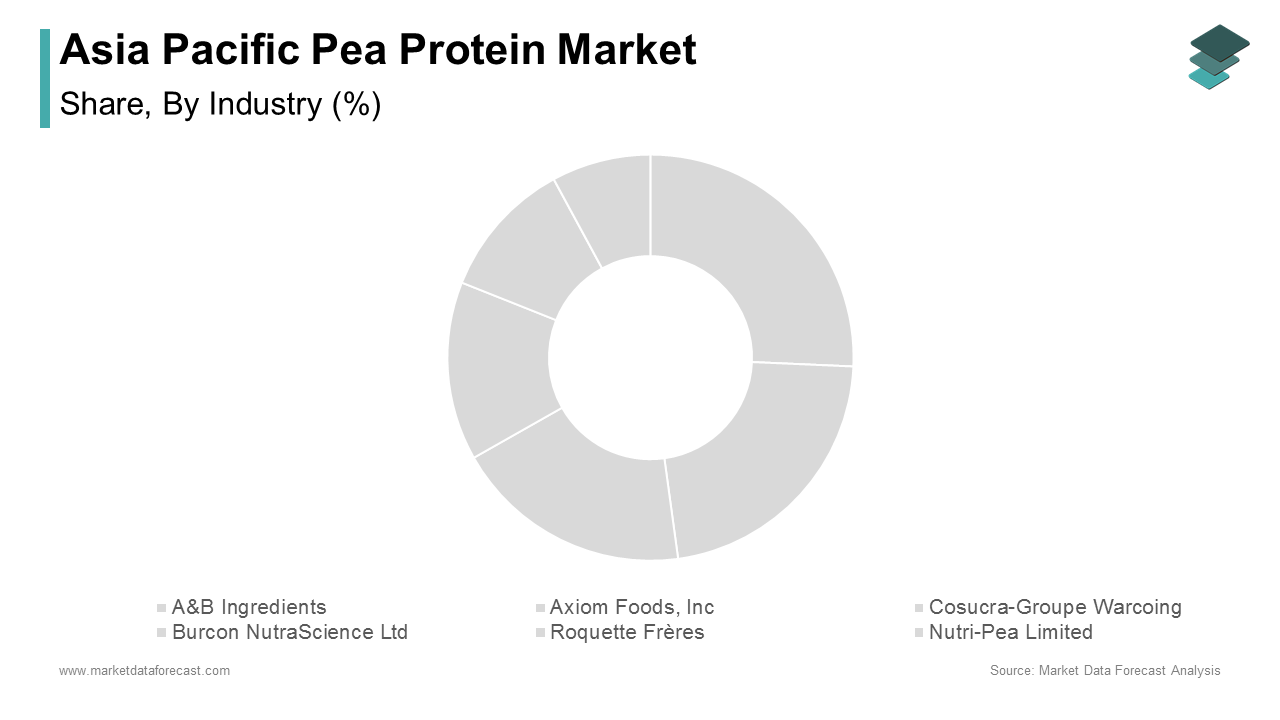
The roquette Frères dominated the Asia Pacific pea protein market by capturing 35.4% of the total share in 2025 with its extensive global footprint, advanced production capabilities, and strong focus on innovation. A key factor fueling this dominance is the company’s commitment to sustainability and ethical sourcing practices. Its ability to enhance product quality and shelf life makes it indispensable in commercial kitchens and large-scale manufacturing units.
Burcon NutraScience Ltd. is projected to grow at a CAGR of 12.5% in the next coming years. This rapid expansion is fueled by increasing adoption in high-value applications such as infant nutrition and pharmaceuticals. One of the primary drivers of this growth is the rising awareness of the nutritional benefits of pea protein its rich content of essential fatty acids, vitamins, and lecithin. As per the International Food Information Council, pea protein accounts for nearly 70% of all plant-based ingredients used in dietary supplements, which is driving a 30% annual increase in demand in urban centers like Singapore and Sydney. The innovations in extraction techniques have enhanced the purity and functionality of pea protein by making it suitable for use in premium products like cosmetics and nutraceuticals. Another significant factor is the influence of health-conscious consumers, who are willing to pay a premium for fortified and nutrient-dense products.
REGIONAL ANALYSIS
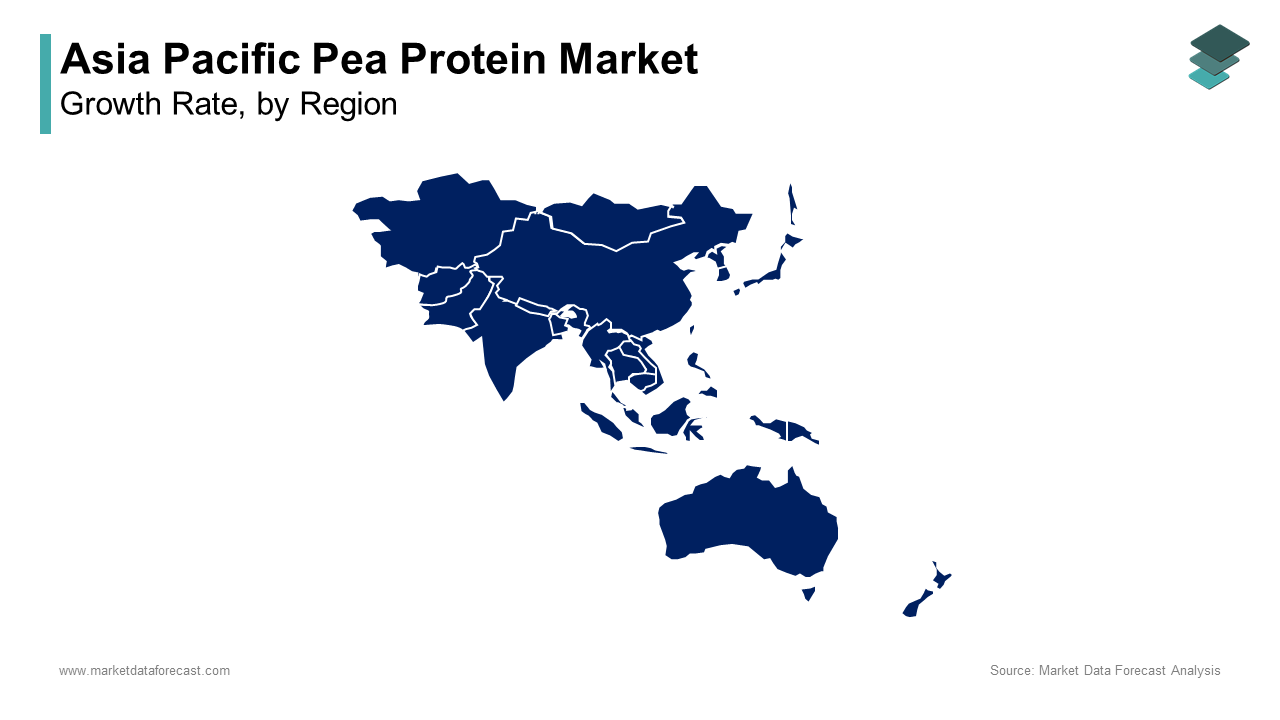
India's pea protein market was the largest contributor for the 25.4% of share in 2025 with the agricultural base and growing health awareness drive demand for pea protein in both food processing and livestock nutrition. According to the Indian Ministry of Agriculture, investments in sustainable pea farming practices have led to a 15% annual increase in pea protein production. Urban centers like Mumbai and Delhi benefit from a strong distribution network, with supermarkets is accounting for 60% of sales.
China held 20.4% of the market share in 2025. The country's youthful population and growing exposure to global cuisines drive demand for pea protein in metropolitan cities. According to the Chinese Ministry of Agriculture, pea protein sales in urban areas like Shanghai and Beijing have surged by 40% annually since 2020, fueled by dual-income households and the influence of Western culture. Additionally, the rise of e-commerce platforms has amplified accessibility, with online sales growing by 50% in 2022.
Japan pea protein market is gaining huge traction of the growth rate with its aging population's reliance on convenience foods. Pea protein is widely used in instant noodles and baked goods, with urban areas witnessing a 25% annual growth in demand. Government initiatives promoting sustainable agriculture have further expanded accessibility, which will promote market expansion.
Australia’s pea protein market is likely to grow at highest rate with its emphasis on fitness and wellness positioning pea protein as essential for daily routines. According to the Australian Institute of Health and Welfare, 50% of adults regularly consume processed foods containing pea protein, with bakery items being the top choice.
South Korea pea protein market growth is driven by its tech-savvy population and booming e-commerce sector. Urban centers like Seoul witness a 30% annual growth in online pea protein sales, which is fueled by influencer-driven campaigns and subscription models.
LEADING PLAYERS IN THE ASIA PACIFIC PEA PROTEIN MARKET
Roquette Frères
Roquette Frères is a dominant player in the Asia Pacific pea protein market, known for its innovative and sustainable production practices. The company has significantly contributed to the global market by introducing high-quality pea protein isolates tailored to diverse applications, from plant-based meat alternatives to sports nutrition. Its commitment to sustainability and ethical sourcing practices has strengthened its reputation, making it a trusted choice among environmentally conscious buyers. Roquette’s strategic partnerships with food manufacturers and e-commerce platforms have further solidified its presence in urban markets across the region.
Axiom Foods, Inc.
Axiom Foods, Inc. has carved a niche in the Asia Pacific market through its focus on premium-quality pea protein products. The company’s emphasis on transparency in sourcing and production processes resonates with consumers seeking clean-label ingredients. Axiom Foods has fostered trust and loyalty among its customer base by aligning with local distributors and promoting fair trade practices. Its contributions to the global market include pioneering allergen-free formulations, which have set new standards for safety and inclusivity in the industry.
Burcon NutraScience Ltd.
Burcon NutraScience Ltd. is a regional leader that leverages its deep understanding of consumer preferences to tailor its pea protein offerings. The company’s strong distribution network and collaborations with major retailers have enabled it to penetrate both urban and rural markets effectively. Burcon’s efforts to promote healthier and more sustainable protein sources have expanded its appeal beyond traditional consumers to health enthusiasts. Globally, the brand is recognized for its affordability and accessibility, which is contributing to the democratization of plant-based protein consumption.
TOP STRATEGIES USED BY KEY PLAYERS IN THE ASIA PACIFIC PEA PROTEIN MARKET
Localized Product Offerings
Key players in the Asia Pacific pea protein market are increasingly focusing on localized product offerings to cater to diverse consumer preferences. By incorporating region-specific flavors and formulations, companies are able to resonate with local tastes and cultural traditions. This strategy not only enhances brand acceptance but also strengthens their competitive edge in a crowded marketplace. Collaborations with local chefs and culinary experts further amplify the authenticity of these offerings, which is driving consumer engagement and loyalty.
Sustainability Initiatives
Sustainability has become a cornerstone of market strategies, with companies emphasizing eco-friendly practices to appeal to environmentally conscious buyers. From adopting biodegradable packaging to promoting sustainable farming techniques, key players are investing in initiatives that reduce their environmental footprint. These efforts not only align with global trends toward green consumption but also position brands as responsible corporate citizens. Partnerships with environmental organizations further reinforce their commitment to sustainability by enhancing brand equity and fostering long-term relationships with consumers.
Digital Marketing and E-commerce Expansion
To strengthen their position, leading companies are leveraging digital marketing and expanding their e-commerce presence. Social media campaigns, influencer collaborations, and targeted advertisements are being used to reach tech-savvy consumers, particularly in urban areas. Simultaneously, investments in online platforms and subscription models ensure seamless accessibility and convenience. The companies are not only increasing their sales but also building direct connections with their customer base by enabling personalized interactions and feedback loops.
KEY MARKET PLAYERS AND COMPETITION OVERVIEW
Major Players in the Asia Pacific Pea Protein market include Roquette, Puris, Cosucra, Nutri-Pea, Axiom Foods, Glanbia Nutritionals, Burcon NutraScience, Yantai Shuangta Food, ET-Chem, The Green Labs, Shandong Jianyuan Foods, and Ingredion
The Asia Pacific pea protein market is characterized by intense competition, with numerous players vying for dominance in an increasingly saturated landscape. Established global brands like Roquette Frères and Axiom Foods compete alongside regional leaders such as Burcon NutraScience Ltd., each striving to differentiate themselves through unique value propositions. While multinational corporations leverage their extensive distribution networks and marketing budgets to capture urban markets, local players focus on affordability and cultural relevance to appeal to broader demographics. The entry of private-label products from major retailers further intensifies the rivalry, pressuring branded manufacturers to innovate continuously. Sustainability and health consciousness have emerged as key battlegrounds, with companies investing in eco-friendly packaging and clean-label formulations to gain a competitive edge. Additionally, the rise of e-commerce has leveled the playing field, enabling smaller brands to challenge incumbents by reaching consumers directly. Despite these challenges, the market remains dynamic, with opportunities for growth driven by untapped rural areas and emerging markets. Strategic collaborations, aggressive marketing, and a focus on product innovation are essential for navigating this fiercely competitive environment.
RECENT HAPPENINGS IN THE MARKET
- In April 2023, Roquette Frères launched a series of organic pea protein variants certified by international sustainability bodies. This move was aimed at appealing to environmentally conscious consumers and expanding its product portfolio in urban markets.
- In June 2023, Axiom Foods partnered with local organic farms in Thailand to source peas sustainably. This initiative reinforced the company’s commitment to ethical sourcing and enhanced its reputation among eco-conscious buyers.
- In August 2023, Burcon NutraScience introduced recyclable packaging for its entire product range. This shift toward sustainable packaging aligned with global environmental trends and strengthened its market positioning.
- In October 2023, Roquette Frères collaborated with fitness influencers across Australia and New Zealand to promote its pea protein as a high-protein ingredient for health enthusiasts. This campaign boosted brand visibility and engagement among health-conscious consumers.
- In February 2025, Axiom Foods expanded its e-commerce operations by partnering with major online retailers in India and Indonesia. This strategic move increased accessibility and tapped into the growing demand for online purchases of processed food ingredients in these regions.
MARKET SEGMENTATION
This research report on the Asia Pacific pea protein market has been segmented and sub-segmented based on industry and region.
By Industry Insights
- A&B Ingredients
- Axiom Foods, Inc
- Cosucra-Groupe Warcoing
- Burcon NutraScience Ltd
- Roquette Frères
- Nutri-Pea Limited
By Region
- India
- China
- Japan
- South Korea
- Australia
- New Zealand
- Thailand
- Malaysia
- Vietnam
- Philippines
- Indonesia
- Singapore
- Rest of Asia-Pacific