- Product Description Description
- Table of Contents TOC
- List of Table & Figure LOT
- Get Free Sample PDF Sample PDF
Market Size, 2025
$24.28 BnMarket Estimate, 2026
$26.08 BnMarket Forecast, 2034
$46.24 BnCAGR, 2026–2034
7.42%Asia-Pacific Pet Food Market Size, Growth, Trends & Forecast (2026–2034)
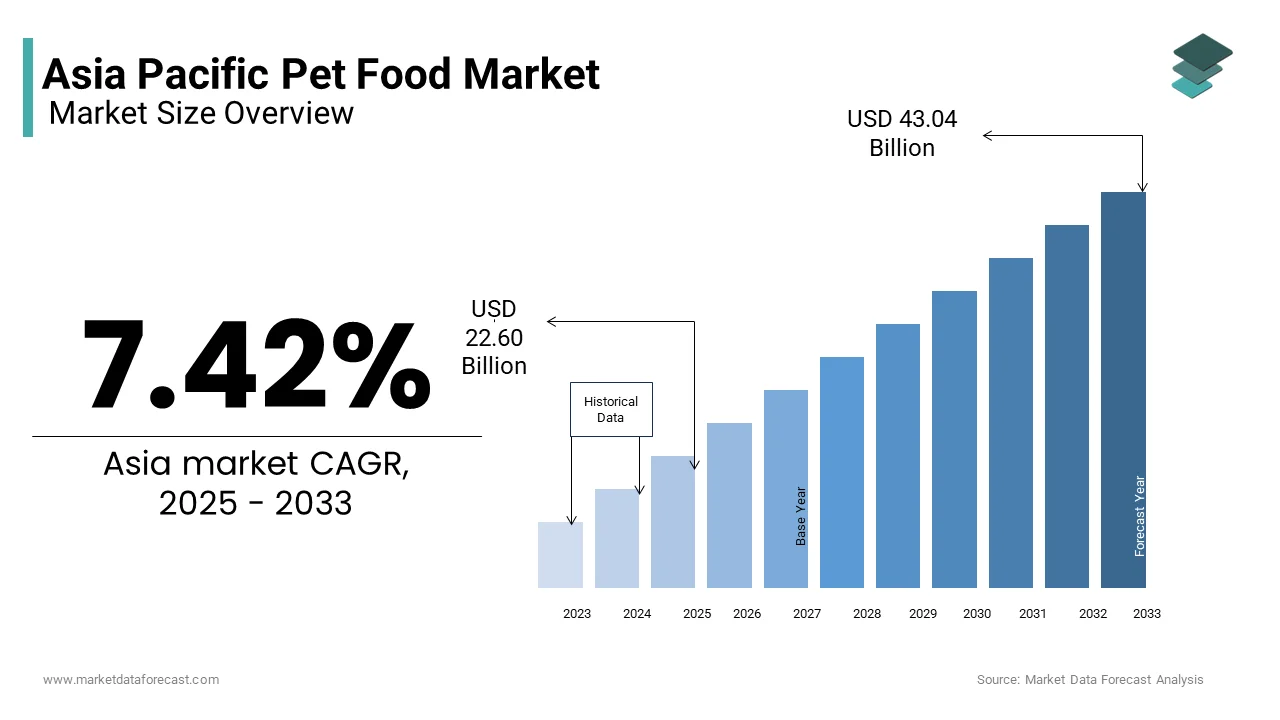
The Asia-Pacific pet food market size was valued at USD 24.28 billion in 2025, is anticipated to reach USD 26.08 billion in 2026, and is projected to scale up to USD 46.24 billion by 2034, registering a compound annual growth rate (CAGR) of 7.42% during the forecast period from 2026 to 2034. Driven by rapid urbanization, smaller household sizes, surging pet humanization, and a growing consumer emphasis on pet health and wellness, the regional industry continues to experience robust growth across developing and mature economies.
Key Executive Metrics (At-a-Glance)
- 2025 Base Valuation: USD 24.28 Billion
- 2026 Current Valuation: USD 26.08 Billion
- 2034 Forecast Valuation: USD 46.24 Billion
- Compound Annual Growth Rate (CAGR): 7.42% (2026–2034)
- Dominant Product Type: Dry Pet Food / Food Products (holding the largest market share due to convenience and everyday nutritional balance)
- Dominant Application Segment: Dogs (leading pet type category supported by increasing canine adoption in China and India)
- Fastest-Growing Application Segment: Pet Nutraceuticals & Supplements / Cats (propelled by preventative healthcare awareness and feline adoption trends)
- Dominant Region: Japan & China (holding primary regional market shares backed by large pet populations and advanced retail infrastructure)
Core Market Drivers
- Urbanization & Lifestyle Shifts: Surging migration to urban centers creating smaller households and raising demand for convenient, ready-to-eat pet nutrition.
- Health & Wellness Awareness: Greater access to information via digital media and veterinary guidance, accelerating the demand for premium, functional, and grain-free formulas.
- E-Commerce Proliferation: Rapid adoption of online shopping portals, digital subscription models, and direct-to-consumer delivery services across Southeast Asia and East Asia.
Primary Market Restraints & Challenges
- Economic Disparities & Price Sensitivity: Income inequalities and inflation restricting mass commercial pet food adoption among rural and semi-urban populations who favor traditional alternatives.
- Regulatory Fragmentation: Lack of a unified regional regulatory framework, leading to disparate labeling, testing requirements, and compliance barriers for multinational manufacturers.
Asia-Pacific Pet Food Market Segmentation Breakdown
| Segment Category | Leading Sub-Segment (2025 Base) | Fastest-Growing Sub-Segment (2026–2034) |
|---|---|---|
| By Product | Dry Pet Food / Supermarkets & Hypermarkets (largest market share for everyday convenience) | Pet Nutraceuticals & Supplements / Online Channels (fastest-growing due to preventive care and e-commerce expansion) |
| By Pet Type | Dogs (largest consumer base supported by urban growth and companion adoption) | Cats (fastest-growing adoption segment driven by solo-living and apartment-friendly ownership) |
| By Country / Region | Japan & China (major regional market leaders in volume and mature pet care infrastructure) | India & Southeast Asia (fastest-growing regional adoption pockets fueled by rising middle-class disposable incomes) |
Major Industry Players Profiled
Key enterprises shaping the Asia-Pacific pet food market include Mars Incorporated, Nestle (Purina), Colgate-Palmolive Company (Hill's Pet Nutrition Inc.), General Mills Inc., ADM, Alltech, Affinity Petcare SA, IB Group (Drools Pet Food Pvt. Ltd.), PLB International, and Schell & Kampeter Inc. (Diamond Pet Foods).
Asia Pacific Pet Food Market Size
The Asia-Pacific Pet food market was valued at USD 24.28 billion in 2025 and is anticipated to reach USD 26.08 billion in 2026 and USD 46.24 billion by 2034, growing at a CAGR of 7.42% during the forecast period from 2026 to 2034.
MARKET DRIVERS
Rising Urbanization and Changing Lifestyles
One of the primary drivers fueling the Asia Pacific pet food market is the rapid pace of urbanization, coupled with changing consumer lifestyles. As per World Bank data, the urban population in the Asia Pacific region reached approximately 54% in 2023, with countries like China and India experiencing significant migration from rural to urban centers. This demographic shift has led to smaller household sizes and increased nuclear families, where individuals are turning to pets for companionship. The trend is particularly pronounced in major metropolitan areas such as Shanghai, Mumbai, and Jakarta, where pet adoption rates have surged. Moreover, modern urban consumers are more inclined toward convenience-driven purchasing behaviors. Ready-to-eat and premium pet food products align well with these preferences, offering time-saving solutions without compromising on nutritional value.
Growing Awareness of Pet Health and Wellness
Another key driver propelling the Asia Pacific pet food market is the increasing awareness surrounding pet health and wellness. Pet owners in the region are now more informed about the dietary needs of their animals, thanks to widespread access to information via social media, veterinary professionals, and pet-focused content platforms. A 2023 survey conducted by Statista revealed that over 70% of pet owners in South Korea and Australia consider pet food ingredients before making a purchase decision, indicating a strong emphasis on quality and nutrition. This heightened awareness has spurred demand for premium and functional pet food products enriched with natural ingredients, probiotics, and grain-free formulations. Furthermore, governments and animal welfare organizations across the region are actively promoting responsible pet ownership through public campaigns and educational initiatives. In India, the Animal Welfare Board of India launched a nationwide program in 2022 aimed at educating pet owners about balanced diets and preventive healthcare.
MARKET RESTRAINTS
Economic Volatility and Income Disparities
A significant restraint affecting the Asia Pacific pet food market is economic volatility and persistent income disparities across the region. While some economies such as Singapore, Australia, and Jap, an enjoy high disposable incomes and stable growth, many emerging markets, including Indonesia, the Philippines, and India,ia continue to face economic challenges. Additionally, inflationary pressures have led to rising raw material costs, compelling manufacturers to increase retail prices. This trend disproportionately affects price-sensitive consumers in rural and semi-urban areas who rely on locally sourced or homemade pet feed alternatives. As per Euromonitor International, in 2023, only 35% of pet owners in rural India purchased commercial pet food, compared to 70% in urban centers. Moreover, fluctuating exchange rates and trade tariffs further complicate import-dependent supply chains, especially for premium pet food brands sourcing ingredients from abroad.
Regulatory Fragmentation and Quality Standards
Regulatory fragmentation across the Asia Pacific region poses a considerable challenge to the pet food market, hindering standardization and impeding cross-border trade. Unlike the European Union or the United States, where centralized regulatory bodies govern pet food safety, the Asia-Pacific lacks a unified framework. Each country has its own set of regulations governing labeling, ingredient sourcing, and product testing. For example, Australia follows the Australian Standard AS 5812–2011 for pet food manufacturing, whereas China enforces strict guidelines under the Ministry of Agriculture and Rural Affairs, mandating extensive product registration processes. As per a 2023 report by the Food and Agriculture Organization (FAO), these disparate requirements increase compliance costs and delay market entry for international players. Furthermore, inconsistent enforcement of quality control measures leads to concerns about counterfeit or substandard pet food products, especially in less-regulated markets such as Vietnam and Myanmar. A 2022 investigation by the Bangkok Post uncovered numerous instances of adulterated pet food in local markets, eroding consumer trust. In response, some multinational companies have scaled back expansion plans in certain regions until regulatory clarity improves.
MARKET OPPORTUNITIES
Expansion of Premium and Functional Pet Food Categories
The growing demand for premium and functional pet food presents a substantial opportunity for the Asia Pacific pet food market. Consumers are increasingly seeking products that offer specific health benefits beyond basic nutrition, such as joint support, digestive health, and weight management. According to a 2023 report by Nielsen, functional pet foods accounted for nearly 30% of total pet food sales in Australia, reflecting a broader shift toward preventative pet healthcare. Innovative product development is also gaining momentum, with brands introducing organic, plant-based, and hypoallergenic formulas to cater to niche consumer preferences. For instance, Thai-based company CPF Pet Foods launched a line of protein-rich dog treats derived from insect-based sources in 2023, capitalizing on sustainability and novel ingredient trends. Meanwhile, e-commerce platforms in China, such as Tmall and JD.com, have dedicated sections for premium pet food, enabling direct-to-consumer engagement and fostering brand loyalty.
Rise of Direct-to-Consumer (DTC) and Subscription-Based Models
The emergence of direct-to-consumer (DTC) and subscription-based models is creating new opportunities for growth in the Asia Pacific pet food market. Traditional distribution channels such as supermarkets and pet stores are being complemented and, in some cases, replaced by online platforms that offer personalized, convenient, and cost-effective purchasing experiences. According to a 2023 report by McKinsey & Company, e-commerce accounted for over 25% of pet food sales in South Korea and 18% in Australia, with growth rates outpacing other FMCG categories. In India, startups like Chewy. in and Etsy. in have introduced monthly subscription services that deliver customized pet food directly to consumers’ doorsteps, enhancing customer retention and brand loyalty. These models allow brands to collect valuable consumer data, enabling targeted marketing and product customization. For instance, in Japan, Maruha Nichiro Pet Care launched a digital platform in 2023 that tailors pet food recommendations based on age, breed, and health conditions, resulting in a 15% increase in repeat purchases within six months. Additionally, DTC strategies reduce reliance on intermediaries, allowing companies to maintain better control over pricing and branding.
MARKET CHALLENGES
Supply Chain Disruptions and Ingredient Sourcing Constraints
Supply chain disruptions and ingredient sourcing constraints pose a major challenge to the Asia Pacific pet food market. The sector heavily relies on a steady supply of raw materials such as meat, grains, and additives, many of which are imported or subject to seasonal availability. However, geopolitical tensions, logistical bottlenecks, and climate-related disruptions have made consistent sourcing increasingly difficult. According to a 2023 report by the United Nations Conference on Trade and Development (UNCTAD), global shipping delays affected over 40% of perishable goods in the Asia-Pacific region, leading to inventory shortages and increased lead times for pet food manufacturers. Additionally, rising feedstock prices, particularly for proteins like chicken meal and fishmeal, have squeezed profit margins. In China, where domestic livestock production faced setbacks due to African swine fever outbreaks, alternative protein sources became costlier, forcing some manufacturers to reformulate products or raise prices. As per Frost & Sullivan, in 2023, nearly 30% of mid-sized pet food producers in Southeast Asia experienced production halts due to ingredient scarcity. These challenges not only impact operational efficiency but also affect consumer affordability, particularly in price-sensitive markets.
Consumer Skepticism Toward Imported and Commercial Pet Food
Despite rising pet ownership, consumer skepticism toward imported and commercial pet food remains a significant challenge in the Asia Pacific pet food market. Many pet owners, particularly in rural and semi-urban areas, continue to rely on homemade meals or locally available feed due to concerns over product authenticity, ingredient transparency, and affordability. According to a 2023 survey by Nielsen, only 45% of pet owners in Indonesia and the Philippines trusted commercial pet food labels, citing a lack of clarity on sourcing and nutritional content. This perception is further exacerbated by occasional reports of contamination or misleading advertising, which erode consumer confidence. In addition, cultural preferences play a role in shaping purchasing decisions. In countries like India and Thailand, traditional beliefs often favor home-cooked diets, viewed as safer and more natural than processed alternatives.
REPORT COVERAGE
| REPORT METRIC | DETAILS |
| Market Size Available | 2025 to 2034 |
| Base Year | 2025 |
| Forecast Period | 2026 to 2034 |
| CAGR | 7.42% |
| Segments Covered | By Product, Pet, Distribution Channel, and Region |
| Various Analyses Covered | Global, Regional, and Country Level Analysis, Segment-Level Analysis, DROC, PESTLE Analysis, Porter’s Five Forces Analysis, Competitive Landscape, Analyst Overview of Investment Opportunities |
| Regions Covered | China, India, Japan, South Korea, Australia, New Zealand, Thailand, Malaysia, Vietnam, Philippines, Indonesia, Singapore, Rest of APAC |
| Market Leaders Profiled | ADM, Affinity Petcare SA, Alltech, Clearlake Capital Group, L.P. (Wellness Pet Company Inc.), Colgate-Palmolive Company (Hill's Pet Nutrition Inc.), General Mills Inc., IB Group (Drools Pet Food Pvt. Ltd.), Mars Incorporated, Nestle (Purina), PLB International, Schell & Kampeter Inc. (Diamond Pet Foods). |
SEGMENTAL ANALYSIS
By Product Insights
The pet food segment accoaccounts forominant share of the Asia Pacific pet food market. One key driver is the growing preference for premium pet food products that offer balanced nutrition. In Japan, where pet humanization trends are strong, premium dry food sales grew by 9% year-on-year, according to Nielsen’s 2024 report. Another factor is the increasing number of nuclear families in urban areas like Shanghai and Bangalore, where convenience plays a major role in purchasing decisions.
The pet nutraceuticals and supplements segment is projected to grow with a CAGR of 10.8% in the coming years. In Australia, where pet insurance penetration is among the highest globally, veterinarians frequently recommend joint health supplements and omega-3 fortified products. According to a 2024 study by Petcare Australia, nearly 40% of dog owners use dietary supplements regularly to manage conditions like arthritis and allergies. Similarly, in South Korea, functional ingredients such as glucosamine and probiotics are gaining traction among younger pet parents who view their pets as family members.
By Pet Insights
The dogs segment accounted in holding 52.3% of the Asia Pacific pet food market share in 2024. A major contributing factor is the rise in dog ownership in countries like China and India, where pet registration numbers have increased significantly. As per the Chinese Kennel Association, registered dog ownership rose by 12% in 2024, with younger demographics adopting pets for companionship. Additionally, the demand for premium and breed-specific dog food has surged, with companies like Royal Canin expanding their presence across Southeast Asia. Moreover, the expansion of pet insurance programs in Australia and Japan has encouraged higher spending on canine nutrition, further reinforcing the dominance of the dog segment in the Asia Pacific pet food landscape.
The cat segment is likely to grow with expected to grow with a CAGR of 9.4% during the forecast period. In Japan, where solo living is increasingly common, cat ownership surpassed dog ownership in 2024 for the first time, according to the Japan Pet Food Association. Over 9.7 million cats were recorded nationwide, leading to a surge in specialized feline diets. Similarly, in South Korea, online platforms such as TMON and Gmarket reported a 20% increase in cat food sales during the same period, indicating a growing appetite for premium and grain-free formulas.
By Distribution Channel Insights
The supermarkets and hypermarkets segment held 38.2% of the Asia Pacific pet food market share in 2024. One key driver is the presence of well-established supermarket networks in developed markets like Australia and Japan, where consumers prefer one-stop shopping experiences. According to NielsenIQ, in 2024, over 60% of pet owners in Sydney purchased pet food from supermarkets due to competitive pricing and frequent promotions. Additionally, in China, hypermarket chains such as Carrefour and Walmart have expanded their private-label pet food offerings, attracting budget-conscious buyers. In India, modern trade retail outlets like Reliance Fresh and DMart have introduced dedicated pet care sections, enhancing consumer convenience.
The online channels segment is likely to grow with a CAGR of 14.2% in the coming years. In Southeast Asia, e-commerce platforms such as Shopee, Lazada, and Amazon Pet Supplies have invested heavily in targeted marketing and subscription services to attract repeat customers. As per Statista, online pet food sales in Indonesia surged by 32% in 2023, driven by millennials seeking doorstep delivery and personalized product recommendations. Meanwhile, in India, startups like Chewy. i n and Purina Pet Care launched AI-powered chatbots to assist users in selecting the right diet based on breed, age, and health conditions. According to Nielsen’s 2023 Digital Consumer Report, over 45% of urban pet owners in India preferred online shopping for pet food due to ease of access and exclusive discounts.
COUNTRY-LEVEL ANALYSIS
Japan Pet Food Market Analysis
The Japanese pet food market held 29.1% of the share in 2024. According to the Japan Pet Food Association, there were over 22 million registered pets in 2024, with cats slightly outnumbering dogs. Japanese consumers exhibit a strong preference for premium and functional pet foods, often enriched with probiotics and joint-supporting ingredients. Additionally, stringent regulatory standards enforced by the Ministry of Agriculture ensure product safety, fostering consumer confidence. The presence of domestic giants like Maruha Nichiro and international players such as Mars Petcare further strengthens the market, which is making Japan a benchmark for innovation and growth in the Asia Pacific pet food sector.
China Pet Food Market Analysis
China's food market was positioned second, by holding 18.3% of the share in 2024. The country's robust economic growth, rising middle-class disposable incomes, and shifting societal attitudes toward pet ownership are key factors propelling market expansion. As per data from the China Companion Animal Industry Association, pet ownership reached 62 million households in 2023, with urban centers like Beijing and Shanghai leading the trend. E-commerce has played a pivotal role in driving pet food sales, with platforms such as JD.com and Tmall reporting a year-on-year growth of 25% in pet food transactions, according to Statista. Additionally, government initiatives aimed at regulating pet food safety and promoting responsible pet ownership have enhanced consumer trust.
Australia Pet Food Market Analysis
The Australian pet food market is expected to grow in the coming years. According to the Australian Bureau of Statistics, over 60% of households owned at least one pet in 2023, with dogs being the most common. The country also leads in pet insurance adoption, which encourages higher spending on veterinary diets and specialty nutrition products. Furthermore, the presence of advanced supply chain infrastructure and well-established retailers such as Petbarn and Greencross enhances product availability and consumer trust.
South Korea Pet Food Market Analysis
South Korea's pet food market growth is driven by the urbanized population, along with a growing trend of single-person households, which has contributed to a surge in pet ownership and associated expenditure. As per the Korean Pet Industry Association, the number of pet-owning households exceeded 15 million in 2023, with cats gaining popularity over dogs due to apartment-living suitability. Government-backed animal welfare policies and increasing pet insurance uptake further bolster market growth, which is positioning South Korea as a dynamic player in the regional pet food sector.
India Pet Food Market Analysis
India's pet food market is experiencing rapid growth, fueled by rising disposable incomes, increasing urban pet adoption, and growing awareness regarding pet nutrition. According to the Indian Pet Care Association, pet ownership in urban areas grew by 15% in 2023, with dogs and cats being the most preferred pets. Additionally, younger pet owners are showing a marked preference for premium and scientifically formulated diets, with over 50% of surveyed pet parents in Mumbai and Bengaluru opting for branded pet food over homemade alternatives, according to Nielsen’s 2023 consumer survey.
COMPETITIVE LANDSCAPE
The competition in the Asia Pacific pet food market is intensifying as both global giants and regional players strive to capture a larger share of the expanding industry. Established multinational corporations leverage their strong brand equity, extensive distribution networks, and R&D capabilities to maintain dominance, particularly in premium segments. At the same time, emerging domestic brands are gaining traction by offering cost-effective alternatives tailored to local tastes and affordability levels. The market is witnessing increased investment in product diversification, including specialized diets, functional ingredients, and sustainable packaging solutions to appeal to health-conscious consumers. E-commerce expansion and digital marketing strategies are also reshaping competitive dynamics, enabling new entrants to challenge traditional retail-based models. Additionally, rising consumer awareness regarding pet health is driving demand for transparency and ingredient traceability, prompting companies to emphasize quality assurance and ethical sourcing.
KEY MARKET PLAYERS
These are the market players that are dominating the Asia Pacific pet food market.
- ADM
- Affinity Petcare SA
- Alltech
- Hill’s Pet Nutrition
- Clearlake Capital Group
- L.P. (Wellness Pet Company Inc.)
- Colgate-Palmolive Company (Hill's Pet Nutrition Inc.)
- General Mills Inc.
- IB Group (Drools Pet Food Pvt. Ltd.)
- Mars Incorporated
- Nestle (Purina)
- PLB International
- Schell & Kampeter Inc. (Diamond Pet Foods)
Top Players In The Market
- Mars Petcare is a leading global player with a strong footprint in the Asia Pacific pet food market. The company offers a diverse portfolio of premium and veterinary diet brands such as Royal Canin, Pedigree, and Whiskas. In the Asia Pacific region, Mars Petcare has consistently driven innovation through research-backed formulations and strategic partnerships with veterinarians. Its focus on pet health and wellness has significantly influenced consumer preferences, which is making it a dominant force in both dry and wet pet food categories.
- Nestlé Purina PetCare plays a pivotal role in shaping the Asia Pacific pet food landscape. Known for its high-quality products like Purina ONE and Friskies, the company emphasizes nutritional science and sustainability. In the region, Purina has expanded its presence through localized product development and digital engagement strategies. Its investments in e-commerce integration and consumer education have helped build trust and brand loyalty among pet owners across diverse markets in the Asia Pacific.
- Hill’s Pet Nutrition is a major contributor to the Asia Pacific pet food market, particularly in the premium and therapeutic diets segment. Hill’s focuses on clinically proven nutrition tailored to specific health conditions with well-established brands like Science Diet and Prescription Diet. The company collaborates closely with veterinary professionals across the region to promote preventive healthcare. Its commitment to scientific innovation and quality control has made it a preferred choice among discerning pet owners and veterinary clinics throughout the Asia Pacific.
Top Strategies Used By Key Market Participants
- One major strategy employed by key players in the Asia Pacific pet food market is product innovation and differentiation. Companies are increasingly launching functional, organic, and customized pet food options that cater to evolving consumer demands for health-focused and premium nutrition. This includes grain-free formulas, breed-specific diets, and supplements designed to support immunity and digestion.
- Another crucial approach is expanding digital and e-commerce presence. Leading firms are leveraging online platforms to enhance consumer engagement, offer personalized recommendations, and streamline distribution. By investing in direct-to-consumer models and mobile applications, they are improving accessibility and convenience for pet owners, especially in urban markets.
- The strategic partnerships and local collaborations are being prioritized to strengthen the market foothold. Brands are partnering with veterinary clinics, pet influencers, and retail chains to boost awareness and credibility. These alliances help companies align with regional preferences and regulatory standards while ensuring broader product visibility and adoption.
RECENT MARKET NEWS
- In January 2024, Mars Petcare launched a dedicated pet health research center in Singapore to develop region-specific pet food formulations and advance clinical nutrition studies.
- In March 2024, Nestlé Purina PetCare introduced an AI-powered pet food recommendation app in South Korea to provide personalized feeding plans based on individual pet profiles.
- In June 2023, Hill’s Pet Nutrition expanded its manufacturing facility in Thailand to enhance local production capacity and improve supply chain efficiency across Southeast Asia.
- In November 2023, Blue Buffalo (acquired by General Mills) entered the Indian pet food market through a strategic partnership with a local distributor to introduce natural and organic pet food products.
- In February 2024, Charoen Pokphand Foods (CPF) Pet Foods launched a new line of insect-based protein pet treats in Australia, which is targeting sustainability-conscious consumers and supporting eco-friendly pet nutrition trends.
MARKET SEGMENTATION
This research report on the Asia Pacific pet food market is segmented and sub-segmented into the following categories.
By Product
Food
-
- By Sub Product
- Dry Pet Food
- By Sub Dry Pet Food
- Kibbles
- Other Dry Pet Food
- Wet Pet Food
Pet Nutraceuticals/Supplements
- Sub Product
- Milk Bioactives
- Omega-3 Fatty Acids
- Probiotics
- Proteins and Peptides
- Vitamins and Minerals
- Other Nutraceuticals
Pet Treats
- By Sub Product
- Crunchy Treats
- Dental Treats
- Freeze-dried and Jerky Treats
- Soft & Chewy Treats
- Other Treats
Pet Veterinary Diets
- Sub Product
- Diabetes
- Digestive Sensitivity
- Oral Care Diets
- Renal
- Urinary tract disease
- Other Veterinary Diets
Pets
- Cats
- Dogs
- Other Pets
By Distribution Channel
- Convenience Stores
- Online Channel
- Specialty Stores
- Supermarkets/Hypermarkets
- Other Channels
By Country
- India
- China
- Japan
- South Korea
- Australia
- New Zealand
- Thailand
- Malaysia
- Vietnam
- Philippines
- Indonesia
- Singapore
- Rest of APAC