- Product Description Description
- Table of Contents TOC
- List of Table & Figure LOT
- Get Free Sample PDF Sample PDF
Market Size, 2025
$2.72 BnMarket Estimate, 2026
$2.82 BnMarket Forecast, 2034
$3.72 BnCAGR, 2026–2034
3.54%Executive Summary: Asia Pacific Pickles Market
- Market Scope: Regional Asia Pacific pickles market analysis covering product types, distribution channels, country-level dynamics, probiotic trends, and traditional preservation technology adoption metrics.
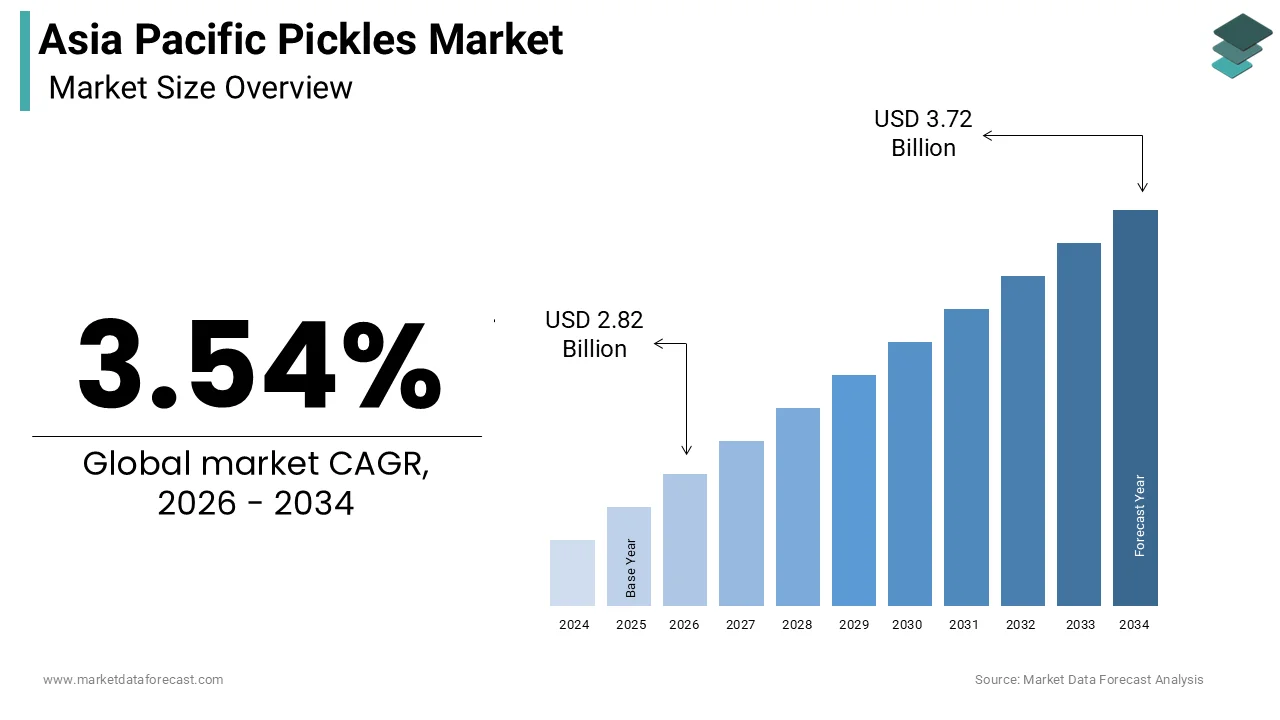
- Market Valuation: Valued at USD 2.72 billion in 2025, estimated at USD 2.82 billion in 2026, and projected to reach USD 3.72 billion by 2034, registering a CAGR of 3.54% from 2026 to 2034.
- Primary Growth Drivers: Deep-rooted cultural significance in daily diets, rising demand for probiotic-rich functional foods, and the shift from homemade to branded commercial alternatives among urban households.
Key Market Segment Metrics (2026–2034)
| Category | Leading Segment (Position) | Fastest-Growing / Key Growth Segment |
|---|---|---|
| By Type & Channel | Vegetable pickles (dominated by type in 2025) & Supermarkets (captured majority share at 49.5% in 2025) | Fruit pickles (fastest-growing type at 6.5% CAGR) & Online retail stores (fastest-growing channel at 12.8% CAGR) |
| By Technology & Innovation | Traditional pickling methods and standard commercial bottling formats | Low-sodium and organic variants, clean-label formulations, and innovative packaging like squeeze bottles |
| By Country / Regional Dynamics | India (led regionally with a 27.2% market share in 2025, followed by China, Japan, and South Korea) | Emerging urban distribution networks leveraging e-commerce expansion across Asia Pacific |
Major Market Players & Market Structure
Market Structure: Highly competitive Asia Pacific preserved and fermented foods sector characterized by digital marketing, localized distribution partnerships, innovative packaging formats, and sustainable sourcing initiatives.
Key Companies: ADF Foods, Del Monte Foods, Mt. Olive Pickle Company, Kraft Foods Inc., Reitzel International, Pinnacle Foods, Inc., Mitoku Company, Ltd., Mother’s Recipe, Yeo Hiap Seng Limited, and Kikkoman Corporation.
Asia Pacific Pickles Market Size
The Asia Pacific Pickles Market was expected to be worth USD 2.72 billion in 2025 and is anticipated to be worth USD 3.72 billion by 2034, from USD 2.82 billion in 2026, growing at a CAGR of 3.54% during the forecast period.
A pickle is a food, most commonly a vegetable or fruit, that has been preserved by soaking it in an acidic solution, such as vinegar or a salty brine. These products are created through fermentation, brining, or oil immersion processes, which enhance shelf life and develop distinct flavor profiles ranging from spicy and tangy to sweet and sour. The market definition extends beyond traditional homemade varieties to include commercially packaged, ready-to-eat options that cater to modern urban lifestyles. While data from the Food and Agriculture Organization (FAO) confirms that Asia produces the vast majority of the world's vegetables, local pickle manufacturers must navigate regional seasonal price volatility and post-harvest supply chain bottlenecks to maintain affordability. The cultural significance of pickles is profound, with many households considering them essential for daily meals. Regulatory frameworks in countries like Japan and South Korea strictly govern food safety standards for fermented products, ensuring quality and hygiene. The rise of dual-income households has shifted consumption patterns from home-prepared pickles to branded commercial alternatives. This transition is supported by improved cold chain logistics and packaging technologies that maintain product integrity. The market is characterized by a blend of traditional artisanal methods and modern industrial processing, reflecting the dynamic interplay between heritage and convenience in the region's food landscape.
MARKET DRIVERS
Deep Rooted Cultural Significance and Culinary Tradition
The enduring cultural significance of pickles in Asian cuisines is a primary driver for the Asia Pacific Pickles Market. This is because these products are deeply embedded in daily dietary habits and traditional meal structures. In countries like India and Korea, pickles are not merely side dishes but essential components that complement staple foods such as rice and bread. Horticulture data from India confirms the country produces millions of tons of mangoes and citrus fruits annually. At the same time, a massive unorganised sector processes these into traditional pickles for domestic consumption; official records show that overall commercial processing of these crops remains below 5%. The tradition of preparing and consuming pickles is passed down through generations, creating a consistent and resilient demand base that is less susceptible to economic fluctuations. According to data tracking from agricultural institutes in South Korea, kimchi remains a foundational cultural staple, though shifting dietary habits have seen per capita consumption stabilize closer to 23 kilograms annually. This cultural attachment ensures that pickles remain a household staple regardless of changing food trends. The variety of regional recipes, from Japanese tsukemono to Chinese zha cai, offers a wide spectrum of flavors that cater to diverse palates within the region. Festivals and religious occasions often feature specific types of pickles, further reinforcing their cultural relevance. The emotional connection to traditional tastes drives brand loyalty towards established local manufacturers who adhere to authentic recipes. This driver is sustained by the perception of pickles as comfort food that provides a sense of home and identity.
Rising Demand for Probiotic-Rich and Functional Foods
The increasing consumer awareness regarding gut health and the benefits of probiotics is significantly fuelling the growth of the Asia Pacific Pickles Market. This is particularly true for naturally fermented varieties. Modern consumers are actively seeking functional foods that offer health benefits beyond basic nutrition, and traditional pickles are recognized for their high probiotic content, which supports digestive health and immunity. Fermented pickles such as kimchi and certain Indian achar varieties are rich in lactobacillus bacteria, which are beneficial for gut flora. Peer-reviewed research, such as studies found in food science literature, demonstrates that the bioactive compounds in traditional fermented vegetables can support digestive health and mitigate metabolic risks; concurrently, separate market trends show health-conscious consumers increasingly buying these products for those exact reasons. The trend towards clean-label products has further boosted demand for pickles made without artificial preservatives or additives, as consumers perceive natural fermentation as a healthier preservation method. Manufacturers are responding by highlighting the probiotic benefits on packaging and marketing materials to attract wellness-oriented buyers. The integration of pickles into healthy meal plans and diet regimes is becoming more common, especially among urban professionals. This driver is amplified by the endorsement of healthcare professionals and nutritionists who recommend fermented foods for maintaining a balanced microbiome. The shift from viewing pickles as indulgent condiments to functional health supplements expands their appeal across different age groups.
MARKET RESTRAINTS
High Sodium Content and Associated Health Concerns
The high sodium content inherent in many traditional pickle formulations is a significant restraint on the Asia Pacific Pickles Market. This is due to the fact that health-conscious consumers are increasingly avoiding excessive salt intake owing to associated health risks. Pickles are typically preserved using large amounts of salt to inhibit bacterial growth and extend shelf life, resulting in products that can contribute significantly to daily sodium consumption. According to the World Health Organization (WHO), the average daily salt intake in many Asia Pacific countries is more than double the recommended maximum of 5 grams (equivalent to 2 grams of sodium), severely escalating the regional burden of hypertension and stroke. While epidemiological data in medical literature underscore that stroke and heart disease are leading causes of death in Asia, separate public health directives are increasingly pressuring regional food processors to reformulate and reduce sodium levels in processed foods. This health awareness leads some consumers to limit or eliminate pickle consumption, particularly among older demographics and those with existing health conditions. Regulatory bodies in countries like Japan and Australia have implemented strict labeling requirements for sodium content, which can deter potential buyers when high levels are displayed. Manufacturers face the challenge of reducing salt without compromising the preservation efficacy and traditional taste of the product. Low-sodium alternatives often have shorter shelf lives and different flavor profiles, which may not appeal to traditionalists. The perception of pickles as unhealthy due to their salt content limits their inclusion in wellness-focused diets. This restraint forces companies to invest in research for alternative preservation methods, which can increase production costs and final prices.
Supply Chain Volatility and Raw Material Price Fluctuations
Supply chain volatility hampers the growth of the Asia Pacific Pickles Market. Furthermore, the market is challenged by the unpredictable costs of core ingredients, such as vegetables, fruits, and spices, due to changing weather and agricultural patterns. Pickle production relies heavily on seasonal produce, and any disruption in supply due to extreme weather events, pests, or disease outbreaks can lead to significant price increases and availability issues. The Food and Agriculture Organization (FAO) warns that accelerating climate disruptions are heavily impacting Asian agricultural stability; these erratic weather patterns directly threaten the yield consistency of vital regional horticultural crops used in processing. Also, the Asian Development Bank (ADB) highlights severe volatility in regional food commodity pricing, creating a challenging inflationary environment that directly pressures operational expenses across the food production sector. Small and medium-sized enterprises are particularly vulnerable to these fluctuations as they lack the financial reserves to absorb sudden cost spikes or invest in long-term storage facilities. The reliance on specific varieties of vegetables for authentic flavors limits sourcing flexibility, making manufacturers dependent on local harvests. Disruptions in logistics and transportation infrastructure in rural areas further complicate the timely procurement of fresh raw materials. These challenges lead to inconsistent product quality and pricing, which can erode consumer trust and brand loyalty. The inability to stabilize input costs hinders long-term planning and expansion efforts. Companies must implement robust risk management strategies, including contract farming and diversified sourcing, which require significant investment and operational complexity.
MARKET OPPORTUNITIES
Expansion of E-Commerce and Direct-to-Consumer Channels
The rapid growth of e-commerce platforms and direct-to-consumer channels offers a significant opportunity for the Asia Pacific Pickles Market. This enables manufacturers to reach wider audiences and bypass traditional retail barriers. Online retail allows brands to showcase diverse product ranges, including niche and regional varieties that may not be available in physical stores. This digital shift enables smaller artisanal producers to compete with larger corporations by accessing national and international markets directly. A study reveals that online grocery and digital condiment sales have surged across major Asian economies. While companies like the Alibaba Group record this growth domestically in China, independent regional market reports track a parallel e-commerce trajectory across India. The ability to provide detailed product information, customer reviews, and recipe ideas online enhances consumer engagement and trust. Subscription models for regular delivery of pickles offer convenience and ensure recurring revenue streams for brands. Social media marketing and influencer collaborations drive brand awareness and trial among younger demographics who are active online. The expansion of quick commerce services ensures fast delivery of fresh and perishable pickle products, enhancing customer satisfaction. Digital platforms also facilitate data collection on consumer preferences, allowing manufacturers to tailor products and marketing strategies effectively. This opportunity enables brands to build direct relationships with customers, fostering loyalty and feedback loops for continuous improvement.
Innovation in Healthy and Low Sodium Variants
The development of healthy and low-sodium pickle variants paves the way for the expansion of the Asia Pacific Pickles Market. This helps to address health concerns while retaining traditional flavors. Manufacturers can innovate by using alternative preservation methods, such as vinegar-based brining or natural fermenting techniques that require less salt. The International Food Information Council (IFIC) emphasizes a powerful global consumer shift toward clean-label products with reduced sodium and minimal additives. Food industry observers note that this broad preference is directly expanding into the condiment and fermented food sectors. While peer-reviewed food technology studies confirm that natural herbs and spices provide crucial antimicrobial properties that assist in industrial sodium reduction, clinical nutrition journals tend to focus strictly on the human metabolic and cardiovascular benefits of low-salt diets. Brands can introduce pickles fortified with vitamins or probiotics to enhance their nutritional profile and appeal to health-conscious consumers. The use of organic ingredients and non genetically modified vegetables further differentiates products in the premium segment. Collaborations with nutritionists and health experts can validate the health benefits of these innovative products, building credibility and trust. Marketing campaigns emphasizing the balance between taste and health can attract consumers who previously avoided pickles due to sodium concerns. The introduction of single-serve packs with controlled portion sizes helps manage sodium intake, appealing to mindful eaters. This opportunity allows companies to tap into the expanding wellness market and redefine the perception of pickles as a healthy dietary component. Innovation in packaging that preserves freshness without excessive preservatives also supports this trend.
MARKET CHALLENGES
Stringent Food Safety Regulations and Compliance Costs
Stringent food safety regulations and high compliance costs create significant barriers for the Asia Pacific Pickles Market. This burden heavily impacts fermented products, as improper processing can easily lead to contamination. Regulatory bodies in countries like Japan, Australia, and New Zealand enforce rigorous standards for hygiene, labeling, and additive usage, requiring manufacturers to invest in advanced testing and quality control measures. The rigid legal limits on microbial counts and chemical residues established by Food Standards Australia New Zealand (FSANZ) require food processors to comply with strict safety parameters, which subsequently drives up compliance and third-party audit expenses for manufacturers. Epidemiological data from the World Health Organization (WHO) underline that foodborne illnesses remain a major public health challenge globally; concurrently, individual domestic governments are tightening regional food safety standards to better manage risks associated with local and unstandardized food processing practices. Small-scale and artisanal producers often struggle to meet these complex requirements due to limited resources and technical expertise, limiting their ability to scale or export. The variation in regulatory frameworks across different countries complicates cross-border trade, requiring companies to adapt formulations and packaging for each market. Non-compliance can result in product recalls, fines, and reputational damage, posing significant risks to businesses. The need for continuous monitoring and documentation adds administrative burdens and costs. Manufacturers must balance traditional production methods with modern safety standards, which can be technically challenging. This challenge restricts market entry for new players and consolidates power among larger firms with established compliance infrastructure. Ensuring consistent quality across batches while adhering to strict regulations requires significant investment in technology and training.
Competition from Substitute Condiments and Changing Taste Preferences
Intense competition from substitute condiments challenges the Asia Pacific Pickles Market. Furthermore, this pressure is amplified by younger consumers whose evolving tastes favor international and fusion flavors. Products such as soy sauce, chili sauces, mayonnaise, and salad dressings are increasingly replacing traditional pickles in modern meals and quick-service restaurant menus. The convenience of ready-to-use sauces that require no preparation appeals to busy urban dwellers, reducing the frequency of pickle consumption. The perception of pickles as old-fashioned or too strong in flavor discourages trial among younger demographics who prefer milder and sweeter options. Globalization has introduced diverse culinary influences, leading to the adoption of Western and other Asian condiments that compete for a share of the stomach. Traditional pickle manufacturers must innovate to remain relevant, often blending traditional flavors with modern trends. The fragmentation of the condiment market means that pickles compete for limited shelf space and consumer attention. This challenge requires aggressive marketing and product differentiation to maintain market share. The inability to adapt to evolving taste preferences can lead to declining relevance and sales volume.
REPORT COVERAGE
| REPORT METRIC | DETAILS |
| Market Size Available | 2025 to 2034 |
| Base Year | 2025 |
| Forecast Period | 2026 to 2034 |
| CAGR | 3.54% |
| Segments Covered | By Type, Distribution Channel, And Region |
| Various Analyses Covered | Global, Regional & Country Level Analysis; Segment-Level Analysis; DROC, PESTLE Analysis; Porter’s Five Forces Analysis; Competitive Landscape; Analyst Overview of Investment Opportunities |
| Regions Covered | India, China, Japan, South Korea, Australia, New Zealand, Thailand, Malaysia, Vietnam, Philippines, Indonesia, Singapore, & Rest Of APAC |
| Market Leaders Profiled | ADF Foods (India), Del Monte Foods (U.S.), Mt. Olive Pickle Company (U.S.), Kraft Foods Inc. (U.S.), Reitzel International (Switzerland), Pinnacle Foods, Inc. (U.S), and Mitoku Company, Ltd. (Japan), among others. |
SEGMENTAL ANALYSIS
By Type Insights
The vegetable pickles segment led the Asia Pacific Pickles Market and captured a substantial share in 2025. This leading position of the segment was attributed to its extensive culinary versatility and the abundant availability of diverse vegetable crops across the region. Vegetables such as cucumbers, carrots, radishes, and cabbage are staple ingredients in traditional diets and are widely cultivated, making them cost-effective raw materials for commercial production. This abundance allows for year-round production and minimizes seasonal price fluctuations. The neutral flavor profile of many vegetables allows them to absorb spices and brines effectively, creating a wide variety of taste profiles that appeal to different regional preferences. In countries like India and Korea, vegetable-based pickles such as mango achar and kimchi are cultural staples consumed with almost every meal. The long shelf life of vegetable pickles makes them ideal for storage and distribution in both urban and rural areas. Manufacturers benefit from established processing technologies that maintain texture and nutritional value. The perception of vegetable pickles as healthier alternatives to fruit-based variants due to lower sugar content also drives demand among health-conscious consumers. This segment dominates because it aligns with traditional eating habits while offering convenience and affordability.
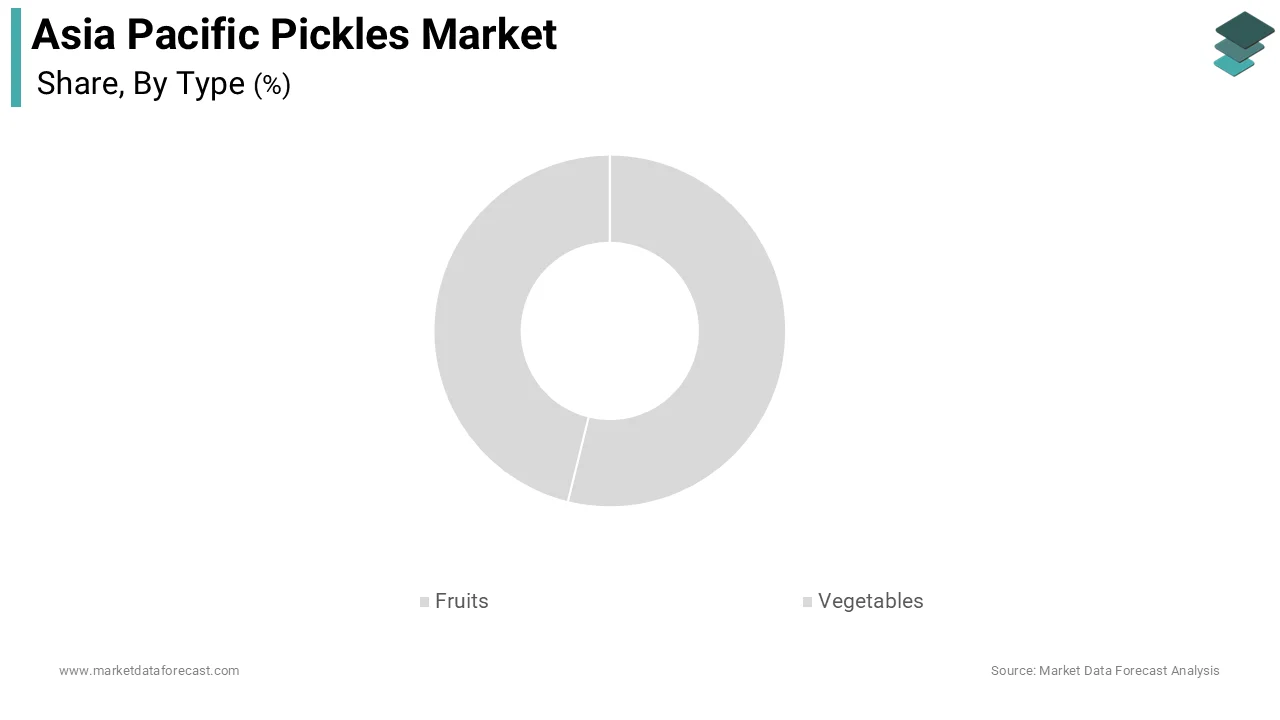
On the contrary, the fruit pickles segment is expected to exhibit a noteworthy CAGR of 6.5% between 2026 and 2034 due to increasing consumer interest in premium and exotic flavors. Fruits such as mango, lemon lime, and plum are being transformed into gourmet pickles that appeal to adventurous palates and those seeking unique culinary experiences. The Indian Ministry of Food Processing Industries (MoFPI) strongly promotes value-added manufacturing to combat high post-harvest crop losses. However, industry reports indicate that overall fruit processing remains low, meaning the pickle sector has significant room to scale up to meet these structural goals. The rising disposable income in emerging economies allows consumers to experiment with premium food items, including artisanal fruit pickles. Fruit pickles are often perceived as delicacies or gifts during festivals and special occasions, driving seasonal spikes in demand. The sweet and tangy flavor profile of fruit pickles complements modern fusion cuisines and snack foods, expanding their application beyond traditional meals. Marketing campaigns highlighting the natural sweetness and antioxidant properties of fruits attract health-conscious buyers. The introduction of organic and low-sugar fruit pickles further enhances their appeal to wellness-oriented consumers. Innovation in packaging, such as single-serve jars, facilitates trial and convenience. This segment benefits from the growing trend of exploring global flavors and the willingness of consumers to pay a premium for high-quality, unique products.
By Distribution Channel Insights
The supermarkets segment dominated the Asia Pacific Pickles Market and accounted for a 49.5% share in 2025. This dominance of the segment was driven by its ability to offer a wide range of brands and varieties under one roof, providing convenience and choice for shoppers. These retail outlets have become the primary source of packaged food for urban households who value hygiene, quality assurance, and consistent availability. The organized retail environment allows manufacturers to display products effectively and conduct promotional activities that drive impulse purchases. In addition, the availability of both local artisanal brands and international players in supermarkets caters to diverse consumer preferences. Private label pickles offered by supermarket chains provide affordable options that attract price-sensitive shoppers. The strategic placement of pickles near complementary items such as bread, rice, and snacks enhances visibility and sales. Supermarkets also benefit from loyalty programs and digital coupons that encourage repeat purchases. The expansion of supermarket chains into tier two and tier three cities in emerging markets further extends their reach. This channel remains dominant due to the habitual nature of weekly grocery shopping and the assurance of product freshness and quality.
However, the online retail stores segment is predicted to witness the highest CAGR of 12.8% during the forecast period, owing to the rapid adoption of e-commerce platforms and the convenience of home delivery. Consumers increasingly prefer online shopping for packaged goods due to the ease of comparing prices, reading reviews, and accessing a wider variety of niche and regional products. E-commerce data indicates that online grocery sales have surged across China and Southeast Asia, driven by improved logistics; while the Alibaba Group documents this trend within its own platforms like Freshippo and Lazada, regional metrics reflect a parallel expansion across the broader APAC digital landscape. The ability to purchase bulk quantities or subscribe to regular deliveries appeals to busy urban professionals and families. Consumer research confirms that the pandemic permanently advanced the baseline for online grocery shopping; however, post-lockdown analyses highlight that consumers have settled into an omni-channel hybrid model, blending digital ordering with a return to physical retail stores. Online platforms allow small and medium-sized enterprises to reach national and international audiences without the need for extensive physical distribution networks. Social media marketing and influencer endorsements drive traffic to online stores, creating brand awareness and trial. The availability of detailed product information and customer feedback helps consumers make informed decisions about new or unfamiliar pickle brands. Quick commerce services promising delivery within hours further enhance the appeal of online purchasing for immediate needs. This channel offers significant growth potential as internet penetration increases in rural areas and logistics infrastructure improves. The ease of access to specialty and organic pickles online caters to specific dietary preferences and lifestyle choices.
REGIONAL ANALYSIS
India Pickles Market Analysis
India was the top performer in the Asia Pacific Pickles Market and accounted for a 27.2% share in 2025. This position was driven by its deep-rooted cultural tradition of pickle consumption and massive domestic demand. Pickles are an integral part of Indian meals, with nearly every household consuming them daily. The market is characterized by a mix of unorganized local players and organized branded manufacturers. The diversity of regional recipes offers a wide variety of flavors catering to different tastes. Government initiatives promoting food processing and export opportunities support market growth. The rise of e-commerce platforms enables smaller artisanal brands to reach wider audiences. Health consciousness is driving demand for low oil and low salt variants. The festival season sees significant spikes in sales as pickles are often gifted or prepared in large quantities. The young demographic is experimenting with fusion flavors, expanding the market scope. Infrastructure improvements in the cold chain and logistics enhance distribution efficiency. The strong emotional connection to traditional tastes ensures sustained demand. India remains the heart of the Asia Pacific pickle industry due to its volume and cultural significance.
China Pickles Market Analysis
China is another key player in the Asia Pacific Pickles market due to large-scale industrial production and growing urban demand for convenient food options. Pickled vegetables such as zhacai and paocai are staple ingredients in Chinese cuisine, used in cooking and as side dishes. The rapid urbanization and busy lifestyles of city dwellers drive demand for ready-to-eat and easy-to-prepare foods. The market is dominated by large, established brands that ensure quality and safety standards. Consumer preference for low-sodium and healthy options is influencing product formulation. The expansion of modern retail channels and e-commerce platforms improves accessibility. Food safety regulations are strict, ensuring high product integrity. The popularity of hot pot and other communal dining experiences boosts demand for pickled ingredients. Innovation in flavors and packaging attracts younger consumers. The government support for agricultural modernization enhances supply chain efficiency. China's market status is defined by its scale and evolving consumer preferences towards convenience and health.
Japan Pickles Market Analysis
Japan holds a significant position in the Asia Pacific Pickles Market owing to high-quality standards and the enduring tradition of tsukemono or Japanese pickles. These pickles are served with almost every meal and are valued for their subtle flavors and health benefits. Japanese consumers prioritize quality, freshness, and natural ingredients, driving the market for premium and artisanal products. The aging population contributes to steady consumption as pickles are considered easy to digest and nutritious. Retail channels are well developed with supermarkets and specialty stores offering diverse options. Regulatory standards for food safety are stringent, ensuring consumer trust. Innovation in packaging, such as single-serve packs caters to smaller households and convenience needs. The influence of the washoku, the traditional Japanese diet, promotes the consumption of fermented foods. Export opportunities for high-quality Japanese pickles are expanding. The market is characterized by stability and a focus on quality over quantity. Tradition and modernity coexist, driving sustained interest in tsukemono.
South Korea Pickles Market Analysis
South Korea grew steadily in the Asia Pacific Pickles Market because of the ubiquitous consumption of kimchi and other fermented vegetables. Kimchi is a national dish consumed daily by the majority of the population. The market is supported by a strong network of local producers and large manufacturing companies. Domestic demand is stable, with consumers preferring fresh and high-quality products. Health benefits associated with probiotics drive continued interest. The government supports the kimchi industry through research and promotion initiatives. Modern retail channels and online platforms facilitate easy access. Innovation in flavors and packaging appeals to younger demographics and international buyers. Food safety standards are rigorous, ensuring product quality. The cultural significance of kimchi ensures its central role in the diet. The market benefits from global trends favoring fermented foods. South Korea's influence extends beyond its borders through cultural exports.
Australia Pickles Market Analysis
Australia is likely to expand notably in the Asia Pacific Pickles Market from 2026 to 2034 due to its multicultural population and reliance on imports for diverse Asian pickle varieties. The presence of large Asian communities drives demand for traditional pickles from India, China, and Southeast Asia. Local production is limited to certain vegetable pickles, leaving a gap for imported specialty products. Consumers are increasingly interested in exploring global flavors and healthy fermented foods. The demand for organic and clean-label pickles is rising among health-conscious buyers. Modern retail channels dominate distribution, with online shopping gaining traction. Regulatory standards for food safety and labeling are strict, ensuring quality. The tourism industry also contributes to demand as visitors seek authentic Asian culinary experiences. Local manufacturers are beginning to produce Asian style pickles to cater to local tastes. The market is characterized by diversity and a focus on quality and authenticity. Growth is driven by cultural integration and health trends.
COMPETITION OVERVIEW
The competitive landscape of the Asia Pacific Pickles Market is characterized by a mix of established multinational corporations and numerous local artisanal producers. Large players leverage strong brand equity and extensive distribution networks to dominate urban markets, while smaller brands compete on authenticity and unique regional flavors. Innovation in product formulations, including reduced sugar and clean label options, is a key differentiator as health consciousness rises among consumers. Price competition remains significant in mass market segments, prompting companies to optimize supply chains for cost efficiency. Private label brands from large retail chains pose a threat by offering affordable alternatives with comparable quality. Marketing strategies emphasize cultural heritage and traditional recipes to build loyalty amidst a crowded marketplace. The rise of e-commerce has lowered barriers to entry, allowing niche brands to gain traction through direct consumer engagement. Regulatory pressures regarding labeling and food safety force continuous adaptation in production processes. Collaborations with food service providers secure long-term contracts and steady revenue streams. Companies must balance tradition with innovation to meet diverse global demands. Agility in responding to flavor trends and health concerns is essential for sustaining market share. The market remains dynamic with frequent product launches and shifting consumer preferences, driving competitive intensity.
KEY MARKET PLAYERS
A few major players of the Asia Pacific pickles market include
- ADF Foods
- Del Monte Foods
- Mt. Olive Pickle Company
- Kraft Foods Inc
- Reitzel International
- Pinnacle Foods, Inc
- Mitoku Company, Ltd
- others
Top Strategies Used by Key Market Participants
Key players in the Asia Pacific Pickles Market primarily employ product innovation and regional expansion to maintain a competitive advantage. Companies invest heavily in research and development to create healthy variants such as low-sodium organic and probiotic-rich pickles that appeal to health-conscious consumers. Strategic partnerships with local distributors facilitate market entry and enhance supply chain efficiency in diverse geographic regions. Manufacturers focus on sustainable sourcing of raw materials to ensure quality and reduce environmental impact. Digital marketing campaigns target younger demographics through social media platforms and influencer collaborations to build brand awareness. Expansion into e-commerce channels enables direct-to-consumer sales and broader reach. Packaging innovations such as resealable jars and single-serve packs enhance convenience and shelf appeal. Price competitiveness remains crucial in mass market segments while premiumization drives value in niche categories. These combined strategies enable manufacturers to address evolving consumer preferences and regulatory requirements effectively.
Leading Players in the Asia Pacific Pickles Market
- Mother’s Recipe is a prominent player in the Asia Pacific Pickles Market, renowned for its extensive portfolio of traditional Indian pickles and condiments. The company leverages authentic recipes and high-quality ingredients to maintain strong brand loyalty among consumers who value taste and heritage. Recent actions include expanding its distribution network across Southeast Asia and introducing innovative packaging formats such as squeeze bottles for enhanced convenience. Mother’s Recipe actively engages in digital marketing campaigns to connect with younger demographics and promote its products as versatile culinary essentials. The firm invests in state-of-the-art manufacturing facilities to ensure hygiene and consistency while adhering to international food safety standards. By launching new variants like low-sodium and organic pickles, the company addresses growing health consciousness. These strategic initiatives strengthen its position as a trusted household name in the region.
- Yeo Hiap Seng Limited contributes significantly to the Asia Pacific Pickles Market through its diverse range of Asian food products, including pickled vegetables and sauces. The company focuses on meeting the demands of modern consumers by offering convenient and ready-to-eat options that align with busy lifestyles. Recent strategies involve expanding its presence in key markets such as China and Indonesia through strategic partnerships with local distributors. Yeo Hiap Seng emphasizes product innovation by introducing unique flavors that cater to regional taste preferences. The firm invests in sustainable sourcing practices to ensure the quality of raw materials and reduce environmental impact. Marketing efforts highlight the versatility of their pickles in various cuisines, appealing to a broad audience. Yeo Hiap Seng continues to grow its footprint in the competitive Asia Pacific landscape. This success is achieved by maintaining strict quality control and leveraging its strong brand recognition.
- Kikkoman Corporation is a leading global manufacturer of fermented food products with a strong presence in the Asia Pacific Pickles Market, particularly in Japan and neighboring countries. The company is renowned for its high-quality tsukemono and other pickled vegetables that adhere to traditional brewing methods. Recent actions include expanding its production capabilities and introducing new product lines that cater to health-conscious consumers, such as low salt and additive-free options. Kikkoman actively promotes the health benefits of fermented foods through educational campaigns and collaborations with nutritionists. The firm leverages its global distribution network to export premium Japanese pickles to international markets, enhancing brand visibility. By investing in research and development, Kikkoman continues to innovate while preserving the authentic flavors that define its brand identity. These efforts reinforce its reputation for excellence and quality in the regional market.
MARKET SEGMENTATION
This research report on the Asia Pacific pickles market has been segmented and sub-segmented based on type, distribution channel & region.
By Type
- Fruits
- Vegetables
By Distribution Channel
- Departmental stores
- Supermarkets
- Convenience stores
By Region
- India
- China
- Japan
- South Korea
- Australia
- New Zealand
- Thailand
- Malaysia
- Vietnam
- Philippines
- Indonesia
- Singapore
- Rest Of APAC