- Product Description Description
- Table of Contents TOC
- List of Table & Figure LOT
- Get Free Sample PDF Sample PDF
Market Size, 2025
$11.52 BnMarket Estimate, 2026
$11.84 BnMarket Forecast, 2034
$14.77 BnCAGR, 2026–2034
2.8%Pickles Market Summary
The global pickles market was valued at approximately USD 11.52 billion in 2025 and is projected to reach around USD 14.77 billion by 2034, exhibiting a CAGR of 2.80% from 2025 to 2033. Another source suggests a size of USD 11.84 billion in 2026, with a higher CAGR of 5.8% through 2034
Pickles are increasingly popular as both standalone snacks and versatile condiments, finding use across cuisines and formats. Rising consumer interest in probiotic-rich, low-sodium, and artisanal products, along with expanding e-commerce and gourmet food trends, is supporting market growth.
Key Market Trends & Insights
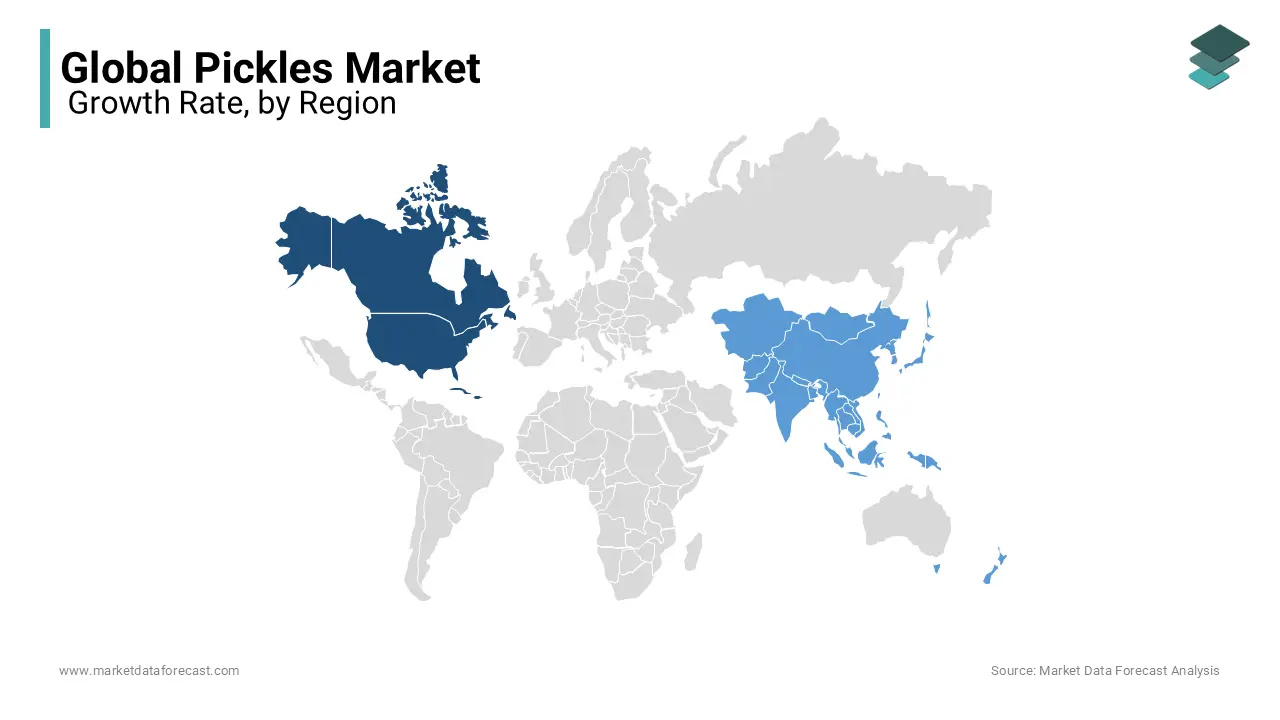
- North America holds the largest market share, driven by high demand for quick snacks and fermented foods
- Asia-Pacific is the fastest-growing region, fueled by diverse ethnic pickling practices and rising urban consumption
- By source, vegetable pickles dominate (~40% share), with fruit pickles holding around 30% and growing in popularity
- Glass jars remain the preferred packaging (~45–66%), though pouches are gaining traction for portability
- Supermarkets and hypermarkets are the primary distribution channels (~USD 7.4 billion), with online retail noted for high growth potential
Market Size & Forecast
- 2025 Market Size: USD 11.52 billion (median estimate)
- 2026: USD 11.84 billion
- 2034 Projected Market Size: USD 14.77 billion
- CAGR (2026–2034): 2.80%
- Leading Region: North America
- Fastest-Growing Region: Asia-Pacific
Global Pickles Market Size
The global pickles market size was assessed at USD 11.52 billion in 2025. The global pickles market is expected to grow at a CAGR of 2.80% from 2026 to 2034 and be worth USD 14.77 billion by 2034 from USD 11.84 billion in 2026. The evolution of consumer preferences for different dishes and flavors is also attracting the attention of the product. As the demand for multicultural cuisine increases worldwide, the pickle market is anticipated to grow during the forecast period.
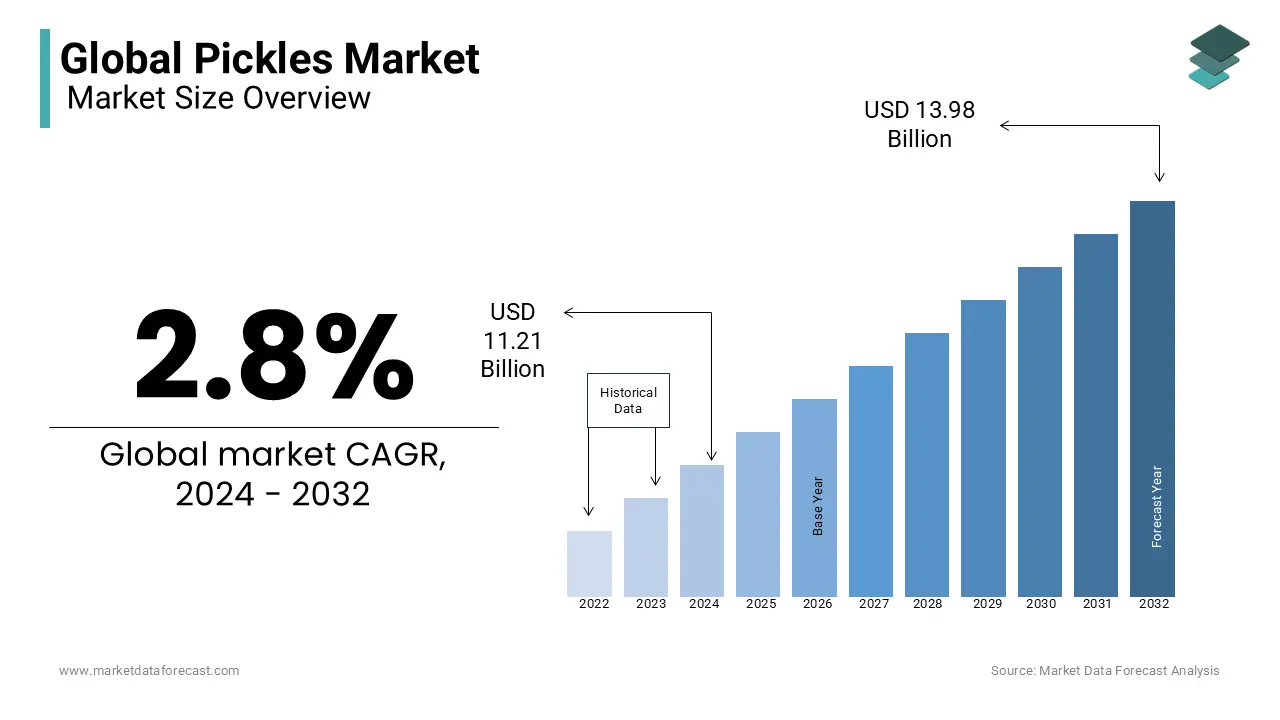
The Pickles are commercial ecosystem with the production, distribution, and consumption of preserved vegetables, fruits, and condiments prepared through fermentation, brining, or vinegar-based curing. These products, deeply embedded in culinary traditions across cultures—from kimchi in Korea and tsukemono in Japan to achar in India and dill pickles in North America—serve as flavor enhancers, digestive aids, and shelf-stable food solutions. According to the Food and Agriculture Organization of the United Nations, over 1.3 billion tons of fruits and vegetables are produced globally each year, with approximately 30% lost post-harvest due to inadequate storage, a challenge that pickling effectively mitigates. As per the World Health Organization, traditional fermentation techniques not only extend shelf life but also enhance microbial safety and nutrient bioavailability in low-resource settings.
MARKET DRIVERS
Resurgence of Traditional and Regional Cuisines in Global Gastronomy
The growing global appreciation for ethnic cuisines, which prominently feature region-specific preserved foods is escalating the growth of the Pickles Market. According to UNESCO, over 30 national pickle varieties from Korean kimchi to Indian mango achar have been recognized as part of intangible cultural heritage, elevating their status beyond mere condiments to cultural artifacts. In the United States, the Specialty Food Association reports that ethnic food sales grew by 12.4% between 2021 and 2023, with fermented and pickled items accounting for a significant share. Korean households consume an average of 27 kilograms of kimchi annually, as documented by the Kimchi Field Museum, and its global export volume increased by 38% from 2020 to 2023, according to South Korea’s Ministry of Agriculture, Food and Rural Affairs.
Rising Consumer Interest in Gut Health and Naturally Fermented Foods
The increasing scientific and consumer recognition of fermented foods as promoters of gut microbiome balance is also enhancing the growth of the Pickles Market. As per the International Scientific Association for Probiotics and Prebiotics, regularly consuming fermented foods like naturally pickled vegetables can increase microbial diversity in the gut, a factor linked to improved immunity and metabolic health. A 2023 study published in Nature Medicine found that individuals who consumed six or more servings of fermented foods per week exhibited a 30% reduction in inflammatory markers over 10 weeks. In Japan, the average citizen consumes over 5 kilograms of tsukemono annually, many of which are lacto-fermented, contributing to one of the world’s highest life expectancies, as noted by the National Institute of Health and Nutrition.
MARKET RESTRAINTS
Stringent Regulatory Standards for Sodium and Additive Content in Preserved Foods
The tightening of food safety and nutritional regulations targeting high sodium levels and synthetic preservatives commonly found in pickled products is also to hinder the growth of the Pickles Market. According to the World Health Organization, the global average sodium intake exceeds recommended limits by more than double, with pickled vegetables contributing significantly due to brine-based preservation. In the European Union, Regulation (EU) No 1169/2011 mandates front-of-pack nutrition labeling, leading to a 19% decline in sales of high-sodium pickles in France and the UK between 2020 and 2023, as reported by the European Food Safety Authority. Similarly, Canada’s updated Food Guide recommends minimizing intake of highly processed and salted foods, directly affecting traditional pickle consumption. In India, the Food Safety and Standards Authority has proposed limits on benzoate and sulfite additives, which is forcing small-scale producers to reformulate or risk non-compliance.
Perishability and Supply Chain Limitations for Fresh Ingredients in Artisanal Pickling
The dependency on seasonal and region-specific raw materials, which complicates consistent production and scalability is also to limit the growth of the Pickles Market. According to the United Nations Environment Programme, climate variability has disrupted vegetable yields, with cucumber production in Spain—Europe’s largest supplier—declining by 14% in 2022 due to drought, as documented by Eurostat. In India, the National Horticulture Board reports that mango crop fluctuations, influenced by erratic monsoon patterns, lead to a 20–30% variation in raw material availability for achar production annually. Small-batch pickle makers, who rely on organic or heirloom produce, face heightened vulnerability to supply shocks. Additionally, fermentation processes require controlled temperature and hygiene conditions, which are difficult to maintain in regions with unreliable refrigeration and power supply.
MARKET OPPORTUNITIES
Expansion of Clean-Label and Organic Pickle Offerings
The rising consumer preference for clean-label, organic, and non-GMO preserved foods in North America and Western Europe is ascribed to boost the growth of the Pickles Market. According to the Organic Trade Association, sales of certified organic condiments and pickled vegetables in the U.S. surpassed $480 million in 2023, reflecting a 16% year-on-year increase. Brands like Farmhouse Pickles and Bubbies have capitalized on this trend by eliminating artificial preservatives and using raw fermentation techniques. In Germany, the organic food market saw a 9% rise in pickle segment sales, driven by retailer demand for transparent sourcing, as noted by the Federal Ministry of Food and Agriculture. Additionally, the Non-GMO Project reported that over 6,000 pickle and fermented food products were verified in 2023, up from 3,200 in 2020.
Growing Integration of Pickled Ingredients in Foodservice and Ready-to-Eat Meals
The increasing use of pickled components in restaurant menus, meal kits, and convenience foods to enhance flavor complexity and freshness is likely to leverage the growth of the Pickles Market. As per the National Restaurant Association, over 60% of U.S. chefs included house-pickled vegetables in their dishes in 2023, citing demand for bold, tangy, and umami-rich profiles. Fast-casual chains like Sweetgreen and Cava use pickled red onions, carrots, and radishes as standard toppings, while meal kit providers such as HelloFresh and Blue Apron feature preserved vegetables in 35% of their Asian and Latin-inspired recipes, according to internal company disclosures. In Japan, convenience stores stock over 200 varieties of pre-packaged tsukemono, with 7-Eleven selling more than 100 million pickle servings annually, as reported by the Japan Pickle Association. This culinary integration not only drives volume demand but also elevates consumer familiarity with diverse pickle types, fostering acceptance of premium and artisanal variants beyond traditional home consumption.
MARKET CHALLENGES
Difficulty in Balancing Flavor, Preservation, and Health-Conscious Formulations
the technical difficulty of maintaining flavor integrity and microbial safety while reducing sodium, sugar, and chemical preservatives is likely to hinder the growth of the Pickles Market. According to research published in the Journal of Food Science, reducing salt content below 5% in brined cucumbers increases the risk of Clostridium botulinum and Listeria contamination, necessitating alternative preservation methods. High-pressure processing (HPP) and pasteurization can extend shelf life but often diminish the live probiotic content prized in fermented varieties. The Institute of Food Technologists notes that reformulated low-sodium pickles face consumer rejection due to altered texture and taste, with sensory trials indicating a 40% drop in palatability when salt is reduced by 30%.
Dominance of Informal and Unregulated Artisanal Producers in Key Regions
The prevalence of unbranded, small-scale, and often unregulated producers who dominate traditional markets in Asia, Africa, and Latin America is additionally to challenge the growth of the Pickles Market. As per the International Labour Organization, over 80% of pickles consumed in India are produced in household or cottage industries, bypassing formal quality control and hygiene standards. In Nigeria, the National Agency for Food and Drug Administration and Control estimates that 70% of locally sold fermented vegetables lack proper labeling or microbial testing. While these informal producers maintain cultural authenticity and affordability, their lack of compliance with international food safety protocols hinders export potential and brand scalability.
REPORT COVERAGE
| REPORT METRIC | DETAILS |
| Market Size Available | 2025 to 2034 |
| Base Year | 2025 |
| Forecast Period | 2026 to 2034 |
| CAGR | 2.8% |
| Segments Covered | By Product Type, Distribution Channel and Region |
| Various Analyses Covered | Global, Regional, & Country Level Analysis; Segment-Level Analysis, DROC, PESTLE Analysis, Porter’s Five Forces Analysis, Competitive Landscape, Analyst Overview of Investment Opportunities |
| Regions Covered | North America, Europe, APAC, Latin America, Middle East & Africa |
| Market Leaders Profiled | ADF Foods, Del Monte Foods, Mt. Olive Pickle Company, Kraft Foods Inc., Reitzel International, Pinnacle Foods, Inc., and Mitoku Company, Ltd |
SEGMENTAL ANALYSIS
By Type Insights
The vegetables segment was the largest and held a prominent share of the Pickles Market. The cabbage-based pickles, particularly sauerkraut and kimchi, are the primary contributors. Germany produces over 100,000 metric tons of sauerkraut annually, according to the German Sauerkraut Association, with domestic consumption deeply embedded in culinary tradition. In South Korea, kimchi is consumed at an average rate of 27 kilograms per person per year, as documented by the Kimchi Promotion Institute, and is served in 95% of meals, reinforcing its cultural indispensability. The fermentation process enhances shelf life and introduces beneficial lactic acid bacteria, aligning with growing consumer interest in gut health. As per the National Institute of Agricultural Sciences in South Korea, daily kimchi consumption is associated with increased microbial diversity in the gut, further validating its functional food status.
The chilli pickles segment is lucratively growing with a CAGR of 9.8% from 2026 to 2034 owing to the rising global demand for spicy and bold flavor profiles in mainstream cuisine. In India, over 60% of households consume homemade or branded chilli achar regularly, with the National Council for Applied Economic Research noting a 22% increase in branded pickle sales in urban centers between 2020 and 2023. Additionally, capsaicin, the active compound in chillies, is recognized by the American Journal of Clinical Nutrition for its metabolic-boosting and anti-inflammatory properties, which is lending functional credibility to spicy pickles.
The cucumber segment was the largest and held a dominant share of the pickles market in 2025. Dill and sour gherkins are particularly dominant in North America and Europe, where cucumber pickling is a centuries-old tradition. The United States dedicates over 60,000 acres annually to pickling cucumber cultivation, primarily in Michigan, Wisconsin, and North Carolina, yielding more than 2 million tons of cucumbers for preservation. According to the Pickle Packers International, over 90% of cucumbers grown for processing are converted into pickles, with an average American consuming approximately 8.5 pounds per year. The crop’s high water content and firm texture make it ideal for brining, while its neutral flavor readily absorbs spices and vinegar.
The mango pickles segment is projected to grow at a CAGR of 10.3% in the coming years owing to the increasing global popularity of Indian and Southeast Asian cuisines, where mango achar is a staple condiment. India produces over 20 million metric tons of mangoes annually, with nearly 5% dedicated to pickle manufacturing, according to the National Horticulture Board. The Alphonso and Kesar varieties, prized for their firm pulp and tangy-sweet profile, are especially suited for oil-based preservation. In the UAE and Saudi Arabia, demand for Indian-style mango pickles has surged, with Gulf Cooperation Council imports of Indian pickles reaching $45 million in 2023, as reported by the Federation of Indian Export Organisations. Additionally, premium artisanal brands are introducing organic, low-oil, and sugar-free variants to cater to health-conscious diaspora consumers.
By Distribution Channel Insights
The supermarkets segment held 58.2% of the share in 2025 with the widespread consumer reliance on organized retail for packaged food purchases, particularly in urban and suburban areas. In countries like Germany and Japan, over 75% of pickle sales occur through supermarket chains such as Aldi, Edeka, and Aeon, according to Eurostat and Japan’s Ministry of Economy, Trade and Industry. These retailers offer extensive shelf space for both mass-market and premium pickle brands, enabling product visibility and consumer trial. The presence of dedicated international food aisles further supports the sale of region-specific varieties like kimchi, sauerkraut, and achar. Combined with consistent hygiene standards, cold chain availability, and promotional strategies, supermarkets remain the primary conduit for pickle distribution worldwide.
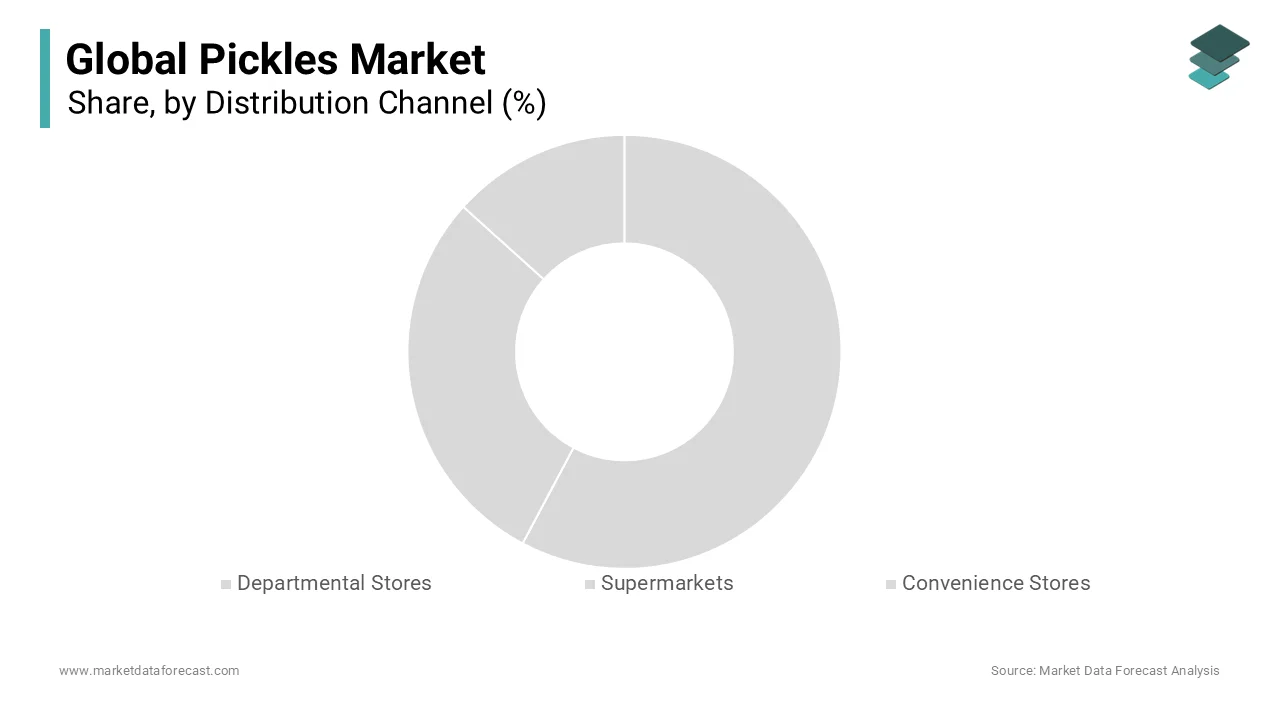
The convenience stores segment is projected to grow with a CAGR of 7.6% in the next coming years owing to the shifting consumer behavior toward quick, on-the-go food solutions and single-serve packaging. In Japan, convenience stores like 7-Eleven and Lawson sell over 150 million individual pickle packs annually, often bundled with rice balls and bento boxes, as reported by the Japan Pickle Association. Similarly, in South Korea, CU and GS25 offer ready-to-eat kimchi side dishes in portable containers, catering to urban professionals with limited meal preparation time. The U.S. convenience store sector recorded a 9% year-on-year increase in condiment sales in 2023, with pickled vegetables featured in sandwiches and snack boxes, according to the National Association of Convenience Stores. The integration of chilled sections and premium imported pickles has elevated product quality, while digital loyalty programs enhance repeat purchases.
REGIONAL ANALYSIS
Asia Pacific Pickles Market Insights
Asia Pacific was the top performer of the global pickles market with 44.3% of share in 2025 with the deep culinary traditions where pickled foods are integral to daily meals. In India, pickle consumption spans all socio-economic strata, with the National Sample Survey Office reporting that over 85% of households consume some form of achar weekly. South Korea’s kimchi culture is so pervasive that the government subsidizes cabbage farming to stabilize supply, with per capita consumption exceeding 27 kilograms annually, as noted by the Ministry for Food, Agriculture, Forestry and Fisheries. China and Japan also maintain robust fermented vegetable markets, with tsukemono and pao cai being dietary staples. The rise of organized retail and e-commerce platforms like BigBasket and Alibaba has expanded access to branded and artisanal pickles.
North America Pickles Market Insights
North America pickles market held 32.1% of the share in 2025. The region’s pickle consumption is anchored in traditional dill and bread-and-butter varieties, with the average American consuming over 8 pounds of pickles annually, according to the USDA. The U.S. alone produces more than 2 million tons of pickling cucumbers each year, primarily for industrial processing. The craft food movement has spurred demand for small-batch, fermented, and organic pickles, with brands like McClure’s and Bubbies gaining national distribution. Additionally, the integration of pickled vegetables in fast-casual chains like Chipotle and Panera Bread has elevated their role in mainstream cuisine. The rise of gut health awareness has further boosted sales of live-culture, probiotic-rich pickles.
Europe Pickles Market Insights
Europe pickles market is esteemed to have significant growth opportunities in the next coming years. Germany leads in sauerkraut production, manufacturing over 100,000 tons annually, while the Netherlands is a major exporter of gherkins, supplying 40% of the EU’s needs, according to Eurostat. In Eastern Europe, countries like Poland and Russia maintain strong traditions of home fermentation, with over 60% of households preparing their own pickled vegetables, as noted by the Central European Food Research Institute. Regulatory emphasis on food safety and labeling transparency has encouraged brands to adopt clean-label practices and natural fermentation. The European Commission’s Farm to Fork strategy has also promoted traditional preservation methods as sustainable alternatives to ultra-processed foods.
Latin America Pickles Market Insights
Latin America pickles market is gearing up with prominent growth opportunities throughout the forecast period. Brazil and Mexico are the primary consumers, where pickled vegetables are commonly served as table condiments in restaurants and households. In Brazil, picles a Portuguese term for mixed pickled vegetables are a staple in churrascarias and sandwich shops, with annual per capita consumption estimated at 2.1 kilograms, according to the Brazilian Association of Food Industries. The region’s growing middle class and expansion of supermarket chains like Walmart Mexico and Carrefour Brazil are increasing access to branded pickles. However, homemade versions still dominate, particularly in rural areas.
Middle East & Africa Pickles Market Insights
Middle East & Africa pickles market growth is having steady opportunities in the next coming years. The Gulf Cooperation Council (GCC) nations, particularly the UAE and Saudi Arabia, are the primary drivers, with high demand for Indian and Persian-style pickles due to large expatriate populations. The UAE imports over 12,000 metric tons of Indian achar annually, according to the Dubai Municipality, reflecting strong cultural affinity. In Saudi Arabia, the Ministry of Municipal and Rural Affairs reports a 15% annual increase in condiment sales, driven by rising restaurant dining and home cooking. South Africa maintains a modest but growing market, with brands like Mrs. Ball’s chutney and pickled beetroot enjoying widespread popularity. However, in sub-Saharan Africa, refrigeration limitations and low disposable income restrict packaged pickle adoption.
KEY MARKET PLAYERS AND COMEPETITIVE LANDSCAPE
ADF Foods, Del Monte Foods, Mt. Olive Pickle Company, Kraft Foods Inc., Reitzel International, Pinnacle Foods, Inc., and Mitoku Company, Ltd. are some of the promising players in the global pickles market.
The competition in the Pickles Market is highly fragmented, characterized by a blend of multinational food corporations, regional specialty brands, and a vast network of informal producers. In developed markets, competition centers on innovation, branding, and health claims, with companies differentiating through organic certification, probiotic content, and clean labels. In contrast, emerging economies are dominated by small-scale and household producers who maintain cultural authenticity and price advantage. Multinational brands face challenges in replicating traditional taste profiles while complying with food safety regulations. The rise of e-commerce and direct-to-consumer platforms has intensified rivalry, enabling niche players to reach global audiences. Additionally, consumer preference for artisanal and locally made products pressures large manufacturers to adopt craft-like narratives.
TOP PLAYERS IN THE MARKET
Patanjali Ayurved Limited
Patanjali has emerged as a dominant force in the Asia Pacific pickles market by leveraging its deep-rooted association with Ayurvedic wellness and Indian culinary traditions. The company offers a wide range of oil-based achar products, including mango, lime, and mixed vegetable pickles, formulated without artificial preservatives to align with clean-label trends. In 2023, Patanjali expanded its production capacity in Haridwar, India, to meet rising domestic and export demand, particularly in Southeast Asia and the Middle East. It launched organic-certified pickle variants in response to health-conscious urban consumers and strengthened its distribution through partnerships with major retail chains like Reliance Smart and DMart. The brand also emphasizes affordability and cultural authenticity, reinforcing trust among Indian households.
Nestlé S.A.
Nestlé has strategically positioned itself in the Asia Pacific pickles market through localized product development and integration into broader food portfolios. While not traditionally a pickle-focused brand, Nestlé has incorporated pickled elements into its ready-to-eat meals and condiment lines, particularly in Japan and Thailand, where fermented vegetables are dietary staples. In 2023, the company introduced Maggi Pickle Delights, a line of flavored pickled vegetables in India, targeting younger consumers seeking convenient, spicy accompaniments. Nestlé also utilizes its Maggi brand equity to promote pickled garnishes as part of instant noodle and meal kit offerings. The company invests in cold-chain infrastructure to preserve the quality of fermented products and collaborates with local farmers for raw material sourcing.
Lalasa Group (Lalasa Pickles & Foods)
Lalasa Group has established a strong regional footprint in the Asia Pacific market by specializing in premium, export-grade Indian pickles and chutneys. Based in Andhra Pradesh, India—renowned for its spicy achar—the company produces over 100 traditional pickle varieties using sun-drying and cold-pressed oil preservation techniques. In 2023, Lalasa launched a halal-certified, low-sugar range tailored for Middle Eastern and Southeast Asian markets, expanding its presence in the UAE, Malaysia, and Indonesia. The company has invested in automated bottling lines and HACCP-compliant facilities to meet international food safety standards. It also partners with e-commerce platforms like Amazon India and Noon to enhance cross-border visibility. Lalasa actively participates in global food expos such as Gulfood Dubai, strengthening brand recognition among diaspora communities.
TOP STRATEGIES USED BY KEY MARKET PLAYERS
Key players in the Pickles Market employ strategies such as product innovation, regional flavor customization, clean-label formulation, e-commerce expansion, and strategic branding to strengthen their market presence. Companies are reformulating products to reduce sodium, eliminate artificial preservatives, and incorporate organic ingredients to meet health-conscious demand. They develop region-specific variants such as kimchi in Korea, sauerkraut in Germany, and mango achar in India to align with local palates. Premium brands emphasize artisanal production and traditional fermentation, while mass-market players focus on affordability and shelf stability. Partnerships with retail chains and foodservice providers enhance distribution, while digital marketing and influencer collaborations boost consumer engagement.
RECENT HAPPENINGS IN THE MARKET
- In January 2023, Patanjali Ayurved launched an organic-certified achar range in India, produced without synthetic preservatives and packaged in recyclable glass jars, which is targeting urban health-conscious consumers and expanding export distribution to Southeast Asia.
- In May 2023, Nestlé introduced Maggi Pickle Delights, a new line of ready-to-eat pickled vegetables in India by integrating traditional flavors with modern convenience to appeal to young professionals and single-serve meal consumers.
- In September 2023, Lalasa Group inaugurated a new HACCP-certified production facility in Hyderabad by enhancing export capacity and enabling compliance with food safety standards in the Middle East and Europe.
- In February 2025, Mizkan Holdings launched a low-sodium, live-culture kimchi variant in Japan and South Korea, which is catering to aging populations seeking gut-healthy fermented foods with reduced salt content.
- In June 2025, Amrit Foods expanded its e-commerce presence on Amazon Global Selling by enabling direct access to U.S. and UK consumers for its range of Indian-style mango and chili pickles that supported by halal and vegan certifications.
MARKET SEGMENTATION
This research report on the global pickles market has been segmented and sub-segmented based on product type distribution channel & region.
By Product Type
- Vegetables
- Cabbage
- Chilli
- Bell Peppers
- Other Vegetables
- Fruits
- Cucumber
- Mango
- Orange
- Other Fruits
By Distribution Channel
- Departmental Stores
- Supermarkets
- Convenience Stores
By Region
- North America
- Europe
- Asia Pacific
- Latin America
- Middle East and Africa