- Product Description Description
- Table of Contents TOC
- List of Table & Figure LOT
- Get Free Sample PDF Sample PDF
Market Size, 2025
$9.08 BnMarket Estimate, 2026
$10.34 BnMarket Forecast, 2034
$29.26 BnCAGR, 2026–2034
13.89%Executive Summary: Asia-Pacific (APAC) Preventive Vaccine Market
- Market Scope: Comprehensive Asia-Pacific preventive vaccine market analysis covering vaccine types (live attenuated, inactivated, subunit, DNA, etc.), end-user segments (pediatric and adult), country-level landscapes, and regional healthcare expenditure trends.
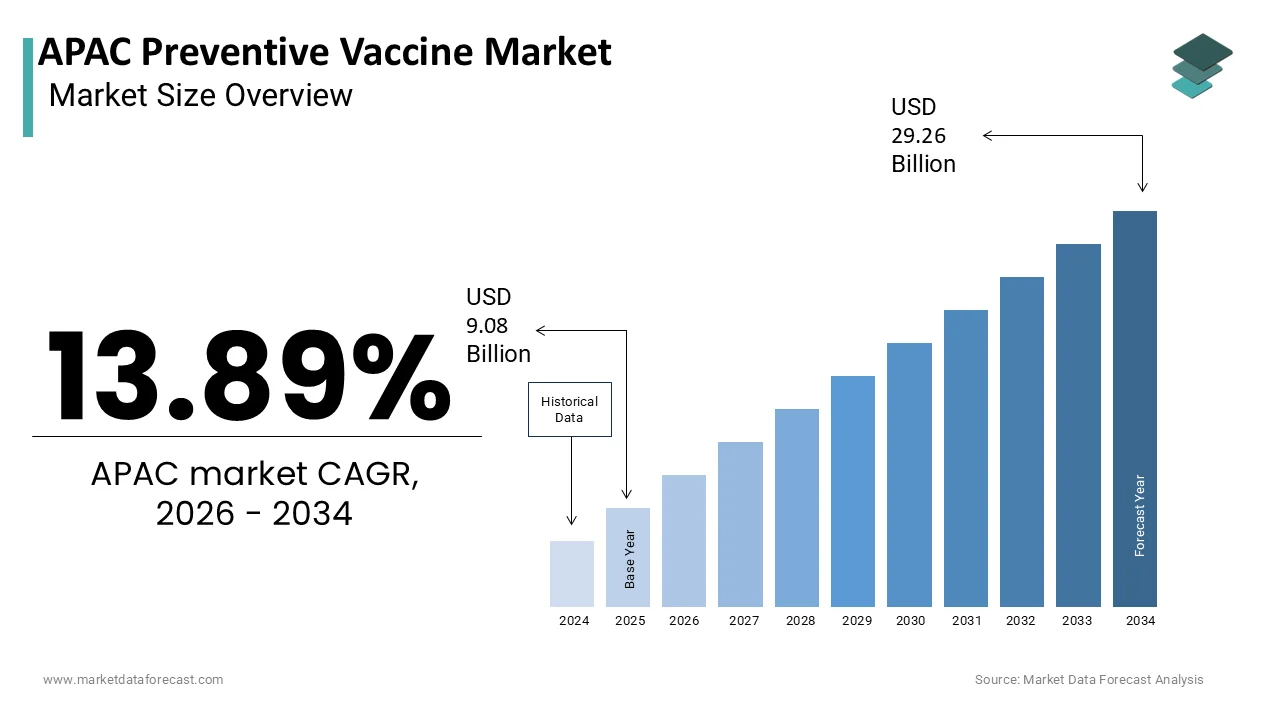
- Market Valuation: Valued at USD 9.08 billion in 2025, estimated at USD 10.34 billion in 2026, and projected to reach USD 29.26 billion by 2034, registering a robust compound annual growth rate (CAGR) of 13.89% from 2026 to 2034.
- Primary Growth Drivers: High proliferation of infectious and chronic diseases, rising public and private healthcare expenditure, increasing awareness of preventive care, continuous introduction of novel vaccines, and heightened government and international funding for laboratory infrastructure and monitoring networks. Key market restraints include complex, highly variable cross-border regulatory compliance and documentation procedures among manufacturing nations.
Key Market Segment Metrics (2026–2034)
| Category | Leading Segment (2025 Position) | Fastest-Growing Segment |
|---|---|---|
| By Vaccine Type | Subunit & Conjugate Vaccines (held dominant shares driven by widespread pediatric immunization programs) | DNA & Recombinant Vector Vaccines (expanding rapidly backed by advanced biotechnology R&D investments) |
| By End-User | Pediatric Vaccines (commanded the largest revenue share due to mandatory national immunization schedules for MMR, polio, and HIB) | Adult Vaccines (experiencing high growth driven by increased uptake of influenza, zoster, and cervical cancer immunizations) |
| By Country | China (dominated the regional market backed by extensive vaccine development centers and heavy government healthcare investments) | India (one of the fastest-growing markets driven by rising healthcare expenditures, supportive reimbursement, and massive production capacity) |
Major Market Players & Market Structure
Market Structure: Highly competitive global biopharmaceutical landscape featuring multinational giants focusing on advanced R&D infrastructure, strategic regional partnerships, and localized vaccine manufacturing facilities.
Key Companies: GlaxoSmithKline PLC, Bavarian Nordic, Merck and Company, CSL Limited, Novartis AG, Emergent BioSolutions Inc., Johnson & Johnson, MedImmune, LLC., Pfizer, Inc., and Sanofi Pasteur.
APAC Preventive Vaccine Market Size
The APAC Preventive Vaccine Market is projected to grow from USD 9.08 billion in 2025 to USD 10.34 billion in 2026 and reach USD 29.26 billion by 2034, registering a CAGR of 13.89% from 2026 to 2034.
A preventive vaccine is a shot given to healthy people to stop them from getting a specific disease before it happens. This domain includes vaccines for influenza, hepatitis,s human papillomavirus, and emerging pathogens, ens serving both pediatric and adult demographics across diverse economies. According to the World Health Organisation, immunisation currently prevents between 3.5 million and 5 million deaths every year from diseases like diphtheria, tetanus, pertussis, influenza, and measles globally. As per the joint WHO/UNICEF Estimates of National Immunization Coverage, global coverage for the third dose of the diphtheria-tetanus-pertussis vaccine reached 85% among infants worldwide. The market is characterized by a mix of government-funded national immunization programs and growing private sector demand driven by rising health awareness. Increasing prevalence of chronic infections and the threat of pandemics have accelerated regulatory approvals and local manufacturing initiatives. Governments in countries such as China, India, and Japan are prioritizing vaccine security and self-sufficiency, leading to substantial investments in biotechnology infrastructure. This strategic focus ensures that preventive vaccines remain a cornerstone of public health policy, driving consistent procurement and distribution efforts to mitigate disease burden and enhance overall community resilience against preventable illnesses.
MARKET DRIVERS
Government Initiatives and Expanded National Immunisation Programs
Robust government initiatives and the expansion of national immunization programs are driving the growth of the APAC Preventive Vaccine Market. This ensures widespread access and affordability. According to the Gavi Alliance, immunisation infrastructure investments since 2000 have successfully protected more than 670 million children against infectious diseases across Asia and the Pacific. As per the Ministry of Health and Family Welfare in India, the Universal Immunization Programme expands vaccine equity by delivering free immunization against 12 vaccine-preventable diseases to over 26 million infants and 29 million pregnant women annually. These massive public health efforts directly drive market demand as governments procure large volumes of vaccines to meet national coverage targets. The inclusion of new vaccines such as those for rotavirus and pneumococcal disease into routine schedules further expands the addressable market. Regulatory bodies in countries like China and South Korea are streamlining approval processes for essential vaccines to accelerate availability. Public funding reduces financial barriers for citizens, increasing uptake rates significantly. This state-led momentum ensures a stable and predictable demand pipeline for manufacturers who align their production capacities with government tenders. Hence, the market benefits from sustained volume growth driven by policy mandates that prioritise disease prevention as a fundamental public health right.
Rising Health Awareness and Disposable Income Levels
Increasing health awareness coupled with rising disposable income levels among the expanding middle class also fuels the expansion of the APAC preventive vaccine market. This significantly propels the adoption of non-mandatory and premium preventive vaccines. According to the Asian Development Bank, developing regional economies must mobilize an estimated $1.7 trillion per year in infrastructure financing through 2030 to successfully maintain economic growth momentum and eliminate persistent sanitation deficiencies. As per a study, escalating wellness demand is driving consumer adoption of artificial intelligence-powered health technology and personalized home diagnostics to track vital metrics. This shift in consumer behaviour directly influences market dynamics as individuals increasingly view vaccines as essential wellness investments rather than just emergency interventions. Private healthcare providers respond by offering comprehensive vaccination packages for travellers, elderly individuals, and high-risk groups. The availability of advanced vaccines such as shingles and combination pediatric formulations appeals to affluent urban populations seeking superior protection. Educational campaigns by pharmaceutical companies further enhance knowledge about vaccine benefits, driving demand in the private sector. This economic empowerment combined with health consciousness ensures that the market expands beyond government-funded programs into a lucrative private segment characterized by higher value products and personalized preventive care solutions.
MARKET RESTRAINTS
Cold Chain Infrastructure Limitations in Rural Areas
Inadequate cold chain infrastructure in remote and rural regions acts as a significant restraint on the effective distribution and efficacy of these vaccines across the region, which holds back the growth of the APAC preventive vaccine market. According to the World Health Organisation, approximately 25% of all vaccine products globally arrive at their final destination in a degraded state due to incorrect shipping and temperature-control failures during transit. As per the joint WHO/UNICEF Estimates of National Immunization Coverage, global vaccine infrastructure expansions have enabled the deployment of specialized solar-powered direct-drive refrigerators to eliminate cold chain gaps across remote healthcare facilities. The logistical gap directly impacts market potential, as manufacturers hesitate to distribute products to areas where spoilage rates are high, leading to wastage and financial losses. The high cost of establishing and maintaining specialised cold storage facilities discourages small clinics from stocking advanced vaccines. Power outages and inconsistent electricity supply further exacerbate the challenge, requiring expensive backup generators. Consequently, many rural populations remain underserved, limiting the overall market penetration despite high disease burden. Until infrastructure improvements are made, the market will face constraints in reaching its full geographic potential. This limitation forces a reliance on less efficient distribution models that compromise vaccine integrity and public health outcomes.
Vaccine Hesitancy and Misinformation Challenges
Persistent vaccine hesitancy fueled by misinformation and cultural beliefs is a major obstruction to the uptake of these vaccines in several countries in the region, which constrains the expansion of the APAC preventive vaccine market. According to the Wellcome Global Monitor, parental surveys reveal that 8% of parents in East Asia and Southeast Asia reported that their children had not received any basic childhood vaccinations. As per the Japanese Ministry of Health, Labour and Welfare, public concern regarding potential adverse reactions prompted the official suspension of proactive civic recommendations for the human papillomavirus vaccine. The skepticism directly affects market dynamics as lower acceptance rates result in unused inventory and decreased revenue for manufacturers. Social media platforms often amplify unfounded claims, creating echo chambers that reinforce negative perceptions. Healthcare providers struggle to counteract misinformation due to limited communication resources and time constraints. In some communities, traditional medicine is preferred over modern immunisation, further reducing demand. Manufacturers face reputational risks and must invest heavily in public education campaigns to rebuild trust. This social barrier slows down the adoption of new vaccines and hinders the achievement of herd immunity goals. Until confidence is restored through transparent communication and community engagement, the market will face persistent resistance. This ongoing resistance ultimately limits both its growth trajectory and its public health impact.
MARKET OPPORTUNITIES
Expansion of Local Manufacturing Capabilities
The strategic shift toward local manufacturing of vaccines provides a significant opportunity for the growth of the APAC preventive vaccine market. This enhances supply chain resilience and reduces dependency on imports. According to the Coalition for Epidemic Preparedness Innovations, strategic health security initiatives have expanded via millions in co-funding partnerships with bodies like Samsung Biologics to build outbreak-ready vaccine production capacity across the Vaccine Manufacturing Facility Network. As per the Indian Department of Biotechnology, the nation actively produces 60% of the world's vaccines, sustaining a dominant global market share and supporting widespread international immunization efforts through its high-capacity manufacturing centers. The localisation trend directly benefits the market by lowering costs through economies of scale and eliminating import tariffs. Governments offer incentives such as tax breaks and subsidies to encourage local firms to develop and produce novel vaccines. The ability to rapidly scale production during health emergencies enhances national security and attracts international partnerships. Local manufacturers are increasingly focusing on research and development to create indigenous vaccines tailored to regional disease patterns. This self-sufficiency model ensures steady supply and price stability, making vaccines more accessible to broader populations. Hence, the market is poised for expansion as local players gain technological expertise and compete effectively with global giants, driving innovation and affordability in the region.
Integration of Digital Health and Tracking Systems
The integration of digital health technologies and electronic immunization registries creates a pathway for improving vaccine coverage and the efficiency of the APAC preventive vaccine market. According to the International Telecommunication Union, individual connectivity metrics track a steep trajectory, with regional digital integration climbing rapidly as mobile internet infrastructure penetration rates exceed 70% in the Asia-Pacific territory. As per the Singapore Ministry of Health, specialized digital outreach programs target the adult population where baseline clinical uptake for critical adult immunizations, such as pneumococcal or influenza doses, traditionally sits under 20%. The digital transformation directly benefits the market by enabling data-driven decision-making and targeted outreach campaigns. Mobile applications allow users to schedule appointments, track vaccination status, and receive educational content, enhancing engagement. Healthcare providers can monitor real-time inventory levels and predict demand more accurately, reducing wastage. Governments use aggregated data to identify coverage gaps and allocate resources effectively. The transparency provided by digital systems builds public trust and facilitates seamless coordination between public and private sectors. This technological advancement creates a more efficient ecosystem that supports higher vaccination rates and opens new avenues for value-added services such as personalised health insights, driving sustained market growth.
MARKET CHALLENGES
Regulatory Heterogeneity Across Countries
The lack of harmonised regulatory frameworks across countries in the region creates substantial barriers to the timely approval and distribution of these vaccines in the APAC preventive vaccine market. According to the Association of Southeast Asian Nations, regional trade integration progresses via the ASEAN Common Technical Dossier framework to harmonize pharmaceutical registration requirements and systematically eliminate technical barriers to trade across member economies. As per the Pharmaceutical Research and Manufacturers of America, biopharmaceutical enterprises are accelerating the localization of manufacturing hubs and expanding clinical trial investments within Southeast Asia's growing healthcare ecosystem. The fragmentation directly challenges market dynamics by delaying product launches and increasing compliance costs for multinational companies. Manufacturers must maintain separate regulatory affairs teams for each country, leading to operational inefficiencies. The absence of mutual recognition agreements means that approvals in one jurisdiction do not facilitate entry into neighbouring markets. Frequent changes in local policies create uncertainty for long-term business planning. This regulatory complexity favours large corporations with extensive resources while marginalising smaller innovators. As a result, the pace of vaccine availability slows as companies prioritise markets with clearer pathways, impacting the overall accessibility of life-saving immunizations and hindering regional health security efforts.
High Cost of Advanced Vaccines and Limited Reimbursement
The high cost of next-generation preventive vaccines combined with limited reimbursement coverage restricts access for large segments of the population in developing nations in the APAC market. According to the World Bank, out-of-pocket health expenditure accounts for over 40% of total health spending in several developing Asian countries, exposing families to financial vulnerabilities and stalling universal coverage for high-cost medical interventions. As per the Thai National Health Security Office, the government expands universal healthcare access by securing dedicated fiscal budgets to fund medicine coverage under the Universal Coverage Scheme. The financial barrier directly affects market dynamics, as high prices suppress demand in price-sensitive markets. Insurance schemes in many countries focus primarily on curative care rather than preventive services, leaving gaps in coverage. Public health budgets are often insufficient to subsidise premium vaccines for the entire population. Manufacturers face pressure to lower prices, which may impact profit margins and research investment. The disparity in access between wealthy urban centres and rural areas widens health inequities. Until sustainable financing models are developed, high costs will remain a persistent challenge for the region. This financial barrier limits market penetration and prevents equitable protection against preventable diseases.
REPORT COVERAGE
| REPORT METRIC | DETAILS |
| Market Size Available | 2025 to 2034 |
| Base Year | 2025 |
| Forecast Period | 2026 to 2034 |
| Segments Covered | By Vaccine Type, End User, and Region. |
| Various Analyses Covered | Global, Regional, and Country-Level Analysis, Segment-Level Analysis, Drivers, Restraints, Opportunities, Challenges; PESTLE Analysis; Porter’s Five Forces Analysis, Competitive Landscape, Analyst Overview of Investment Opportunities |
| Countries Covered | India, China, Japan, South Korea, Australia, New Zealand, Thailand, Malaysia, Vietnam, Philippines, Indonesia, Singapore, Rest of APAC |
| Market Leaders Profiled |
|
SEGMENTAL ANALYSIS
By Vaccine Type Insights
The inactivated vaccines segment dominated the APAC Preventive Vaccine Market and accounted for a substantial share in 2025. This dominance of the segment was driven by its well-established safety profile, stability, and broad regulatory acceptance, which make it suitable for mass immunisation campaigns. According to the World Health Organization, inactivated polio vaccines are deployed strategically within universal immunization campaigns to eliminate public health risks of vaccine-derived paralytic poliomyelitis in areas transitioning away from live oral formulations. As per cold-chain logistics reports from the Centers for Disease Control and Prevention, precise temperature monitoring networks protect global medical supply lines by mapping real-time thermal variations across delivery pipelines. The stability directly drives market leadership as governments prioritize cost-effective solutions that minimize logistical burdens. Moreover, the ease of storage and transport without ultra-cold chain requirements makes inactivated vaccines ideal for rural distribution in countries like India and Indonesia. Regulatory bodies favour these vaccines for their predictable immune response and lower risk of adverse events, facilitating faster approval processes. Manufacturers benefit from standardised production protocols that ensure consistent quality and scalability. This reliability ensures that inactivated vaccines remain the backbone of public health initiatives, driving sustained procurement volumes and securing their position as the largest segment in the regional market.
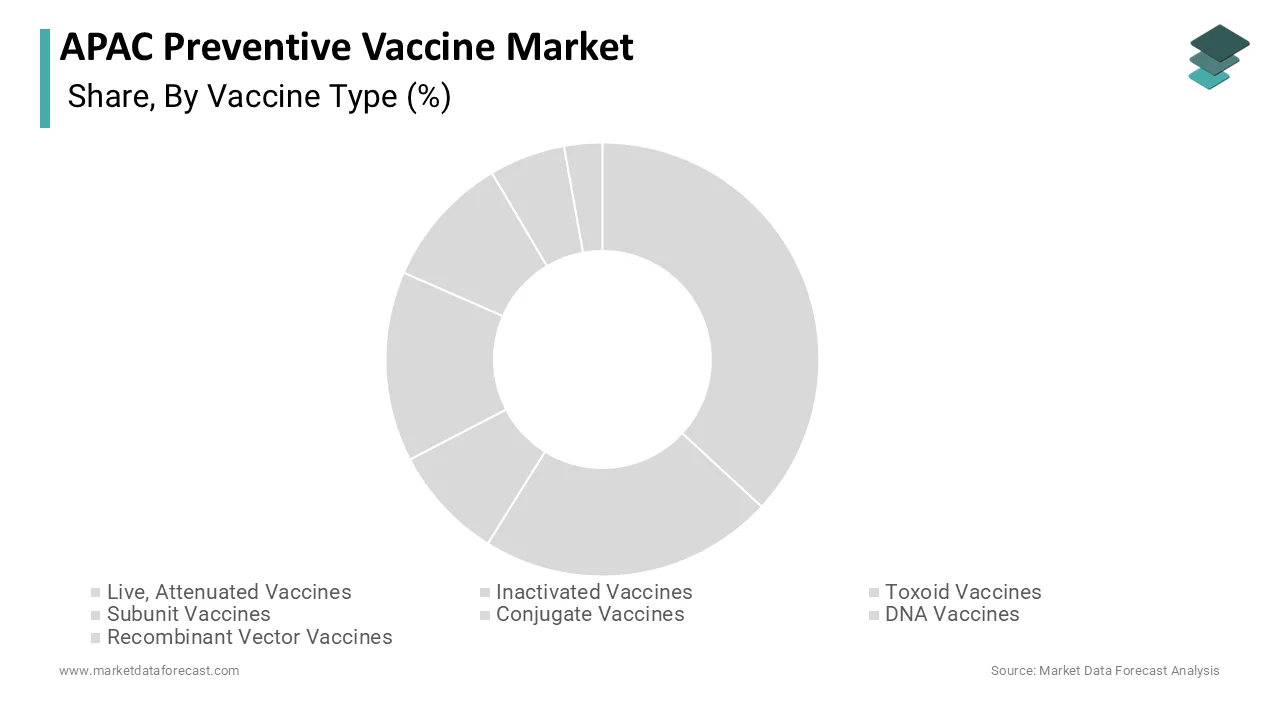
The versatility of inactivated vaccines in targeting a wide range of pathogens, including hepatitis, A A rabi, es and pertus, sis significantly contributes to their market dominance. According to Gavi, the Vaccine Alliance, strategic procurement frameworks aggregate cross-border purchasing power to ensure sustainable, lower-cost access to essential infant immunisations in developing nations. As per the Japanese Ministry of Health, Labour and Welfare, annual public safety guidance coordinates seasonal distribution channels to supply high-priority demographic sectors ahead of winter outbreaks. The broad applicability directly influences market dynamics as healthcare providers can rely on a single technology platform for diverse clinical needs. Also, the ability to combine multiple inactivated antigens into combination vaccines further enhances convenience and compliance, reducing the number of injections required for children. Public health campaigns leveraging multi-disease protections drive higher uptake rates. Manufacturers invest in optimizing adjuvant systems to boost immunogenicity, ensuring robust protection even with lower antigen loads. This technological flexibility allows for continuous product innovation while maintaining core manufacturing infrastructure. Consequently, the segment maintains its leadership by addressing both pediatric and adult health priorities, ensuring consistent demand across various demographic groups in the Asia Pacific region.
The DNA vaccines segment is estimated to register the fastest CAGR of 18.8% from 2026 to 2034 due to its rapid-development timelines and scalable manufacturing processes. According to the Nature Biotechnology journal, advanced nucleic acid engineering technologies allow manufacturing systems to scale platform adaptations rapidly following standard sequence publications. As per the Coalition for Epidemic Preparedness Innovations, expanding regional manufacturing ecosystems leverages scalable platform technologies to accelerate rapid-response bio-manufacturing output. The efficiency directly drives market growth as manufacturers seek agile solutions to respond to emerging infectious threats. The stability of DNA plasmids at room temperature simplifies logistics, eliminating the need for complex cold chain infrastructure, which is a major barrier in remote areas. Regulatory agencies in Australia and Singapore have accelerated review pathways for nucleic acid-based vaccines, recognising their potential for pandemic preparedness. The modular nature of DNA technology allows for easy updates to match viral mutations, ensuring long-term relevance. This combination of speed, cost-effectiveness, and logistical advantage ensures that DNA vaccines will experience accelerated adoption as countries prioritise health security and rapid response capabilities.
The integration of novel delivery systems such as electroporation and needle-free jets is enhancing the immunogenicity of DNA vaccines, driving their rapid adoption in the market. According to the Journal of Controlled Release, structural chemical optimisation improves the cellular delivery efficiency of therapeutic macromolecular formulations through advanced carrier matrices. As per sources, South Korean biopharmaceutical researchers are conducting phase-based evaluations of alternative nucleic acid candidates to establish safety and immunogenicity profiles. The technological breakthrough directly addresses previous limitations of DNA vaccines regarding low potency, encouraging broader clinical application. The ability to induce both humoral and cellular immunity makes DNA vaccines particularly effective against intracellular pathogens and cancers. Pharmaceutical companies are investing heavily in proprietary delivery devices to differentiate their products and improve patient comfort. Regulatory approvals for these enhanced formulations are increasing, providing clear pathways for commercialisation. The promise of single-dose efficacy further appeals to public health planners seeking to improve coverage rates. This innovation cycle ensures that the DNA vaccine segment will continue to grow rapidly as it transitions from experimental use to mainstream preventive care solutions in the Asia Pacific region.
By End-User Insights
The pediatric vaccines segment led the APAC Preventive Vaccine Market and captured a significant share in 2025. This leading position of the segment was attributed to mandatory national immunisation schedules that require high coverage rates for school entry and public health compliance. According to the United Nations Children's Fund, child survival and well-being initiatives require scaling up equitable supply chains to expand delivery of routine immunizations across rural and hard-to-reach communities. The regulatory mandate directly drives market dominance as governments procure large volumes of vaccines to meet legal obligations. Moreover, the high birth rate in developing nations such as Indonesia and the Philippines further amplifies this demand, creating a steady pipeline for manufacturers. Public funding covers the majority of pediatric vaccines, removing financial barriers for families and ensuring widespread access. Healthcare providers strictly adhere to these schedules, integrating vaccination into routine well-child visits. This institutionalised demand ensures that pediatric vaccines remain the largest revenue generator in the market,t as they form the foundation of lifelong health protection and disease eradication efforts across the continent.
The significant burden of infectious diseases among children in the Asia Pacific region necessitates robust vaccination programs, thereby sustaining the leadership of the pediatric segment. According to the World Health Organisation, respiratory infections and diarrheal diseases remain leading causes of mortality in children under five in Southeast Asia, driving urgent demand for pneumococcal and rotavirus vaccines. According to The Lancet Global Health, childhood survival monitoring shows that regional public health interventions must expand tracking of zero-dose children to close systemic immunization coverage gaps. The epidemiological reality directly influences market dynamics as governments and NGOs prioritise funding for paediatric vaccines to reduce mortality rates. The introduction of new vaccines into national schedules such as Haemophilus influenzae type b and human papillomavirus for adolescents expands the addressable market. Parents are increasingly aware of the risks of these diseases, leading to higher demand for private sector options when public supplies are limited. Manufacturers focus on developing combination vaccines to simplify administration and improve compliance. This persistent health challenge ensures that pediatric vaccines remain central to public health strategies, driving continuous innovation and procurement to protect vulnerable populations.
The adult vaccines segment is experiencing the fastest growth owing to the rapidly ageing population in the Asia Pacific region, which increases susceptibility to infectious diseases and complications. According to the United Nations Department of Economic and Social Affairs, the global demographic transition is shifting rapidly as declining fertility rates and rising longevity dramatically expand the older adult population worldwide. As per data from the Japanese Geriatrics Society, clinical guidance coordinates with medical practitioners to manage complex polypharmacy risks and optimize appropriate pharmacological treatments for elderly patients. The demographic shift directly drives market expansion as healthcare systems shift focus from acute care to preventive management for seniors. Governments are expanding reimbursement coverage for adult vaccines such as shingles and pneumococcal conjugates to reduce hospitalization costs. The rising prevalence of chronic conditions like diabetes and heart disease further increases the risk of infections necessitating regular immunisation. Pharmaceutical companies are launching targeted marketing campaigns to educate older adults about vaccine benefits. This convergence of demographic trends and clinical needs ensures that the adult vaccine segment will grow at an accelerated pace as societies adapt to the health requirements of an ageing populace.
Growing awareness of preventive health and wellness among the working-age population is fueling rapid growth in the adult vaccine market. According to the Asian Development Bank, population ageing across Asia and the Pacific is progressing at an unprecedented pace, requiring structural economic transformations and expanded long-term care infrastructure to sustain silver economies. As per the Singapore Health Promotion Board, preventative public health guidelines recommend consistent hand hygiene, prompt sanitization, and avoiding communal sharing to actively reduce the transmission of childhood respiratory illnesses. The cultural shift directly benefits the market as individuals view vaccines as essential tools for maintaining productivity and quality of life. Also, the rise in international travel for business and leisure increases demand for vaccines against yellow fever, typhoid, and Japanese encephalitis. Private healthcare providers offer convenient vaccination services in urban centres, catering to busy professionals. Digital health platforms facilitate easy scheduling and reminders, enhancing accessibility. Employers recognise the economic benefits of a healthy workforce and subsidise vaccination costs. This proactive approach to health ensures that the adult vaccine segment will continue to expand rapidly as preventive care becomes ingrained in lifestyle choices across the region.
COUNTRY LEVEL ANALYSIS
China Preventive Vaccine Market Analysis
China was the top performer in the APAC Preventive Vaccine Market and occupied the largest share in 2025. Factors such as its massive population and aggressive government investments in domestic biotechnology have contributed to the supremacy of the Chinese market. According to the National Medical Products Administration, China's biopharmaceutical market is expanding rapidly as cross-border out-licensing transactions by local developers climb toward tens of billions in aggregate value. As per the Chinese Center for Disease Control and Prevention, the National Immunization Program successfully maintains over 95% coverage for targeted childhood diseases while health authorities face growing demand for non-program adult formulations. The government’s focus on self-sufficiency has led to the approval of numerous indigenous vaccines, reducing reliance on imports. Strict regulatory reforms have improved quality standards, attracting international partnerships. The growing middle class is driving demand for premium vaccines such as HPV and pneumococcal formulations in the private sector. Urbanisation and increased health awareness further stimulate market growth. This combination of scale, policy support, and economic power ensures that China remains the dominant force in the regional market, setting trends for production and consumption.
India Preventive Vaccine Market Analysis
India was the next prominent country in the APAC preventive vaccine market and secured a major share in 2025. The Indian market is known for its role as a global vaccine hub and extensive public health programs. According to the Ministry of Health and Family Welfare, India's public health network scales delivery via the Universal Immunization Programme to administer free vaccines protecting millions of high-risk mothers and infants annually. As per the Serum Institute of India, the manufacturer produces more than 1.5 billion doses globally to supply essential immunizations to children across approximately 170 countries. The Universal Immunization Program ensures widespread access to basic vaccines while the private sector caters to growing demand for advanced formulations. Government initiatives like Mission Indradhanush aim to improve coverage in underserved areas. Rising income levels are increasing uptake of optional vaccines such as rotavirus and HPV. Regulatory streamlining has accelerated the launch of new products. This dual structure of high-volume public supply and a growing private premium market ensures India remains a key growth engine with strong manufacturing depth.
Japan Preventive Vaccine Market Analysis
Japan remains a crucial player in the APAC preventive vaccine market. It maintains a mature and technologically advanced segment of the market, driven by its super-aged society and high healthcare spending. According to the Ministry of Health, Labour and Welfare, Japan's domestic life-course immunization strategy actively expands public funding channels to support seasonal and specialized adult vaccine accessibility. As per the National Institute of Infectious Diseases, baseline pneumococcal routine immunization coverage within the targeted senior population remains low at roughly 33% due to historical intervals and awareness barriers. The government actively promotes vaccination as a key component of healthy longevity strategies. High regulatory standards ensure only safe and effective products reach the market. Consumers prefer premium brands with proven efficacy, leading to higher average selling prices. The focus on shingles and cancer prevention vaccines is expanding the adult segment. This affluent and ageing demographic ensures Japan remains a high-value market with steady demand for innovative preventive solutions.
South Korea Preventive Vaccine Market Analysis
South Korea is also a key contributor to the APAC preventive vaccine market because of its advanced healthcare infrastructure and strong government support for biotechnology. According to the Korea Disease Control and Prevention Agency, public investments focus heavily on next-generation manufacturing platforms as the national healthcare budget increases by 7.4% to transition immunizations toward advanced mRNA technologies. As per data from the Korean Ministry of Food and Drug Safety, strict clinical evaluations and post-market safety tracking are integrated within centralized authorization pathways to evaluate vaccine effectiveness against emerging viral lineages. The national immunisation program has expanded to include HPV and hepatitis A for adolescents. High health literacy drives demand for optional vaccines among adults. Local manufacturers are investing heavily in mRNA and DNA vaccine research, positioning the country as a future innovation hub. Universal health coverage ensures broad access to essential vaccines. This blend of technological prowess and proactive health policy ensures South Korea continues to grow as a sophisticated market for preventive immunisation.
Australia Preventive Vaccine Market Analysis
Australia is witnessing stable growth in the regional market owing to comprehensive government-funded vaccination programs. According to the Department of Health, public health agencies launch major multi-tiered national campaigns to address rising public vaccine hesitancy and reverse downward trajectories in childhood immunization coverage rates. As per the Australian Technical Advisory Group on Immunisation, clinical recommendations are actively transitioning to integrate standalone pandemic immunizations directly into the unified National Immunisation Program infrastructure. High public trust in medical science supports strong uptake rates. The private market supplements public offerings with travel and occupational vaccines. The Therapeutic Goods Administration ensures high safety standards. Indigenous health initiatives target specific communities to close coverage gaps. This well-structured system ensures Australia remains a reliable and high-quality market with consistent demand driven by public health priorities.
COMPETITIVE LANDSCAPE
The competition in the APAC Preventive Vaccine Market is characterized by intense rivalry among global pharmaceutical giants and emerging local manufacturers who strive to balance innovation with affordability. Major competitors focus on developing vaccines tailored to regional disease profiles such as dengue and hepatitis, which are prevalent in tropical and subtropical areas. Strategic alliances with local producers enable multinational companies to navigate regulatory complexities and reduce production costs while enhancing market acceptance. Price sensitivity remains a critical factor,r particularly in developing nations where government procurement dominates the landscape, pushing manufacturers to optimize cost structures. Intellectual property protection and regulatory approvals serve as significant barriers to entry,y favoring established players with robust compliance frameworks. The rise of domestic manufacturers in India and China intensifies competition by offering cost-effective alternatives that challenge imported products. Companies must continuously innovate to differentiate their offerings through improved efficacy, safety profiles,s and ease of administration. Collaborative efforts with international health agencies further shape competitive dynamics by influencing procurement policies and prioritizing specific disease targets. This dynamic environment requires agile strategies and deep local insights to sustain growth and maintain leadership positions in a diverse and rapidly evolving market.
KEY MARKET PLAYERS
Some of the companies that are playing a dominant role in the APAC Preventive Vaccine Market include:
- GlaxoSmithKline plc
- Bavarian Nordic A/S
- Merck & Co., Inc.
- CSL Limited
- Novartis AG
- Emergent BioSolutions Inc.
- Johnson & Johnson
- MedImmune, LLC
- Pfizer Inc.
- Sanofi Pasteur
TOP LEADING PLAYERS IN THE MARKET
- GlaxoSmithKline plc maintains a robust presence in the APAC Preventive Vaccine Market through its extensive portfolio of high-quality immunization products targeting infectious diseases and cancer prevention. The company actively collaborates with regional governments to support national immunization programs, ensuring widespread access to essential vaccines for pediatric and adult populations. Recent actions include the expansion of manufacturing capabilities in Singapore to enhance supply chain resilience and meet growing regional demand. GlaxoSmithKline focuses on introducing advanced adjuvant technologies that improve vaccine efficacy,acy particularly for elderly demographics susceptible to influenza and shingles. Their strategic partnerships with local distributors facilitate efficient market penetration across diverse healthcare settings. By prioritizing innovation and public health engagement, GlaxoSmithKline strengthens its position as a trusted provider of preventive solutions that address critical health challenges and improve community well-being throughout the Asia Pacific region.
- Sanofi S.A. contributes significantly to the market by leveraging its global expertise in vaccine development and production to deliver reliable preventive solutions in resource-constrainedAsia Pacific. The company has strengthened its footprint through strategic investments in local manufacturing facilities and research centers aimed at addressing region-specific disease burdens. Recent initiatives involve the launch of next-generation dengue and influenza vaccines tailored to tropical climates and seasonal patterns prevalent in theactivelySanofi act,ively engages in public-private partnerships to improve vaccination coverage in underserved communities, enhancing accessibility and affordability. They prioritize regulatory compliance and quality assurance to maintain trust among healthcare providers and patients. By focusing on sustainable supply chains and an innovative product pipeline,s Sanofi reinforces its leadership role in preventing infectious diseases and supporting public health infrastructure development across diverse markets in the Asia Pacific.
- Serum Institute of India Pvt Ltd plays a pivotal role as one of the largest vaccine manufacturers globally with a strong focus on affordable and accessible preventive solutions for the APAC region. The company supplies billions of doses annually supporting national immunization programs in developing countries across Asia and Africa. Recent actions include the expansion of production capacity for measles polio and pentavalent vaccines to meet increasing global and regional demand. Serum Institute actively collaborates with international health organizations to ensure equitable distribution of life saving immunizations. They invest heavily in technology transfer and process optimization to maintain low costs without compromising quality. By prioritizing volume and accessibility Serum Institute strengthens its market position as a critical supplier that enables widespread disease prevention and supports public health goals in resource constrained settings throughout the Asia Pacific.
TOP STRATEGIES USED BY KEY MARKET PARTICIPANTS
Key players in the APAC Preventive Vaccine Market primarily employ strategic partnerships with local governments and health organizations to expand market access and support national immunization programs. Companies focus on establishing local manufacturing facilities to reduce costs improve supply chain resilience and comply with regional regulatory requirements. Investment in research and development drives the creation of novel vaccines targeting endemic diseases such as dengue and Japanese encephalitis specific to the Asia Pacific context. Manufacturers leverage digital health platforms to enhance vaccine tracking and patient engagement, improving coverage rates. Competitive pricing strategies and tiered pricing models are utilized to ensure affordability in diverse economic landscapes. These multifaceted approaches enable companies to navigate complex regulatory environments and meet the varying needs of public and private sectors across the region.
MARKET SEGMENTATION
This research report segmented and sub-segmented the Asia Pacific Preventive Vaccines Market into the following categories.
By Vaccine Type
- Live, Attenuated Vaccines
- Inactivated Vaccines
- Toxoid Vaccines
- Subunit Vaccines
- Conjugate Vaccines
- DNA Vaccines
- Recombinant Vector Vaccines
By End-User
- Pediatric Vaccine
- Pneumococcal
- MMR
- Varicella
- Hepatitis
- Poliovirus
- HIB
- Others
- Adult Vaccines
- Influenza
- Cervical Cancer
- Hepatitis
- Zoster
- Others
By Country
- India
- China
- Japan
- South Korea
- Australia
- New Zealand
- Thailand
- Malaysia
- Vietnam
- Philippines
- Indonesia
- Singapore
- Rest of APAC