- Product Description Description
- Table of Contents TOC
- List of Table & Figure LOT
- Get Free Sample PDF Sample PDF
Market Size, 2025
$1.28 BnMarket Estimate, 2026
$1.36 BnMarket Forecast, 2034
$2.24 BnCAGR, 2026–2034
6.46%Asia Pacific Protein Bar Market Size
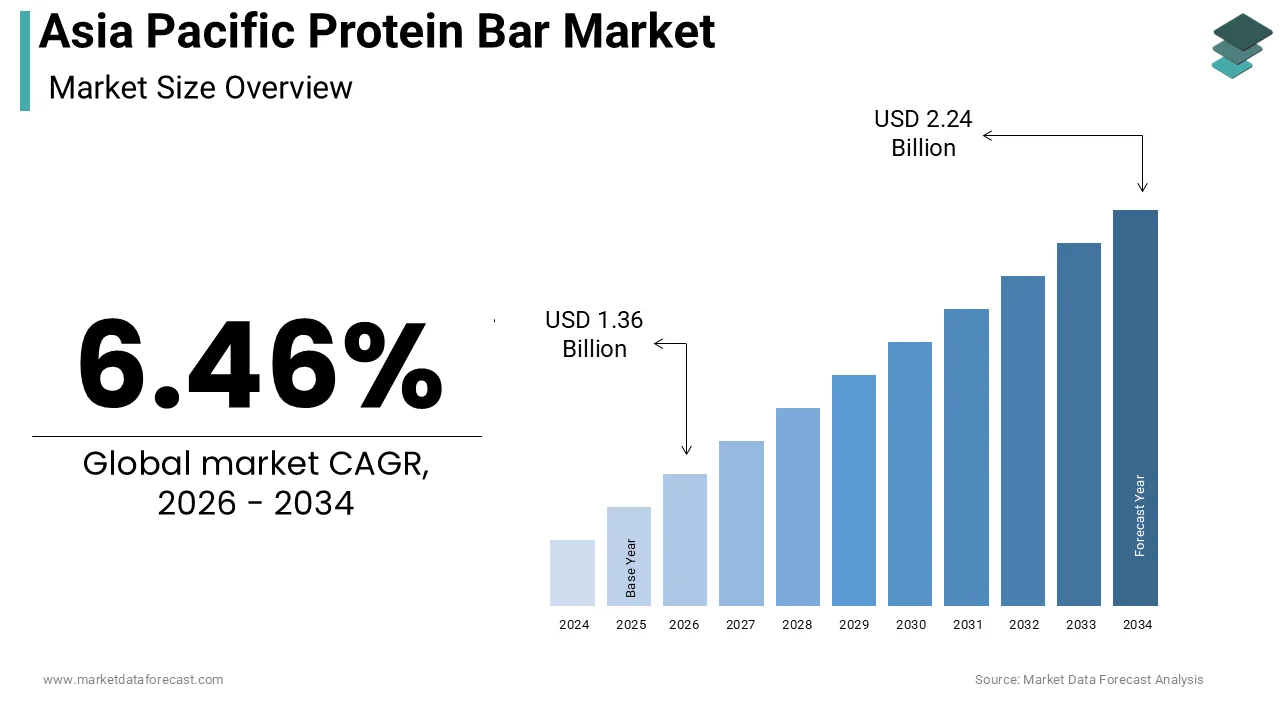
The size of the Asia Pacific protein bar market was calculated to be USD 1.28 billion in 2025 and is anticipated to be worth USD 2.24 billion by 2034, from USD 1.36 billion in 2026, growing at a CAGR of 6.46% during the forecast period.
Protein bars are a type of nutrition bars that are made such that it contains high protein to carbohydrate ratio. They are majorly used by people who require a significant amount of protein and fewer calories. These people include fitness enthusiasts, athletes and muscle builders. Human body requires proteins to build muscles.
Protein food is usually taken after practice or workout sessions as it is widely known that protein intake after exercise will help build muscles. However, professionals say that protein supplements are not necessary in regular diet. Several improvements are being made in protein bars regarding taste aspect so as to attract more consumers. Increasing demand for nutritious and ready to eat foods and increasing popularity for fitness diets are the major factors driving the market. Increasing health awareness among people with increase in number of obese and diabetic people, increasing per capita income of people and changing life styles of people are also expected to drive the market. However, high sugar content in protein bars and higher prices are hindering the market growth.
This research report on the Asia Pacific protein bar market is segmented and sub-segmented into the following categories.
Asia Pacific Protein Bar Market By Product Type
- Energy Protein Bars
- Women's Protein Bar
- Meal Replacement Bars
- Low Carbohydrate Protein Bars
- Others
Energy protein bars are expected to be the largest market segment as most of the athletes require calories as well as proteins.
Asia Pacific Protein Bar Market By Protein Source
- Animal protein
- Plant protein
Plant proteins lead the market due to the large consumption of whey and soy proteins.
Asia Pacific Protein Bar Market By Protein Content
- Low Protein
- Medium Protein
- High Protein
High protein bars are highly preferred by the body builders, medium protein bars are highly preferred by the body athletes and low protein bars are preferred by people undergoing diet management.
Asia Pacific Protein Bar Market By Region
- China
- India
- Japan
- Australia
- South Korea
Asia Pacific is expected to be the fastest growing segment due to the increasing awareness of healthy and nutritious diet management and changing lifestyles. It is also due to huge population base in India and China providing a lot of opportunities for growth of the market.
KEY MARKET PLAYERS
Some of the major players in this region are Small Planet Foods, Inc., The WhiteWave Foods Company, The Kellogg Company, General Mills, Inc., Premier Nutrition Corporation, Caveman Foods LLC, and MARS, Incorporated.