- Product Description Description
- Table of Contents TOC
- List of Table & Figure LOT
- Get Free Sample PDF Sample PDF
Market Size, 2025
$0.38 BnMarket Estimate, 2026
$0.40 BnMarket Forecast, 2034
$0.64 BnCAGR, 2026–2034
5.94%Asia Pacific Rare Sugar Market Summary
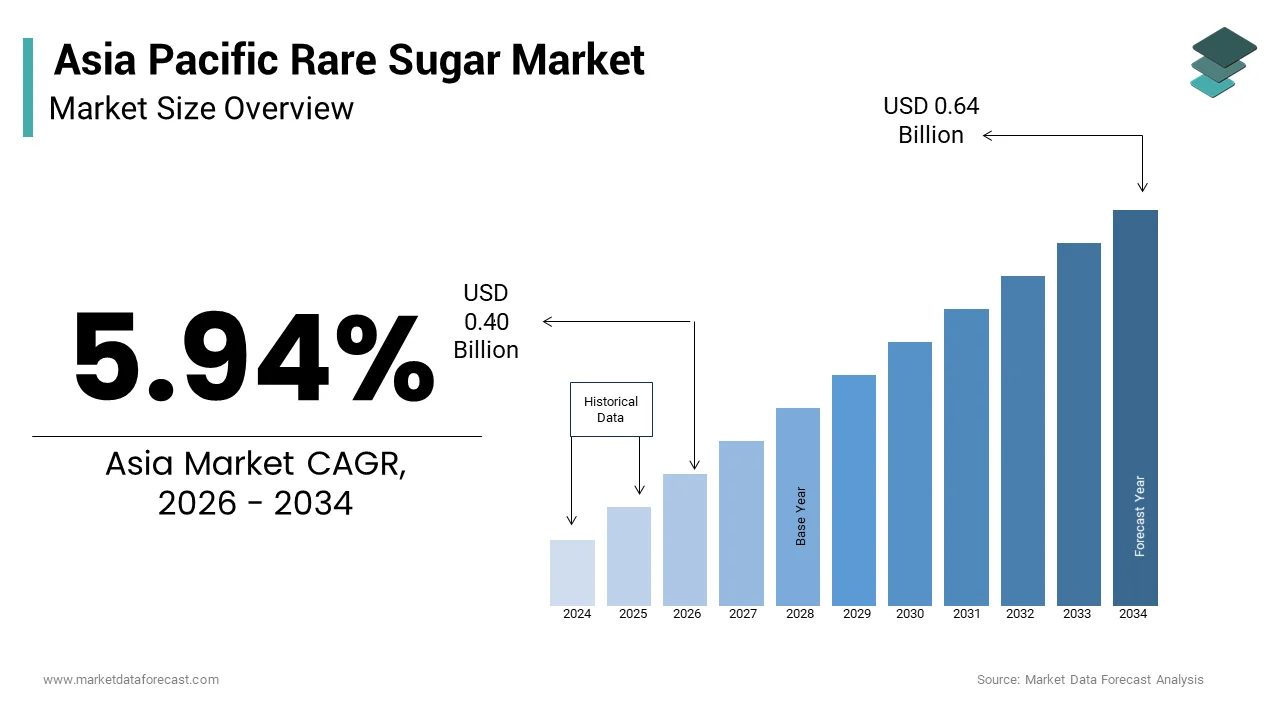
The Asia Pacific rare sugar market size was valued at USD 0.38 billion in 2025 and is anticipated to reach USD 0.40 billion in 2026 to reach USD 0.64 billion by 2034, growing at a CAGR of 5.94% during the forecast period from 2026 to 2034.
Key Market Trends & Insights
- Japan was the top performer and led the Asia Pacific Market in 2025.
- China's rare sugar market was ranked in the next position in the Asia Pacific market in 2025.
- South Korea's rare sugar market growth is likely to grow in the Asia Pacific market in 2025.
- India's rare sugar market is expected to showcase growth in the Asia Pacific market in 2025.
- Based on Product, the allulose segment held 48.3% of the Asia Pacific market in 2025
- Based on Application, the Food & Flavor application segment was the largest and held 42.3% in 2025.
Market Size & Forecast
2025 Market Size: USD 0.38 Billion
2034 projected Market Size: USD 0.64 Billion
CAGR (2026 to 2034): 5.94%
Japan: Largest Market in 2025
China: Strongest Growth Region
 Download Free Sample Report
Asia Pacific Rare Sugar Market Size
The Asia Pacific rare sugar market size was valued at USD 0.38 billion in 2025 and is anticipated to reach USD 0.40 billion in 2026 to reach USD 0.64 billion by 2034, growing at a CAGR of 5.94% during the forecast period from 2026 to 2034.
The rare sugar is a naturally occurring monosaccharide present in trace amounts in certain fruits and plants, with allulose and tagatose emerging as the most commercially viable variants. These sugars exhibit sweetness profiles comparable to sucrose but with negligible caloric contribution and minimal impact on blood glucose levels by making them increasingly relevant in the context of metabolic health. Regulatory recognition has expanded across the region, with Japan’s Food Safety Commission approving allulose for unrestricted use in 2021, while Food Standards Australia New Zealand completed safety evaluations for tagatose in 2022. As metabolic disorders escalate, with the International Diabetes Federation reporting that over 300 million adults in the Asia Pacific region were living with diabetes in 2023, the demand for non-glycemic sweetening agents has intensified. Additionally, consumer awareness of sugar-related health risks has grown, as evidenced by the 2023 Nielsen Health and Wellness Survey, indicating that 68% of consumers in urban China, India, and South Korea actively avoid high-sugar products.
MARKET DRIVERS
Rising Prevalence of Type 2 Diabetes and Metabolic Disorders
The escalating burden of type 2 diabetes across the Asia Pacific region is a primary catalyst for the adoption of rare sugars in food and beverage formulations. According to the International Diabetes Federation, the region accounted for 60% of the global diabetic population in 2023, with China and India alone contributing over 220 million cases. This epidemic is driven by rapid urbanization, sedentary lifestyles, and increased consumption of processed foods high in refined sugars. In response, health authorities are promoting dietary alternatives that do not elevate blood glucose or insulin levels. Regulatory agencies in Japan and South Korea have classified allulose as a non-digestible sugar, allowing its use in medical nutrition products. In India, the Indian Council of Medical Research revised its dietary guidelines in 2023 to recommend low-glycemic sweeteners for prediabetic individuals, creating a policy environment conducive to rare sugar integration.
Advancements in Enzymatic and Microbial Production Technologies
Breakthroughs in biocatalytic conversion processes have significantly enhanced the commercial feasibility of rare sugar production, transforming them from laboratory-scale curiosities into scalable food ingredients, which is also fuelling the growth of the Asia Pacific rare sugar market. Traditional extraction methods yielded minuscule quantities at prohibitive costs, but modern enzymatic isomerization using D-tagatose 3-epimerase and L-rhamnose isomerase has enabled cost-effective synthesis from abundant precursors like fructose and galactose. As per the Industrial Biotechnology Journal, Japan’s Matsutani Chemical Industry has achieved a 98% conversion efficiency in allulose production using immobilized enzyme reactors, reducing manufacturing costs by nearly 60% since 2018. In South Korea, CJ CheilJedang has developed a genetically modified E. coli strain capable of fermenting lactose into tagatose by achieving yields of 90 grams per liter, as verified by the Korea Research Institute of Bioscience and Biotechnology. These innovations have shortened production cycles and minimized downstream purification requirements, making rare sugars economically viable for mainstream food applications. The Australian Commonwealth Scientific and Industrial Research Organisation has further optimized enzyme stability under industrial conditions, extending catalyst lifespan by 200 hours per batch. As a result, manufacturers across Thailand, Malaysia, and Vietnam are now exploring joint ventures with biotech firms to localize production.
MARKET RESTRAINTS
High Production Costs and Limited Economies of Scale
The production of rare sugars remains significantly more expensive than conventional sweeteners, which is hindering the growth of the Asia Pacific rare sugar market. This cost disparity stems from the complexity of enzymatic conversion processes, the need for high-purity substrates, and the energy-intensive purification steps required to meet food-grade standards. Furthermore, the absence of large-scale domestic production facilities in most Southeast Asian countries necessitates reliance on imported intermediates, increasing logistical costs and supply chain vulnerability. As per the Asian Development Bank, import tariffs on specialty food ingredients in ASEAN nations average 12%, further inflating final prices. Small and medium-sized food enterprises, which constitute over 70% of the packaged food sector in the region according to the United Nations Industrial Development Organization, lack the financial flexibility to reformulate products with high-cost sweeteners.
Inconsistent Regulatory Landscapes Across Regional Jurisdictions
The fragmented regulatory environment for rare sugars across the Asia Pacific region is restricting the growth of the Asia Pacific rare sugar market. In China, the National Health Commission has only approved allulose for use in specific categories such as nutritional supplements and infant formula, limiting its application in mainstream confectionery and beverages. India’s Food Safety and Standards Authority has not yet established a regulatory framework for rare sugars, leaving manufacturers in a legal gray area regarding product claims and labeling. As per the Asia-Pacific Economic Cooperation’s Food Safety Cooperation Forum, only 8 of the 21 member economies have issued formal guidelines for novel sweeteners, creating uncertainty for multinational producers. In Australia and New Zealand, while safety assessments have been completed, regulatory approval for unrestricted use remains pending, delaying commercial rollout.
MARKET OPPORTUNITIES
Integration into Functional and Medical Nutrition Products
The growing emphasis on preventive healthcare and personalized nutrition is creating new opportunities for the growth of the Asia Pacific rare sugar market. In Japan, where 10.8 million people are diagnosed with diabetes as per the Ministry of Health, Labour and Welfare, allulose is now featured in over 300 commercially available "Foods for Specified Health Use" (FOSHU) products, including sugar-free jams, yogurts, and confectionery. Clinical evidence supports its role in glycemic control; a 2023 multicenter trial published by the Japanese Society of Nutrition and Metabolism demonstrated that daily consumption of 5 grams of allulose reduced HbA1c levels by 0.4% over 12 weeks in type 2 diabetic patients. Hospitals in Thailand and Singapore are piloting rare sugar-based enteral formulas for post-bariatric surgery patients to prevent dumping syndrome. The aging population further amplifies demand by 2030, over 250 million people in the region will be aged 65 or older, as per the United Nations Economic and Social Commission for Asia Pacific.
Expansion in Plant-Based and Clean-Label Food Formulations
The surge in demand for plant-based and clean-label food products is additionally to promote the growth of the Asia Pacific rare sugar market. Consumers are increasingly scrutinizing ingredient lists, with a 2023 Mintel survey revealing that 74% of urban consumers in Australia, Japan, and Singapore prefer products with recognizable, naturally derived components. Rare sugars, perceived as non-artificial and structurally identical to natural monosaccharides, align with this clean-label ethos. Unlike high-intensity sweeteners such as sucralose or aspartame, allulose and tagatose are labeled simply as “rare sugar” or “D-allulose,” enhancing consumer trust. Australia’s Bonsoy and Japan’s Morinaga have already launched allulose-sweetened soy milk variants targeting health-conscious consumers.
MARKET CHALLENGES
Limited Consumer Awareness and Misclassification as Artificial Sweeteners
The persistent lack of consumer understanding and frequent misperception as synthetic or artificial additives is restricting the growth of the Asia Pacific rare sugar market. A 2023 consumer perception study conducted by the Singapore Institute of Food Technologists found that only 22% of respondents could correctly identify allulose as a naturally occurring sugar, while 54% mistakenly believed it was chemically synthesized. In rural areas of India and Indonesia, where literacy rates and access to nutritional information are lower, the concept of “low-calorie natural sugars” remains largely unfamiliar. Even in urban centers, marketing efforts by food brands often fail to clearly differentiate rare sugars from other sweeteners, diluting their unique value proposition.
Supply Chain Fragility and Dependence on Specialized Enzymes
The reliance on a narrow base of specialized enzymes and biotechnological inputs by creating supply chain fragility is limiting the growth of the Asia Pacific rare sugar market. The synthesis of allulose and tagatose depends on highly specific isomerases D-tagatose 3-epimerase and L-arabinose isomerase, that produced by a limited number of biotech firms in Japan and South Korea. Any disruption in enzyme supply, whether due to geopolitical factors, intellectual property disputes, or microbial contamination, can halt production. In 2022, a contamination incident at a key enzyme manufacturing facility in Osaka led to a three-month shortage, affecting allulose output across Southeast Asia, as reported by the Japan Bioindustry Association. Localization of enzyme production remains limited, with only two facilities in China capable of industrial-scale enzyme fermentation. This concentration increases dependency and reduces bargaining power for regional manufacturers. As per the United Nations Conference on Trade and Development, biotech supply chains in Asia are 40% less diversified than in North America or Europe.
REPORT COVERAGE
| REPORT METRIC | DETAILS |
| Market Size Available | 2025 to 2034 |
| Base Year | 2025 |
| Forecast Period | 2026 to 2034 |
| CAGR | 5.94% |
| Segments Covered | By Product, Application, Country |
| Various Analyses Covered | Global, Regional, and Country Level Analysis; Segment-Level Analysis; DROC; PESTLE Analysis; Porter’s Five Forces Analysis; Competitive Landscape; Analyst Overview of Investment Opportunities |
| Regions Covered | India, China, Japan, South Korea, Australia, New Zealand, Thailand, Malaysia, Vietnam, Philippines, Indonesia, Singapore, and the Rest of APAC |
| Market Leaders Profiled | ASTRAEA Allulose (USA), Douglas Laboratories (USA), DuPont de Nemours Inc. (USA), Hebei Huaxu (China), Matsutani Chemical Industry Co. Ltd. (Japan), Naturesupplies (UK), Sanwa Starch (Japan), Specom Biochemical (China), Sweet Cures (USA), and Tale and Lyle (UK). |
SEGMENTAL ANALYSIS
By Product Insights
The allulose segment held 48.3% of the Asia Pacific rare sugar market share in 2025, with its regulatory acceptance and metabolic advantages, particularly in Japan and South Korea, where it is fully approved for unrestricted food use. Allulose delivers 70% of the sweetness of sucrose while contributing only 0.2 kcal per gram by making it ideal for low-calorie and diabetic-friendly formulations. This physiological efficacy has led to its integration into over 250 FOSHU (Foods for Specified Health Use) products in Japan, including sugar-free candies, beverages, and dairy items. Additionally, allulose exhibits functional properties similar to sucrose, such as browning and bulking, which are critical in baked goods and confectionery, unlike high-intensity sweeteners that require bulking agents.
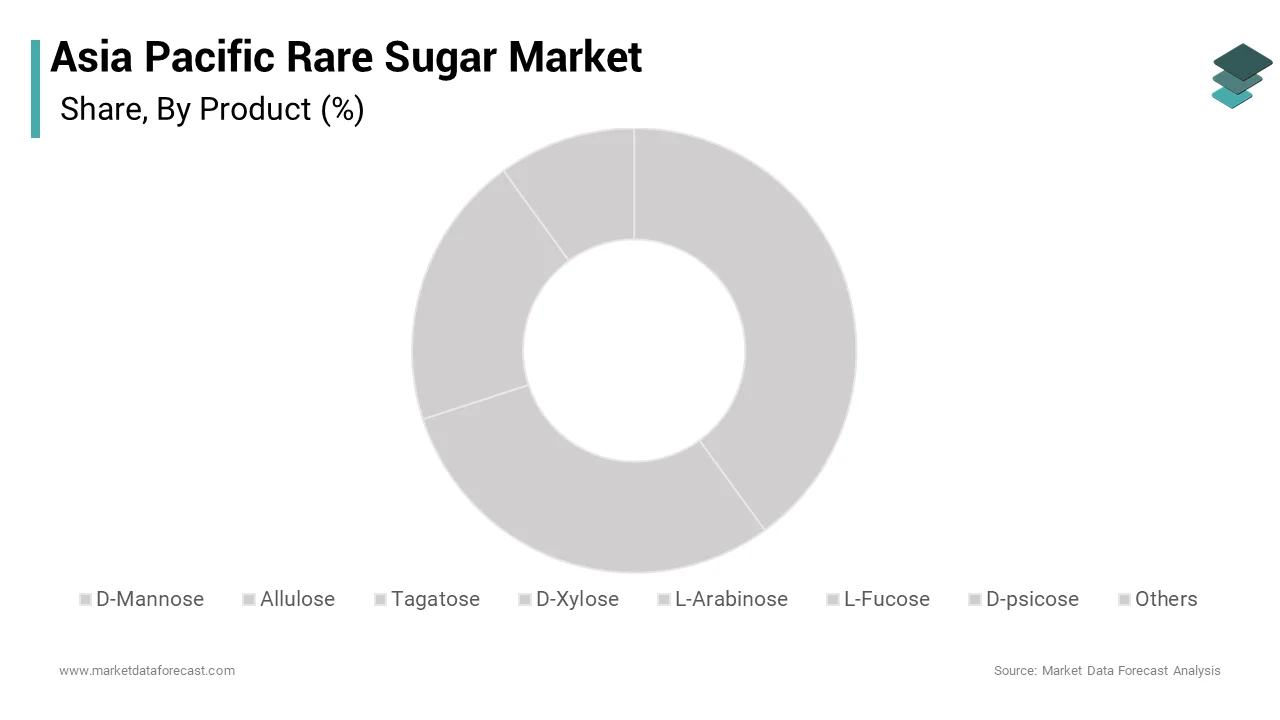
The D-Mannose segment is lucratively growing with a CAGR of 12.7% from 2025 to 2033 with its well-documented role in urinary tract health, particularly in preventing recurrent urinary tract infections (UTIs). Unlike other rare sugars primarily used as sweeteners, D-Mannose functions as a therapeutic agent by inhibiting the adhesion of E. coli bacteria to the bladder epithelium. A 2022 multicenter study conducted by the Asian Urological Association found that daily supplementation with 2 grams of D-Mannose reduced UTI recurrence by 58% in women over six months, comparable to antibiotic prophylaxis but without antimicrobial resistance risks.
By Application Insights
The Food & Flavor application segment was the largest and held 42.3% of the Asia Pacific rare sugar market share in 2025, with the growing demand for clean-label, low-sugar food products that maintain sensory appeal and functional performance. Rare sugars such as allulose and tagatose are increasingly integrated into baked goods, dairy alternatives, confectionery, and beverages due to their ability to replicate the bulk, texture, and browning characteristics of sucrose without elevating blood glucose. The rise of plant-based diets has further amplified demand—soy milk, oat milk, and vegan desserts often contain high sugar levels, necessitating alternatives that do not compromise taste. According to the Asia Plant-Based Foods Market Report 2023, 68% of new product launches in the category now include low-calorie sweeteners, with allulose being the preferred choice due to its clean taste profile. Additionally, rare sugars participate in the Maillard reaction, enabling caramelization in baked goods, a feature absent in non-nutritive sweeteners.
The Medicine application segment is likely to register a CAGR of 13.4% from 2025 to 203,3 with the increasing use of rare sugars in pharmaceutical formulations, particularly as excipients and active ingredients in metabolic and urological therapies. D-Mannose is now incorporated into over-the-counter (OTC) urinary tract health supplements in Japan, South Korea, and Australia, with sales increasing by 35% year-on-year between 2021 and 2023, as reported by IQVIA’s Asia Pharmaceutical Tracker. In Japan, the Ministry of Health, Labour and Welfare has approved D-Mannose as a quasi-drug ingredient, enabling its sale in pharmacies without prescription. The Korean Food and Drug Administration has endorsed tagatose-enriched formulations for use in diabetic medical nutrition therapy. Additionally, rare sugars are gaining traction as stabilizers in lyophilized vaccines and biologics due to their cryoprotective properties. The Australian Biopharmaceutical Innovation Council has funded research into allulose-based delivery systems for peptide drugs, citing its low hygroscopicity and thermal stability.
COUNTRY-LEVEL ANALYSIS
Japan
Japan was the top performer of the Asia Pacific rare sugar market with 36.4% of the share in 2025, owing to its anchored in decades of scientific research and progressive regulatory frameworks that recognize the functional and health benefits of rare sugars. Allulose was first commercialized in Japan in the 1990s by Matsutani Chemical Industry under the brand name "Rare Sugar," and today, it is fully integrated into the national food system. The Ministry of Health, Labour and Welfare excludes allulose from total sugar and calorie labeling, providing a strong incentive for food manufacturers to adopt it. As per the Japan Health and Nutrition Survey, over 40% of packaged foods in the low-sugar category now contain allulose. The country hosts the world’s largest allulose production facility, with an annual capacity of 5,000 metric tons, and supports R&D through the Kagawa Rare Sugar Research Center.
China
China's rare sugar market was ranked in the next position by holding a prominent share in 2025, with the rising health consciousness, increasing diabetes prevalence, and government support for functional food development. According to the Chinese Center for Disease Control and Prevention, over 140 million adults in China were diagnosed with diabetes in 2023, fueling demand for low-glycemic sweeteners. In 2022, the National Health Commission included allulose in its draft list for broader food use, signaling impending regulatory expansion. The China Starch Industry Association reports a 45% year-on-year increase in rare sugar production between 2021 and 2023. E-commerce platforms like JD.com and Tmall have seen a 60% surge in rare sugar supplement sales, particularly among urban millennials.
South Korea
South Korea's rare sugar market growth is likely to grow with its focus on biotechnological innovation and clinical validation. The country has emerged as a hub for advanced research in rare sugar metabolism and functional applications, supported by strong public-private collaboration. The Korea Research Institute of Bioscience and Biotechnology has developed genetically modified microbial strains that enhance the yield of tagatose and allulose, achieving conversion efficiencies exceeding 90% in pilot fermenters. CJ CheilJedang, a leading food and biotech company, has launched a range of allulose-sweetened beverages under its “Zero Sugar” line, targeting health-conscious consumers in Seoul and Busan. According to the Korea Consumer Agency, low-sugar product launches increased by 38% between 2020 and 2023, with rare sugars featured in 22% of them. The Korea Disease Control and Prevention Agency has recognized tagatose as a functional ingredient for weight management, encouraging its use in medical nutrition. Additionally, the Ministry of Food and Drug Safety has fast-tracked safety evaluations for rare sugars in dietary supplements.
India
India's rare sugar market is expected to grow owing to the rising urban health awareness and government dietary initiatives. While current consumption remains low, the market is gaining momentum due to increasing diabetes prevalence and the expansion of the functional food sector. The Indian Council of Medical Research estimates that 101 million adults in India had diabetes in 2023, with another 136 million in the prediabetic stage, creating a vast target population for low-glycemic sweeteners. Although regulatory approval for rare sugars is still pending, private companies like Tata Consumer Products and Patanjali Ayurved are exploring allulose and tagatose for use in health foods and beverages. Startups such as Wellbeing Nutrition and True Elements have already launched D-Mannose supplements for urinary health, reporting a 50% sales increase in 2023, as per RedSeer Consulting. The Food Safety and Standards Authority of India is currently reviewing scientific data on allulose, with a decision expected by 2025.
Australia
Australia's rare sugar market is escalating the growth of the scientific validator and regulatory influencer. The country’s market is characterized by rigorous safety assessments and strong consumer demand for transparent, evidence-based ingredients. Food Standards Australia New Zealand completed a comprehensive safety evaluation of tagatose in 2022, paving the way for its potential approval in food and supplements. The Therapeutic Goods Administration has already recognized D-Mannose as a complementary medicine for urinary tract health, allowing approved health claims. According to the Australian Bureau of Statistics, over 1.2 million Australians use D-Mannose supplements annually, with sales growing at 25% per year since 2020. The Commonwealth Scientific and Industrial Research Organisation has conducted studies on the metabolic effects of allulose, confirming its non-glycemic nature in human trials. Major retailers like Woolworths and Coles have introduced allulose-sweetened products in their health lines, responding to consumer demand for clean-label alternatives.
COMPETITIVE LANDSCAPE
The competition in the Asia Pacific rare sugar market is defined by a dichotomy between technological pioneers and regional scalability players. Japanese and South Korean firms lead in research, enzymatic innovation, and regulatory influence, leveraging decades of scientific investment to establish rare sugars as functional ingredients. Meanwhile, Chinese and Indian companies are focusing on cost optimization and volume production to serve price-sensitive markets. The absence of dominant global players has created a fragmented yet dynamic landscape where differentiation hinges on scientific validation, regulatory navigation, and application-specific expertise. Multinationals emphasize clinical evidence and premium branding, while domestic manufacturers prioritize affordability and supply chain localization. Collaboration often outweighs direct rivalry, with joint ventures between biotech firms and food producers becoming common. Regulatory divergence across countries further fragments competition, requiring tailored market entry strategies. However, as consumer demand for natural, low-glycemic ingredients grows and aging populations drive healthcare innovation, the competitive axis is shifting toward integrated solutions that combine metabolic benefits with functional performance. This evolving environment rewards both scientific rigor and commercial agility, fostering a market where innovation, trust, and accessibility collectively determine success.
KEY MARKET PLAYERS
These are the market players that are dominating the Asia Pacific rare sugar market.
- ASTRAEA Allulose (USA)
- Douglas Laboratories (USA)
- DuPont de Nemours Inc. (USA)
- Hebei Huaxu (China)
- Matsutani Chemical Industry Co. Ltd. (Japan)
- Naturesupplies (UK)
- Sanwa Starch (Japan)
- Specom Biochemical (China)
- Sweet Cures (USA)
- Tale and Lyle (UK)
Top Players In The Market
Matsutani Chemical Industry Co., Ltd.
Matsutani Chemical Industry has been a pioneering force in the Asia Pacific rare sugar market through its development and commercialization of allulose under the brand name Rare Sugar. The company operates the world’s largest dedicated allulose production facility in Kagawa, Japan, with an annual capacity of 5,000 metric tons. It has played a foundational role in establishing the scientific and regulatory framework for rare sugars, which is collaborating with the Kagawa Rare Sugar Research Center and contributing to Japan’s FOSHU approvals. In 2023, Matsutani expanded its enzyme immobilization technology to improve conversion efficiency, reducing production costs by 18%. The company actively partners with food manufacturers across Japan, South Korea, and Southeast Asia to support product reformulation. It also sponsors clinical trials on allulose’s metabolic effects, reinforcing its credibility in health-focused applications.
CJ CheilJedang Corporation
CJ CheilJedang has emerged as a key innovator in the Asia Pacific rare sugar market by leveraging its biotechnological expertise to scale the production of allulose and tagatose for food and health applications. The company has developed proprietary microbial fermentation processes that enhance yield and purity, enabling cost-effective manufacturing. In 2022, it launched a zero-sugar beverage line in South Korea using allulose, targeting health-conscious urban consumers. CJ has also partnered with the Korea Research Institute of Bioscience and Biotechnology to optimize enzyme stability in industrial-scale reactors. The company supplies rare sugars to major food brands and is expanding into functional supplements, including D-Mannose-based formulations. Its digital marketing campaigns emphasize clean-label positioning and metabolic benefits, resonating with younger demographics. Additionally, CJ participates in government-led nutrition initiatives under South Korea’s Healthy Living 2030 program by aligning its product development with public health goals. By integrating biotech innovation with consumer-centric branding, CJ CheilJedang is shaping the trajectory of rare sugar adoption in processed foods and functional nutrition across the region.
Shandong Baozun Bio-Tech Co., Ltd.
Shandong Baozun Bio-Tech has become a significant contributor to the Asia Pacific rare sugar market by scaling enzymatic production of allulose and tagatose in China, addressing regional demand for cost-effective, high-purity ingredients. The company utilizes immobilized enzyme technology to convert fructose into allulose with over 90% efficiency, achieving industrial-scale output of 800 metric tons annually. In 2023, it upgraded its purification systems to meet international food-grade standards, facilitating exports to Southeast Asia and Oceania. Shandong Baozun actively collaborates with domestic food and supplement manufacturers to develop low-sugar dairy, confectionery, and nutraceutical products. It also supports regulatory submissions to China’s National Health Commission for broader food category approvals. The company has invested in R&D partnerships with the Chinese Academy of Sciences to explore novel rare sugar derivatives.
Top Strategies Used By The Key Market Participants
Key players in the Asia Pacific rare sugar market are deploying science-led commercialization strategies to establish credibility and expand adoption. Companies are investing heavily in clinical research to validate metabolic and therapeutic benefits, enhancing regulatory approval prospects. Vertical integration is common, with firms controlling enzyme production, fermentation, and final purification to ensure quality and reduce costs. Strategic collaborations with academic institutions and government bodies are accelerating standardization and policy recognition. Market education initiatives, including white papers, webinars, and dietitian engagement, are being used to differentiate rare sugars from artificial sweeteners. Expansion into functional applications such as medical nutrition, supplements, and clean-label foods is diversifying revenue streams. Digital marketing and e-commerce partnerships are improving consumer access, particularly in urban centers. Additionally, companies are localizing production to reduce import dependency and logistical costs, while enhancing responsiveness to regional formulation needs. These multifaceted strategies collectively strengthen technical authority, regulatory positioning, and consumer trust, enabling sustained market penetration in a scientifically driven, health-focused environment.
RECENT MARKET NEWS
- In January 2023, Matsutani Chemical Industry upgraded its enzyme immobilization system at its Kagawa plant to enhance allulose conversion efficiency by reducing production costs and improving yield consistency for food and pharmaceutical clients across Japan and Southeast Asia.
- In June 2022, CJ CheilJedang launched a zero-sugar beverage line in South Korea using allulose as the primary sweetener, which is targeting health-conscious consumers and expanding its presence in the functional beverage segment through major retail and e-commerce channels.
- In September 2023, Shandong Baozun Bio-Tech achieved international food-grade certification for its allulose production by enabling exports to Australia, Thailand, and Vietnam while strengthening its position as a reliable supplier in the regional rare sugar supply chain.
- In March 2023, Matsutani Chemical Industry partnered with the University of Tokyo to conduct a clinical trial on the long-term metabolic effects of daily allulose consumption in prediabetic adults, which is reinforcing scientific credibility and supporting future regulatory submissions.
- In November 2022, CJ CheilJedang expanded its collaboration with the Korea Research Institute of Bioscience and Biotechnology to optimize microbial strains for tagatose fermentation, increasing production efficiency and reducing reliance on imported enzymes.
MARKET SEGMENTATION
This research report on the Asia Pacific rare sugar market is segmented and sub-segmented into the following categories.
By Product
- D-Mannose
- Allulose
- Tagatose
- D-Xylose
- L-Arabinose
- L-Fucose
- D-psicose
- Others
By Application
- Sweetener
- Medicine
- Cosmetics
- Nutrition
- Food & Flavor
- Others
By Country
- India
- China
- Japan
- South Korea
- Australia
- New Zealand
- Thailand
- Malaysia
- Vietnam
- Philippines
- Indonesia
- Singapore
- Rest of APAC