- Product Description Description
- Table of Contents TOC
- List of Table & Figure LOT
- Get Free Sample PDF Sample PDF
Market Size, 2025
$29.43 BnMarket Estimate, 2026
$31.04 BnMarket Forecast, 2034
$47.57 BnCAGR, 2026–2034
5.48%Asia-Pacific Renal Disease Therapeutics Market Size, Growth, Trends & Forecast (2026–2034)
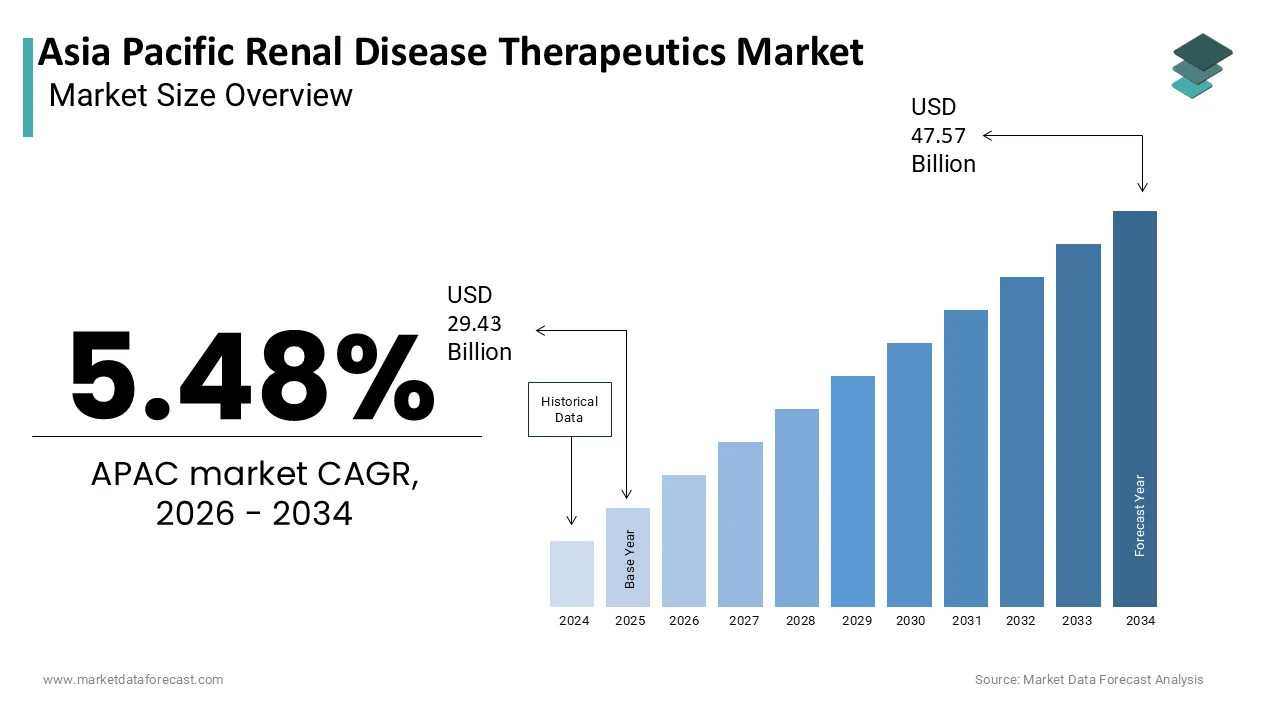
The Asia-Pacific renal disease therapeutics market size was valued at USD 29.43 billion in 2025, is anticipated to reach USD 31.04 billion in 2026, and is projected to scale up to USD 47.57 billion by 2034, registering a compound annual growth rate (CAGR) of 5.48% during the forecast period from 2026 to 2034. Driven by the rising type 2 diabetes epidemic, aging populations, and the adoption of novel drug modalities, the regional market continues to expand steadily.
Key Executive Metrics (At-a-Glance)
- 2025 Base Valuation: USD 29.43 Billion
- 2026 Current Valuation: USD 31.04 Billion
- 2034 Forecast Valuation: USD 47.57 Billion
- Compound Annual Growth Rate (CAGR): 5.48% (2026–2034)
- Dominant Treatment Segment: Dialysis Equipment (holding 68.1% market share in 2025 due to late-stage diagnosis volumes)
- Fastest-Growing Treatment Segment: Wearable Artificial Kidney Devices (projected at an exceptional 31.4% CAGR)
- Dominant Application Segment: Chronic Kidney Disease Management (holding 54.2% market share in 2025)
- Fastest-Growing Application Segment: Diabetes-Associated Renal Complications (projected at an 18.9% CAGR)
- Dominant Country Market: China (holding 34.5% market share in 2025, driven by massive patient populations and procurement reforms)
Core Market Drivers
- Diabetes Epidemic: Escalating type 2 diabetes prevalence fueling diabetic nephropathy and long-term cardiorenal management needs.
- Ageing Populations: Demographic shifts across developed and transitioning nations (e.g., Japan, Thailand) accelerating age-related renal function decline.
Primary Market Restraints & Challenges
- Reimbursement & Access Disparities: Fragmented health coverage and variable national formularies creating cross-border access inequalities.
- Specialist Shortages & Infrastructure Gaps: Severe deficits in trained nephrologists and primary care diagnostic limitations delaying early intervention.
Asia-Pacific Renal Disease Therapeutics Market Segmentation Breakdown
| Segment Category | Leading Sub-Segment (2025 Base) | Fastest-Growing Sub-Segment (2026–2034) |
|---|---|---|
| By Treatment / Equipment | Dialysis Equipment (68.1% share in 2025) | Wearable Artificial Kidney Devices (31.4% CAGR) |
| By Application Mode | Chronic Kidney Disease Management (54.2% share in 2025) | Diabetes-Associated Renal Complications (18.9% CAGR) |
| By Country / Region | China (34.5% share in 2025) & Japan (22.3% share in 2025) | India, South Korea & Southeast Asian Emerging Hubs |
Major Industry Players Profiled
Key enterprises shaping the competitive Asia-Pacific renal disease therapeutics market include AstraZeneca plc, Amgen Inc., Merck & Co., Inc., Bristol-Myers Squibb Company, F. Hoffmann-La Roche Ltd., Fresenius Medical Care AG & Co. KGaA, Baxter International Inc., and DaVita Inc.
 Download Free Sample Report
Asia Pacific Renal Disease Therapeutics Market Size
The Asia-Pacific Renal Disease Therapeutics Market is projected to grow from USD 29.43 billion in 2025 to USD 31.04 billion in 2026 and reach USD 47.57 billion by 2034, registering a CAGR of 5.48% from 2026 to 2034.
Renal disease therapeutics refers to the medical treatments, medicines, and procedures used to manage, slow down, or replace the work of damaged kidneys. The main goal is to stop kidney damage from getting worse, control symptoms like high blood pressure and swelling, and clean the blood when the kidneys fail. This market includes established therapies like renin-angiotensin system inhibitors and erythropoiesis stimulating agents alongside novel modalities including sodium glucose cotransporter 2 inhibitors, nonsteroidal mineralocorticoid receptor antagonists, and hypoxia inducible factor prolyl hydroxylase inhibitors that are reshaping treatment paradigms. According to the International Society of Nephrology, global public health initiatives require an increasing deployment of primary diagnostic blood and urine screening frameworks to mitigate escalating healthcare costs. As per the World Health Organisation, public health infrastructure models deploy essential blood pressure screening tools to manage chronic diseases within low-income and middle-income countries. According to the World Health Organisation, national medical systems report a widespread multi-ethnic prevalence of diabetic kidney disease among type 2 diabetes patients who receive care from public health clinics. This market definition extends beyond drug sales to encompass diagnostic infrastructure, specialist workforce capacity, and reimbursement frameworks that collectively determine therapeutic accessibility across income strata and healthcare system maturity levels throughout this complex regional landscape.
MARKET DRIVERS
Diabetes Epidemic Fuels Diabetic Nephropathy Treatment Volume
Escalating type 2 diabetes prevalence across the region is the fundamental epidemiological engine driving demand in the Asia Pacific renal disease therapeutics market. Diabetic kidney disease is becoming the dominant indication for nephrology care. According to the International Diabetes Federation, regional healthcare infrastructure frameworks expand long-term diabetes prevention strategies to manage the escalating disease burden within heavily populated territories. As per the National Centre for Chronic and Noncommunicable Disease Control and Prevention, national clinical surveillance systems track the multi-year progression of metabolic risk markers across diverse patient populations. Unlike autoimmune or genetic renal conditions where patient pools remain stable, diabetic nephropathy incidence tracks directly with worsening metabolic health trends, showing no signs of plateau despite prevention efforts. This structural demographic shift transforms nephrology from a speciality focused on rare diseases into a high-volume chronic care discipline managing cardiorenal metabolic syndrome. Pharmaceutical investment has responded accordingly.
Ageing Populations Accelerate Age-Related Renal Function Decline
Demographic ageing across developed and transitioning nations in the region generates sustained demand for renal therapeutics independent of diabetes trends, which further accelerate the growth of the Asia Pacific renal disease therapeutics market. Physiological ageing increases susceptibility to chronic kidney disease and acute kidney injury. According to the United Nations Population Fund, Japan has one of the world's highest proportions of elderly citizens, with exactly 30% of its total population aged 65 and older. As per the Organisation for Economic Co-operation and Development, public healthcare systems require structural policy reforms to build adequate fiscal space and manage the resource demands of an ageing workforce. According to the Board of Investment of Thailand, national demographic data shows that citizens aged 65 years and over make up approximately 14.97% of the total population. This demographic inevitability creates a non-cyclical demand floor as biological ageing processes continue driving case volumes regardless of economic conditions or lifestyle intervention success rates, ensuring sustained market growth through structural population dynamics.
MARKET RESTRAINTS
Reimbursement Heterogeneity Limits Cross-Border Access Equity
Fragmented insurance coverage and variable national formulary inclusion create profound access disparities, which restrict the expansion of the Asia Pacific renal disease therapeutics market. This prevents uniform adoption of evidence-based renal therapeutics across the region despite regulatory approvals. According to the Asia Pacific Observatory on Health Systems and Policies, variations in universal coverage frameworks impact the equitable distribution of renal disease medications and delay timely access to early pharmacological interventions. As per BPJS Kesehatan, national financial resource management under Indonesia's national health insurance scheme directly shapes the formulary inclusion and structural availability of advanced cardiovascular-renal agents. According to PhilHealth, strategic enhancements to the Z Benefit Packages aim to maximise responsive coverage for peritoneal dialysis and kidney transplantation to alleviate out-of-pocket costs for advanced chronic kidney disease patients. These systemic financing gaps function as de facto rationing mechanisms suppressing realised market potential below epidemiological capacity and perpetuating outcome disparities across income levels and national borders within the same geographic region.
Specialist Workforce Shortages: Bottleneck Diagnosis and Prescription
A critical deficit of trained nephrologists across the region hinders the growth of the Asia Pacific renal disease therapeutics market. This deficit prevents the timely initiation of advanced renal therapeutics, even when drugs are available and reimbursed, creating human capital constraints independent of supply-side factors. As per the International Society of Nephrology Global Kidney Health Atlas, sharp shortages in the regional nephrology workforce limit the practical delivery of specialist-driven kidney replacement therapy models in multiple low- and middle-income countries. According to the Indian Society of Nephrology, heavy concentration of registered nephrologists in tier 1 urban areas shifts primary chronic kidney disease management responsibilities onto general physicians in underserved rural communities. These workforce deficits mean millions of eligible patients remain undiagnosed or undertreated regardless of drug availability, creating artificial demand suppression that training pipeline expansions cannot address within near term planning horizons.
MARKET OPPORTUNITIES
HIF PH Inhibitor Adoption Creates Novelnear-termManagement Paradigm
Oral hypoxia-inducible factor prolyl hydroxylase inhibitors offer a transformative opportunity to displace injectable erythropoiesis-stimulating agents in CKD anaemia management, which is expected to propel the Asia Pacific renal disease therapeutics market. This is particularly true in settings where cold chain logistics and injection safety pose barriers to biologic therapy. According to the Japanese Society for Dialysis Therapy, clinical management standards for renal anaemia recommend explicit target haemoglobin ranges to optimise oral hypoxia-inducible factor prolyl hydroxylase inhibitor therapies for dialysis-dependent populations. As per the National Healthcare Security Administration of China, successive updates to the National Reimbursement Drug List continue to systematically lower out-of-pocket costs and enhance public insurance coverage for advanced renal pharmacotherapies. The modality shift addresses longstanding adherence challenges with injectable therapies while creating new revenue streams for manufacturers transitioning from biologic to small molecule platforms with simpler manufacturing and distribution requirements suited to developing market infrastructure constraints.
Cardiorenal Metabolic Syndrome Integration Expands Prescribing Base
The convergence of cardiology, endocrinology, and nephrology around shared pathophysiology enables renal protective agents to capture prescriptions from non-nephrology specialists, which is anticipated to contribute to the expansion of the Asia Pacific renal disease therapeutics market. This shift dramatically expands addressable patient populations beyond traditional kidney disease boundaries. According to the European Society of Cardiology, clinical practice guidelines establish strong Class I recommendations for utilising foundational medical therapies to reduce cardiovascular events and hospitalisations in heart failure populations. As per the Asia Pacific Society of Cardiology, localised medical consensus statements guide multidisciplinary clinical practices to streamline early therapeutic interventions for heart failure and chronic kidney disease patients. The paradigm expansion means renal therapeutics compete in larger cardiometabolic markets where patient volumes exceed pure CKD populations by a factor of three to five, creating growth trajectories uncorrelated with nephrology workforce constraints or traditional kidney disease awareness limitations.
MARKET CHALLENGES
Diagnostic Infrastructure Gaps Delay Treatment Initiation Windows
Primary care settings currently lack standardised eGFR reporting and albuminuria testing, which prevents the early identification of CKD patients and ultimately challenges the growth of the Asia Pacific renal disease therapeutics market. This gap creates critical missed windows for early therapeutic interventions, resulting in damage that cannot be reversed by later treatment. According to the International Society of Nephrology, stark disparities in universal laboratory infrastructure restrict automated serum creatinine reporting and early diagnostic staging within regional primary healthcare facilities. As per the Directorate General of Health Services of Bangladesh, targeted primary care assessments drive the expansion of standardised screening protocols for early detection of diabetic kidney disease across subnational clinics. According to Papua New Guinea’s National Department of Health, structural laboratory modernisation initiatives aim to stabilise regional biochemistry analyser capabilities to minimise long-distance referral backlogs for chronic kidney disease evaluations. Without systematic diagnostic infrastructure investment, therapeutic innovations reach only a fraction of eligible patients. Detection bottlenecks constrain real-world impact rather than drug availability or affordability, regardless of clinical trial efficacy demonstrations.
Regulatory Divergence Delays Multi-Country Launch Timelines
Lack of harmonised approval pathways across jurisdictions in the region impedes the expansion of the Asia Pacific renal disease therapeutics market. This creates staggered market entry timelines extending 3 to 5 years between first and last country launches, depriving patients in slower-approving nations of timely access to life-saving therapies. According to the Asia Pacific Economic Cooperation Regulatory Harmonisation Steering Committee, distinct multi-country registration tracks and varied regulatory review capacities influence the marketing authorisation timelines for global pharmaceutical dossiers. As per the Food and Drug Administration of the Philippines, enhanced technical review protocols guide the approval tracks for complex new molecular entities to expand local market accessibility for cardiovascular-renal therapeutics. These regulatory frictions create artificial access inequities where geography determines therapeutic options independent of clinical need or ability to pay, undermining regional health equity goals despite nominal harmonisation policy commitments.
REPORT COVERAGE
| REPORT METRIC | DETAILS |
| Market Size Available | 2025 to 2034 |
| Base Year | 2025 |
| Forecast Period | 2026 to 2034 |
| Segments Covered | By Treatment, Application Mode, and Region. |
| Various Analyses Covered | Global, Regional, and Country-Level Analysis, Segment-Level Analysis, Drivers, Restraints, Opportunities, Challenges; PESTLE Analysis; Porter’s Five Forces Analysis, Competitive Landscape, Analyst Overview of Investment Opportunities |
| Countries Covered | Mexico, Brazil, Argentina, Chile, Rest of Latin America |
| Market Leaders Profiled | Amgen Inc., Merck & Co., Inc., Bristol-Myers Squibb Company, F. Hoffmann-La Roche Ltd., Shire Inc., Fresenius Medical Care AG & Co. KGaABaxter International Inc., DaVita Inc. |
SEGMENTAL ANALYSIS
By Treatment Insights
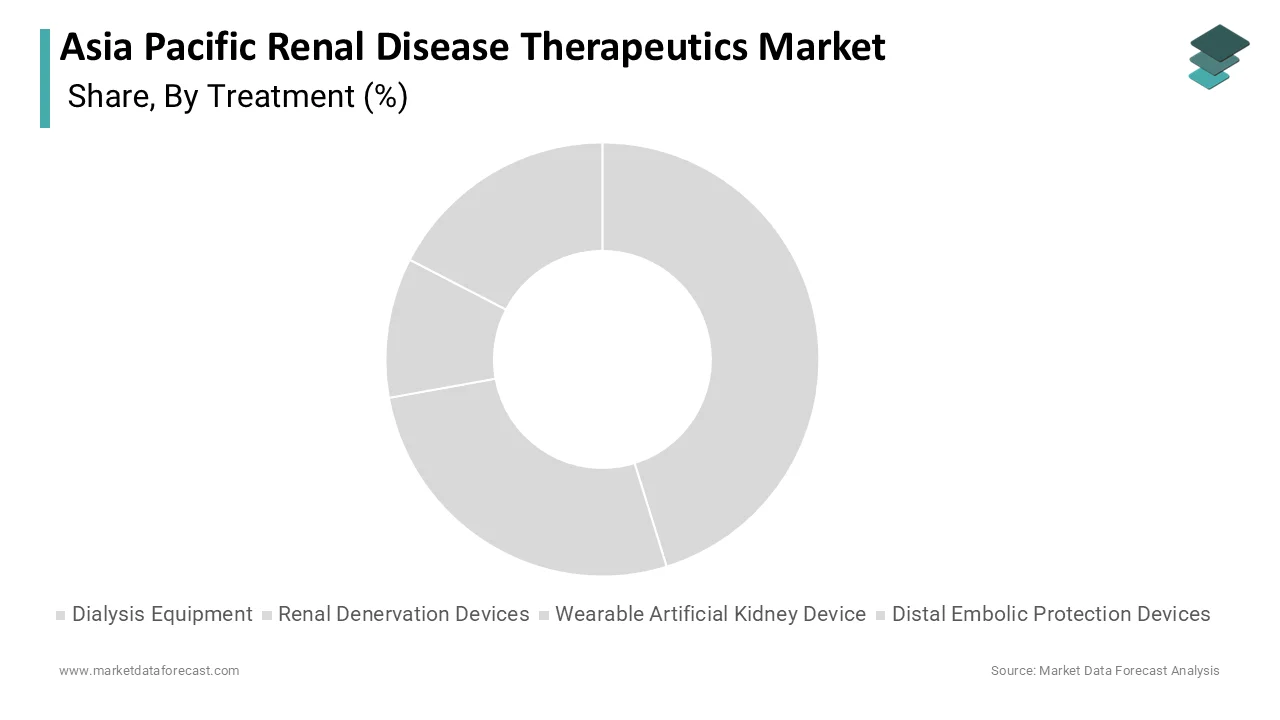
The dialysis equipment segment dominated the Asia Pacific renal disease therapeutics market and accounted for a 68.1% share in 2025. This supremacy of the segment was supported by the sheer volume of patients requiring renal replacement therapy due to late-stage diagnosis patterns prevalent across developing Asian nations. According to the International Society of Nephrology, regional kidney failure patient numbers continue to scale upward across major developing countries within South and Southeast Asia. As per the Asian Pacific Society of Nephrology, countries are implementing innovative programs like PD-first in Hong Kong and indigenous transplant initiatives in Australia to address structural disparities and expand access to renal replacement therapies. Furthermore, according to the World Bank, the real value of per capita public healthcare spending around the world grew by about 27% between 2019 and 2022, altering the baseline funding available for chronic disease infrastructure. The structural demand ensures dialysis equipment maintains leadership regardless of emerging device innovations because it addresses immediate life-sustaining needs for millions lacking alternative therapeutic options or transplant access.
Reimbursement policy evolution reinforces dialysis equipment dominance as governments expand coverage to reduce catastrophic health expenditures among vulnerable populations. According to the National Healthcare Security Administration, China's basic medical insurance system actively expands financial protections for chronic kidney disease treatments to limit the direct out-of-pocket medical burdens on beneficiaries. As per India’s Ministry of Health and Family Welfare, public healthcare systems under the Pradhan Mantri National Dialysis Programme are expanding tertiary hospital infrastructure to ensure accessible hemodialysis services for eligible populations. Apart from these, according to the National Health Security Office, Thailand’s Universal Coverage Scheme is optimising its healthcare funding templates to sustain equitable citizen access to chronic renal replacement therapies. The policy interventions transform dialysis from an out-of-pocket luxury to a publicly guaranteed service, creating predictable demand streams for equipment manufacturers. Public-private partnership models in Malaysia and Indonesia further accelerate facility build-outs with guaranteed volume commitments, reducing commercial risk for suppliers. Consequently, reimbursement expansion functions as the primary market maker, ensuring the dialysis segment retains dominance through state-sponsored demand generation independent of private purchasing power fluctuations.
The wearable artificial kidney devices segment is likely to experience the fastest CAGR of 31.4% during the forecast period owing to recent engineering breakthroughs enabling functional miniaturisation previously considered scientifically unfeasible. According to the Kidney Health Initiative, medical research networks emphasise technical innovation parameters to shrink structural sorbent system footprints and allow high-mobility therapies. As per the Singapore Agency for Science, Technology and Research, public research labs create engineered baseline materials to enhance chemical detoxification efficiencies within smaller wearable enclosures. In addition, according to Japan’s Ministry of Economy, Trade and Industry, strategic medical device development subsidies seek to optimise local medical manufacturing setups and advance technological product commercialisation. The technical validations shift investor and clinician perception from theoretical concept to near-term reality, attracting capital and talent previously directed toward incremental dialysis improvements. The convergence of microfluidics, advanced materials, and battery technology creates an inflection point where wearable devices transition from research curiosity to an investable product category sustaining exceptional growth trajectories.
Quality of life imperatives accelerate wearable adoption as patients and caregivers increasingly reject facility-bound treatment schedules incompatible with employment and social participation. According to the International Society of Nephrology, patient choices are increasingly leaning toward home-centred renal therapies to facilitate greater functional autonomy and improve lifestyle integration. As per the Australia and New Zealand Dialysis and Transplant Registry, home-based peritoneal and hemodialysis use relies heavily on proper home support mechanisms and adequate patient training. Moreover, according to the South Korea National Health Insurance Service, public healthcare systems utilise long-term remote patient tracking projects to curb total emergency readmission rates across severe organ failure conditions. Ageing caregiver demographics in Japan and China create additional pressure as family members can no longer support thrice-weekly facility transport, making autonomous devices a necessity rather than convenience. This confluence of patient preference, economic efficiency, and demographic reality creates multi-stakeholder alignment, ensuring sustained adoption momentum independent of technological novelty alone.
By Application Mode Insights
The chronic kidney disease management segment led the Asia Pacific renal disease therapeutics market and captured a 54.2% share in 2025. This leading position of the segment was attributed to massive underlying prevalence driven by metabolic disease epidemics. According to the International Diabetes Federation, the rapid escalation of lifestyle-related metabolic disorders dramatically accelerates secondary microvascular complications across developing Asian jurisdictions. According to The Lancet Regional Health, persistently high blood pressure exhibits strong positive correlations with late-stage organ filtration failure among rapidly ageing populations. Furthermore, according to the Chinese Centre for Disease Control and Prevention, national surveillance data document high chronic kidney disease prevalence among adults, reinforcing the systemic need for extended metabolic health screenings. The epidemiological tsunami ensures the CKD segment maintains dominance through sheer numerical superiority over acute or end-stage conditions. Therapeutic focus on SGLT2 inhibitors, GLP-1 agonists, and RAAS blockers targets this massive patient pool, creating sustained pharmaceutical and diagnostic demand independent of dialysis infrastructure constraints.
Policy-driven screening initiatives reinforce CKD leadership as governments recognise cost savings from preventing progression to expensive dialysis dependency. According to the Japan Ministry of Health, Labour and Welfare, national metabolic checkup protocols mandate comprehensive early screening parameters to trace metabolic vulnerabilities before they manifest as critical failure points. As per the Australian Department of Health and Aged Care, federal health strategy allocations fund local outreach infrastructure to deploy defensive health detection systems within historically underserved communities. Besides these, according to the Ministry of Health and Welfare of Taiwan, routine preventative checkup models incorporate standardised chemical blood parameters to optimise early-stage therapeutic interventions. As per the Singapore Ministry of Health, subsidised national preventive diagnostic programs expand citizen engagement with baseline renal and metabolic health profiles.
The diabetes-associated renal complications segment is expected to exhibit a noteworthy CAGR of 18.9% from 2026 to 2034, due to paradigm-shifting pharmacotherapies and unified clinical guidelines. According to sources, clinical management algorithms prioritise advanced sodium-glucose cotransporter-2 inhibitors to delay progressive tissue decline in adult patients. As per the Asian Pacific Society of Nephrology, advanced pharmacological clinical evaluations demonstrate clear long-term reductions in critical organ degradation endpoints within clinical cohort subsets. Furthermore, according to the National Medical Products Administration of China, the statutory licensing of diverse molecular generics significantly reduces commercial treatment expenditures for high-volume patient groups. The therapeutic advances transform diabetes renal care from passive monitoring to active disease modification, creating prescription volume surges. Guideline harmonisation across APAC reduces physician hesitation and accelerates formulary inclusion, ensuring rapid diffusion of evidence-based practices independent of local clinical tradition inertia.
Care model integration accelerates diabetes renal segment growth as siloed speciality approaches give way to holistic cardiorenal metabolic management frameworks. According to the Asian Pacific Society of Cardiology, structural alignment between distinct medical specialisations significantly lifts standard compliance with multi-system clinical pathways. As per the Ministry of Health of Singapore, unified multidisciplinary hospital interventions lower acute clinical readmissions across interlinked cardiovascular and metabolic syndromes. The systemic reorganisation creates structural demand for therapeutics positioned as multi-benefit agents rather than glucose-lowering drugs alone. Payers and providers align around outcomes-based reimbursement, making diabetes renal therapeutics central to value-based care transformation, ensuring sustained growth through healthcare delivery redesign rather than drug innovation alone.
COUNTRY LEVEL ANALYSIS
China Renal Disease Therapeutics Market Analysis
China remained the largest player in the Asia Pacific renal disease therapeutics market and held a 34.5% share in 2025. This prominence of the Chinese market was propelled by its massive patient population and rapidly evolving reimbursement landscape. According to the National Healthcare Security Administration, the integration of extensive volume-based procurement protocols for medical consumables systematically lowers price parameters for domestic hemodialysis infrastructures. As per the Chinese Society of Nephrology, regional clinical guidelines emphasise early pharmaceutical interventions with advanced metabolic regulators to treat progressive microvascular complications. Apart from these, according to the Ministry of Science and Technology of China, federal R&D development funding focuses on accelerating technical upgrades for specialised renal filtering devices and indigenous artificial organ prototypes. As per the National Health Commission of China, regional expansion initiatives for medical service centres scale up the domestic availability of maintenance blood purification therapies across rural regions. The combination of centralised price regulation, volume expansion and innovation investment creates unique market dynamics where affordability and accessibility drive growth more than premium pricing power, distinguishing China from other APAC markets.
Japan Renal Disease Therapeutics Market Analysis
Japan followed closely behind in the Asia Pacific renal disease therapeutics market and secured a 22.3% share in 2025. This expansion of the Japanese market was fuelled by its super-aged society and sophisticated universal health coverage system. According to the Ministry of Health, Labour and Welfare, official revisions to the medical fee schedule expand technical financial coverage for home-centred therapies to optimise localised resource allocations. As per the Japanese Society for Dialysis Therapy, the national database monitors a high structural concentration of ageing maintenance therapy patients with distinct chronic metabolic management needs. Besides these, according to the Pharmaceuticals and Medical Devices Agency, regulatory approval reviews prioritise novel molecular therapeutics to counter severe electrolyte disturbances in adult patients suffering from chronic kidney conditions. Japan market is characterised by high-quality expectations, rigorous post-marketing surveillance, and a preference for domestic manufacturers. Demographic inevitability ensures sustained demand growth even as overall population declines, making Japan the most mature yet still expanding renal therapeutics market in the region.
India Renal Disease Therapeutics Market Analysis
India maintains a noteworthy share of the Asia Pacific renal disease therapeutics market due to its dual burden of infectious and metabolic kidney diseases alongside dramatic access expansion. According to the National Health Authority, the Ayushman Bharat Digital Mission scales up digital health infrastructure across the nation to enable secure digital portability of individual diagnostic histories and patient medical records. As per the Indian Society of Nephrology, the commercial availability of diverse generic formulations within domestic pharmaceutical markets helps expand baseline therapeutic access for patients with progressive chronic kidney failure. In addition, according to the Ministry of Chemicals and Fertilisers, the Production Linked Incentive scheme for bulk drugs allocates targeted fiscal incentives to boost domestic manufacturing of critical key starting materials and active pharmaceutical ingredients. India market is distinguished by extreme price sensitivity, government-led infrastructure build-out, and a thriving generic manufacturing base, creating a volume-driven growth model fundamentally different from premium-oriented developed markets. State-level implementation variability remains a key challenge requiring localised engagement strategies rather than uniform national approaches.
South Korea Renal Disease Therapeutics Market Analysis
South Korea contributes considerably to the Asia Pacific renal disease therapeutics market, owing to its advanced digital health infrastructure and concentrated chaebol-dominated industrial base. According to the Health Insurance Review and Assessment Service, clinical researchers evaluate machine learning models and prospective databases to calculate early cardiovascular and overall mortality risks in localised maintenance therapy cohorts. As per the Korean Diabetes Association and Korean Society of Nephrology clinical practice guidelines, non-steroidal mineralocorticoid receptor antagonists receive strong management recommendations for type 2 diabetes patients with severe albuminuric complications. Moreover, according to the Ministry of Trade, Industry and Energy, national industrial technology initiatives support advanced bio-health R&D and foundational cell therapy engineering frameworks to improve regional medical device manufacturing capacity. South Korean market is characterised by rapid technology adoption, integrated electronic health records, and strong government-industry collaboration enabling swift translation of research into clinical practice. A concentrated hospital system allows efficient market access but also amplifies the impact of negative reimbursement decisions requiring robust health economic evidence generation.
Australia Renal Disease Therapeutics Market Analysis
Australia is moving ahead steadfastly in the Asia Pacific renal disease therapeutics market because of its high per capita healthcare spending and focus on Indigenous health equity. According to the Department of Health and Aged Care, the Pharmaceutical Benefits Advisory Committee evaluates cost-effectiveness benchmarks of selective non-steroidal therapies to formulate clinical subsidy recommendations on the Pharmaceutical Benefits Scheme. As per the Australia and New Zealand Dialysis and Transplant Registry, Aboriginal and Torres Strait Islander populations exhibit disproportionately elevated rates of chronic renal disease, highlighting critical variations in long-term remote health access metrics. Apart from these, according to the Therapeutic Goods Administration, specialised regulatory framework mechanisms expedite evaluation pathways for medical devices designed to resolve serious unmet public health needs. Australia market is distinguished by evidence-based reimbursement rigour, strong primary care integration,n and commitment to closing Indigenous health gaps, creating demand drivers absent in other developed APAC markets. Geographic tyranny necessitates innovative service delivery models, making Australia a testbed for remote monitoring and portable technologies with potential export relevance to other geographically dispersed nations.
COMPETITIVE LANDSCAPE
Competition within the Asia Pacific renal disease therapeutics market exhibits pronounced stratification characterized by distinct competitive arenas operating under different rules across income tiers, therapeutic categories,s and national regulatory environments. Novel agent segments, ts including SGLT2 inhibitors, MRAs, and PHIF inhibitors, feature intense innovation competition among multinational originators and fast-following domestic manufacturers pursuing first- or best-in-class positioning through superior outcomes, safety profiles,s or formulation advantages. Generic segments display commoditized rivalry driven primarily by price and supply reliability, ty with Indian, Chinese, and domestic ASEAN manufacturers competing aggressively in volume-based procurement tenders dominating public sector purchasing. Barriers to entry vary dramatically, from minimal for established molecule generics to substantial for novel biologics and devices requiring extensive clinical validation and regulatory navigation, favoring incumbents with established infrastructure. Reimbursement heterogeneity creates parallel markets where identical molecules compete under different access conditions across countries, preventing unified regional strategy and forcing manufacturer-specific commercialization approaches. Specialist workforce deficits indirectly shape competition by limiting prescription capacity regardless of drug availability, making companies with superior education and task-shifting support more successful than those relying solely on product attributes. Digital health integration increasingly differentiates offerings as payers and providers seek solutions addressing adherence monitoring and remote management challenges endemic to geographically dispersed populations. This multi-layered competitive landscape rewards participants balancing innovation velocity with access excellence while punishing those unable to adapt to value-driven procurement paradigms reshaping renal therapeutics through 2030.
KEY MARKET PLAYERS
Some of the companies that are playing a dominating role in the Asia Pacific Renal Disease Therapeutics Market include:
- Amgen Inc.
- Merck & Co., Inc.
- Bristol-Myers Squibb Company
- F. Hoffmann-La Roche Ltd.
- Shire Inc.
- Fresenius Medical Care AG & Co. KGaA
- Baxter International Inc.
- DaVita Inc.
TOP LEADING PLAYERS IN THE MARKET
- AstraZeneca plc maintains profound influence across the Asia Pacific renal disease therapeutics landscape through its foundational SGLT2 inhibitor franchise that established cardiorenal protection as standard of care for diabetic and non diabetic chronic kidney disease. The company contributes extensively by conducting landmark DAPA-CKD and EMPA-KIDNEY trials with substantial Asian enrollment, generating region-specific evidence supporting label expansions across diverse regulatory jurisdictions. Their patient support programs, includingthe Farxiga Access Initiative, ensure continuity of care for uninsured populations inthe Philippines, Indonesia, and Vietnam, reducing treatment abandonment rates. Strategic collaborations with national health insurance agencies enable value-based contracting, linking reimbursement to eGFR stabilization outcomes and aligning economic incentives with clinical success. These initiatives reinforce therapeutic leadership and access infrastructure without relying on market share metrics to demonstrate sustained competitive advantage in renoprotective pharmacotherapy throughout Asia Pacific healthcare systems.
- Bayer AG plays a pivotal role in the Asia Pacific renal disease therapeutics ecosystem through finerenone as the first nonsteroidal mineralocorticoid receptor antagonist approved specifically for diabetic kidney disease, addressing residualcardiovascular-renall risk unmet by RAAS inhibitors alone. Their physician education programs targeting cardiologists, endocrinologists,s and nephrologists simultaneously address cross-specialty awareness gaps critical for cardiorenal metabolic syndrome management. Manufacturing partnerships with Indian and Chinese API suppliers ensure cost-competitive pricing for price-sensitive public sector tenders while maintaining quality standards. These platform-centric strategies differentiate offerings through novel mechanisms of action while creating switching costs via integrated care pathways, strengthening long term positioning in emerging therapeutic categories before generic competition emerges.
- FibroGen Inc has established a substantial presence in the Asia Pacific renal disease therapeutics market through roxadustat as a pioneering oral hypoxia-inducible factor prolyl hydroxylase inhibitor, transforming anemia management from injectable biologics to convenient small-molecule therapy. The company contributes uniquely by achieving first-mover advantage in Japan, China, and South Korea, ea where roxadustat captured the majority HIF-PH inhibitor market share within three years of approval, reflecting prescriber preference for oral administration and elimination of ESA-associated cardiovascular risks. Regulatory engagement with TGA and NPRA facilitated expedited review pathways acknowledging unmet need for dialysis-independent anemia management. This modality leadership creates defensible positioning through intellectual property protection and clinical experience accumulation, distinguishing FibroGen from late-entering competitors in the rapidly evolving oral anemia therapeutic segment.
TOP STRATEGIES USED BY KEY MARKET PARTICIPANTS
Key players in the Asia Pacific renal disease therapeutics market employ multifaceted strategic approaches to navigate regulatory heterogeneity, reimbursement fragmentation,n and specialist workforce constraints across diverse national contexts. Cross-specialty positioning targeting cardiologists, endocrinologists, and primary care physicians expands the prescribing base beyond nephrology bottlenecks, ks capturing larger cardiorenal metabolic patient populations through guideline integration and joint clinic models. Real-world evidence generation post-approval validates trial outcomes in diverse ethnic populations, supporting label expansions and formulary inclusion beyond restrictive initial coverage policies, es addressing payer demands for local effectiveness data. Value-based contracting arrangements linking reimbursement to measurable biomarker improvement align economic incentives with clinical success,s particularly important in single-payer systems evaluating the budget impact of novel agents. Domestic manufacturing partnerships and technology transfer agreements reduce costs and improve supply security for price-sensitive public sector procurement while satisfying local content requirements in Indonesia, Malaysiai, and India. Digital health integration, embedding medication adherence monitoring and remote consultation capabilities, addresses geographic access barriers and specialist shortages,s enabling decentralized care delivery essential for archipelagic and rural settings. Patient support infrastructure, re including financial assistance, nurse education, and laboratory monitoring coordination,n reduces discontinuation rates and improves outcomes, justifying premium pricing through demonstrated value. Regulatory navigation through proactive engagement with harmonization initiatives and bilateral mutual recognition agreements accelerates multi-country launch timelines, reducing revenue lag versus first approving jurisdictions. These interconnected strategies collectively address fundamental market dynamics where access facilitation, evidence generation, and operational sustainability determine competitive success beyond regulatory approval alone.
MARKET SEGMENTATION
This research report on the APAC renal disease therapeutics market has been segmented and sub-segmented into the following categories.
By Treatment
- Dialysis Equipment
- Renal Denervation Devices
- Wearable Artificial Kidney Device
- Distal Embolic Protection Devices
By Application Mode
- Kidney Stone Disease
- End-Stage Kidney Disease
- Kidney Failure
- Chronic Kidney Disease
- Hypertension
- Diabetes
- Anemia
By Country
- India
- China
- Japan
- South Korea
- Australia
- New Zealand
- Thailand
- Malaysia
- Vietnam
- Philippines
- Indonesia
- Singapore
- Rest of APAC