- Product Description Description
- Table of Contents TOC
- List of Table & Figure LOT
- Get Free Sample PDF Sample PDF
Market Size, 2025
$124.94 BnMarket Estimate, 2026
$129.44 BnMarket Forecast, 2034
$171.77 BnCAGR, 2026–2034
3.6%Executive Summary: Global Renal Disease Therapeutics Market
- Market Scope: Comprehensive global renal disease therapeutics market analysis covering application modes (chronic kidney disease, end-stage renal disease, diabetic nephropathy, hypertension), treatment modalities (dialysis equipment, wearable artificial kidneys, renal denervation), and regional adoption frameworks.
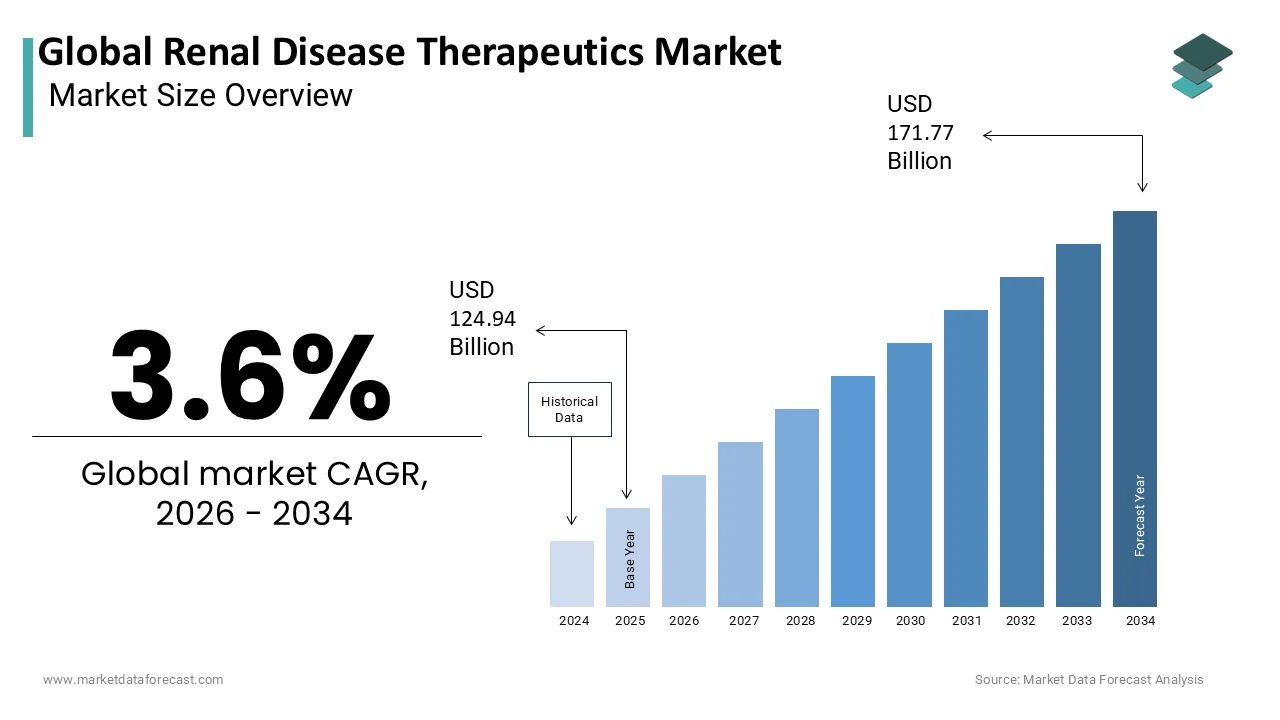
- Market Valuation: Valued at USD 124.94 billion (2025), estimated at USD 129.44 billion (2026), and projected to reach USD 171.77 billion by 2034, registering a steady CAGR of 3.6% (2026–2034).
- Primary Growth Drivers: Escalating global prevalence of diabetes and systemic hypertension, rapidly aging demographic structures expanding chronic kidney disease burdens, and technological innovations in wearable artificial kidneys and digital health integration.
Key Market Segment Metrics (2026–2034)
| Category | Leading Segment (2025 Position) | Fastest-Growing Segment (2026–2034) |
|---|---|---|
| By Application Mode | Chronic Kidney Disease (CKD) (accounted for a 38.1% share in 2025, driven by insidious progression and high prevalence among aging populations) | Diabetes-Related Renal Complications (exhibiting a notable CAGR of 10.8% fueled by the global diabetes pandemic and renoprotective therapies) |
| By Treatment | Dialysis Equipment (captured 52.4% market share in 2025 as the indispensable backbone for end-stage renal replacement therapy) | Wearable Artificial Kidney Device (projected to witness the highest CAGR of 24.3% driven by patient mobility demand and technological miniaturization) |
| By Region | North America (dominated the global market with a 39.6% share in 2025, supported by advanced diagnostic infrastructure and high metabolic disease burdens) | Asia-Pacific (growing steadily through expanding healthcare investments, rising diabetic populations in China/India, and advanced tech adoption in Japan) |
Major Market Players & Market Structure
Market Structure: Highly competitive global landscape comprising dominant dialysis service providers, pharmaceutical leaders, and medical device innovators focusing on home-based treatment models, AI-driven predictive analytics, and biocompatible renal care solutions.
Key Companies: Fresenius Medical Care, Baxter International, DaVita Inc. (DaVita Healthcare Partners), Amgen Inc., Merck & Co., Inc., Bristol-Myers Squibb Company, F. Hoffmann-La Roche Inc., and Shire Inc.
Global Renal Disease Therapeutics Market Size
The Global Renal Disease Therapeutics Market is projected to grow from USD 124.94 billion in 2025 to USD 129.44 billion in 2026 and reach USD 171.77 billion by 2034, registering a CAGR of 3.6% from 2026 to 2034.
Renal diseases are pathological conditions affecting kidney structure and function, ranging from acute kidney injury and chronic kidney disease to end-stage renal disease requiring dialysis or transplantation. These disorders are characterized by progressive loss of glomerular filtration rate, electrolyte imbalance, and systemic complications, including cardiovascular morbidity and metabolic bone disease. The global burden of renal pathologies is escalating in tandem with aging populations, rising prevalence of diabetes and hypertension, and environmental nephrotoxins such as heavy metals and pharmaceutical residues. According to research, chronic kidney disease has become one of the leading causes of death globally, with mortality rates continuing to rise in contrast to many other major non-communicable diseases. Recent data from the Global Burden of Disease (GBD) study for 2023 ranks chronic kidney disease (CKD) as the ninth leading cause of death globally. As per the Global Burden of Disease Study, over 850 million people currently live with some form of kidney damage, yet fewer than 10 percent receive a formal diagnosis due to asymptomatic early stages and limited screening infrastructure in low-resource settings. A major disparity exists in access to treatment for advanced kidney disease, with most patients in low-resource areas like Sub-Saharan Africa unable to access life-sustaining renal replacement therapy, as per a study. Diagnostic and therapeutic innovation is accelerating, with biomarkers such as cystatin C and neutrophil gelatinase-associated lipocalin enabling earlier detection, while wearable artificial kidneys and regenerative therapies enter clinical validation. This convergence of epidemiological urgency, technological advancement, and care delivery transformation defines the modern renal diseases landscape.
MARKET DRIVERS
Rising Global Prevalence of Diabetes and Hypertension Fuels Disease Incidence
The unchecked proliferation of metabolic and cardiovascular risk factors, particularly type 2 diabetes and systemic hypertension, propels the growth of the renal diseases market. It is the principal epidemiological engine driving the global expansion of renal disease burden. The global adult population living with diabetes is rapidly expanding, from an estimated 537 million in 2021, projected to exceed 783 million by 2045. A significant and leading consequence of this trend is diabetic nephropathy, which accounts for a substantial proportion of new end-stage renal disease cases in developed nations, as consistently documented by the U.S. Renal Data System and other sources. Hypertension compounds this trajectory. Despite high global prevalence (1.28 billion adults) and awareness of its link to chronic kidney disease (CKD) - a 3.2-fold increased risk as identified by the long-running Framingham Heart Study - a major market gap exists in effective management, with only about 21% of adults achieving adequate blood pressure control. In low- and middle-income nations, the syndemic is accelerating. The Indian Council of Medical Research's 2023 ICMR-INDIAB study highlights a substantial and growing public health crisis, reporting 101 million adults with diabetes and underscoring a significant upward trend in diabetic kidney disease prevalence, indicative of a strained healthcare system. The economic toll is staggering. Also, renal complications of diabetes consume a portion of total diabetes related healthcare expenditures across the EU, exceeding a substantial amount annually. Public health interventions remain inadequate. This metabolic tsunami ensures sustained demand for diagnostics, nephroprotective agents, and renal replacement infrastructure.
Aging Populations Amplify Chronic Kidney Disease Burden and Care Demand
Demographic transitions toward older age structures are exponentially increasing the prevalence of chronic kidney disease, which in turn accelerates the expansion of the renal diseases market. This is because renal function naturally declines with age, and comorbid conditions accumulate. According to research, the global population aged 65 and over is rapidly expanding, from approximately 761 million in the early 2020s to a projected 1.6 billion by 2050, with over one-third of persons over 70 exhibiting a high prevalence of reduced kidney function, significantly increasing demand for renal care. In Japan, where 29.1 percent of the population is over 65, the Ministry of Health, Labour and Welfare documented that a share of new dialysis initiations in 2023 occurred in patients aged 75 or older, straining capacity and workforce resources. Europe faces similar pressure. Eurostat data projects a significant increase in the elderly proportion of the EU population in the coming decades, driving a substantial projected rise in demand for specialized medical services, including nephrology outpatient visits. Aging kidneys exhibit reduced regenerative capacity and heightened susceptibility to nephrotoxic insults. Healthcare systems are unprepared. This demographic inevitability ensures escalating demand for geriatric nephrology services, conservative kidney management, and age-adapted dialysis modalities.
MARKET RESTRAINTS
Limited Access to Early Diagnostic Infrastructure in Low-Resource Settings
The absence of accessible, affordable, and standardized screening mechanisms for early-stage kidney disease in low and middle-income countries results in late presentation, irreversible organ damage, and avoidable mortality, which restrains the growth of the renal diseases market. This constrains effective market development for preventive and early interventional therapies. The capacity for a foundational test used in the early detection of diabetic kidney issues is limited in many primary healthcare settings. The majority of low-income countries do not have national guidelines for identifying chronic kidney problems. Population-wide surveillance for kidney disease is infrequently conducted in these areas. As a result, most patients receiving their first specialist consultation for kidney issues are already in the advanced stages of the disease. Diagnostic delays cascade into therapeutic futility. Even when diagnostics are available, affordability is prohibitive. In rural India, the cost of a basic renal function panel constitutes a notable share of monthly household income for many families. This diagnostic desertification perpetuates a reactive rather than preventive care paradigm, suppressing demand for early-stage therapeutics and monitoring technologies.
Fragmented Reimbursement Policies Restrict Treatment Accessibility and Innovation Adoption
Inconsistent and underfunded reimbursement frameworks for renal diagnostics, therapeutics, and replacement therapies across and within nations are a major obstacle to the renal diseases market. This creates significant barriers to patient access, provider adoption, and commercial investment in novel interventions. Coverage for renal replacement therapy varies significantly across member countries. The scarcity of plans that fully cover all treatments, coupled with steep out-of-pocket costs for essential procedures, places considerable financial strain on patients. Access to healthcare coverage may be inconsistent for individuals beginning therapy, and a lack of continuous insurance coverage may be associated with increased adverse health outcomes. Reimbursement for novel therapeutics is equally fragmented. Diagnostic innovation faces similar hurdles. These reimbursement discontinuities disincentivize provider adoption of guideline-recommended care and deter pharmaceutical investment in renal indications, as market access remains unpredictable and regionally siloed.
MARKET OPPORTUNITIES
Expansion of Conservative Kidney Management Programs for Elderly and Frail Patients
The growing recognition that dialysis may confer limited survival benefit and reduced quality of life in elderly or multimorbid patients is enabling investment in structured conservative kidney management programs, which creates a novel care delivery and therapeutic segment, and thereby provides new opportunities for the expansion of the renal diseases market. For some patients with comorbidities, conservative management of kidney failure can offer comparable survival to dialysis, with potentially better symptom control and quality of life. There is a developing practice to ensure that shared decision making and formalized care plans for conservative kidney management are a standard part of treatment discussions for those with advanced kidney disease. Standardized approaches to conservative kidney care may lead to a reduction in certain healthcare utilization metrics, such as hospitalizations. Pharmaceutical innovation is aligning. Payer support is emerging. This paradigm shift from default dialysis to personalized care planning unlocks new markets for palliative nephrology, geriatric symptom control agents, and decision support tools.
Integration of Artificial Intelligence for Early Risk Stratification and Progression Prediction
The deployment of machine learning algorithms to analyze multimodal clinical, genomic, and imaging data is generating fresh growth prospects for the renal diseases market. It is enabling unprecedented precision in identifying high risk individuals and forecasting renal function trajectories, transforming early intervention from reactive to predictive. According to research, AI models trained on extensive health records show potential in predicting the progression of chronic kidney disease. Also, the use of AI in nephrology referral systems appears to facilitate quicker specialist consultations for patients at high risk. Algorithms based on retinal scans are being developed and used as a screening method for diabetic kidney disease. Pharmaceutical developers are leveraging these tools. Regulatory bodies are adapting. Also, regulatory bodies are recognizing and accelerating the review of AI-driven diagnostic tools designed to detect early indicators of acute kidney injury. This convergence of data science and nephrology is redefining early detection, enabling preemptive therapeutic deployment, and establishing algorithmic diagnostics as a high-value market segment.
MARKET CHALLENGES
Lack of Standardized Global Guidelines for Early Stage Intervention
The absence of universally harmonized clinical practice guidelines for the management of early-stage chronic kidney disease is one of the serious challenges slowing down the expansion of the renal diseases market. This results in fragmented care delivery, inconsistent therapeutic adoption, and suppressed market potential for nephroprotective agents in non-advanced disease. According to a study, guideline adaptation varies, with many national nephrology societies having incomplete implementation of established clinical protocols. As per research, prescription patterns for certain chronic kidney disease medications appear inconsistent in clinical practice. In primary care, confusion abounds. Healthcare professional understanding of risk categories for kidney disease may be limited among general practitioners. Pharmaceutical innovation is stifled. Even biomarker adoption is unstandardized. A mature market for early-stage therapeutics depends entirely on the establishment of global consensus on intervention thresholds, treatment protocols, and regulatory endpoints.
Workforce Shortages and Training Gaps in Nephrology Care Delivery
The global deficit of adequately trained nephrologists, dialysis nurses, and allied health professionals inhibits the growth of the renal diseases market. This severely constrains the capacity to manage the expanding renal disease burden, limiting market scalability for diagnostics, devices, and therapeutics regardless of innovation. According to studies, there is a notable disparity in the availability of kidney specialists across different economic settings. Many dialysis centers operate with nurse-to-patient ratios that surpass recommended guidelines. Training pipelines are inadequate. The number of individuals applying for specialized training in kidney health fields has seen a decline. In Europe, a portion of nephrology departments have unfilled consultant positions, which delays patient access by an average of 14 weeks. Tele nephrology and task shifting offer partial solutions. This human capital crisis throttles care delivery expansion, rendering even the most advanced technologies and therapeutics inaccessible to the populations that need them most.
REPORT COVERAGE
| REPORT METRIC | DETAILS |
| Market Size Available | 2025 to 2034 |
| Base Year | 2025 |
| Forecast Period | 2026 to 2034 |
| Segments Covered | By Application Mode, Treatment, and Region |
| Various Analyses Covered | Global, Regional & Country Level Analysis, Segment-Level Analysis, DROC, PESTLE Analysis, Porter’s Five Forces Analysis, Competitive Landscape, Analyst Overview of Investment Opportunities |
| Regions Covered | North America, Europe, APAC, Latin America, Middle East & Africa |
| Market Leaders Profiled | Amgen Inc., Merck & Co., Inc., Bristol-Myers Squibb Company, Hoffmann-La Roche Inc., Shire Inc., Fresenius Medical Care, Baxter International, and Davita Healthcare Partners |
SEGMENTAL ANALYSIS
By Application Mode Insights
The chronic kidney disease segment was the largest segment in the renal diseases market and accounted for a 38.1% share in 2025. The prominence of the chronic kidney disease segment is driven by its insidious progression, high prevalence among aging and metabolically compromised populations, and systemic complications that necessitate multidisciplinary intervention. A substantial number of individuals live with some degree of chronic kidney impairment, with many not receiving a formal diagnosis because early stages often lack symptoms, and screening protocols are inconsistent. The economic burden is staggering. Managing chronic kidney issues accounts for a significant portion of overall healthcare spending. Diabetes and hypertension serve as primary accelerants. A large percentage of new dialysis patients have diabetic kidney disease as the underlying cause, and a majority had uncontrolled high blood pressure before their kidney function declined. Public health initiatives remain inadequate. This combination of demographic inevitability, diagnostic neglect, and systemic cost anchors chronic kidney disease as the central pillar of renal care delivery and therapeutic innovation.

The diabetes related renal complications segment is expected to exhibit a noteworthy CAGR of 10.8% from 2025 to 2033 due to the global diabetes pandemic, delayed nephropathy screening, and the commercialization of renoprotective agents proven to slow progression independent of glycemic control. As per sources, the area involving renal complications linked to diabetes is showing rapid expansion. A substantial number of adults globally live with diabetes, and this figure is expected to grow significantly. Diabetic kidney issues are common in a notable percentage of individuals diagnosed with diabetes over time. Therapeutic innovation is catalyzing growth. Certain types of medications can substantially lessen the risk of kidney function decline in diabetic patients. Screening expansion is accelerating. Payer policies are evolving. This convergence of epidemiological pressure, pharmacological breakthrough, and policy reform is transforming diabetic nephropathy from an inevitable complication to a modifiable trajectory, unlocking new markets for diagnostics, risk stratification tools, and targeted therapeutics.
By Treatment Insights
In 2025, the dialysis equipment segment led the renal diseases market by capturing a share of 52.4%. The leading position of the dialysis equipment segment is credited to the irreversible nature of end stage renal disease, limited transplant availability, and the life-sustaining necessity of renal replacement therapy for millions of patients worldwide. According to sources, a large majority of individuals beginning treatment for advanced kidney disease use hemodialysis, typically requiring several sessions weekly, which necessitates specialized equipment, supplies, and professional oversight. Technological advancements reinforce dominance. Certain hemodialysis machines incorporating real-time data modeling have shown a reduction in episodes of low blood pressure during treatment, which can lead to better treatment adherence and patient outcomes. Home dialysis adoption is accelerating. The use of peritoneal dialysis has seen an increase in popularity, possibly influenced by the adoption of remote monitoring technologies. Reimbursement frameworks support scalability. Even in resource-constrained settings, dialysis remains the default. This structural dependence on mechanical filtration entrenches dialysis equipment as the indispensable backbone of renal care delivery.
The wearable artificial kidney device segment is predicted to witness the highest CAGR of 24.3% over the forecast period. The swift expansion of the wearable artificial kidney device segment is propelled by patient demand for mobility and physiological mimicry, technological miniaturization, and payer recognition of long term cost offsets versus conventional in center hemodialysis. Patient preference is decisive. Regulatory momentum is building. Reimbursement pilots are underway. Technological convergence with microfluidics, biocompatible membranes, and AI driven dosing algorithms is overcoming historical barriers of size, power, and anticoagulation. This paradigm shift from intermittent clearance to continuous renal support is redefining therapeutic expectations and establishing wearables as the future standard of care.
REGIONAL ANALYSIS
North America Renal Diseases Market Analysis

North America dominated the global renal diseases market and occupied a share of 39.6% in 2025. The United States dominates the regional burden, contributing a significant share of volume, driven by epidemic rates of diabetes, obesity, and aging, coupled with advanced diagnostic and therapeutic infrastructure. A notable portion of the adult population experiences chronic kidney disease. The condition is linked to underlying health issues, including blood sugar and blood pressure concerns. A substantial number of new patients initiate treatment involving mechanical filtration of the blood. Support systems for individuals with advanced kidney issues are widely utilized. Canada contributes a niche strength in conservative care innovation. Regulatory frameworks reinforce innovation. Investment in digital health is accelerating. This convergence of epidemiological burden, reimbursement security, and technological leadership solidifies North America as the epicenter of renal care delivery and market development.
Europe Renal Diseases Market Analysis
Europe secured a second position in the renal diseases market and held a 28.5% share in 2025. Factors such as integrated care and policy leadership are attributed to the growth of the renal diseases market. The healthcare system demonstrates a prominent role in the field of kidney care. Specialization in various treatment modalities is evident, including dialysis technology, specific renal procedures, and conservative care pathways. A substantial patient population receives renal replacement therapy. Healthcare coverage is widely available for a significant number of individuals needing treatment. Access to diverse treatment options, including home modalities and transplantation options, is integrated into coverage provisions. The United Kingdom drives innovation in integrated care. France maintains strength in pharmacovigilance and outcomes research. Italy and Spain face workforce challenges. Regulatory harmonization under the EU Medical Device Regulation is accelerating the adoption of novel diagnostics. This blend of policy innovation, technological adoption, and persistent workforce gaps defines Europe’s complex but high value renal care landscape.
Asia Pacific Renal Diseases Market Analysis
Asia Pacific is steadily growing in the global renal diseases market, which is driven by diabetes prevalence exceeding significant millions of adults and aging demographics. China faces a significant and growing burden of chronic kidney disease cases in the region. The number of adults living with diabetes in China is very high and has been increasing. A very small proportion of Chinese patients with advanced chronic kidney disease receive appropriate specialized care. India is experiencing accelerated growth. It has observed a significant increase in the burden of diabetic nephropathy. Dialysis access in Indian public hospitals remains limited. Japan maintains technological leadership. A high proportion of dialysis units in Japan employ advanced monitoring technologies. South Korea drives innovation in digital nephrology. A high proportion of dialysis units in Japan employ advanced monitoring technologies. Regional growth is further amplified by infrastructure investment. New hospital projects in Southeast Asia increasingly incorporate specialized units, including nephrology wings.
Latin America Renal Diseases Market Analysis
Latin America witnessed moderate expansion in the global renal diseases market. This expansion was propelled by rising diabetes prevalence and partial public coverage under SUS. Brazil has a high concentration of dialysis patients, a significant portion of the total in the region. The total number of patients undergoing dialysis in Brazil continues on an upward trend. Significant waiting times and regional inequities in access to kidney replacement therapy remain a concern in parts of Brazil's public health system. Mexico is emerging in early detection. There is a growing focus on the early diagnosis and management of chronic kidney disease, particularly diabetic nephropathy, as a key public health challenge. Argentina faces reimbursement fragmentation. Access to certain novel and potentially more effective kidney disease treatments is limited and varies across different insurance providers and regions. Chile drives conservative care adoption. There is an increasing emphasis on developing and implementing comprehensive non-dialysis care plans to ensure appropriate initiation of kidney replacement therapy. Regional growth is constrained by workforce deficits. A notable disparity exists in the availability and distribution of nephrologists across different areas of Latin America. The concentration of nephrologists in Latin America is uneven, with rural and remote regions often experiencing a significant lack of specialized kidney care professionals. Despite these challenges, urban medical hubs in São Paulo, Mexico City, and Buenos Aires are becoming centers of clinical research and device adoption.
Middle East and Africa Renal Diseases Market Analysis
The Middle East and Africa region is anticipated to expand in the renal diseases market from 2025 to 2033. The United Arab Emirates anchors regional innovation. The United Arab Emirates demonstrates a strong commitment to expanding its digital healthcare infrastructure and innovative medical technologies. Telehealth and remote patient monitoring solutions are increasingly integrated into dialysis care within the UAE, particularly in Abu Dhabi and Dubai. The UAE healthcare system is focused on improving patient outcomes and reducing mortality from non-communicable diseases through various initiatives. Saudi Arabia is expanding screening. Diabetic kidney disease is a growing health concern in Saudi Arabia, prompting increased efforts for early detection and national management plans. South Africa leads Sub-Saharan capacity. South Africa maintains a stark disparity in kidney care access, with widespread availability in the private health sector contrasting sharply with limited, rationed access for the majority relying on public healthcare. Egypt is investing in workforce development. There is an ongoing effort to expand training opportunities and increase the number of qualified nephrology specialists in the region to meet growing demand. Regional innovation is accelerating. Sidra Medicine in Qatar is a leader in applying advanced genomic sequencing and precision medicine to identify genetic causes of chronic kidney disease, especially in pediatric patients. Despite these advances, most end stage renal disease patients in sub Saharan Africa lack any form of renal replacement therapy, which emphasizes profound inequities that constrain market development.
COMPETITIVE LANDSCAPE
The gasoline fuel additives market features intense competition among multinational chemical companies and specialized additive producers. Players compete on product performance environmental compliance and cost efficiency as regulations tighten globally. Innovation remains central with firms developing multifunctional additives that improve engine cleanliness fuel economy and emission control. Strategic acquisitions and joint ventures are common as companies seek to expand their technology portfolios and geographic reach. Regional players often focus on niche formulations tailored to local fuel standards and engine types. Price competition is significant, particularly in mature markets where differentiation is harder to achieve. Leading firms invest in sustainability initiatives to align with global decarbonization goals. Marketing and technical support services also play a key role in customer retention. The market is dynamic with constant pressure to adapt to evolving engine technologies and regulatory landscapes.
KEY MARKET PLAYERS
Companies leading the global renal disease therapeutics market, profiled in the report
- Amgen Inc.
- Merck & Co., Inc.
- Bristol-Myers Squibb Company
- Hoffmann-La Roche Inc.
- Shire Inc.
- Fresenius Medical Care
- Baxter International
- aDaVitaita Healthcare Partners.
TOP LEADING PLAYERS IN THE MARKET
- Fresenius Medical Care is a global leader in dialysis products and services with a strong presence in over one hundred countries. The company develops advanced dialysis machines and provides comprehensive renal care through its network of clinics. Recently it launched a next generation dialysis system with remote monitoring to improve patient safety and treatment efficiency. It also expanded home dialysis training centers in emerging markets to support decentralized care. These initiatives reinforce its commitment to innovation and accessibility in kidney disease management worldwide.
- Baxter International plays a vital role in renal care by offering a broad portfolio of peritoneal and hemodialysis therapies. The company focuses on improving patient comfort and long term outcomes through biocompatible solutions and smart delivery systems. In early 2024 it introduced a new dialysis fluid with fewer glucose degradation products to reduce metabolic complications. It also initiated a global pediatric outcomes registry to guide clinical best practices. Baxter continues to invest in research and global partnerships to advance kidney care accessibility and quality.
- DaVita Inc operates one of the largest networks of outpatient dialysis centers primarily in the United States with growing international operations. It emphasizes patient centered care and digital health integration to enhance treatment adherence and outcomes. Recently DaVita partnered with an artificial intelligence company to implement predictive analytics for early kidney function decline detection. It also launched mobile health tools to support remote patient monitoring and education. These efforts demonstrate its focus on preventive care and technology enabled renal disease management to serve broader patient populations effectively.
TOP STRATEGIES USED BY THE KEY MARKET PARTICIPANTS
Key players in the renal diseases market focus on product innovation to address unmet clinical needs and improve patient quality of life. They invest heavily in research and development to create advanced dialysis systems and biocompatible solutions. Strategic partnerships with technology firms and academic institutions help accelerate innovation and clinical validation. Geographic expansion into emerging markets allows broader patient access and strengthens global footprints. Companies also prioritize digital transformation by integrating remote monitoring and artificial intelligence to enable proactive care. Patient education and home based treatment models are promoted to reduce hospital dependency. These strategies collectively enhance care delivery efficiency and reinforce long term market leadership.
MARKET SEGMENTATION
This research report on the global renal disease therapeutics market has been segmented and sub-segmented based on application mode, treatment, and region.
By Application Mode
- Kidney Stone Disease
- End-Stage Kidney Disease
- Kidney Failure
- Chronic Kidney Disease
- Hypertension
- Diabetes
- Anemia
By Treatment
- Dialysis Equipment
- Renal Denervation Devices
- Wearable Artificial Kidney Device
- Distal Embolic Protection Devices
By Region
- North America
- Europe
- Asia-Pacific
- Latin America
- The Middle East and Africa