- Product Description Description
- Table of Contents TOC
- List of Table & Figure LOT
- Get Free Sample PDF Sample PDF
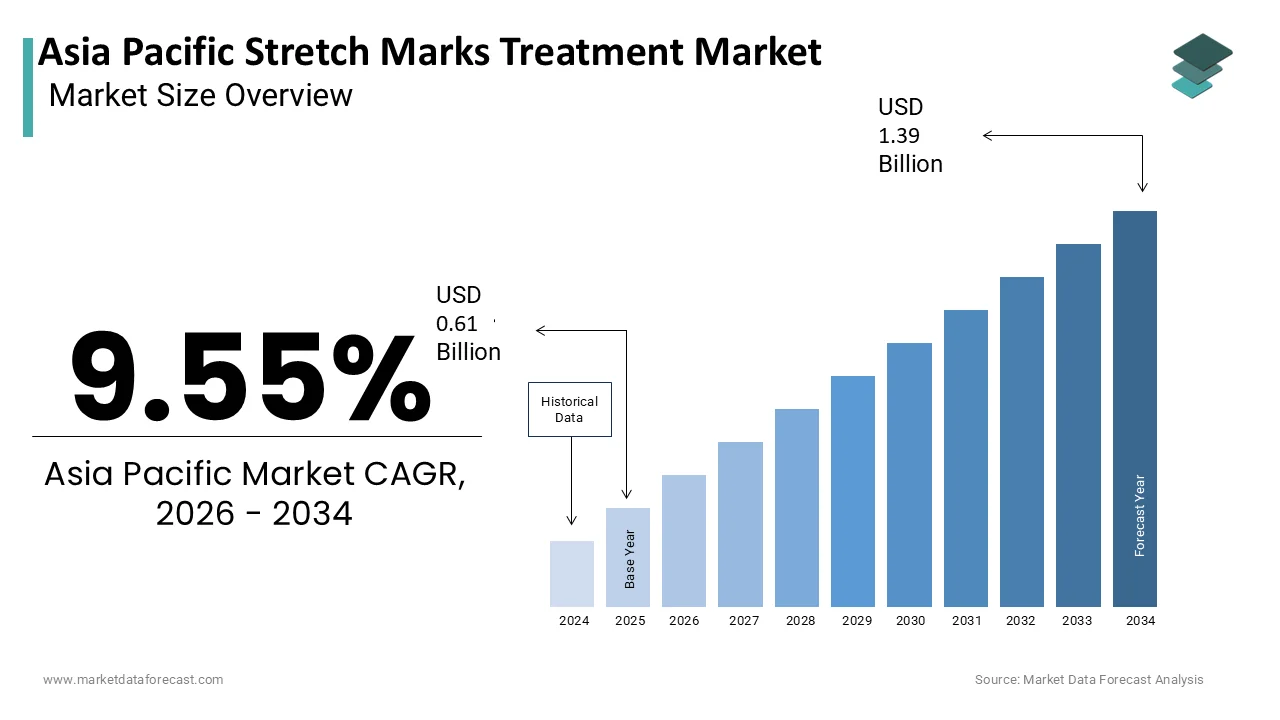
Market Size, 2025
$0.61 BnMarket Estimate, 2026
$0.67 BnMarket Forecast, 2034
$1.39 BnCAGR, 2026–2034
9.55%Executive Summary: Asia Pacific Stretch Marks Treatment Market Analysis & Growth Forecast (2026-2034)
- Market Scope: Comprehensive Asia-Pacific industry analysis covering treatment options, end-user settings, country-level frameworks, and key regional demand drivers.
- Market Valuation: Valued at USD 0.61 billion in 2025, estimated at USD 0.67 billion in 2026, and projected to reach USD 1.39 billion by 2034, registering a robust CAGR of 9.55% from 2026 to 2034.
- Primary Growth Drivers: Rising obesity rates, growing cosmetic consciousness among pregnant women, high acceptance of non-invasive zero-downtime laser treatments, increasing disposable incomes, and active product promotions by major industry players.
Key Asia Pacific Stretch Marks Treatment Market Segment Metrics (2026-2034)
| Category | Leading Segment (2025 Position) | Fastest-Growing Segment |
|---|---|---|
| By Treatment | Lasers (favored for quick sessions, efficacy, and non-invasive application) | Advanced Laser & Energy-Based Devices (driven by ongoing R&D investments) |
| By End User | Clinics & Specialty Dermatology Centers (highest volume of professional procedures) | Home-use (expanding due to accessibility of advanced personal skincare devices) |
| By Country | China (dominates with over one-third of the entire APAC market share) | Australia, India, Singapore & Taiwan (accelerating due to aging demographics and medical tourism) |
Major Asia Pacific Stretch Marks Treatment Market Players & Industry Structure
Market Structure: Highly competitive regional market driven by technological advancements in laser devices, microdermabrasion, chemical peels, and specialized topical formulations, alongside expanding medical tourism and e-commerce platforms.
Key Companies: Syneron Medical Ltd., E.T. Browne Drug Co., Inc., Union-Swiss (Pty) Ltd., Basq Skincare, Ellipse A/S, Laboratoires Expanscience, Clarins Group, Merz North America, Inc., Cynosure, Inc., The Boppy Company LLC, Helix BioMedix, Inc., Weleda AG, Dermaclara, Inc., Mama Mio US, Inc., and Centre Light Solutions, LLC.
 Download Free Sample Report
Asia Pacific Stretch Marks Treatment Market Size
The Asia Pacific stretch marks treatment market size was valued at USD 0.61 billion in 2025 and is expected to have a 9.55% CAGR from 2026 to 2034 and be worth USD 1.39 billion by 2034, up from USD 0.67 billion in 2026.
The stretch marks treatment is the dermatological procedures, topical formulations, and laser therapies designed to mitigate striae distensae across diverse ethnic populations. The structure relies heavily on minimally invasive aesthetic clinics rather than traditional hospital settings, reflecting a shift toward outpatient convenience. According to the World Health Organization, obesity rates in Southeast Asia have doubled over the past two decades, creating a substantial population prone to rapid weight fluctuation-induced scarring. This epidemiological trend establishes a foundational demand for corrective treatments beyond cosmetic vanity.
MARKET DRIVERS
Rising Prevalence of Obesity and Rapid Weight Fluctuations
The escalating incidence of obesity with the patient base for stretch mark interventions is driving the growth of the Asia Pacific stretch marks treatment market. As dietary habits shift toward processed foods, sedentary lifestyles increase waist circumferences leading to dermal tearing and subsequent scar formation. According to the World Obesity Federation projections indicate that by 2030, nearly 50% of adults in China and India will be overweight or obese. This massive demographic surge creates a continuous influx of individuals seeking solutions for associated skin damage. Moreover, insights from The Lancet reveal that adolescents in urban centers are experiencing an earlier onset of weight-related issues due to lifestyle changes, necessitating preventive and corrective dermatological care. Parents increasingly invest in early intervention to prevent permanent scarring affecting future self-esteem. The correlation between BMI indices and striae severity drives demand for specialized lasers capable of penetrating deeper dermal layers.
Surge in Medical Tourism and Cosmetic Procedure Accessibility
The booming medical tourism industry, known for advanced dermatological expertise at competitive costs is additionally fuelling the growth of the Asia Pacific stretch marks treatment market. Countries like Thailand, Malaysia, and South Korea have positioned themselves as global hubs for affordable, yet high-quality aesthetic services. The trend benefits local clinics offering package deals combining accommodation with multi-session laser therapies for stubborn stretch marks. Furthermore, data from the Korean Ministry of Culture Sports and Tourism shows that inbound visitors specifically seeking skin rejuvenation procedures grew significantly reflecting the country’s reputation for innovative laser technology. Patients from Western nations often find domestic treatment costs prohibitive opting instead for comprehensive care abroad. Digital platforms facilitate easy booking and virtual consultations reducing barriers to entry. The availability of cutting-edge fractional CO2 a, nd pulsed dye lasers in these tourist hotspots draws clients unwilling to settle for less effective topical creams locally.
MARKET RESTRAINTS
High Cost of Advanced Laser Equipment and Treatments
The prohibitive capital expenditure for acquiring state-of-the-art laser systems, particularly in rural and lower-income urban areas is hindering the growth of the Asia Pacific stretch marks treatment market. High-end fractional lasers required for effective collagen remodeling can cost upwards of $150,000 per unit, excluding maintenance and training fees. The healthcare infrastructure gaps persist in many developing economies, limiting access to such expensive technologies outside major metropolitan centers. This disparity forces smaller clinics to rely on inferior devices or topical alternatives yielding suboptimal results and dissatisfied customers. Moreover, the out-of-pocket payment models dominate the aesthetic sector leaving uninsured patients unable to afford multiple sessions needed for visible improvement. The cumulative cost of a full treatment course often exceeds monthly salaries for average earners discouraging consistent adherence. Insurance coverage for cosmetic procedures remains virtually non-existent except in rare medical cases like severe trauma scars. Consequently, financial barriers prevent widespread adoption confining effective treatments to affluent demographics, while leaving the broader population underserved, thereby stifling overall market volume growth despite high clinical demand.
Risk of Post-Inflammatory Hyperpigmentation in Darker Skin Tones
The safety concerns regarding adverse effects on melanin-rich skin from undergoing laser therapy is hindering the growth of the Asia Pacific stretch marks treatment market. Incorrect settings or inappropriate wavelengths can trigger severe post-inflammatory hyperpigmentation worsening the appearance of stretch marks rather than improving them. This risk necessitates highly skilled practitioners who are scarce in many regions increasing labor costs and wait times. Moreover, consumer awareness remains high due to viral social media stories of botched treatments. Patients often prefer safer albeit less effective topical remedies to avoid permanent discoloration. Regulatory bodies in countries like Indonesia and Vietnam impose strict licensing requirements adding bureaucratic hurdles for new clinics. The fear of irreversible skin damage presses willingness to pay for premium services.
MARKET OPPORTUNITIES
Integration of AI-Driven Personalized Treatment Protocols
The artificial intelligence to customize laser parameters based on individual skin use of characteristics reducing risks and enhancing efficacy is likely to create new opportunities fo,r the growth of the Asia Pacific stret,ch marks treatment market. Algorithms can analyze patient photos to determine optimal wavelength energy levels and pulse duration specific to their Fitzpatrick skin type. This precision appeals to cautious consumers wary of side effects, driving higher conversion rates for clinics adopting these technologies. Moreover, telemedicine platforms integrating AI pre-screening are expanding access to remote areas, where specialists are unavailable. Patients receive preliminary assessments digitally before traveling for procedures, optimizing resource allocation. Software subscriptions provide recurring revenue streams for tech providers partnering with hardware manufacturers. Thus, leveraging data analytics transforms subjective aesthetic practices into objective scientific services, unlocking new segments among tech-savvy younger demographics seeking guaranteed outcomes through digital transparency and personalized care pathways.
Expansion of At-Home Radiofrequency and Microneedling Devices
The proliferation of consumer-grade home-use devices at clinical costs is also boosting the growth of the Asia Pacific stretch treatment market. Compact radiofrequency and microneedling gadgets allow users to perform maintenance treatments between professional sessions, extending results affordably. This trend reduces dependency on frequent clinic visits lowering total cost of ownership for patients. Moreover, brands offering bund, bundled LEDcare serums with devices achieve higher customer retention through subscription models. Manufacturers can differentiate products by incorporating safety sensors that prevent overheating, addressing previous concerns about DIY risks. Partnerships with dermatologists lend credibility to these devices,s encouraging medical endorsement. The convenience factor appeals to busy urban professionals unable to schedule daytime appointments. Thus, bridging the gap between professional and personal care creates sustainable long-term revenue through product ecosystems rather than one-off procedure fees.
MARKET CHALLENGES
Regulatory Fragmentation Across Diverse Jurisdictions
The inconsistent legal frameworks governing medical devices and aesthetic procedures for multinational providers is a major challenge for the growth of the Asia Pacific stretch marks treatment market. Each country maintains distinct approval processes,ses classification criteria,eria and advertising restrictions,tions complicating pan-regional strategies. According to the ASEAN Medical Device Directive, implementation timelines vary widely, with some nations requiring years for device registration while others fast-track approvals. Moreover, overlapping jurisdictional responsibilities between health ministries and trade departments create bureaucratic hurdles. Clinics face varying liability laws regarding informed consent and malpractice claims, making investment in innovative but unproven methods risky. Harmonization efforts remain slow, impacting supply chain efficiency and pricing structures.
Shortage of Certified Aesthetic Practitioners
The shortage of trained professionals proficient in operating advanced laser equipment threatens service quality and is also inhibiting the growth of the Asia Pacific stretch marks treatment market. Rapid expansion of aesthetic clinics has outpaced the development of standardized training curricula leading to inconsistent skill levels among practitioners. Health workforce shortages affect procedural safety globally, with Asia Pacific facing acute gaps in specialized dermatologic nursing. This scarcity forces clinics to hire underqualified staff, increasing error rates and patient dissatisfaction. Moreover, continuing education requirements are poorly enforced in neighboring countries, allowing outdated techniques to persist. Patients lose confidence when encountering inexperienced operators, resulting in negative word-of-mouth. Accreditation bodies struggle to keep pace with technological advancements, leaving certification lags. The high cost of relocating experts to underserved regions further exacerbates distribution imbalances. Without a steady pipeline of competent personnel,l even the best technology cannot deliver optimal outcomes.
REPORT COVERAGE
| REPORT METRIC | DETAILS |
| Market Size Available | 2025 to 2034 |
| Base Year | 2025 |
| Forecast Period | 2026 to 2034 |
| Segments Covered | By Treatment, End User, and Country. |
| Various Analyses Covered | Global, Regional,l and Country-Level Analysis, Segment-Level Analysis, Drivers, Restraints, Opportunities, Challenges; PESTLE Analysis; Porter’s Five Forces Analysis, Competitive Landscape, Analyst Overview of Investment Opportunities |
| Countries Covered | India, China, Japan, South Korea, Australia, New Zealand, Thailand, Malaysia, Vietnam, Philippines, Indonesia, Singapore, Rest of APAC |
| Market Leaders Profiled |
|
SEGMENTAL ANALYSIS
By Treatment Insights
The lasers segment held a significant share of the Asia Pacific Stretch Marks Treatment Market in 2025 due to their superior efficacy in stimulating deep dermal collagen remodeling, which microdermabrasion cannot achieve. This technology offers precise control over energy delivery minimizing damage to surrounding tissues while maximizing scar reduction. This clinical superiority drives high patient preference despite higher costs. Furthermore, the laser procedures are all non-surgical body contouring interventions in this regard. The versatility of various wavelengths allows practitioners to tailor treatments for different skin tones, reducing the risk of hyperpigmentation. Manufacturers continue to innovate with shorter pulse durations, enhancing safety profiles for darker Fitzpatrick types prevalent in Asia.
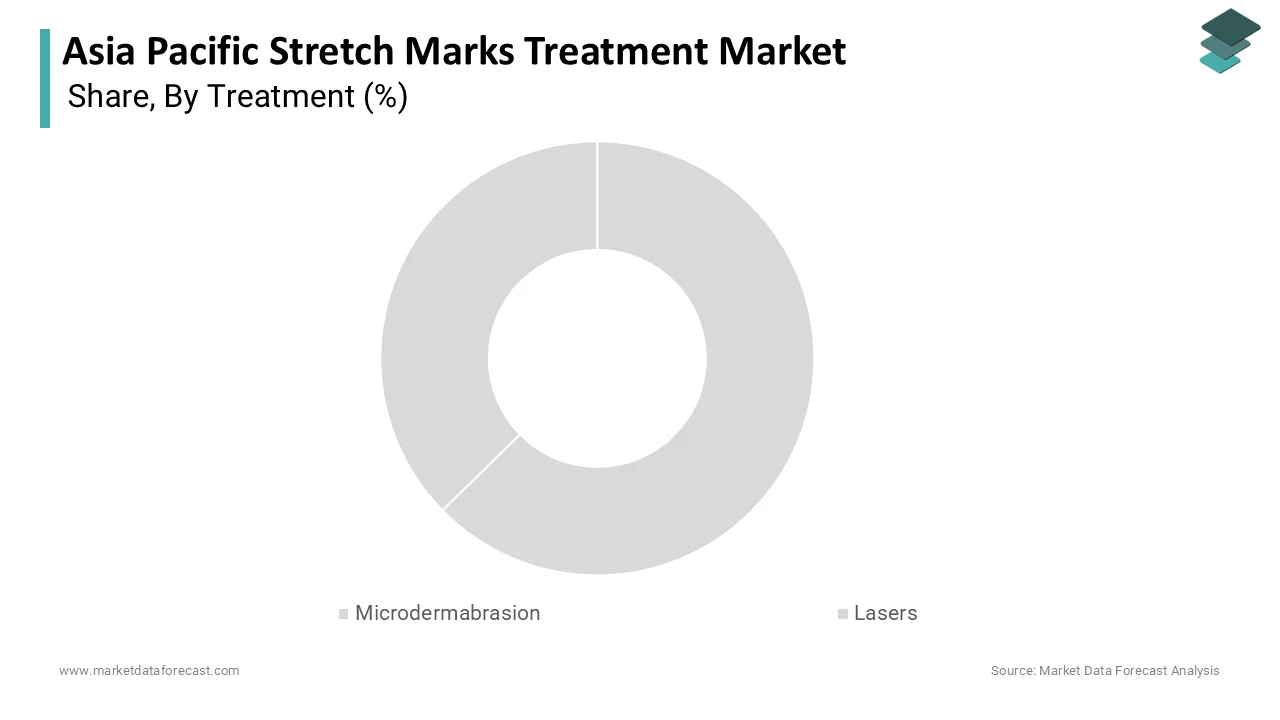
The microdermabrasion segment is likely to grow at a fastest CAGR of 8.9% from 2026 to 2034 with its status as a low-risk entry point for consumers hesitant about invasive procedures or high costs. It serves as an effective maintenance therapy between more intensive laser sessions appealing to budget-conscious patients. The convenience factor drives rapid adoption among working professionals in urban hubs like Tokyo and Seoul. The procedure’s simplicity allows for quick training of staff enabling widespread availability in spas and salons not just medical facilities. As awareness grows regarding early intervention for new stretch marks, microdermabrasion becomes the go-to preventive measure.
By End User Insights
The specialized aesthetic clinics segment was the largest by accounting for a significant share of the Asia Pacific Stretch Marks Treatment Market in 2025 with the owing to their focused expertise advanced equipment access, and patient care models. These facilities offer tailored protocols combining multiple modalities such as lasers and microneedling for optimal outcomes unlike general hospitals. The infrastructure development supports higher throughput and better resource allocation for complex procedures. Furthermore, licensed private clinics perform over 70% of all cosmetic laser procedures nationally due to shorter wait times and enhanced service amenities. Patients value the consultative approach where practitioners spend significant time explaining risks and benefits, fostering loyalty. Clinics also lead in adopting new technologies quickly without bureaucratic hospital hurdles. The agility customer-centric focus and technological sophistication of independent clinics are promoting the gro,, wth of the segment.
The hospitals segment is likely to register a fastest CAGR of 7.4% during the forecast period with the increasing integration of aesthetic services within comprehensive healthcare systems,particularly for post-bariatric surgery patients requiring extensive skin repair. These institutions possess the necessary emergency backup and multidisciplinary teams to handle complications from aggressive treatments on large surface areas. Moreover, the hospital-based programs are expanding outpatient aesthetic wings to capture insurance-covered indications alongside cash-pay cosmetic services. The credibility associated with hospital brands attracts older demographics, who may distrust standalone spas. Additionally, government initiatives promoting public-private partnerships in healthcare are facilitating equipment upgrades in municipal hospitals.
COUNTRY LEVEL ANALYSIS
China Stretch Marks Treatment Market Analysis
China was the largest contributor in the Asia Pacific Stretch Marks Treatment Market by holding 34.2% of the share in 2025 with a massive population base and rapidly rising disposable incomes among the middle class. The country’s stringent regulatory environment has paradoxically boosted consumer confidence by eliminating unlicensed providers forcing traffic toward certified clinics. Furthermore, the urban women aged 2,5 to 40 account for 60% of all stretch mark treatment consultations, reflecting peak childbearing years. E-commerce platforms facilitate easy booking and comparison shopping,g accelerating adoption rates. Government initiatives promote comparison shopping,m also boosting medical travel within provinces.
Japan Stretch Marks Treatment Market Analysis
Japan stretch marks treatment market was positioned second, holding 1an 8.2% share in 2025, with high standards of quality p, precision, and understanding aesthetic outcomes. The aging demographic creates unique demand for treatments addressing skin laxity alongside stretch marks often linked to weight fluctuations in later life. The preference drives innovation in gentle laser technologies suitable for delicate mature skin. Furthermore, insights from the Ministry of Health Labour and Welfare indicate that strict advertising regulations prevent misleading claims, fostering trust in established clinics. Consumers prioritize practitioner credentials and clinic reputation over price, leading to premium pricing structures. The cultural emphasis on meticulous care ensures high adherence to multi-session protocols. Thus, Japan serves as a benchmark for quality and safety, influencing regional trends while offering stable growth driven by an affluent elderly population willing to invest in maintaining youthful skin integrity through scientifically validated treatments.
South Korea Stretch Marks Treatment Market Analysis
South Korea stretch marks treatment marwth is likely to driven byth the world-renowned dermatological expertia se and reward culture. This is driven by leaders in adopting hybrid treatments combining lasers with topical serums and injectables for synergistic effects. The technological edge attracts international medical tourists seeking cutting-edge solutions. Furthermore, data from the Korean Tourism Organization shows that beauty-related medical travel contributed significantly to national revenue with stretch mark removal ranking among top requests. High social media usage amplifies word-of-mouth marketing, accelerating adoption of new techniques. Competitive density forces clinics to differentiate through superior service experiences and outcome guarantees.
India Stretch Marks Treatment Market Analysis
India stretch marks treatment market growth is likely to grow with the young demographic expanding urbanization and increasing awareness of personal grooming. The rise of the digital economy facilitates access to information and booking platforms, breaking down traditional barriers to entry. Furthermore, there is a parallel rise in holistic health consciousness, linking skin health to overall wellness. Price sensitivity remains high; however, this compels providers to offer tiered packages ranging from basic peels to advanced lasers. Cultural shifts toward accepting cosmetic procedures reduce stigma, encouraging wider participation. Thus, India represents a latent opportunity where strategic investments in education affordable technology and scalable clinic models can unlock vast potential al, aligning with the nation’s demographic dividend and evolving lifestyle aspirations.
Australia Stretch Marks Treatment Market Analysis
The Australian stretch marks treatment market is likely to grow with the strong consumer protection laws and high healthcare standards. The outdoor lifestyle and UV exposure concerns make skin health a priority, driving demand for reparative treatments. The strict guidelines on medical advertising ensure transparency,y building trust in legitimate providers. Furthermore, the research funding into pigmentary disorders and scarring has increased, supporting evidence-based practice advancements. High disposable incomes allow patients to access premium services, including combination therapies. The multicultural population necessitates diverse treatment protocols accommodating various skin types safely.
COMPETITIVE LANDSCAPE
The competitive environment of the Asia Pacific Stretch Marks Treatment Market features intense rivalry among multinational laser manufacturers and emerging regional tech firms vying for dominance in aesthetic clinics. Major incumbents leverage established brand equity and extensive service networks to maintain influence over purchasing decisions in developed countries like Japan and Australia. New entrants face significant hurdles due to stringent medical device regulations and the need for localized clinical data proving efficacy on diverse ethnic skin types. Differentiation occurs through unique wavelength combinations and AI-integrated treatment protocols that promise superior results with minimal downtime. Companies engage in aggressive pricing strategies bundled with financing options to attract smaller clinics in price-sensitive regions like Vietnam and Indonesia. Innovation cycles are accelerating, with focus shifting toward painless, non-invasive technologies suitable for mass adoption. Strategic mergers and acquisitions reshape the landscape as larger entities absorb niche specialists to broaden portfolios. Technology adoption distinguishes leaders who utilize cloud-based patient management systems by enhancing operational efficiency.
KEY MARKET PLAYERS
Some of the companies that are playing a dominating role in the Asia Pacific Stretch Marks Treatment Market include:
- Syneron Medical Ltd.
- E.T. Browne Drug Co., Inc.
- Union-Swiss (Pty) Ltd.
- Basq Skincare
- Ellipse A/S
- Laboratoires Expanscience
- Clarins Group
- Merz North America, Inc.
- Cynosure, Inc.
- The Boppy Company LLC
- Helix BioMedix, Inc.
- Weleda AG
- Dermaclara, Inc.
- Mama Mio US, Inc.
- Centre Light Solutions, LLC
TOP LEADING PLAYERS IN THE MARKET
- Cynosure Inc. maintains a formidable presence in the Asia Pacific Stretch Marks Treatment Market through its advanced PicoWay laser technology, which effectively targets dermal pigmentation and scar remodeling. The company focuses on expanding distribution networks in key countries like China and South Korea to enhance accessibility for specialized clinics. Recent actions include launching comprehensive training programs for practitioners to ensure optimal device utilization and patient safety. Their strategic emphasis on scientific validation through peer-reviewed studies builds trust among dermatologists.
- Lumenis Ltd. plays a pivotal role by offering versatile multi-application platforms such as the UltraPulse CO2 laser, which is highly regarded for ablative resurfacing procedures. The company emphasizes reliability and ease of use,se appealing to high-volume aesthetic centers in Japan and Australia. Recent initiatives involve partnering with local distributors to establish service hubs reducing maintenance downtime for critical equipment. Lumenis invests heavily in R&D to develop non-ablative alternatives that minimize recovery periods attracting busy urban professionals. They actively participate in regional medical conferences to educate stakeholders on the latest techniques.
- Alma Lasers Ltd. distinguishes itself through its hybrid platform approach combining multiple wavelengths in single devices like the Soprano Titanium system. This innovation allows clinics to offer comprehensive body contouring and skin tightening services alongside stretch mark reduction. Recent actions include expanding manufacturing capabilities in Israel to meet rising Asian demand, while maintaining strict quality controls. Alma collaborates with celebrity influencers and social media platforms to drive consumer awareness directly to partner clinics. They focus on user-friendly interfaces that reduce operator error enhancing safety profiles for darker skin tones prevalent in Southeast Asia. Strategic alliances with spa chains facilitate bulk procurement deals,s increasing market penetration.
TOP STRATEGIES USED BY KEY MARKET PARTICIPANTS
Key players in the Asia Pacific Stretch Marks Treatment Market, primarily employ localization strategies to adapt global technologies to regional skin types and regulatory requirements. Another dominant tactic involves forming exclusive partnerships with leading hospital chains and aesthetic clinic networks to secure preferred vendor status. Firms also pursue aggressive educational initiatives including certification workshops for doctors and nurses to build loyalty and ensure proper device usage. Marketing efforts focus on digital engagement leveraging social media platforms popular in Asia to reach younger demographics seeking cosmetic improvements. Additionally, manufacturers emphasize after-sales service packages including rapid spare parts delivery and remote diagnostics to minimize clinic downtime. Product diversification into home-use devices complements professional offerings, capturing broader consumer spending.
MARKET SEGMENTATION
This research report on the Asia Pacific Stretch Marks Treatment Market has been segmented and sub-segmented into the following categories.
By Treatment
- Microdermabrasion
- Lasers
By End User
- Hospitals
- Clinics
- Specialty Dermatology Centers
- Home-use
By Country
- India
- China
- Japan
- South Korea
- Australia
- New Zealand
- Thailand
- Malaysia
- Vietnam
- Philippines
- Indonesia
- Singapore
- Rest of APAC