Asia Pacific Yogurts Market By Product Type (Icelandic Yogurt, Australian Yogurt, Traditional Yogurt, Greek Yogurt, Kids Yogurt, Non-Dairy Yogurt And Other Yogurts), Packaged Containers (Yogurt Tubs, Yogurt Cups, Yogurt Pouches And Yogurt Bottles), And Region - Industry Analysis, Size, Share, Growth, Trends And Forecasts (2026 to 2034)

ID: 3660
Pages: 145

Market Size, 2025

$3.02 Bn

Market Estimate, 2026

$3.18 Bn

Market Forecast, 2034

$4.79 Bn

CAGR, 2026–2034

5.25%

Asia Pacific Yogurts Market Size

The Asia Pacific Yogurts Market size was calculated to be USD 3.02 billion in 2025 and is anticipated to be worth USD 4.79 billion by 2034, from USD 3.18 billion in 2026, growing at a CAGR of 5.25% during the forecast period.
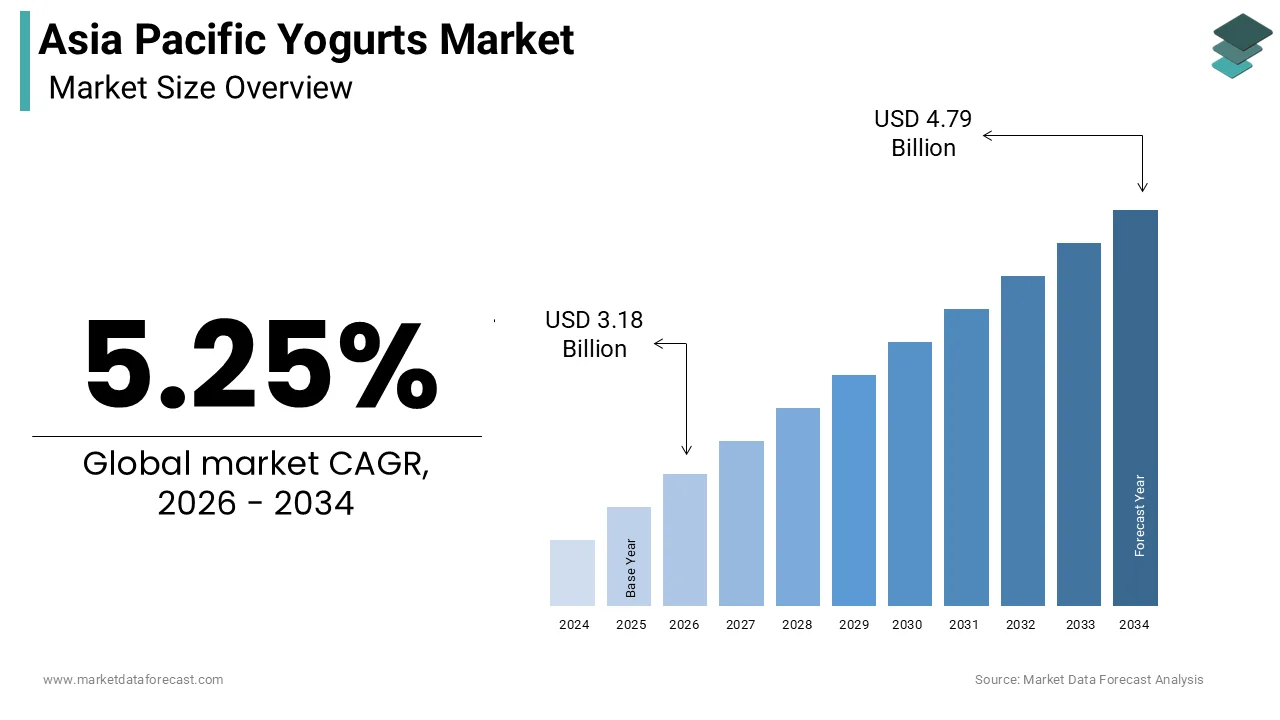
Asia Pacific Yogurts Market size was calculated to be USD 3.02 billion in 2025 and is anticipated to be worth USD 4.79 billion by 2034

Yogurt is a food product which is made from bacterial fermentation of milk. The bacteria which are used in preparing yogurt are called yogurt cultures. Action of bacteria on lactose present in milk produces lactic acid, which gives yogurt its characteristic taste. Most commonly, milk obtained from cow is used in making yogurt.

A wide range of delicacies are prepared from yogurt throughout the world. In India, a unique yogurt called dahi is prepared which is known for its characteristic taste. Dadiah is a special kind of yogurt prepared from fermented bamboo tubes in Sumatra region. In Iran, yogurt is used as a side dish to all meals in their cuisine.  Matsoni is a popular yogurt in Russia and Caucasus regions, which is believed to contribute to longevity and high life expectancy among the people. In addition to being used in foods, it is used in regions like India and Pakistan as a cosmetic by mixing yogurt and honey.

Market Drivers

The Asia Pacific Yogurts market is driven by factors like rising disposable incomes, changing dietary styles of people, rising availability of yogurt in developing regions of the world and growing awareness about wide range of health benefits such as immunity boost, relieving constipation and diarrhea offered by yogurt among others.

Segmental Analysis

Asia Pacific Yogurts Market By Product Type

  • Icelandic yogurt
  • Australian yogurt
  • Traditional yogurt
  • Greek yogurt
  • kids yogurt
  • Non-dairy yogurt
  • Other yogurts

Asia Pacific Yogurts Market By Packaged Containers

  • yogurt tubs
  • yogurt cups
  • yogurt pouches
  • yogurt bottles

Regional Analysis

  • India
  • China
  • Japan
  • Australia

Asia Pacific has the third largest market for yogurts in the world by share and is also the fastest growing market. Within Asia Pacific region, China is expected to have the largest share. Factors such as rising disposable income and increasing awareness about the health benefits offered by yogurt is expected to drive the market growth in the region.

Key Players in the Market

Some of the major players in the market include Danone Groupe SA, Ultima Foods Inc, Chobani Inc., Sodiaal S.A, NESTLÉ SA, General Mills, and Kraft Foods Group, Inc , Yakult Honsha Co., Ltd among others.

Trusted by 500+ companies. We respect your privacy and never share your data.

Please wait. . . . Your request is being processed

Frequently Asked Questions

1. What is driving the growth of the APAC yogurts market?

The market is driven by increasing health awareness, rising demand for probiotic foods, growing disposable incomes, and expanding retail distribution.

2. What are the major types of yogurt available in the market?

The market includes regular yogurt, Greek yogurt, flavored yogurt, drinkable yogurt, probiotic yogurt, and plant-based yogurt.

3. Which application segment dominates the APAC yogurts market?

The retail household consumption segment dominates the market, followed by the foodservice sector.

4. Which flavors are most popular in the APAC yogurt market?

Popular flavors include strawberry, vanilla, mango, blueberry, peach, mixed berries, and region-specific fruit flavors.

5. What factors are increasing yogurt consumption in Asia-Pacific?

Urbanization, changing dietary habits, growing fitness awareness, rising demand for functional foods, and increasing availability of premium yogurt products are boosting consumption.

6. What challenges does the APAC yogurts market face? .

Challenges include fluctuating milk prices, cold chain logistics, short product shelf life, and increasing competition from dairy alternatives

7. Which distribution channels are commonly used for yogurt products?

Yogurt is sold through supermarkets, hypermarkets, convenience stores, specialty stores, online retail platforms, and foodservice outlets.

8. Which consumer groups are driving demand for yogurt?

Health-conscious consumers, children, young professionals, elderly individuals, athletes, and fitness enthusiasts are major consumers.

9. What trends are shaping the APAC yogurts market?

Key trends include clean-label products, organic yogurt, functional ingredients, premium offerings, sustainable packaging, and personalized nutrition.

10. What is the future outlook for the APAC yogurts market?

The APAC yogurts market is expected to witness steady growth, supported by rising health awareness, expanding product portfolios, technological advancements in dairy processing, and increasing consumer demand for nutritious and convenient foods.

Related Reports

Click for Request Sample