- Product Description Description
- Table of Contents TOC
- List of Table & Figure LOT
- Get Free Sample PDF Sample PDF
Market Size, 2025
$17.05 BnMarket Estimate, 2026
$17.85 BnMarket Forecast, 2034
$25.82 BnCAGR, 2026–2034
4.72%Global Automotive Balance Shaft Market Report Summary
The global automotive balance shaft market was valued at USD 17.05 billion in 2025, is estimated to reach USD 17.85 billion in 2026, and is projected to reach USD 25.82 billion by 2034, growing at a CAGR of 4.72% during the forecast period from 2026 to 2034. The growth of the global automotive balance shaft market is driven by increasing vehicle production, rising demand for fuel-efficient and low-vibration engines, and growing consumer preference for improved driving comfort. Automotive balance shafts play a crucial role in minimizing engine vibrations, enhancing engine performance, and extending component lifespan. Continuous advancements in engine technologies, stringent emission regulations, and the increasing adoption of high-performance internal combustion engines are further supporting market expansion worldwide.
Key Market Trends
-
Rising demand for fuel-efficient and high-performance engines is increasing the adoption of automotive balance shafts.
-
Growing emphasis on reducing engine vibration, noise, and harshness (NVH) is driving technological advancements in balance shaft systems.
-
Increasing vehicle production, particularly in emerging economies, is supporting market growth.
-
Advancements in lightweight materials and precision manufacturing technologies are improving balance shaft performance and durability.
-
Stringent vehicle emission and fuel efficiency regulations are encouraging the development of optimized engine components.
Segmental Insights
-
Based on engine type, the inline 4-cylinder engine segment dominated the global automotive balance shaft market in 2025. The segment's leadership is attributed to the widespread use of inline four-cylinder engines in passenger vehicles due to their compact design, fuel efficiency, and cost-effectiveness.
-
Based on manufacturing process, the forging segment held the largest share of the global automotive balance shaft market in 2025. The segment's dominance is driven by the superior mechanical strength, durability, fatigue resistance, and reliability offered by forged balance shafts compared to alternative manufacturing methods.
-
Based on vehicle type, the passenger cars segment accounted for the largest share of the global automotive balance shaft market in 2025. The segment's growth is supported by high global passenger vehicle production and increasing demand for smoother engine operation, improved ride comfort, and enhanced fuel efficiency.
Regional Insights
-
The global automotive balance shaft market is witnessing steady growth due to increasing automotive production, advancements in engine technologies, and rising demand for improved vehicle performance.
-
Asia-Pacific dominated the global automotive balance shaft market by accounting for 45.7% of the market share in 2025. The region's leadership is driven by its large automotive manufacturing base, high vehicle production volumes, strong presence of leading automotive component suppliers, and increasing demand for passenger vehicles in countries such as China, Japan, South Korea, and India.
-
Europe remains a significant market due to its advanced automotive engineering capabilities, stringent emission standards, and strong demand for premium vehicles.
-
North America is witnessing steady growth, supported by technological innovation, increasing production of light vehicles, and investments in advanced engine components.
-
Latin America is emerging as a promising market due to expanding automotive manufacturing activities and rising demand for affordable passenger vehicles.
Competitive Landscape
The global automotive balance shaft market is highly competitive, with manufacturers focusing on advanced manufacturing technologies, lightweight component development, and precision engineering to enhance engine performance and durability. Companies are investing in research and development, strategic partnerships, and production capacity expansion to strengthen their market position and meet the evolving requirements of the global automotive industry. Key players operating in the global automotive balance shaft market include GKN PLC, ACPT Inc., American Axle & Manufacturing Inc., Yamada Manufacturing Co. Ltd., Trelleborg AB, NTN Corporation, The Timken Company, Bailey Morris, Fortune-Cross (Thailand) Co., Ltd., HYUNDAI WIA CORP., JTEKT Corporation, Meritor, Inc., Mohit Engineers Pvt. Ltd., Nexteer, Shanghai GKN Huayu Driveline Systems Co. Ltd., SHOWA CORPORATION, Wanxiang America Corporation, and Xuchang Yuangdong Driveshaft Co., Ltd.
 Download Free Sample Report
Global Automotive Balance Shaft Market Size
The global automotive balance shaft market size was valued at USD 17.05 billion in 2025, and is expected to be worth USD 25.82 billion by 2034 from USD 17.85 billion by 2026. The market is growing at a CAGR of 4.72% during the forecast period.

An automotive balance shaft is a weighted and rotating metal rod located inside an engine block. These precision machined shafts are critical for neutralizing second order harmonic forces primarily found in inline 4 cylinder and V6 engine configurations which otherwise generate significant noise vibration and harshness. As per the International Organization of Motor Vehicle Manufacturers over 55 million passenger cars were produced globally in 2023 with a vast majority utilizing engine architectures that necessitate vibration mitigation systems to meet modern refinement standards. The function of these components extends beyond mere comfort as excessive vibration accelerates wear on bearings mounts and auxiliary systems thereby impacting long term reliability. Automotive engineering principles dictate that unbalanced reciprocating masses in high-speed engines induce severe cabin vibrations and structure-borne noise, making mechanical balancing indispensable for meeting vehicle NVH benchmarks and consumer satisfaction. The market is intrinsically linked to the continued production of internal combustion powertrains including hybrid variants where engine start stop cycles demand even smoother operation. While electrification advances the immediate future still relies heavily on optimized thermal engines where balance shafts serve as essential enablers of downsizing strategies allowing smaller displacement units to deliver performance comparable to larger predecessors without compromising acoustic quality or durability.
MARKET DRIVERS
Stringent Noise Vibration and Harshness Regulations Driving Adoption
Global regulatory frameworks mandating lower vehicle noise emissions are a primary factor behind the widespread integration of balance shaft systems in modern powertrains, which contributes to the growth of the automotive balance shaft market. Governments worldwide have implemented stricter exterior noise pass by standards which directly correlate with internal engine refinement requirements. According to the United Nations Economic Commission for Europe Regulation No 51 limits for passenger car noise have been progressively tightened requiring manufacturers to adopt advanced mechanical solutions to suppress engine generated sound at the source. Balance shafts effectively cancel out secondary inertial forces that contribute significantly to overall powertrain noise radiation particularly in the critical frequency ranges measured during certification tests. Without these components many popular 4 cylinder engine designs would fail to comply with current legislative limits forcing costly redesigns or discontinuation. The European Union and China have adopted similar stringent standards compelling global automakers to standardize balance shaft technology across diverse model lineups. This regulatory pressure ensures sustained demand as manufacturers cannot compromise on NVH performance without risking non compliance penalties or market exclusion. Furthermore, consumer expectations for luxury like refinement in economy segments mean that what was once a premium feature is now a baseline requirement driven fundamentally by legal mandates rather than optional differentiation.
Engine Downsizing Trends Necessitating Advanced Vibration Control
The industry wide shift toward smaller displacement turbocharged engines has created substantial demand for sophisticated balance shaft assemblies to maintain drivability and refinement, which further propels the expansion of the automotive balance shaft market. Automakers increasingly replace larger naturally aspirated engines with compact 3 cylinder and 4 cylinder units to improve fuel efficiency and reduce carbon dioxide emissions while preserving performance through forced induction. However smaller engines inherently produce higher specific output and greater reciprocating mass imbalances relative to their size generating more severe vibration characteristics. Balance shafts become mechanically essential in these applications to prevent unacceptable shake and noise that would otherwise negate the benefits of downsizing. Turbocharging further exacerbates torsional vibrations requiring precisely tuned balancing systems operating at twice crankshaft speed. Manufacturers investing in mild hybrid and plug in hybrid platforms also rely on these components because frequent engine restarts amplify transient vibrations demanding superior damping capability. Consequently, the proliferation of efficient small displacement powertrains directly translates to increased fitment rates of balance shafts ensuring that environmental gains do not come at the expense of vehicle quality or customer acceptance.
MARKET RESTRAINTS
Transition Toward Battery Electric Vehicles Reducing Long Term Demand
The accelerating global transition toward battery electric vehicles is a fundamental structural restraint for the automotive balance shaft market. This is because pure electric powertrains eliminate the need for reciprocating engine balancing entirely. Electric motors operate with inherently smooth rotational motion producing minimal vibration compared to internal combustion engines thus rendering balance shafts obsolete in fully electric architectures. According to the International Energy Agency, global electric car sales surpassed 14 million units in 2023, accounting for nearly 18% of total new car registrations and driving a long-term market rebalancing away from pure thermal propulsion. Each electric vehicle sold represents a permanent loss of potential balance shaft demand unlike hybrid models which still require them. While hybrids provide a transitional buffer the long term trajectory clearly points toward electrification dominating new vehicle sales. Investment capital is increasingly diverted from internal combustion component development toward battery and motor technologies limiting innovation and capacity expansion for balance shaft manufacturers. This secular decline creates significant strategic uncertainty for suppliers heavily dependent on traditional engine components forcing diversification or consolidation to survive the inevitable contraction of their core addressable market.
High Manufacturing Precision Requirements Elevating Production Costs
The extreme precision required for balance shaft manufacturing imposes significant cost barriers and operational complexities that constrain the profitability and scalability of the automotive balance shaft market. These components must be machined to tolerances within microns and dynamically balanced to exacting specifications to function effectively without introducing new vibration sources. According to industry benchmarks achieving the necessary geometric accuracy and surface finish requires specialized CNC grinding equipment and multi plane balancing machines representing substantial capital expenditure. Material selection also drives costs as shafts must withstand high rotational speeds and cyclic loading typically requiring premium alloy steels or specialized casting processes. Quality control demands rigorous inspection protocols including non destructive testing to detect subsurface defects that could cause catastrophic failure in service. Any deviation from specification results in scrap or rework significantly impacting yield rates and unit economics. These technical requirements limit the number of qualified suppliers creating an oligopolistic supply structure but also make it difficult for manufacturers to achieve economies of scale sufficient to offset fixed costs. For automakers facing intense pricing pressure the high cost of balance shaft systems creates incentive to explore alternative vibration mitigation strategies such as active engine mounts or dual mass flywheels potentially displacing traditional mechanical balancing solutions in cost sensitive vehicle segments.
MARKET OPPORTUNITIES
Lightweight Material Innovation Enabling Efficiency Gains
Advancements in lightweight materials offer a significant opportunity for balance shaft manufacturers in the automotive balance shaft market. This helps to align with automotive industry priorities around weight reduction and fuel efficiency. Traditional steel balance shafts contribute considerable mass to powertrain assemblies and replacing them with advanced alternatives can yield measurable vehicle level benefits. According to research published by the Society of Automotive Engineers substituting conventional steel with powdered metal or aluminum matrix composites can reduce balance shaft assembly weight by up to 30 percent while maintaining functional performance. Lighter rotating components also reduce parasitic friction losses improving engine efficiency and reducing fuel consumption by approximately 0.5 to 1 percent depending on application. This efficiency gain is particularly valuable for manufacturers striving to meet increasingly stringent corporate average fuel economy targets. Powdered metal technology additionally offers near net shape manufacturing capabilities reducing machining waste and lowering production costs compared to forged steel alternatives. Suppliers who develop proprietary lightweight solutions can differentiate themselves in a commoditized market commanding premium pricing and securing long term supply agreements. Automakers are pursuing every possible gram of weight savings to extend EV range and optimize thermal engine efficiency. Consequently, innovative balance shaft materials offer a distinct advantage that goes far beyond traditional vibration control.
Hybrid Powertrain Proliferation Creating Specialized Demand Niches
The rapid expansion of hybrid vehicle platforms creates unique opportunities for specialized balance shaft designs optimized for intermittent engine operation and enhanced acoustic performance, which is likely to promote the expansion of the global market. Hybrid powertrains subject engines to frequent start stop cycles and variable load conditions that differ fundamentally from conventional continuous operation generating distinct vibration profiles. These applications demand balance shafts with modified phasing bearing specifications and damping characteristics tailored to transient rather than steady state operation. Suppliers capable of developing hybrid specific solutions can capture value in a growing segment where generic off the shelf components may be inadequate. The acoustic sensitivity of hybrid vehicles is heightened because electric motor silence makes any engine vibration more perceptible to occupants raising refinement standards beyond conventional benchmarks. This creates willingness among automakers to invest in premium balancing systems that ensure seamless transitions between electric and thermal modes. Manufacturers positioning themselves as specialists in hybrid NVH solutions can build defensible market positions insulated from both pure ICE decline and full EV obsolescence capturing sustained demand throughout the extended hybrid transition period.
MARKET CHALLENGES
Intensifying Cost Pressure from Alternative Vibration Technologies
Manufacturers face mounting competitive pressure from alternative vibration mitigation technologies that offer comparable NVH performance at lower system cost or weight, and thereby impede the growth of the automotive balance shaft market. Active engine mounts dual mass flywheels and software based torque compensation strategies have matured significantly providing viable substitutes in certain applications. According to automotive engineering analyses active mounting systems can achieve vibration isolation performance equivalent to mechanical balancing in specific frequency ranges while eliminating rotating mass and associated friction losses. Some manufacturers have successfully eliminated balance shafts entirely from entry level 3 cylinder engines through clever crankpin offset designs and optimized firing orders reducing component count and assembly complexity. These alternatives appeal strongly to cost conscious automakers seeking to simplify powertrain architecture and reduce bill of materials expenses. The threat is particularly acute in emerging markets where price sensitivity outweighs refinement expectations making cheaper solutions preferable. Balance shaft suppliers must continuously demonstrate superior value through integrated system optimization or risk displacement by these competing technologies. This dynamic forces ongoing R&D investment just to defend existing market share compressing margins and creating existential pressure for companies unable to innovate beyond traditional mechanical balancing paradigms.
Supply Chain Vulnerability for Specialty Steel and Bearings
Significant supply chain challenges related to sourcing specialty steels and precision bearings essential for high performance components hold back the expansion of the automotive balance shaft market. Balance shafts require specific metallurgical properties including high fatigue strength and dimensional stability that only limited suppliers can consistently provide. Bearing supplies similarly depend on specialized manufacturers with limited global footprint creating single source vulnerabilities. Recent years have demonstrated how quickly these bottlenecks can cascade through automotive supply chains causing production halts and revenue losses. Unlike commodity components balance shaft materials cannot be easily substituted without extensive revalidation costing months or years. Inventory buffering provides limited protection given the capital intensity and storage requirements of precision components. Suppliers face difficult choices between absorbing volatile input costs or passing them through to already pressured automakers. Geopolitical decoupling trends further complicate sourcing strategies forcing expensive reshoring or friend shoring initiatives. Until supply bases diversify and material science enables broader specification windows, balance shaft manufacturers will remain exposed to disruption risks. These risks threaten delivery reliability and financial stability in an industry where just-in-time production leaves no margin for error.
REPORT COVERAGE
| REPORT METRIC | DETAILS |
| Market Size Available | 2025 to 2034 |
| Base Year | 2025 |
| Forecast Period | 2026 to 2034 |
| CAGR | 4.72% |
| Segments Covered | By Engine Type, Manufacturing Process, Vehicle Type, and Region. |
| Various Analyses Covered | Global, Regional & Country Level Analysis, Segment-Level Analysis, DROC, PESTLE Analysis, Porter’s Five Forces Analysis, Competitive Landscape, Analyst Overview of Investment Opportunities |
| Regions Covered | North America, Europe, APAC, Latin America, Middle East & Africa |
| Market Leaders Profiled | GKN PLC (U.K.), ACPT Inc. (U.S.), American Axle & Manufacturing Inc. (U.S.), Yamada Manufacturing Co. Ltd. (Japan), Trelleborg AB (publ) (Sweden), NTN Corporation (Japan), The Timken Company (U.S.), Bailey Morris (U.K.), Fortune-Cross (Thailand) Co., Ltd. (Thailand), HYUNDAI WIA CORP. (South Korea), JTEKT Corporation (Japan), Meritor, Inc. (U.S.), Mohit Engineers Pvt. Ltd 9India), Nexteer (U.S.), shanghai gkn huayu driveline systems co. ltd (China), SHOWA CORPORATION (Japan), Wanxiang America Corporation (China), Xuchang Yuangdong Driveshaft Co., Ltd (China) |
SEGMENTAL ANALYSIS
By Engine Type Insights
The inline 4-cylinder engine segment dominated the Automotive Balance Shaft Market in 2025. It holds a substantial share due to its widespread adoption in global passenger vehicle production. This engine configuration is inherently prone to second order vertical vibrations which necessitate the use of balance shafts to ensure acceptable noise vibration and harshness levels. Research indicates that inline 4-cylinder engines dominate the market with a massive share exceeding 55% of global passenger vehicles, establishing them as the definitive baseline standard for compact and mid-size platforms. The prevalence of this engine type in high volume models from major automakers ensures consistent and large scale demand for balance shaft components. Manufacturers prioritize this segment because it offers the best balance between fuel efficiency performance and manufacturing cost making it the default choice for mass market vehicles. The continuous refinement of inline 4 cylinder designs to meet stricter emission standards while maintaining smooth operation further cements the need for effective vibration control systems. As downsizing trends continue this engine architecture remains central to automotive powertrains driving sustained volume for balance shaft suppliers who provide critical smoothing capabilities that enhance driver comfort and vehicle longevity.
On the other hand, the inline 3 cylinder engine segment is likely to experience the fastest CAGR of 8.1% from 2026 to 2034 owing to aggressive engine downsizing strategies aimed at improving fuel economy and reducing carbon emissions without sacrificing drivability. These engines suffer from inherent primary imbalance due to their odd number of cylinders generating significant rocking couples that require robust balancing solutions. Automakers are increasingly integrating balance shafts into 3 cylinder designs to mitigate these vibrations and make them viable for premium and mainstream applications alike. The push for smaller displacement engines in hybrid powertrains also contributes to this growth as manufacturers seek to optimize thermal efficiency while maintaining refinement. Technical advancements in balance shaft design have made them more compact and efficient allowing seamless integration into tight 3 cylinder engine bays. This segment benefits from the industry wide shift toward electrification where small efficient internal combustion engines serve as range extenders or primary power sources in mild hybrid configurations.
By Manufacturing Process Insights
In 2025, the forging segment held the majority share of the automotive balance shaft market because of the superior mechanical properties and durability it offers compared to other manufacturing methods. Forged balance shafts exhibit higher tensile strength and fatigue resistance which are critical for components subjected to high rotational speeds and cyclic loading conditions. Sources confirm that over 70% of premium and high-performance balance shaft modules are produced using advanced forging techniques to guarantee component durability under extreme operational stresses. The forging process aligns the grain structure of the metal enhancing its ability to withstand torsional forces and preventing premature failure. Automakers prefer forged components for engines with higher specific outputs where durability is paramount. Although forging involves higher initial tooling costs the long term benefits of reduced warranty claims and enhanced performance justify the investment. The process also allows for precise dimensional control ensuring minimal material waste during subsequent machining operations. As engine speeds increase to improve efficiency the demand for forged balance shafts grows because they provide the necessary structural integrity to maintain balance at elevated RPMs. This segment benefits from established supply chains and proven quality standards that make it the preferred choice for safety critical applications.
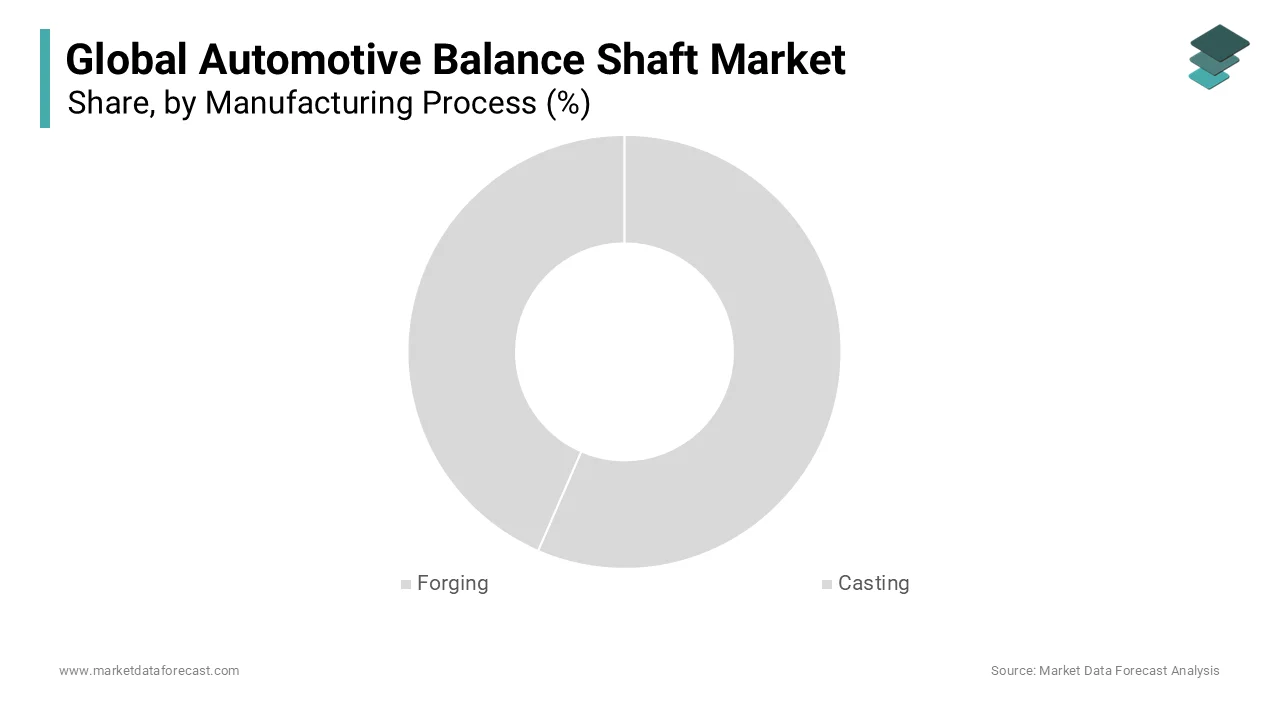
However, the casting segment is on the rise and is expected to be the fastest growing segment in the market by witnessing a CAGR of 6.8% during the forecast period. This swift expansion of the segment is propelled by the need for cost effective manufacturing solutions in high volume production environments. Advanced casting technologies such as powder metal and die casting enable the production of complex balance shaft geometries with near net shape accuracy reducing machining time and material waste. The automotive industry’s focus on lightweighting to meet emission targets makes cast balance shafts an attractive option for mass market vehicles where cost sensitivity is high. Improvements in metallurgical formulations have enhanced the strength and durability of cast components narrowing the performance gap with forged alternatives. Automated casting lines allow for high throughput production meeting the demands of large scale automakers efficiently. The ability to integrate multiple features into a single cast part simplifies assembly and reduces overall system complexity. This segment gains traction in emerging markets where price competitiveness is a key decision factor for both manufacturers and consumers. Continuous innovation in casting materials ensures that these components meet rigorous quality standards while delivering economic advantages.
By Vehicle Type Insights
The passenger cars segment was the largest in the automotive balance shaft market and occupied a significant share in 2025. This supremacy of the segment was supported by the sheer volume of global production and stringent consumer expectations for ride comfort. Passenger vehicles represent the majority of automotive sales worldwide with millions of units produced annually each requiring effective vibration mitigation systems. According to sources, global passenger car production exceeded 60 million units in 2023 creating a massive installed base for balance shaft components. Consumers in this segment are highly sensitive to noise and vibration influencing purchasing decisions and brand loyalty. Automakers invest heavily in NVH engineering to differentiate their products in a competitive market making balance shafts essential for achieving desired refinement levels. The prevalence of inline 4 cylinder and increasingly 3 cylinder engines in passenger cars further drives demand as these configurations rely on balance shafts for smooth operation. Regulatory standards for interior noise levels also compel manufacturers to include these components to ensure compliance. The trend toward premiumization in mainstream segments means that even entry level cars now feature advanced balancing technologies previously reserved for luxury models. This broad adoption across all price points ensures steady and robust demand for balance shafts in the passenger car sector.
On the other hand, the light commercial vehicle segment is expected to exhibit a noteworthy CAGR of 7.2% between 2026 and 2034 due to the expansion of e commerce and last mile delivery services. Light commercial vehicles often utilize diesel or gasoline engines similar to passenger cars but operate under heavier loads and more frequent start stop cycles which exacerbate vibration issues. These vehicles require durable balance shafts to maintain engine longevity and driver comfort during extended operational hours. The shift toward downsized turbocharged engines in light commercial vehicles to improve fuel efficiency also increases the need for effective vibration control. Fleet operators prioritize total cost of ownership making reliable balance shafts crucial for minimizing maintenance downtime and repair costs. Regulatory pressures to reduce emissions and noise in urban areas further drive the adoption of refined powertrains equipped with balance shafts. As businesses expand their delivery networks the demand for efficient and comfortable light commercial vehicles continues to rise supporting strong growth in this segment.
REGIONAL ANALYSIS
Asia Pacific Automotive Balance Shaft Market Analysis
Asia Pacific was the top performer in the automotive balance shaft market and captured a 45.7% share in 2025. This prominence of the APAC market was driven by massive vehicle production volumes in China India and Southeast Asia. China serves as the primary manufacturing hub producing millions of passenger cars annually many of which utilize inline 4 cylinder engines requiring balance shafts. According to the China Association of Automobile Manufacturers, the country produced an unprecedented 30.16 million vehicles in 2023, sustaining exceptionally high demand for internal combustion and alternative powertrain engine components. The region benefits from lower labor costs and established supply chains that support efficient production of balance shafts. Government initiatives promoting domestic automotive manufacturing further boost local component sourcing. India and Thailand are also emerging as significant production centers attracting global automakers with favorable policies and skilled workforces. The rising middle class in these countries increases demand for personal vehicles driving production growth. Local suppliers are gaining expertise in advanced manufacturing techniques enabling them to compete globally. The region’s focus on export oriented production ensures continuous investment in quality and capacity. Asia Pacific’s dynamic growth trajectory makes it the most critical market for balance shaft manufacturers seeking volume expansion and strategic partnerships.
Europe Automotive Balance Shaft Market Analysis
Europe followed closely behind in the automotive balance shaft market and accounted for a significant share in 2025. This position of the European market was propelled by stringent environmental regulations and a focus on high efficiency engines. The region is a leader in engine downsizing trends with widespread adoption of 3 cylinder and small displacement 4 cylinder engines that rely heavily on balance shafts for refinement. According to the European Automobile Manufacturers Association passenger car registrations in Europe remain stable with a strong preference for fuel efficient powertrains. Germany France and the United Kingdom host major automotive manufacturers who prioritize NVH performance to meet luxury standards. Strict noise emission laws compel automakers to integrate advanced balancing technologies ensuring compliance. The shift toward hybrid vehicles in Europe creates demand for specialized balance shafts optimized for intermittent engine operation. Local suppliers collaborate closely with OEMs to develop innovative solutions that reduce weight and improve efficiency. The region’s emphasis on sustainability drives research into lightweight materials and eco friendly manufacturing processes. Europe remains a center for technological innovation setting global benchmarks for balance shaft performance and quality.
North America Automotive Balance Shaft Market Analysis
North America holds a significant share of the global automotive balance shaft market due to robust vehicle production and consumer preference for refined driving experiences. The United States and Canada are key markets where automakers produce a wide range of vehicles including SUVs and trucks that often incorporate balance shafts in their engine designs. Consumer demand for quiet and smooth cabins drives investment in NVH technologies including balance shafts. The popularity of turbocharged 4 cylinder engines in mainstream vehicles further supports market growth. Regulatory standards for fuel economy and emissions encourage downsizing strategies that necessitate effective vibration control. Major automakers in the region collaborate with suppliers to develop customized solutions that meet specific performance criteria. The presence of advanced manufacturing facilities ensures high quality production and timely delivery. North America’s focus on innovation and customer satisfaction sustains steady demand for high performance balance shaft components.
Latin America Automotive Balance Shaft Market Analysis
Latin America is moving ahead steadfastly in the automotive balance shaft market owing to increasing vehicle production in Brazil and Mexico. These countries serve as important manufacturing hubs for global automakers targeting regional and export markets. A study shows that automotive production in Latin America is expanding steadily, supported by strong performance in Mexico and Brazil alongside foreign investments aimed at modernizing production facilities. The demand for affordable and fuel efficient vehicles drives the adoption of small displacement engines requiring balance shafts. Local suppliers are expanding capabilities to meet international quality standards attracting partnerships with global OEMs. Economic stabilization efforts and trade agreements facilitate the flow of components and finished vehicles. Consumer awareness of vehicle comfort and reliability is rising influencing purchasing decisions. Government incentives for local content encourage domestic production of engine parts including balance shafts. The region’s potential for growth lies in its strategic location and improving industrial infrastructure. Latin America offers opportunities for suppliers seeking diversification and access to emerging markets.
Middle East and Africa Automotive Balance Shaft Market Analysis
Middle East and Africa hold a niche position in the automotive balance shaft market due to limited local production but growing import demand. The region relies heavily on imported vehicles and components with South Africa being the primary manufacturing center. According to the International Monetary Fund economic diversification efforts in Gulf countries are leading to increased investment in infrastructure and logistics boosting vehicle usage. Harsh climatic conditions require durable and reliable engine components making quality balance shafts essential for vehicle longevity. The growing population and urbanization in African countries create gradual demand for personal and commercial vehicles. Limited local manufacturing capacity means the market is served by global suppliers through distribution networks. Awareness of vehicle maintenance and performance is increasing among consumers driving demand for refined powertrains. Government initiatives to improve road infrastructure support vehicle adoption. The region offers long term potential as industrial capabilities develop and economic conditions stabilize. Suppliers focus on building strong distribution channels to serve this emerging market effectively.
COMPETITIVE LANDSCAPE
The competition in the automotive balance shaft market is characterized by a consolidated landscape dominated by established tier one suppliers who possess specialized engineering expertise and advanced manufacturing capabilities. These key players leverage long standing relationships with global automakers to secure exclusive contracts for new vehicle programs. The barrier to entry remains high due to the need for precise machining dynamic balancing technology and rigorous quality certification processes. Competitors differentiate themselves through innovations in lightweight materials such as powdered metal and aluminum alloys which reduce rotational mass and improve fuel efficiency. Price competition is intense as automakers exert pressure to lower component costs while demanding higher performance standards. The shift toward electrification poses a strategic challenge prompting companies to adapt their offerings for hybrid applications where balance shafts remain relevant. Mergers and acquisitions are common strategies used to expand geographic reach and acquire niche technologies. Suppliers must continuously invest in automation and process optimization to maintain margins. The ability to provide integrated NVH solutions rather than just individual components is becoming a critical factor for sustaining competitive advantage in this mature yet evolving market segment.
KEY MARKET PLAYERS
Some of the key players dominating the global automotive balance shaft market are
- GKN PLC (U.K.)
- ACPT Inc. (U.S.)
- American Axle & Manufacturing Inc. (U.S.)
- Yamada Manufacturing Co. Ltd. (Japan)
- Trelleborg AB (publ) (Sweden)
- NTN Corporation (Japan)
- The Timken Company (U.S.)
- Bailey Morris (U.K.)
- Fortune-Cross (Thailand) Co., Ltd. (Thailand)
- HYUNDAI WIA CORP. (South Korea)
- JTEKT Corporation (Japan)
- Meritor, Inc. (U.S.)
- Mohit Engineers Pvt. Ltd. (India)
- Nexteer (U.S.)
- Shanghai GKN Huayu Driveline Systems Co. Ltd. (China)
- SHOWA CORPORATION (Japan)
- Wanxiang America Corporation (China)
- Xuchang Yuangdong Driveshaft Co., Ltd. (China)
Top Players in the Market
- GKN plc stands as a global leader in driveline and powertrain technologies with a strong focus on precision balance shaft systems. The company leverages advanced manufacturing techniques to produce lightweight and high durability components that meet stringent noise vibration and harshness standards. GKN recently expanded its production capabilities in Asia to serve growing demand from electric hybrid vehicle manufacturers. Its commitment to research and development has led to innovative designs that reduce friction and improve engine efficiency. By integrating digital manufacturing processes GKN ensures consistent quality and faster delivery times. Strategic partnerships with major automakers allow the company to co develop customized solutions for next generation powertrains. These efforts reinforce its position as a trusted supplier capable of adapting to evolving automotive trends while maintaining operational excellence and technological leadership in the competitive global market.
- Tsubaki Nakashima Co Ltd is a prominent manufacturer specializing in high precision balance shafts and related powertrain components. The Japanese company utilizes proprietary forging and machining technologies to deliver products with superior balance accuracy and fatigue resistance. Tsubaki recently invested in automated production lines to enhance efficiency and reduce manufacturing costs for high volume orders. Its focus on lightweight materials supports global automakers in meeting fuel economy targets without compromising performance. The company actively collaborates with engine designers to optimize balance shaft integration for compact and turbocharged engines. By prioritizing quality control and continuous improvement Tsubaki maintains strong relationships with leading automotive brands. Its strategic expansion into emerging markets ensures broader geographic reach and resilience against regional fluctuations. These initiatives strengthen its reputation for reliability and innovation in the specialized automotive balance shaft sector.
- Aisin Corporation contributes significantly to the market through its comprehensive portfolio of automotive components including advanced balance shaft assemblies. The company integrates balance shafts with other powertrain modules to offer holistic solutions that enhance overall vehicle performance and refinement. Aisin recently developed new compact balance shaft designs specifically for three cylinder engines used in hybrid applications. Its investment in smart manufacturing technologies enables real time monitoring and predictive maintenance of production equipment ensuring high yield rates. The company emphasizes sustainability by adopting eco friendly materials and energy efficient processes in its facilities. Collaborations with global OEMs facilitate the rapid deployment of innovative balancing technologies across diverse vehicle platforms. By focusing on system integration and cost optimization Aisin delivers value added solutions that address complex NVH challenges. This approach solidifies its role as a key partner in the transition toward more efficient and quieter automotive powertrains.
Top Strategies Used by Key Market Participants
Key players in the automotive balance shaft market primarily employ product innovation and lightweight material adoption to enhance performance and meet fuel efficiency regulations. Companies invest heavily in research and development to create compact and durable designs suitable for downsized and hybrid engines. Strategic partnerships with original equipment manufacturers enable co development of customized solutions that integrate seamlessly with new powertrain architectures. Expansion into emerging markets through local production facilities helps mitigate supply chain risks and reduce logistics costs. Automation and digital manufacturing technologies are increasingly adopted to improve precision reduce waste and lower production expenses. Diversification into adjacent powertrain components allows firms to offer integrated systems rather than standalone parts. These strategies collectively aim to maintain competitiveness amidst declining internal combustion engine volumes by maximizing value per unit and securing long term supply contracts with major global automakers.
MARKET SEGMENTATION
This research report on the global automotive balance shaft market is segmented and sub-segmented into the following categories.
By Engine Type
- Inline 3 Cylinder
- Inline 4 Cylinder
- Inline 5 Cylinder
- V6 Cylinder
By Manufacturing Process
- Forging
- Casting
By Vehicle Type
- Passenger Cars
- LCV
- HCV
By Region
- North America
- Europe
- Asia Pacific
- Latin America
- Middle East & Africa