- Product Description Description
- Table of Contents TOC
- List of Table & Figure LOT
- Get Free Sample PDF Sample PDF
Market Size, 2025
$1147 MnMarket Estimate, 2026
$1264 MnMarket Forecast, 2034
$2750 MnCAGR, 2026–2034
10.2%Executive Summary: Beneficial Insects Market
- Market Scope: Comprehensive global beneficial insects market analysis covering insect types, application sectors, regional leadership frameworks, sustainable pest management, and pollination solutions.
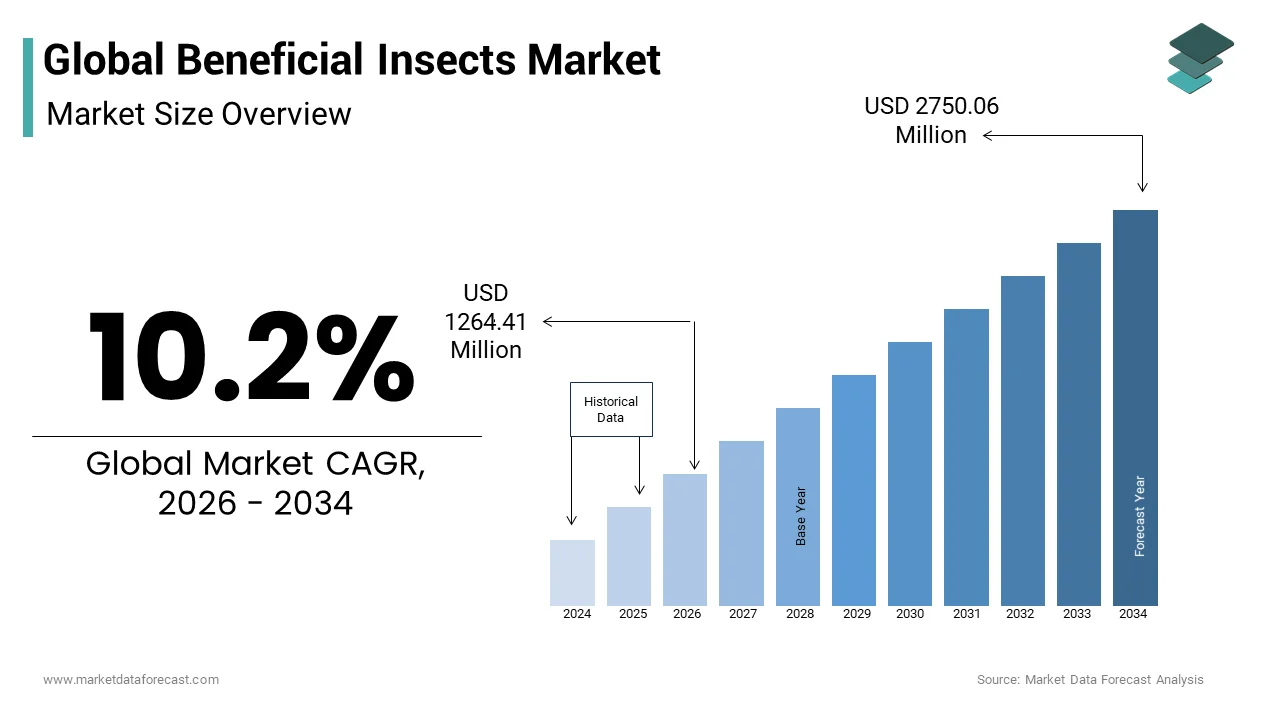
- Market Valuation: Valued at USD 1,147.38 million (2025), estimated at USD 1,264.41 million (2026), and projected to reach USD 2,750.06 million by 2034, registering a strong CAGR of 10.2% (2026–2034).
- Primary Growth Drivers: Stringent regulatory bans on hazardous pesticides, rising consumer demand for organic produce, and the critical need for managed pollination services amid wild pollinator decline.
Key Market Segment Metrics (2026–2034)
| Category | Leading Segment (2025 Position) | Fastest-Growing Segment |
|---|---|---|
| By Insect Type | Predators (held the majority market share in 2025) | Parasitoids (anticipated to witness the fastest CAGR of 9.2% from 2026 to 2034) |
| By Application | Crop Protection (occupied a significant share in 2025) | Crop Production (likely to experience the fastest CAGR of 8.5% during the forecast period) |
| By Region | North America (accounted for 35.2% of the global market share in 2025) | Asia-Pacific & Europe (growing via Farm to Fork mandates and chemical reduction initiatives) |
Major Market Players & Market Structure
Market Structure: Highly specialized global biological control landscape featuring leading producers competing on localized production facilities, supply chain resilience for perishable products, packaging innovations, and proprietary breeding strains.
Key Companies: Tip Top Bio Control, Applied Bio-Nomics Ltd., Natural Insect Control, Koppert Biological Systems, Biobest NV, Dudutech, Bioline Agrosciences Ltd., Biological Services, Fargro Ltd., Biobee Biological Systems Ltd., Arbico Organics, and Andermatt Biocontrol AG.
Global Beneficial Insects Market Size
The global beneficial insects market size was valued at USD 1147.38 million in 2025 and is anticipated to reach USD 1264.41 million in 2026 and USD 2750.06 million by 2034, growing at a CAGR of 10.2% during the forecast period from 2026 and 2034.
Introduction to the Beneficial Insects Market
Beneficial insects are natural "good bugs" that provide valuable services to gardens, farms, and ecosystems. Instead of damaging plants, they actively help by acting as pollinators, natural pest control, and decomposers. This market is a critical component of integrated pest management strategies aimed at reducing reliance on synthetic chemical pesticides in agriculture, horticulture, and urban environments. Key species include predatory mites parasitic wasps ladybugs and managed bee populations which actively suppress pest populations or facilitate plant reproduction. According to the Food and Agriculture Organization of the United Nations approximately 75 percent of global food crops depend at least in part on pollination highlighting the indispensable role of these organisms in food security. Also, the United Nations Human Rights Council shows that acute pesticide poisoning causes roughly 200,000 deaths globally each year, accelerating the demand for biological pest control alternatives. The market is characterized by specialized rearing facilities that maintain strict quality control to ensure high viability and efficacy of released insects. Regulatory frameworks in major economies are increasingly supporting biocontrol agents through streamlined registration processes compared to chemical counterparts. The integration of digital monitoring tools and precision release technologies further enhances the effectiveness of these biological solutions. This evolving landscape positions beneficial insects as a cornerstone of sustainable agricultural practices and environmental conservation efforts globally.
MARKET DRIVERS
Stringent Regulatory Bans on Synthetic Pesticides Accelerate Biological Adoption
The implementation of rigorous regulatory bans and restrictions on hazardous synthetic pesticides fuels the adoption of these insects across global agricultural sectors, which boosts the growth of the beneficial insects market. Governments worldwide are increasingly recognizing the severe environmental and health consequences of conventional chemical usage leading to decisive legislative actions. Policy guidelines from the European Commission highlight that the Farm to Fork Strategy establishes a 50% reduction goal for chemical pesticide use and risk by 2030, strongly accelerating the adoption of alternative biological crop protections. As per the United States Environmental Protection Agency several organophosphate and neonicotinoid pesticides have been phased out or heavily restricted due to their toxicity to non target organisms and human health concerns. These regulatory pressures create an immediate vacuum in pest management solutions that beneficial insects are uniquely positioned to fill. Predatory mites and parasitic wasps offer targeted control without leaving harmful residues or contributing to soil degradation. Furthermore international trade agreements often impose strict maximum residue limits on exported produce incentivizing growers to adopt chemical free practices to maintain market access. This regulatory driven transition ensures a sustained and expanding demand for reliable and scalable biological control agents in both protected cultivation and open field agriculture.
Rising Consumer Demand for Organic and Residue Free Produce Drives Market Growth
The escalating consumer preference for organic and residue-free agricultural products significantly propels the demand for these insects in commercial farming operations, and thereby accelerates the expansion of the beneficial insects market. Modern shoppers are increasingly health conscious and environmentally aware actively seeking food products that are free from synthetic chemical contaminants. According to the Organic Trade Association sales of organic food in the United States reached over 60 billion USD in recent annual assessments reflecting a robust and growing market segment. The Research Institute of Organic Agriculture (FiBL) validates that global organic farmland acreage continues to reach record highs, expanding the addressable agricultural footprint for macro-biological pest control systems. Organic certification standards strictly prohibit the use of synthetic pesticides making biological control methods not just an option but a necessity for compliance. Beneficial insects such as lacewings and hoverflies provide effective pest suppression while maintaining the integrity of organic labels. Additionally the rise of direct to consumer sales channels and community supported agriculture models allows farmers to communicate their sustainable practices directly to buyers enhancing brand loyalty. This powerful consumer driven shift toward clean and safe food production guarantees continuous growth for the beneficial insects market as farmers strive to meet evolving market expectations.
MARKET RESTRAINTS
Complexity of Mass Rearing and Quality Control Standards Restricts Scalability
The inherent biological complexity associated with mass rearing and maintaining strict quality control standards is a major limitation to the rapid expansion of the beneficial insects market. Unlike chemical pesticides which can be manufactured consistently in large volumes living organisms require specific environmental conditions dietary inputs and handling protocols to ensure viability. According to the International Organization for Biological Control variability in temperature humidity and light cycles can significantly impact the reproductive rates and fitness of reared insects leading to inconsistent product quality. As per the United States Department of Agriculture establishing and maintaining sterile rearing facilities requires substantial capital investment and highly skilled technical personnel which raises operational costs. Furthermore the short shelf life of many beneficial species necessitates efficient logistics and cold chain management to prevent mortality during transportation. Any deviation from optimal conditions can result in high mortality rates rendering the product ineffective upon arrival at the farm. These biological constraints limit the ability of manufacturers to scale up production rapidly to meet sudden spikes in demand. Consequently the high cost of production and logistical challenges restrict market accessibility particularly for smallholder farmers in remote regions who may lack the infrastructure to support timely delivery and proper storage of live biological agents.
Limited Farmer Awareness and Technical Expertise Hinders Widespread Implementation
The widespread lack of farmer awareness and technical expertise regarding the proper application and management of these insects is a major barrier to the penetration of the beneficial insects market. Effective biological control requires a deep understanding of pest life cycles predator prey dynamics and environmental factors which differs significantly from the straightforward application of chemical sprays. According to the Food and Agriculture Organization of the United Nations a significant portion of the global agricultural workforce lacks formal training in integrated pest management techniques leading to misapplication and perceived failure of biological controls. As per the World Bank extension services in many developing countries are underfunded and unable to provide adequate education on biological control methods. Farmers accustomed to the immediate knockdown effect of chemicals may become discouraged when beneficial insects take time to establish and suppress pest populations. Incorrect timing of release or inadequate monitoring can result in poor outcomes reinforcing skepticism about the efficacy of biological solutions. Without comprehensive educational programs and hands on technical support farmers may revert to familiar chemical methods. This knowledge gap slows the adoption rate and limits the potential market size for beneficial insects despite their proven long term benefits and sustainability advantages.
MARKET OPPORTUNITIES
Expansion into Urban Agriculture and Vertical Farming Systems Creates New Avenues
The rapid growth of urban agriculture and vertical farming systems offers a strong opening for the beneficial insects market. This creates controlled environments ideal for biological control. Vertical farms and indoor growing facilities operate in closed loops where chemical pesticide use is strictly prohibited due to food safety and worker health concerns. The Association for Vertical Farming confirms that the global vertical farming market is expanding rapidly as urban centres invest in controlled-environment agriculture to localise food supplies and lower transit footprints. As per the United Nations Department of Economic and Social Affairs over 68 percent of the world population is expected to live in urban areas by 2050 increasing the demand for local fresh produce. These high tech facilities rely heavily on precise biological interventions to manage pests such as aphids and thrips without compromising crop quality. Beneficial insects like predatory mites thrive in these stable climate controlled environments offering consistent and predictable pest suppression. Furthermore the compact nature of vertical farms allows for efficient release and monitoring of biological agents reducing labor costs. This synergy between advanced agricultural technology and biological control creates a lucrative niche market for specialized insect suppliers who can tailor solutions for indoor growing conditions.
Integration of Digital Monitoring and Precision Release Technologies Enhances Efficacy
The integration of digital monitoring tools and precision release technologies provides a clear path to enhance the efficacy and reliability of beneficial insect applications, which is expected to drive the expansion of the beneficial insects market. Advanced sensors computer vision and artificial intelligence algorithms can now detect early signs of pest infestations and monitor predator populations in real time. According to the International Society for Precision Agriculture the adoption of smart farming technologies is accelerating allowing for data driven decision making in pest management. These technologies reduce the guesswork associated with traditional scouting methods ensuring that biological agents are deployed when they are most needed. Furthermore digital platforms enable remote monitoring and troubleshooting allowing suppliers to provide proactive support to farmers. The ability to demonstrate measurable results through data analytics builds trust and encourages wider adoption among skeptical growers. This technological convergence transforms biological control from an art into a precise science opening new markets among tech savvy commercial growers who prioritize efficiency and predictability in their operations.
MARKET CHALLENGES
Climate Variability and Environmental Instability Disrupt Biological Activity
The increasing climate variability and environmental instability disrupt the activity and survival rates of released organisms, which is a major hurdle for the beneficial insects market. Beneficial insects are highly sensitive to temperature fluctuations humidity levels and extreme weather events which can severely impact their efficacy. According to the Intergovernmental Panel on Climate Change rising global temperatures and unpredictable precipitation patterns are altering pest and predator dynamics in agricultural ecosystems. Studies by bodies like the USDA Agricultural Research Service show that extreme thermal stress drastically lowers the survival and reproductive rates of sensitive beneficial insects, reducing their field efficacy during heatwaves. Conversely unseasonal rains can wash away predators or hinder their movement within crop canopies. These environmental stressors make it difficult for farmers to rely solely on biological control in open field settings where conditions are uncontrollable. Manufacturers struggle to develop resilient strains that can withstand diverse and changing climatic conditions. This unpredictability forces growers to maintain backup chemical options undermining the goal of complete pesticide reduction. Biological control will remain a concern in regions prone to extreme weather. This is until more robust and climate-resilient insect strains are developed through selective breeding or genetic improvement.
High Initial Costs and Economic Barriers for Smallholder Farmers Limit Access
The high initial costs associated with purchasing these insects and implementing necessary monitoring infrastructure create significant economic barriers for smallholder farmers, which negatively impacts the expansion of the beneficial insects market. Unlike inexpensive generic pesticides biological control agents often require recurring purchases throughout the growing season to maintain effective predator populations. According to the World Bank smallholder farmers who produce a substantial portion of the world food supply often operate on thin profit margins and lack access to credit. As per the International Fund for Agricultural Development the upfront investment for biological control including scouting tools and release devices can be prohibitive for resource constrained growers. Additionally the perceived risk of crop loss if biological control fails discourages farmers from abandoning familiar and cheaper chemical alternatives. While long term benefits such as improved soil health and reduced resistance are significant they do not provide immediate financial relief. Lack of subsidies or financial incentives for biological control further exacerbates this issue. Without affordable financing options or government support programs the adoption of beneficial insects remains limited to larger commercial operations with greater financial resilience. This economic disparity restricts the overall market potential and hinders the global transition toward sustainable agricultural practices.
REPORT COVERAGE
| REPORT METRIC | DETAILS |
| Market Size Available | 2025 to 2034 |
| Base Year | 2025 |
| Forecast Period | 2026 to 2034 |
| CAGR | 10.2% |
| Segments Covered | By Type, Application, and Region |
| Various Analyses Covered | Global, Regional, & Country Level Analysis; Segment-Level Analysis, DROC, PESTLE Analysis, Porter’s Five Forces Analysis, Competitive Landscape, Analyst Overview of Investment Opportunities |
| Regions Covered | North America, Europe, APAC, Latin America, Middle East & Africa |
| Market Leaders Profiled | Tip Top Bio Control, Applied Bio-Nomics Ltd., Natural Insect Control, Biobest NV, Dudutech, Bioline Agrosciences Ltd., Biological Services, Fargro Ltd, Biobee Biological Systems Ltd., Arbico Organics, Andermatt Biocontrol AG. |
SEGMENT ANALYSIS
By Type Insights
Predators
In 2025, the predators segment held the majority share of the beneficial insects market because of its ability to provide immediate and visible suppression of pest populations. Unlike parasitoids which require time to complete their life cycle within a host predators actively hunt and consume pests such as aphids spider mites and thrips offering rapid relief during infestation outbreaks. The International Biocontrol Manufacturers Association (IBMA) indicates that predatory mites represent a dominant share of the commercial macro-biological control market due to their widespread use in greenhouse pest management. the International Biocontrol Manufacturers Association (IBMA) indicates that predatory mites represent a dominant share of the commercial macro-biological control market due to their widespread use in greenhouse pest management. The versatility of predators allows them to target a wide range of soft bodied pests that are common in high value crops such as strawberries tomatoes and ornamental plants. Their generalist feeding behavior ensures that they remain active even when primary pest densities fluctuate providing a stable level of protection. This immediacy and broad spectrum efficacy make predators the preferred first line of defense for growers seeking to avoid crop damage and maintain yield quality without chemical intervention.
A further key factor driving the dominance of the predator segment is the well established global infrastructure for mass rearing and commercial distribution of these organisms. Decades of research and development have optimized the production protocols for key species such as Amblyseius swirskii and Hippodamia convergens ensuring consistent quality and high survival rates during shipping. Registries from the Association of Natural Bio-control Producers (ANBP) confirm a robust global network of commercial insectaries across North America and Europe that specialize in mass-rearing predatory species to meet high agricultural demands. The mature supply chain ensures that growers can access these biological agents quickly and easily through agricultural distributors. Furthermore the extensive library of scientific literature and practical guidelines available for using predators reduces the technical barrier for adoption. This combination of reliable availability and ease of use cements the position of predators as the cornerstone of the commercial beneficial insects market.
Parasitoids
The parasitoids segment is anticipated to witness the fastest CAGR of 9.2% from 2026 to 2034, mainly due to its high specificity, which minimizes impact on non target organisms and enhances environmental safety. Parasitic wasps such as Trichogramma and Encarsia lay their eggs inside or on specific pest hosts ensuring that only the target pest is affected while leaving beneficial pollinators and other natural enemies unharmed. According to the Journal of Applied Ecology this precision makes parasitoids ideal for integrated pest management programs in biodiversity sensitive areas and organic farming systems where preserving ecological balance is paramount. As per the International Centre for Insect Physiology and Ecology the use of specific parasitoids has been shown to reduce the risk of secondary pest outbreaks that often occur when broad spectrum predators or chemicals eliminate competing species. This targeted approach aligns with stringent regulatory requirements in regions like the European Union which prioritize the protection of native biodiversity. Growers are increasingly adopting parasitoids to manage difficult pests such as whiteflies and leafminers which are resistant to many conventional controls. The ability to deploy these agents without disrupting the broader ecosystem guarantees their rapid adoption in sustainable agricultural practices.
The quick growth of this segment gets a boost from their critical role in managing pest populations that have developed resistance to conventional chemical pesticides. As pests evolve resistance to synthetic compounds farmers are turning to biological modes of action that bypass these resistance mechanisms. The Insecticide Resistance Action Committee (IRAC) and the Arthropod Resistance Database documents chemical resistance in over 500 pest species worldwide, intensifying the market demand for biological alternatives. For example the parasitic wasp Aphidius colemani is highly effective against aphid populations that have become resistant to neonicotinoids. This biological advantage makes parasitoids an essential tool in resistance management rotations. Furthermore government agencies are promoting the use of parasitoids as part of national strategies to combat pesticide resistance and preserve the efficacy of remaining chemical tools. This strategic importance in maintaining long term agricultural productivity ensures that the parasitoid segment will continue to expand rapidly.
By Application Insights
Crop Protection
The crop protection segment was the largest in the beneficial insects market and occupied a significant share in 2025. This supremacy of the segment was driven by strict regulations on chemical residues in high-value crops, compelling growers to adopt biological alternatives for pest management. Fruits vegetables and ornamental plants often have zero tolerance for pesticide residues in export markets making biological control a necessity rather than a choice. According to the European Food Safety Authority maximum residue limits for many conventional pesticides have been lowered significantly in recent years forcing exporters to switch to residue free methods. The USDA Foreign Agricultural Service (FAS) underscores a multi-billion-dollar fresh produce trade market that increasingly depends on low-residue or biological certifications to clear strict international phytosanitary inspections. Beneficial insects provide effective pest suppression without leaving any chemical traces ensuring compliance with international trade standards. This regulatory pressure is particularly acute in the greenhouse sector where crops like peppers and cucumbers are harvested continuously and cannot withstand waiting periods after chemical application. The ability of beneficial insects to provide continuous protection throughout the growing season ensures that growers can meet market demands for clean and safe produce. This imperative for market access and regulatory compliance guarantees the dominance of the crop protection segment.
Furthermore, this segment keeps its lead due to the prevention of crop losses and the assurance of high yield quality through consistent pest suppression. Pests such as aphids and thrips not only damage plant tissue but also transmit viral diseases that can devastate entire fields. According to the Food and Agriculture Organization of the United Nations plant pests and diseases cause up to 40 percent of global crop losses annually highlighting the economic importance of effective control measures. Research indexed by the International Society for Horticultural Science (ISHS) demonstrates that continuous biological control of insect vectors can effectively suppress viral transmission rates in high-value greenhouse and field crops. By maintaining pest populations below economic threshold levels beneficial insects protect the aesthetic and nutritional quality of the produce which is crucial for premium pricing. Furthermore the continuous presence of predators and parasitoids provides a proactive defense system that prevents outbreaks before they cause significant damage. This reliability in protecting yield and quality makes crop protection the most lucrative and widely adopted application for beneficial insects in modern agriculture.
Crop Production
The crop production segment is likely to experience the fastest CAGR of 8.5% during the forecast period owing to the surging demand for managed pollination services in intensive monoculture systems. Many high value crops such as almonds berries and apples are self sterile or have low natural pollinator activity requiring the introduction of managed bees to ensure fruit set. According to the United States Department of Agriculture the almond industry in California alone requires over 2 million honeybee hives annually for pollination representing a massive commercial market for managed insects. The disparity creates a critical dependency on commercially reared bees and other pollinators to sustain production levels. Farmers are increasingly investing in managed pollination services to guarantee yields and improve fruit quality. The economic value of these services is substantial driving rapid growth in the breeding and rental of managed pollinators. This structural reliance on managed insects for food production ensures that the crop production segment will continue to expand at a robust pace.
This segment is growing fast thanks to the documented decline of wild pollinator populations due to habitat loss disease and pesticide exposure which necessitates the use of commercial alternatives. According to the Intergovernmental Science Policy Platform on Biodiversity and Ecosystem Services approximately 40 percent of invertebrate pollinator species are facing extinction threatening global food security. Farmers can no longer rely solely on natural ecosystems to provide adequate pollination services forcing them to purchase managed hives or alternative pollinators such as bumblebees and mason bees. This shift from a free ecosystem service to a purchased input represents a significant market expansion. Furthermore the development of new pollinator species for specific crops such as stingless bees for tropical fruits is opening new niches within the crop production segment. The urgent need to secure pollination services in the face of ecological decline guarantees sustained and accelerated growth for this application area.
REGIONAL ANALYSIS
North America Market Analysis
North America outperformed other regions in the global beneficial insects market and accounted for a 35.2% share in 2025. This leading position of the region’s market was attributed to a highly advanced agricultural sector and stringent environmental regulations. The market in this region is characterized by widespread adoption of biological control in large-scale greenhouse operations and high-value fruit production. As per the Environmental Protection Agency the registration of new biological pesticides is prioritized and expedited compared to chemical counterparts encouraging innovation and market entry. The presence of major biocontrol companies and research institutions fosters a robust ecosystem for product development and technical support. Furthermore strong consumer demand for organic produce drives growers to adopt beneficial insects to meet certification standards. The combination of regulatory support advanced technology and high market demand ensures that North America remains the largest and most mature market for beneficial insects globally.
Europe Market Analysis
Europe followed closely behind in the global market and occupied a 30.8% share in 2025 because of aggressive policy initiatives and a strong tradition of sustainable agriculture. The market growth in this region is heavily influenced by the European Green Deal and Farm to Fork Strategy which mandate significant reductions in chemical pesticide use. According to the European Commission member states are required to implement national action plans that promote integrated pest management and biological control methods. The International Biocontrol Manufacturers Association (IBMA) confirms double-digit annual market expansion for macro-organisms in Europe, driven by strict regulatory limits on synthetic chemical residues. Countries like the Netherlands Spain and Italy are global leaders in greenhouse horticulture utilizing millions of beneficial insects annually to protect tomato pepper and cucumber crops. The high density of protected cultivation in these countries creates a concentrated and high volume demand for biological agents. Furthermore European consumers are highly conscious of food safety and environmental impact driving retail chains to prefer produce grown with biological controls. This policy driven and consumer led transition ensures that Europe remains a critical and rapidly evolving market for beneficial insects.
Asia-Pacific Market Analysis
Asia-Pacific expanded quickly in the global market due to rapid expansion of protected agriculture and increasing awareness of pesticide risks. The regional market is evolving rapidly, with China, India, and Japan at the forefront of adopting biological control technologies. According to the Ministry of Agriculture and Rural Affairs of China the government has launched major initiatives to reduce chemical pesticide use by 2025 promoting the use of natural enemies in rice vegetable and fruit production. As per the Food and Agriculture Organization of the United Nations the area under protected cultivation in Asia has expanded significantly creating ideal conditions for the release of beneficial insects. Japan has a long history of using parasitic wasps and predatory mites in its advanced greenhouse sector setting a benchmark for the region. Furthermore rising middle class incomes are driving demand for high quality and safe produce encouraging farmers to adopt biological methods. The vast agricultural land area and growing technical expertise in countries like India and Thailand present immense potential for market expansion. This combination of government support and market growth ensures that Asia-Pacific will experience the highest growth rate in the coming years.
Latin America Market Analysis
Latin America is an upcoming region in the global market owing to the need to comply with international residue standards for exports of fruits flowers and vegetables to North America and Europe. The regional market exhibits a strong export oriented agricultural sector and increasing adoption of sustainable practices. According to the Inter American Institute for Cooperation on Agriculture countries like Chile Colombia and Mexico are major exporters of berries avocados and cut flowers requiring strict pest management protocols. As per the Brazilian Agricultural Research Corporation Brazil is investing heavily in biological control research and production to reduce reliance on imported chemicals and improve sustainability. The warm climate in many parts of the region supports year round production and the activity of beneficial insects. Furthermore local manufacturers are emerging to produce cost effective biological agents tailored to regional pests. The economic imperative to maintain access to lucrative export markets ensures that Latin American growers will continue to increase their use of beneficial insects. This export driven demand guarantees steady growth for the market in the region.
Middle East and Africa Market Analysis
The Middle East and Africa region is likely to grow notably in the global market from 2026 to 2034 due to water scarcity challenges and the growth of controlled environment agriculture. The market status in this region is shaped by the need for efficient and sustainable farming methods in arid climates where water conservation is critical. According to the Food and Agriculture Organization of the United Nations the adoption of greenhouse and hydroponic systems is increasing in countries like the United Arab Emirates Saudi Arabia and South Africa to enhance food security. Beneficial insects are particularly suitable for these closed systems where chemical use is restricted due to water recycling and worker safety concerns. Furthermore international development agencies are promoting biological control as a cost effective solution for smallholder farmers. While the current market size is small the strategic focus on technology driven agriculture and food security ensures that the Middle East and Africa will see gradual but meaningful growth in the beneficial insects market.
COMPETITIVE LANDSCAPE
The competition in the Beneficial Insects Market is characterized by a mix of established global leaders and specialized regional producers focusing on niche biological control agents. Major players differentiate themselves through superior product quality extensive technical support and robust distribution networks. Price competition is moderate as buyers prioritize efficacy reliability and viability of live organisms over lowest cost options. Intellectual property protection around specific breeding techniques and proprietary strains provides a competitive edge for innovators. Strategic collaborations with research institutions accelerate the development of new species and improve rearing efficiency. Supply chain resilience is critical due to the perishable nature of the products prompting companies to localize production facilities. Customer loyalty is driven by consistent performance and responsive advisory services that help growers achieve successful pest management. The market sees continuous innovation in packaging and shipping technologies to extend shelf life. Regulatory support for biological controls fosters a favorable environment for market entry and expansion. Collaborative ecosystems involving suppliers growers and regulators promote the adoption of sustainable agricultural practices.
KEY MARKET PLAYERS
Some of the leading companies operating in the Global Beneficial Insects Market are
- Tip Top Bio Control
- Applied Bio-Nomics Ltd
- Natural Insect Control
- Koppert Biological Systems
- Biobest NV
- Dudutech
- Bioline Agrosciences Ltd.
- Biological Services
- Fargro Ltd
- Biobee Biological Systems Ltd.
- Arbico Organics
- Andermatt Biocontrol AG
Top Players In The Market
- Koppert Biological Systems stands as a global pioneer in the beneficial insects market specializing in natural pest management and pollination solutions. The company produces a wide range of predatory mites parasitic wasps and bumblebees designed for greenhouse and open field agriculture. Recent actions include expanding its production facilities in North America and Asia to reduce delivery times and ensure high viability of live organisms. Koppert actively invests in digital tools such as smart traps and monitoring apps to help growers optimize release strategies. By providing extensive technical support and training programs the company empowers farmers to implement integrated pest management effectively. These strategic initiatives reinforce its position as a trusted partner for sustainable crop protection worldwide.
- Biobest Group operates as a leading international supplier of biological control agents and bumblebee pollination services. The company focuses on delivering high quality beneficial insects including predatory bugs mites and nematodes to protect various crops from pests. Recent actions involve strengthening its distribution network in Europe and Latin America to better serve local growers with tailored solutions. Biobest collaborates with research institutions to develop new strains of beneficial insects that are more resilient to climate variations. They also emphasize sustainability by using eco friendly packaging and energy efficient rearing methods. Through continuous innovation and customer centric services Biobest solidifies its reputation as a key enabler of organic and sustainable farming practices globally.
- Andermatt Biocontrol AG is a prominent player in the beneficial insects market known for its expertise in producing high quality natural enemies for pest control. The company offers a diverse portfolio of predatory mites lacewings and parasitic wasps used in agriculture horticulture and urban environments. Recent actions include acquiring specialized breeding facilities to increase production capacity and expand its product range. Andermatt focuses on rigorous quality control processes to ensure the potency and health of its biological agents. They also engage in educational initiatives to raise awareness about the benefits of biological control among farmers and policymakers. Andermatt strengthens its market position by prioritizing scientific excellence and reliable supply chains. As a result, the company contributes significantly to the global shift toward sustainable agriculture.
Top Strategies Used By Key Market Participants
Key players in the Beneficial Insects Market primarily focus on expanding production capacities to meet growing global demand for biological pest control solutions. Companies invest heavily in research and development to identify and breed new strains of beneficial insects that are more effective against resistant pests. Strategic partnerships with agricultural distributors and technology providers enhance market reach and improve delivery logistics for live organisms. Market participants prioritize quality assurance through rigorous testing protocols to ensure high viability and performance of their products. Education and training programs for farmers help bridge the knowledge gap and promote proper application techniques. Digital integration via monitoring tools and data analytics supports precision release and improves efficacy. Sustainability initiatives such as eco friendly packaging and carbon neutral operations align with environmental goals. These multifaceted approaches drive growth and strengthen competitive positions in the evolving biocontrol landscape.
MARKET SEGMENTATION
This research report on the global beneficial insects market is segmented and sub-segmented into the following categories.
By Type
- Predators
- Parasitoids
- Pathogens
- Pollinators
By Application
- Crop Protection
- Crop Production
By Region
- North America
- Europe
- Asia-Pacific
- Latin America
- Middle East and Africa