- Product Description Description
- Table of Contents TOC
- List of Table & Figure LOT
- Get Free Sample PDF Sample PDF
Market Size, 2025
$3.57 BnMarket Estimate, 2026
$3.92 BnMarket Forecast, 2034
$8.21 BnCAGR, 2026–2034
9.7%Executive Summary: Global Bio-Organic Fertilizer Market
- Market Scope: Comprehensive global analysis of the bio-organic fertilizer market covering types, application segments, regional dynamics, growth drivers, restraints, challenges, and competitive landscapes.
- Market Valuation: Valued at USD 3.57 billion (2025), estimated at USD 3.92 billion (2026), and projected to reach USD 8.21 billion by 2034, registering a strong compound annual growth rate (CAGR) of 9.7% during the forecast period (2026–2034).
- Primary Growth Drivers: Rising consumer demand for organic and chemical-free food products, government support and regulatory push for sustainable farming (e.g., EU Green Deal, PM PRANAM scheme), and the expansion of regenerative agriculture practices.
Key Market Segment Metrics (2026–2034)
| Category | Leading Segment (2025 Position) | Fastest-Growing Segment |
|---|---|---|
| By Type | Nitrogen-Fixing Bio-Fertilizers (held 39.3% market share in 2025 driven by Rhizobium, Azotobacter, and Azospirillum demand) | Potash Mobilizing Bio-Fertilizers (predicted to register the fastest CAGR of 13.8% due to plant resilience and water retention needs) |
| By Application | Fruits & Vegetables (captured leading share of 36.6% in 2025 due to chemical sensitivity and premium market focus) | Plantations (anticipated to record the fastest CAGR of 15.5% as large-scale palm oil, tea, and rubber estates shift to sustainable inputs) |
| By Region | Asia-Pacific (accounted for 41.4% market share in 2025 driven by robust government schemes in India and China) | Europe & North America (expanding rapidly via Green Deal mandates, organic farming acreage, and regenerative ag investments) |
Major Market Players & Market Structure
Market Structure: Moderately consolidated agricultural biotech landscape featuring specialized microbial inoculant producers and global chemical-to-biological transition firms competing on efficacy, shelf-life stability, and regulatory compliance.
Key Companies: Gujarat State Fertilizers & Chemicals (GSFC), Lallemand, Novozymes, Symborg, Biomax, Agri Life, Ajay Bio-Tech Ltd, Antibiotice S.A., and others.
 Download Free Sample Report
Global Bio Organic Fertilizer Market Size
The global bio-organic fertilizer market size was valued at USD 3.57 billion in 2025 and is anticipated to reach a valuation of USD 3.92 billion in 2026 and USD 8.21 billion by 2034, growing at a compound annual growth rate (CAGR) of 9.7% from 2026 to 2034.
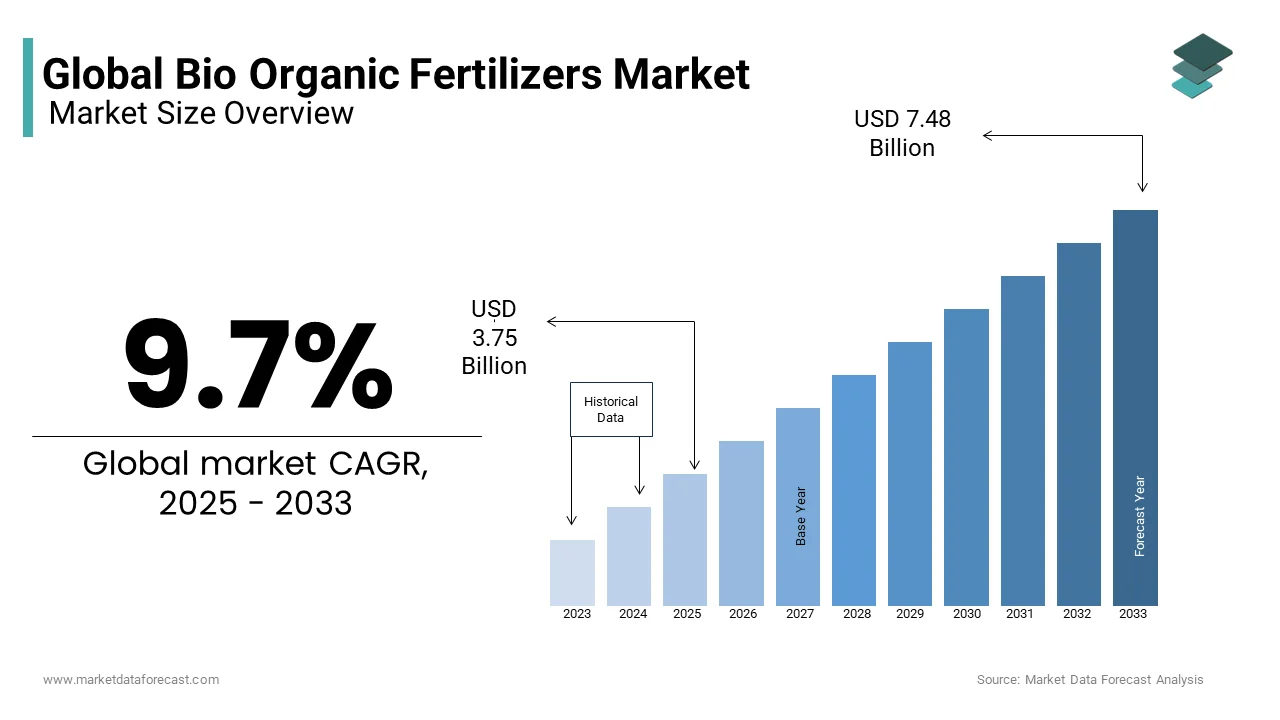
The global bio-organic fertilizer market is witnessing strong momentum as sustainable agriculture gains traction across key agricultural economies. The growing awareness around soil health, environmental sustainability, and consumer demand for chemical-free food products is likely to boost the demand for biorganic fertilizers worldwide during the forecast period. Countries such as India, China, the U.S., and Germany are leading the adoption curve due to government-backed organic farming initiatives and rising investments in agri-tech innovations. According to the Research Institute of Organic Agriculture (FiBL), global organic agricultural land reached 76 million hectares in 2023, reflecting an upward trend that directly supports the uptake of bio-organic fertilizers. In addition, U.S. organic crop production increased by 12% in 2024, as reported by the USDA, reinforcing the need for nutrient-rich, non-synthetic fertilization solutions. Meanwhile, in the Asia-Pacific, India’s Ministry of Agriculture stated that certified organic farms grew by 15% year-on-year, boosting domestic demand for compost-based and microbial organic fertilizers. These developments illustrate how evolving consumer preferences, regulatory support, and farm-level sustainability goals are shaping the current landscape of the bio-organic fertilizer market.
MARKET DRIVERS
Rising Consumer Demand for Organic Food Products
The growing consumer preference for organic food, which has spurred a shift toward chemical-free agricultural practices, is one of the major factors propelling the growth of the bio-organic fertilizer market. According to the Organic Trade Association, U.S. organic food sales surpassed USD 60 billion in 2023, marking a 9% increase from the previous year. Consumers are increasingly prioritizing health and wellness, prompting farmers to adopt organic fertilization methods that align with certification standards. In Europe, the European Commission reported that organic retail sales in the EU rose by 11% in 2023, further incentivizing producers to transition away from synthetic inputs. In emerging markets, China’s Ministry of Agriculture revealed that organic food exports increased by 18% in 2024, driven by strong demand from North America and Europe. To meet these export targets, Chinese farmers have ramped up the use of bio-organic fertilizers like vermicompost and microbial inoculants. Similarly, in India, the National Programme for Organic Production (NPOP) noted a 22% rise in certified organic farmland since 2021, reinforcing the link between organic food demand and fertilizer adoption. As urban consumers become more conscious of food sourcing and environmental impact, this trend will continue to fuel demand for biorganic fertilizers globally.
Government Support and Regulatory Push for Sustainable Farming
Government policies promoting sustainable agriculture are playing a major role in the expansion of the bio-organic fertilizer market. Several countries have introduced subsidies, tax incentives, and direct funding programs to encourage farmers to switch from synthetic to organic fertilizers. For instance, in 2024, India’s Ministry of Chemicals and Fertilizers launched the PM PRANAM scheme, offering financial assistance to states that reduce chemical fertilizer usage by 50%, thereby encouraging greater use of organic alternatives. The program aims to cut urea imports by 20% by 2027, accelerating the adoption of bio-organic nutrients. In the European Union, the Farm to Fork Strategy under the Green Deal mandates a 20% reduction in chemical pesticide use and a 20% increase in organic farming area by 2030. These regulations are compelling agribusinesses to integrate organic nutrient sources into mainstream farming systems. Similarly, in Brazil, the Ministry of Agriculture expanded its Low-Carbon Agriculture Plan (ABC Plan) in early 2024, allocating USD 1.2 billion to promote organic soil amendments, including bio-organic fertilizers. With governments worldwide aligning agricultural policy with climate resilience and sustainability goals, regulatory support is emerging as a powerful catalyst for market expansion.
MARKET RESTRAINTS
High Cost and Limited Awareness Among Farmers
One of the primary restraints facing the global bio-organic fertilizer market is the relatively high cost compared to conventional chemical fertilizers, which discourages widespread adoption among smallholder farmers. According to the International Fertilizer Association (IFA), biorganic fertilizers can cost up to 40% more per ton than synthetic variants, primarily due to higher production and transportation expenses. In developing regions like Sub-Saharan Africa and South Asia, where farm incomes remain low, this price differential limits accessibility and slows market penetration. Additionally, limited awareness about the long-term benefits of bio-organic fertilizers continues to hinder their adoption. A 2024 survey conducted by the Food and Agriculture Organization (FAO) found that over 60% of smallholder farmers in East Africa lacked knowledge about organic soil amendments, relying instead on familiar synthetic inputs. In India, despite government efforts to promote organic farming, only 12% of surveyed farmers were aware of microbial-based bio fertilizers, as per data released by the Indian Council of Agricultural Research (ICAR). Without adequate extension services or training programs, many farmers remain skeptical about transitioning to bioorganic options, creating a persistent barrier to market growth.
Inconsistent Product Quality and Lack of Standardization
The lack of standardized quality control mechanisms, which results in inconsistent product performance and reduced farmer confidence, is further impeding the growth of the global bio-organic fertilizer market. Unlike synthetic fertilizers, which have well-defined nutrient compositions, biorganic fertilizers vary widely in formulation, potency, and shelf life depending on raw materials and manufacturing processes. According to a 2023 report by the European Committee for Standardization (CEN), nearly 30% of commercially available organic fertilizers in Eastern Europe failed to meet minimum labeling accuracy requirements, undermining consumer trust. In India, the Bureau of Indian Standards (BIS) identified significant discrepancies in nutrient content among organic fertilizer brands, with some products delivering less than 50% of the advertised nitrogen levels. Similar concerns were echoed in the U.S., where the USDA’s National Organic Program (NOP) issued recalls for several unregistered organic soil amendments in 2024, citing misleading claims and contamination risks. These inconsistencies create confusion in the marketplace and discourage large-scale procurement by institutional buyers. Until robust regulatory frameworks and certification protocols are uniformly implemented, the issue of product variability will continue to constrain the broader acceptance of bio-organic fertilizers.
MARKET OPPORTUNITIES
Expansion of Regenerative Agriculture Practices
Regenerative agriculture is gaining momentum as a sustainable farming model focused on restoring soil health, enhancing biodiversity, and reducing carbon footprints, and is creating a significant opportunity for the bioorganic fertilizer market. According to the Rodale Institute, regenerative farming methods can sequester over 100% of global annual CO₂ emissions if adopted globally, making them a central component of climate-smart agriculture. Governments and private sector players are increasingly investing in this approach, directly boosting demand for organic soil amendments. In the U.S., General Mills committed USD 30 million in 2024 to expand regenerative agriculture across 1 million acres of farmland, working closely with farmers to replace synthetic inputs with bio organic fertilizers. Similarly, in Brazil, Embrapa partnered with local cooperatives to promote organic composting techniques on soybean and coffee farms, reporting a 25% improvement in soil fertility within two years, as per a 2024 study. In Europe, the Netherlands' Ministry of Agriculture noted a 17% increase in bio-organic fertilizer usage on dairy farms adopting regenerative grazing systems, demonstrating cross-sectoral application. As investment in regenerative practices intensifies, biorganic fertilizers are poised to play a central role in reshaping modern agriculture.
Rise of Urban and Controlled-Environment Agriculture
Urban and controlled-environment agriculture (CEA), including vertical farming, hydroponics, and greenhouse cultivation, is emerging as a high-growth segment that strongly favors bioorganic fertilizers due to their compatibility with closed-loop systems and consumer expectations for clean produce. In Singapore, where land availability is limited but food security is a priority, the government launched the "30 by 30" initiative, aiming to produce 30% of the country's nutritional needs locally by 2030, as reported by Enterprise Singapore in 2024. This push has led to a surge in demand for liquid bio-organic fertilizers tailored for hydroponic systems, particularly among rooftop farms and indoor greenhouses. Similarly, in the Middle East, Saudi Arabia's NEOM project incorporated biorganic nutrient blends into its Smart Valley vertical farming initiative, highlighting regional interest in sustainable input solutions. As urban farming scales, biorganic fertilizers are becoming essential components of next-generation agricultural ecosystems.
MARKET CHALLENGES
Logistical Constraints in Distribution and Storage
Logistical challenges related to the distribution and storage of biorganic fertilizers are one of the major challenges to market scalability. Unlike synthetic fertilizers, which are stable and easy to transport, many bioorganic formulations, especially those containing live microbes, are sensitive to temperature, moisture, and shelf life. According to the International Fertilizer Development Center (IFDC), microbial-based bio fertilizers can lose up to 40% of their efficacy if stored above 30°C for extended periods, complicating supply chain management in tropical and arid regions. In Sub-Saharan Africa, where infrastructure limitations affect nearly 60% of rural roads, as reported by the World Bank in 2024, transporting organic fertilizers to remote farming communities remains inefficient and costly. Similarly, in India, the National Centre for Organic Farming highlighted that 20% of organic fertilizer shipments arrived damaged or degraded, mainly due to poor packaging and handling practices. In Latin America, Brazilian cooperatives noted delays in distributing compost-based fertilizers during the rainy season, affecting seasonal planting schedules. These logistical inefficiencies hinder market expansion and require strategic investments in cold chain logistics, better packaging, and decentralized production facilities to ensure product viability and timely delivery.
Competition from Synthetic Fertilizers in Price-Sensitive Markets
Despite the growing emphasis on sustainability, synthetic fertilizers continue to dominate in price-sensitive markets, posing a significant challenge to the bio-organic fertilizer industry. According to the Food and Agriculture Organization (FAO), urea and diammonium phosphate (DAP) remain significantly cheaper per nutrient unit compared to organic alternatives, especially in regions where government subsidies make them even more affordable. In India, for example, subsidized DAP costs just USD 250 per metric ton, whereas bio-organic fertilizers range between USD 400–600, making the latter less attractive to budget-conscious farmers. In Southeast Asia, Indonesian rice farmers reported a 15% yield advantage when using synthetic NPK blends over organic compost, as per a 2024 study published by the Indonesian Center for Agricultural Technology. In Nigeria, where over 70% of farmers rely on imported chemical fertilizers, affordability and immediate results continue to drive preference for synthetic inputs, despite government-led awareness campaigns. Even in developed markets like the U.S., a 2023 USDA survey found that 45% of conventional farmers avoided switching to organic fertilizers due to perceived cost inefficiencies. Until bio-organic fertilizers achieve parity in pricing and yield response, they will struggle to displace entrenched synthetic options in key agricultural zones.
REPORT COVERAGE
| REPORT METRIC | DETAILS |
| Market Size Available | 2025 to 2034 |
| Base Year | 2025 |
| Forecast Period | 2026 to 2034 |
| CAGR | 9.7% |
| Segments Covered | By Type, Application, and Region. |
| Various Analyses Covered | Global, Regional, and country-level analysis; Segment-Level Analysis; DROC, PESTLE Analysis; Porter’s Five Forces Analysis; Competitive Landscape; Analyst Overview of Investment Opportunities |
| Regions Covered | North America, Europe, APAC, Latin America, Middle East & Africa |
| Market Leaders Profiled | Gujarat State Fertilizers & Chemicals (GSFC), Lallemand, Novozymes, Symborg, Biomax, Agri Life, Ajay Bio-Tech Ltd, Antibiotice, and Others. |
SEGMENTAL ANALYSIS
By Type Insights
The nitrogen-fixing Bio-Fertilizers segment held 39.3% of the global market share in 2025. The dominance of the nitrogen-fixing bio fertilizer segment is primarily attributed to the high demand for nitrogen-fixing microbes such as Rhizobium, Azotobacter, and Azospirillum, which play a crucial role in enhancing soil fertility without synthetic chemical inputs. According to the International Center for Agricultural Research in the Dry Areas (ICARDA), legume crops inoculated with Rhizobium showed up to a 30% increase in yield, reinforcing the agronomic benefits of nitrogen-fixing bio-fertilizers. In India, the Ministry of Agriculture noted that Rhizobium-based inoculants were applied on over 12 million hectares of pulse crops in FY 2024, supported by government distribution programs aimed at reducing urea dependency. Moreover, the integration of these bio-fertilizers into integrated nutrient management systems is growing, particularly in rice-wheat cropping zones across South Asia. The Food and Agriculture Organization (FAO) highlighted that in Bangladesh, the use of Azospirillum in rice cultivation improved nitrogen uptake by 25%, contributing to higher productivity and reduced environmental impact. As farmers seek sustainable alternatives to synthetic nitrogen sources, this segment continues to lead the bioorganic fertilizer market.
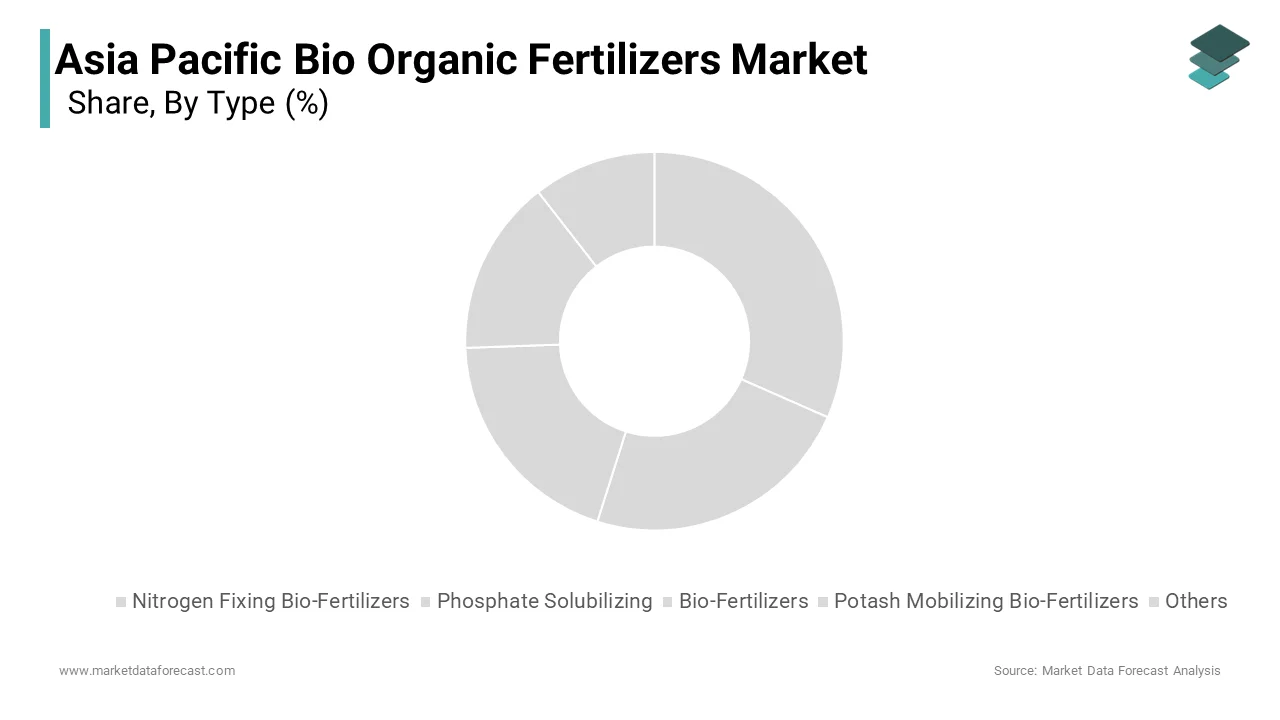
The potash mobilizing segment is predicted to witness the fastest CAGR of 13.8% over the forecast period, owing to the increasing recognition of potassium's role in improving plant resilience, water retention, and disease resistance, especially in high-value horticulture and plantation crops. In Brazil, where banana and coffee production remain major agricultural exports, the National Coffee Institute (INC) reported that farmers using Bacillus mucilaginosus-based potash mobilizers saw a 22% improvement in fruit size and sugar content, boosting market interest. Similarly, in India, the Indian Institute of Soil Science found that potash-mobilizing bio-fertilizers increased mango yields by up to 18%, prompting widespread adoption among orchard growers. Additionally, rising investment in microbial formulation technologies is accelerating product development. In 2024, Novozymes launched a new strain of potassium-solubilizing bacteria tailored for tropical soils, expanding its portfolio in emerging markets. With soil potassium depletion becoming a growing concern globally, especially in intensively farmed regions, this segment is well-positioned for sustained expansion in both conventional and organic farming systems.
By Application Insights
The fruits and vegetables segment captured the leading share of 36.6% of the global market in 2025. The growth of the fruits and vegetables segment in the global market is attributed to the high sensitivity of horticultural crops to chemical residues, making organic fertilization a preferred choice among producers targeting premium and export markets. For instance, organic vegetable acreage in the U.S. grew by 14% in 2024, with bio organic fertilizers used on over 80% of certified organic farms, particularly for crops like tomatoes, lettuce, and strawberries. In Europe, the Netherlands' Ministry of Agriculture reported that greenhouse tomato growers applied microbial-based bio fertilizers on 75% of cultivated land, citing improved flavor, shelf life, and compliance with organic certification standards. India’s National Horticulture Board also observed a 20% year-on-year increase in bio-organic fertilizer usage on chili and onion farms, driven by government-backed extension programs promoting residue-free produce. Additionally, in China, Shandong Province’s greenhouse clusters adopted liquid bio-organic formulations for hydroponic vegetable production, reflecting broader technological integration. As consumer awareness about food safety and sustainability rises, fruits and vegetables remain the leading sector driving demand for organic nutrient solutions.
The plantations segment is anticipated to register the fastest CAGR of 15.5% over the forecast period, owing to the large-scale palm oil, rubber, tea, and banana plantations shifting toward sustainable input practices to meet global certification requirements and reduce environmental footprints. In Indonesia, the world’s largest palm oil producer, the Ministry of Plantation reported that over 2.5 million hectares of oil palm estates began transitioning to bio-organic fertilizers in 2024, with companies like Wilmar International and Golden Agri-Resources adopting microbial blends to enhance soil microbiota and yield stability. According to the Indonesian Palm Oil Association (GAPKI), farms using Trichoderma-based organic amendments recorded a 25% reduction in soil-borne diseases, improving long-term productivity. Similarly, in Sri Lanka, the Tea Research Institute documented a 19% increase in yield when bio-organic fertilizers replaced 50% of synthetic inputs, supporting the country’s push for fully organic tea exports. In Ecuador, banana exporters noted a 17% improvement in fruit firmness and shelf life after switching to phosphate-solubilizing bio-fertilizers, as per reports from the Ministry of Agriculture. With multinational buyers increasingly demanding deforestation-free and chemically responsible sourcing, plantations are rapidly embracing biorganic nutrients, propelling this segment’s accelerated growth trajectory.
REGIONAL ANALYSIS
Asia Pacific Market Analysis
Asia-Pacific accounted for the major share of 41.4% of the global bio-organic fertilizer market in 2025. The growth of the Asia-Pacific region in the global market is primarily driven by strong government initiatives, rising organic farming acreage, and increasing consumer awareness about sustainable food production. Countries such as India, China, and Japan are spearheading this growth due to policy support and a shift toward eco-friendly agricultural practices. According to the Research Institute of Organic Agriculture (FiBL), India recorded over 3.5 million hectares of certified organic farmland in 2024, making it one of the top five countries globally in terms of organic cultivation. The Indian Ministry of Agriculture reported that bio-organic fertilizer consumption rose by 18% year-on-year, supported by schemes like PM PRANAM aimed at reducing chemical fertilizer dependency. In China, the Ministry of Agriculture and Rural Affairs noted that organic crop production expanded by 15% in 2024, with bio-organic fertilizers being integrated into large-scale vegetable and tea plantations. Additionally, Japan’s Ministry of Agriculture, Forestry, and Fisheries emphasized soil health regulations, encouraging widespread use of microbial-based fertilizers in greenhouse and high-value horticulture. With regulatory backing, expanding domestic demand for organic produce, and growing investments in biostimulant technologies, Asia-Pacific continues to set the pace for the global bio-organic fertilizer industry.
Europe Market Analysis
Europe is another major market for bio-organic fertilizers and is estimated to account for a substantial share of the worldwide market over the forecast period. The region's commitment to sustainability is evident through the European Green Deal and the Farm to Fork Strategy, which mandate a 20% reduction in chemical pesticide use and an increase in organic land area by 2030, as outlined by the European Commission. According to Eurostat, the EU’s organic agricultural land reached 16 million hectares in 2023, representing nearly 10% of the total utilized agricultural area. Germany, France, and Spain lead in both production and consumption of biorganic fertilizers, with Germany alone accounting for over 2 million hectares under organic management, as per the Federal Ministry of Food and Agriculture. Additionally, Denmark introduced mandatory organic fertilizer usage in municipal green spaces in early 2024, further stimulating market demand. In Italy, the National Association of Organic Agriculture (AIAB) reported that over 60% of organic vineyards now use bio-organic fertilizers to enhance soil microbiology and grape quality. With stringent regulations, increasing consumer preference for clean-label products, and rising public-private collaborations, Europe remains a key growth engine in the global bio-organic fertilizer market.
North America Market Analysis
North America is predicted to account for a notable share of the global bio-organic fertilizer market during the forecast period, owing to the robust consumer demand for organic food, advancements in biostimulant technologies, and supportive government policies. The U.S. leads the region, with California, Oregon, and Washington emerging as hotspots for organic farming and controlled-environment agriculture. According to the U.S. Department of Agriculture (USDA), certified organic cropland in the U.S. increased by 12% in 2025, reaching over 6 million acres, with bio-organic fertilizers applied on more than 70% of these farms, particularly for high-value crops like strawberries, lettuce, and almonds. Canada is also witnessing significant traction, with Alberta and British Columbia implementing new nutrient management plans that prioritize organic amendments, as reported by Agriculture and Agri-Food Canada in early 2024. In addition, California’s Healthy Soils Program provided USD 28 million in grants to farmers adopting bioorganic fertilizers, reinforcing state-level sustainability goals. Private sector players like BASF, Novozymes, and Marrone Bio Innovations have launched new microbial formulations tailored for North American soils, accelerating product adoption. With rising investment in regenerative agriculture and agtech startups, North America is solidifying its role as a key innovation hub in the global bioorganic fertilizer landscape.
Latin America Market Analysis
Latin America contributes considerably to the global bio-organic fertilizer market, with Brazil, Argentina, and Mexico leading the charge. The region’s growth is primarily driven by expanding plantation economies, increasing exports of organic commodities, and government-backed sustainability programs. According to the Brazilian Ministry of Agriculture, organic agricultural land in Brazil grew by 14% in 2024, reaching over 5 million hectares, with bio-organic fertilizers increasingly used in coffee, banana, and sugarcane plantations. Embrapa, Brazil’s agricultural research corporation, reported that coffee farms applying microbial-based fertilizers saw a 20% improvement in bean size and aroma, boosting export competitiveness. In Mexico, the National Service of Certification and Agri-Food Quality (SINAL) documented a 22% rise in organic avocado exports, prompting greater use of bio-organic nutrients in Michoacán orchards. Similarly, in Argentina, soybean producers in Buenos Aires Province began integrating phosphate-solubilizing bio-fertilizers into no-till systems, as per the Argentine Chamber of Biotechnology and Life Sciences. With growing international demand for deforestation-free and residue-free agricultural exports, Latin America is fast becoming a strategic growth zone for biorganic fertilizer suppliers seeking untapped markets and scalable opportunities.
Middle East And Africa Market Analysis
The market in the Middle East and Africa is projected to grow at a steady CAGR in the global market over the forecast period, with Egypt, Kenya, Uganda, and South Africa driving most of the demand. Though still in the early stages of adoption, the region is witnessing gradual expansion due to increased government focus on soil restoration, water conservation, and food security. According to the Egyptian Ministry of Agriculture, organic farmland expanded by 10% in 2025, with bio-organic fertilizers being promoted in desert reclamation projects to improve degraded soils. In Kenya, the Ministry of Agriculture reported that smallholder farmers using compost-based organic fertilizers achieved up to 30% higher maize yields, as part of a national initiative backed by the African Development Bank. South Africa’s Department of Agriculture, Land Reform and Rural Development noted that vineyards and citrus farms in Western Cape Province increasingly adopted microbial inoculants to reduce synthetic input reliance, aligning with export certification standards. Meanwhile, in Saudi Arabia, the Ministry of Environment, Water and Agriculture launched the National Organic Agriculture Strategy, aiming to boost local organic production by 25% by 2030. Despite challenges related to affordability and awareness, policy interventions and pilot programs are laying the foundation for long-term growth, positioning the Middle East and Africa as a developing frontier in the global bioorganic fertilizer market.
KEY MARKET PLAYERS
Some of the key players dominating the market are Gujarat State Fertilizers & Chemicals (GSFC), Lallemand, Novozymes, Symborg, Biomax, Agri Life, Ajay Bio-Tech Ltd, and Antibiotice S.A.
Top Players in the Market
Novozymes A/S, headquartered in Denmark, is a global leader in biofertilizer innovation, leveraging its expertise in enzyme and microbial technology to develop sustainable agricultural solutions. The company offers a range of microbial-based organic fertilizers that enhance nutrient uptake, improve soil health, and reduce dependency on synthetic inputs. Novozymes collaborates with major agribusinesses and research institutions to tailor products for diverse soil conditions and crop types. Its partnerships with organizations like Yara International and Bayer CropScience have expanded its reach across North America, Europe, and Asia-Pacific. With continuous R&D investments and a strong product pipeline, Novozymes plays a pivotal role in shaping the future of biorganic fertilizers.
BASF SE, based in Germany, is a major player in the bioorganic fertilizer market, offering a portfolio of biostimulants and microbial inoculants under its "BASCO Organics" and "Magrow Technology" brands. The company focuses on integrating biologicals with conventional farming practices to boost yield efficiency while reducing environmental impact. BASF has strategically expanded into emerging markets such as India and Brazil through joint ventures and localized distribution networks. In 2024, it launched new phosphate-solubilizing bacterial strains tailored for tropical soils, enhancing its competitive edge. By aligning with sustainability goals and investing in digital agriculture tools, BASF continues to strengthen its presence in the global biobioorganic fertilizer landscape.
UPL Limited (United Phosphorus Limited), headquartered in India, is one of the largest providers of bio-organic fertilizers globally, with a strong emphasis on affordable, scalable, and farmer-friendly organic nutrient solutions. Through its subsidiary Biagro Latinoamericana, UPL delivers biofertilizers across key agricultural regions in Asia, Latin America, and Africa. The company’s focus on integrated nutrient management systems has made its products popular among smallholder farmers seeking cost-effective alternatives to chemical fertilizers. UPL's acquisition of Arysta LifeScience in 2019 significantly expanded its global footprint and product portfolio. With government-backed initiatives promoting organic farming in India and abroad, UPL remains at the forefront of driving mass adoption of bio-organic fertilizers worldwide.
Top Strategies Used by Key Market Participants
Product Innovation and Microbial Formulation Development are central to maintaining competitiveness in the bio-organic fertilizer market. Companies like Novozymes and BASF invest heavily in R&D to engineer advanced microbial strains that enhance nutrient solubility, root absorption, and stress tolerance in crops. In 2024, Novozymes introduced a new Rhizobium-based nitrogen fixer tailored for legume crops in Sub-Saharan Africa, improving yields while reducing synthetic fertilizer dependence. Similarly, BASF launched a potassium-mobilizing bacterial blend designed for high-pH soils in South America, addressing regional agronomic challenges. These innovations not only differentiate products but also expand application scope across diverse cropping systems.
Strategic Mergers and Acquisitions are frequently employed to strengthen market position and accelerate global reach. For instance, UPL Limited expanded its biofertilizer capabilities through the acquisition of Arysta LifeScience, gaining access to distribution networks in over 60 countries. In 2023, Sumitomo Chemical acquired a stake in Bioclear, a Dutch biostimulant developer, aiming to enhance its European presence. Such moves allow companies to integrate complementary technologies, diversify product offerings, and establish footholds in high-growth regions, reinforcing their leadership in the evolving bioorganic fertilizer sector.
Partnerships with Governments and Agricultural Institutions are increasingly leveraged to promote large-scale adoption of bio-organic fertilizers. Many companies collaborate with national agricultural departments to support policy-driven initiatives aimed at reducing chemical input use. For example, in India, UPL partnered with the Ministry of Agriculture to distribute subsidized biofertilizers to millions of smallholder farmers, directly boosting market penetration. In the U.S., BASF collaborated with the USDA’s Natural Resources Conservation Service (NRCS) to pilot bio-organic fertilizer programs in Midwest row crops, demonstrating efficacy under real-world conditions. These alliances not only enhance credibility but also facilitate regulatory approvals and farmer education, ensuring sustained market expansion.
COMPETITION OVERVIEW
The global bio-organic fertilizer market is marked by intense competition driven by rapid technological advancements, shifting consumer preferences toward sustainable agriculture, and increasing government intervention. Unlike the consolidated nature of the synthetic fertilizer industry, the bio-organic segment features a hybrid structure with both multinational corporations and regional players competing for market share. While companies like Novozymes, BASF, and UPL dominate due to their extensive R&D capabilities and global distribution networks, local manufacturers in India, China, Brazil, and Kenya are gaining traction by offering cost-competitive formulations tailored to regional soil and climatic conditions.
One of the defining aspects of this market is the high level of innovation required to ensure product efficacy and scalability. As bio-organic fertilizers depend on living microorganisms, formulation stability, shelf life, and compatibility with existing farm practices remain critical differentiators. This has led to a surge in strategic collaborations between agri-tech startups and established agrochemical firms, further intensifying the competitive landscape. Additionally, regulatory frameworks and certification standards vary widely across regions, adding complexity to market entry and expansion strategies.
Moreover, the growing influence of regenerative agriculture and carbon credit programs is reshaping demand dynamics, compelling companies to align their portfolios with climate-smart farming trends. With rising investment in microbial discovery, fermentation technologies, and precision delivery systems, the battle for dominance in the bio-organic fertilizer space is increasingly being fought on the grounds of scientific innovation, supply chain agility, and strategic policy engagement.
RECENT HAPPENINGS IN THE MARKET
- In January 2024, Novozymes launched a new microbial-based nitrogen-fixing bio fertilizer tailored for smallholder farms in Sub-Saharan Africa, in collaboration with the International Institute of Tropical Agriculture (IITA). This product was designed to improve legume yields while reducing dependency on synthetic inputs. The initiative aimed to expand Novozymes’ presence in emerging markets and support sustainable agricultural development across the region.
- In March 2024, BASF announced a strategic partnership with India’s National Bank for Agriculture and Rural Development (NABARD) to promote bio-organic fertilizers among Indian farmers through subsidized distribution and training programs. This collaboration was intended to increase adoption rates among small-scale growers and align with India’s national goal of expanding organic farming acreage by 2030.
- In June 2024, UPL Limited introduced a digital farm advisory platform called ‘BioConnect’ in Brazil, offering real-time recommendations on bio-organic fertilizer application based on soil testing and crop data. By integrating agronomic insights with its product offerings, UPL aimed to enhance customer engagement and drive precision-based organic nutrient usage in Latin America’s key plantation crops.
- In August 2024, Sumitomo Chemical acquired a majority stake in AgriCell, a South Korean biostimulant startup specializing in plant growth-promoting rhizobacteria (PGPR). This acquisition strengthened Sumitomo’s foothold in the Asia-Pacific bio-organic fertilizer market and expanded its portfolio of microbial-based solutions for rice and vegetable cultivation.
- In November 2024, Koppert Biological Systems, a Dutch leader in biological crop protection, expanded into the bio fertilizer sector by launching a line of phosphate-solubilizing compost teas for greenhouse and hydroponic farming in the Netherlands. This move diversified Koppert’s agri-input offerings and capitalized on the growing demand for closed-loop, chemical-free horticulture systems in Europe.
MARKET SEGMENTATION
This research report on the global bio-organic fertilizer market is segmented and sub-segmented into the following categories.
By Type
- Nitrogen Fixing Bio-Fertilizers
- Phosphate Solubilizing
- Bio-Fertilizers
- Potash Mobilizing Bio-Fertilizers
- Others
By Application
- Fruits and Vegetables
- Plantations
- Cereals
- Pulses and Oilseeds
By Region
- North America
- Europe
- Asia Pacific
- Latin America
- Middle East and Africa