- Product Description Description
- Table of Contents TOC
- List of Table & Figure LOT
- Get Free Sample PDF Sample PDF
Market Size, 2025
$19.50 BnMarket Estimate, 2026
$23.42 BnMarket Forecast, 2034
$101.22 BnCAGR, 2026–2034
20.08%Global Bioplastics Market Summary
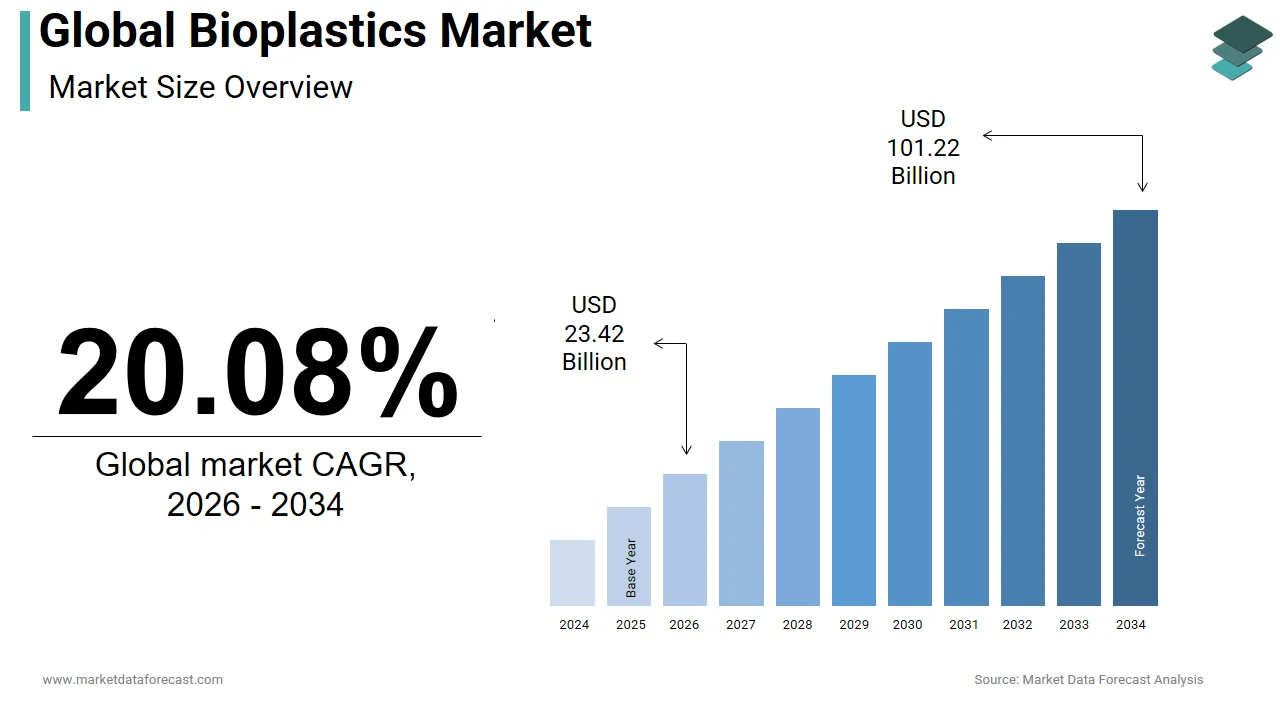
The global bioplastics market was valued at USD 19.50 billion in 2025, is estimated to reach USD 23.42 billion in 2026, and is projected to grow substantially to USD 101.22 billion by 2034, expanding at a CAGR of 20.08% from 2026 to 2034. The growth of the global bioplastics market is attributed to rising environmental concerns over conventional plastics, increasing government regulations on single-use plastics, growing consumer preference for sustainable packaging, and expanding applications across industries such as packaging, automotive, textiles, and consumer goods.
Key Market Trends
- Growing demand for eco-friendly packaging solutions in food, beverages, and e-commerce.
- Rising use of bioplastics in automotive and electronics for lightweight and sustainable components.
- Increasing investment in advanced biopolymer R&D to enhance durability and functionality.
- Strong support from government policies and regulations promoting biodegradable and bio-based plastics.
- Expanding use of PLA, PHA, and starch blends in industrial applications.
Segmental Insights
- Based on type, the bio-based biodegradables segment dominated the market with 63.6% share in 2024, reflecting strong adoption across packaging and disposable products.
- Based on feedstock, the corn segment led the market with 48.3% share in 2024, supported by abundant availability and cost-efficiency in bioplastic production.
- Based on processing technology, the extrusion segment captured 52.4% share in 2024, as it is widely used in films, sheets, and packaging applications.
Regional Insights
- Europe was the top-performing region in the global bioplastics market, accounting for 31.1% of the share in 2024, driven by strict sustainability regulations, consumer awareness, and strong adoption of green packaging.
- Asia-Pacific is expected to witness the fastest growth, fueled by industrial expansion, supportive government policies, and rising consumer demand.
- North America maintains steady growth with the increasing use of bioplastics in packaging and automotive sectors.
- Latin America shows promising potential with rising adoption in food packaging and agriculture.
- Middle East & Africa are emerging markets, gradually integrating bioplastics into packaging and consumer products.
Competitive Landscape
Key players in the global bioplastics market include BASF, TotalEnergies (Total Corbion), NatureWorks LLC, Eni S.p.A. (Novamont), and Braskem. These companies are focusing on capacity expansion, partnerships with packaging companies, and innovations in bio-based polymers to strengthen their global presence and meet growing sustainability demands.
Global Bioplastics Market Size
The global bioplastics market was valued at USD 19.50 billion in 2025 and is estimated to reach USD 23.42 billion in 2026 and USD 101.22 billion by 2034, growing at a CAGR of 20.08% from 2026 to 2034.
Bioplastics are derived from renewable biomass sources, such as corn starch, sugarcane, cellulose, and microbial feedstocks. It is engineered to offer biodegradability, compostability, or a reduced carbon footprint compared to conventional fossil-based plastics. These materials are increasingly deployed in packaging, agriculture, textiles, and consumer goods as part of broader sustainability transitions.
MARKET DRIVERS
Regulatory Mandates Targeting Single-Use Plastics
Governments worldwide are enacting stringent legislation to phase out non-degradable single-use plastics, which drives the growth of the bioplastics market. These regulatory mandates are directly accelerating the adoption of certified compostable bioplastics. The European Union’s Single-Use Plastics Directive, implemented in 2021, bans items like cutlery, plates, and straws made from conventional plastics, mandating biodegradable alternatives where feasible. Few EU member states reported a reduction in single-use plastic consumption by 2023.
Corporate Sustainability Commitments and ESG Burdens
Multinational corporations are increasingly integrating bioplastics into their environmental, social, and governance (ESG) strategies to meet net-zero targets and respond to investor and consumer scrutiny, which propels the growth of the bioplastics market. According to a 2022 study by Duke University researchers, 72% of the top 300 companies on the Fortune Global 500 list had made some form of voluntary commitment to reduce plastic pollution. Nestlé, for instance, has committed to incorporating a portion of food-grade recycled or bio-based plastics in its packaging, while Coca-Cola’s World Without Waste initiative includes piloting bottles made from bio-PET derived from sugarcane ethanol.
MARKET RESTRAINTS
Limited Industrial Composting Infrastructure
The absence of widespread industrial composting facilities severely limits their end-of-life efficacy, which degrades the growth of the bioplastics market. Only a few industrial composting facilities in the United States accept contaminated bioplastic waste, representing a smaller share of all organic waste processing sites. In Europe, as per Eurostat, just 17% of municipal bio-waste was processed in dedicated composting or anaerobic digestion plants in 2022, with significant disparities between member states. Countries like Germany and Austria have robust systems, but Southern and Eastern European nations lack sufficient capacity. This infrastructure gap leads to biodegradable plastics being either landfilled, incinerated, or contaminating conventional recycling streams.
Feedstock Competition with Food Supply Chains
Reliance on first-generation feedstocks such as corn, cassava, and sugarcane, which raises concerns about land use competition and food security, restricts the growth of the bioplastics market. According to the Food and Agriculture Organization, in 2023, the land used for bioplastic production was approximately 0.01% of the total global agricultural area. Localized impacts are acute. Diverting a portion of global corn output to industrial uses could increase food prices, which would affect low-income populations. These socio-agricultural tensions constrain policy support and public acceptance in regions vulnerable to climate-induced crop volatility.
MARKET OPPORTUNITIES
Advancements in Second- and Third-Generation Feedstocks
The development of non-food biomass and microbial fermentation platforms is likely to promote new opportunities for the bioplastics market. Second-generation feedstocks, such as agricultural residues (e.g., wheat straw, bagasse), and third-generation sources like microalgae and methane-consuming bacteria, are gaining commercial traction. According to the study, lignocellulosic waste could supply notable tons of fermentable sugars annually in the EU, sufficient to replace a portion of current bioplastic feedstock demand. Companies have commercialized PHA production using oilseed crops and waste cooking oil, reducing land-use burdens. These innovations mitigate food-versus-material conflicts and align with circular bioeconomy principles.
Integration with Digital Traceability and Certification Systems
The emergence of blockchain-enabled traceability and digital product passports is enhancing transparency in bioplastic supply chains, which is setting up new opportunities for the growth of the bioplastics market. The European Union’s Digital Product Passport (DPP), part of the Circular Economy Action Plan, mandates full lifecycle tracking of materials, including origin, composition, and end-of-life instructions. Companies are embedding QR codes and RFID tags into bioplastic films to verify bio-based content and compostability claims.
MARKET CHALLENGES
Inconsistent Global Standards for Biodegradability and Compostability
The lack of harmonized certification protocols for bioplastics creates confusion among consumers, regulators, and waste managers, which challenges the growth of the bioplastics market. While standards such as EN 13432 (Europe) and ASTM D6400 (U.S.) define industrial compostability, they are not universally adopted or enforced. According to the study, different national standards for biodegradable plastics exist, with varying timeframes and conditions, some requiring temperatures above 58°C, which are unattainable in home composting.
High Production Costs and Energy-Intensive Processing
The high cost of production compared to conventional plastics challenges the growth of the bioplastics market. This is because of complex fermentation, purification, and polymerization processes. According to the Fraunhofer Institute for Process Engineering and Packaging, the average production cost of PLA is higher than that of polypropylene, primarily due to expensive enzymes, sterile bioreactors, and downstream drying. PHA, while fully marine-biodegradable, can cost more than low-density polyethylene (LDPE), as per a study.
REPORT COVERAGE
| REPORT METRIC | DETAILS
|
| Market Size Available | 2025 to 2034 |
| Base Year | 2025 |
| Forecast Period | 2026 to 2034 |
| Segments Covered | By Type, Feedstock, Processing Technology, Application, and Region. |
| Various Analyses Covered | Global, Regional and Country-Level Analysis, Segment-Level Analysis, Drivers, Restraints, Opportunities, Challenges; PESTLE Analysis; Porter’s Five Forces Analysis, Competitive Landscape, Analyst Overview of Investment Opportunities |
| Regions Covered | North America, Europe, Asia-Pacific, Latin America, Middle East and Africa |
| Market Leaders Profiled | BASF, TotalEnergies (Total Corbion), NatureWorks LLC, Eni S.p.A. (Novamont), Braskem. |
SEGMENTAL ANALYSIS
By Type Insights
The bio-based biodegradables segment dominated the bioplastics market by capturing 63.6% of the global market share in 2024. The growth of the bio-based biodegradables segment is driven by the increasing demand for compostable materials in short-life applications such as food packaging, agricultural films, and disposable cutlery. Polylactic acid (PLA) and polybutylene adipate terephthalate (PBAT) are the primary polymers within this category, which are valued for their ability to decompose under industrial composting conditions.
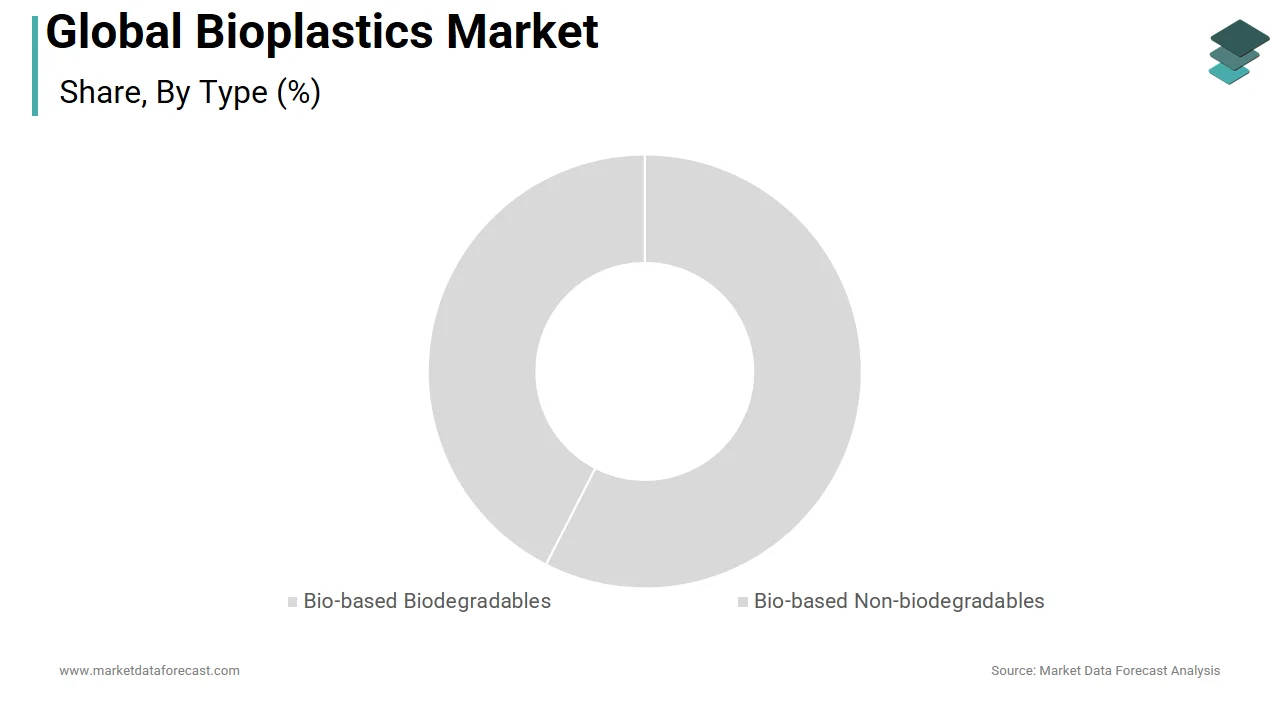
The bio-based non-biodegradables segment is predicted to witness the highest CAGR of 12.4% from 2026 to 2034 due to the rising use of bio-polyethylene (bio-PE) and bio-polyethylene terephthalate (bio-PET) in durable and recyclable packaging, particularly in beverage bottles and personal care containers. Unlike biodegradable alternatives, these materials are chemically identical to their fossil-based counterparts, which enables seamless integration into existing recycling streams.
By Feedstock Insights
The corn segment led the bioplastics market by capturing 48.3% of the global market share in 2024. The growth of the corn segment is primarily driven by its widespread availability, established agricultural infrastructure, and high starch content, which is efficiently converted into polylactic acid (PLA) through fermentation. The United States, a major corn producer, harvested millions of metric tons, providing a stable and scalable supply for bioplastics manufacturers, which operates the world’s largest PLA plant in Blair, Nebraska. According to the study, U.S. corn yields reached an average of 177 bushels per acre in 2023, supported by advanced seed technologies and precision farming, ensuring consistent quality for industrial use. Moreover, federal support for bio-based manufacturing enhances corn’s strategic position.
The sugarcane and sugar beet segment is predicted to witness a CAGR of 11.8% from 2026 to 2034, owing to the increasing production of bio-PE and bio-PET, particularly in Brazil and Europe, where sugarcane ethanol and sugar beet fermentation offer high sugar yields with lower land-use impact compared to starch crops. Brazil, the world’s largest sugarcane producer, harvested millions of metric tons, with a portion directed toward industrial ethanol, as per the research. Braskem’s bio-PE plant utilizes tons of sugarcane to produce one ton of plastic, capturing a portion of CO₂ in the process, according to the study. Apart from these, the European Union’s Common Agricultural Policy supports sugar beet cultivation with sustainability incentives, encouraging farmers to supply biorefineries.
By Processing Technology Insights
The extrusion segment dominated the bioplastics market by capturing 52.4% of the global market share in 2024. The growth of the extrusion segment is attributed to its suitability for producing flexible films, sheets, and coatings applications that constitute the bulk of bioplastic usage in packaging, agriculture, and lamination. Extrusion is particularly effective for processing polylactic acid (PLA), PBAT, and starch blends, which are widely used in compostable shopping bags, bread wraps, and mulch films. According to the study, hectares of farmland globally use plastic mulch, with biodegradable alternatives gaining traction in the EU and South Korea, where regulations restrict conventional plastic film use.
The injection molding segment is predicted to witness the highest CAGR of 10.9% from 2026 to 2034 due to rising demand for rigid, durable components in consumer electronics, automotive interiors, and medical devices made from bio-based polyamides, bio-PE, and bio-PET. Injection molding enables high precision, which is a complex part manufacturing. This makes it ideal for premium applications where aesthetics and functionality are important. Tons of bioplastics were processed via injection molding, with Asia-Pacific accounting for a portion of the output. Automotive manufacturers are increasingly adopting bio-based interior trims and connectors to meet lightweighting and sustainability goals.
REGIONAL ANALYSIS
Europe Bioplastics Market Insights
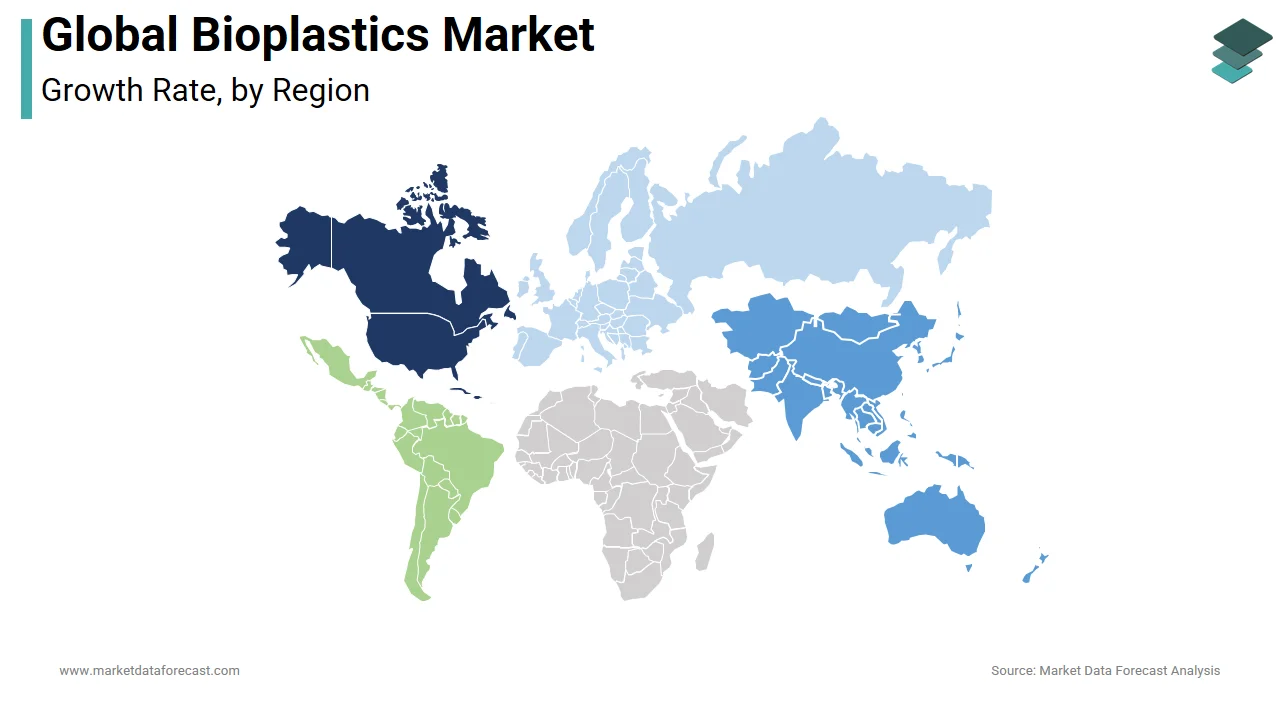
Europe was the top performer in the global bioplastics market in 2024 and accounted for 31.1% of the global market share in 2024, with its progressive regulatory environment and advanced waste management systems that favor compostable and bio-based materials. The European Union’s Circular Economy Action Plan and Packaging and Packaging Waste Regulation have set binding targets for recyclability and recycled content, pushing brands toward sustainable alternatives. Countries have implemented extended producer responsibility (EPR) schemes that financially incentivize bioplastic use.
Asia-Pacific Bioplastics Market Insights
Asia-Pacific bioplastics market was positioned second by holding 29.5% of the share in 2024. The growth of the Asia Pacific in the global market is driven by rapid industrialization and growing environmental awareness in China, India, and Southeast Asia. China alone accounts for a portion of regional bioplastic production, with the National Development and Reform Commission mandating a reduction in non-degradable plastic use in major cities. India introduced a nationwide ban on single-use plastics in 2022.
North America Bioplastics Market Insights
North America bioplastics market growth is likely to grow eventually in the coming years. The United States serves as the primary innovation and production hub. The country benefits from strong agricultural output, particularly corn and soy, and a robust ecosystem of biotech firms and research institutions. According to the research, large acres of corn are dedicated to industrial uses, including bioplastics and biofuels. Companies have pioneered commercial-scale PLA and PHA production, which is supported by federal grants from the Department of Energy and USDA.
Latin America Bioplastics Market Insights
Latin America is bioplastics market growth is likely to be driven by Brazil emerging as the dominant player due to its abundant sugarcane resources and early adoption of bio-based polymers. Braskem’s Green PE plant in Triunfo has been operational since 2010, making Brazil the world’s first commercial producer of bio-PE. According to the research, Brazil accounts for a portion of Latin America’s bioplastic output, exporting to North America and Europe. The country’s ethanol industry, which produces significant liters annually, provides a ready supply of bio-based ethylene.
Middle East and Africa Bioplastics Market Insights
The Middle East and Africa are likely to grow in the bioplastics market during the forecast period, with limited but growing activity. Saudi Arabia is investing in carbon capture and bio-based chemicals through its Vision 2030 initiative, with NEOM planning a green hydrogen-powered biorefinery. As per the King Abdullah University of Science and Technology, a pilot project in Saudi Arabia is exploring date waste for PHA production. According to the African Union’s Agenda 2063, sustainable materials are a priority for urban development and waste reduction.
COMPETITIVE LANDSCAPE
The bioplastics market features a dynamic and evolving competitive landscape characterized by technological differentiation rather than price dominance. While multinational chemical firms leverage scale and integration, specialized biotech companies focus on niche polymers and advanced functionalities. Competition is intensifying as players expand geographically and vertically, from feedstock sourcing to end-product development. Regulatory divergence across regions creates both opportunities and complexities, requiring tailored compliance strategies. Innovation in non-food feedstocks and marine-degradable polymers is becoming a key differentiator. Strategic partnerships with brand owners, recyclers, and governments are essential to navigate infrastructure gaps and build consumer trust.
KEY MARKET PLAYERS
Some of the companies that are playing a dominating role in the global bioplastics market include
- BASF
- TotalEnergies (Total Corbion)
- NatureWorks LLC
- Eni S.p.A. (Novamont)
- Braskem
Top Strategies Used by the Key Market Participants
Key players in the bioplastics market are deploying vertical integration, technology differentiation, regional localization, strategic alliances, and sustainability certification to strengthen their competitive edge. Companies are securing feedstock supply through direct farming partnerships or joint ventures in biomass-rich regions. Investment in R&D is focused on enhancing material performance, such as heat resistance and barrier properties, to expand into high-value sectors like automotive and electronics. Firms are establishing regional production and technical support centers to reduce logistics costs and comply with local regulations. Collaborations with waste management operators and certification bodies ensure end-of-life credibility.
Top Players in the Bioplastics Market
NatureWorks LLC (USA)
NatureWorks is a pioneering force in the bioplastics sector, which is renowned for its Ingeo polylactic acid (PLA), derives from renewable plant resources. In the Asia Pacific region, the company has deepened its footprint through strategic collaborations with packaging converters and foodservice brands in Japan, South Korea, and Thailand. Its focus on life-cycle transparency, including carbon footprint labeling, aligns with Asia’s tightening sustainability mandates. This positions the brand as a premium bio-based material provider.
TotalEnergies Corbion (France-Thailand Joint Venture)
TotalEnergies Corbion operates one of the most advanced commercial-scale PLA production facilities in Rayong, Thailand, strategically positioned to serve the high-growth Asia Pacific market. The company supplies PLA to manufacturers of biodegradable films, 3D printing filaments, and medical devices across Southeast Asia and India. TotalEnergies Corbion strengthens trust among environmentally conscious brands seeking scalable and traceable bioplastics solutions by integrating renewable energy into its production process and achieving ISCC PLUS certification.
Mitsubishi Chemical Corporation (Japan)
Mitsubishi Chemical is a key innovator in high-performance bioplastics, particularly through its DURABIO brand, a bio-based, non-biodegradable polyamide derived from isosorbide extracted from corn. The company has positioned itself as a supplier of durable, transparent materials for automotive, electronics, and consumer goods in the Asia Pacific region. It also expanded partnerships with electronics manufacturers in for use in smartphone bezels and connectors. The company’s R&D center continues to develop next-generation biopolymers with improved heat resistance and UV stability. Mitsubishi Chemical is establishing bioplastics as a viable alternative in engineering-grade applications across industrial supply chains.
MARKET SEGMENTATION
This global bioplastics market research report is segmented and sub-segmented into the following categories.
By Type
- Bio-based Biodegradables
- Starch-based
- Polylactic Acid (PLA)
- Polyhydroxyalkanoates (PHA)
- Polyesters (PBS, PBAT, PCL)
- Other Bio-based Biodegradables
- Bio-based Non-biodegradables
- Bio Polyethylene Terephthalate (PET)
- Bio Polyethylene
- Bio Polyamides
- Bio Polytrimethylene Terephthalate
- Other Bio-based Non-biodegradables
By Feedstock
- Sugarcane / Sugar Beet
- Corn
- Cassava and Potato
- Cellulosic and Wood Waste
- Others (Algae and Microbial Oil)
By Processing Technology
- Extrusion
- Injection Molding
- Blow Molding
- 3D Printing
- Others (Thermoforming, etc.)
By Application
- Flexible Packaging
- Rigid Packaging
- Automotive and Assembly Operations
- Agriculture and Horticulture
- Construction
- Textiles
- Electrical and Electronics
- Other Applications
By Region
- North America
- Europe
- Asia-Pacific
- Middle East Africa
- Latin America