- Product Description Description
- Table of Contents TOC
- List of Table & Figure LOT
- Get Free Sample PDF Sample PDF
Market Size, 2025
$4.86 BnMarket Estimate, 2026
$5.13 BnMarket Forecast, 2034
$7.85 BnCAGR, 2026–2034
5.46%Executive Summary: Global Biosurfactants Market
- Market Scope: Comprehensive global biosurfactants market analysis covering product types, application sectors, industrial end-use dynamics, regional leadership frameworks, and fermentation-based production metrics.
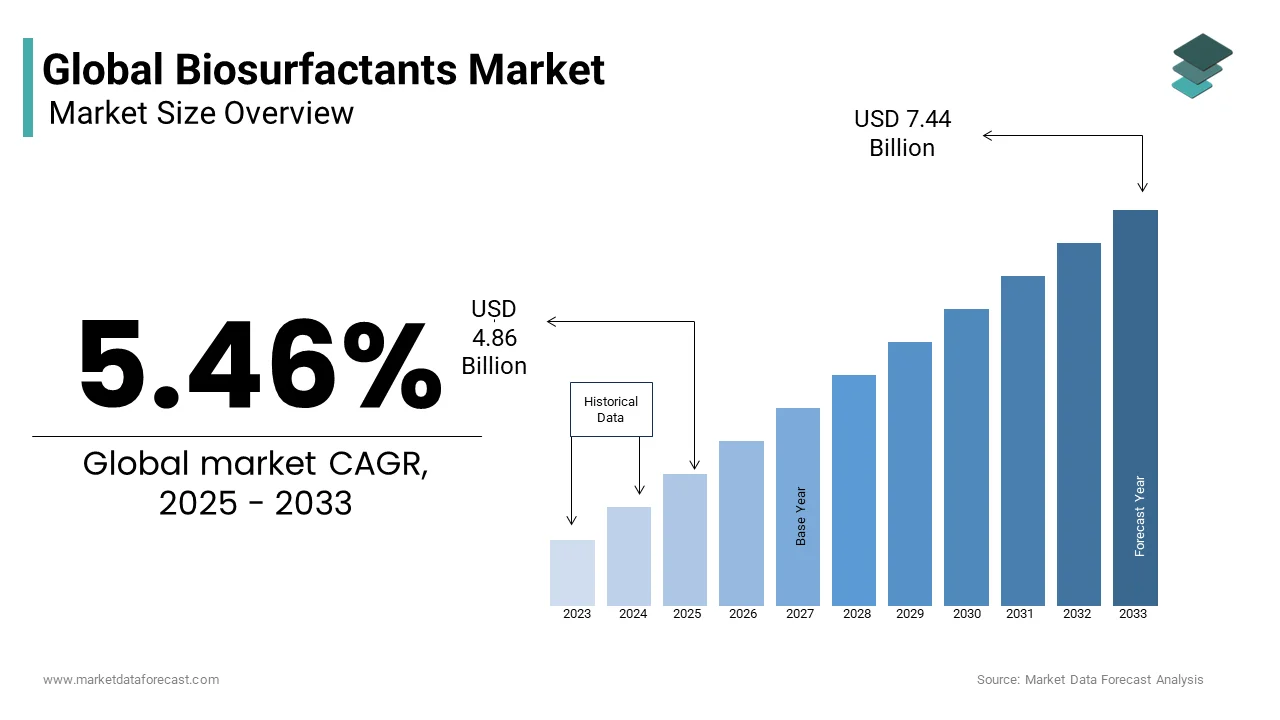
- Market Valuation: Valued at USD 4.86 billion (2025), estimated at USD 5.13 billion (2026), and projected to reach USD 7.85 billion by 2034, registering a robust CAGR of 5.46% (2026–2034).
- Primary Growth Drivers: Rising demand for environmentally safe oil spill remediation solutions, expansion of enhanced oil recovery (EOR) using microbial methods, tightening regulatory pressure against persistent synthetic petrochemical surfactants, and the shift toward clean, natural formulations in green cosmetics.
Key Market Segment Metrics (2026–2034)
| Category | Leading Segment (2025 Position) | Fastest-Growing Segment |
|---|---|---|
| By Type | Glycolipids (dominated with 58.6% of the global market share in 2025) | Lipopeptides (projected to expand at the fastest CAGR of 14.6% from 2026 to 2034) |
| By Application | Oil & Petroleum (led the market by capturing 34.8% of global share in 2025) | Personal Care (forecasted to grow at the fastest CAGR of 13.8% from 2026 to 2034) |
| By Region | Europe (top performer accounting for 36.5% of the market share in 2025) | Asia-Pacific (fastest-growing regional market driven by rapid industrialization and supportive green policies) |
Major Market Players & Market Structure
Market Structure: Fragmented yet rapidly evolving competitive landscape featuring established chemical firms and innovative biotech players competing intensely on strain optimization, waste-derived feedstock integration, application performance, and regulatory compliance.
Key Companies: Jeneil, Evonik Industries, AGAE Technologies, Glycosurf, Tensiogreen, Stepan Company, Holiferm, Ecover, Pergan GmbH, and Novichem.
Global Biosurfactants Market Size
The global biosurfactants market size was valued at USD 4.86 billion in 2025 and is expected to reach USD 7.85 billion by 2034 from USD 5.13 billion in 2026, growing at a CAGR of 5.46%.
Biosurfactants refers to a class of surface-active agents produced by microorganisms such as bacteria, yeasts, and fungi, capable of reducing interfacial tension between immiscible phases through eco-compatible mechanisms. Unlike synthetic surfactants derived from petrochemicals, biosurfactants are biodegradable, low-toxicity, and function effectively under extreme pH, temperature, and salinity conditions, which makes them suitable for specialized industrial applications. These compounds include glycolipids (e.g., rhamnolipids, sophorolipids), lipopeptides, and polymeric surfactants, each exhibiting unique emulsifying, foaming, and antimicrobial properties.
MARKET DRIVERS
Rising Demand for Environmentally Safe Oil Spill Remediation Solutions
The increasing frequency of marine oil spills and regulatory burden to minimize ecological damage is driving the growth of biosurfactants market. The notable metric tons of oil were spilled globally from tanker incidents alone, which requires governments to mandate greener cleanup technologies. Biosurfactants enhance the bioavailability of hydrocarbons, which enables indigenous microbial populations to degrade oil more efficiently. Similarly, as per the research, biosurfactant-based dispersants have been tested in laboratory experiments using North Sea seawater, where they showed promising results for oil cleanup.
Expansion of Enhanced Oil Recovery (EOR) Using Microbial Methods
Increasing deployment in microbial enhanced oil recovery (MEOR), where they improve oil mobility in reservoirs by reducing interfacial tension and altering rock wettability is propelling the growth of biosurfactants market. Operators are turning to low-impact EOR techniques to extend field life as conventional extraction yields are declining. According to the study, MEOR applications have been piloted in onshore fields, with success rates exceeding in mature reservoirs. In India, the Oil and Natural Gas Corporation implemented biosurfactant injection in aging wells in Assam, achieving an increase in oil recovery over months, as per the study.
MARKET RESTRAINTS
High Production Costs Due to Complex Fermentation and Downstream Processing
The commercial scalability is hindered by expensive bioprocessing requirements, including sterile fermentation, nutrient-rich media, and intricate purification steps, which hamper the growth of biosurfactants market. The production cost of rhamnolipids range was more per kilogram, compared to that for synthetic surfactants like sodium dodecyl sulfate. As per the Fraunhofer Institute for Interfacial Engineering and Biotechnology, achieving high-purity biosurfactants at industrial volumes requires multi-step processing, which limits adoption to niche and high-value applications where cost is secondary to environmental performance.
Limited Industrial-Scale Fermentation Infrastructure
The global capacity for large-scale production remains fragmented and underdeveloped despite technological advances, which restricts the growth of biosurfactants market. Most manufacturing occurs in pilot or semi-industrial setups, with few facilities exceeding 100-ton annual output. Less share of worldwide fermentation infrastructure is optimized for biosurfactant synthesis, as most biorefineries prioritize biofuels or pharmaceuticals. In Europe, only some commercial plants are dedicated to microbial surfactant production. In developing regions, inconsistent power supply and lack of skilled bioprocess engineers further constrain operations. This infrastructural deficit impedes consistent supply and economies of scale essential for broader market penetration.
MARKET OPPORTUNITIES
Utilization of Waste-Derived Feedstocks for Sustainable Production
The integration of low-cost, non-food waste streams, such as molasses, lignocellulosic biomass, and food processing byproducts, into biosurfactant fermentation, which is setting up new opportunities for the growth of biosurfactants market. This can reduce production costs and environmental impact. According to the Food and Agriculture Organization, over 1.3 billion tons of food waste are generated annually, much of which contains fermentable sugars suitable for microbial growth. Similarly, vinasse, a byproduct of ethanol production, supported high-efficiency rhamnolipid synthesis when supplemented with nitrogen sources.
Penetration into Green Cosmetics and Personal Care Formulations
The cosmetics industry’s shift toward clean, natural, and dermatologically safe ingredients is setting up new opportunities for the growth of biosurfactants market. Sophorolipids, produced by Starmerella bombicola yeast, exhibit excellent foaming and emulsifying properties with anti-inflammatory benefits, which makes them ideal for sensitive skin formulations. Companies have incorporated biosurfactants into premium skincare lines, citing improved biocompatibility and compliance with COSMOS and Ecocert standards.
MARKET CHALLENGES
Strain Instability and Low Yield in Industrial Fermentation
The genetic instability of microbial strains under prolonged fermentation, which is leading to inconsistent yields and product profiles that degrades the growth of biosurfactants market. Apart from these, optimal biosynthesis conditions, such as precise oxygen levels, pH, and nutrient gradients, are difficult to maintain at scale, resulting in batch variability. This inefficiency necessitates costly process optimization and real-time monitoring, deterring investment from large-scale chemical manufacturers seeking predictable output and standardized quality for downstream integration.
Regulatory Ambiguity and Lack of Standardized Approval Pathways
The absence of harmonized global regulations for use in industrial, agricultural, and consumer applications is likely to inhibit the growth of the biosurfactants market. While the U.S. Environmental Protection Agency (EPA) does regulate biosurfactants under the Toxic Substances Control Act (TSCA) for many industrial applications, the U.S. Food and Drug Administration (FDA) is primarily responsible for reviewing and approving those used in food-contact and agricultural applications. In the European Union, biosurfactants fall under the REACH regulation, but many remain unregistered due to high compliance costs. In emerging markets, regulatory frameworks are still evolving, with no dedicated classification for biosurfactants.
REPORT COVERAGE
| REPORT METRIC | DETAILS |
| Market Size Available | 2025 to 2034 |
| Base Year | 2025 |
| Forecast Period | 2026 to 2034 |
| CAGR | 5.46% |
| Segments Covered | By Type, Application, and Region |
| Various Analyses Covered | Global, Regional, & Country Level Analysis; Segment-Level Analysis; DROC, PESTLE Analysis; Porter’s Five Forces Analysis; Competitive Landscape; Analyst Overview of Investment Opportunities |
| Regions Covered | North America, Europe, APAC, Latin America, Middle East & Africa |
| Market Leaders Profiled | Jeneil (U.S.), Evonik Industries (Germany), AGAE Technologies (U.S.), Glycosurf (U.S.), Tensiogreen (U.S.), Stepan Company (U.S.), Holiferm (U.K.) |
SEGMENTAL ANALYSIS
By Type Insights
The glycolipids segment dominated the biosurfactants market by capturing a 58.6% of the global market share in 2025. The growth of the glycolipids segment is primarily driven by the widespread use of rhamnolipids and sophorolipids in industrial and environmental applications due to their high surface activity, stability under extreme conditions, and proven biodegradability. Rhamnolipids, produced predominantly by Pseudomonas aeruginosa, exhibit exceptional emulsification efficiency, with interfacial tension reductions. This makes them ideal for oil recovery and bioremediation. According to the study, rhamnolipid-based formulations enhanced oil recovery in field trials conducted. Sophorolipids, derived from yeast such as Starmerella bombicola, are increasingly adopted in green cleaning and personal care products due to their low toxicity and skin compatibility. Their dual functionality as both surfactants and antimicrobial agents further broadens application scope, which strengthens glycolipids as the cornerstone of the biosurfactant market.
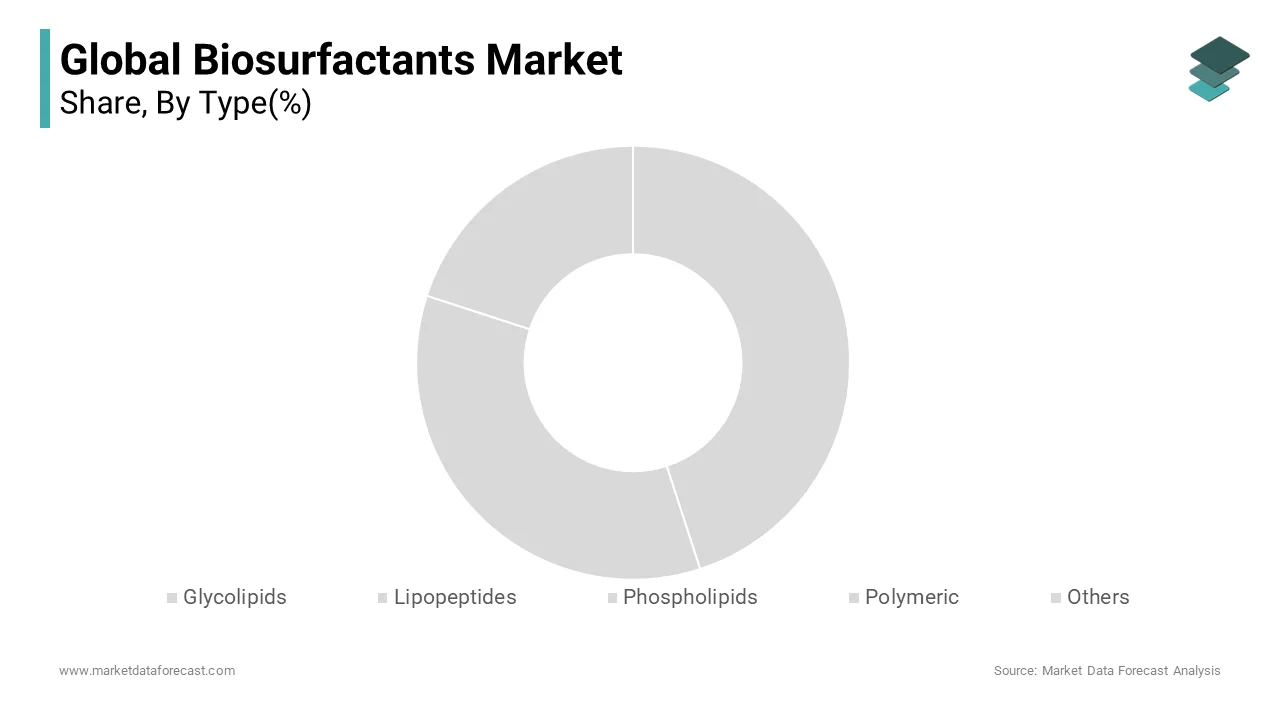
The lipopeptides segment is likely to experience the fastest CAGR of 14.6% from 2026 to 2034 due to their rising use in pharmaceuticals, agriculture, and advanced antimicrobial coatings. Surfactin, iturin, and fengycin, produced by Bacillus subtilis strains, exhibit potent antifungal, antiviral, and biofilm-disrupting properties, making them valuable in crop protection and medical device coatings. According to the Food and Agriculture Organization, fungal pathogens destroy up to 16% of global crop yields annually, prompting agrochemical firms to develop biosurfactant-based biopesticides as sustainable alternatives to synthetic fungicides.
By Application Insights
The oil & petroleum segment led the biosurfactants market by capturing 34.8% of the global market share in 2025. The growth of the oil & petroleum segment is attributed to the rising deployment of biosurfactants in microbial enhanced oil recovery (MEOR) and oil spill remediation, where their ability to reduce interfacial tension and mobilize trapped hydrocarbons offers a sustainable alternative to chemical flooding. Apart from these, regulatory mandates in ecologically sensitive regions are driving the use of biosurfactants in spill response. The Norwegian offshore chemical regulations, following OSPAR guidelines, require dispersants to demonstrate a certain level of marine biodegradability within a longer timeframe. Some conventional chemical dispersants meet this requirement, though microbial surfactants (biosurfactants) are being researched as promising, less toxic alternatives.
The personal care application segment is likely to experience the fastest CAGR of 13.8% from 2026 to 2034 due to consumer demand for natural, non-irritating, and environmentally responsible ingredients in skincare, haircare, and baby products. Biosurfactants such as sophorolipids and rhamnolipids offer excellent foaming, emulsifying, and antimicrobial properties without the skin irritation associated with sulfates like SLS. According to the research, a portion of new cosmetic launches in Europe featured biosurfactants as key active ingredients, particularly in facial cleansers and micellar waters. Apart from these, the U.S. points out that products labeled biodegradable surfactant saw a increase in consumer purchase intent compared to conventional alternatives. Clinical studies demonstrated that sophorolipid-based cleansers reduced transepidermal water compared to synthetic surfactants, enhancing skin barrier function. Major brands are accelerating clean beauty transitions.
REGIONAL ANALYSIS
Europe Biosurfactants Market Analysis
Europe was the top performer in the biosurfactants market in 2025 and accounted for 36.5% of the share in 2025 with stringent environmental regulations, advanced biotechnological infrastructure, and strong public and private investment in green chemistry. The European Union’s REACH regulation and Green Deal initiative have accelerated the phase-out of persistent synthetic surfactants, favoring biodegradable alternatives. Germany and the Netherlands host major biosurfactant producers, which integrate microbial surfactants into household and industrial cleaners.
North America Biosurfactants Market Analysis
North America biosurfactants market held 28.1% of the share in 2025. The United States serve as the primary hub for R&D and commercial deployment. The country benefits from robust federal support for bio-based technologies through agencies like the Department of Energy and the National Science Foundation. According to the study, many biosurfactant-related patents were granted, reflecting active innovation in strain engineering and fermentation optimization.
Asia Pacific Biosurfactants Market Analysis
Asia-Pacific biosurfactants market growth is likely to grow with rapid expansion led by India, China, and South Korea. The region’s growth is fueled by rising environmental awareness, government initiatives, and expanding industrial applications. In 2025, India launched the BioE3 Policy, a broader policy focusing on high-performance biomanufacturing, which includes bioproducts that can be used for environmental applications. According to the research, many industrial sites with hydrocarbon contamination are required to use biologically derived remediation agents. China’s Five-Year Plan includes biosurfactants as a priority in green chemical manufacturing, with projects scaling sophorolipid production.
Latin America Biosurfactants Market Analysis
Latin America grew steadily in the biosurfactants market, with Brazil emerging as the regional leader due to its vast agricultural resources and early adoption of bio-based technologies. The country’s ethanol industry, primarily based on sugarcane, provides a ready supply of fermentable sugars for microbial cultivation. The pilot-scale biosurfactant facilities are operational, focusing on rhamnolipid and sophorolipid production for agrochemical and oilfield applications.
Middle East and Africa Biosurfactants Market Analysis
Middle East and Africa biosurfactants market growth is likely to grow with limited but strategically growing activity. Saudi Arabia is investing in biosurfactant research through its King Abdullah University of Science and Technology (KAUST) by focusing on thermotolerant microbial strains for oilfield applications in high-temperature reservoirs.
KEY MARKET PLAYERS
These are the some of the market players that are dominating the global biosurfactants market are
- Jeneil (U.S.)
- Evonik Industries (Germany)
- AGAE Technologies (U.S.)
- Glycosurf (U.S.)
- Tensiogreen (U.S.)
- Stepan Company (U.S.)
- Holiferm (U.K.)
Top Players In The Market
Evonik Industries (Germany)
Evonik has established a significant presence in the Asia Pacific biosurfactants landscape through its sophorolipid-based product line, primarily under the brand Surfmix. The company has strengthened its foothold by collaborating with regional personal care and household cleaner manufacturers in South Korea, Japan, and Australia to replace synthetic surfactants with biodegradable alternatives. Evonik is positioning itself as a premium supplier of high-purity and sustainably produced biosurfactants across the region by aligning with ASEAN’s green chemistry roadmap and obtaining certifications.
Ecover (Belgium, part of SC Johnson Professional)
Ecover, a pioneer in ecological cleaning solutions, has extended its biosurfactant expertise into the Asia Pacific market by supplying enzyme- and microbial surfactant-based formulations to institutional and industrial clients in India, Thailand, and New Zealand. The company utilizes rhamnolipids derived from sugar beet and molasses in its professional cleaning products, targeting sectors such as food processing and healthcare where non-toxic, rapidly biodegradable agents are important. The company also engaged with municipal waste authorities in Auckland to test biosurfactant-based grease trap cleaners. Ecover is building credibility and demand for biosurfactants in high-impact industrial applications across the region by combining product innovation with on-ground environmental partnerships.
GlycoSurf, LLC (USA)
GlycoSurf has emerged as a key innovator in rhamnolipid production and has expanded its influence in the Asia Pacific market through strategic research alliances and niche application development. The company supplies high-purity with fermentation-derived rhamnolipids to bioremediation firms and oilfield service providers, where demand for eco-safe spill response agents is rising. GlycoSurf is establishing a differentiated presence in the region’s specialized industrial and environmental sectors by focusing on performance-essential and environmentally sensitive applications and supporting regulatory compliance with full lifecycle data.
Top Strategies Used By The Key Market Participants
Key players in the biosurfactants market are leveraging strain optimization, feedstock diversification, application-specific formulation, regulatory engagement, and strategic partnerships to consolidate their market position. Companies are investing in metabolic engineering to enhance microbial yield and stability, which reduces production costs and batch variability. Utilization of agro-industrial waste streams as fermentation substrates is improving sustainability and economic viability. Firms are developing tailored biosurfactant blends for high-value sectors such as personal care, agriculture, and enhanced oil recovery. Engagement with environmental agencies ensures compliance and accelerates approval processes.
COMPETITION OVERVIEW
The biosurfactants market features a fragmented yet rapidly evolving competitive environment where technological differentiation outweighs scale. While established chemical firms leverage regulatory expertise and distribution networks, niche biotech companies lead in strain innovation and application-specific performance. Competition is intensifying as players target high-margin sectors like green cosmetics and bioremediation, where efficacy and environmental credentials are paramount. Geographic expansion into emerging economies is accompanied by localized production and waste-based feedstock integration to reduce costs. Intellectual property in strain engineering and fermentation processes is becoming an important differentiator.
MARKET SEGMENTATION
This research report on the global biosurfactants market is segmented and sub-segmented into the following categories.
By Type
- Glycolipids
- Rhamnolipids
- Trehalolipids
- Sophorolipids
- Lipopeptides
- Phospholipids
- Polymeric
- Others
By Application
- Household Cleaners
- Industrial & Institutional Cleaners
- Food Processing
- Oil & Petroleum
- Personal Care
- Agrochemicals
- Others
By Region
- North America
- Europe
- Asia-Pacific
- Latin America
- Middle East and Africa