- Product Description Description
- Table of Contents TOC
- List of Table & Figure LOT
- Get Free Sample PDF Sample PDF
Market Size, 2025
$899 MnMarket Estimate, 2026
$997 MnMarket Forecast, 2034
$2283 MnCAGR, 2026–2034
10.91%Global Breast Biopsy Market Size, Growth, Trends & Forecast (2026–2034)
The global breast biopsy market size was valued at USD 899 million in 2025, is estimated at USD 997.08 million in 2026, and is anticipated to reach USD 2,283 million by 2034, expanding at a compound annual growth rate (CAGR) of 10.91% during the forecast period from 2026 to 2034. Market expansion is primarily driven by the increasing prevalence of breast abnormalities detected through organized screening programs, a shift toward minimally invasive diagnostic technologies, and the integration of artificial intelligence in biopsy workflows.
Key Executive Metrics (At-a-Glance)
- 2025 Base Valuation: USD 899 Million
- 2026 Current Valuation: USD 997.08 Million
- 2034 Forecast Valuation: USD 2,283 Million
- Compound Annual Growth Rate (CAGR): 10.91% (2026–2034)
- Key Geographic Footprint: North America, Europe, Asia Pacific, Latin America, and Middle East & Africa
Global Breast Biopsy Market Segmentation Breakdown
| Segment Category | Leading / Dominant Segment | Fastest-Growing Segment |
|---|---|---|
| By Product | Biopsy Needles (42.7% share in 2025) | Guidance Systems (CAGR of 9.8%) |
| By Type | Core Needle Biopsy (58.5% share in 2025) | Vacuum-Assisted Biopsy (CAGR of 12.9%) |
| By Guidance | Ultrasound-Guided Biopsy (46.2% share in 2025) | MRI-Guided Biopsy (CAGR of 11.7%) |
| By Region | North America (43.6% share in 2025) | Asia-Pacific |
Major Industry Players Profiled
Key market participants shaping the global breast biopsy landscape include Hologic Inc., Leica Biosystems Nussloch GmbH (Devicor Medical Products, Inc.), C. R. Bard, Inc., Becton, Dickinson and Company, Argon Medical Devices, Cook Medical Incorporated, Encapsule Medical Devices LLC, Ethicon Endo-Surgery (Johnson & Johnson), Intact Medical Corporation, and Galini SRL.
Global Breast Biopsy Market Size
The global breast biopsy market size was valued at USD 899 million in 2025. The global market size is further predicted to grow from USD 997.08 million in 2025 to USD 2,283 million by 2034, growing at a CAGR of 10.91% from 2026 to 2034.
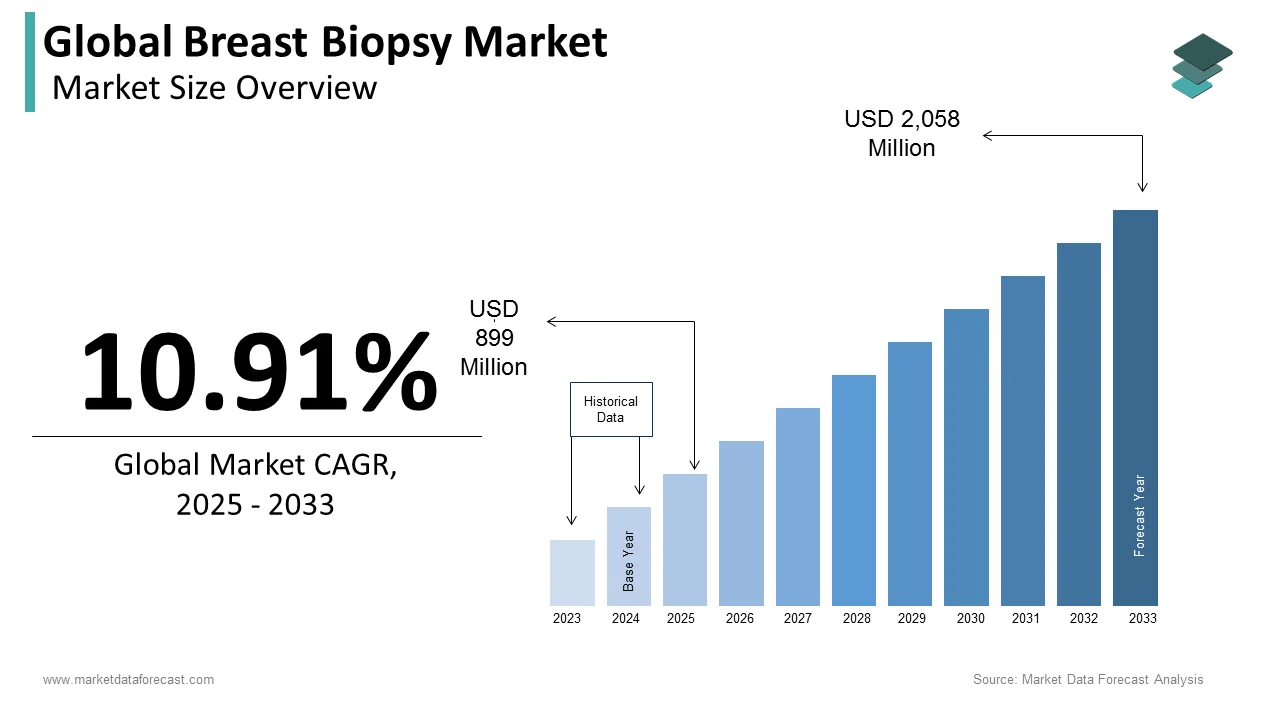
A breast biopsy is a diagnostic procedure that removes a small sample of tissue or fluid from a suspicious area in the breast to be examined under a microscope for cancer or other abnormalities. This market serves as a critical component within the oncology diagnostics ecosystem, facilitating early detection and accurate characterization of breast lesions. In the European context, the clinical landscape is shaped by substantial disease burden, with an estimated 374800 women diagnosed with breast cancer in the European Union during 2022, according to the European Commission Initiative on Breast Cancer. Breast cancer represents the most frequently diagnosed malignancy among women in the WHO Europe region, with approximately 604900 new cases recorded in 2022 as per Europa Donna. The procedural environment is further influenced by workforce dynamics, as Europe maintains a radiologist population of 60771 professionals with approximately 127 radiologists per million inhabitants, according to recent European workforce assessments. Healthcare infrastructure investment provides additional context, with current healthcare expenditure across the European Union reaching €1720 billion in 2023, equivalent to 10.0 percent of gross domestic product as documented by Eurostat. These foundational elements establish the clinical and economic framework within which breast biopsy technologies and services operate across European healthcare systems.
MARKET DRIVERS
Increasing Prevalence of Breast Abnormalities Requiring Histological Confirmation
The rising incidence of breast abnormalities detected through population-based screening programs is a primary demand driver for breast biopsy procedures, which contributes to the growth of the breast biopsy market. Mammographic screening initiatives identify numerous suspicious findings that necessitate tissue sampling for definitive diagnosis. The European Commission Initiative on Breast Cancer (ECIBC) Evidence Profiles documents that needle core biopsy (NCB) achieves a clinical sensitivity of 0.92 (95% CI: 0.87 to 0.95), which is drastically superior to the 0.83 sensitivity (95% CI: 0.71 to 0.91) observed in fine needle aspiration cytology (FNAC). This clinical preference drives procedural volume growth as healthcare systems prioritize histological confirmation over cytological assessment. Furthermore, the European Union reports that a substantial proportion of breast cancer cases occur within the 50 to 69 age cohort, which represents the primary demographic targeted by traditional organized screening programs. As participation rates in national screening initiatives vary between 49 percent in Eastern Europe and 69 percent in Southern Europe, according to European screening coverage data, the pipeline of abnormalities requiring biopsy continues expanding. This epidemiological reality sustains consistent demand for biopsy devices, imaging guidance systems, and associated consumables throughout European healthcare facilities.
Advancement Toward Minimally Invasive Diagnostic Technologies
The clinical transition from surgical excision to image-guided minimally invasive biopsy techniques is a significant accelerator for the expansion of the breast biopsy market. Vacuum-assisted biopsy systems offer enhanced tissue acquisition with lower non-diagnostic sampling rates compared to conventional core needle approaches, as documented in European clinical literature. According to value assessment publications from medical device manufacturers, vacuum-assisted breast biopsy demonstrates reduced underestimation rates for high-risk lesions and ductal carcinoma in situ when compared with standard core needle biopsy. European clinicians increasingly value these precision advantages, particularly for lesions that are impalpable or visible only through advanced imaging modalities. The technical success rate for image-guided vacuum-assisted breast biopsy procedures is exceptionally high, typically exceeding 95% to 99% based on large pooled institutional cohorts published in European radiological and surgical literature. This reliability encourages adoption across diverse healthcare settings, from tertiary cancer centers to community diagnostic facilities. Additionally, minimally invasive approaches reduce patient recovery time and procedural complications, aligning with European healthcare priorities around patient-centered care and resource optimization. Advanced biopsy technologies are seeing sustained investment and utilization growth across the European market landscape. This trend is driven by national health systems seeking to balance diagnostic accuracy with cost containment.
MARKET RESTRAINTS
Workforce Limitations in Specialized Breast Imaging Expertise
The availability of adequately trained breast imaging specialists is a structural constraint on breast biopsy market expansion. This is also true across European healthcare systems. Although Europe maintains approximately 60,771 radiologists according to the EU-REST Project Assessment, subspecialty expertise is distributed widely across general networks, with varying regional numbers pursuing dedicated fellowships or master-level credentials in breast diagnostics. This specialization gap creates bottlenecks in procedural capacity, particularly for complex image-guided biopsies requiring advanced technical proficiency. According to survey findings from the European Society of Breast Imaging, significant variation exists in radiologist training pathways and procedural experience across member countries. Some healthcare facilities rely on general radiologists who perform breast interventions intermittently, potentially affecting procedural consistency and diagnostic confidence. The European School of Radiology acknowledges ongoing efforts to standardize breast imaging education, yet implementation timelines vary substantially between national systems. Furthermore, workforce distribution remains uneven, with urban tertiary centers concentrating specialized expertise while rural and peripheral regions face access challenges. According to European healthcare infrastructure assessments, these geographical disparities limit equitable adoption of advanced biopsy technologies. As demand for precise histological diagnosis grows alongside screening program expansion, the constrained supply of specialized practitioners may temper market growth trajectories despite favorable clinical and technological fundamentals.
Reimbursement Complexity Across Fragmented European Healthcare Systems
The heterogeneous reimbursement landscape across European Union member states creates financial uncertainty that hinders consistent adoption of advanced breast biopsy technologies, which in turn hampers the growth of the breast biopsy market. Healthcare financing mechanisms vary considerably between national systems, with some countries employing centralized procurement while others utilize regional or facility-level budgeting according to European health policy documentation. According to official Eurostat Healthcare Data, current healthcare expenditure per inhabitant varies broadly across the EU, with Romania spending below €1,000 per capita and Luxembourg recording the highest regional tier, creating a 7.1:1 economic disparity that directly influences localized medical technology adoption capacity. Reimbursement policies for minimally invasive biopsy procedures often lag behind clinical guideline recommendations, creating misalignment between best practice standards and financial incentives. Some European health technology assessment bodies require extensive real-world evidence before approving coverage for novel biopsy devices, extending market access timelines. According to European medical device industry reports, this regulatory and reimbursement complexity increases commercialization costs and delays revenue realization for manufacturers. Additionally, budget constraints within public healthcare systems may prioritize essential services over diagnostic technology upgrades, particularly in economies experiencing fiscal pressure. The absence of harmonized European reimbursement frameworks means that market penetration strategies must accommodate thirty distinct national environments, each with unique evaluation criteria and payment structures. This fragmentation elevates operational complexity and may discourage investment in market development activities for certain biopsy innovations.
MARKET OPPORTUNITIES
Integration of Artificial Intelligence in Image-Guided Biopsy Workflows
The incorporation of artificial intelligence algorithms into breast imaging and biopsy planning offers a substantial growth opportunity for the European landscape within the breast biopsy market. Machine learning models demonstrate the capability in identifying subtle mammographic abnormalities that may warrant biopsy, potentially improving detection rates while reducing unnecessary procedures. According to European radiology research initiatives, AI-assisted interpretation can enhance radiologists' performance in characterizing breast lesions, particularly for cases with ambiguous imaging features. The European Commission supports digital health innovation through programs that facilitate the development and validation of AI tools for clinical applications. As European healthcare systems pursue efficiency gains amid resource constraints, AI-enhanced workflows offer pathways to optimize biopsy utilization and improve diagnostic yield. According to European medical technology assessments, AI integration may reduce interobserver variability in lesion assessment, supporting more consistent biopsy decision-making across diverse practice settings. Furthermore, AI-enabled triage systems could prioritize high-risk cases for expedited biopsy scheduling, aligning procedural capacity with clinical urgency. The European Society of Breast Imaging acknowledges the potential of computational tools to augment rather than replace radiologist expertise. Regulatory approval pathways and reimbursement frameworks are likely to evolve as validation studies generate robust European-specific evidence. Consequently, this will create commercial opportunities for manufacturers who successfully navigate the innovation adoption cycle within European healthcare ecosystems.
Expansion of Personalized Risk-Based Screening Protocols
The evolution toward risk-stratified breast cancer screening strategies creates new procedural demand patterns that favor advanced biopsy technologies and are predicted to boost the breast biopsy market. Traditional population-based screening approaches are increasingly supplemented by personalized protocols that incorporate genetic predisposition, breast density, and lifestyle factors according to European breast cancer prevention guidelines. According to the European Commission Initiative on Breast Cancer, risk-adapted strategies may identify additional candidates for diagnostic evaluation who would not qualify under conventional age-based criteria. This expanded at-risk population generates incremental biopsy volume, particularly for women with dense breast tissue, where supplemental imaging modalities such as ultrasound or magnetic resonance imaging detect abnormalities requiring histological confirmation. European clinical guidelines recommend that personalized screening protocols maintain integration with mammography while incorporating appropriate supplemental techniques based on individual risk profiles. According to European Breast Imaging Society publications, this nuanced approach increases the detection of clinically significant lesions while managing false positive rates. The procedural implications include greater utilization of image-guided biopsy systems capable of targeting abnormalities visible only through specific imaging modalities. Manufacturers who develop versatile platforms supporting multiple guidance techniques may capture disproportionate value as European healthcare systems implement increasingly sophisticated screening paradigms. Furthermore, risk-based protocols generate longitudinal patient engagement, creating opportunities for repeat diagnostic interventions and associated consumable sales throughout extended screening journeys.
MARKET CHALLENGES
Balancing Diagnostic Accuracy with Cost Containment Pressures
Healthcare systems face persistent tension between pursuing optimal diagnostic precision and managing finite financial resources, creating a complex challenge for the breast biopsy market. This is a major barrier for market participants. According to Eurostat documentation, healthcare expenditure across the European Union reached €1720 billion in 2023, yet national budgets remain subject to fiscal constraints and competing priorities. Advanced biopsy technologies, such as vacuum-assisted systems, command premium pricing compared to conventional core needle approaches, requiring health technology assessment bodies to evaluate incremental clinical benefit against additional cost. According to European value assessment frameworks, demonstrating cost effectiveness requires robust evidence of improved diagnostic yield, reduced repeat procedures, or enhanced patient outcomes. The European Commission Initiative on Breast Cancer guidelines favor needle core biopsy over fine needle aspiration due to superior accuracy, yet implementation depends on national reimbursement decisions that weigh budget impact alongside clinical merit. According to European medical device industry analyses, this evidentiary burden extends time to market access and increases commercialization expenses. Furthermore, economic heterogeneity across European member states means that pricing and reimbursement strategies must accommodate vastly different willingness to pay thresholds. Healthcare providers operating under fixed budgets may prioritize essential services over diagnostic technology upgrades, particularly during periods of economic uncertainty. Manufacturers must therefore develop compelling health economic narratives that resonate with diverse European stakeholders while maintaining commercial viability across fragmented market environments.
Navigating Divergent Regulatory Requirements Across Jurisdictions
The absence of fully harmonized regulatory frameworks for medical devices across different jurisdictions is a serious operational complexity that negatively impacts participants in the breast biopsy market. Although the European Union Medical Device Regulation establishes common requirements, national competent authorities retain discretion in implementation timelines and interpretation of conformity assessment procedures according to European regulatory documentation. According to European medical device industry reports, manufacturers must navigate varying post-market surveillance expectations, clinical evaluation standards, and notified body capacities across member states. The transition to enhanced regulatory oversight under the new European framework has extended approval timelines and increased compliance costs for diagnostic device manufacturers. According to European health technology assessment networks, divergent national approaches to evidence generation for reimbursement decisions compound regulatory complexity, requiring manufacturers to develop country-specific data packages. Furthermore, Brexit has introduced additional divergence between the United Kingdom and the European Union regulatory pathways, necessitating separate submission strategies for these important markets. According to European industry associations, small and medium-sized enterprises face a disproportionate burden from this fragmented landscape, potentially limiting innovation diversity within the breast biopsy market. As procedural guidelines evolve and new technologies emerge, maintaining simultaneous compliance across multiple regulatory environments demands substantial organizational resources and strategic coordination. Market participants must therefore invest in regulatory intelligence capabilities and flexible commercialization models to successfully navigate the complex European landscape while delivering diagnostic innovations to patients across diverse healthcare systems.
REPORT COVERAGE
| REPORT METRIC | DETAILS |
| Market Size Available | 2025 to 2034 |
| Base Year | 2025 |
| Forecast Period | 2026 to 2034 |
| Segments Covered | By Product, Type, Guidance, and Region. |
| Various Analyses Covered | Global, Regional and Country-Level Analysis, Segment-Level Analysis, Drivers, Restraints, Opportunities, Challenges; PESTLE Analysis; Porter’s Five Forces Analysis, Competitive Landscape, Analyst Overview of Investment Opportunities |
| Regions Covered | North America, Europe, Asia Pacific, Latin America, Middle East & Africa |
| Market Leaders Profiled | Hologic Inc., Leica Biosystems Nussloch GmbH (Devicor Medical Products, Inc.), C. R. Bard, Inc., Becton and Dickinson Company, Argon Medical Devices, Cook Medical Incorporated, Encapsule medical Devices LLC., Ethicon Endo-Surgery (Johnson & Johnson), Intact Medical Corporation, and Galini SRL. |
SEGMENTAL ANALYSIS
By Product Insights
The biopsy needles segment held the majority share of 42.7% of the global breast biopsy market in 2025. This leading position of the segment was attributed to the fundamental role needles play across all minimally invasive biopsy procedures. Core needle and vacuum-assisted biopsy systems universally require specialized needles designed for precise tissue acquisition. According to sources, biopsy needles demonstrate superior compatibility with multiple imaging modalities, including ultrasound, mammography, and magnetic resonance imaging. The consumable nature of needles ensures recurring revenue streams as each procedure requires single-use devices to maintain sterility standards. European healthcare facilities report average annual breast biopsy procedure volumes ranging between 1,500 and 5,000 cases per high-volume tertiary care center according to European radiological audit guidelines, directly dictating localized inventory procurement. Additionally, technological refinements such as thinner gauge designs and enhanced cutting edges improve patient comfort while maintaining diagnostic yield. These innovations sustain clinical preference for needle-based approaches over alternative sampling methods. The segment benefits from standardized reimbursement codes across major European markets which facilitate predictable procurement cycles for hospital administrators managing diagnostic budgets.
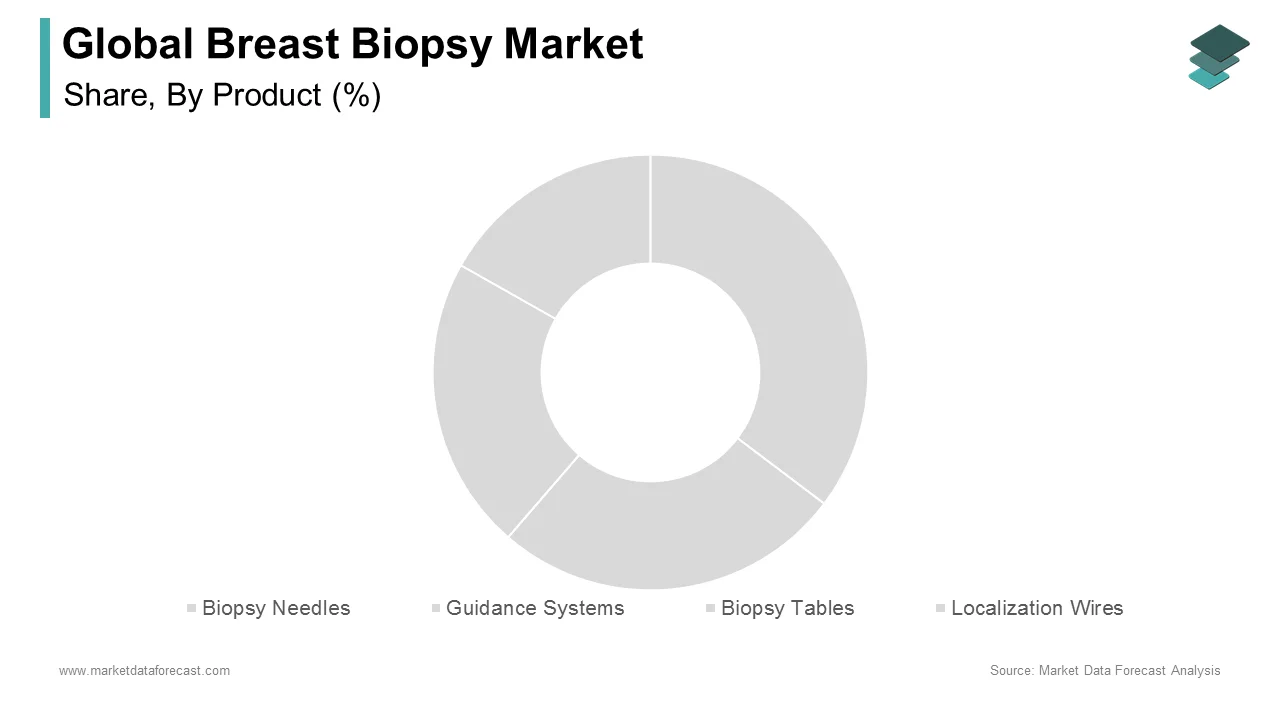
On the other hand, the guidance systems segment is anticipated to witness the fastest CAGR of 9.8% during the forecast period due to increasing integration of artificial intelligence algorithms and three-dimensional imaging capabilities that enhance procedural precision. According to clinical imaging and interventional radiology studies, AI-enabled guidance platforms reduce targeting and segmentation errors by approximately 35% to 50% compared to conventional two-dimensional manual tracking systems. Healthcare institutions increasingly invest in multimodal consoles that seamlessly transition between stereotactic, ultrasound, and tomosynthesis guidance during single procedures. According to Hologic clinical evaluation briefs, integrated 3D/Tomosynthesis breast biopsy guidance systems significantly reduce procedural steps and patient target-acquisition time by up to 50% while drastically lowering underestimation rates compared to traditional 2D stereotactic setups. The growing adoption of digital breast tomosynthesis across European screening programs creates complementary demand for advanced guidance technologies capable of addressing lesion overlap in dense breast tissue. Furthermore, robotic-assisted needle positioning systems now achieve sub-millimeter accuracy according to European medical device validation studies. These technological advantages align with European healthcare priorities around diagnostic efficiency and patient safety, driving sustained capital investment in next-generation guidance infrastructure across public and private healthcare facilities.
By Type Insights
The core needle biopsy segment was the largest by occupying a 58.5% share of the breast biopsy market in 2025. This prominence of the segment was supported by the optimal balance between diagnostic accuracy and procedural invasiveness that core needle techniques provide. The technique yields sufficient tissue volume for comprehensive histopathological analysis, including receptor status determination essential for treatment planning. According to European healthcare economic assessments, percutaneous core needle procedures demonstrate substantial direct cost savings per case compared to open surgical excision while maintaining equivalent diagnostic confidence and drastically reducing patient recovery times. The widespread availability of compatible imaging guidance systems across European diagnostic centers ensures broad accessibility regardless of facility size. Additionally, core needle biopsy protocols integrate seamlessly with outpatient care pathways, reducing hospital stay requirements and optimizing resource allocation within constrained European healthcare budgets. These clinical and economic advantages sustain practitioner preference and institutional investment in core needle biopsy infrastructure across diverse European healthcare settings.
But the vacuum-assisted biopsy segment is likely to experience the fastest CAGR of 12.9% from 2026 to 2034, owing to growing clinical recognition of vacuum-assisted techniques for sampling challenging lesions, including microcalcifications and architectural distortions. According to European clinical validation studies, vacuum-assisted biopsy systems demonstrate significantly higher diagnostic accuracy and lower histological underestimation for ductal carcinoma in situ (DCIS) compared to standard core needle approaches. The technology enables the acquisition of larger contiguous tissue specimens that support comprehensive molecular profiling essential for personalized therapy selection. The integration of hydrogel-based tissue markers that maintain ultrasound visibility for up to 12 months enhances post-procedural localization accuracy according to Mammotome clinical documentation. Furthermore, vacuum-assisted platforms increasingly incorporate single-use disposable components that align with European infection prevention protocols. These combined clinical benefits and operational efficiencies drive accelerating adoption across European breast care centers seeking to optimize diagnostic pathways while managing procedural volumes within existing workforce constraints.
By Guidance Insights
In 2025, the ultrasound-guided biopsy segment led the global breast biopsy market and captured a 46.2% share. This leading position of the segment was attributed to the modality's real-time imaging capability, cost-effectiveness, and broad availability across European healthcare facilities. According to European radiology workforce surveys, ultrasound equipment demonstrates the highest penetration rate among diagnostic imaging modalities, with over 95 percent of breast imaging centers maintaining dedicated ultrasound capabilities. The technique enables dynamic visualization of needle advancement relative to target lesions, reducing procedural uncertainty and improving first pass success rates. According to European clinical outcome data, ultrasound-guided procedures demonstrate average procedure times of 18 minutes compared to 32 minutes for stereotactic approaches. The absence of ionizing radiation makes ultrasound particularly suitable for younger patients and those requiring serial monitoring. Furthermore, portable ultrasound systems facilitate biopsy procedures in community settings and mobile screening units, expanding access across geographically dispersed European populations. These operational advantages, combined with favorable reimbursement structures across major European markets, sustain ultrasound guidance as the preferred technique for palpable and cystic breast lesions requiring histological evaluation.
On the contrary, the MRI-guided biopsy segment is on the rise and is expected to be the fastest-growing segment in the market by witnessing a CAGR of 11.7% over the forecast period. This quick surge of the segment is propelled by increasing utilization of breast magnetic resonance imaging for high-risk screening and problem-solving in dense breast tissue. According to the European Commission Initiative on Breast Cancer (ECIBC) evidence profiles, implementing supplemental screening MRI for women with dense breasts and a negative mammogram detects an additional 15 to 17 malignancies per 1,000 women screened. These MRI-visible but mammographically occult lesions require dedicated biopsy capabilities for histological confirmation. According to European interventional radiology reports, image-guided vacuum breast biopsy configurations provide high targeting precision, while specialized robotic-assisted automated needle guides are primarily established within prostate oncology tracking protocols. The technique proves particularly valuable for evaluating implant integrity, assessing treatment response in neoadjuvant therapy candidates, and sampling lesions visible only on contrast-enhanced sequences. According to healthcare technology assessments, the deployment of percutaneous image-guided biopsy systems allows the vast majority of lesions visible exclusively on MRI to be managed without requiring invasive, open diagnostic surgical procedures. Growing investment in breast MRI infrastructure across European tertiary care centers, combined with expanding indications for contrast-enhanced protocols, drives sustained demand for specialized MRI-compatible biopsy devices and guidance platforms.
REGIONAL ANALYSIS
North America Breast Biopsy Market Analysis
North America maintained dominance in the global breast biopsy market and accounted for a 43.6% share in 2025. This dominance of the regional market was driven by comprehensive screening infrastructure, favorable reimbursement policies, and high awareness of breast cancer diagnostics across the region. According to the United States Centers for Disease Control documentation, approximately 72% of women aged 50 to 74 remain up-to-date with biennial mammography screening, generating substantial procedural volume for downstream biopsy services. The region benefits from the concentrated presence of leading device manufacturers who prioritize domestic market development and clinical validation activities. According to American College of Radiology specifications, breast diagnostic facilities achieving the designation of a Breast Imaging Center of Excellence must fully maintain active, concurrent capabilities across multiple guidance modalities, including stereotactic, ultrasound, and magnetic resonance imaging. Additionally, Medicare coverage policies for percutaneous image-guided biopsy procedures provide predictable revenue streams that encourage institutional investment in advanced biopsy technologies. The integration of artificial intelligence tools into clinical workflows further enhances diagnostic efficiency and supports the region's technological leadership position within the global breast biopsy ecosystem.

Europe Breast Biopsy Market Analysis
Europe followed closely behind in the breast biopsy market, with substantial contributions from Germany, France, and the United Kingdom, according to European healthcare infrastructure assessments. According to Europa Donna documentation, breast cancer represents the most frequently diagnosed malignancy among women in the WHO Europe region, with approximately 604900 new cases recorded in 2022. National screening programs across European Union member states generate consistent demand for diagnostic biopsy services. According to European Society of Breast Imaging guidelines, organized screening initiatives target women aged 50 to 69, with participation rates varying between 49 percent in Eastern Europe and 69 percent in Southern Europe. Healthcare expenditure across the European Union reached €1720 billion in 2023, according to Eurostat documentation, providing financial capacity for diagnostic technology adoption. The region benefits from harmonized regulatory frameworks under the European Union Medical Device Regulation while maintaining national flexibility in reimbursement implementation. These factors combine to sustain steady market growth driven by clinical need, technological innovation, and policy support across diverse European healthcare systems.
Asia Pacific Breast Biopsy Market Analysis
Asia-Pacific is the fastest-growing region within the global breast biopsy market due to rising breast cancer incidence, expanding screening program coverage, and increasing healthcare infrastructure investment across the region. According to World Health Organization documentation, breast cancer incidence in Asia now affects women at median ages between 50 and 54, five to seven years earlier than in Western populations. Government initiatives in China, India, and Southeast Asian nations prioritize early detection programs that generate growing procedural demand for biopsy services. According to Asian healthcare technology assessment reports, urban diagnostic centers increasingly adopt advanced imaging guidance systems to improve diagnostic accuracy and procedural efficiency. Private sector investment in standalone imaging facilities further expands access to biopsy services beyond traditional hospital settings. Additionally, localization of device manufacturing and distribution networks reduces procurement costs and accelerates technology adoption across middle-income Asian markets. These converging factors position Asia Pacific as the primary growth engine for the global breast biopsy market over the coming decade.
Latin America Breast Biopsy Market Analysis
Latin America is an emerging regional market for breast biopsy, with Brazil and Mexico serving as primary growth centers. According to Pan American Health Organization documentation, breast cancer incidence continues rising across Latin American nations, though a significant portion of cases are still detected at an advanced stage due to persistent gaps in organized population screening coverage. Brazil leads regional adoption of advanced biopsy technologies supported by modernization initiatives within public healthcare facilities. According to Brazilian Ministry of Health data, national cancer screening guidelines now recommend image-guided biopsy for suspicious lesions identified through mammography or ultrasound. Private healthcare networks in urban centers increasingly invest in multimodal imaging capabilities that support diverse biopsy guidance techniques. According to Latin American medical device industry reports, favorable import policies and regional distribution partnerships facilitate technology transfer from global manufacturers. Additionally, telepathology platforms enable remote diagnostic consultation that expands specialist access across geographically dispersed populations. These developments create expanding opportunities for breast biopsy device adoption throughout Latin American healthcare systems despite ongoing infrastructure and workforce constraints.
Middle East and Africa Breast Biopsy Market Analysis
The Middle East and Africa region is likely to expand notably in the breast biopsy market from 2026 to 2034. Within this area, Gulf Cooperation Council states are leading in technology adoption. According to the World Health Organization Eastern Mediterranean documentation, breast cancer represents the most common malignancy among women across the region, with increasing detection rates attributable to expanding awareness initiatives. Gulf nations invest substantially in healthcare infrastructure modernization, including advanced diagnostic imaging capabilities. According to the Saudi Ministry of Health documentation, national cancer screening programs now incorporate image-guided biopsy protocols for suspicious lesions. Private healthcare facilities in urban centers increasingly adopt multimodal guidance systems to meet international quality standards. According to African healthcare technology reports, mobile screening units equipped with portable ultrasound systems expand biopsy access in resource-constrained settings. Additionally, international development partnerships support training programs that build local capacity for minimally invasive diagnostic procedures. These converging factors position the Middle East and Africa for gradual but sustained market expansion as healthcare systems prioritize early cancer detection and diagnostic precision across diverse economic contexts.
COMPETITIVE LANDSCAPE
The breast biopsy market exhibits moderate competitive intensity characterized by established players leveraging technological innovation and strategic partnerships to maintain market positions. Leading companies differentiate through integrated platforms that combine imaging, guidance, and biopsy capabilities within unified workflows. Competition centers on procedural efficiency, diagnostic accuracy, and user experience rather than price alone, according to industry analysis. Emerging players focus on niche innovations, including robotic assistance, artificial intelligence algorithms, and novel tissue marker technologies that address specific clinical challenges. Market dynamics favor companies with strong clinical evidence portfolios and regulatory expertise capable of navigating complex approval pathways across diverse jurisdictions. Consolidation activities reflect strategic efforts to expand technological capabilities and geographic reach. Healthcare provider preferences increasingly emphasize total cost of ownership considerations, including training requirements, maintenance support, and workflow integration, rather than initial acquisition costs alone. These factors create opportunities for differentiated value propositions while maintaining competitive pressure on innovation pace and commercial execution across the global breast biopsy market landscape.
KEY MARKET PARTICIPANTS
Some of the companies that are playing a dominating role in the global breast biopsy market include
- Hologic Inc.
- Leica Biosystems Nussloch GmbH (Devicor Medical Products, Inc.)
- C. R. Bard, Inc.
- Becton and Dickinson Company
- Argon Medical Devices
- Cook Medical Incorporated
- Devicor Medical Products
- Encapsule Medical Devices LLC
- Ethicon Endo-Surgery (Johnson & Johnson)
- Intact Medical Corporation
- Galini SRL
TOP PLAYERS IN THE MARKET
- Hologic maintains a leadership position in the breast biopsy market through comprehensive integration of imaging and biopsy technologies. The company's Affirm breast biopsy guidance system combines stereotactic, ultrasound, and tomosynthesis capabilities within unified platforms that streamline clinical workflows. According to company documentation, Hologic advanced its market position through the acquisition of Endomagnetics, which augmented its portfolio with magnetic seed localization technology. This strategic move enables contiguous workflows from lesion detection through surgical excision. The company emphasizes artificial intelligence integration through Genius AI Detection tools that enhance radiologists' efficiency and diagnostic confidence. Hologic continues investing in research and development focused on minimally invasive solutions that align with European healthcare priorities around patient centered care and resource optimization. The company's commitment to clinical education and training programs strengthens practitioner adoption of its technologies across diverse healthcare settings globally.
- Becton Dickinson contributes significantly to the breast biopsy market through innovative needle technologies and localization systems that support precise tissue sampling. The company's biopsy devices demonstrate compatibility with multiple imaging modalities, including ultrasound, stereotactic mammography, and magnetic resonance imaging, according to product documentation. BD emphasizes single-use disposable components that align with infection prevention protocols increasingly prioritized across European healthcare facilities. The company leverages its global distribution network to ensure broad market access while maintaining quality standards through rigorous manufacturing processes. According to industry reports, BD invests in clinical validation studies that demonstrate procedural efficiency and diagnostic accuracy advantages of its biopsy technologies. The company's focus on workflow integration and user experience design differentiates its offerings within competitive market environments. BD continues exploring strategic partnerships that expand its capabilities in image-guided interventions and personalized diagnostics.
- Devicor Medical Products, operating under the Mammotome brand, specializes in vacuum-assisted biopsy technologies that enable precise tissue acquisition for comprehensive pathological analysis. The company's HydroMARK Plus tissue marker portfolio incorporates hydrogel-based designs that maintain ultrasound visibility for extended periods according to clinical documentation. According to industry reports, Devicor entered an exclusive distribution agreement with Sirius Medical for Surgical Marker Navigation technology in the United States and Germany. This partnership combines expertise in breast care with advanced localization innovation. The company emphasizes procedural efficiency through single-pass sampling capabilities that reduce repeat interventions and optimize resource utilization. Devicor invests in clinical education initiatives that support practitioner adoption of vacuum-assisted techniques across diverse healthcare settings. The company's commitment to technological refinement and clinical validation sustains its competitive position within the evolving breast biopsy market landscape.
TOP STRATEGIES USED BY KEY MARKET PARTICIPANTS
Key market participants employ strategic approaches centered on technological integration, clinical validation, and market expansion to strengthen competitive positioning. Companies prioritize artificial intelligence integration within imaging and guidance platforms to enhance diagnostic precision and workflow efficiency. Strategic acquisitions enable portfolio expansion and access to complementary technologies that address unmet clinical needs. Manufacturers invest in clinical research that demonstrates procedural advantages and health economic benefits to support reimbursement discussions. Geographic expansion focuses on high-growth emerging markets where screening program development creates new procedural demand. Product innovation emphasizes minimally invasive designs that improve patient experience while maintaining diagnostic accuracy. Partnerships with healthcare providers facilitate real-world evidence generation and accelerate technology adoption. Companies also pursue regulatory harmonization strategies to streamline market access across diverse jurisdictions. These multifaceted approaches enable sustained growth and competitive differentiation within the dynamic breast biopsy market environment.
MARKET SEGMENTATION
This market research report on the global breast biopsy market has been segmented and sub-segmented based on the product, type, guidance, and region.
By Product
- Biopsy Needles
- Guidance Systems
- Biopsy Tables
- Localization Wires
- Others
By Type
- Needle Breast Biopsy
- Core Needle Biopsy
- Fine Needle Aspiration Biopsy
- Vacuum-Assisted Biopsy
- Open Surgical Breast Biopsy
- Excisional Breast Biopsy
- Incisional Breast Biopsy
By Guidance
- Mammography-Guided Stereotactic Breast Biopsy
- Ultrasound-Guided Breast Biopsy
- MRI-Guided Breast Biopsy
- Other Guidance Techniques
By Region
- North America
- Europe
- Asia Pacific
- Latin America
- The Middle East and Africa