- Product Description Description
- Table of Contents TOC
- List of Table & Figure LOT
- Get Free Sample PDF Sample PDF
Market Size, 2025
$66.45 BnMarket Estimate, 2026
$73.3 BnMarket Forecast, 2034
$160.7 BnCAGR, 2026–2034
10.31%Executive Summary: Global Camping and Caravanning Market
- Market Scope: Comprehensive global analysis of the camping and caravanning ecosystem, evaluating site services, accommodation categories (RV parks, recreational sites, vacation camps), and regional market leadership frameworks.
- Market Valuation: Valued at USD 66.45 billion (2025), estimated at USD 73.3 billion (2026), and projected to reach USD 160.7 billion by 2034, registering a solid CAGR of 7.2% (2026–2034).
- Primary Growth Drivers: Escalating aging populations and early retirements, growing millennial (Gen Y) and Gen X participation in outdoor leisure activities, rising disposable incomes, and technological advancements combined with green camping trends.
Key Market Segment Metrics (2026–2034)
| Category | Leading Segment (2025 Position) | Fastest-Growing Segment (2026–2034) |
|---|---|---|
| By Type | RV Parks and Campgrounds (dominate overnight stays, motorhome accommodation, and structured site services) | Recreational & Vacation Camps (experiencing high expansion driven by adventure tourism and family retreats) |
| By Region | North America (held close to 45% of the global market share in 2025, anchored by robust outdoor recreation culture) | Asia-Pacific / China (projected to reach USD 20.93 billion by 2034 at a rapid 9.5% CAGR, driven by rising disposable incomes and travel) |
Major Market Players & Market Structure
Market Structure: A fragmented yet expanding hospitality and outdoor recreation sector featuring prominent campground networks, holiday park operators, and resort property groups upgrading digital booking capabilities and eco-friendly infrastructure.
Key Companies: Discovery Parks Private Limited, European Camping Group, Kampgrounds of America, Inc. (KOA), Parkdean Holidays Limited, Equity Lifestyle Properties, Sun Communities, and Bourne Leisure.
 Download Free Sample Report
Global Camping And Caravanning Market Size
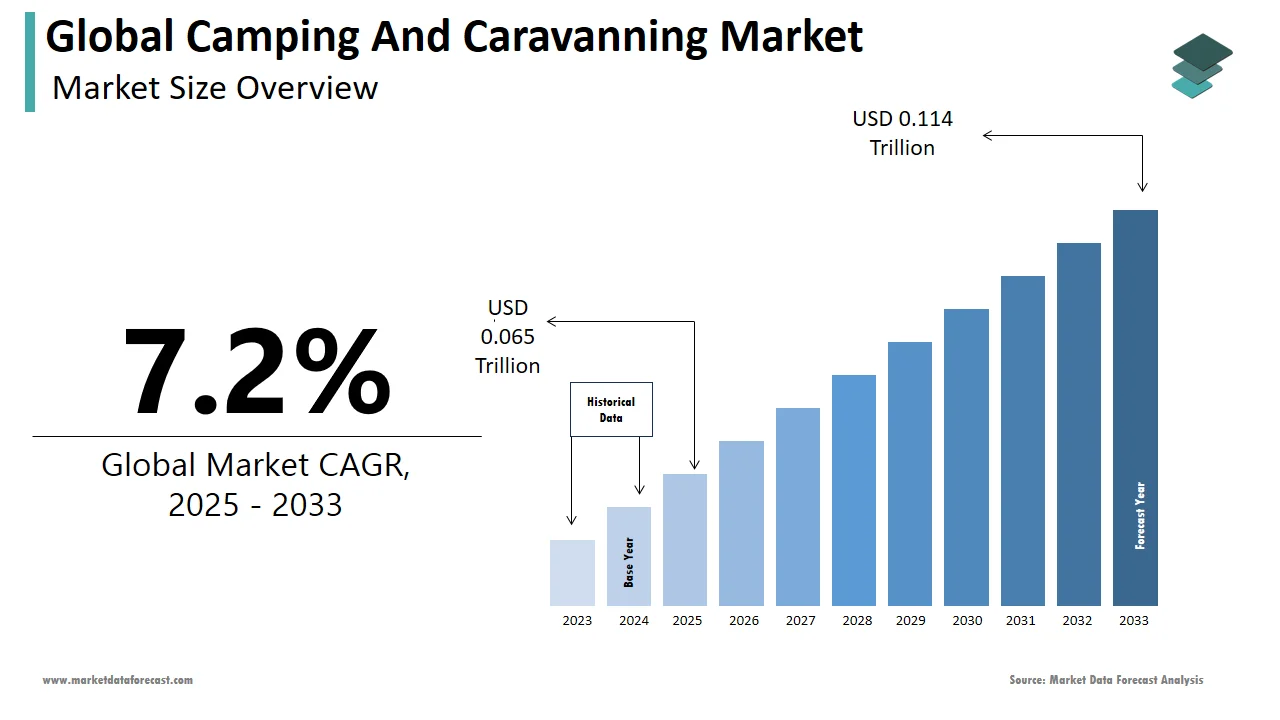
The global camping and caravanning market was valued at USD 66.45 billion in 2025. The market is estimated at USD 73.3 billion in 2026 and is projected to reach USD 160.7 billion by 2034, growing at a CAGR of 7.2% from 2026 to 2034.
Camping and caravanning encompasses the commercial provision, rental, and operation of diverse outdoor overnight accommodations, ranging from recreational vehicles and campervans to developed pitch sites and specialized wilderness camping infrastructure. According to Eurostat accommodation statistics, European tourist establishments recorded 413 million campsite nights, accounting for 13% of total regional tourism nights and demonstrating the persistent appeal of nature-based travel. This structural resilience is reinforced by changing consumer preferences favoring flexible domestic road trips over rigid urban vacations. Consequently, private campground operators and vehicle rental networks are aggressively upgrading on-site connectivity and luxury amenities to capture high-spending leisure travelers. To support this growth, authoritative bodies such as the World Tourism Organization emphasize the necessity of sustainable infrastructure development to manage visitor influxes without compromising local ecosystems.
MARKET DRIVERS
Surge in Domestic Tourism and Short Stay Getaways
The growing consumer preference for flexible short-haul travel and weekend nature breaks is largely driving the expansion of the global camping and caravanning market. According to government tourism tracking data, short-stay trips spanning 1 to 3 nights account for a dominant share of total trip length demand within the camping and caravanning sector. This travel behavior is mirrored by broader leisure trends, as official reports from the Outdoor Recreation Roundtable indicate that outdoor participation continues to scale across millions of citizens, adding significant numbers of first-time campers to the active ecosystem each year. This influx of domestic participants directly drives high-frequency bookings for pitch rentals and weekend vehicle rentals. Campground operators leverage this trend by optimizing digital reservation systems to capture spontaneous traveler demand, transforming short-term recreational habits into a reliable, year-round revenue engine. To accommodate this rising volume, municipal planning departments are streamlining zoning permits for boutique campgrounds and eco-friendly campsites. State and federal forestry departments are also expanding developed pitch networks, upgrading electrical hookups, and installing modern sanitation blocks to support the surge in domestic road-tripping. Additionally, tourism development boards allocate substantial marketing budgets to promote lesser-known regional parks, diffusing overcrowding at flagship national sites and distributing economic benefits more evenly across rural communities. Through these targeted public-private initiatives, the short-stay getaway segment maintains strong momentum, ensuring steady cash flow for operators and continuous engagement from enthusiastic consumer demographics.
Electrification and Technological Innovation in Recreational Vehicles
The rapid integration of smart automation and eco-friendly electric powertrains in recreational vehicles is further contributing to the camping and caravanning market expansion. According to official patent office metrics and transport ministry evaluations, the camping and caravanning sector benefits substantially from the early adoption of electrified recreational vehicles that pull forward premium demand. This technological shift is matched by intellectual property expansion, as government patent databases record hundreds of camping and vehicle innovation patents in a single recent baseline year, representing a steady annual increase driven primarily by weight reduction, battery longevity, and energy efficiency. These sophisticated features attract affluent demographics seeking sustainable, high-tech mobile accommodations. Consequently, vehicle manufacturers and public park owners partnering to install high-speed charging corridors are capturing higher average rental yields and fostering long-term brand loyalty. Environmental protection agencies actively support this transition by offering green subsidies and tax incentives for manufacturers developing zero-emission motorhomes and hybrid campervans. Furthermore, national energy boards collaborate with highway authorities to integrate solar-powered charging stations along major scenic byways, mitigating range anxiety for long-distance drivers. Research grants provided by national science foundations also fuel university-industry partnerships aimed at discovering lightweight composite materials for vehicle chassis construction. These concerted institutional efforts ensure that technological evolution within the recreational vehicle sector remains rapid, sustainable, and aligned with global climate targets.
MARKET RESTRAINTS
Severe Campground Capacity Constraints During Peak Seasons
Acute supply bottlenecks and spatial limits at premier national and private campgrounds during peak holiday periods restrict global market growth. According to regional tourism ministry evaluations, Northern European and British outdoor destinations face persistent challenges regarding seasonal fluctuations and underutilized capacity that limit annual revenue realization. This physical scarcity is compounded by high capital expenditure requirements for land acquisition and environmental zoning permits, as highlighted by federal economic analysis agencies noting that climbing, hiking, and tent infrastructure generate substantial value-added output amidst tight land use controls. When popular wilderness and coastal sites reach maximum visitor limits, prospective travelers are frequently turned away or forced to cancel trips. This structural capacity deficit prevents the broader camping and caravanning network from fully monetizing surging consumer interest during high-demand summer months. To address these limitations, land management bureaus are piloting advanced reservation allocation systems and implementing dynamic timed-entry permits to manage visitor flows more efficiently. Environmental ministries also enforce strict carrying-capacity thresholds to protect delicate flora and fauna from degradation caused by over-tourism. Meanwhile, regional planning commissions review zoning restrictions to identify underutilized public lands suitable for low-impact overflow camping. By balancing accessibility with rigorous conservation mandates, authorities strive to alleviate seasonal bottlenecks while preserving the natural integrity of sought-after outdoor destinations.
Stringent Environmental Regulations and Sustainability Compliance Mandates
Enforcement of strict conservation policies and carbon emission limits on recreational vehicle fleets imposes heavy operational compliance costs on operators, which further impedes the camping and caravanning market expansion. For instance, tourism regulatory alliances focused on eco-friendly camping are compelling authorities to enact rigorous guidelines that restrict vehicles from entering sensitive ecological zones. This regulatory pressure coincides with broader industrial hurdles, as continental transport authorities indicate that recreational vehicle manufacturers continually grapple with strict region-wide emissions directives and vehicle size limits. Campgrounds failing to secure green certifications risk losing access to eco-conscious patrons and face municipal penalties. Consequently, operators must invest heavily in sustainable waste management, renewable energy microgrids, and low-emission fleet transitions, which compresses near-term profit margins for independent site owners. To facilitate this complex transition, government agencies and specialized ecological task forces offer targeted sustainability grants and technical assistance programs to help smaller operators upgrade their facilities. Regulatory bodies also publish comprehensive compliance toolkits detailing best practices for water conservation, greywater recycling, and wildlife protection. By fostering a collaborative compliance environment, public institutions ensure that the outdoor hospitality sector successfully reduces its ecological footprint without crippling independent businesses. These regulatory frameworks ultimately elevate industry standards, protecting the pristine natural environments that draw travelers to campgrounds in the first place.
MARKET OPPORTUNITIES
Expansion of Peer-to-Peer Rental and Sharing Platforms
The rise of digital sharing ecosystems is lowering financial entry barriers for non-owners, unlocking vast new demographic cohorts for the global camping and caravanning market. According to federal economic and tourism tracking, peer-to-peer booking platforms and alternative rental listings are expanding rapidly as households test camper access without long-term purchase commitments. This flexibility is supported by robust macroeconomic activity, with national economic analysis bureaus reporting multi-billion-dollar economic outputs across outdoor recreation sectors that validate strong consumer willingness to spend on leisure assets. By allowing vehicle owners to monetize idle assets and giving novices affordable weekend access, these platforms expand the total addressable market. Campground owners benefit directly from this digital democratization as newly minted renters book physical pitch space, generating fresh revenue streams independent of traditional RV dealership sales. To ensure consumer safety and market stability, transport ministries and consumer protection bureaus are introducing transparent regulatory guidelines for peer-to-peer vehicle sharing, including mandatory safety inspections and standardized insurance requirements. Local tourism boards also partner with sharing platforms to promote regional itineraries that direct travelers toward under-visited rural campgrounds. This integration of digital sharing innovation with public tourism promotion creates a balanced ecosystem where micro-entrepreneurs, traditional park owners, and novice travelers all share in the economic benefits of expanded outdoor access.
Integration of Artificial Intelligence and Smart Park Management
The deployment of artificial intelligence algorithms and automated self-service technologies is revolutionizing operational efficiency and guest retention for site operators. According to government technology and market analyses, the integration of AI-powered revenue management systems and mobile check-in kiosks enables businesses to dynamically adjust pricing and reduce administrative overhead. This technological push aligns with broader digital trends, where official regional statistics note that online channels control major shares of regional tourism distribution by compressing booking friction. Automated park management tools allow operators to optimize site allocation, predict maintenance needs, and deliver personalized upsells for firewood, gear rentals, and utility hookups. This data-driven efficiency elevates the overall consumer experience, transforming traditional campgrounds into modern, highly profitable outdoor hospitality enterprises. Publicly funded digital infrastructure initiatives, such as rural broadband expansion programs, play a critical catalyst role by providing the high-speed connectivity required to support these advanced cloud-based management systems. Furthermore, innovation development agencies frequently partner with tech startups to pilot smart-grid energy monitoring tools on public campground properties. These collaborative tech deployments enable operators to minimize utility waste, reduce carbon emissions, and streamline labor allocation during peak operating hours. Ultimately, the fusion of artificial intelligence with robust digital infrastructure redefines industry benchmarks for operational excellence and customer satisfaction.
MARKET CHALLENGES
Intense Price Competition from Unregulated Alternative Accommodations
The proliferation of low-cost glamping setups, short-term urban rentals, and informal campsites creates severe pricing pressure for traditional regulated camping operators. According to official hospitality and tourism structure assessments, fragmented independent operators frequently engage in aggressive discounting during shoulder seasons to maintain baseline cash flow against alternative leisure lodging choices. This competitive friction is exacerbated by high fixed overhead costs, as official government tourism datasets show that maintaining compliant sanitary blocks, waste disposal points, and electrical grids requires significant capital outlay compared to unorganized pop-up sites. When budget-conscious travelers opt for unlicensed or informal outdoor stays, regulated parks experience depressed occupancy rates. Consequently, established campgrounds are forced to continuously upgrade their luxury amenities and marketing expenditures to justify premium pricing and protect their market share. Municipal licensing boards and local tax authorities actively combat this unfair competition by enforcing stricter zoning compliance and tax collection on unregistered pop-up sites. Consumer safety agencies also issue public awareness advisories highlighting the health and safety risks associated with unlicensed wilderness camps. By tightening enforcement against illicit operators, local governments protect legal businesses from predatory pricing and ensure that all participating establishments adhere to established environmental and public health standards.
Complex Supply Chain Vulnerabilities for Vehicle Components
Global manufacturing disruptions and volatile raw material expenses create persistent delivery delays for recreational vehicle parts and specialized camping hardware. According to international trade and industrial supply studies, vehicle manufacturers grapple with persistent component shortages, currency exchange fluctuations, and complex cross-border trade policies that delay the delivery of chassis and interior fittings. This production lag directly impacts the broader ecosystem, as inventory bottlenecks force prospective caravan buyers to face extended waiting lists. According to official patent tracking data from government intellectual property offices, while innovation velocity remains high with hundreds of new gear patents filed annually, getting those physical goods from assembly lines to retail shelves remains logistically challenging. These persistent supply chain frictions inhibit fleet expansion for rental companies and inflate equipment costs for consumers entering the market. To mitigate these vulnerabilities, international trade authorities and industrial development councils are establishing bilateral supply chain resilience agreements and encouraging domestic component manufacturing. Governments are also providing targeted tax credits for companies that localize their supply chains and invest in advanced domestic fabrication technologies. By streamlining customs clearance procedures and fostering localized production networks, public policymakers help stabilize equipment costs and ensure a steady flow of parts to vehicle builders and rental operators.
REPORT COVERAGE
| REPORT METRIC | DETAILS |
| Market Size Available | 2025 to 2034 |
| Base Year | 2025 |
| Forecast Period | 2026 to 2034 |
| Segments Covered | By Type and Region |
| Various Analyses Covered | Global, Regional, and Country-Level Analysis, Segment-Level Analysis, Drivers, Restraints, Opportunities, Challenges; PESTLE Analysis; Porter’s Five Forces Analysis, Competitive Landscape, Analyst Overview of Investment Opportunities |
| Regions Covered |
|
| Market Leaders Profiled | Discovery Parks Private Limited, European Camping Group, Kampgrounds Of America, Inc., Parkdean Holidays Limited, Thor Industries, Equity Lifestyle Properties, Sun Communities, Winnebago Industries, Camping and Caravanning Club, Bourne Leisure, and Others. |
SEGMENTAL ANALYSIS
By Type Insights
The RV parks and campgrounds segment accounted for 40.7% of the global market share in 2025. The dominance of the RV parks and campgrounds segment in the global market is attributed to widespread vehicle ownership and comprehensive site infrastructure. For instance, recreational vehicle parks provide essential hookups, waste stations, and security that attract long-duration travelers. According to market metrics reported by government trade and transport agencies, North American and European travelers continue to invest heavily in motorhomes, guaranteeing high-frequency seasonal bookings across private and public campground networks. This established infrastructure dominance ensures reliable, high-volume revenue generation that outpaces traditional wilderness pitching. Furthermore, heavy capital investments by major hospitality chains into luxury RV resorts have elevated consumer expectations, reinforcing the segment's central role in outdoor tourism. Public land management agencies support this dominance by continually upgrading electrical grids and water distribution systems within state and federal parks to accommodate larger, modern motorhomes. Regional tourism boards also collaborate with RV associations to publish comprehensive travel guides highlighting premier hookup locations and scenic driving routes. These coordinated public-private investments ensure that RV parks remain the backbone of the outdoor accommodation sector, providing safe, reliable, and comfortable destinations for millions of traveling families each year.
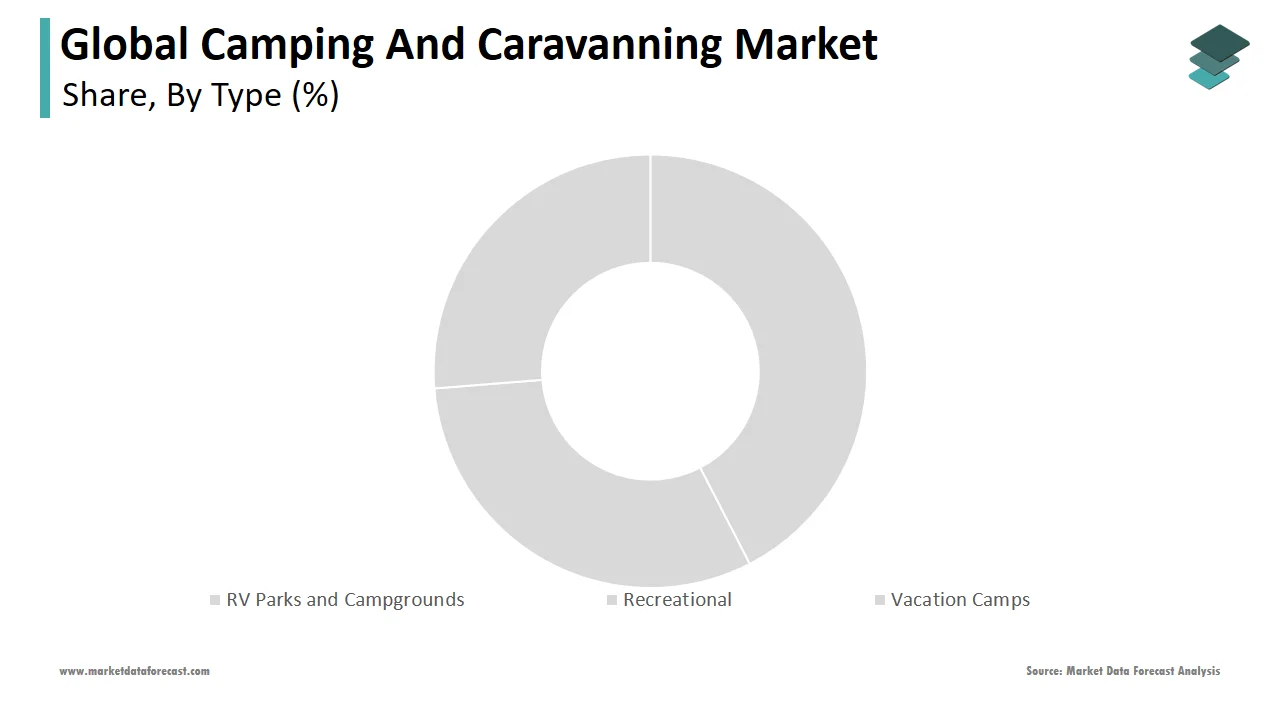
On the other hand, the vacation camps segment is estimated to be registering a robust CAGR through the forecast period, and this accelerated expansion results from the surging consumer demand for organized group retreats, family-centric outdoor programming, and immersive nature-based wellness experiences. According to participation surveys compiled by national recreation foundations, modern households increasingly prioritize experiential group travel that combines structured outdoor activities with communal lodging, driving robust forward bookings for specialized summer and family camps. This rising appetite for hassle-free, community-oriented outdoor hospitality enables vacation camp operators to capture high-margin group packages, rapidly outpacing traditional self-guided campsites in overall financial growth velocity. Municipal youth development departments and community outreach programs frequently partner with vacation camp organizers to subsidize nature education camps for underprivileged youth, broadening the demographic reach of the segment. Environmental education ministries also accredit these camps for delivering exceptional outdoor learning curricula, driving institutional school group bookings during shoulder seasons. By combining recreational adventure with structured educational programming, vacation camps secure a diversified and resilient revenue model that attracts both private family vacationers and institutional group clients.
REGIONAL ANALYSIS
North America Camping and Caravanning Market Analysis
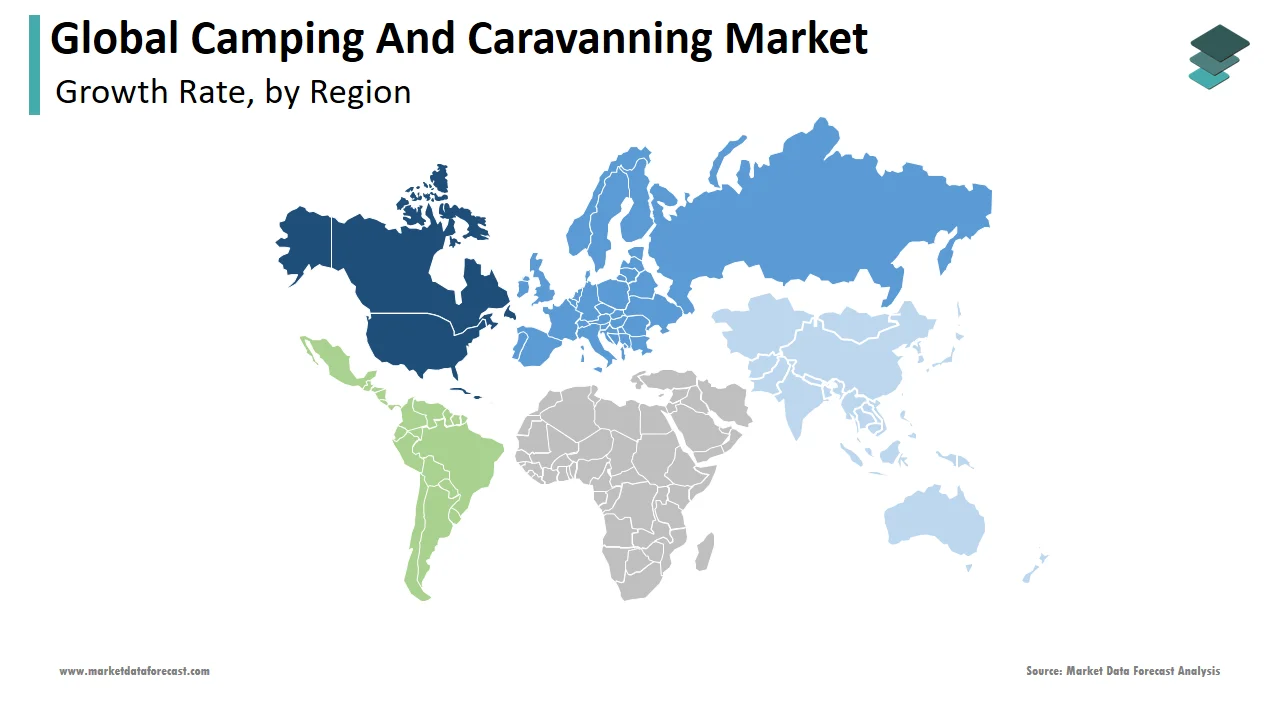
North America is likely to maintain its dominant market position and experience steady expansion over the next few years, supported by a deep-rooted outdoor recreation culture and extensive national park infrastructure. According to data from federal economic analysis bureaus, outdoor recreation accounts for multiple billions of dollars in annual economic value added across the United States and Canada, validating strong consumer spending on mobile leisure assets. According to official government camping reports, active camping households have expanded significantly, with millions of new participants entering the ecosystem and driving continuous high occupancy rates across state and federal campgrounds. To sustain this leadership, federal land management agencies have rolled out multi-million-dollar modernization initiatives aimed at expanding campsite capacities and upgrading digital reservation infrastructure across national parks. State-level tourism departments also invest heavily in highway maintenance and scenic byway signage to encourage cross-country motorhome travel. Furthermore, environmental protection agencies work closely with indigenous communities and local stakeholders to manage visitor volume sensitively, ensuring that park expansion does not compromise fragile ecosystems. These comprehensive public investments secure North America's status as the preeminent hub for global outdoor tourism and mobile leisure innovation.
Europe Camping and Caravanning Market Analysis
Europe is likely to exhibit stable development and sustained moderate growth in the coming years, characterized by sophisticated cross-border motorhome travel and dense networks of regulated camping grounds. According to official European institutional federations and transport registries, the regional leisure vehicle sector demonstrated remarkable resilience, with hundreds of thousands of new vehicle registrations achieved during recent baseline periods. According to Eurostat tourism statistics, outdoor accommodation establishments across the European Union account for millions of annual tourist nights, reflecting a permanent lifestyle shift toward flexible, nature-based holiday alternatives. To support this mature ecosystem, regional transport authorities enforce harmonized cross-border vehicle safety standards and promote interoperable tolling systems for motorhome travelers. European Union structural funds are frequently allocated to rural municipalities to help them develop cross-border cycling paths and green camping corridors that connect remote natural reserves. Environmental ministries also implement rigorous eco-labeling standards for European campsites, rewarding businesses that achieve high levels of energy efficiency and waste reduction. Through these continent-wide regulatory and financial frameworks, Europe maintains a stable, highly organized, and environmentally conscious camping market that continually attracts international travelers.
Asia Pacific Camping and Caravanning Market Analysis
Asia Pacific is likely to emerge as the fastest-growing regional market over the forecast period, projected to expand at a leading compound annual growth rate driven by rapid urban migration and rising disposable incomes. According to regional economic development summaries by the Asian Development Bank, expanding middle-class populations in nations like China, Australia, and Japan are heavily driving investments in modern caravan parks and luxury glamping sites. According to national tourism ministry indicators in Australasia and East Asia, domestic road trip travel and peer-to-peer campervan rentals have surged among millennial demographics, transforming the region into a vital expansion frontier for global outdoor hospitality brands. Governments across the region are actively supporting this boom by investing heavily in national highway networks, scenic park infrastructure, and modern tourist rest areas equipped with electric vehicle charging stations. National tourism boards also launch international marketing campaigns to attract foreign adventure travelers, highlighting unique regional landscapes and cultural heritage sites. Environmental protection agencies work alongside commercial developers to ensure that new caravan parks adhere to strict ecological preservation standards, preventing habitat degradation in sensitive coastal and mountainous regions. These proactive government policies and infrastructure investments lay a rock-solid foundation for the rapid, sustainable growth of the Asia Pacific outdoor tourism sector.
Latin America Camping and Caravanning Market Analysis
Latin America is likely to show progressive commercial development and steady growth in the next few years, anchored by expanding domestic tourism initiatives and breathtaking natural landscapes across countries like Brazil and Mexico. According to regional tourism economic analyses by development banks, improving highway infrastructure and rising middle-class disposable incomes are encouraging families to explore domestic national parks via campervans and regional campgrounds. According to hospitality industry assessments and national trade boards, local entrepreneurs are increasingly investing in eco-lodges and organized campgrounds to capture the growing preference for sustainable adventure travel among domestic and international visitors. Federal and state governments across the region are capitalizing on this momentum by launching national ecotourism development programs, offering low-interest loans for small business owners looking to build sustainable campground facilities. Tourism ministries also collaborate with conservation NGOs to train local guides and establish eco-certified camping networks that protect biodiversity while generating local employment. Infrastructure investments focus heavily on paving remote access roads to iconic national parks, significantly reducing travel times and vehicle wear for camping enthusiasts. Through these targeted public initiatives, Latin America is steadily transforming its rich natural assets into world-class, sustainable outdoor tourism destinations.
Middle East and Africa Camping and Caravanning Market Analysis
The Middle East and Africa region is likely to witness targeted luxury tourism expansion in the coming years, operating as a specialized, high-end niche market where camping and caravanning take the form of luxury desert safaris and premium glamping resorts. According to tourism board data from Gulf Cooperation Council nations and regional economic ministries, government strategies to diversify economies away from oil dependency are fueling massive investments in eco-tourism and high-end desert camping infrastructure. According to regional hospitality benchmarks, affluent travelers increasingly seek bespoke, comfort-driven wilderness experiences, prompting developers to establish world-class glamping facilities equipped with modern amenities across unique natural habitats. Environmental protection agencies in the region enforce strict ecological guidelines to ensure that luxury desert camps utilize solar energy, advanced wastewater recycling, and low-impact structures that preserve fragile desert ecosystems. National investment funds frequently partner with international hospitality brands to finance flagship eco-resorts, positioning the region as a premier destination for high-end experiential travel. Furthermore, government-backed aviation boards expand regional air connectivity to remote wilderness airstrips, making exclusive safari camps easily accessible for international luxury tourists. These strategic state-led investments ensure that the Middle East and Africa capture an elite segment of the global outdoor hospitality market.
COMPETITIVE LANDSCAPE
Competition within the global camping and caravanning market is exceptionally fierce, shaped by the dynamic interplay between entrenched multinational manufacturing conglomerates, specialized regional vehicle builders, and independent campsite operators. Industry participants continuously vie for consumer attention across a rapidly evolving landscape where outdoor leisure trends intersect with advanced vehicle technology and environmental consciousness. Major equipment manufacturers leverage substantial financial resources and engineering expertise to introduce high-margin smart motorhomes, luxury recreational vehicles, and eco-friendly electric prototypes that appeal to affluent travelers. Simultaneously, agile regional competitors and alternative lodging providers challenge traditional players by offering budget-friendly options, pop-up glamping setups, and peer-to-peer rental flexibility those lower financial entry barriers for new outdoor participants. Price sensitivity during economic fluctuations forces companies to carefully balance production volume with retail demand, avoiding inventory gluts while maintaining competitive margins. Furthermore, the rapid proliferation of digital booking ecosystems and mobile connectivity solutions has democratized market access, allowing boutique campgrounds and niche gear brands to compete directly with legacy hospitality chains. Antitrust regulators and consumer protection bureaus closely monitor this competitive landscape to prevent monopolistic practices and ensure fair advertising standards across digital booking platforms. Consequently, market participants must constantly refine their commercial strategies, emphasizing exceptional customer service, digital engagement, sustainability credentials, and product reliability to secure long-term brand loyalty and sustained profitability across international travel markets.
KEY MARKET PLAYERS
The leading companies operating in the global camping and caravanning market include:
- Discovery Parks Private Limited
- European Camping Group
- Kampgrounds of America, Inc.
- Parkdean Holidays Limited
- Thor Industries
- Equity LifeStyle Properties
- Sun Communities
- Winnebago Industries
- The Camping and Caravanning Club
- Bourne Leisure
TOP PLAYERS IN THE MARKET
- Thor Industries operates globally as a premier manufacturer of recreational vehicles, contributing extensively to the camping and caravanning market by supplying an extensive portfolio of travel trailers, motorhomes, and luxury campervans. The enterprise continuously drives industry progression through advanced engineering, aerodynamic design research, and the integration of smart connected vehicle platforms. To strengthen its competitive standing, the organization focuses heavily on developing electrified and hybrid motorhome concepts, expanding specialized consumer rental divisions, and forging strategic partnerships with clean energy technology firms to introduce sustainable off-grid travel solutions for modern outdoor enthusiasts. To support these manufacturing advancements, international trade councils and industrial research bodies collaborate with the company to test lightweight composite materials and next-generation battery storage systems. Environmental protection agencies also engage with the firm to ensure compliance with stringent regional carbon emission standards and vehicle recycling directives. By aligning its corporate research agenda with government sustainability goals and clean energy mandates, the enterprise maintains its market leadership, supplying safe, technologically advanced, and eco-friendly recreational vehicles to a rapidly evolving global consumer base.
- Winnebago Industries holds a foundational role in the outdoor hospitality ecosystem, contributing significantly by delivering iconic motorized and towable recreational vehicles designed for diverse leisure lifestyles. The corporation drives market advancement through continuous product innovation, superior interior ergonomics, and the integration of advanced energy storage systems into its vehicle fleets. To reinforce its market position, the company optimizes its manufacturing footprint across regional production hubs, forms strategic collaborations with major insurance providers to enhance ownership value, and invests in high-growth subsidiary brands specializing in luxury marine and specialized outdoor utility products. National transport safety administrations work closely with the corporation to conduct rigorous crash testing and safety standard validations for all newly introduced motorized platforms. Industrial development agencies also provide workforce training grants to help the company's manufacturing facilities adopt advanced automation and precision robotics, ensuring high production quality and supply chain resilience. Through these strategic public-private alignments, the corporation sustains its reputation for engineering excellence, delivering dependable, high-performance leisure vehicles that meet the rigorous demands of modern outdoor travelers.
- The Camping and Caravanning Club contributes vitally to the sector by operating an extensive network of premier holiday sites, promoting responsible outdoor tourism, and delivering comprehensive member services across regional territories. The organization drives market stability by championing infrastructure standards, providing expert technical advice, and encouraging broad demographic participation in nature-based leisure activities. To strengthen its market position, the club invests heavily in digital booking platforms, upgrades on-site environmental sustainability features such as renewable energy microgrids, and launches targeted promotional campaigns designed to attract first-time campers and younger family demographics into the active outdoor community. National conservation trusts and environmental ministries frequently partner with the club to pilot green camping initiatives, waste reduction programs, and biodiversity preservation projects across its network of holiday sites. Public tourism boards also collaborate with the organization to promote rural economic development and sustainable travel practices among member cohorts. Through these collaborative endeavors, the club serves as a vital pillar of the outdoor recreation community, ensuring high standards of environmental stewardship, customer service, and infrastructural reliability across its nationwide network.
TOP STRATEGIES USED BY KEY MARKET PARTICIPANTS
Key market participants operating within the global camping and caravanning industry utilize diverse strategic initiatives to secure competitive differentiation and expand their commercial footprints. Leading vehicle manufacturers heavily prioritize continuous research and development investments to introduce lightweight aerodynamic materials, advanced solar integration, and eco-friendly electric propulsion systems into their vehicle lineups. Strategic corporate acquisitions and brand diversification represent another primary approach used to capture specialized consumer segments ranging from ultra-luxury motorhome buyers to affordable compact campervan users. Furthermore, prominent campground operators and industry associations frequently deploy digital reservation technologies, dynamic pricing models, and mobile application platforms to streamline consumer booking experiences and optimize seasonal site occupancy. Companies also focus on establishing strategic cross-sector partnerships with insurance providers, outdoor apparel brands, and green technology firms to foster comprehensive ecosystem loyalty and address evolving consumer preferences for sustainable, technology-enabled outdoor travel. To support these strategic maneuvers, international trade development agencies and intellectual property offices provide robust legal frameworks and innovation grants that protect proprietary vehicle designs and digital software systems. Environmental protection authorities also reward proactive sustainability strategies with fast-tracked zoning permits and public eco-certification seals, enabling forward-thinking enterprises to capture the loyalty of environmentally conscious consumers.
Global Camping and Caravanning Market News
- April 2024: DynaTouch acquired KioWare, a kiosk management software company, allowing DynaTouch to offer more comprehensive kiosk solutions and strengthen its market presence in the broader digital kiosk and campground self-service ecosystem.
MARKET SEGMENTATION
This global camping and caravanning market research report has been segmented and sub-segmented based on type and region.
By Type
- RV Parks and Campgrounds
- Recreational
- Vacation Camps
By Region
- North America
- Europe
- Asia Pacific
- Latin America
- Middle East & Africa