- Product Description Description
- Table of Contents TOC
- List of Table & Figure LOT
- Get Free Sample PDF Sample PDF
Market Size, 2025
$38.14 BnMarket Estimate, 2026
$39.47 BnMarket Forecast, 2034
$51.98 BnCAGR, 2026–2034
3.50%Executive Summary: Global Chocolate Flavoured Candy Market
- Market Scope: Comprehensive global analysis of the chocolate-flavored candy market covering product categories, types, distribution channels, regional dynamics, growth drivers, restraints, and competitive landscapes.
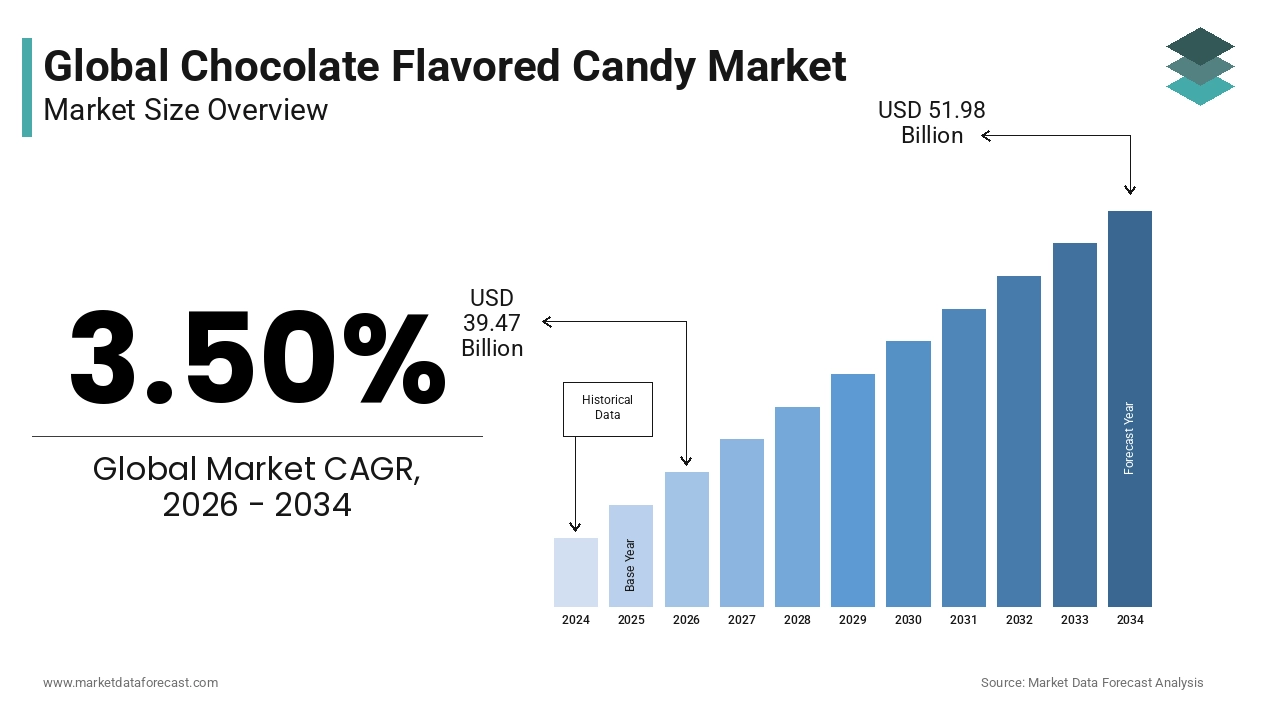
- Market Valuation: Valued at USD 38.14 billion (2025), estimated at USD 39.47 billion (2026), and projected to reach USD 51.98 billion by 2034, registering a solid CAGR of 3.50% during the forecast period (2026–2034).
- Primary Growth Drivers: Growing urbanization, rising disposable incomes, increasing demand for confectionery snacks, surging popularity of dark chocolate due to health benefits, and seasonal gift-giving trends.
Key Market Segment Metrics (2026–2034)
| Category | Leading Segment (2025 Position) | Fastest-Growing Segment |
|---|---|---|
| By Type | Milk Chocolate (holds the major market share and is the most commonly available variant globally) | Dark Chocolate & White Chocolate (driven by health-conscious preferences and gourmet dessert applications) |
| By Distribution Channel | Supermarkets & Hypermarkets (account for approximately half of total market share due to broad retail reach) | Online Retail (expanding rapidly driven by busy lifestyles and digital grocery delivery adoption) |
| By Region | North America (projected to hold the largest revenue share in 2025 due to high confectionary consumption) | Asia-Pacific (anticipated to exhibit the fastest growth rate backed by rising populations in India and China) |
Major Market Players & Market Structure
Market Structure: Moderately consolidated global confectionery landscape featuring multinational food corporations and regional candy makers competing on brand recognition, flavor innovations, and retail shelf placement.
Key Companies: Hershey's, Nestlé, Mars, Tootsie Roll, Florestal Foods, Colombina S.A., Tora Foods, LLC, Carmit Candy Industries, Natural Food Works Group, August Storck KG, Lowell International Polska, and others.
 Download Free Sample Report
Global Chocolate Flavoured Candy Market Size
The global chocolate flavoured candy market size was valued at USD 38.14 billion in 2025 and is projected to reach USD 51.98 billion by 2034 from USD 39.47 billion in 2026, growing at a CAGR of 3.50%
 .
The chocolate flavoured candy market encompasses a diverse array of confectionery products that utilize cocoa derivatives or synthetic flavorings to mimic the taste profile of chocolate without necessarily containing significant cocoa butter content. According to the International Cocoa Organization, global cocoa bean production for the 2023/2024 season was estimated at 4.382 million metric tons, providing the essential raw material base that underpins both genuine chocolate and flavored alternatives. This market distinction is critical as manufacturers leverage cost-effective flavor systems to offer affordable indulgence options to price-sensitive consumers. According to CAOBISCO, the European chocolate, sugar confectionery, and fine bakery sector generated €59.5 billion in annual turnover based on its latest published sector facts, highlighting the substantial scale of confectionery consumption in Europe. These figures illustrate how flavor innovation drives volume growth even when pure cocoa prices fluctuate. The sector relies heavily on advanced flavor encapsulation technologies to ensure longevity and intensity, which distinguishes it from traditional candy segments. According to the National Confectioners Association, chocolate accounted for $21.4 billion in U.S. confectionery sales in the latest reported period, demonstrating the continued strength of chocolate as a flavor and confectionery category. This persistent consumer preference ensures that the chocolate flavoured candy market remains resilient and adaptable to changing dietary trends while maintaining its core identity as a source of accessible comfort and sensory satisfaction.
MAJOR DRIVERS
Affordability and Accessibility Compared to Premium Chocolate
The lower price point of chocolate-flavored candies is one of the major factors propelling the chocolate flavoured candy market growth by making indulgent experiences accessible to a wider demographic during periods of economic uncertainty. According to the National Confectioners Association, 65% of U.S. consumers identified chocolate as an affordable treat in its 2024 consumer research, supporting the continued role of confectionery in affordable indulgence. This consumer perception supports demand for flavored alternatives that offer similar sensory satisfaction at a lower cost. The statistical disparity in inflation rates directly correlates with increased volume sales for flavored candies as households adjust their discretionary spending habits. Additionally, retailers prioritize these items for promotional campaigns because their lower unit cost allows for deeper discounts without eroding margins. According to the National Confectioners Association, more than 98% of Americans purchased chocolate, non-chocolate candy, gum, or mints in 2023, demonstrating the broad household reach of confectionery products. This behavioral trend reinforces the market position of flavored candies as a budget-friendly luxury. Consequently, manufacturers can maintain high turnover rates and expand distribution into discount channels, thereby strengthening the chocolate flavoured candy market through volume-driven growth strategies that resonate with cost-conscious shoppers.
Versatility in Product Format and Innovation
The ability to incorporate chocolate flavors into diverse non-chocolate matrices such as gummies, marshmallows, and hard candies drives innovation and expands consumption occasions within the chocolate flavoured candy market. According to a review published in the International Journal of Food Science and Technology, flavor encapsulation is widely used in food applications because volatile flavor compounds can degrade during processing and storage, making encapsulation an important method for improving flavor stability. This supports the development of hybrid products such as chocolate-filled gummies and chocolate-coated marshmallows, which appeal to consumers seeking novel textures. According to the National Confectioners Association, younger consumers increasingly over-index for gummy, chewy, and freeze-dried candy formats, demonstrating continued demand for novel confectionery textures. This innovation cycle keeps the category fresh and engaging for younger demographics who prioritize experiential eating. Furthermore, these formats often have longer shelf lives than pure chocolate, which reduces waste for retailers and manufacturers. According to peer-reviewed food engineering research, chocolate-flavored confectionery coatings are used in soft-centered confectionery and coated biscuits and wafers, where their barrier properties help control moisture migration. This technical advantage supports broader geographic distribution and reduces logistical costs. Thus, the chocolate flavoured candy market benefits from continuous product evolution that leverages flavor versatility to create unique value propositions distinct from traditional chocolate bars.
MARKET RESTRAINTS
Health Consciousness and Sugar Reduction Trends
Growing consumer awareness regarding sugar intake and obesity risks undermines the chocolate flavoured candy market significantly by prompting demand for low-sugar or sugar-free alternatives that are technically challenging to produce. According to the World Health Organization recommendations, free sugar intake should be limited to less than 10% of total energy needs, with a further reduction to below 5% providing additional health benefits. This dietary guidance has encouraged greater attention to sugar reduction and reformulation across confectionery categories. These regulatory pressure forces manufacturers to reformulate products using expensive sweeteners like stevia or monk fruit, which often fail to replicate the mouthfeel and bulk of sucrose. The statistical drop in sales volume reflects a structural shift in consumer preferences away from traditional high-sugar treats. Additionally, health advocates campaign against the marketing of sugary snacks to children, further restricting market growth. According to the European Commission, European Union food flavouring and food additive rules require authorised substances to undergo safety assessment and comply with specified conditions of use, reinforcing the broader regulatory emphasis on food safety and consumer information. These measures dampen impulse purchases and brand loyalty. Consequently, the chocolate flavoured candy market faces a persistent headwind as it struggles to balance taste expectations with nutritional mandates, leading to slower growth in traditional formulations.
Volatility in Cocoa Prices Influencing Flavor Perception
Fluctuating costs of real cocoa beans impact the chocolate flavoured candy market by creating consumer confusion and skepticism about the authenticity of chocolate-flavored products. According to the International Cocoa Organization, the nearby May 2024 cocoa futures contract reached an all-time high of US$12,567 per tonne in London and US$11,878 per tonne in New York on 19 April 2024. While chocolate-flavored candies use less actual cocoa, this price spike raises the cost of any real cocoa powder used in blends and increases consumer scrutiny of ingredient lists. The statistical volatility leads some brands to reduce cocoa content further, relying more on artificial flavors, which can degrade perceived quality. According to the Food and Agriculture Organization, cocoa prices increased by 136% between July 2022 and February 2024, with cocoa stock futures exceeding US$10,000 per tonne for the first time. This volatility makes it difficult for manufacturers to justify premium pricing for flavored products that lack substantial cocoa content. Furthermore, competitors may exploit this uncertainty by promoting pure chocolate alternatives during promotions. These dynamics create a challenging environment where the value proposition of chocolate-flavored candy is questioned. Thus, the chocolate flavoured candy market must navigate complex consumer perceptions while managing input costs that are indirectly linked to the volatile cocoa commodity market.
MARKET OPPORTUNITIES
Expansion into Functional and Wellness-Oriented Confectionery
Integrating chocolate flavors with functional ingredients such as probiotics, vitamins, and adaptogens is a significant opportunity for the chocolate flavoured candy market to tap into the health and wellness sector. According to the Global Wellness Institute, the global wellness economy reached $6.3 trillion in 2023 and is projected to grow at a CAGR of 7.3% from 2026 to 2034, supporting continued consumer interest in wellness-oriented products. Chocolate-flavored gummies fortified with collagen or magnesium is gaining traction as they mask the bitter taste of supplements while providing a treat-like experience. The statistical rise in supplement adoption among millennials and Gen Z drives this trend as consumers increasingly seek convenient delivery formats. According to the Council for Responsible Nutrition, 75% of Americans reported using dietary supplements in 2024, while magnesium usage increased from 19% of supplement users in 2023 to 23% in 2024. This convergence allows manufacturers to command higher price points and differentiate from standard candies. Additionally, these products can be marketed as daily essentials rather than occasional treats, increasing purchase frequency. Regulatory frameworks for food supplements are well-established, facilitating easier market entry. Consequently, the chocolate flavoured candy market can leverage its flavor profile to enhance the palatability of functional ingredients, thereby accessing a lucrative and growing segment that prioritizes holistic health without sacrificing taste.
Growth in Emerging Markets with Rising Disposable Incomes
Rising middle-class populations in emerging economies offer a substantial opportunity for the chocolate flavoured candy market as disposable incomes increase and western consumption patterns take hold. According to the World Bank, Latin America and the Caribbean recorded GDP growth of 2.3% in 2024, while GDP per capita reached approximately US$10,737.6, reflecting the economic scale of the region. In these regions, chocolate-flavored candies serve as an affordable entry point into premium confectionery categories for first-time buyers. The statistical expansion of retail infrastructure, including supermarkets and convenience stores, facilitates wider distribution and visibility. According to the World Bank, approximately 80% of the population of Latin America and the Caribbean lived in urban areas in recent estimates, supporting demand for packaged and branded snacks. Local manufacturers are partnering with global flavor houses to create region-specific chocolate variants that incorporate local tastes such as matcha or chili. This localization strategy enhances relevance and acceptance. Furthermore, e-commerce platforms are reaching rural areas, expanding the potential customer base. These factors indicate that the chocolate flavoured candy market can achieve significant volume growth by targeting emerging economies where cultural adoption of chocolate flavors is still in its early stages but accelerating rapidly.
MARKET CHALLENGES
Stringent Regulatory Scrutiny on Artificial Flavorings
Increasing regulatory restrictions on artificial flavoring agents is a significant challenge to the chocolate flavoured candy market by forcing costly reformulations and limiting ingredient options. According to the European Food Safety Authority, approximately 2,000 chemically defined flavouring substances have been assessed through its flavouring group evaluation programme and included in the EU framework, demonstrating the extensive scale of regulatory scrutiny applied to flavouring substances. This regulatory shift requires manufacturers to invest in research to identify natural alternatives that can replicate the complex profile of chocolate. The statistical burden of compliance is high as reformulation costs can be substantial when formulations must be adapted to meet different regulatory requirements. Additionally, approval processes for new natural flavors can delay product launches. According to the European Commission, eight smoke flavouring primary products were not renewed in 2024 and were subject to phase-out measures, demonstrating the potential commercial impact of regulatory decisions affecting flavouring substances. This scarcity creates supply bottlenecks and price volatility for compliant ingredients. Furthermore, inconsistent regulations across different countries complicate global supply chains, requiring multiple formulations for different markets. These hurdles increase operational complexity and reduce agility. Consequently, the chocolate flavoured candy market faces ongoing pressure to innovate within a narrowing regulatory framework, which threatens profit margins and slows down the pace of new product introduction.
Supply Chain Disruptions for Key Flavor Ingredients
Disruptions in the supply chain for key raw materials such as vanilla, sugar, and dairy derivatives is another major challenge for the chocolate flavoured candy market by causing production delays and cost inflation. According to the United Nations Trade and Development, global trade fell by 3% in 2023 to approximately $31 trillion, while geopolitical issues and shipping disruptions increased uncertainty for international supply chains. Vanilla, a common complement to chocolate flavors, experienced supply-related pressures in major producing regions. This volatility affects the cost structure of chocolate-flavored candies that rely on vanilla for depth. The statistical impact on margins is significant as manufacturers struggle to pass on costs to price-sensitive consumers. Additionally, dairy-based flavor enhancers face supply constraints due to fluctuating milk production levels. According to the Food and Agriculture Organization, world milk production was forecast to reach 944 million tonnes in 2023, representing an increase of 0.9% from 2022, indicating relatively slow growth in global milk supply. These shortages force manufacturers to seek alternative suppliers, which may compromise quality consistency. Furthermore, transportation delays affect the timely delivery of finished goods, leading to stockouts. These interlinked supply chain vulnerabilities create instability. Thus, the chocolate flavoured candy market must navigate a fragile sourcing environment that threatens product availability and profitability.
REPORT COVERAGE
| REPORT METRIC | DETAILS |
| Market Size Available | 2025 to 2034 |
| Base Year | 2025 |
| Forecast Period | 2026 to 2034 |
| CAGR | 5.83% |
| Segments Covered | By Product, Type, Consumption, Distribution Channel and Region |
| Various Analyses Covered | Global, Regional & Country Level Analysis, Segment-Level Analysis, DROC, PESTLE Analysis, Porter’s Five Forces Analysis, Competitive Landscape, Analyst Overview on Investment Opportunities |
| Regions Covered | North America, Europe, APAC, Latin America, Middle East & Africa |
|
Market Leaders Profiled | Hershey's, Nestle, Mars, Tootsie Roll, Florestal Foods, Mondelez International, Colombina S.A., Tora Foods, LLC, Carmit Candy Industries, Natural Food Works Group, August Storck KG, Ferrero Group, and Lowell International Polska |
SEGMENTAL ANALYSIS
By Product Type Insights
The milk chocolate segment had the largest share of the global chocolate flavoured candy market in 2025. The dominance of milk chocolate segment in the global market is majorly attributed to its universal appeal, balanced sweetness, and creamy texture that resonate with consumers across all age groups. The dominance of milk chocolate is further driven by its ability to satisfy a wide range of taste preferences, making it the default choice for mass-market confectionery. According to the National Confectioners Association, milk chocolate was the preferred chocolate variety among 40% of U.S. consumers in its consumer research, making it the leading stated chocolate preference. This broad acceptance ensures consistent demand regardless of seasonal trends or economic fluctuations. The statistical prevalence of milk chocolate in household pantries indicates deep-rooted consumption habits that are difficult for niche varieties to disrupt. Additionally, its milder flavor profile makes it suitable for children and adults alike, expanding the total addressable market. According to the National Confectioners Association, chocolate represented 51.7% of total U.S. confectionery sales in 2025, confirming chocolate as the largest major confectionery category. Manufacturers leverage this safety to introduce innovative formats such as filled bars and bite-sized pieces without alienating core buyers. Consequently, the chocolate flavoured candy market relies on milk chocolate as its volume anchor, ensuring steady revenue streams and high turnover rates in retail channels.
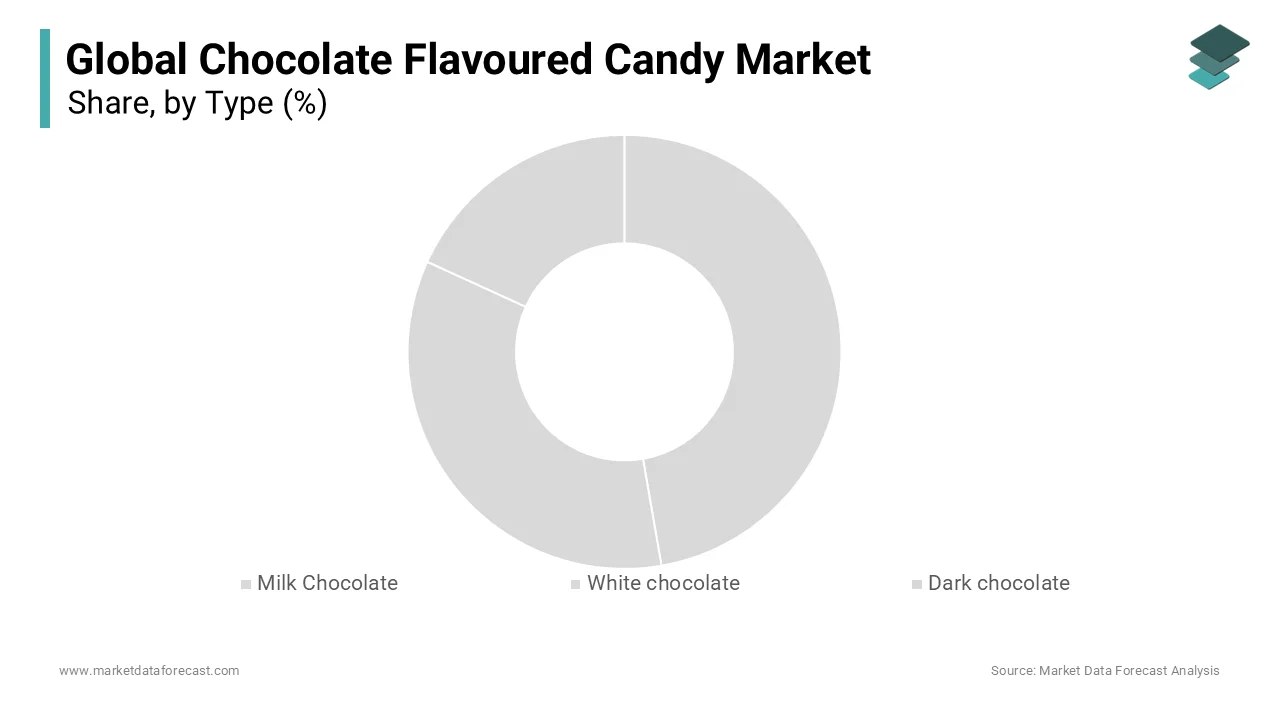
On the other end, the dark chocolate segment is the fastest-growing segment in the chocolate flavoured candy market and is estimated to register a promising CAGR of 7.5% over the forecast period owing to the health consciousness and the demand for intense flavor experiences and increasing consumer awareness of its potential health benefits, including high antioxidant content and lower sugar levels. According to a peer-reviewed study published in the International Journal of Life Cycle Assessment, dark chocolate was identified as having an expected CAGR of 8.5% during the 2017 to 2026 assessment period, supporting its position as a high-growth chocolate category in published research. This scientific backing has transformed dark chocolate from a niche luxury into a functional food item for health-conscious shoppers. According to the National Confectioners Association, dark chocolate was preferred by 28% of U.S. consumers, behind milk chocolate but ahead of several other chocolate varieties. Consumers are actively seeking indulgence that aligns with their wellness goals, driving demand for higher cocoa percentages. Additionally, the lower sugar content appeals to those managing diabetes or following low-carbohydrate diets. As per peer-reviewed nutrition research, dark chocolate contains cocoa polyphenols and flavanols that have been investigated for potential cardiovascular and metabolic effects, although these findings do not establish dark chocolate as a medical treatment. This scientific interest enhances credibility and supports continued innovation in dark chocolate products. Consequently, the chocolate flavoured candy market sees dark chocolate as a key growth engine driven by the convergence of indulgence and health.
By Distribution Channel Insights
The supermarkets and hypermarkets segment constituted the leading distribution channel in the chocolate flavoured candy market in 2025 with holding the major share of the global market due to their extensive reach, one-stop shopping convenience, and ability to offer wide product assortments. The dominance of supermarkets is underpinned by their ubiquitous presence and the consumer preference for purchasing groceries and snacks in a single trip. According to the National Confectioners Association, the grocery channel was the strongest performing retail channel in its 2024 confectionery reporting, supporting the continued importance of grocery-based distribution for chocolate and candy. This behavior ensures high foot traffic and consistent visibility for chocolate-flavored candies. The statistical volume of grocery sales provides a stable baseline demand that sustains large-scale production operations. Additionally, supermarkets offer prominent shelf space and end-cap displays, which drive impulse purchases. According to the National Confectioners Association, more than 98% of Americans purchased chocolate, non-chocolate candy, gum, or mints in 2023, illustrating the broad household penetration that retailers can address through mainstream grocery distribution. This routine purchasing pattern creates predictable revenue streams for manufacturers. Furthermore, private label options in supermarkets provide affordable alternatives that capture price-sensitive segments. These factors collectively cement the leading position of supermarkets in the chocolate flavoured candy market by leveraging scale and convenience.
However, the coffeehouses segment is the fastest-growing distribution channel for chocolate-flavored candies and is estimated to showcase a CAGR of 8.1% over the forecast period owing to the pairing culture and premium positioning and the established cultural practice of pairing sweet treats with coffee, which enhances the sensory experience for consumers. According to the National Coffee Association, coffee remains a highly established daily beverage category in the United States, supporting the continued opportunity for complementary food and confectionery purchases. This habitual pairing creates a captive audience for impulse purchases at the point of service. The statistical correlation between coffee shop visits and candy sales demonstrates a strong cross-selling opportunity. Additionally, coffeehouses often feature artisanal or locally sourced chocolate candies, which appeal to consumers seeking quality and authenticity. According to the Specialty Coffee Association, specialty coffee continues to represent an important component of the U.S. coffee market, supporting foodservice environments where premium confectionery can be positioned as an accompaniment. This focus on quality allows for higher price points and better margins. Consequently, the chocolate flavoured candy market leverages the coffeehouse environment to position products as premium accompaniments rather than mere snacks.
REGIONAL ANALYSIS
North America Chocolate Flavoured Candy Market Analysis
North America held the major share of the global market in 2025 and is likely to maintain a strong position in the chocolate flavoured candy market over the next few years because of its established confectionery consumption base and continued product innovation. North America holds a mature and highly competitive position in the chocolate flavoured candy market, characterized by high per capita consumption and a strong preference for innovative and premium products. The region is home to major global confectionery companies that drive continuous product development. According to the National Confectioners Association, U.S. confectionery sales reached a record $55 billion in 2025, while chocolate represented 51.7% of confectionery sales, demonstrating the strength of the North American market. This massive volume supports a robust manufacturing infrastructure and extensive distribution networks. The statistical stability in consumption indicates a deeply ingrained cultural habit of snacking on sweets. Additionally, the region leads in health-oriented innovations such as sugar-free and organic chocolate candies. According to the National Confectioners Association, 99.8% of U.S. households purchased confectionery products at least once in 2025, reflecting exceptionally broad category penetration. High disposable incomes allow consumers to experiment with premium and artisanal brands. Furthermore, the presence of major retail chains facilitates wide availability and frequent promotions. These factors ensure that North America remains a key revenue generator in the chocolate flavoured candy market through volume and value innovation.
Europe Chocolate Flavoured Candy Market Analysis
Europe is likely to remain a leading premium market for the chocolate flavoured candy market over the next few years because of its established chocolate heritage, sophisticated consumers, and strong confectionery manufacturing base. Europe occupies a prestigious position in the chocolate flavoured candy market, driven by its rich heritage in chocolate making and stringent quality standards that favor premium and artisanal products. The region is known for high-quality cocoa processing and strict regulatory frameworks. According to CAOBISCO, the European chocolate, sugar confectionery, and fine bakery sector recorded €59.5 billion in annual turnover and 13.3 million tonnes of annual product output in its published sector facts. This high-value market emphasizes quality ingredients and traditional methods. The statistical preference for dark and milk chocolate blends reflects sophisticated consumer palates. Additionally, sustainability is a major driver as European consumers increasingly demand ethically sourced cocoa. According to the Fairtrade movement, certified Fairtrade products remain an established part of European ethical consumption, supporting continued attention to responsible cocoa sourcing. Strict labeling laws also promote transparency, which builds consumer trust. Furthermore, the region has a dense network of specialty shops and cafes that support niche brands. These attributes position Europe as a leader in quality and sustainability within the chocolate flavoured candy market.
Asia Pacific Chocolate Flavoured Candy Market Analysis
Asia Pacific is likely to deliver the fastest growth in the chocolate flavoured candy market over the next few years because of expanding urbanization, rising incomes, and increasing adoption of packaged snack formats. The Asia-Pacific region represents the fastest-growing segment in the chocolate flavoured candy market, driven by rising disposable incomes, urbanization, and the westernization of dietary habits. Countries like China, India, and Japan are seeing rapid expansion in confectionery consumption. According to the Asian Development Bank, nearly two billion of the 2.4 billion new middle-class consumers expected globally by 2030 were projected to come from Asia, indicating a major long-term consumer opportunity. This demographic shift creates a vast new customer base for chocolate-flavored candies. The statistical growth in retail infrastructure, including supermarkets and e-commerce platforms, facilitates wider access to these products. Additionally, local manufacturers are adapting global flavors to regional tastes such as matcha green tea and red bean. According to Euromonitor, Asia's chocolate, gum, and sugar confectionery market was expected to record 5.7% year-on-year growth in 2025, while the Philippines and Vietnam were expected to grow by more than 4% annually over the following five years. Young consumers in particular are driving demand for trendy and Instagrammable candy formats. Furthermore, gifting cultures in countries like China boost seasonal sales volumes. These dynamics indicate that Asia-Pacific will be the primary engine of future growth in the chocolate flavoured candy market.
Latin America Chocolate Flavoured Candy Market Analysis
Latin America is likely to experience steady expansion in the chocolate flavoured candy market over the next few years as urbanization and consumer purchasing power support packaged food consumption. Latin America holds a vibrant and growing position in the chocolate flavoured candy market, characterized by a strong cultural affinity for sweets and increasing industrialization of the confectionery sector. Brazil and Mexico are the largest markets in the region, driving overall growth. According to the World Bank, Latin America and the Caribbean recorded GDP growth of 2.3% in 2024 and GDP per capita of approximately US$10,737.6 and this provides a substantial economic base for discretionary food categories. This production capacity supports both domestic consumption and exports to neighboring countries. The statistical rise in urban population drives convenience store sales and impulse purchases. Additionally, the region benefits from local cocoa production, which reduces raw material costs for manufacturers. According to the World Bank, approximately 80% of the population of Latin America and the Caribbean lives in urban areas, supporting demand for packaged and branded snacks. Economic volatility sometimes impacts purchasing power, but affordable chocolate-flavored candies remain resilient. Furthermore, festive traditions such as Day of the Dead drive seasonal spikes in sales. These factors ensure that Latin America remains a dynamic and volume-driven market in the chocolate flavoured candy market.
Middle East and Africa Chocolate Flavoured Candy Market Analysis
The Middle East and Africa are likely to register gradual expansion in the chocolate flavoured candy market over the next few years because of young populations, urbanization, retail modernization, and strong gifting traditions. The Middle East and Africa represent an emerging and diverse segment in the chocolate flavoured candy market, driven by young demographics, increasing retail modernization, and cultural traditions of hospitality. Gulf countries lead in premium consumption while Africa shows potential for volume growth. According to the World Bank, the Middle East, North Africa, Afghanistan, and Pakistan region had an urban population share of approximately 56% in recent World Development Indicators data, supporting continued expansion of modern retail and packaged food consumption. This demand favors high-quality and internationally recognized brands. The statistical growth in mall culture and modern retail outlets facilitates exposure to global candy trends. Additionally, religious festivals such as Ramadan and Eid drive significant spikes in candy purchases for gifting and sharing. According to the World Bank, urbanization in the Middle East, North Africa, Afghanistan, and Pakistan region has continued to rise, supporting greater concentration of consumers in cities and expanding modern retail opportunities. Local production is also expanding in countries like Egypt and South Africa. Furthermore, rising disposable incomes in urban centers support premiumization. These factors position the Middle East and Africa as a region with substantial untapped potential in the chocolate flavoured candy market.
COMPETITIVE LANDSCAPE
The competition in the chocolate flavoured candy market is characterized by intense rivalry among established multinational corporations and agile niche players who compete on brand strength innovation and price. Large entities leverage their economies of scale and extensive distribution networks to dominate mass market segments while smaller brands focus on premium artisanal and health oriented niches. The barrier to entry is moderate due to the need for significant capital investment in manufacturing and marketing but low for private label producers. Competitive intensity is high as companies strive to differentiate through unique flavor profiles sustainable sourcing claims and engaging packaging designs. Price wars are common in standard segments prompting manufacturers to optimize supply chains for cost efficiency. Regulatory pressures regarding sugar content and labeling further shape competitive dynamics by forcing reformulation and transparency. Innovation remains the primary driver of growth as companies seek to capture shifting consumer preferences toward healthier and more ethical options. This dynamic environment requires continuous adaptation and strategic agility to maintain market share and profitability.
KEY MARKET PLAYERS
Some of the key players in the chocolate flavoured candy market are
- Hershey's
- Nestle
- Mars
- Tootsie Roll
- Florestal Foods
- Mondelez International
- Colombina S.A.
- Tora Foods, LLC
- Carmit Candy Industries
- Natural Food Works Group
- August Storck KG
- Ferrero Group
- Lowell International Polska
Top Players in the Market
- The Hershey Company maintains a dominant presence in the Chocolate Flavoured Candy Market through its extensive portfolio of iconic brands and robust distribution networks across North America and global markets. The company focuses on innovation by introducing new flavor combinations and limited edition products to engage consumers. Recently Hershey expanded its manufacturing capacity in Mexico to better serve the Latin American market and reduce supply chain costs. This strategic investment enhances regional availability and supports growth in emerging economies. Their commitment to sustainable cocoa sourcing strengthens brand reputation among ethically conscious buyers. By leveraging digital marketing campaigns and partnerships with major retailers Hershey ensures high visibility and accessibility. These actions solidify their leadership position by driving volume growth and maintaining strong consumer loyalty in a competitive landscape.
- Mondelez International plays a critical role in the Chocolate Flavoured Candy Market with its diverse range of confectionery brands including Cadbury and Toblerone which are recognized globally for quality and taste. The company emphasizes premiumization by launching artisanal and dark chocolate variants that appeal to discerning consumers. Recently Mondelez invested heavily in automation technologies at its European facilities to improve production efficiency and product consistency. This modernization effort reduces operational costs and enhances scalability. They also prioritize sustainability by committing to 100 percent responsibly sourced cocoa by 2025. Through strategic acquisitions and organic growth initiatives Mondelez expands its footprint in high growth regions. These efforts reinforce their competitive edge and drive long term value creation in the global confectionery sector.
- Ferrero Group contributes significantly to the Chocolate Flavoured Candy Market through its premium positioning and innovative product formats such as Kinder and Ferrero Rocher which blend chocolate with other ingredients. The company focuses on creating unique sensory experiences that differentiate its offerings from standard mass market candies. Recently Ferrero acquired the Nestle US confectionery business including iconic brands like Butterfinger and Crunch to expand its presence in the North American market. This acquisition broadens their product portfolio and distribution reach significantly. Ferrero also invests in sustainable packaging solutions to meet evolving environmental regulations and consumer expectations. By maintaining strict quality controls and fostering brand heritage Ferrero commands premium pricing. These strategies enhance their market influence and drive sustained growth in key global regions.
Top Strategies Used by Key Market Participants
Key players in the chocolate flavoured candy market primarily employ product innovation strategies by introducing novel flavors textures and functional benefits to capture consumer interest and drive trial. Companies invest heavily in research and development to create hybrid products that combine chocolate with fruits nuts or health focused ingredients. Another major strategy involves geographic expansion into emerging markets where rising disposable incomes and urbanization drive demand for packaged confectionery. Manufacturers establish local production facilities to reduce costs and tailor products to regional tastes. Additionally participants focus on sustainability by sourcing certified cocoa and adopting eco friendly packaging to enhance brand equity and comply with regulatory standards. Strategic mergers and acquisitions allow firms to consolidate market presence and acquire complementary brands. These combined tactics enable companies to maintain relevance and competitiveness in a dynamic and evolving industry landscape.
MARKET SEGMENTATION
This research report on the global chocolate flavoured candy market is segmented and sub segmented into following categories
By Product Type
- White Chocolate
- Milk Chocolate
- Dark Chocolate
By Distribution Channel
- Convenience Stores
- Coffeehouses
- Restaurants
- Personal Use
- Supermarkets/Hypermarkets
By Region
- North America
- Europe
- Asia-Pacific
- Latin America
- Middle East & Africa