- Product Description Description
- Table of Contents TOC
- List of Table & Figure LOT
- Get Free Sample PDF Sample PDF
Market Size, 2025
$3.13 BnMarket Estimate, 2026
$3.41 BnMarket Forecast, 2034
$6.71 BnCAGR, 2026–2034
8.83%Global Chocolate Powdered Drinks Market Report Summary
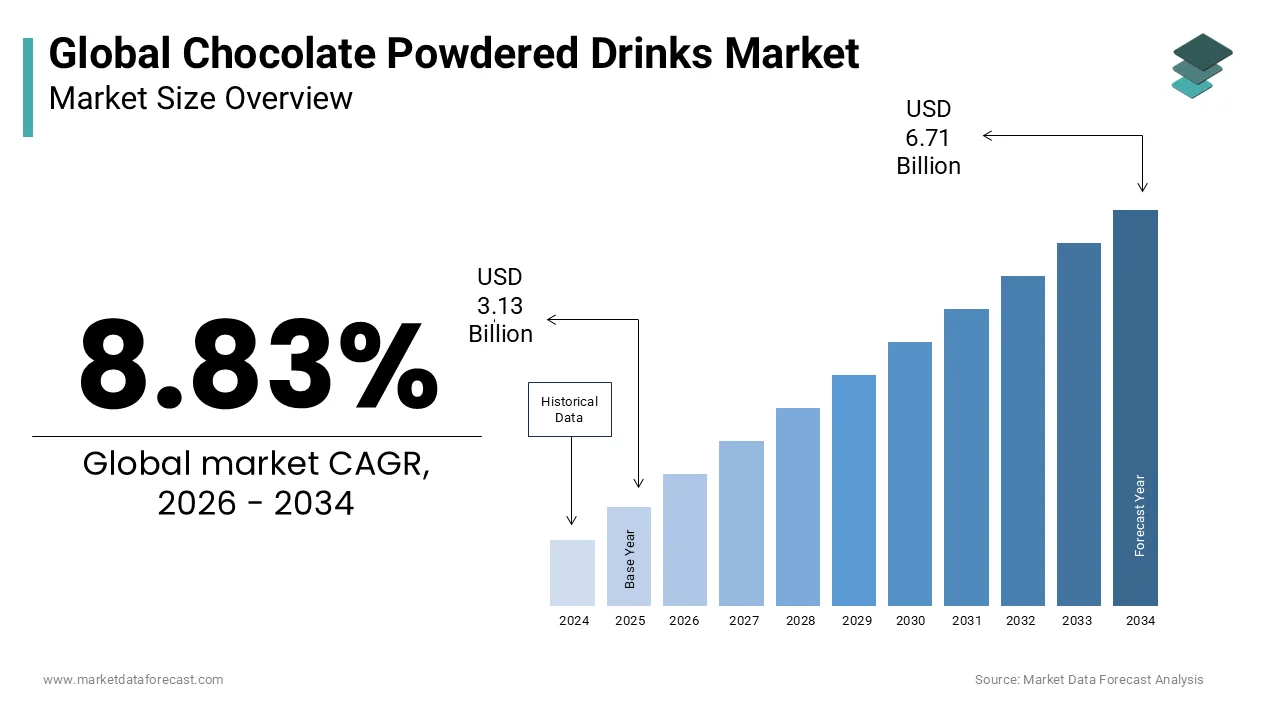
The global chocolate powdered drinks market was valued at USD 3.13 billion in 2025 and is estimated to reach USD 3.41 billion in 2026, and is projected to reach USD 6.71 billion by 2034, growing at a CAGR of 8.83% during the forecast period. Market growth is driven by increasing demand for convenient beverage mixes, rising consumption of flavored dairy beverages, and growing preference for indulgent and fortified drink products. Chocolate powdered drinks are widely consumed across households and foodservice sectors due to their taste, convenience, and versatility. The expansion of retail channels and innovation in health-focused formulations are further supporting strong market growth globally.
Key Market Trends
- Rising demand for convenient and ready-to-mix beverages is driving market growth.
- Increasing consumption of flavored dairy and chocolate beverages is boosting demand.
- Growing preference for fortified and functional drink products is supporting market expansion.
- Expansion of organized retail and e commerce channels is enhancing product accessibility.
- Innovation in low sugar and protein enriched formulations is influencing consumer preferences.
Segmental Insights
- Based on type, the milk chocolate drink powder segment held a substantial share of the global chocolate powdered drinks market in 2025. This dominance is attributed to strong consumer preference for creamy and sweet flavored beverages.
- Based on end user, the chocolate drinks segment accounted for 43.1% of the global chocolate powdered drinks market share in 2025, driven by high consumption across households and cafés.
- Based on distribution channel, the store based segment held a significant share of the global chocolate powdered drinks market in 2025, supported by extensive product availability through supermarkets and retail stores.
Regional Insights
- The global chocolate powdered drinks market is experiencing strong growth across regions, supported by rising beverage consumption and retail expansion.
- North America was the leading contributor, accounting for 30.5% of the global chocolate powdered drinks market share in 2025, driven by high demand for flavored beverages, established retail infrastructure, and strong consumer spending.
Competitive Landscape
The global chocolate powdered drinks market is highly competitive, with key players focusing on product innovation, flavor diversification, and expansion of distribution networks to strengthen their market position. Companies are investing in fortified beverage formulations, premium branding, and convenient packaging solutions. Prominent players in the global chocolate powdered drinks market include Kanegrade Ltd, Nestlé S.A, GlaxoSmithKline Plc, Mondelez, Gatorade, PepsiCo Inc, and Mars Inc..
Global Chocolate Powdered Drinks Market Size
The global chocolate powdered drinks market size was valued at USD 3.13 billion in 2025, and the global market size is predicted to reach USD 6.71 billion by 2034 from USD 3.41 billion in 2026, growing at a CAGR of 8.83% during the forecast period.
Chocolate powdered drinks refer to a convenient, pre-mixed powder designed to instantly create a chocolate-flavored beverage when mixed with hot or cold milk (or water). This market serves as a critical component of the global instant beverage industry offering consumers a convenient shelf stable alternative to ready to drink chocolate milk or freshly prepared hot chocolate. The definition extends beyond simple retail sachets to include bulk formats for food service institutions and specialized formulations such as high protein or fortified variants. According to FAOSTAT data, global cocoa bean production exceeded 5.0 million metric tons in the 2022/23 marketing year. In contrast, the International Cocoa Organization (ICCO) estimated production for the 2023/24 season at approximately 4.4 million tonnes, with a forecast recovery to roughly 4.7–4.8 million tonnes for 2024/25. The International Cocoa Organization notes that West Africa remains the dominant source of cocoa beans supplying over 60 percent of the world’s total which influences supply chain dynamics and pricing structures. As per the World Health Organization, rising concerns regarding non-communicable diseases have prompted guidelines to reduce free sugar intake to less than 10% of total energy. In response, manufacturers are reformulating products to meet these targets while striving to maintain sensory appeal to satisfy consumer expectations. The market is characterized by a blend of traditional family oriented brands and emerging premium artisanal options catering to diverse consumer preferences. The integration of digital commerce has further redefined accessibility allowing niche brands to reach global audiences. This industry acts as a bridge between confectionery indulgence and daily hydration habits driven by cultural traditions and evolving lifestyle needs. The versatility of chocolate powder allows it to be used in both hot and cold preparations ensuring year round demand across varying climatic conditions.
MARKET DRIVERS
Rising Demand for Convenient and Comfort Food Solutions
The accelerating pace of modern life and the psychological need for comfort have established convenience as a primary factor behind the growth of the chocolate powdered drinks market. Consumers increasingly seek quick and easy preparation methods for beverages that provide emotional satisfaction and stress relief without the time commitment of brewing fresh coffee or preparing elaborate drinks. According to the International Labour Organization, global trends in "time poverty" driven by urbanization and work-life imbalances, despite a general decline in total hours in developed nations, continue to limit time for home meal and beverage preparation. This lifestyle constraint has fueled the growth of instant beverage mixes which require only the addition of hot water or milk. Chocolate powdered drinks offer a cost effective way to enjoy a premium tasting experience at home compared to visiting cafes. The versatility of these products allows them to be consumed as morning energy boosters afternoon snacks or evening relaxants. Retailers have responded by expanding their offerings of single serve sticks and resealable pouches that cater to portion control and freshness. The cultural association of chocolate with warmth and happiness further reinforces its role as a staple comfort item. This structural shift toward home based consumption and the desire for immediate gratification ensures steady demand for chocolate powdered drinks across diverse demographic segments.
Increasing Urbanization and Changing Lifestyle Patterns
The rapid urbanization across emerging markets and the subsequent shift in lifestyle patterns have significantly driven the adoption of these drinks, which boost the expansion of the chocolate powdered drinks market. As more individuals migrate to cities traditional household routines are replaced by fast paced urban lifestyles that prioritize efficiency and portability. According to the United Nations Department of Economic and Social Affairs the global urban population is projected to reach 68 percent by 2050 creating a massive consumer base that values ready to consume products. In urban centers access to fresh milk may be less consistent or more expensive than in rural areas making powdered mixes a practical alternative. The World Bank highlights that rising disposable incomes in developing nations are leading to increased expenditure on packaged food and beverage items. Chocolate powdered drinks are perceived as a modern and aspirational product among younger urban demographics who are influenced by global trends and marketing campaigns. The proliferation of modern retail formats such as supermarkets and convenience stores in urban hubs facilitates widespread availability and impulse purchases. Additionally the influence of social media and digital marketing has popularized chocolate beverages as part of trendy lifestyle aesthetics driving trial and adoption. The ability of manufacturers to introduce innovative flavors and packaging formats appeals to urban consumers seeking novelty and variety. This convergence of urban growth income expansion and cultural shifts sustains robust demand for chocolate powdered drinks in both developed and emerging markets.
MARKET RESTRAINTS
Health Concerns Regarding High Sugar and Caloric Content
Growing health consciousness among consumers restrains the expansion of the chocolate powdered drinks market. This is due to perceptions regarding high sugar content and excessive calories. Many traditional chocolate powder formulations contain substantial amounts of added sugars which contribute to weight gain and metabolic disorders such as type 2 diabetes. According to the World Health Organization global obesity rates have nearly tripled since 1975 with excessive sugar consumption identified as a major contributing factor. In response health aware shoppers are increasingly scrutinizing nutrition labels and avoiding products with high glycemic indices. The Centers for Disease Control and Prevention reports that reducing added sugar intake is a key public health priority prompting many individuals to limit their consumption of sweetened beverages. Although manufacturers have introduced low sugar or sugar free variants these products often face criticism for altered taste profiles and the use of artificial sweeteners. Euromonitor International notes that the clean label movement is gaining traction with consumers demanding natural ingredients and minimal processing. This trend forces companies to reformulate products which can be costly and may not always meet consumer expectations for richness and flavor. The stigma associated with sugary drinks continues to hinder market growth as educational campaigns by health organizations emphasize the benefits of water and unsweetened teas. Consequently the chocolate powdered drinks sector must navigate these health perceptions carefully to maintain relevance in a market that increasingly prioritizes wellness and nutritional transparency.
Volatility in Cocoa Prices and Supply Chain Instability
The volatility in cocoa prices and instability in the global supply chain are a serious obstacle to the chocolate powdered drinks market. This affects production costs and profit margins. Cocoa is a commodity subject to significant price fluctuations driven by weather conditions political instability and disease outbreaks in major producing regions. According to the International Cocoa Organization cocoa prices have experienced extreme volatility in recent years with futures reaching historic highs due to supply shortages in West Africa. Climate change effects such as droughts and excessive rainfall have adversely affected crop yields leading to scarcity and higher input costs for manufacturers. The World Bank highlights that inflation in agricultural commodities has been a persistent issue forcing producers to either absorb costs or pass them on to consumers. When prices are transferred to the end user demand elasticity often causes a drop in sales volume particularly among price sensitive segments. Furthermore the reliance on imported cocoa exposes manufacturers to currency exchange risks and international trade barriers. The Food and Agriculture Organization of the United Nations emphasizes that smallholder farmers who produce the majority of cocoa are vulnerable to these market swings impacting long term supply stability. This financial instability hinders strategic planning and investment in innovation thereby restraining the overall growth potential of the market as companies prioritize cost containment over expansion.
MARKET OPPORTUNITIES
Innovation in Health Fortified and Functional Variants
The development of health fortified and functional chocolate powdered drinks opens the door for the chocolate powdered drinks market expansion. This aligns with the growing demand for nutritious and beneficial beverages. Manufacturers can capitalize on this trend by introducing products enriched with proteins vitamins minerals and probiotics that offer health benefits beyond simple indulgence. By incorporating ingredients like whey protein collagen or plant based alternatives brands can appeal to fitness enthusiasts and health conscious individuals. The U.S. Food and Drug Administration (FDA) provides the regulatory framework for the fortification of food products to address nutrient deficiencies, ensuring such innovations meet safety and labeling standards. Additionally the rise of veganism has created demand for dairy free chocolate powders made from almond oat or coconut milk which cater to lactose intolerant and ethical consumers. The Good Food Institute reports that the plant-based food market is expanding globally, particularly in the dairy and ingredient sectors, offering brands significant opportunities for differentiation through taste and texture innovations. Companies can also explore organic and non GMO certifications to attract premium buyers who prioritize clean labels. Collaborations with nutritionists and health experts can help validate the benefits of these functional variants. By focusing on health and wellness attributes manufacturers can overcome negative perceptions associated with traditional sugary drinks. This strategic shift toward functional nutrition not only attracts new customer segments but also fosters brand loyalty among existing consumers who prioritize holistic well being.
Expansion into Emerging Markets with Growing Middle Class
The expansion into emerging markets characterized by a rising middle class and increasing disposable incomes serves as a strong prospect for the chocolate powdered drinks market. As economic conditions improve in regions such as Asia Pacific Latin America and Africa consumers are shifting toward diversified diets that include convenient and packaged beverage options. According to the World Bank the middle class in developing countries is expanding rapidly driving demand for higher quality and varied food products. Chocolate powdered drinks offer an affordable and accessible way for these consumers to enjoy a premium tasting experience that was previously limited to wealthier demographics. The Food and Agriculture Organization of the United Nations highlights that urbanization in these regions is leading to changes in shopping habits with supermarkets and hypermarkets becoming dominant retail channels. These modern trade formats facilitate the distribution of packaged goods including chocolate powders to a wider audience. Local manufacturers can leverage this trend by establishing production facilities closer to raw material sources thereby reducing costs and ensuring freshness. International brands can enter these markets through partnerships with local distributors who understand regional preferences and regulatory landscapes. The increasing adoption of western dietary habits and the influence of global media further stimulate demand for convenient beverage options. By tailoring product offerings to local tastes and price points companies can capture significant market share in these high growth regions. This geographic diversification reduces dependence on mature markets and opens new avenues for revenue generation.
MARKET CHALLENGES
Stringent Regulatory Standards and Labeling Requirements
Stringent regulatory standards and labeling requirements are a formidable challenge to the chocolate powdered drinks market. This affects product formulation and market entry strategies. Governments worldwide are implementing stricter guidelines on sugar content artificial additives and nutritional labeling to combat public health issues such as obesity and diabetes. According to the European Commission, ongoing initiatives aim to mandate detailed front-of-pack nutritional information to help consumers identify products high in certain nutrients, building on scientific opinions provided by EFSA. In the United States the Food and Drug Administration has updated nutrition facts labels to include added sugars and revised serving sizes which impacts how chocolate powders are marketed and perceived. Compliance with these evolving regulations requires significant investment in reformulation packaging redesign and legal consultation. The World Health Organization advocates for policies that reduce the availability of high sugar snacks and beverages in schools and public institutions further restricting market access. Manufacturers must navigate a complex landscape of varying national and regional standards which increases operational complexity and costs. Failure to comply can result in fines product recalls and reputational damage. Additionally the push for front of pack labeling systems such as traffic light ratings may negatively impact the image of traditional chocolate powders if they are flagged as high in sugar. These regulatory hurdles force companies to continuously adapt their products and marketing strategies to remain compliant and competitive. The uncertainty surrounding future regulations discourages long term investment in new product development.
Intense Competition from Alternative Beverage Categories
Intense competition from various alternative beverage categories restricts the growth potential of the chocolate powdered drinks market. Consumers today have access to an unprecedented variety of drink options including ready to drink coffees teas smoothies and plant based milks which vie for shelf space and consumer attention. According to NielsenIQ the beverage category is highly fragmented with new entrants constantly introducing innovative products that capture market share. Ready to drink chocolate milk and bottled frappuccinos offer convenience without the need for preparation appealing to busy consumers who prioritize speed. Additionally the rise of functional beverages such as energy drinks and protein shakes appeals to fitness enthusiasts looking for specific benefits beyond taste. Private label brands from major retailers also offer competitive pricing putting pressure on established chocolate powder brands to maintain margins. The abundance of choices empowers consumers to switch brands or categories easily based on price promotions or novelty factors. This saturated landscape makes it difficult for chocolate powder manufacturers to distinguish their products and sustain loyalty. The constant need to innovate and compete on multiple fronts erodes profitability and limits market expansion. Furthermore the perception of powdered drinks as less premium than freshly prepared alternatives poses a branding challenge. To remain competitive companies must invest heavily in marketing and product differentiation.
REPORT COVERAGE
| REPORT METRIC | DETAILS |
| Market Size Available | 2025 to 2034 |
| Base Year | 2025 |
| Forecast Period | 2026 to 2034 |
| CAGR | 8.83% |
| Segments Covered | By Type, End User, Distribution Channel and region |
| Various Analyses Covered | Global, Regional and Country Level Analysis; Segment-Level Analysis; DROC; PESTLE Analysis; Porter’s Five Forces Analysis; Competitive Landscape; Analyst Overview of Investment Opportunities |
| Regions Covered | North America, Europe, APAC, Latin America, Middle East & Africa |
| Market Leaders Profiled | Kanegrade Ltd, Nestlé S.A, GlaxoSmithKline Plc, Mondelez, Gatorade, PepsiCo Inc, Mars Inc. |
SEGMENTAL ANALYSIS
By Type Insights
The milk chocolate drink powder segment led the global chocolate powdered drinks market and captured a substantial share in 2025. This leading position of the segment is attributed to its universal appeal balanced sweetness and deep rooted cultural associations with childhood comfort. The formulation typically contains a higher ratio of milk solids and sugar compared to cocoa content resulting in a creamy mild flavor that appeals to a broad demographic including children and adults who prefer less intense chocolate tastes. According to the International Cocoa Organization milk chocolate accounts for the largest share of global chocolate consumption reflecting consumer preference for sweeter profiles. This preference translates directly to the powdered drink segment where brands like Nesquik and Ovaltine have established strong brand loyalty over decades. The World Health Organization notes that while sugar reduction is a global health goal moderate consumption of sweetened beverages remains prevalent particularly in developing regions where caloric density is valued. In many cultures serving warm milk chocolate is a traditional bedtime ritual or a remedy for colds reinforcing its emotional connection. The versatility of milk chocolate powder allows it to be mixed with water milk or plant based alternatives making it adaptable to various dietary preferences. Retailers prioritize this segment due to high turnover rates and consistent demand throughout the year. The affordability of milk chocolate variants compared to premium dark options ensures accessibility for mass market consumers. This combination of taste familiarity emotional resonance and economic accessibility cements the dominance of milk chocolate drinks in the global market. The extensive marketing efforts and rich brand heritage associated with major milk chocolate drink manufacturers significantly contribute to their market leadership. Companies have invested heavily in advertising campaigns that position milk chocolate drinks as essential for growing children providing energy and nutrients. According to NielsenIQ branded milk chocolate powders consistently rank among the top selling items in the breakfast and beverage aisles of supermarkets globally. The association with vitality and growth has been a cornerstone of marketing strategies for brands like Horlicks and Bournvita which are deeply embedded in the daily routines of millions of households. The United States Department of Agriculture highlights that fortified milk powders often contain added vitamins and minerals such as Vitamin D and Calcium which enhances their perceived nutritional value. This functional benefit appeals to parents seeking convenient ways to supplement their children’s diets. The long standing presence of these brands in the market creates a barrier to entry for new competitors who struggle to match the trust and recognition established over decades. Promotional activities during back to school seasons and holidays further drive sales volumes. The ability of these brands to innovate within the milk chocolate category by introducing new flavors and formats while maintaining core identity ensures sustained relevance. This strategic blend of emotional branding and perceived nutritional benefit sustains the leading position of milk chocolate drinks.
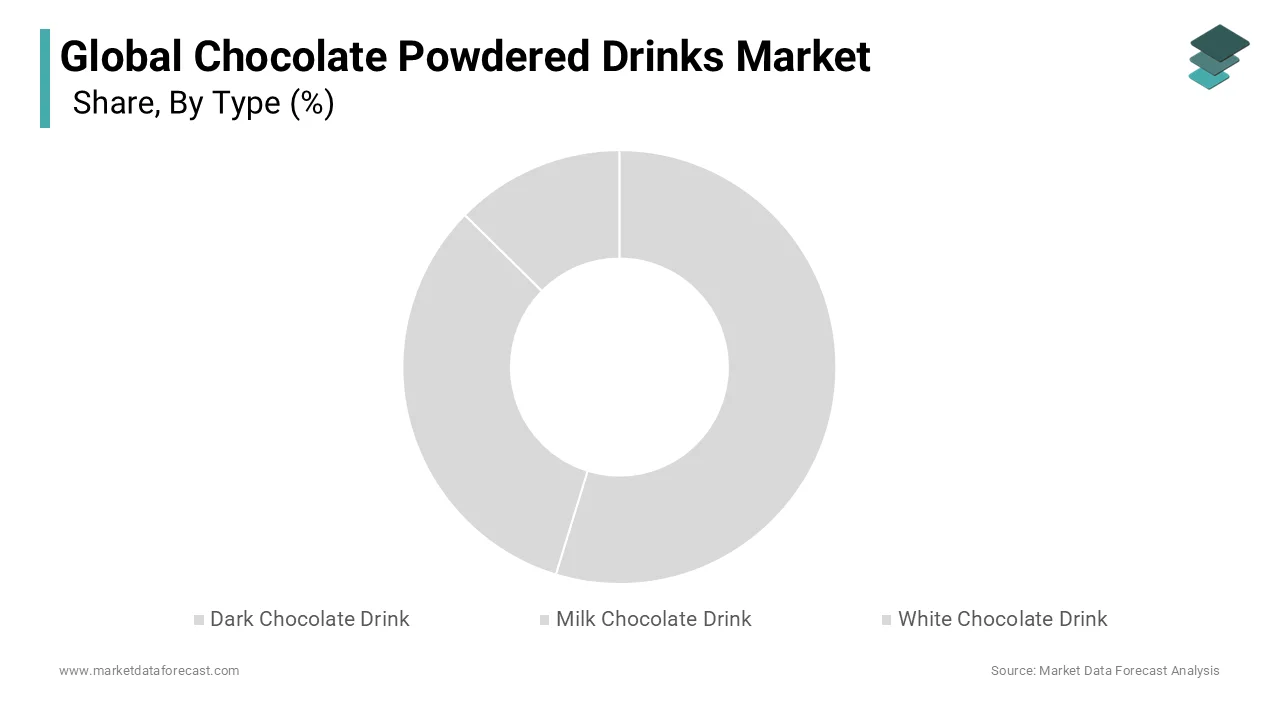
The dark chocolate drink powder segment is likely to experience the fastest CAGR of 6.5% from 2026 to 2034 owing to increasing health consciousness and the demand for antioxidant rich beverages. Dark chocolate contains higher levels of cocoa solids which are rich in flavonoids and polyphenols known for their cardiovascular and cognitive health benefits. According to the American Heart Association moderate consumption of dark chocolate may help lower blood pressure and improve blood flow attracting health aware consumers. The Global Wellness Institute reports that the wellness economy is expanding with consumers actively seeking functional foods that offer health benefits beyond basic nutrition. Dark chocolate powders are often marketed as low sugar or sugar free alternatives appealing to individuals managing diabetes or weight. The rise of the clean label movement has encouraged manufacturers to use organic cocoa and natural sweeteners enhancing the premium appeal of dark chocolate drinks. In Europe and North America where health trends are more advanced dark chocolate beverages are gaining popularity as a sophisticated alternative to sugary soft drinks. The bitter and robust flavor profile appeals to adult consumers who appreciate complex tastes. This shift toward healthier indulgence drives the rapid adoption of dark chocolate powders. The ability of dark chocolate to align with keto paleo and vegan diets further expands its consumer base. This convergence of health benefits and premium positioning ensures exceptional growth for the dark chocolate segment. The influence of premiumization and the global gourmet coffee culture significantly contributes to the rapid growth of the dark chocolate drink segment. As consumers become more discerning about quality they are willing to pay higher prices for artisanal and single origin chocolate powders that offer superior flavor profiles. According to the Specialty Coffee Association the integration of high quality chocolate into coffee beverages such as mochas has elevated the status of dark chocolate as a premium ingredient. Cafes and specialty retailers are introducing house made dark chocolate mixes using ethically sourced cocoa beans appealing to eco conscious and quality focused shoppers. The International Coffee Organization notes that the consumption of specialty coffee drinks is rising globally creating opportunities for complementary products like dark chocolate powders. Consumers are experimenting with home brewing techniques replicating cafe style beverages using premium ingredients. Social media platforms play a crucial role in showcasing aesthetically pleasing dark chocolate preparations driving trial and adoption among younger demographics. The perception of dark chocolate as a luxurious and sophisticated treat differentiates it from mass market milk chocolate options. Manufacturers are responding by launching limited edition flavors and packaging that emphasize origin and craftsmanship. This focus on quality and experience drives the exceptional growth trajectory of the dark chocolate segment in the global market.
By End User Insights
The chocolate drinks segment dominated the global chocolate powdered drinks market and accounted for a 43.1% share in 2025. This dominance of the segment is driven by its status as a traditional household staple consumed primarily for enjoyment and comfort. This category encompasses standard preparations where chocolate powder is mixed with milk or water to create a standalone beverage. According to the Food and Agriculture Organization of the United Nations cocoa-based beverages reflect deep cultural integration and remain a staple non-alcoholic drink category, particularly in regions with high historical production and consumption ties. In many Latin American and European countries drinking hot chocolate is a daily ritual particularly during colder months. The simplicity of preparation and the immediate sensory satisfaction make it a preferred choice for families. The United States Department of Agriculture notes that household expenditure on cocoa products remains stable indicating consistent demand. Retailers dedicate significant shelf space to mainstream chocolate drink powders ensuring high visibility and accessibility. The versatility of the product allows it to be served hot or cold catering to seasonal preferences. The emotional connection to childhood memories and family gatherings reinforces its position as a comfort food. Major brands leverage this tradition through marketing campaigns that emphasize warmth and togetherness. The widespread availability in various pack sizes from single serve sachets to large family tins caters to diverse consumption needs. This enduring cultural significance and habitual consumption pattern sustain the leadership of the chocolate drinks segment. The affordability and widespread accessibility of standard chocolate drinks contribute significantly to their dominance in the end user market. Compared to specialized functional beverages or premium coffee mixes traditional chocolate powders are priced competitively making them accessible to consumers across various income levels. According to the World Bank rising disposable incomes in emerging markets are increasing the purchasing power of middle class households who view chocolate drinks as an affordable luxury. The low cost of production and economies of scale achieved by major manufacturers allow for competitive pricing strategies. Supermarkets and convenience stores globally stock these products ensuring they are readily available to a broad customer base. The National Retail Federation highlights that value oriented products perform well during economic downturns as consumers seek cost effective indulgences. Chocolate drinks offer a high perceived value relative to their price providing a satisfying treat without significant financial burden. This economic advantage makes them a staple in budget conscious households. Additionally the long shelf life of powdered mixes reduces waste and allows for bulk purchasing further enhancing cost efficiency for consumers. The combination of low price point and high availability ensures that chocolate drinks remain the primary choice for the majority of consumers sustaining their leading position in the market.
The protein shakes segment is on the rise and is expected to be the fastest growing segment in the market by witnessing a CAGR of 8.2% during the forecast period due to the global fitness boom and the demand for effective muscle recovery solutions. Chocolate is a popular flavor for protein supplements due to its ability to mask the taste of whey or plant based proteins. According to the International Health Racquet and Sportsclub Association gym membership and fitness participation have increased globally leading to higher demand for sports nutrition products. The American College of Sports Medicine emphasizes the importance of protein intake post exercise for muscle repair and growth driving consumers toward convenient protein shake options. Chocolate flavored protein powders offer a palatable alternative to unflavored or fruity variants appealing to a wider audience. The rise of home workouts and digital fitness platforms has further accelerated the adoption of home based nutrition solutions. Consumers prefer the convenience of mixing a quick shake after a workout rather than preparing a full meal. The availability of ready to mix sachets and tubs in retail and online channels enhances accessibility. The perception of chocolate protein shakes as both a treat and a functional supplement drives repeat purchases. This alignment with health and fitness goals ensures rapid growth for the protein shake segment. Innovation in plant based and clean label protein formulations contributes significantly to the rapid growth of the chocolate protein shake segment. As veganism and flexitarian diets gain popularity there is increasing demand for non dairy protein sources such as pea rice and hemp protein. According to the Good Food Institute the plant based food market is expanding rapidly with chocolate being a key flavor for masking earthy notes of plant proteins. Manufacturers are launching organic and non GMO chocolate protein powders that appeal to health conscious consumers seeking transparency and purity. The Clean Label Project advocates for products free from heavy metals and artificial additives driving brands to improve quality standards. Chocolate’s strong flavor profile effectively complements plant based ingredients making it a preferred choice for vegan protein blends. The rise of social media influencers in the fitness and wellness space promotes these products to engaged audiences. Collaborations with nutritionists and athletes help validate the efficacy and taste of these innovative formulations. The ability to cater to specific dietary restrictions while delivering a familiar and enjoyable taste drives adoption. This focus on innovation and ethical sourcing positions chocolate protein shakes as a dynamic and high growth category in the beverage market.
By Distribution Channel Insights
The store based segment was the largest segment in the Chocolate Powdered Drinks Market and occupied a share of significant share in 2025 because of the immediate availability of products and the ability for consumers to physically inspect them. The tactile experience of picking up a product and the visual appeal of packaging on shelves drive impulse purchases particularly for comfort items like chocolate drinks. Supermarkets often feature promotional displays and end cap arrangements that highlight new flavors or discounts attracting attention. The convenience of one stop shopping allows consumers to purchase chocolate powder alongside other household essentials. Convenience stores cater to immediate needs offering single serve packs for on the go consumption. The established logistics networks of retail chains ensure consistent stock levels and wide geographic coverage. This reliability and accessibility build consumer trust and habit. The ability to interact with the product before purchase reduces perceived risk and enhances satisfaction. This physical presence and operational efficiency sustain the dominance of store based channels. The established supply chains and strong relationships between manufacturers and retailers significantly contribute to the leadership of store based channels. Major chocolate powder brands have long standing agreements with supermarket chains ensuring prime shelf placement and consistent distribution. Retailers leverage their bargaining power to negotiate favorable terms while manufacturers benefit from the vast reach of retail networks. The integration of point of sale data allows for real time inventory management reducing out of stock situations. These initiatives enhance brand visibility and drive sales volume. The ability of physical stores to offer immediate gratification without waiting for delivery appeals to consumers who need products instantly. The trust associated with established retail brands also extends to the products they sell reinforcing consumer confidence. The complexity of last mile delivery for e commerce is avoided in store based channels reducing logistical costs. This operational maturity and strategic alignment between manufacturers and retailers ensure that store based channels remain the primary driver of sales in the chocolate powdered drinks market.
The non store based channels segment is expected to exhibit a noteworthy CAGR of 9.5% between 2026 and 2034. This swift expansion of the segment is fuelled by increasing digital penetration and the convenience of home delivery. According to Statista online sales of food and beverages have surged globally as consumers embrace the ease of ordering from home. E commerce platforms offer an extensive range of products including niche and international brands that may not be available in local stores. The ability to browse reviews compare prices and access detailed nutritional information empowers consumers to make informed decisions. Home delivery services eliminate the need for physical travel saving time and effort for busy individuals. This convenience is particularly valued by elderly consumers and those with limited mobility. The availability of subscription services for regular deliveries of staple items like chocolate powder further enhances customer retention. Online retailers often provide detailed product information and personalized recommendations aiding discovery. The seamless integration of payment gateways and secure transactions builds trust in online shopping. This combination of accessibility variety and convenience drives the rapid expansion of non store based channels. Direct to consumer models and personalized marketing strategies employed by online retailers enhance consumer engagement and drive the rapid growth of non store based channels. Brands are increasingly bypassing traditional intermediaries to sell directly to consumers through their own websites and social media platforms. Online stores utilize data analytics to understand consumer preferences and browsing behavior allowing them to offer tailored product suggestions. Personalized emails and notifications about discounts on preferred brands encourage repeat purchases. Social media integration allows brands to engage with customers through influencers and interactive content. Online retailers also offer bundled deals and cross selling opportunities based on purchase history increasing average order values. The transparency of online reviews and ratings helps build confidence in product quality. Additionally the ease of returning unsatisfactory items reduces purchase risk. These digital enhancements create an engaging and user friendly shopping experience. The focus on personalization and customer centric services distinguishes non store channels from traditional retail. This strategic use of technology and data drives the exceptional growth of online distribution in the chocolate powdered drinks market.
REGIONAL ANALYSIS
North America Chocolate Powdered Drinks Market Analysis
North America outperformed other regions in the global Chocolate Powdered Drinks Market and captured a 30.5% share in 2025. This position of the North American market is supported by high disposable incomes and a strong culture of convenience. The market status in this region is characterized by a mature consumer base that values both traditional comfort foods and innovative functional beverages. According to the United States Department of Agriculture the United States is a major consumer of cocoa products with a high penetration of branded chocolate powders in households. The prevalence of health consciousness has led to a surge in demand for low sugar and protein enriched variants. The National Confectioners Association tracks supermarkets and club stores as primary distribution channels for cocoa products, offering a wide variety of options for mainstream and premium consumers. The rise of e commerce has further expanded access to premium and artisanal brands. Canada also contributes to the market with a strong preference for high quality cocoa products. The region benefits from advanced manufacturing infrastructure and strong brand recognition among major players. However competition from ready to drink alternatives remains a challenge. The market continues to evolve with innovations in packaging and product formulations. The focus on sustainability and health will shape future growth trajectories in North America. The region remains a key driver of global trends in the chocolate beverage sector.
Europe Chocolate Powdered Drinks Market Analysis
Europe was the second largest in the global Chocolate Powdered Drinks Market and accounted for a 25.6% share in 2025. This growth of the European market is attributed to deep historical roots in chocolate consumption and high quality standards. The market status in this region is defined by a preference for premium and artisanal products particularly in countries like Switzerland Belgium and France. According to the European Commission strict regulations on food safety and labeling ensure high quality products for consumers. The demand for organic and fair trade certified chocolate powders is rising as consumers prioritize ethical sourcing. The European Cocoa Association highlights that per capita consumption of cocoa products remains high despite health concerns. Retailers are focusing on private label premium ranges to meet consumer demands. The region has a well established tradition of hot chocolate consumption particularly during winter months. The shift toward plant based diets is driving demand for dairy free chocolate powders. The European Food Safety Authority supports initiatives to improve nutritional quality of processed foods. This has led to a rise in demand for reduced sugar options. The market faces challenges from high production costs and regulatory compliance. Innovation in sustainable packaging is a key area of development. The emphasis on quality and ethics drives the European market toward premium segments.
Asia Pacific Chocolate Powdered Drinks Market Analysis
Asia Pacific is the fastest growing region in the global Chocolate Powdered Drinks Market owing to rising disposable incomes urbanization and a growing young population. The market status in this region is characterized by increasing adoption of western dietary habits and convenience foods. According to the Food and Agriculture Organization of the United Nations countries like China India and Indonesia are expanding their consumption of packaged beverages. The growing middle class in urban areas has greater access to supermarkets and hypermarkets where chocolate powders are widely available. The World Bank notes that economic growth in the region supports higher spending on packaged foods. Cultural factors such as the use of chocolate in celebrations and gifting also drive consumption. E commerce is rapidly expanding providing access to a wide variety of products. However the market faces challenges from competition with traditional local beverages. Manufacturers are focusing on affordable pricing and localized flavors. The region offers significant potential for growth as infrastructure improves and consumer awareness increases. The balance between traditional preferences and modern convenience shapes the market dynamics in Asia Pacific. The youth demographic is a key target for marketing campaigns.
Latin America Chocolate Powdered Drinks Market Analysis
Latin America is moving ahead steadfastly in the global Chocolate Powdered Drinks Market due to strong cultural traditions and local cocoa production. The region is a major producer of cocoa beans particularly in Brazil Ecuador and Peru. According to the Inter American Institute for Cooperation on Agriculture domestic consumption of chocolate beverages is high due to cultural affinity. The economic volatility in some countries makes shelf stable foods a practical choice for households. The United Nations Economic Commission for Latin America and the Caribbean highlights the importance of food security in the region. Local manufacturers are improving quality standards to meet international requirements. The rise of modern retail formats in urban centers is increasing availability. However the market faces challenges from infrastructure limitations and economic instability. The focus on value added products and organic certifications offers growth opportunities. The region’s rich biodiversity provides a diverse range of cocoa options. The balance between domestic needs and export demands defines the Latin American market. Traditional recipes and local flavors drive consumer preference. The market is resilient despite economic fluctuations.
Middle East and Africa Chocolate Powdered Drinks Market Analysis
The Middle East and Africa region is likely to grow significantly in the global Chocolate Powdered Drinks Market from 2026 to 2034 owing to import dependency and growing urbanization. The region relies heavily on imports to meet demand for chocolate powders due to limited local processing capacity. According to the African Union agricultural development programs are aiming to boost local production and reduce reliance on imports. In the Middle East high disposable incomes and a large expatriate population drive demand for diverse food products including chocolate drinks. The hot climate in many parts of the region makes cold chocolate beverages particularly attractive. The World Health Organization promotes healthy eating habits which influences product formulations. Supermarkets in Gulf Cooperation Council countries offer a wide range of imported chocolate powders. In Africa the market is fragmented with informal trade playing a significant role. However modern retail is expanding in major cities. The lack of cold chain infrastructure enhances the appeal of powdered products. Challenges include high import costs and logistical barriers. Opportunities exist in developing local processing industries. The region’s growth is linked to economic development and infrastructure improvements. The focus on food security and nutrition will drive future market expansion.
COMPETITIVE LANDSCAPE
The competition in the European Chocolate Powdered Drinks Market is characterized by the presence of established multinational corporations and regional artisanal brands vying for dominance through product differentiation and brand loyalty. Major players leverage their extensive distribution networks and economies of scale to maintain strong market positions while smaller firms compete on quality and uniqueness. The market is moderately consolidated with key brands controlling significant shelf space in retail outlets. Innovation in healthy formulations such as low sugar and organic variants serves as a primary differentiator attracting health conscious consumers. Price competitiveness remains crucial in the mass market segment forcing businesses to optimize costs. The rise of private label brands from major retailers intensifies pressure on branded manufacturers to justify premium pricing. Sustainability credentials and ethical sourcing are increasingly important for brand reputation. Regulatory compliance regarding food safety and labeling shapes competitive dynamics. Companies must continuously adapt to changing consumer trends and dietary preferences. The integration of digital sales channels offers new avenues for growth. Overall the market demands strategic agility and continuous innovation to sustain profitability amidst fluctuating raw material costs.
KEY MARKET PLAYERS
Some of the key players in the chocolate powdered drinks market are
- Kanegrade Ltd
- Nestlé S.A
- GlaxoSmithKline Plc
- Mondelez
- Gatorade
- PepsiCo Inc
- Mars Inc.
Top Players in the Market
- Nestlé S.A. is a dominant force in the European chocolate powdered drinks market leveraging its iconic Nesquik brand to maintain strong consumer loyalty. The company focuses on product innovation by introducing reduced sugar formulations and organic variants to align with evolving health trends. Recent strategic actions include enhancing sustainability initiatives in cocoa sourcing and adopting recyclable packaging materials to meet environmental standards. Nestlé actively engages in digital marketing campaigns targeting families and health conscious consumers. The company also expands its distribution networks through partnerships with major retail chains and e commerce platforms. By prioritizing nutritional transparency and ethical sourcing Nestlé strengthens its brand reputation. These efforts ensure continued relevance and growth in the competitive European beverage landscape while addressing consumer demands for healthier and sustainable options.
- Mondelez International Inc. contributes significantly to the European market through its Cadbury drinking chocolate range which is deeply embedded in local cultures. The company emphasizes premiumization by launching artisanal and single origin cocoa products that appeal to discerning consumers. Recent efforts to strengthen its position include investing in sustainable cocoa farming programs and reducing plastic usage in packaging. Mondelez leverages seasonal promotions and limited edition flavors to drive engagement and sales volume. The company also enhances its supply chain efficiency to ensure consistent product availability across diverse markets. By focusing on quality and ethical practices Mondelez builds trust with environmentally aware shoppers. These strategies reinforce its leadership in the indulgence segment while adapting to regulatory pressures and changing consumer preferences in Europe.
- Barry Callebaut AG is a leading B2B supplier of high quality chocolate ingredients including powders for the European food service and manufacturing sectors. The company supports clients with innovative solutions such as custom flavor profiles and functional cocoa mixes. Recent actions to bolster its market position include expanding production capacities and investing in research and development for health focused ingredients. Barry Callebaut promotes sustainability through its Forever Chocolate initiative ensuring responsible sourcing and transparency. The company collaborates with retailers and brands to create unique product offerings that differentiate in the market. By providing technical expertise and consistent quality Barry Callebaut strengthens its partnerships. These initiatives enhance its competitive edge and drive growth in the professional and industrial segments of the European chocolate powdered drinks industry.
Top Strategies Used by Key Market Participants
Key players in the Chocolate Powdered Drinks Market predominantly focus on health oriented reformulation and sustainability to maintain competitive advantage. Companies reduce sugar content and introduce organic or plant based variants to align with wellness trends. Strategic investments in ethical cocoa sourcing and eco friendly packaging enhance brand reputation and comply with regulations. Product diversification through premium and functional offerings caters to niche consumer segments. Digital marketing and e commerce expansion increase direct consumer engagement and accessibility. Partnerships with retailers and food service providers ensure broad distribution and visibility. Innovation in flavor profiles and convenient packaging formats drives trial and repeat purchases. These multifaceted strategies enable participants to navigate market complexities and sustain growth in the evolving European landscape.
MARKET SEGMENTATION
This research report on the global chocolate powdered drinks market has been segmented and sub-segmented based on type, end-user, distribution channel & region.
By Type
- Dark Chocolate Drink
- Milk Chocolate Drink
- White Chocolate Drink
By End User
- Energy Drinks
- Milk Beverages
- Cappuccino Mixes
- Protein Shakes
- Chocolate Drinks
By Distribution Channel
- Store-Based
- Non-Store Based
By Region
- North America
- Asia Pacific
- Europe
- Latin America
- Middle East and Africa