- Product Description Description
- Table of Contents TOC
- List of Table & Figure LOT
- Get Free Sample PDF Sample PDF
Market Size, 2025
$4.03 BnMarket Estimate, 2026
$4.69 BnMarket Forecast, 2034
$15.76 BnCAGR, 2026–2034
16.36%Executive Summary: Global Cold Plasma Market
- Market Scope: Comprehensive global market assessment of the cold plasma sector, tracking industry verticals, functional applications, treatment regimes (low and atmospheric pressure), and regional adoption frameworks.
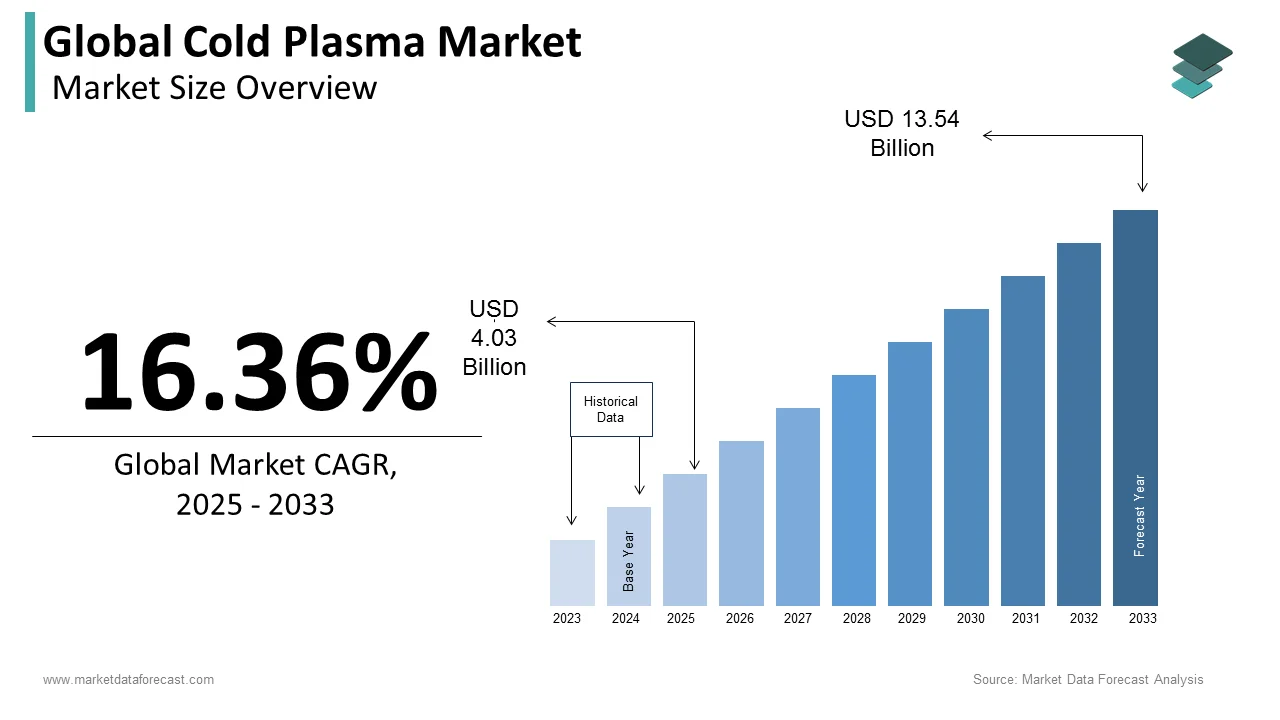
- Market Valuation: Valued at USD 4.03 billion in 2025, estimated at USD 4.69 billion in 2026, and projected to reach USD 15.76 billion by 2034, registering a high CAGR of 16.36% from 2026 to 2034.
- Primary Growth Drivers: Strict environmental regulations favoring sustainable, water-free industrial processing, and rapid advancements in medical sterilization, device decontamination, and plasma-assisted wound healing.
Key Market Segment Metrics (2026–2034)
| Category | Leading Segment Position | Fastest-Growing / Key Growth Segment |
|---|---|---|
| By Industry | Electronics & Semiconductors (dominant share driven by precise microchip cleaning, etching, and surface modification) | Medical Sector (projected at the fastest CAGR of 12.5% fueled by non-thermal sterilization and wound care therapies) |
| By Application | Surface Activation & Adhesion (held 44.3% market share in 2025, enhancing wettability and bond strength for polymers/ceramics) | Sterilization & Decontamination (anticipated at the fastest CAGR of 11.8% due to stringent healthcare and food hygiene standards) |
| By Region | North America (largest contributor holding 35.3% share in 2025 via advanced research infrastructure and strict EPA/FDA guidelines) | Asia Pacific (fastest-growing regional hub powered by rapid industrialization and electronics/medical manufacturing expansion) |
Major Market Players & Market Structure
Market Structure: Moderately fragmented competitive landscape featuring specialized technology innovators and diversified industrial equipment providers focusing on scalable plasma source design and automated line integration.
Key Companies: Enercon Industries Corporation, Henniker Plasma, ADTEC Plasma Technology Co. Ltd., Europlasma NV, Neoplas Tools GmbH, P2i Limited, Nordson Corporation, Plasmatreat GmbH, Vetaphone A/S, and Tantec A/S.
Global Cold Plasma Market Size
The size of the global cold plasma market was valued at USD 4.03 billion in 2025. The global market is further expected to experience a CAGR of 16.36% from 2026 to 2034 and be worth USD 15.76 billion by 2034 from USD 4.69 billion in 2026.
Cold plasma generates ionized gas at near-ambient temperatures by enabling surface modification, sterilization, and material processing without thermal damage to sensitive substrates. This innovative field leverages reactive species, such as electrons, ions, radicals, and excited atoms, to alter surface properties, enhance adhesion, or eliminate pathogens on heat-sensitive materials. In the semiconductor industry, the International Technology Roadmap for Semiconductors highlights the critical need for precise etching and cleaning processes where cold plasma provides superior control compared to wet chemical methods. Environmental applications are gaining traction as well, with the European Environment Agency noting that plasma-based waste treatment can reduce hazardous volume by 90%, while recovering valuable materials. The versatility of cold plasma allows its integration into diverse manufacturing lines ranging from textile finishing to automotive component coating. Regulatory bodies increasingly favor these dry processes due to their minimal environmental footprint and absence of toxic effluents.
MARKET DRIVERS
Stringent Environmental Regulations and Demand for Sustainable Processing Drive Adoption
The strict environmental regulations and the global shift towards sustainable industrial is driving the growth of the cold plasma market. Traditional surface treatment and sterilization methods often involve hazardous chemicals and significant water usage, which are increasingly restricted by governmental policies. Data from the Environmental Protection Agency indicates that wet chemical cleaning generates over 2 billion gallons of contaminated wastewater annually in the United States alone, creating substantial disposal costs and environmental risks. Cold plasma systems operate without solvents or water, significantly reducing the ecological footprint of industrial operations. Furthermore, the technology aligns with circular economy principles by enabling the recycling of materials through effective surface activation without degradation. The ability of cold plasma to replace perfluorinated compounds in textile waterproofing and adhesives in packaging further drives its uptake. Companies seeking to meet corporate sustainability goals and comply with evolving regulatory frameworks find cold plasma an essential tool for maintaining competitiveness, while minimizing environmental impact.
Advancements In Medical Sterilization And Wound Healing Applications Fuel Market Growth
The rapid advancements in medical applications, particularly in sterilization and wound healing significantly propelling the growth of the cold plasma market. The rising prevalence of antibiotic-resistant bacteria necessitates alternative disinfection methods that do not contribute to microbial resistance. According to the Centers for Disease Control and Prevention, antibiotic-resistant infections cause more than 2.8 million illnesses and 35000 deaths annually in the United States, highlighting the urgent need for effective non-chemical sterilization techniques. Cold plasma generates reactive oxygen and nitrogen species that effectively destroy bacterial cell walls and biofilms without damaging human tissue. Hospital-acquired infections cost healthcare systems billions of dollars each year, driving investment in advanced sterilization technologies. Cold plasma devices offer rapid sterilization cycles for heat-sensitive medical instruments, preserving their functionality and extending lifespan. Additionally, clinical trials have demonstrated that cold plasma accelerates wound healing by stimulating cell proliferation and reducing inflammation. The growing aging population and increase in surgical procedures further amplify the demand for safe and efficient medical technologies. Regulatory approvals for cold plasma medical devices in Europe and Asia are expanding market access, encouraging manufacturers to invest in research and development.
MARKET RESTRAINTS
High Initial Capital Investment and Operational Complexity Restrain Market Penetration
The substantial initial capital investment required for acquiring and installing cold plasma systems, particularly for small and medium-sized enterprises, is hindering the growth of the cold plasma market. These systems involve sophisticated power supplies, vacuum chambers, and control units, which are expensive to manufacture and maintain. Additionally, the operational complexity of cold plasma systems requires specialized technical expertise for setup, maintenance, and troubleshooting. Many existing workforces lack the necessary training, leading to increased downtime and operational inefficiencies. As per the study, nearly 60% of manufacturers cite skills gaps as a major challenge in adopting new technologies. The need for continuous monitoring of parameters, such as gas flow pressure and power density, adds to the operational burden. Without adequate technical support and training programs, smaller firms hesitate to transition from traditional methods.
Limited Awareness and Technical Expertise Among End Users Hinders Adoption
Lack of awareness and insufficient technical expertise among potential end users is limiting the growth of the cold plasma market. Many industries remain reliant on conventional methods due to familiarity and perceived reliability, unaware of the advantages offered by cold plasma. This knowledge gap prevents decision-makers from evaluating cold plasma as a viable solution for their specific applications. Data from the American Chemical Society suggests that misconceptions about plasma safety and complexity further deter potential adopters who fear operational risks and integration challenges. The absence of standardized educational programs and industry certifications exacerbates the issue, leaving engineers and technicians without clear guidance on implementation best practices. The vocational training systems in many regions have not yet updated curricula to include plasma technology, resulting in a shortage of qualified personnel. Companies often struggle to find staff capable of optimizing plasma parameters for different materials, leading to suboptimal results and dissatisfaction. Bridging this information deficit requires targeted marketing efforts, collaborative research initiatives, and robust training platforms to build confidence and competence among end users across diverse industrial sectors.
MARKET OPPORTUNITIES
Integration with Automated Manufacturing Lines Presents Significant Growth Opportunities
The integration of cold plasma systems with automated manufacturing lines and Industry 4.0 technologies is creating new opportunities for the growth of the cold plasma market. As factories increasingly adopt smart manufacturing practices, there is a growing demand for process technologies that can seamlessly connect with digital control systems. Cold plasma modules can be easily integrated into robotic arms and conveyor systems, allowing for precise and consistent treatment of complex geometries. As per the study, connected manufacturing systems improve productivity by 20% through real-time monitoring and adaptive control. This connectivity enables predictive maintenance, reducing downtime and extending equipment life. Furthermore, the modular nature of cold plasma sources allows for scalable deployment in flexible production environments. Companies that integrate advanced processing technologies report higher product quality and reduced waste. The synergy between cold plasma and automation supports the production of high-precision components in aerospace electronics and automotive industries.
Expansion into Emerging Countries with Growing Industrial Base Offers Untapped Potential
The expansion of cold plasma technology with rapidly growing industrial bases is expected to enhance the growth of the cold plasma market. Countries in Asia Pacific, Latin America, and Eastern Europe are experiencing robust manufacturing growth driven by urbanization and increasing consumer demand. These new facilities often seek state-of-the-art equipment to meet international quality standards and export requirements. Cold plasma technology offers a competitive edge by improving product durability and aesthetic appeal without environmental penalties. Local governments in these regions are also implementing incentives for green technologies, accelerating adoption. The infrastructure development in emerging countries supports the establishment of industrial clusters where shared technology platforms can be utilized. Partnerships with local distributors and system integrators can facilitate entry and provide necessary technical support. The rising middle class in these regions drives demand for high-quality consumer goods, such as electronics and packaged foods, which benefit from plasma treatment.
MARKET CHALLENGES
Standardization of Process Parameters and Quality Control Remains a Major Challenge
The lack of standardized process parameters and quality control metrics is quite a challenge for the growth of the cold plasma market. Unlike established methods, such as heat sterilization or chemical cleaning, cold plasma involves complex interactions between multiple variables, including gas composition, power frequency, and exposure time. There are currently few universally accepted standards for measuring plasma efficacy and surface modification outcomes. This lack of uniformity makes it difficult for manufacturers to guarantee performance and for regulators to approve new applications. Industries requiring strict compliance, such as pharmaceuticals and aerospace, face hurdles in validating cold plasma processes due to the absence of clear benchmarks. Developing reference materials and calibration protocols for plasma diagnostics is a complex and ongoing effort. Without standardized metrics, comparing different systems becomes challenging for buyers, leading to hesitation in procurement. Furthermore, the dynamic nature of plasma means that slight changes in environmental conditions can affect performance, requiring rigorous monitoring.
Scalability Issues in Large Volume Industrial Applications Hinder Widespread Deployment
The scalability issues when transitioning cold plasma technology from laboratory settings to large-volume industrial applications also hinder the growth of the cold plasma market. While effective on small batches, maintaining uniform treatment over large surface areas or high-speed production lines is technically demanding. Scaling up plasma sources often leads to inconsistencies in reactive species distribution, thereby affecting treatment quality. The energy requirements for large-scale plasma generation also increase significantly, impacting operational costs and sustainability goals. The industrial-scale plasma systems may require specialized power infrastructure, which is not always available in existing facilities. Additionally, the heat generated during prolonged operation, even in cold plasma systems, can accumulate, requiring advanced cooling solutions that add complexity and cost. Maintaining stable plasma discharge over extended periods without electrode degradation is another technical hurdle. These engineering challenges slow the adoption of cold plasma in mass production environments, where consistency, throughput, and cost efficiency are paramount.
REPORT COVERAGE
| REPORT METRIC | DETAILS |
| Market Size Available | 2025 to 2034 |
| Base Year | 2025 |
| Forecast Period | 2026 to 2034 |
| Segments Covered | |
| Various Analyses Covered | Global, Regional and Country-Level Analysis, Segment-Level Analysis, Drivers, Restraints, Opportunities, Challenges; PESTLE Analysis; Porter’s Five Forces Analysis, Competitive Landscape, Analyst Overview of Investment Opportunities |
| Regions Covered | North America, Europe, Asia Pacific, Latin America, Middle East & Africa |
| Market Leaders Profiled | Enercon Industries Corporation, Henniker Plasma, ADTEC Plasma Technology Co. Ltd., Europlasma NV, Neoplas Tools GmbH, P2i Limited, Nordson Corporation, Plasmatreat GmbH, Vetaphone A/S, and Tantec A/S). |
SEGMENTAL ANALYSIS
By Industry Insights
The electronics and semiconductors industry segment was the largest by accounting for a dominant share of the cold plasma market primarily due to the critical need for precise surface cleaning, etching, and modification in microchip fabrication. As semiconductor devices shrink to nanometer scales, traditional wet chemical cleaning methods become ineffective and environmentally hazardous, making dry plasma processes indispensable. The high value of semiconductor equipment allows manufacturers to invest heavily in sophisticated cold plasma systems that offer superior control and repeatability. Furthermore, the shift towards three-dimensional chip architectures and complex packaging technologies increases the demand for gentle yet effective surface activation techniques that do not damage delicate structures.
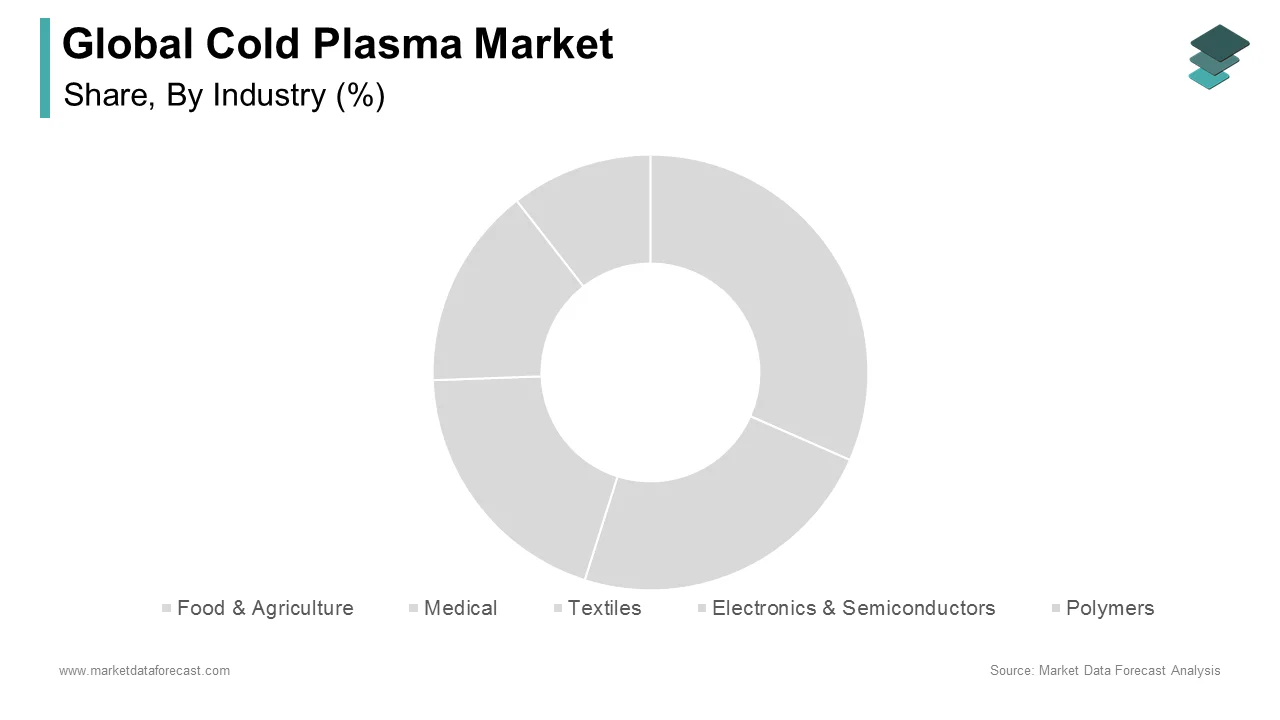
The medical sector is expected to register the fastest CAGR of 12.5% during the forecast period with the increasing demand for non-thermal sterilization and advanced wound healing therapies. The rising prevalence of multidrug-resistant organisms necessitates alternative disinfection methods that are effective against biofilms without damaging sensitive medical instruments or human tissue. Healthcare-associated infections affect millions of patients annually, costing billions in additional treatment expenses, which drives hospitals to adopt efficient sterilization technologies. Additionally, the growing field of plasma medicine utilizes reactive species to stimulate tissue regeneration and accelerate wound healing, particularly for chronic ulcers and diabetic wounds. As per the Journal of Clinical Medicine, clinical trials have demonstrated significant improvements in healing rates for patients treated with cold plasma devices. Regulatory approvals for plasma-based medical devices in Europe and North America are expanding market access, encouraging investment in portable and handheld units.
By Application Insights
The surface activation and adhesion segment was the largest by holding 44.3% of the cold plasma market share in 2025. Many modern materials such as polymer composites and ceramics have low surface energy, which prevents strong adhesion of adhesives, inks, or coatings. Cold plasma treatment modifies the surface chemistry by introducing polar functional groups, thereby enhancing wettability and bond strength without altering bulk properties. The versatility of this application spans packaging, textiles, and electronics, where reliable bonding is crucial for product integrity. Furthermore, cold plasma offers a dry and eco-friendly alternative to chemical primers, which are increasingly restricted due to environmental regulations. A leading adhesive manufacturer integrating plasma activation into production lines improves process efficiency and reduces material usage.
The sterilization and decontamination segment is likely to grow at the fastest CAGR of 11.8% during the forecast period, with the stringent hygiene standards in healthcare and food processing industries. The inability of traditional heat sterilization to treat heat-sensitive materials and the environmental concerns associated with chemical disinfectants create a strong demand for cold plasma solutions. In healthcare, the rise of antibiotic-resistant bacteria necessitates robust sterilization protocols for medical devices and hospital surfaces. Cold plasma devices offer rapid cycle times and deep penetration into complex instrument geometries, ensuring comprehensive disinfection. The ability to sterilize packaging materials before filling also extends shelf life and reduces spoilage. Regulatory support for novel food preservation technologies and medical device sterilization methods accelerates adoption.
REGIONAL ANALYSIS
North America Cold Plasma Market Analysis
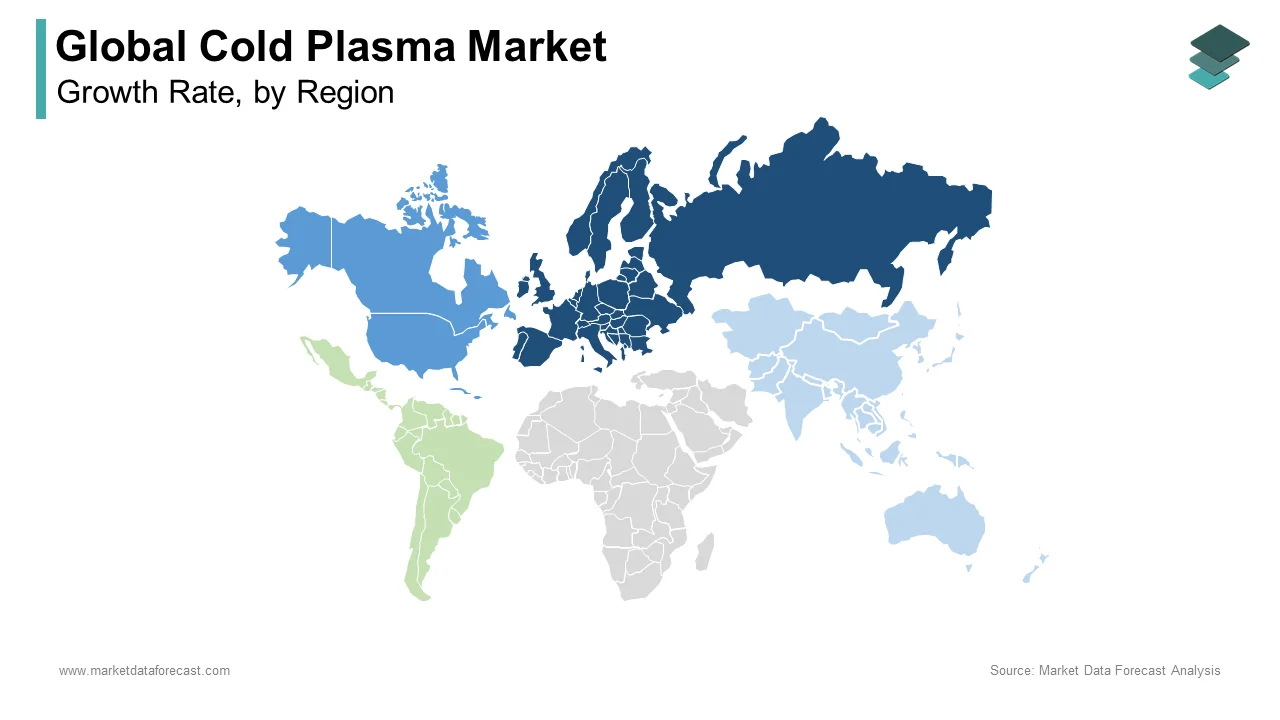
North America was the largest contributor in the cold plasma market by holding 35.3% of the share in 2025 due to its advanced research infrastructure and strong presence of key end-use industries. The region is home to leading semiconductor manufacturers, medical device companies, and agricultural technology firms that drive innovation and adoption of plasma technologies. The presence of major regulatory bodies such as the Food and Drug Administration and Environmental Protection Agency encourages the adoption of safe and sustainable technologies like cold plasma. Furthermore, the region has a high concentration of academic institutions and private research centers collaborating on plasma medicine and industrial applications. Employment in scientific and technical services is growing faster than average, ensuring a skilled workforce to support technology deployment. Strong intellectual property protection and venture capital availability also foster startup activity in the plasma sector.
Europe Cold Plasma Market Analysis
Europe cold plasma market was positioned second, holding 30.3% of the share in 2025, with strict environmental regulations and a strong emphasis on sustainable manufacturing practices. The European Union’s Green Deal and Industrial Emissions Directive mandate significant reductions in chemical usage and waste generation, driving industries to adopt dry plasma processes. The circular economy action plan promotes technologies that extend product life and enable recycling, which aligns perfectly with plasma surface treatment capabilities. The European manufacturing sector invests heavily in eco-innovation, with Germany, France, and Italy leading in plasma equipment adoption for automotive and packaging applications. The region is also a pioneer in plasma medicine, with numerous clinical trials and regulatory approvals for wound healing devices conducted in countries like Germany and the United Kingdom. The collaborative research projects between academia and industry accelerate the commercialization of new plasma applications. The presence of established plasma technology providers and a skilled engineering workforce further supports market growth. Additionally, consumer awareness of environmental issues drives demand for sustainably produced goods treated with green technologies.
Asia Pacific Cold Plasma Market Analysis
The Asia Pacific cold plasma market is likely to grow at the fastest CAGR in the coming years with the rapid industrialization and the expansion of electronics and healthcare sectors. Countries like China, Japan, South Korea, and India are becoming global hubs for semiconductor manufacturing and medical device production, creating immense demand for plasma processing tools. The rising middle class and aging population in the region also drive demand for improved healthcare services, including advanced wound care and sterilization technologies. As per the study, incentives for local electronics manufacturing are attracting foreign investment and boosting demand for supporting technologies. Furthermore, increasing awareness of food safety standards is prompting food processors to adopt non-thermal preservation methods. The large labor force and competitive production costs make Asia Pacific an attractive location for plasma equipment manufacturing as well.
Latin America Cold Plasma Market Analysis
Latin America cold plasma market is likely to grow steadily with the emerging applications in agriculture and healthcare. Brazil and Mexico are the primary contributors to the regional market with growing investments in food processing and medical infrastructure. Data from the Brazilian Ministry of Agriculture indicates that exports of fresh produce require compliance with international sanitary standards, driving processors to adopt advanced decontamination methods like cold plasma. The region faces challenges related to high import tariffs and limited local manufacturing capabilities, which can restrict access to premium plasma equipment. However, partnerships with international suppliers and local distributors are improving market accessibility.
Middle East and Africa Cold Plasma Market Analysis
The Middle East and Africa cold plasma market is likely to grow with investments in healthcare modernization and diversification of their economies beyond oil and gas. In South Africa, the mining and automotive sectors utilize plasma technologies for surface hardening and cleaning, although adoption remains limited compared to developed regions. The lack of extensive manufacturing infrastructure and technical expertise poses challenges to widespread adoption. However, government initiatives to improve food security and public health are creating demand for plasma-based decontamination solutions.
COMPETITIVE LANDSCAPE
The global cold plasma market features a moderately fragmented competitive landscape characterized by a mix of specialized technology providers and diversified industrial equipment manufacturers. Leading companies compete on technological superiority, process efficiency, and application versatility to capture share across diverse sectors, such as electronics, healthcare, and automotive. Innovation in plasma source design and control systems serves as a primary differentiator, with firms striving to offer more uniform and scalable solutions. Price competition is moderate as buyers prioritize performance and reliability over cost, especially in high-value applications like semiconductor fabrication. Regional players often focus on niche markets or specific local regulations, leveraging proximity to provide superior service and support. The barrier to entry remains high due to the need for specialized engineering expertise and intellectual property protection. Strategic alliances and acquisitions are common as larger firms seek to broaden their product portfolios and geographic reach. Customer loyalty is driven by consistent performance and robust after-sales support, including maintenance and troubleshooting.
KEY MARKET PLAYERS
Some of the notable companies dominating the global cold plasma market profiled in this report are
- Enercon Industries Corporation
- Henniker Plasma Ltd
- ADTEC Plasma Technology Co. Ltd.
- Europlasma NV
- Neoplas Tools GmbH
- P2i Limited
- Nordson Corporation
- Plasmatreat GmbH
- Vetaphone A/S
- Tantec A/S
TOP PLAYERS IN THE MARKET
- Plasmatreat GmbH is a leading innovator in atmospheric pressure plasma technology specializing in surface activation and cleaning solutions for industrial applications. The company focuses on developing modular plasma systems that integrate seamlessly into existing production lines for automotive packaging and textile industries. Recent strategic actions include expanding its product portfolio with energy-efficient generators designed to reduce operational costs for manufacturers. Plasmatreat has strengthened its global presence by establishing partnerships with system integrators in Asia and North America to enhance distribution capabilities. The company actively participates in international trade fairs to showcase advancements in plasma nozzle design and process control software. By prioritizing customer-specific engineering services, Plasmatreat ensures tailored solutions that address unique substrate challenges. Their commitment to sustainability aligns with regulatory trends driving adoption of dry processing technologies.
- Adtec Plasma Technology Co Ltd operates as a prominent supplier of cold plasma systems with a strong emphasis on medical sterilization and semiconductor processing applications. The company leverages advanced radio frequency power sources to deliver precise and uniform plasma treatment for sensitive materials. Recent efforts involve launching compact sterilization devices targeted at healthcare facilities seeking alternatives to traditional chemical disinfection methods. Adtec has invested in research collaborations with universities to validate the efficacy of plasma against multidrug-resistant pathogens. They have also expanded their manufacturing capacity in Japan to meet growing demand from the electronics sector. The company provides comprehensive technical support and training programs to ensure optimal system performance for clients.
- Henniker Plasma Ltd is a key player in the global market known for its versatile range of atmospheric and low-pressure plasma systems used for surface modification and adhesion promotion. The company serves diverse industries including aerospace electronics and biomedical devices, offering customized solutions for complex bonding challenges. Recent actions include introducing automated plasma treatment stations compatible with robotic arms to support Industry 4.0 initiatives. Henniker has enhanced its digital platform, providing customers with remote monitoring and diagnostic tools to minimize downtime. They actively engage in joint development projects with material scientists to optimize plasma parameters for new composite materials. The company has expanded its service network in Europe and North America to provide faster response times for maintenance and upgrades.
TOP STRATEGIES USED BY KEY MARKET PARTICIPANTS
Key players in the cold plasma market primarily focus on product differentiation through technological innovation and customization to meet specific industry needs. Companies invest heavily in research and development to create energy-efficient and compact plasma sources that are easier to integrate into automated production lines. Strategic partnerships with original equipment manufacturers and system integrators help expand distribution networks and access new geographic markets. Manufacturers emphasize regulatory compliance and certification, particularly for medical and food applications, to build trust and facilitate market entry. Providing comprehensive technical support and training services ensures customer satisfaction and long-term retention. Additionally, firms are adopting sustainable business practices by designing eco-friendly equipment that reduces energy consumption and eliminates hazardous waste. Digitalization strategies, including remote monitoring and predictive maintenance features, enhance value propositions for industrial clients. Collaborations with academic institutions foster innovation and validate new applications, such as plasma medicine.
MARKET SEGMENTATION
This research report on the global cold plasma market has been segmented & sub-segmented based on the industry, application, regime, and region.
By Industry
- Food & Agriculture
- Medical
- Textiles
- Electronics & Semiconductors
- Polymers
By Application
- Decontamination
- Adhesion
- Finishing
- Sterilization
- Coating
- Cleaning and Activation
- Printing
- Wound Healing
By Regime
- Low Pressure
- Atmospheric Pressure
By Region
- North America
- Europe
- Asia-Pacific
- Latin America
- Middle East and Africa