Global Cotton Yarn Market Size, Share, Trends, and Growth Analysis Report, Segmented By Type (Carded Yarn, Combed Yarn, Others), Application & Region (North America, Europe, Latin America, Asia Pacific, Middle East & Africa), Industry Forecast From 2025 to 2033
Global Cotton Yarn Market Size
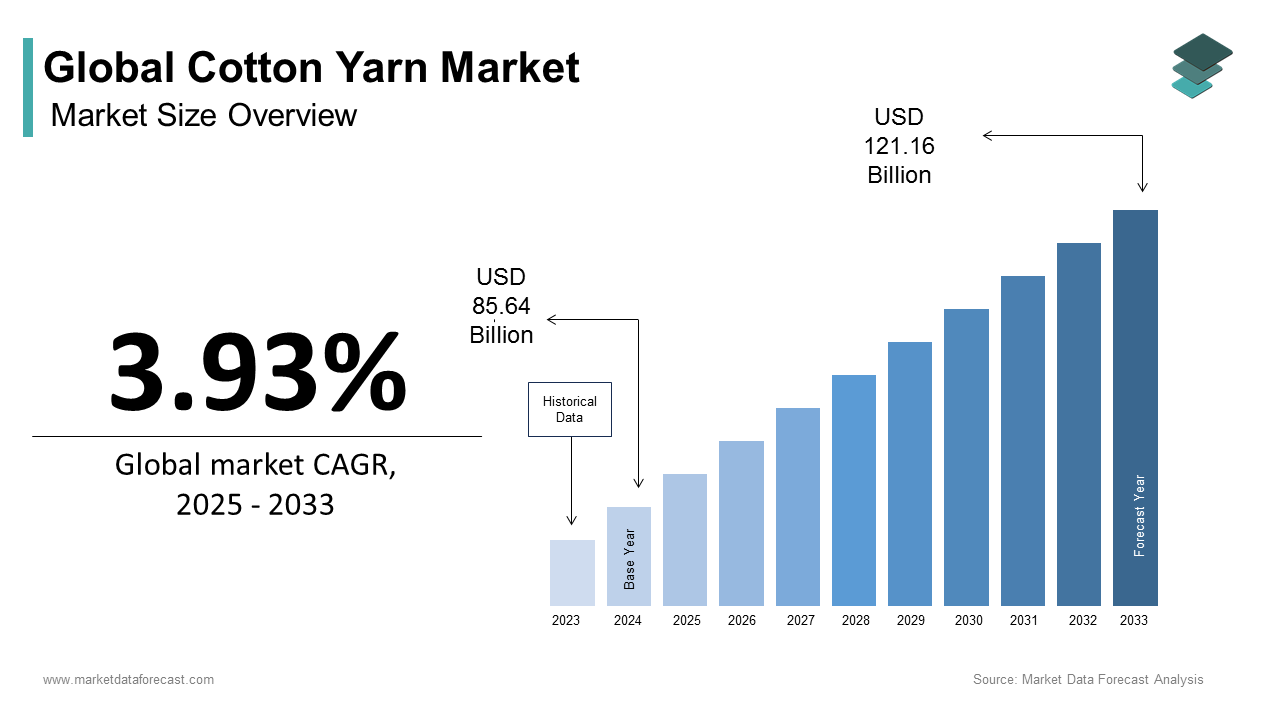
The global cotton yarn market size was valued at USD 85.64 billion in 2024 and is anticipated to reach USD 89.01 billion in 2025 and USD 121.16 billion by 2033, growing at a CAGR of 3.93% during the forecast period from 2025 to 2033.
The cotton yarn is a raw material for textile manufacturing. Cotton yarn is highly valued for its softness, breathability, and durability, making it indispensable in apparel, home textiles, and industrial applications. As per the Food and Agriculture Organization (FAO), global cotton production reached approximately 26.3 million metric tons in 2023. Increasing consumer preference for natural fibers due to environmental concerns and sustainable fashion trends has further reinforced the demand for cotton yarn.
MARKET DRIVERS
Rising Apparel and Textile Demand
The expansion of global apparel consumption in emerging countries is accelerating the growth of the cotton yarn market. According to the United Nations Conference on Trade and Development (UNCTAD), global textile and apparel trade volume exceeded $850 billion in 2023, reflecting sustained consumer demand. Cotton yarn, being a primary raw material, benefits from this trend. Growth in fast fashion, coupled with urbanization and increasing disposable incomes in regions such as India, Bangladesh, and Vietnam, has accelerated demand. Manufacturers are increasingly adopting advanced spinning technologies to meet the high-quality yarn requirements of modern textiles, ensuring both durability and comfort.
Preference for Sustainable and Natural Fibers
Consumer awareness regarding environmental sustainability is driving demand for natural fibers over synthetic alternatives. As per Textile Exchange, the global organic cotton production reached 244,000 metric tons in 2023, reflecting a growing inclination toward eco-friendly textiles. Cotton yarn, being biodegradable and renewable, aligns with this sustainability trend. Brands and retailers are actively incorporating organic and ethically sourced cotton into their collections, which is encouraging suppliers to scale production of high-quality yarns. This shift toward environmentally conscious fashion ensures long-term growth prospects for the cotton yarn market globally.
MARKET RESTRAINTS
Volatility in Raw Cotton Prices
Price fluctuations of raw cotton due to climatic variations, pest attacks, and geopolitical trade restrictions directly affect yarn production costs. Such instability can constrain profitability for yarn manufacturers, particularly small- and medium-sized enterprises. Price unpredictability also affects long-term contracts with textile mills, which creates uncertainties in supply chains and discourages investment in capacity expansion.
Competition from Synthetic Fibers
Synthetic yarns such as polyester and nylon provide cost advantages and higher durability compared to cotton. As per the International Textile Manufacturers Federation, synthetic fiber production accounted for nearly 65% of global fiber output in 2023. Their resistance to wrinkles, lower maintenance, and adaptability in technical textiles often lead manufacturers to opt for synthetics over cotton yarn, which is restraining market growth. Additionally, innovations in recycled synthetic yarns pose an added competitive challenge for traditional cotton products.
MARKET OPPORTUNITIES
Growth in Home Textiles and Technical Fabrics
The increasing demand for home textiles such as bed linens, curtains, and upholstery provides a lucrative avenue. Cotton yarn’s versatility, comfort, and durability make it a preferred material. Manufacturers can capitalize on this trend by developing specialized yarns for premium and eco-friendly home textile products, enhancing market penetration.
Expansion in Developing Economies
Emerging markets in Asia and Africa are witnessing significant growth in the textile and apparel industries, which is creating opportunities for the cotton yarn market. As per the World Bank, industrial output in South and Southeast Asia expanded by 6.1% in 2023, driven by investments in spinning and weaving infrastructure. Localized production not only reduces costs but also ensures timely supply to domestic textile industries. Strategic investments in regional spinning facilities and partnerships with local mills can enable market players to leverage these growth opportunities.
MARKET CHALLENGES
Water and Energy-Intensive Production
Cotton cultivation and yarn production are resource-intensive, requiring large amounts of water and energy. According to the World Resources Institute, producing one kilogram of cotton consumes approximately 10,000 liters of water. This creates sustainability and cost challenges for manufacturers, particularly in water-scarce regions. Regulatory pressures to adopt water-efficient and energy-saving technologies may increase operational costs.
Labor and Supply Chain Constraints
The cotton yarn market relies heavily on manual labor for spinning and weaving processes in several countries. As per the International Labour Organization (ILO), labor shortages and rising wages in textile hubs such as India and Pakistan have increased production costs by 8–10% in 2023. Additionally, disruptions in the supply of raw cotton due to transport inefficiencies or geopolitical factors can adversely impact yarn availability and market stability.
REPORT COVERAGE
| REPORT METRIC | DETAILS |
| Market Size Available | 2024 to 2033 |
| Base Year | 2024 |
| Forecast Period | 2025 to 2033 |
| CAGR | 3.93% |
| Segments Covered | By Type, Application, and Region |
| Various Analyses Covered | Global, Regional, and Country Level Analysis; Segment-Level Analysis; DROC; PESTLE Analysis; Porter’s Five Forces Analysis; Competitive Landscape; Analyst Overview of Investment Opportunities |
| Regions Covered | North America, Europe, APAC, Latin America, Middle East & Africa |
| Market Leaders Profiled | Vardhman Textiles Ltd., Nahar Spinning Mills Ltd., Trident Group, Grasim Industries Ltd. (Aditya Birla Group), LS Mills Ltd., Weiqiao Textile Company Limited, Huafu Fashion Co., Ltd., Texhong Textile Group Limited, Shandong Ruyi Technology Group Co., Ltd., Loyal Textile Mills Ltd., KPR Mill Limited, Nishat Mills Limited, Arvind Limited, Ambika Cotton Mills Limited |
SEGMENTAL ANALYSIS
By Type Insights
Carded yarn dominated the cotton yarn market by accounting for 55.3% of the market share in 2024 due to its cost-effectiveness and versatility across various textile applications. Carded yarn is widely used in home textiles, basic apparel, and industrial fabrics because it provides acceptable quality at lower production costs compared to combed yarn. According to the Food and Agriculture Organization, carded yarn production reached nearly 10.5 million tons globally in 2023. Additionally, the segment benefits from strong demand in emerging economies where price-sensitive consumers drive textile consumption. Innovations in carding technology have also improved yarn strength and uniformity, reinforcing its dominance in the market.
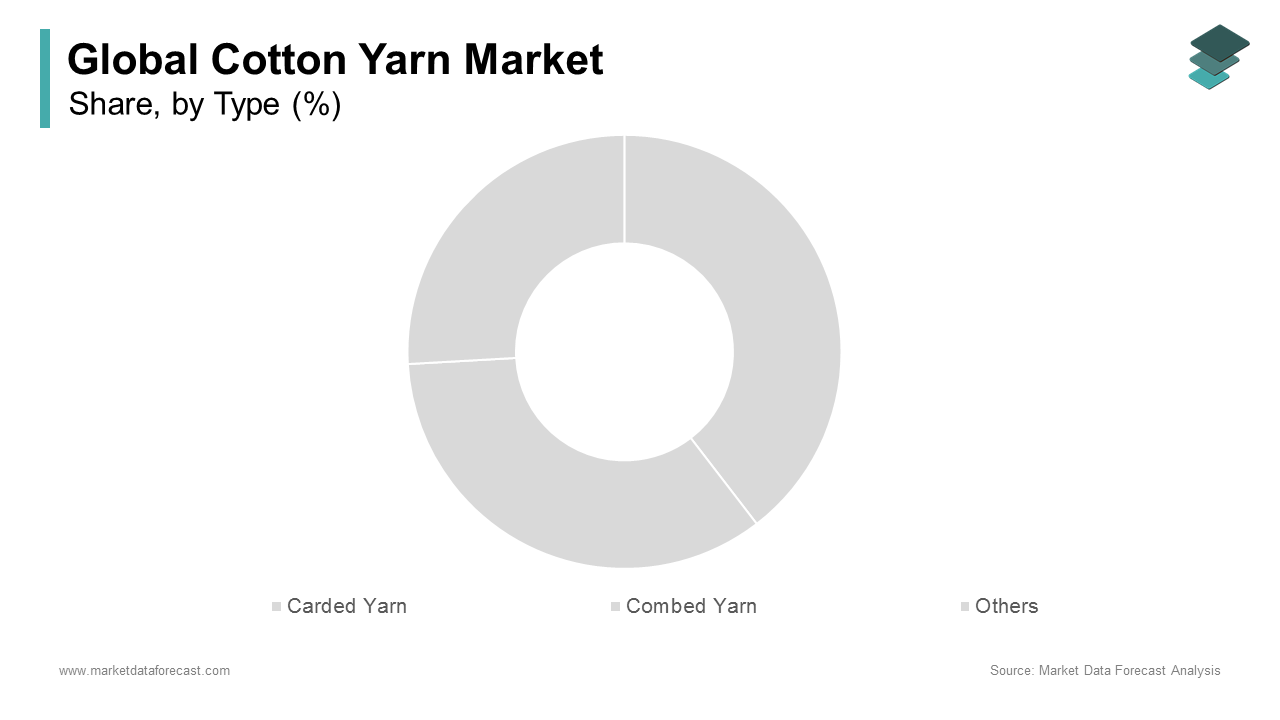
The combed yarn is growing at a CAGR of 6.2% during the forecast period due to increasing demand for high-quality, soft, and durable fabrics. Combed yarn removes short fibers and impurities, making it ideal for premium apparel and fashion textiles. According to Textile Exchange, the adoption of combed yarn in sustainable and organic cotton lines has surged by 8% in 2023. The rising consumer preference for premium and comfortable garments, especially in North America and Europe, is driving rapid growth. Moreover, technological advancements in spinning machinery have reduced production costs and enhanced efficiency by enabling manufacturers to scale production for global apparel brands.
By Application Insights
The apparel segment was the largest with a significant share of the cotton yarn market in 2024, driven by the rising global apparel demand in fast fashion and casual wear. According to UNCTAD, textile and clothing exports from Asia exceeded $520 billion in 2023. Cotton yarn’s natural comfort, breathability, and hypoallergenic properties make it the preferred choice for clothing. Additionally, the proliferation of branded fashion retailers and online shopping platforms in emerging economies has intensified yarn consumption for mass apparel production.
The textile segment is growing at a CAGR of 5.8% in the coming years due to urbanization and rising disposable income in developing regions. As per the FAO, global home textile production increased by 4.5% in 2023. Consumer demand for premium curtains, bed linens, and upholstery fabrics is accelerating the adoption of high-quality yarns. Manufacturers are responding by developing specialized yarns with improved durability, softness, and sustainable sourcing, which is further propelling the growth of the cotton yarn market.
REGIONAL ANALYSIS
Asia Pacific Market Analysis
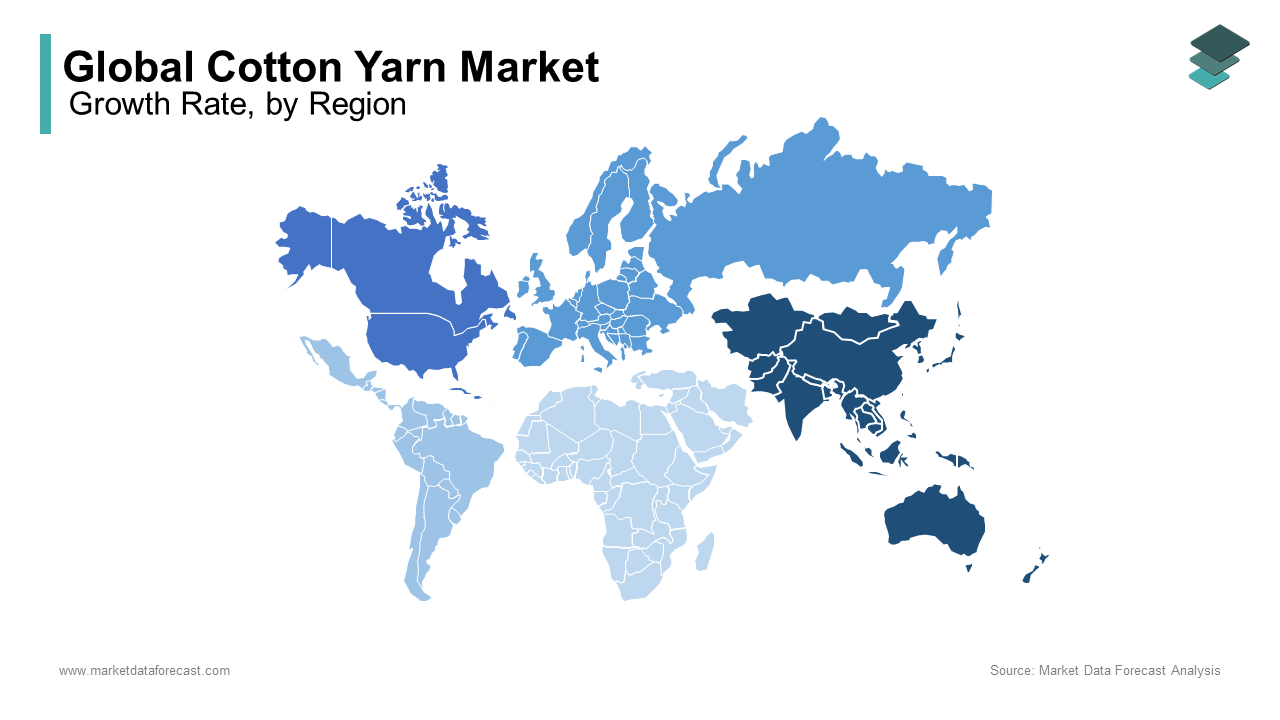
Asia Pacific was the top performer in the cotton yarn market by capturing 32.1% the market share in 2024. Countries such as India, China, and Bangladesh dominate due to abundant raw cotton availability and low-cost labor. According to ICAC, India produced nearly 6.5 million tons of cotton in 2023, supporting the growth of local spinning mills. The region benefits from government incentives for textile exports and rapid industrialization, driving demand for both carded and combed yarn.
North America Market Analysis
North America held 18.3% of the cotton yarn market share in 2024, with the U.S. leading production. Cotton yarn consumption is driven by premium apparel and home textile segments. According to the USDA, U.S. cotton production reached 3.7 million tons in 2023. Technological innovation in spinning and quality standards for apparel textiles has strengthened market presence.
Europe Market Analysis
Europe cotton yarn market is growing lucratively with prominent growth opportunities in the coming years. Italy and Germany are key players in fashion and technical textiles. According to Eurostat, Europe imported over 1.2 million tons of cotton in 2023 to support local yarn production. Sustainability initiatives are driving demand for organic and combed yarn.
Latin America Market Analysis
Latin America cotton yarn market growth is expected to continue during the forecast period. Brazil and Mexico lead in raw cotton production and local textile consumption. According to FAO, Brazil produced 3.1 million tons of cotton in 2023. Expanding domestic textile industries and government incentives for value-added yarn production contribute to market growth.
Middle East & Africa Market Analysis
The Middle East and Africa cotton yarn market is expected to grow in the coming years. Egypt’s long-staple cotton is highly valued for premium yarns. According to ICAC, Egypt produced 0.9 million tons of cotton in 2023. Rising textile exports and investments in spinning infrastructure are fostering demand for both carded and combed yarn.
COMPETITIVE OVERVIEW
The cotton yarn market in the Asia Pacific is highly competitive, driven by both established players and emerging regional manufacturers. Leading companies compete on product quality, technological innovation, and sustainable practices. Vardhman Textiles, Arvind Limited, and Indo-Rama dominate due to their integrated production systems and focus on premium yarn solutions. Smaller regional firms differentiate through niche offerings or cost-effective products. The competition is intensifying as consumer demand shifts toward sustainable and high-performance textiles. Companies are investing heavily in R&D, automation, and capacity expansion to meet both domestic and export demand, while also responding to evolving fashion and home textile trends. Strategic collaborations and eco-conscious initiatives are key differentiators.
KEY MARKET PLAYERS
A few of the dominating players in the global cotton yarn market include
- Vardhman Textiles Ltd.
- Nahar Spinning Mills Ltd.
- Trident Group
- Grasim Industries Ltd. (Aditya Birla Group)
- LS Mills Ltd.
- Weiqiao Textile Company Limited
- Huafu Fashion Co., Ltd.
- Texhong Textile Group Limited
- Shandong Ruyi Technology Group Co., Ltd.
- Loyal Textile Mills Ltd.
- KPR Mill Limited
- Nishat Mills Limited
- Arvind Limited
- Ambika Cotton Mills Limited
LEADING PLAYERS IN THE COTTON YARN MARKET
Vardhman Textiles Ltd.
Vardhman Textiles is headquartered in India, which is a leading integrated textile manufacturer specializing in cotton yarn production. The company has significantly contributed to the Asia Pacific market by supplying a wide range of carded and combed yarns to the apparel and textile industries. Vardhman has strengthened its position through technological advancements in spinning and sustainable production processes, including water-efficient dyeing and energy-efficient machinery. In 2023, the company expanded its capacity in Punjab, India, enabling faster fulfillment of both domestic and export orders.
Arvind Limited
Arvind Limited is a major Indian textile manufacturer that plays a key role in the Asia Pacific cotton yarn market through its extensive production of high-quality combed and specialty yarns. The company supplies leading fashion brands and textile manufacturers across the region, emphasizing sustainable and organic cotton yarn production. Arvind has recently invested in modern spinning mills and advanced yarn finishing techniques to improve efficiency and quality.
PT Indo-Rama Synthetics Tbk
Indo-Rama, an Indonesia-based multinational, is recognized for producing cotton-blended yarns and supplying textile manufacturers across the Asia Pacific. The company has expanded its spinning capacity and integrated advanced quality control systems to enhance product consistency and durability. In recent years, Indo-Rama has partnered with regional apparel manufacturers to provide specialty yarns tailored for both fashion and home textile applications.
GLOBAL COTTON YARN MARKET NEWS
- In March 2023, Vardhman Textiles commissioned a new spinning mill in Punjab, India, to expand carded and combed yarn production capacity, enhancing its supply chain efficiency and regional market reach.
- In July 2023, Arvind Limited launched a line of organic cotton yarns, targeting sustainable fashion brands across the Asia Pacific and increasing its portfolio for premium apparel applications.
- In November 2023, Arvind Limited invested in advanced moisture-wicking and anti-bacterial yarn technology, catering to both sportswear and healthcare textile segments across the Asia Pacific.
MARKET SEGMENTATION
This research report on the global cotton yarn market is segmented and sub-segmented into the following categories.
By Type
- Carded Yarn
- Combed Yarn
- Others
By Application
- Apparel
- Textiles
- Others
By Region
- North America
- Europe
- Latin America
- Asia Pacific
- Middle East & Africa
Frequently Asked Questions
1. What is driving the growth of the cotton yarn market?
Rising demand for sustainable and natural fabrics, growth in the apparel and home textile industries, and increasing disposable income in emerging economies are driving market growth.
2. What are the major restraints in the cotton yarn market?
Price volatility of raw cotton, dependency on weather conditions, and competition from synthetic fibers are major restraints.
3. What are the key applications of cotton yarn?
Cotton yarn is widely used in apparel (t-shirts, jeans, shirts), home textiles (bedsheets, curtains, towels), and industrial textiles.
4. Who are the major players in the cotton yarn market?
Leading players include Vardhman Textiles, Nahar Spinning Mills, Trident Group, Grasim Industries, Weiqiao Textile, Huafu Fashion, Texhong Textile, and Arvind Limited.
5. How is sustainability influencing the cotton yarn market?
There is a growing shift toward organic and recycled cotton yarns, supported by eco-conscious consumers and global sustainability certifications.
6. What impact does technology have on the cotton yarn market?
Automation, digital spinning technologies, and advanced machinery are improving efficiency, reducing costs, and enhancing yarn quality.
7. How is the cotton yarn market segmented?
The market is segmented by type (carded, combed, compact), count (fine, medium, coarse), application (apparel, home textiles, industrial), and region.
8. What is the growth outlook for the cotton yarn market?
The market is projected to grow steadily, driven by rising fashion industry demand, urbanization, and preference for natural fibers over synthetics.
9. What challenges does the cotton yarn market face?
Challenges include high water consumption in cotton cultivation, labor shortages, climate change risks, and fluctuating global trade policies.
10. What opportunities exist in the cotton yarn market?
Opportunities include the expansion of organic cotton yarns, sustainable textile innovations, and rising demand from fast-growing markets in Asia and Africa.
Related Reports
Access the study in MULTIPLE FORMATS
Purchase options starting from
$ 2500
Didn’t find what you’re looking for?
TALK TO OUR ANALYST TEAM
Need something within your budget?
NO WORRIES! WE GOT YOU COVERED!
Call us on: +1 888 702 9696 (U.S Toll Free)
Write to us: sales@marketdataforecast.com