- Product Description Description
- Table of Contents TOC
- List of Table & Figure LOT
- Get Free Sample PDF Sample PDF
Market Size, 2025
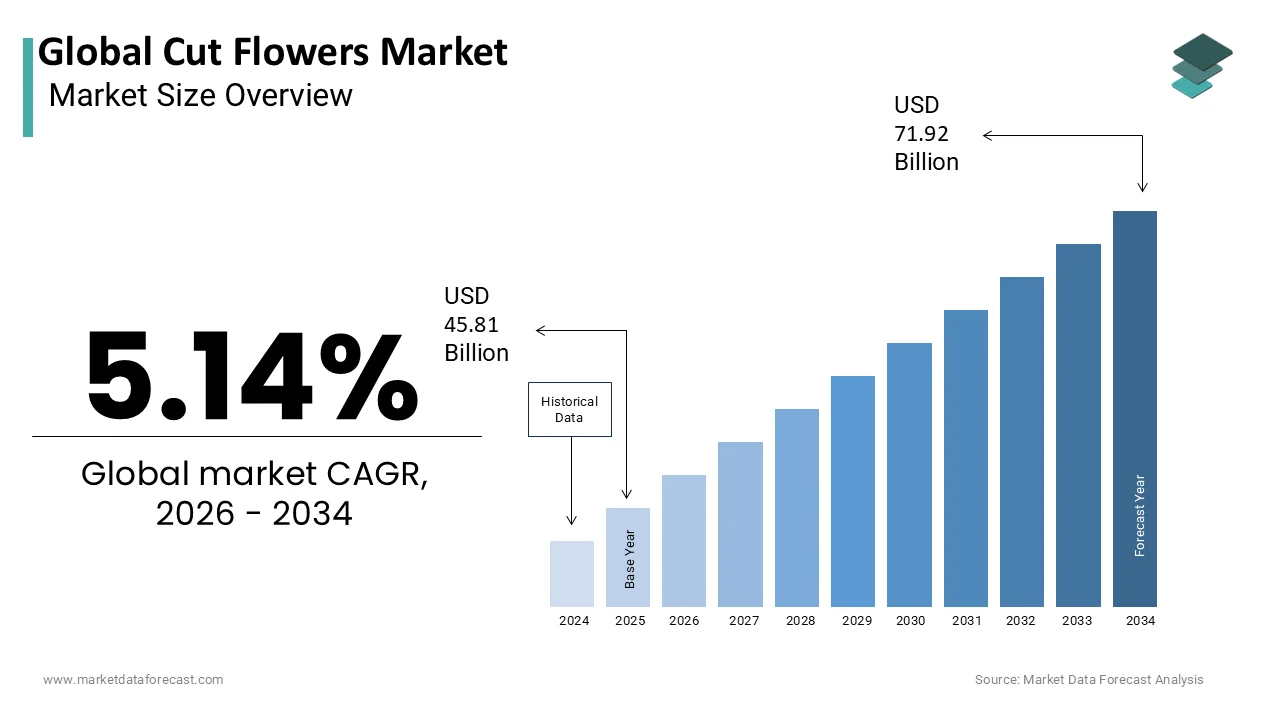
$45.81 BnMarket Estimate, 2026
$48.16 BnMarket Forecast, 2034
$71.92 BnCAGR, 2026–2034
5.14%Executive Summary: Cut Flowers Market
- Market Scope: Comprehensive global cut flowers market analysis covering flower types, application segments, distribution channels, regional leadership frameworks, and global trade metrics.
- Market Valuation: Valued at USD 45.81 billion (2025), estimated at USD 48.16 billion (2026), and projected to reach USD 71.92 billion by 2034, registering a steady CAGR of 5.14% (2026–2034). (Note: Valued at USD 41.44 billion in 2023).
- Primary Growth Drivers: Rising demand for home decor and gifting, expanding online retail platforms, and global trade networks. Key economic and trade highlights include annual U.S. spending on flowers and plants estimated at USD 32 billion, worldwide annual spending on home decor flowers at approximately USD 30 billion, and the Netherlands accounting for 52% of global cut-flower exports.
Key Market Segment Metrics (2026–2034)
| Category | Leading Segment (2025 Position) | Fastest-Growing Segment |
|---|---|---|
| By Flower Type | Roses (dominated with a 39.1% market share in 2025); Chrysanthemums (held 19.4%) | Specialized Varieties & Roses (projected to grow at a 5.12% CAGR) |
| By Application Sector | Home Application (accounted for 60.8% of the global market in 2025) | Commercial Applications (projected to expand at a robust 6.22% CAGR) |
| By Distribution Channel | Supermarkets & Hypermarkets (held 37.9% share, growing at 4.88%) | Online Retail (captured 24.9% share and projected to record the fastest CAGR of 8.76%) |
| By Region / Country | Europe (accounted for 36.3% in 2023); Asia-Pacific (captured 28.5% in 2025) | North America (projected to grow at a steady 5.97% CAGR) |
Major Market Players & Market Structure
Market Structure: Highly competitive global floriculture landscape featuring major international agricultural producers, exporters, and digital flower delivery platforms competing intensely on sustainable cultivation practices, diverse flower varieties, robust cold-chain export networks, online retail integration, and expanding consumer accessibility.
Key Companies: The Queen's Flowers Corp, Selecta Cut Flowers SAU, Sher Holland BV, Multiflora Corp, Rosebud Ltd, Karen Roses Ltd, Washington Bulb Co Inc, Dummen Orange Holding BV, Esmeralda Farms LLC, and Marginpar BV.
 Download Free Sample Report
Global Cut Flowers Market Size
The Global Cut Flowers Market is projected to grow from USD 45.81 billion in 2025 to USD 48.16 billion in 2026 and reach USD 71.92 billion by 2034, registering a CAGR of 5.14% from 2026 to 2034.
The cut flowers market is a specialized agricultural sector that relies heavily on intricate cold chain logistics to preserve the perishability and aesthetic quality of blooms from farm to vase. According to the Food and Agriculture Organization of the United Nations, the Netherlands serves as the primary global hub, handling approximately 60% of all international flower trade through its advanced auction systems. As per data from the Royal FloraHolland association, over 12 billion cut flowers are traded annually through its facilities alone, highlighting the massive scale of global consumption. These statistics underscore the critical importance of efficient supply chain management and rapid transportation networks in maintaining product viability. The market dynamics are influenced by seasonal variations, cultural traditions, and the rising demand for sustainable sourcing practices. Advanced horticultural techniques, including greenhouse automation and genetic breeding, have become standard protocols in leading producing nations such as Kenya, Colombia, and Ecuador. Regulatory frameworks governing phytosanitary standards and pesticide residues strictly evaluate imported products, ensuring consumer safety. This rigorous oversight shapes the competitive landscape while driving innovation in post-harvest treatments and eco-friendly packaging solutions tailored to diverse consumer preferences across different regions.
MARKET DRIVERS
Rising Disposable Income and Urbanization Trends
The increasing levels of disposable income and rapid urbanization across emerging economies primarily drive the cut flowers market growth due to the shifting lifestyle preferences of consumers. As individuals move to urban centers, they seek ways to enhance their living spaces and express emotions through gifting, leading to higher expenditure on non-essential items like fresh flowers. According to the World Bank, the middle class in developing nations is projected to grow by 15% over the next decade, creating a larger customer base with purchasing power for premium floral products. This demographic shift drives demand for diverse flower varieties beyond traditional occasions such as weddings and funerals. Additionally, urban dwellers often experience higher stress levels and turn to biophilic design elements, including indoor plants and cut flowers, to improve mental well-being. As per the Floriculture Industry Association, household spending on ornamental plants and cut flowers has increased by 8% annually in major metropolitan areas globally. This trend encourages retailers to expand their offerings and invest in attractive displays. Supermarkets and online platforms capitalize on this demand by offering convenient subscription services. The correlation between economic growth and floral consumption ensures a steady expansion of the market. Retailers adapt by providing high-quality arrangements that appeal to urban aesthetics. This sustained interest supports continuous growth in production and distribution networks.
Growing Cultural Significance and Gifting Traditions
The deep-rooted cultural significance of flowers in various societies and the evolution of gifting traditions fundamentally transform the demand landscape for the cut flowers market. Flowers play a central role in religious ceremonies, festivals, weddings, and social celebrations across many cultures, particularly in Asia and Latin America. According to the Ministry of Culture in India, floral consumption during festival seasons, such as Diwali and weddings, accounts for nearly 40% of annual domestic flower sales in the country. This statistical evidence underscores the critical role of cultural events in driving bulk purchases and sustaining local floriculture industries. Furthermore, the globalization of Western holidays, such as Valentine’s Day and Mother’s Day, has expanded the gifting culture to regions where it was previously less prominent. As per the International Floral Council, sales of roses and lilies increase by 300% during peak gifting periods in Europe and North America. This seasonal surge necessitates robust supply chains and strategic inventory management. Social media platforms amplify these trends by showcasing elaborate floral arrangements, inspiring consumers to purchase for personal enjoyment and social sharing. Florists leverage these occasions to introduce premium and exotic varieties. The emotional connection associated with flower gifting ensures recurring demand. As cultural exchanges increase, the adoption of diverse floral traditions grows. This dynamic creates consistent opportunities for market expansion throughout the year.
MARKET RESTRAINTS
High Perishability and Supply Chain Vulnerabilities
The inherent perishability of cut flowers is a significant restraint and is limiting market reach and increasing operational costs for producers and retailers. Fresh flowers have a short vase life and require strict temperature control and humidity management throughout the supply chain to maintain quality. According to the Postharvest Biology and Technology Journal, approximately 20% of cut flowers are lost due to spoilage and damage during transit and storage before reaching the end consumer. This high wastage rate directly impacts profitability and forces companies to invest heavily in advanced cold chain infrastructure. The reliance on air freight for long-distance exports further exacerbates costs and environmental concerns. Fuel price fluctuations can significantly increase transportation expenses, making flowers less affordable for price-sensitive consumers. Additionally, any disruption in logistics, such as airport strikes or weather delays, can lead to substantial losses for exporters. The lack of adequate cold storage facilities in developing producing countries further compounds the issue. Retailers must manage inventory carefully to avoid unsold stock, which often results in markdowns or disposal. These logistical challenges restrict the ability of smaller producers to enter international markets. The need for rapid turnover limits the flexibility of supply chains. Consequently, the market faces constant pressure to optimize efficiency and reduce waste.
Stringent Environmental and Phytosanitary Regulations
Rigorous environmental and phytosanitary regulations imposed by importing countries create substantial barriers and compliance costs for cut flower exporters. Authorities enforce strict limits on pesticide residues and require detailed documentation to prevent the spread of pests and diseases. The European Union Plant Health Regulation mandates that all imported flowers undergo thorough inspections and meet specific safety standards, which can delay shipments and increase administrative burdens. According to the International Society for Horticultural Science, compliance with these regulations can increase production costs by up to 15% for growers in developing nations. Small-scale farmers often struggle to afford the necessary certifications and testing procedures, limiting their access to premium markets. Additionally, growing consumer awareness regarding the environmental footprint of flower production pressures companies to adopt sustainable practices. The use of chemical fertilizers and excessive water consumption in flower farming faces scrutiny from environmental groups. Retailers increasingly demand proof of ethical sourcing and eco-friendly cultivation methods. Failure to meet these standards can result in rejected shipments and reputational damage. The complexity of navigating diverse regulatory frameworks across different regions complicates global trade. Manufacturers must balance productivity with compliance, ensuring that products meet all legal requirements. This regulatory landscape slows down market entry for new players.
MARKET OPPORTUNITIES
Expansion of E-Commerce and Direct-to-Consumer Models
The rapid growth of e-commerce platforms and direct-to-consumer delivery models presents a significant opportunity for expanding the cut flowers market reach and enhancing customer convenience. Online florists and subscription services allow consumers to purchase fresh flowers from the comfort of their homes, bypassing traditional retail intermediaries. According to the Global E-commerce Report, online sales of fresh flowers have grown by 25% annually as consumers embrace digital shopping for convenience and wider variety. This shift enables producers to connect directly with end users, reducing margins lost to wholesalers and retailers. Subscription models provide a steady revenue stream and encourage regular consumption rather than occasional purchases. Companies leverage data analytics to personalize offerings and predict demand accurately. Improved last-mile delivery solutions, including specialized packaging and same-day delivery, ensure that flowers arrive in pristine condition. Social media marketing plays a crucial role in driving traffic to online stores through visually appealing content. The ability to offer customized arrangements and unique varieties attracts niche customer segments. Partnerships with logistics providers enhance reliability and speed. As internet penetration increases in emerging markets, the potential for online floral sales expands. This digital transformation allows brands to build loyalty and engage with customers more effectively. The convenience factor drives repeat purchases and market growth.
Adoption of Sustainable and Eco-Friendly Practices
The increasing consumer preference for sustainable and eco-friendly floral products offers substantial opportunities for differentiation and brand loyalty in the cut flowers market. Buyers are becoming more conscious of the environmental impact of flower production, including carbon emissions and chemical usage. According to the Sustainable Flower Initiative, 60% of consumers in Europe prefer buying flowers certified as organic or fair trade. This trend drives demand for locally sourced flowers and those grown using sustainable methods, such as integrated pest management. Growers who adopt eco-friendly practices can command premium prices and access niche markets. Certifications such as Fair Trade and Rainforest Alliance provide credibility and assure consumers of ethical standards. Retailers are introducing green labeling and promoting flowers with lower carbon footprints. Innovations in biodegradable packaging and water conservation techniques further enhance sustainability credentials. Collaborations with environmental organizations help promote best practices and raise awareness. The shift towards sustainability aligns with broader corporate social responsibility goals. Brands that prioritize transparency and ethical sourcing gain a competitive advantage. This movement encourages innovation in cultivation techniques and supply chain management. As awareness grows, the market for sustainable flowers expands. This opportunity allows companies to appeal to environmentally conscious consumers.
MARKET CHALLENGES
Climate Change and Unpredictable Weather Patterns
Climate change and unpredictable weather patterns pose a significant challenge to the stability and productivity of the cut flowers market. Flower cultivation is highly sensitive to temperature, humidity, and sunlight variations, which affect growth cycles and bloom quality. According to the Intergovernmental Panel on Climate Change, rising global temperatures have led to a 10% decrease in yield for certain flower varieties in key producing regions like East Africa. Extreme weather events, such as droughts, floods, and hailstorms, can destroy entire crops, leading to supply shortages and price volatility. Growers face increased costs for irrigation and climate control measures to mitigate these risks. The unpredictability of seasons disrupts planting schedules and harvest timelines, affecting supply consistency. Water scarcity in major producing areas further threatens sustainability and production capacity. Farmers must invest in resilient crop varieties and adaptive technologies, which require significant capital. The impact of climate change also affects the quality of blooms, making them more susceptible to diseases and pests. Insurance costs for agricultural operations are rising due to increased risk exposure. These environmental challenges threaten the livelihoods of smallholder farmers. The industry must adapt to changing conditions to ensure long-term viability. This uncertainty complicates planning and investment decisions.
Labor Shortages and Rising Production Costs
Labor shortages and rising production costs present a major challenge to the cut flowers market expansion. Flower farming is labor-intensive, requiring skilled workers for planting, pruning, harvesting, and packing. According to the International Labour Organization, the agricultural sector faces a 15% shortage of skilled labor in many producing countries due to urban migration and aging workforces. This scarcity drives up wages and increases operational expenses for growers. Additionally, the cost of inputs, such as fertilizers, pesticides, and energy, has risen significantly, impacting profit margins. Inflationary pressures reduce consumer purchasing power, leading to decreased demand for non-essential items like cut flowers. Small-scale producers struggle to compete with large commercial farms that benefit from economies of scale. The lack of mechanization in certain stages of production limits efficiency gains. Training and retaining skilled workers is difficult due to the seasonal nature of the work. Compliance with labor standards and fair wage requirements adds to the financial burden. These economic pressures force some growers to exit the market or reduce production. The industry faces the dual challenge of maintaining quality while controlling costs. This situation threatens the sustainability of local floriculture sectors.
REPORT COVERAGE
| REPORT METRIC | DETAILS |
| Market Size Available | 2025 to 2034 |
| Base Year | 2025 |
| Forecast Period | 2026 to 2034 |
| Segments Covered | By Type, Application, Distribution Channel, and Region |
| Various Analyses Covered | Global, Regional & Country-Level Analysis, Segment-Level Analysis, DROC, PESTLE Analysis, Porter’s Five Forces Analysis, Competitive Landscape, Analyst Overview of Investment Opportunities |
| Regions Covered | North America, Europe, APAC, Latin America, Middle East & Africa |
| Market Leaders Profiled | The Queen's Flowers Corp, Selecta Cut Flowers SAU, Sher Holland BV, Multiflora Corp, Rosebud Ltd, Karen Roses Ltd, Washington Bulb Co Inc, Dummen Orange Holding BV, Esmeralda Farms LLC, and Marginpar BV. Other key contributors to the market include Danziger Group, Dos Gringos LLC, Flamingo, Florance Flora, Karen Roses Company, Soex Flora, Florius Flowers, David Austen Roses, Jet Fresh Flowers, Maryland Grown Flowers, Turkish Flower Group, Rosa Flower Limited, Beekenkamp Group, Berg Roses, Porta Nova, Jardines De Los Andes, and Wesselman Flowers. |
SEGMENTAL ANALYSIS
By Type Insights
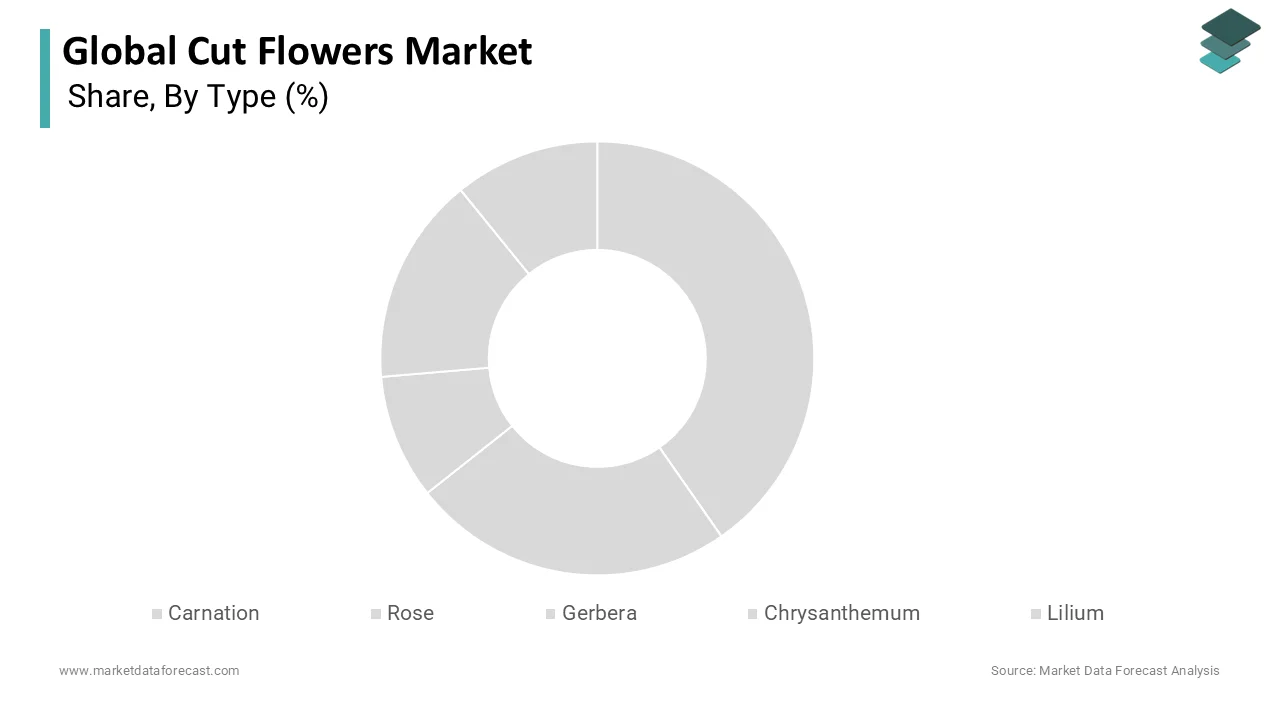
The roses segment dominated the market by accounting for 36.5% of the global market share in 2025 due to their entrenched status as the quintessential symbol of romance and affection, which drives massive sales during key calendar events. According to the Society of American Florists, rose sales account for approximately 35% of all cut flower transactions in the United States, with Valentine’s Day alone seeing over 200 million stems sold annually. This statistical evidence underscores the critical role of cultural traditions in sustaining high-volume demand for this specific flower type. Retailers and growers prioritize rose production because of its predictable demand cycles and established supply chains. The versatility of roses allows them to be used in bouquets, single-stem gifts, and large event decorations, ensuring broad market applicability. Consumer preference for red roses remains strongest, but pink, white, and yellow varieties are gaining traction for diverse emotional expressions. The global recognition of the rose as a premium gift item ensures it remains the top choice for consumers willing to spend on floral arrangements. Marketing campaigns by major retailers heavily feature roses, reinforcing their position in the consumer mind. The ability to source roses year-round from various climatic zones supports consistent availability. This reliability makes roses the backbone of the floriculture industry. The segment benefits from continuous breeding programs that introduce new colors and longer vase lives. Thus, the rose remains the undisputed leader in the cut flowers market.
On the other hand, the lilies segment is expected to expand at a notable CAGR of 7.4% over the forecast period in the global market owing to their increasing popularity in home decor, their perceived value as long-lasting premium flowers, and their growing acceptance as a staple in modern home decor and interior design schemes. According to the International Interior Design Association, the use of large statement flowers like lilies in residential settings has increased by 20% in recent years as homeowners seek to create focal points in living spaces. Lilies offer a dramatic visual impact with their large blooms and elegant form, making them ideal for minimalist and contemporary interiors. Their strong fragrance adds a sensory dimension to home environments, which appeals to consumers looking for holistic wellness benefits. The availability of Asiatic and Oriental hybrids provides options for both scent lovers and those who prefer odorless varieties. Florists promote lilies as high-value items due to their longevity and ability to open fully after purchase. Social media platforms showcase styled interiors featuring lilies, influencing consumer purchasing decisions. The perception of lilies as a luxury item that is still affordable compared to exotic imports drives adoption. Retailers place lilies prominently in displays to attract attention. The ease of care required for lilies makes them suitable for novice flower owners. This combination of aesthetic appeal and practicality supports steady growth. The segment benefits from the trend towards bringing nature indoors.
By Application Insights
The home segment led the market with 47.4% of the global market share in 2025. The dominance of the home segment in the global market can be credited to the growing adoption of biophilic design principles, which emphasize the connection between humans and nature in living spaces. According to the World Green Building Council, 70% of homeowners consider indoor plants and fresh flowers as important factors in creating a healthy and stress-free environment. This shift in mindset drives regular purchases of cut flowers for self-consumption rather than gifting. Consumers use flowers to boost mood, reduce anxiety, and enhance the visual appeal of their homes. The rise of remote work has further intensified this trend as people seek to improve their home office environments. Social media influencers promote the idea of flower arranging as a therapeutic hobby, encouraging wider participation. Supermarkets respond by offering affordable weekly bunches tailored for home use. The availability of subscription services delivers fresh flowers regularly, removing the effort of shopping. This convenience supports habitual buying behavior. The focus on mental health and wellness positions flowers as a tool for self-care. Retailers market flowers alongside wellness products, reinforcing this association. The segment benefits from the democratization of floral design. As more people recognize the psychological benefits of fresh flowers, the home segment continues to lead. This cultural shift ensures sustained demand.
However, the commercial segment is the fastest-growing in the global market and is estimated to register a CAGR of 7.5% over the forecast period in the global market owing to the increasing corporate investment in employee well-being and office environment enhancement. According to the Global Workplace Analytics report, companies that incorporate biophilic elements such as fresh flowers see a 15% increase in employee productivity and satisfaction. This data encourages businesses to budget for regular floral deliveries as part of their workplace wellness programs. Flowers are used in reception areas, meeting rooms, and break spaces to create a welcoming and inspiring atmosphere. The post-pandemic return to offices has intensified the need to make physical workplaces attractive to encourage attendance. Companies view floral arrangements as a tangible benefit that improves company culture and brand image. Corporate contracts provide florists with stable recurring revenue streams. The demand for large-scale installations for corporate events and conferences also boosts this segment. Businesses prefer suppliers who can offer consistent quality and reliable delivery schedules. The trend towards flexible workspaces requires adaptable floral solutions. Designers create modular arrangements that can be moved and reconfigured. This professionalization of floral use in offices drives market expansion. The focus on creating positive work environments ensures steady growth. As more companies recognize the value of aesthetics, the commercial segment accelerates.
By Distribution Channel Insights
The supermarkets and hypermarkets segment had 54.9% of the global market share in 2025 due to the unparalleled convenience they offer by allowing consumers to purchase fresh flowers alongside their regular grocery items. According to the European Retail Round Table, 65% of households in Western Europe buy cut flowers at least once a month from supermarkets, citing time savings and one-stop shopping as key reasons. This integration eliminates the need for separate trips to specialty florists, which may be less accessible or have limited hours. Supermarkets are located in residential areas, making them easily reachable for spontaneous purchases. The extended operating hours of supermarkets accommodate busy schedules, allowing for evening or weekend shopping. Self-service formats empower consumers to select stems based on personal preference without pressure. The visibility of flowers near entrances or checkout counters triggers impulse buys. Retailers optimize shelf space to display vibrant arrangements that attract attention. The familiarity of the supermarket environment reduces hesitation for first-time buyers. This ease of access drives high-volume sales. The segment benefits from the established trust consumers have in major retail chains. The routine nature of grocery shopping ensures consistent demand. Thus, supermarkets remain the primary source for cut flowers for the majority of consumers.
On the other side, the online retail segment is the fastest-growing distribution channel in the global cut flowers market and is estimated to showcase a CAGR of 10.1% over the forecast period owing to the rise of e-commerce platforms, subscription models, improved last-mile delivery capabilities and the proliferation of e-commerce platforms and the popularity of flower subscription services. According to the Digital Commerce Institute, online flower sales have grown by 25% annually as consumers embrace the convenience of home delivery and recurring orders. Subscription models provide a steady stream of fresh flowers for home or office use, eliminating the need for manual repurchasing. These services often offer curated selections and exclusive varieties not found in local stores. Online platforms allow consumers to compare prices and read reviews before buying, enhancing decision-making. The ability to send flowers directly to recipients across long distances expands the gifting market. User-friendly apps and websites simplify the ordering process with personalized recommendations. Digital marketing campaigns target specific demographics effectively. The convenience of scheduling deliveries for specific dates ensures timely gifting. Online retailers offer a wider variety than physical stores due to a lack of shelf-space constraints. This abundance of choice attracts enthusiasts and designers. The growth of mobile commerce facilitates easy ordering on the go. As digital literacy increases, the adoption of online flower buying accelerates. This shift in consumer behavior supports rapid segment growth.
COUNTRY LEVEL ANALYSIS
North America Cut Flowers Market Analysis
North America dominated the market by holding the largest share of the global market in 2025 and is likely to maintain steady growth over the next few years due to high consumer spending and a mature retail infrastructure. The region is a major importer of flowers, relying heavily on supplies from Latin America. According to the Society of American Florists, the United States accounts for over 80% of flower consumption in the region, with annual per capita spending exceeding 50 dollars. This high expenditure drives demand for premium and exotic varieties. The growing trend of subscribing to flower delivery services is reshaping market dynamics. Major holidays, such as Valentine’s Day and Mother’s Day, drive peak sales volumes. The presence of large supermarket chains facilitates widespread access to affordable flowers. Environmental concerns are prompting a shift towards locally grown flowers to reduce carbon footprints. The rise of urban farming initiatives supports local production. Regulatory standards for pesticide residues are strict, ensuring product safety. The market is competitive, with a mix of independent florists and large retailers. E-commerce is growing rapidly, driven by convenience. The focus on sustainability and ethical sourcing is influencing purchasing decisions. North America remains a key market for innovation in floral design and distribution.
Europe Cut Flowers Market Analysis
Europe is expected to exhibit stable market expansion over the next few years, driven by deep-rooted cultural traditions and high per capita consumption. The Netherlands serves as the central hub for flower trade, distributing blooms across the continent. According to Royal FloraHolland, Europe consumes approximately 4 billion stems annually, with Germany, France, and the UK being the largest markets. The tradition of giving flowers for various occasions sustains steady demand. Environmental awareness is high, leading to strong demand for certified sustainable flowers. The Fair Trade and MPS certifications are widely recognized and preferred by consumers. Supermarkets play a dominant role in distribution, offering competitive prices. The region is seeing a resurgence in interest in locally grown seasonal flowers. Climate change concerns are driving investments in energy-efficient greenhouses. The market is mature, with slow but steady growth. Online sales are increasing, particularly among younger demographics. Regulatory frameworks are stringent regarding chemical use and labor standards. Europe leads in setting global standards for sustainability in floriculture. The focus on quality and ethics defines the market character.
Asia Pacific Cut Flowers Market Analysis
Asia Pacific is projected to experience rapid market growth over the next few years, driven by rising disposable incomes and rapid urbanization. Countries like China, India, and Japan are witnessing a surge in demand for both domestic consumption and exports. According to the Asian Floriculture Association, flower consumption in China has grown by 15% annually as the middle class expands. Cultural festivals and weddings drive significant bulk purchases. Japan remains a sophisticated market with high demand for premium quality and intricate arrangements. The rise of e-commerce platforms is transforming distribution channels. Local production is increasing to meet domestic demand, reducing reliance on imports. Government initiatives support the development of floriculture infrastructure. The young population is adopting Western gifting traditions, boosting sales of roses and lilies. Urbanization leads to smaller living spaces, increasing demand for compact floral arrangements. The market is fragmented, with many small-scale growers. Sustainability is becoming a concern, but is less prioritized than in Europe. The region offers substantial growth potential for international players. Infrastructure improvements are facilitating better supply chains. Asia Pacific is becoming a key player in the global market.
Latin America Cut Flowers Market Analysis
Latin America is anticipated to sustain strong export-driven growth over the next few years as a crucial global supplier. Colombia and Ecuador are the leading producers, supplying a significant portion of flowers to North America and Europe. According to the Inter-American Institute for Cooperation on Agriculture, Colombia exports over 1 billion stems annually, benefiting from favorable climate conditions. The region focuses on high-value varieties such as roses, carnations, and chrysanthemums. Domestic consumption is growing, but remains limited compared to export volumes. Economic instability in some countries affects local purchasing power. However, the industry provides significant employment and foreign exchange earnings. Investments in technology and infrastructure are improving productivity and quality. Sustainability certifications are increasingly adopted to meet international buyer requirements. The region faces challenges related to logistics and security. Government support for agriculture helps sustain the sector. The focus is on maintaining competitiveness in global markets. Labor costs are relatively low, providing a competitive advantage. Latin America remains indispensable to the global supply chain. The region is exploring new markets in Asia and the Middle East.
Middle East Cut Flowers Market Analysis
The Middle East is poised for steady niche expansion over the next few years, supported by rising luxury consumption and event culture. Countries like the United Arab Emirates and Saudi Arabia are key markets with high spending on floral decorations for weddings and corporate events. According to the Gulf Flower Society, the UAE imports over 80% of its flowers due to harsh climatic conditions unsuitable for large-scale production. The demand for premium and exotic varieties is high among affluent consumers. The hospitality sector drives significant commercial demand. Religious and cultural celebrations also contribute to seasonal spikes in sales. Local production is limited to controlled environments such as greenhouses. The market is sensitive to global supply chain disruptions. High temperatures require robust cold chain logistics to maintain quality. The government is investing in agricultural technology to boost local production. Sustainability is gaining attention, but cost remains a primary factor. The market is influenced by global trends and tourism. The region offers opportunities for high-value exporters. Luxury branding is important in this market.
COMPETITIVE LANDSCAPE
The competition in the Cut Flowers Market is characterized by a fragmented landscape with numerous small-scale growers alongside large multinational corporations and cooperatives. Leading players compete primarily on product quality, variety uniqueness, and supply chain reliability rather than price alone due to the perishable nature of the product. The market sees intense rivalry in the premium segment, ent where breeders strive to introduce exclusive varieties that command higher margins. Large auctions like Royal FloraHolland serve as central pricing mechanisms influencing global trade dynamics. Geographic advantages play a significant role, with producers in Latin America and East Africa leveraging favorable climates and lower labor costs to dominate exports. However,r rising logistics costs and environmental regulations are reshaping competitive advantages. Local growers in consuming regions are gaining traction by offering fresher and more sustainable options. Digital platforms are lowering barriers to entry,ry allowing smaller producers to reach global customers directly. Consolidation is occurring through mergers and acquisitions as companies seek to achieve economies of scale. Brand reputation and certification status are becoming key differentiators. The shift towards sustainability and transparency is driving competition beyond traditional metrics. This dynamic environment fosters continuous improvement in quality and efficiency, benefiting consumers worldwide.
KEY MARKET PLAYERS
Some of the companies that are playing a dominant role in the Global Cut Flowers Market include:
- The Queen's Flowers Corp
- Selecta Cut Flowers SAU
- Sher Holland BV
- Multiflora Corp
- Rosebud Ltd
- Karen Roses Ltd
- Washington Bulb Co Inc
- Dummen Orange Holding BV
- Esmeralda Farms LLC
- Marginpar BV
- Danziger Group
- Dos Gringos LLC
- Flamingo
- Florance Flora
- Karen Roses Company
- Soex Flora
- Florius Flowers
- David Austin Roses
- Jet Fresh Flowers
- Maryland Grown Flowers
- Turkish Flower Group
- Rosa Flower Limited
- Beekenkamp Group
- Berg Roses
- Porta Nova
- Jardines De Los Andes
- Wesselman Flowers
TOP LEADING PLAYERS IN THE CUT FLOWERS MARKET
- Royal FloraHolland operates as the world’s largest flower auction and serves as a critical hub for the global cut flowers trade. The cooperative facilitates the distribution of billions of stems annually by connecting growers from around the world with buyers in over 100 countries. Recent actions include the implementation of advanced digital platforms that streamline trading processes and enhance transparency for participants. The organization actively promotes sustainability through its certification programs, which encourage environmentally responsible farming practices. By investing in logistics infrastructure,e Royal FloraHolland ensures efficient handling and rapid transport of perishable goods. Its role in setting quality standards and market prices makes it an indispensable player in the industry. The cooperative continues to innovate by integrating data analytics to predict trends and optimize supply chain efficiency. This strategic focus on digitalization and sustainability strengthens its position as the central node in the international floral network.
- DÜMMEN GROUP is a leading global breeder and producer of ornamental plants and cut flowers with a strong focus on innovation and genetics. The company develops new varieties o,roses chrysant,hemums and other popular flowers that offer improved vase life d,isease rresistancesistan,ce and aesthetic appeal. Recent initiatives involve expanding its breeding facilities in key regions to accelerate the development of climate-resilient cultivars. DÜMMEN GROUP collaborates closely with growers to ensure that new varieties meet commercial requirements and consumer preferences. The company emphasizes sustainable production methods and reduces its environmental footprint through efficient resource management. Its extensive portfolio of proprietary genetics provides a competitive advantage in the market. By focusing on quality and innovation, DÜMMEN GROUP supports growers in producing high-value crops. This commitment to research and development ensures a steady pipeline of novel products that drive market growth and differentiation.
- Karuturi Global Limited is a prominent integrated floriculture company based in Ethiopia and Kenya specializing in the production and export of premium cut flowers. The company operates large-scale greenhouses that utilize advanced agricultural technologies to produce high-quality roses for international markets. Recent actions include significant investments in renewable energy sources such as geothermal power to reduce operational costs and carbon emissions. Karuturi focuses on maintaining strict quality control standards to meet the demanding requirements of European and Middle Eastern buyers. The company also engages in community development projects to support local economies and improve labor conditions. By vertically integrating its operations from breeding to export, Karuturi ensures consistency and reliability in supply. Its strategic location in East Africa allows for efficient air freight logistics to major global hubs. This operational excellence and commitment to sustainability strengthen its reputation as a trusted supplier in the global cut flowers market.
TOP STRATEGIES USED BY KEY MARKET PARTICIPANTS
Key players in the Cut Flowers Market employ several strategic approaches to maintain competitiveness and drive growth. Product innovation remains a primary strategy,y with companies investing heavily in breeding programs to develop new varieties with enhanced traits such as longer vase li,fe unique colors, and disease resistance. Sustainability is another majorfocusu,s with firmadopting eco-friendlyly cultivation practices and obtaining certifications to meet growing consumer demand for ethical products. Vertical integration is common as companies control multiple stages of the supply chain from farming to distribution to ensure quality and efficiency. Digital transformation is increasingly important with the use of e-commerce platforms and data analytics to optimize sales and logistics. Strategic partnerships with retailers and logistics providers help expand market reach and improve delivery speed. Companies also focus on brand building and marketing to differentiate their offerings in a crowded marketplace. These combined strategies enable participants to address evolving consumer preferences and operational challenges while strengthening their position in the global market.
MARKET SEGMENTATION
This research report on the global cut flowers market has been segmented and sub-segmented based on type, application, distribution channel, and region.
By Type
- Carnation
- Rose
- Gerbera
- Chrysanthemum
- Lilium
- Others
By Application
- Home
- Commercial
By Distribution Channel
- Supermarkets & Hypermarkets
- Specialty Stores/Florists
- Online Retail
By Region
- North America
- Europe
- Asia-Pacific
- Latin America
- Middle East and Africa