- Product Description Description
- Table of Contents TOC
- List of Table & Figure LOT
- Get Free Sample PDF Sample PDF
Market Size, 2025
$7.15 BnMarket Estimate, 2026
$7.88 BnMarket Forecast, 2034
$17.14 BnCAGR, 2026–2034
10.2%Global Dental Implants Market Report Summary
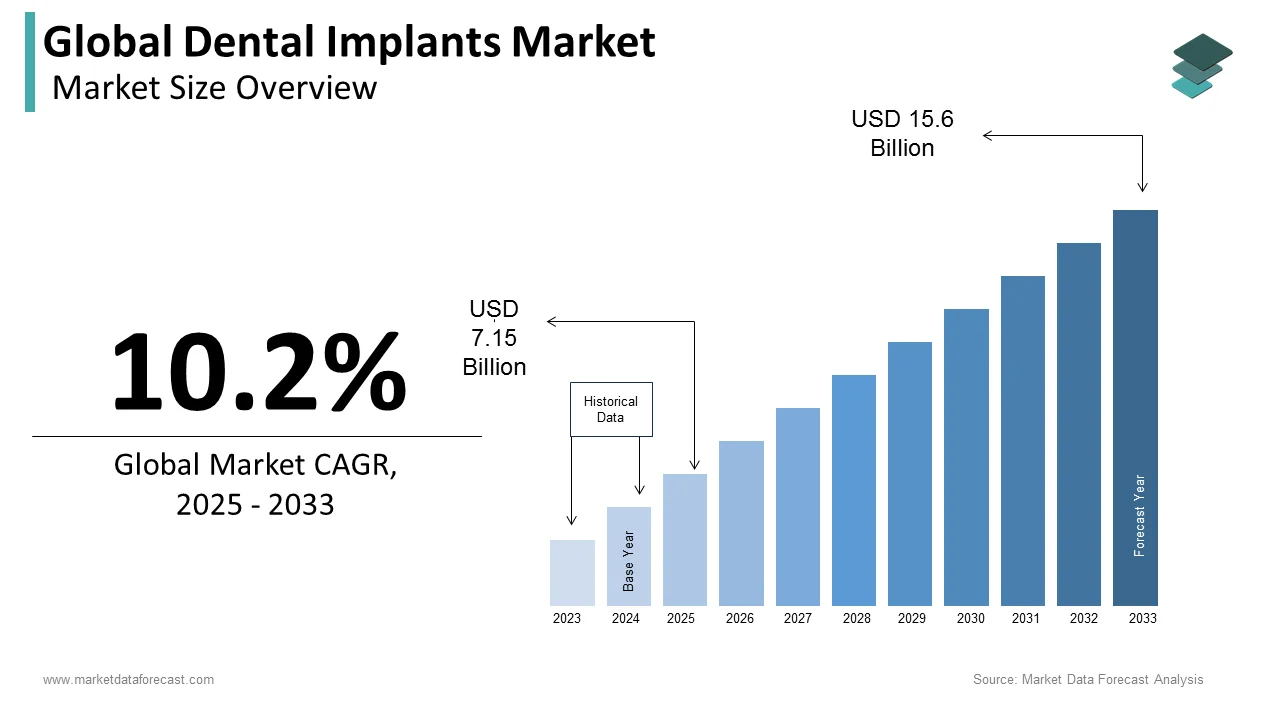
The global dental implants market was valued at USD 7.15 billion in 2025 and is projected to grow from USD 7.88 billion in 2026 to USD 17.14 billion by 2034, registering a CAGR of 10.2% from 2026 to 2034. Market growth is driven by the rising prevalence of tooth loss, increasing demand for cosmetic and restorative dentistry, and growing adoption of advanced implant technologies. Dental implants have become the preferred long-term solution for tooth replacement due to their durability, improved functionality, and natural aesthetics. Technological advancements in digital dentistry, computer-guided implant surgery, and biomaterials are further supporting market expansion.
Key Market Trends
- Rising demand for aesthetic and restorative dental procedures.
- Increasing adoption of digital dentistry, CAD/CAM systems, and guided implant surgery.
- Growing use of immediate-load and minimally invasive implant techniques.
- Expansion of dental tourism in emerging economies.
- Continuous advancements in implant surface technologies and biomaterials.
Segmental Insights
- Based on type, the endosteal implants segment dominated the global dental implants market in 2025, driven by their high success rates, excellent osseointegration, and widespread use as the standard solution for permanent tooth replacement.
- Based on material, the titanium implants segment held the largest share of the market in 2025, supported by superior biocompatibility, long-term durability, excellent mechanical strength, and proven clinical outcomes.
- Based on end user, the dental clinics segment accounted for the majority share of the market in 2025, owing to the specialized expertise, advanced equipment, and personalized treatment capabilities offered by private dental and implantology practices.
Regional Insights
The global dental implants market continues to expand across major regions, supported by increasing oral healthcare awareness, technological innovation, and growing demand for cosmetic dentistry.
- North America dominated the global market in 2025 by accounting for a 38.7% share, driven by advanced dental care infrastructure, high adoption of premium implant technologies, increasing cosmetic dental procedures, and favorable reimbursement for selected treatments.
- Europe held the second-largest position with a 27.9% share in 2025, supported by well-established dental healthcare systems, strong presence of leading implant manufacturers, and increasing demand for restorative dental procedures.
- Asia-Pacific is projected to register the fastest growth during the forecast period, driven by improving healthcare infrastructure, rising disposable incomes, growing dental tourism, and increasing awareness of advanced tooth replacement solutions.
Competitive Landscape
The global dental implants market is highly competitive, with leading manufacturers focusing on product innovation, digital dentistry integration, and expansion of implant portfolios. Market participants are investing in advanced implant materials, computer-guided surgical systems, customized prosthetic solutions, and strategic collaborations to strengthen their market position. Product launches, acquisitions, and geographic expansion continue to shape the competitive landscape.
Prominent companies operating in the global dental implants market include Osstem Implant, Zimmer Biomet, Henry Schein, Institut Straumann AG, Danaher Corporation, Biotech Dental Laboratories, Cortex Dental Implants Industries Ltd., Bicon Dental Implants, Avinent Implant System, Straumann, Camlog Biotechnologies AG, ADIN Dental Implants Systems, Glidewell Dental, A.B. Dental Devices Ltd., BioHorizons Implant Systems, Inc., and Dentsply Sirona.
Global Dental Implants Market Size
The global dental implants market was valued at USD 7.15 billion in 2025. The global market is projected to grow from USD 7.88 billion in 2026 to reach USD 17.14 billion by 2034, exhibiting a compound annual growth rate (CAGR) of 10.2% from 2026 to 2034.
Dental implants are artificial tooth roots, usually made of titanium or zirconia, that are surgically placed into your jawbone. They act as a stable foundation for securing artificial teeth (like a crown, bridge, or denture), allowing them to look, feel, and function like natural teeth. This domain is a critical intersection of biomedical engineering, oral surgery, and restorative dentistry, aiming to restore masticatory function, aesthetic appearance, and psychological well-being for patients suffering from edentulism. The global burden of oral diseases remains substantial. According to the World Health Organization (WHO) Oral Health Factsheet, oral diseases remain a major global burden, with an estimated 2 billion people suffering from untreated caries of permanent teeth and 510 million children suffering from caries of primary (deciduous) teeth. Eurostat indicates that the demographic shift toward an aging population in Europe is increasing, with individuals aged 65 years and over constituting 22.0% of the total EU population. This demographic cohort experiences higher rates of periodontal disease and tooth loss, necessitating durable long-term solutions beyond traditional removable dentures. Data supported by the European Federation of Periodontology (EFP) and the Global Burden of Disease study indicates that severe periodontitis affects roughly 11% to 12.5% of the adult population globally, acting as a leading cause of premature tooth extraction. Furthermore, studies, such as those indexed via the International Journal of Oral & Maxillofacial Implants (JOMI), demonstrate that advancements in osseointegration technology have yielded long-term dental implant survival rates ranging between 90% and 95% over 10-year periods. Regulatory frameworks such as the European Union Medical Device Regulation impose stringent biocompatibility and clinical evaluation requirements, ensuring patient safety while driving innovation in surface treatments and material science. These factors collectively define a market driven by clinical necessity, technological reliability and evolving patient expectations for permanent functional restoration.
MARKET DRIVERS
Rising Global Prevalence of Edentulism and Tooth Loss
The escalating incidence of tooth loss due to periodontal disease, dental caries and trauma is a key factor behind the growth of the global dental implants market. Periodontal disease remains the primary cause of tooth loss in adults, with the Centers for Disease Control and Prevention stating that 47.2 percent of adults aged 30 years and older in the United States have some form of periodontal disease. This condition destroys the supporting structures of teeth, including bone and gum tissue, leading to eventual extraction. Globally, the Global Burden of Disease Study indicates that untreated dental caries in permanent teeth is the most common health condition affecting nearly 2.3 billion people. As these teeth are lost, patients seek replacements that offer superior stability and function compared to conventional dentures. Dental implants provide a fixed solution that prevents bone resorption, a common consequence of tooth loss, where the jawbone deteriorates at a rate of 0.5 to 1 millimeter per year in the first year after extraction, according to research in the Journal of Clinical Periodontology. The desire to maintain facial structure and chewing efficiency drives patients toward implants, which can withstand biting forces up to 200 pounds, similar to natural teeth. Additionally, the increasing awareness of oral health impacts on systemic conditions such as cardiovascular disease and diabetes motivates patients to invest in permanent solutions. The American Academy of Implant Dentistry reports that 3 million people in the United States currently have dental implants, with that number growing by 500000 annually, reflecting the widespread acceptance of implants as the standard of care for tooth replacement.
Technological Advancements in Material Science and Digital Workflow
Innovations in biomaterials and digital dentistry technologies significantly accelerate the adoption of these implants by enhancing precision, predictability, and patient comfort, which in turn fuels the expansion of the global dental implants market. The transition from traditional two-stage surgical protocols to immediate loading procedures has been facilitated by improvements in implant surface topography. Modern implants feature nanostructured surfaces that promote faster osseointegration, reducing healing times from 6 months to as little as 6 weeks, according to studies published in the International Journal of Molecular Sciences. The integration of computer-aided design and computer-aided manufacturing CAD CAM technologies allows for the creation of patient-specific surgical guides and custom abutments with micron-level accuracy. Furthermore, the introduction of zirconia implants offers a metal-free alternative for patients with titanium sensitivities or aesthetic concerns in the anterior zone. The use of cone beam computed tomography CBCT enables three-dimensional planning of implant placement, avoiding critical anatomical structures such as nerves and sinuses. This digital workflow reduces surgical time and minimizes postoperative complications, making the procedure more accessible and appealing to both clinicians and patients, thereby driving market expansion through enhanced clinical outcomes and operational efficiency.
MARKET RESTRAINTS
High Procedural Costs and Limited Insurance Coverage
The substantial financial burden associated with dental implant procedures is a significant restraint limiting accessibility for a large segment of the population, which impedes the growth of the global dental implants market. Also, the American Dental Association (ADA) Health Policy Institute confirms that the out-of-pocket cost for a single completed dental implant (including surgical placement, abutment, and crown) typically ranges from $3,000 to $4,500 in the United States. For patients requiring multiple implants or full arch reconstructions, costs can exceed 20000 dollars creating a prohibitive barrier for middle- and lower-income households. Unlike medical procedures, many national healthcare systems and private insurance plans classify dental implants as cosmetic or elective treatments, resulting in minimal or no coverage. In Europe, disparities in coverage exist, with countries like Germany offering partial reimbursement under statutory health insurance only in specific medical necessity cases, while others leave patients to bear the full cost. This financial constraint forces many patients to opt for cheaper alternatives such as removable partial dentures or dental bridges, which, although less durable and functional, are more affordable. The out-of-pocket expense discourages timely treatment, leading to prolonged periods of edentulism, which exacerbates bone loss and complicates future implant placement. Economic downturns and inflationary pressures further reduce disposable income available for elective healthcare services, causing patients to defer or cancel planned implant surgeries, thereby restraining market growth, particularly in price-sensitive regions.
Stringent Regulatory Requirements and Clinical Complexity
Navigating complex regulatory landscapes and the need for specialized clinical expertise are substantial obstacles to the widespread expansion of the dental implants market. The implementation of the European Union Medical Device Regulation MDR has increased the burden of proof for manufacturers, requiring extensive clinical data and post-market surveillance to demonstrate safety and performance. According to the European Commission, the transition to MDR has led to delays in product approvals, with some smaller manufacturers withdrawing certain implant lines due to the high costs of compliance. These regulations ensure patient safety but also slow the introduction of innovative materials and designs into the market. On the clinical side, placing dental implants requires advanced surgical skills and comprehensive training that not all general dentists possess. The American Board of Oral Implantology notes that only a fraction of general practitioners undergo rigorous certification in implantology, leading to a reliance on specialists such as periodontists and oral surgeons who may have limited availability and higher fees. Improper placement due to lack of expertise can result in complications such as peri-implantitis, nerve damage, or implant failure, which occurs in approximately 5 to 10 percent of cases according to meta-analyses in the Journal of Dental Research. These risks necessitate careful patient selection and meticulous planning, which can prolong the treatment timeline. The combination of regulatory hurdles for manufacturers and the scarcity of highly trained clinicians creates barriers in service delivery, limiting the speed at which the market can expand to meet growing demand, especially in underserved rural areas where specialist access is limited.
MARKET OPPORTUNITIES
Expansion into Emerging Markets with Rising Healthcare Infrastructure
Emerging economies in Asia Pacific, Latin America, and Eastern Europe are key growth areas for the expansion of the global dental implants market. This growth is driven by improving healthcare infrastructure and rising disposable incomes. Countries such as China, India, and Brazil are witnessing a surge in medical tourism and domestic demand for advanced dental care. As middle-class populations expand in these regions, there is a growing awareness of aesthetic dentistry and functional restoration, leading to higher acceptance of dental implants. Government initiatives in countries like India under the Ayushman Bharat scheme are improving access to basic healthcare, which indirectly raises awareness of specialized treatments. Furthermore, the presence of local manufacturing hubs in Asia is reducing the cost of implants, making them more affordable for regional patients. The adoption of digital dentistry technologies in these regions is also accelerating, with local distributors partnering with global brands to provide training and equipment. This infrastructure development, combined with a young demographic profile in countries like India, where 50 percent of the population is under 25 years old as per the United Nations Department of Economic and Social Affairs, creates a long-term pipeline of patients who will require dental restoration services in the coming decades, offering sustained growth potential for implant manufacturers.
Integration of Artificial Intelligence and Robotic Surgery
The incorporation of artificial intelligence AI and robotic assistance into dental implantology opens new avenues for precision, efficiency, and expanded service capabilities, which is expected to accelerate the expansion of the dental implants market. AI algorithms can analyze cone beam computed tomography scans to automatically identify optimal implant sites, assessing bone density and proximity to vital structures with greater accuracy than manual interpretation. Robotic systems such as the Yomi robot provide haptic feedback during surgery, guiding the drill along the planned trajectory to ensure precise angulation and depth. This technology reduces human error and allows less experienced clinicians to perform complex cases with confidence, potentially expanding the pool of qualified providers. Additionally, AI-driven predictive analytics can help practices manage inventory and schedule appointments more efficiently, optimizing resource utilization. As these technologies become more affordable and user-friendly, they will likely transition from specialized centers to general practices, democratizing access to high-quality implant care. The integration of telemedicine platforms also allows for remote consultation and monitoring, enabling specialists to guide general dentists in rural areas. This technological convergence not only enhances clinical outcomes but also creates new business models for software and hardware vendors, fostering innovation and differentiation in a competitive market landscape.
MARKET CHALLENGES
Shortage of Skilled Dental Professionals and Training Gaps
The global shortage of qualified professionals capable of performing complex implant surgeries and restorations hinders the growth of the global dental implants market. The World Health Organization estimates a global deficit of 15 million health workers by 2030, with dentistry being significantly affected in low- and middle-income countries. Even in developed nations, there is a mismatch between the number of general dentists and those with advanced implant training. The American Dental Education Association reports that only a small percentage of dental school graduates feel confident placing implants without additional postgraduate training. This skills gap leads to uneven distribution of services, with urban centers having adequate coverage while rural areas remain underserved. The complexity of implant procedures requires continuous education in surgical techniques, prosthetic design, and complication management, which many practicing dentists struggle to pursue due to time and financial constraints. Furthermore, the aging workforce in many Western countries means that experienced implantologists are retiring faster than new specialists are entering the field. Under European Commission professional qualifications frameworks, divergent national registration requirements and administrative language testing mandates create localized mobility barriers for dental specialists across EU member states. This shortage limits the capacity of the market to meet growing demand, leading to longer waiting times and higher costs for patients. Addressing this challenge requires significant investment in educational programs, standardized certification processes, and teledentistry solutions to bridge the expertise gap, ensuring that market growth is not stifled by human resource limitations.
Risk of Peri-implantitis and Long-Term Complications
The biological risk of peri-implantitis, an inflammatory condition affecting the soft and hard tissues around dental implants, is a significant challenge to the global dental implants market. This negatively impacts the long-term market sustainability and patient confidence. Peri-implantitis affects approximately 10 to 20 percent of patients with implants, according to a consensus report by the European Federation of Periodontology. This condition can lead to progressive bone loss and eventual implant failure requiring costly and complex revision surgeries. The etiology of peri-implantitis is multifactorial, involving bacterial biofilm accumulation, host immune response, and mechanical overload, making it difficult to predict and prevent entirely. Patients with a history of periodontal disease or smoking are at higher risk, yet screening protocols are not universally implemented. The treatment of peri-implantitis is challenging and often yields unpredictable results, leading to patient dissatisfaction and legal liabilities for clinicians. According to the Journal of Clinical Periodontology, non-surgical therapies have limited efficacy, and surgical interventions carry high recurrence rates. This risk necessitates rigorous long-term maintenance protocols including regular professional cleanings and home care compliance, which many patients fail to adhere to. The fear of such complications deters some potential candidates from choosing implants, opting instead for removable prosthetics despite their inferior function. Manufacturers and clinicians must address this challenge through improved implant surface designs that resist bacterial colonization and enhanced patient education programs. Failure to mitigate these risks could undermine the reputation of dental implants as a reliable long-term solution, impacting market growth and patient trust.
REPORT COVERAGE
| REPORT METRIC | DETAILS |
| Market Size Available | 2025 to 2034 |
| Base Year | 2025 |
| Forecast Period | 2026 to 2034 |
| Segments Covered | By Type, Material, End-User, and Region. |
| Various Analyses Covered | Global, Regional and Country-Level Analysis, Segment-Level Analysis, Drivers, Restraints, Opportunities, Challenges; PESTLE Analysis; Porter’s Five Forces Analysis, Competitive Landscape, Analyst Overview of Investment Opportunities |
| Regions Covered | North America, Europe, Asia Pacific, Latin America, Middle East & Africa |
| Market Leaders Profiled | Osstem Implant, BiometHenry Schein Iraqi National Congress., Institut Straumann Ag, The Danaher Corporation, Biotech Dental Laboratories, Cortex Dental Implants Industries Ltd., Bicon Dental Implants, Avinent Implant System, Camlog Biotechnologies Ag, ADIN Dental Implants Systems, Glidewell Dental work, A.B. Dental Devices Ltd., Biohorizons Implant Systems, Inc., and Dentsply Sirona., and Others. |
SEGMENTAL ANALYSIS
By Type Insights
The endosteal implants segment dominated the Dental Implants Market and accounted for a substantial share in 2025. Moreover, this dominance of the segment was driven by their superior biomechanical stability and high success rates compared to other implant types. Endosteal implants are surgically placed directly into the jawbone, acting as artificial roots, which allows for optimal load distribution during mastication. According to longitudinal studies published in the International Journal of Oral and Maxillofacial Implants, endosteal implants demonstrate a survival rate of 95 to 98 percent over 10 years, significantly outperforming subperiosteal or transosteal alternatives. This reliability makes them the preferred choice for both single tooth replacement and full arch reconstructions. The second major factor driving domination is the versatility of endosteal designs, which include screw-shaped cylinder and blade variants suitable for various bone densities and anatomical conditions. The American Academy of Implant Dentistry reports that advancements in surface treatments such as sandblasting and acid etching have enhanced osseointegration speeds, allowing for immediate loading protocols in suitable candidates. Furthermore, the widespread availability of standardized surgical kits and prosthetic components for endosteal systems simplifies inventory management for dental practices. Clinicians are extensively trained in endosteal placement techniques during undergraduate and postgraduate education, creating a large pool of competent practitioners. The extensive clinical data supporting their long-term efficacy, combined with predictable outcomes, ensures that endosteal implants remain the gold standard in restorative dentistry, sustaining their leading market position despite the emergence of alternative technologies.
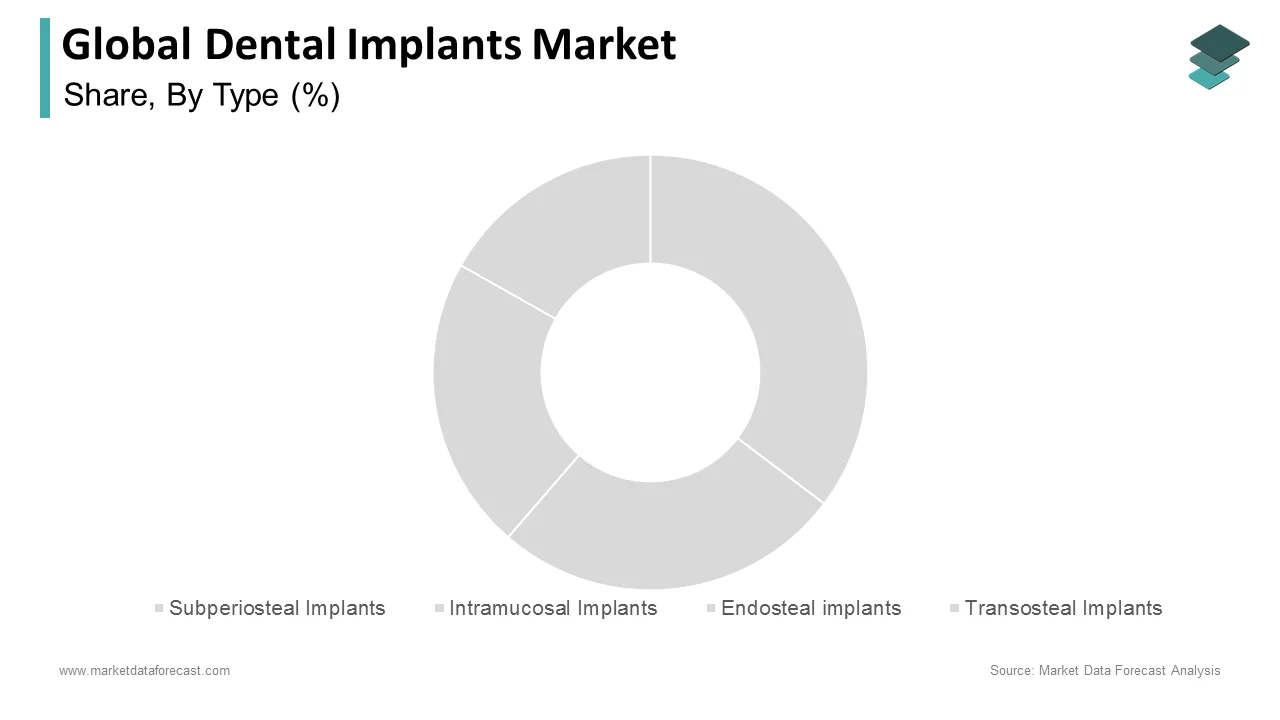
On the other hand, the subperiosteal implants segment is anticipated to witness the fastest CAGR of 6.8% during the forecast period due to the increasing number of patients with severe alveolar bone resorption who are not candidates for traditional endosteal implants without complex bone grafting procedures. Subperiosteal implants rest on top of the jawbone but under the gum tissue, providing a viable solution for individuals with insufficient bone height or width. A further key driving factor is the integration of computer-aided design and computer-aided manufacturing CAD CAM technologies, which allow for the creation of patient-specific subperiosteal frameworks. Traditional subperiosteal implants required invasive surgery to expose the bone for direct molding, but modern digital workflows utilize cone beam computed tomography scans to design custom implants noninvasively. Research indicates that digitally fabricated subperiosteal implants reduce surgical time by 40 percent and minimize postoperative discomfort. This technological advancement has revitalized interest in subperiosteal solutions among oral surgeons who previously avoided them due to procedural complexity. Additionally, the aging global population means more patients are seeking functional restoration despite significant bone loss, making subperiosteal implants an essential alternative. Digital fabrication costs are decreasing, and awareness is growing. As a result, this segment is poised for rapid adoption among complex case referrals.
By Material Insights
The titanium implants segment led the Dental Implants Market and captured a significant share in 2025. This leading position of the segment was attributed to its unparalleled biocompatibility, mechanical strength, and decades of proven clinical success. Titanium forms a stable oxide layer upon exposure to air, which facilitates osseointegration, the direct structural and functional connection between living bone and the surface of a load-bearing artificial implant. The main driver for this dominance is the extensive body of scientific literature supporting titanium safety and efficacy, which gives clinicians and patients confidence in its long-term performance. The American Dental Association recognizes titanium as the standard of care for dental implantology due to its corrosion resistance and ability to withstand high occlusal forces without fracturing. A different growth factor is the versatility of titanium alloys, which can be manufactured into various shapes and surface textures to optimize bone attachment. Grade 4 commercially pure titanium and Ti 6Al 4V alloy are widely used, offering a balance of flexibility and strength suitable for different clinical scenarios. Furthermore, the established supply chain and manufacturing infrastructure for titanium implants ensure consistent quality and availability globally. Most dental school curricula focus exclusively on titanium protocols, meaning the majority of practicing dentists are proficient in its use. This widespread expertise combined with regulatory approval across all major markets solidifies titanium as the foundational material of the dental implant industry.
However, the zirconium implants segment is likely to experience the fastest CAGR of 8.2% from 2026 to 2034 owing to aesthetic demands and metal sensitivity concerns. Zirconia a ceramic material, offers a white color that mimics natural tooth structure, making it ideal for anterior restorations where grayish titanium margins might show through thin gingival tissues. According to a study published in the Journal of Esthetic Dentistry, zirconia implants demonstrate excellent soft tissue response with lower plaque accumulation compared to titanium, reducing the risk of peri-implant mucositis. The primary driver for this growth is the increasing patient preference for metal-free healthcare solutions fueled by awareness of potential metal allergies and systemic health impacts. Additionally, an extra reason this segment leads is advancements in zirconia material science, particularly the development of yttria-stabilized tetragonal zirconia polycrystal, which improves fracture toughness and durability. Early generations of zirconia implants faced issues with brittleness, but modern formulations have achieved mechanical properties comparable to titanium. Regulatory approvals from the Food and Drug Administration and European authorities have validated their safety, encouraging wider adoption. Additionally, marketing efforts by manufacturers emphasize the biocompatibility and aesthetic superiority of zirconia, appealing to cosmetic dentistry patients. Clinical data on long-term survival rates is accumulating, and manufacturing costs are decreasing. Consequently, zirconia implants are gaining traction as a premium alternative in the global market.
By End User Insights
In 2025, the dental clinics segment held the majority share of the Dental Implants Market because of the specialized nature of implant dentistry, which requires focused expertise and dedicated equipment often found in private practices rather than general hospital settings. These clinics offer personalized patient care and flexible scheduling, which appeals to individuals seeking elective restorative procedures. The second major factor is the economic model of dental clinics, which allows for competitive pricing and bundled treatment packages that make implants more accessible to patients. Private clinics often participate in dental insurance networks or offer financing plans, reducing the financial barrier for patients. Furthermore, the decentralization of healthcare services has led to the proliferation of small and medium-sized dental practices in urban and suburban areas, increasing geographic accessibility. Patients prefer clinics for their comfortable environment and shorter wait times compared to hospital outpatient departments. The strong referral networks between general dentists and specialist implantologists within the private sector ensure a steady flow of cases. This ecosystem of specialized care, patient convenience, and financial flexibility sustains the leading position of dental clinics in the implant market.
But the hospitals segment is on the rise and is expected to be the fastest-growing segment in the market with a CAGR of 5.5% over the forecast period. This swift expansion of the segment is fuelled by the increasing complexity of cases and integration of multidisciplinary care. The main driver for this growth is the rising number of patients requiring implant-supported reconstructions following traumatic injuries, tumor resections, or congenital defects, which necessitate hospital-based surgical facilities. According to the World Health Organization, oral cancer incidence is rising globally, with over 377000 new cases diagnosed annually, many of which require maxillofacial reconstruction involving implants. Hospitals provide the necessary infrastructure for general anesthesia and intensive care monitoring, which is essential for medically compromised patients or those undergoing extensive reconstructive surgeries. The segment is expanding quickly due to the trend toward medical-dental integration, where hospitals establish specialized oral health centers to address the link between oral health and systemic conditions such as diabetes and cardiovascular disease. Academic medical centers are also expanding their implant programs to train residents and conduct clinical research, attracting patients seeking cutting-edge treatments. Government initiatives in countries with universal healthcare systems are increasingly covering implant procedures for specific medical indications, shifting volume from private clinics to public hospitals. Additionally, hospitals are investing in advanced imaging and navigation technologies that enhance precision in complex cases. This convergence of medical necessity, technological capability, and policy support is accelerating the adoption of dental implants within hospital settings, particularly for complex rehabilitative cases.
REGIONAL ANALYSIS
North America Dental Implants Market Analysis
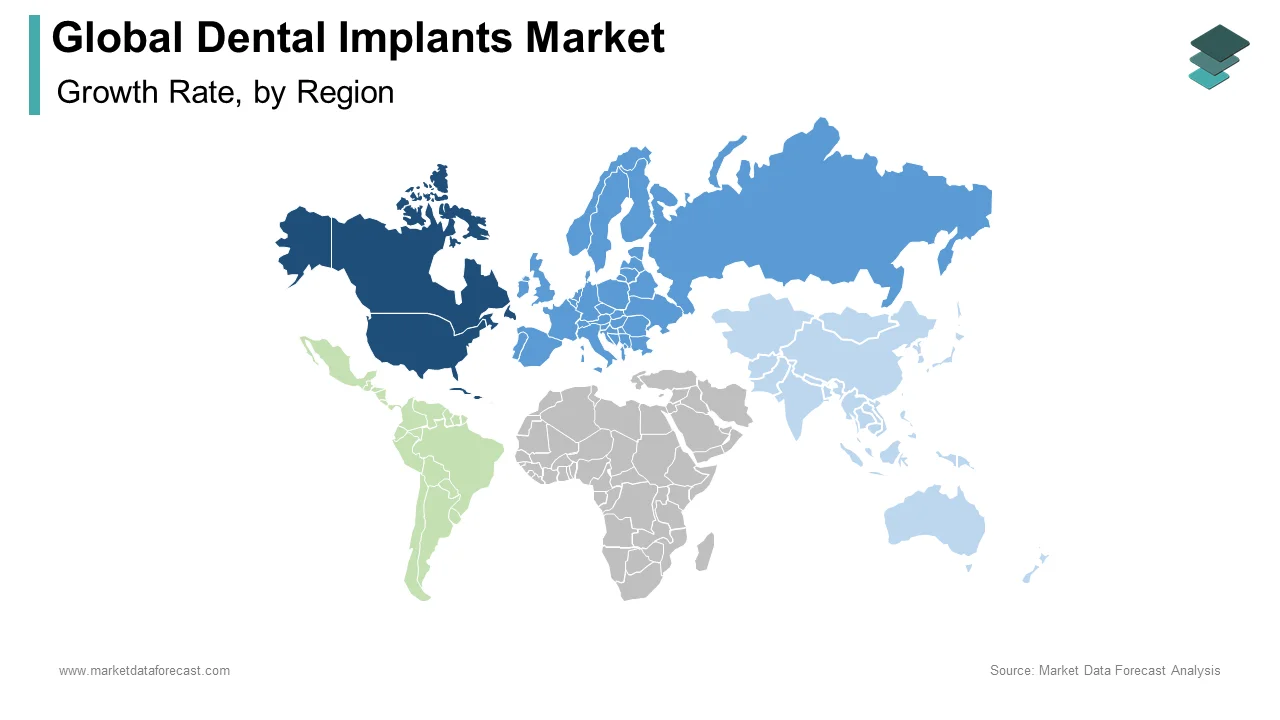
North America outperformed other regions in the global Dental Implants Market and occupied a 38.7% share in 2025. Factors such as high healthcare expenditure and advanced dental infrastructure have contributed to the supremacy of this regional market. The United States is the main engine of growth, characterized by a high prevalence of tooth loss and strong consumer spending on aesthetic dentistry. In addition, the American Association of Oral and Maxillofacial Surgeons (AAOMS) indicates that roughly 69% of adults aged 35 to 44 have lost at least one permanent tooth, highlighting a massive, early-intervention addressable consumer market for structural dental implants. The presence of leading implant manufacturers such as Zimmer Biomet and Envista fosters innovation and competitive pricing within the region. High disposable income levels allow patients to afford out-of-pocket expenses for implants, which are often not fully covered by insurance. Furthermore, the aging baby boomer population is actively seeking durable solutions to maintain quality of life, driving sustained demand. The region also benefits from a robust network of specialized training programs ensuring a steady supply of skilled implantologists. Regulatory clarity from the Food and Drug Administration facilitates the rapid introduction of new technologies. These factors combine to maintain North America's position as the most mature and lucrative market for dental implants globally, with continuous adoption of digital workflows and premium materials.
Europe Dental Implants Market Analysis
Europe followed closely behind in the global Dental Implants market and accounted for a 27.9% share in 2025. This expansion of the European market was supported by diverse healthcare systems and strong regulatory standards. Germany, France, and the United Kingdom are the key contributors, driven by well-established dental care cultures and high awareness of oral health. According to Eurostat, the proportion of Europeans aged 65 and older is projected to reach 30 percent by 2050, creating a demographic tailwind for implant demand as tooth loss correlates strongly with age. The implementation of the European Union Medical Device Regulation has raised quality standards, ensuring patient safety and fostering trust in implant products. In Germany, statutory health insurance covers basic prosthetic care, but many patients opt for higher-quality implant-supported restorations, paying the difference out of pocket. The European Federation of Periodontology emphasizes the importance of treating periodontal disease to preserve teeth but acknowledges implants as the standard for replacement when loss occurs. Private dental insurance penetration is high in countries like Switzerland and the Netherlands, facilitating access to advanced treatments. The region also sees significant growth in medical tourism, particularly in Hungary and Poland, where lower costs attract patients from Western Europe. Technological adoption is rapid, with many European clinics utilizing digital impression systems and guided surgery. These dynamics ensure steady market growth supported by an aging population and strong clinical expertise across the continent.
Asia Pacific Dental Implants Market Analysis
Asia Pacific is the fastest-growing regional market due to improving healthcare infrastructure and rising disposable incomes. China, India, Japan, and South Korea are the primary markets supported by government initiatives to enhance oral health services. Sources show rapid infrastructure development across China's oral care sector, backed by partnerships with the Chinese Stomatological Association (CSA) to standardize advanced clinical training and expand advanced implant accessibility. Rising middle-class populations in India and Southeast Asia are becoming more aware of aesthetic dentistry, leading to higher demand for implants. Japan's Ministry of Health, Labour and Welfare reveals that while overall elderly tooth retention is rising due to the "8020" oral health campaign, partial tooth loss among seniors still sustains robust demand for implant-supported fixed bridges. Medical tourism in Thailand and Malaysia attracts international patients seeking affordable, high-quality implant care. Local manufacturing hubs in China and South Korea are reducing costs, making implants more accessible to domestic patients. The region also benefits from a young demographic profile in countries like India, where increasing awareness of oral hygiene prevents premature tooth loss but also creates a future market for restorative care. Government reforms in countries like Australia and New Zealand improve access to dental services for low-income groups. These factors position Asia Pacific as a critical growth engine with vast untapped potential.
Latin America Dental Implants Market Analysis
Latin America is moving ahead steadfastly in the Dental Implants market owing to growing adoption rates and significant potential driven by medical tourism and expanding private healthcare sectors. Brazil, Mexico, and Argentina are the largest markets supported by a strong culture of aesthetic dentistry and increasing access to credit for healthcare services. According to the Pan American Health Organization, oral health coverage has improved in several countries, though out-of-pocket spending remains high. Brazil is a global leader in dental tourism with thousands of international visitors annually seeking affordable implant procedures. In Mexico, proximity to the United States drives cross-border dental tourism where implants cost up to 60 percent less than in the US. Rising middle-class populations in Chile and Colombia are investing in long-term dental solutions as awareness of oral health benefits grows. Private dental chains are expanding rapidly, offering standardized implant services with financing options. However, economic volatility and currency fluctuations can impact purchasing power and delay investments in expensive equipment. Despite these challenges, the region benefits from a large pool of skilled dentists trained in international standards. The combination of cost competitiveness, aesthetic consciousness, and improving infrastructure ensures steady growth in the Latin American dental implant market, particularly in urban centers.
Middle East and Africa Dental Implants Market Analysis
The Middle East and Africa region is likely to grow in the global market. Gulf Cooperation Council countries are leading adoption, while Sub-Saharan Africa remains in the early stages of development. Saudi Arabia, the United Arab Emirates, and Qatar drive regional growth through massive healthcare investments and high per capita spending on cosmetic procedures. The Dubai Health Authority mandates strict licensing for dental practitioners, ensuring high standards of care that attract medical tourists from across the region. In contrast, Sub-Saharan Africa faces significant barriers, including limited infrastructure and a shortage of specialists. However, South Africa and Kenya serve as regional hubs with private laboratories offering implant services to affluent local populations and international visitors. The rising prevalence of diabetes in the Middle East, which affects over 15 percent of adults in some Gulf states as per the International Diabetes Federation, increases the risk of periodontal disease and tooth loss, driving demand for restorative solutions. Government initiatives in countries like Egypt and Morocco aim to improve oral health education, potentially expanding the future market. While current penetration is low outside the Gulf, the region offers long-term growth potential as economic diversification and healthcare reforms progress across the continent.
COMPETITIVE LANDSCAPE
The competitive landscape of the Dental Implants Market is defined by intense rivalry among multinational corporations and specialized niche manufacturers striving for technological supremacy. Established industry leaders maintain their dominance through extensive distribution networks and deep clinical validation data that reassure practitioners about long-term product reliability. However, innovative challengers are disrupting traditional paradigms by introducing advanced digital ecosystems that seamlessly integrate intraoral scanning with automated milling processes. Price competition remains fierce in the value segment where emerging manufacturers from Asia offer cost-effective alternatives that appeal to budget-constrained clinics in developing nations. Conversely, the premium segment focuses heavily on material science innovations such as nanoporous surface treatments that accelerate bone healing and reduce postoperative complications. Strategic alliances between hardware providers and software developers are increasingly common, creating closed-loop systems that lock customers into specific proprietary workflows. Furthermore, companies are heavily investing in direct-to-consumer marketing campaigns to elevate patient awareness and drive demand for specific implant brands. This multifaceted competition forces continuous innovation, requiring substantial research funding to maintain regulatory compliance and secure favorable positioning within global procurement contracts and private dental networks across the globe, ensuring sustained commercial viability amid shifting healthcare economic dynamics.
KEY MARKET PLAYERS
Some of the notable dental implant manufacturers that are playing a significant role in the global dental implants market are
- Osstem Implant
- Biomet
- Henry Schein
- Institut Straumann AG
- The Danaher Corporation
- Biotech Dental Laboratories
- Cortex Dental Implants Industries Ltd.
- Bicon Dental Implants
- Avinent Implant System
- Straumann
- Camlog Biotechnologies AG
- ADIN Dental Implants Systems
- Glidewell Dental Work
- Zimmer Biomet
- B. Dental Devices Ltd.
- BioHorizons Implant Systems, Inc.
- Dentsply Sirona
TOP PLAYERS IN THE GLOBAL MARKET
- Straumann stands as a pioneer in the Dental Implants Market by delivering premium titanium and ceramic solutions for restorative dentistry. The company focuses heavily on biomaterials innovation, introducing advanced surface technologies that accelerate osseointegration and reduce healing periods. Recently, Straumann expanded its digital workflow ecosystem by acquiring specialized software firms to integrate computer-aided design with surgical planning. This strategic move enables practitioners to offer precise and predictable patient outcomes. By investing in comprehensive training programs for global clinicians, the organization ensures optimal utilization of its products. These continuous technological advancements solidify its leadership position without relying on aggressive pricing.
- Dentsply Sirona significantly influences the Dental Implants Market through its extensive portfolio of surgical and prosthetic components designed for diverse clinical scenarios. The corporation emphasizes digital dentistry integration, allowing seamless data transfer between intraoral scanners and milling machines. Recently, the enterprise launched next-generation guided surgery kits that enhance precision during complex bone grafting procedures. This innovation minimizes surgical time and improves patient recovery experiences significantly. Furthermore, the company actively partners with academic institutions to fund clinical research validating the long-term efficacy of their novel implant surfaces. These educational initiatives build strong trust among specialists and general practitioners globally.
- Zimmer Biomet contributes robustly to the Dental Implants Market by offering comprehensive solutions ranging from basic fixtures to full arch reconstruction systems. The organization prioritizes patient-specific manufacturing, utilizing three-dimensional printing to create custom abutments that match unique anatomical requirements. Recently, the business expanded its robotic surgery capabilities by integrating advanced navigation systems into standard implant protocols. This technological leap reduces human error and allows less experienced clinicians to perform intricate placements safely. Additionally, the firm focuses on sustainability by optimizing its supply chain to reduce carbon emissions during distribution. These operational improvements enhance brand reputation while maintaining clinical standards.
TOP STRATEGIES USED BY KEY MARKET PARTICIPANTS
Key participants in the Dental Implants Market primarily utilize strategic acquisitions to absorb innovative digital workflow startups and expand their technological capabilities rapidly. Companies heavily invest in developing comprehensive educational platforms to train dental professionals on complex surgical protocols, thereby fostering brand loyalty and ensuring proper product utilization. Another dominant strategy involves expanding manufacturing facilities in emerging economies to reduce production costs and bypass import tariffs, making premium products more accessible to price-sensitive regions. Manufacturers also prioritize the integration of artificial intelligence into treatment planning software to enhance diagnostic accuracy and streamline clinical decision-making processes. Furthermore, establishing robust partnerships with specialized materials science laboratories allows these corporations to develop novel ceramic alloys that improve biocompatibility and aesthetic outcomes. By diversifying their portfolios to include both premium and value-tier product lines, key players effectively capture diverse demographic segments while mitigating financial risks associated with global economic fluctuations and changing healthcare reimbursement policies.
GLOBAL DENTAL IMPLANTS MARKET NEWS
- In May 2023, Straumann Holding AG completed the acquisition of GalvoSurge Dental AG, gaining access to a unique electrolytic cleaning system that removes biofilm from implants to support post-implantation care and prevent implant loss.
- In September 2022, Dentsply Sirona launched Primescan Connect, a highly flexible, laptop-based version of its intraoral scanner powered by the DS Core cloud platform to streamline digital impressions and prosthetic workflows.
MARKET SEGMENTATION
This research report on the global dental implants market has been segmented and sub-segmented based on the following categories.
By Type
-
Subperiosteal Implants
-
Intramucosal Implants
-
Endosteal implants
-
Transosteal Implants
By Material
-
Zirconium Implants
-
Titanium Implants
By End User
-
Dental Clinics
-
Hospitals
By Region
-
North America
-
Europe
-
Asia Pacific
-
Latin America
-
The Middle East and Africa