- Product Description Description
- Table of Contents TOC
- List of Table & Figure LOT
- Get Free Sample PDF Sample PDF
Market Size, 2025
$1055 MnMarket Estimate, 2026
$1139 MnMarket Forecast, 2034
$2109 MnCAGR, 2026–2034
8%Global PEEK Dental Implants Market Report Summary
The global PEEK dental implants market was valued at USD 1,055 million in 2025 and is projected to grow from USD 1,139.40 million in 2026 to USD 2,109 million by 2034, registering a CAGR of 8% from 2026 to 2034. Market growth is driven by increasing demand for advanced dental restoration procedures, rising prevalence of tooth loss and periodontal disorders, and growing adoption of biocompatible implant materials. Polyether ether ketone (PEEK) dental implants are gaining popularity due to their lightweight properties, high strength, radiolucency, and favorable biomechanical compatibility with human bone. Advancements in digital dentistry, CAD/CAM technologies, and aesthetic dental solutions are further supporting global market expansion.
Key Market Trends
- Rising adoption of biocompatible and metal-free dental implant materials.
- Increasing demand for aesthetic and minimally invasive dental restoration procedures.
- Growing integration of digital dentistry and CAD/CAM manufacturing technologies.
- Expansion of dental tourism and cosmetic dentistry services globally.
- Continuous advancements in surface modification and implant design technologies.
Segmental Insights
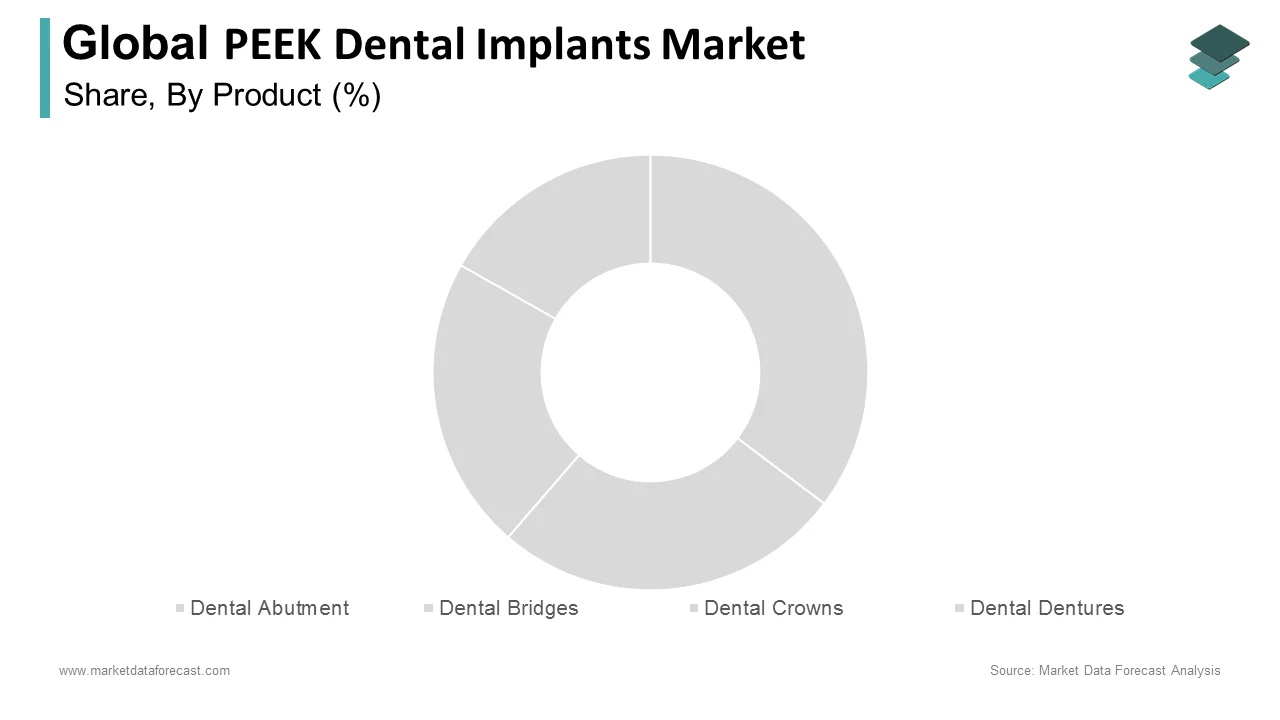
- Based on product, the dental bridges segment dominated the global PEEK dental implants market in 2025 by accounting for 38.6% market share, driven by increasing demand for durable and aesthetically appealing tooth replacement solutions.
- Based on end user, the dental clinics segment held the majority share of 52.6% in 2025, supported by rising outpatient dental procedures, growing cosmetic dentistry demand, and expanding specialized dental care centers.
Regional Insights
The global PEEK dental implants market is witnessing strong growth across major regions, supported by increasing dental awareness, technological advancements, and expanding access to restorative dental care.
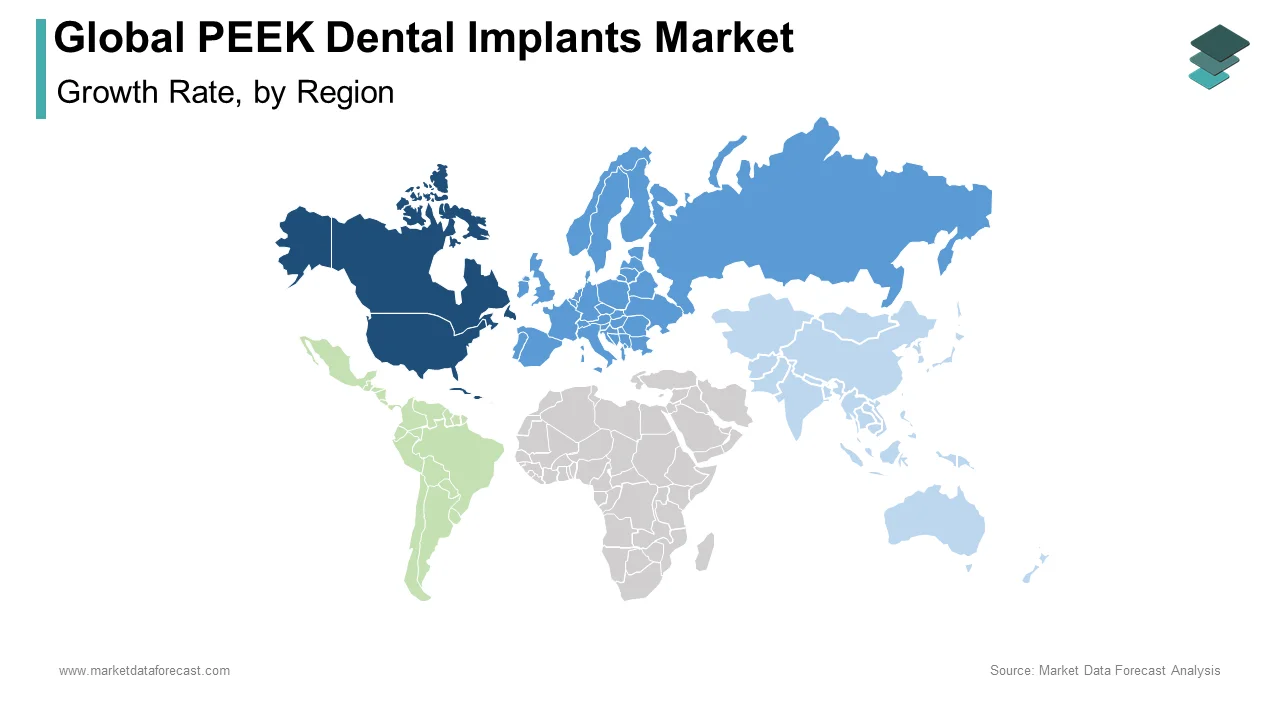
- North America dominated the global market in 2025 with 41.3% share, driven by advanced dental healthcare infrastructure, high cosmetic dentistry adoption, and strong patient awareness regarding implant procedures.
- Europe held the second-largest position with 28.3% share in 2025, supported by increasing adoption of advanced dental materials and strong presence of dental implant manufacturers.
- Asia-Pacific is emerging as a rapidly growing regional market due to expanding medical tourism, rising disposable incomes, and increasing investments in dental healthcare infrastructure.
Competitive Landscape
The global PEEK dental implants market is characterized by strong competition among dental implant manufacturers, biomaterial companies, and digital dentistry solution providers focusing on advanced implant materials and precision restorative solutions. Market participants are emphasizing product innovation, expansion of CAD/CAM-compatible implant systems, and development of highly biocompatible materials to strengthen market positioning. Strategic collaborations, acquisitions, and investments in dental biomaterials research are shaping competitive dynamics across the market.
Prominent companies operating in the global PEEK dental implants market include Dibay, SisoMM, ETGAR, LASAK, Dentsply Sirona, MKprecision, Ziacom Medical S.L., Zimmer Biomet, Invibio, Nobel Biocare, Victrex, Evonik Industries AG, Phoenix Implants GmbH, and Bone System.
Global PEEK Dental Implants Market Size
The global PEEK dental implants market was valued at USD 1,055 million in 2025. The global market is projected to grow from USD 1,139.40 million in 2026 to reach USD 2,109 million by 2034, exhibiting a compound annual growth rate (CAGR) of 8% during the forecast period 2026 to 2034.

Polyether ether ketone (PEEK) dental implants are a specialized category of prosthetic devices engineered from high-performance thermoplastic polymers that exhibit exceptional biocompatibility and radiolucency. Unlike traditional titanium fixtures, these polymer-constructed structures closely mimic the mechanical modulus of human bone, thereby reducing stress shielding and promoting extended duration osseointegration. The clinical adoption of polyether ether ketone continues to expand as dental practitioners seek alternatives that minimize metal hypersensitivity and improve aesthetic outcomes in the anterior region. Patient demographics heavily influence this transition. According to the World Health Organization, the global population of people aged 60 years and older is projected to reach 1.4 billion by 2030, a rapid demographic shift that significantly increases the long-term demand for specialized geriatric healthcare and restorative medical interventions. Concurrently, data from the FDI World Dental Federation highlights that oral diseases affect nearly 3.5 billion people globally, with severe periodontal disease acting as a primary driver of tooth loss and sustained demand for dental implant and restorative protocols. Under the European Union's updated regulatory frameworks, advanced polymer-constructed medical devices must undergo rigorous conformity assessments to demonstrate corrosion resistance, biocompatibility, and favorable soft tissue integration before securing commercial market access. Contemporary diagnostic imaging protocols increasingly value advanced polymer biomaterials because their non-magnetic and low-artifact properties reduce distortion during postoperative monitoring via CT scans and X-rays. The integration of digital-assisted manufacturing techniques has further refined implant geometry, allowing customized load distribution across alveolar ridges. These structural and clinical advantages position the PEEK Dental Implants Market as a transformative solution in modern restorative dentistry, bridging biomechanical compatibility with individualized treatment planning.
MARKET DRIVERS
Increasing Prevalence of Metal Hypersensitivity Reactions Among Dental Patients
The rising incidence of allergic responses to conventional metallic fixtures has fundamentally altered clinical material selection protocols, which contributes to the growth of the PEEK dental implants market. Nickel and chromium alloys frequently trigger immunological cascades that manifest as gingival inflammation, mucosal ulceration, and compromised healing trajectories. While general contact dermatitis to common base metals like nickel is widely documented in allergy literature, proven hypersensitivity to modern titanium dental implants remains clinically rare, prompting selective use of zirconia or high-performance polymer alternatives only for patients with a verified genetic or dermal predisposition to metal allergies. Polyether ether ketone eliminates these immunological triggers through its inert polymeric architecture, ensuring stable peri-implant tissue integration without provoking hypersensitive pathways. Clinical literature indicates that metal-free polymer and ceramic restorative alternatives offer excellent biocompatibility and low plaque affinity, which can support healthier peri-implant mucosa and minimize localized inflammatory responses during initial tissue remodeling phases. Furthermore, the material maintains dimensional stability under cyclic occlusal loading while resisting ionic release that typically compromises surrounding bone matrices. Dental laboratories have responded by optimizing surface topography through plasma treatment, which enhances cellular adhesion and accelerates epithelial sealing. This biochemical neutrality directly addresses growing patient expectations for hypoallergenic restorative solutions, particularly among individuals with documented systemic allergies or autoimmune conditions. The convergence of immunological safety and mechanical reliability has established polyether ether ketone as a clinically preferred substrate, driving procedural volume across multidisciplinary dental networks that prioritize long-term tissue preservation over traditional metallic paradigms.
Expansion of Digital Dentistry and Computer-Aided Manufacturing Infrastructure
The rapid proliferation of intraoral scanning technologies and volumetric printing ecosystems has fundamentally streamlined the fabrication workflow for advanced polymer implants, which further propels the expansion of the PEEK dental implants market. Dental practices now routinely capture submicron-level anatomical data, which seamlessly interfaces with digital design software to generate individualized implant geometries. According to consensus trends highlighted by global implantology networks, the adoption of digital workflows, incorporating intraoral scanning and computer-aided design, is steadily rising in developed markets, significantly improving the predictability and precision of surgical planning. Polyether ether ketone demonstrates exceptional machinability through computer numerical control milling systems, enabling precise contour adaptation that matches individual alveolar bone topography. High-performance dental polymers exhibit minimal thermal deformation during CAD/CAM milling operations, allowing laboratories to preserve strict dimensional accuracy. This digital manufacturing efficiency streamlines clinical delivery and helps prevent long-term mechanical complications stemming from poorly fitting fixtures. Additionally, the radiolucent nature of polyether ether ketone synergizes perfectly with volumetric scanning imaging, allowing practitioners to visualize bone interface zones without metallic scattering artifacts. The alignment of digital diagnostics with polymer processing capabilities has created a self-reinforcing clinical cycle that accelerates adoption rates. Laboratories and surgical networks continue to invest in automated fabrication pipelines, recognizing that computational precision combined with polymer versatility yields superior functional outcomes and predictable extended duration osseointegration trajectories.
MARKET RESTRAINTS
High Production Costs and Specialized Fabrication Requirements
The manufacturing ecosystem for polyether ether ketone dental fixtures demands sophisticated equipment and stringent environmental controls that substantially elevate baseline production expenses and hinder the growth of the PEEK dental implants market. Raw polymer procurement requires medical-grade certification, and the material must undergo rigorous purification protocols to eliminate residual monomers that could compromise biocompatibility. High-performance dental polymers like implant-grade polyether ether ketone (PEEK) carry a substantial cost premium over traditional metals; this pricing is driven by the highly controlled, sterile manufacturing and rigorous biocompatibility validation required for permanent medical implants. Processing advanced dental polymers requires specialized lab equipment, including ultra-hard or diamond-coated cutting tools and precise temperature-controlled fabrication systems, which represent a significant capital investment for standard dental laboratories. The operational complexity extends to sterilization validation, as polyether ether ketone requires specific gamma irradiation parameters to maintain structural integrity without inducing microfractures. Adopting high-performance polymer workflows requires dental technicians to undergo specialized training programs to master the unique milling tolerances, surface conditioning methods, and bonding protocols essential for polymer restorations. These cumulative financial barriers restrict widespread adoption, particularly among small-scale clinics and emerging market practices operating under constrained capital budgets. Consequently, the elevated cost structure limits routine procedural integration, confining polyether ether ketone utilization to specialized surgical centers that prioritize advanced material performance over conventional economic efficiency.
Limited Long-Term Clinical Data Compared to Titanium Standards
Long-term clinical evidence remains insufficient when benchmarked against titanium protocols, which impedes the expansion of the PEEK dental implants market. Titanium dental fixtures possess decades of longitudinal clinical documentation that establish predictable survival trajectories exceeding twenty years under varied occlusal conditions. In contrast, polyether ether ketone implants remain relatively nascent in clinical deployment, with comprehensive longitudinal studies spanning fewer than fifteen years. Systematic literature reviews emphasize that while high-performance polymers show strong short-to-medium-term clinical outcomes, a long-term clinical data gap still exists beyond 10-year observational windows compared to traditional titanium fixtures. Regulatory bodies mandate rigorous commercial surveillance, yet the limited historical dataset complicates risk stratification models for complex anatomical scenarios. Clinicians frequently evaluate material fatigue and load-bearing capacity when planning polymer restorations in the posterior region, where maximum physiological chewing forces regularly exceed 500 Newtons during heavy occlusion. The absence of standardized failure mode classifications further impedes consensus development across professional dental associations. Academic institutions continue to conduct retrospective analyses, but the slow accumulation of peer-reviewed data restricts guideline formulation. Consequently, many practitioners maintain titanium as their primary substrate while reserving polyether ether ketone for selective applications with minimal biomechanical stress. This conservative clinical posture constrains market penetration until robust longitudinal trials establish unequivocal equivalence or superiority in extended duration functional performance.
MARKET OPPORTUNITIES
Integration with Bioactive Surface Modifications and Bone Growth Stimulators
Surface engineering advancements have unlocked unprecedented potential for enhancing polyether ether ketone osseointegration through targeted bioactive coatings that accelerate bone apposition and are expected to fuel the growth of the PEEK dental implants market. Researchers have successfully applied hydroxyapatite and calcium phosphate nanostructures to polymer substrates, creating hybrid interfaces that stimulate osteoblastic proliferation while maintaining the mechanical flexibility of the underlying matrix. In vitro and in vivo studies indicate that surface-modified polyether ether ketone (PEEK) fixtures significantly enhance cell adhesion and osseointegration over a multi-week healing window compared to smooth, untreated, bio-inert variants. The incorporation of growth factors such as bone morphogenetic protein two further amplifies regenerative outcomes, particularly in patients with compromised alveolar density. Research in polymer engineering demonstrates that plasma immersion ion implantation techniques can embed bioactive ions into a polymer surface layer, altering surface energy and biocompatibility without degrading the material's bulk structural properties. This technological convergence enables clinicians to address complex bone augmentation scenarios previously reserved for metallic alternatives. Dental material manufacturers are actively pursuing proprietary coating formulations that comply with international biocompatibility standards while reducing surgical intervention timelines. The strategic alignment of surface chemistry innovations with polymer versatility establishes a compelling value proposition for next-generation implant systems, positioning polyether ether ketone at the forefront of regenerative oral rehabilitation protocols.
Expansion of Telemedicine-Enabled Surgical Planning and Remote Monitoring Networks
The integration of remote diagnostic platforms with digital implantology has created novel pathways for expanding polyether ether ketone adoption across geographically dispersed clinical networks, which is anticipated to boost the expansion of the PEEK dental implants market. Practitioners now transmit volumetric radiographic datasets to centralized surgical planning hubs, where specialists design individualized polymer fixtures using cloud-based computational algorithms. Driven by evolving digital communication frameworks and the development of integrated lab networks, digital consults and virtual diagnostic sharing have steadily expanded across Europe, optimizing the collaborative workflow between clinics and dental laboratories. Polyether ether ketone benefits directly from this model due to its radiolucent properties, which enable precise postoperative assessment without imaging interference. Digital prosthetic planning allows clinicians to evaluate bone density and architecture through static, in-office baseline scans, enabling them to design precise occlusal geometries that evenly distribute chewing forces across the restoration framework. Educational institutions have incorporated these digital frameworks into continuing education curricula, training emerging practitioners in virtual surgical simulation techniques. The scalability of telemedicine infrastructure reduces geographical barriers to specialized implant care, particularly in rural and underserved regions. This decentralized paradigm aligns seamlessly with polymer-based restorative solutions, creating sustainable expansion pathways that leverage computational precision, remote expertise, and enhanced patient accessibility across global dental care networks.
MARKET CHALLENGES
Regulatory Hurdles and Divergent Certification Standards Across Jurisdictions
The classification of polyether ether ketone dental fixtures varies substantially across international regulatory frameworks, which negatively impacts the growth of the PEEK dental implants market. Consequently, these complex compliance landscapes delay commercialization timelines. The United States Food and Drug Administration categorizes certain polymer implants as intermediate-risk medical devices requiring commercial notification, while the European Union mandates conformity assessments under the Medical Device Regulation framework that demands extensive clinical evidence and commercial surveillance protocols. According to guidelines from the International Medical Device Regulators Forum, global regulatory harmonization for innovative medical technologies remains an ongoing challenge, as disparate regional frameworks and varying clinical evidence requirements create asynchronous market entry timelines for novel biomaterials. Manufacturers must navigate divergent biocompatibility testing requirements, sterilization validation parameters, and mechanical fatigue standards that differ by region. The absence of unified classification guidelines forces companies to conduct redundant clinical trials, inflating development expenditures and delaying market entry. Smaller enterprises frequently lack the regulatory expertise required to maintain multi-regional compliance portfolios, restricting competitive diversity. Furthermore, periodic revisions to material safety directives introduce additional testing mandates that disrupt established fabrication pipelines. This regulatory fragmentation constrains global scalability and compels manufacturers to prioritize specific geographic markets, ultimately limiting the widespread availability of advanced polymer-based implant solutions and impeding standardized clinical adoption across international dental networks.
Surgeon Training Deficits and Procedural Adaptation Requirements
The transition from metallic to polymeric implant systems necessitates comprehensive surgical retraining, a lack of which slows down the expansion of the PEEK dental implants market. This training must address distinct biomechanical handling characteristics and drilling protocols. Polyether ether ketone exhibits lower thermal conductivity than titanium, requiring modified irrigation techniques to prevent localized bone necrosis during osteotomy preparation. Educational consensus reports in advanced dentistry highlight that while traditional training focuses heavily on conventional titanium and metal-ceramic systems, the rapid commercial rise of high-performance polymers creates a distinct need for updated, material-specific surgical and prosthetic training curricula. The learning curve extends to torque application parameters, as polymeric fixtures demand reduced insertion forces to avoid microfractures along the implant body. Clinical workshops reveal that inexperienced practitioners frequently miscalculate seating depth, resulting in compromised primary stability in twenty-five percent of initial placements. Continuing education modules must integrate simulated surgical environments and haptic feedback training to familiarize operators with polymer behavior under variable bone density conditions. Academic institutions face resource constraints when developing standardized polymer implantology curricula, leading to inconsistent training quality across regions. The procedural adaptation requirement creates temporary clinical hesitation, as practitioners prioritize familiar metallic techniques over innovative polymer alternatives until competency benchmarks are achieved. This educational bottleneck restricts procedural volume expansion and delays optimal clinical utilization of polyether ether ketone systems across mainstream dental practices.
REPORT COVERAGE
| REPORT METRIC | DETAILS |
| Market Size Available | 2025 to 2034 |
| Base Year | 2025 |
| Forecast Period | 2026 to 2034 |
| Segments Covered | By Type, Production Technologies, Region. |
| Various Analyses Covered | Global, Regional and Country-Level Analysis, Segment-Level Analysis, Drivers, Restraints, Opportunities, Challenges; PESTLE Analysis; Porter’s Five Forces Analysis, Competitive Landscape, Analyst Overview of Investment Opportunities |
| Regions Covered | North America, Europe, Asia Pacific, Latin America, the Middle East, and Africa |
| Market Leaders Profiled | Dibay, SisoMM, ETGAR, LASAK, MKprecision, Ziacom Medical S.L., Invibio, Victrex, Evonik Industries AG, Phoenix Implants GmbH, and Bone System. |
SEGMENTAL ANALYSIS
By Product Insights
The dental bridges segment dominated the PEEK dental implants market and accounted for a 38.6% share in 2025. This dominance of the segment was driven by the material's superior load distribution capabilities and aesthetic integration in multi-unit restorations. The structural integrity of polyether ether ketone enables dental bridges to withstand complex occlusal forces while maintaining dimensional stability across extended spans. Research in the Journal of Prosthetic Dentistry confirms that polyether ether ketone (PEEK) exhibits a low elastic modulus close to that of human dentin and bone, which reduces stress concentration on abutment teeth while maintaining a flexural strength that meets clinical standards for fixed dental prostheses. This mechanical congruence reduces stress concentration at abutment interfaces, thereby minimizing microfracture risks and enhancing long-term restoration survival. Dental clinicians utilize carbon-fiber-reinforced or high-performance polymer frameworks in posterior applications to take advantage of their excellent shock-absorbent properties under heavy masticatory forces that routinely exceed several hundred Newtons. The material's radiolucent nature further facilitates unobstructed volumetric imaging for precise marginal adaptation assessment. Laboratory evaluations show that appropriate surface conditioning, such as airborne-particle abrasion or chemical etching, overcomes PEEK's naturally inert surface, significantly improving its shear bond strength with resin cements to support long-term clinical retention. These combined mechanical and diagnostic advantages position PEEK bridges as the preferred solution for complex edentulous scenarios requiring multi-unit prosthetic rehabilitation.
Furthermore, the versatility of polyether ether ketone enables its deployment across diverse clinical scenarios, including compromised alveolar ridges and patients with documented metal sensitivities. The material's chemical inertness eliminates ionic leaching concerns that traditionally complicate long-term tissue integration with metallic frameworks. Educational institutions have incorporated PEEK bridge fabrication modules into prosthodontic curricula, which ensures emerging practitioners develop competency with polymer-based restorative techniques. The convergence of material science advancements and clinical training initiatives continues to expand the procedural volume for PEEK bridge applications across multidisciplinary dental practices.
But the dental crowns segment is predicted to witness the highest CAGR of 9.2% between 2026 and 2034 due to increasing patient demand for metal-free anterior restorations and expanding insurance coverage for polymer-based prosthetics. Contemporary dental consumers increasingly prioritize natural appearing restorations that eliminate visible metal margins, particularly in the anterior zone where aesthetic demands are paramount. Polyether ether ketone addresses this preference through its tooth colored substrate, which supports seamless chromatic integration with adjacent dentition. The material's translucency characteristics enable layered ceramic veneering techniques that replicate natural enamel light diffusion properties. This aesthetic reliability, combined with biocompatibility advantages, drives procedural volume growth, particularly among younger demographics seeking durable yet visually harmonious restorative solutions.
In addition, the integration of intraoral scanning with computer numerical control milling has fundamentally transformed PEEK crown manufacturing efficiency and precision. The material's thermoplastic properties enable high-speed machining without thermal degradation, which preserves structural integrity during rapid production cycles. Automated design software now incorporates PEEK-specific occlusal morphology libraries that optimize load distribution while minimizing material bulk. The scalability of digital PEEK crown production supports same-day restorative protocols, which align with contemporary patient expectations for expedited treatment timelines and predictable aesthetic outcomes.
By End Users Insights
In 2025, the dental clinics segment held the majority share of 52.6% of the global market. This supremacy of the segment was attributed to the decentralized nature of restorative dentistry and the procedural flexibility offered by outpatient clinical settings. The majority of PEEK implant procedures occur within dental clinics due to their specialized equipment and focused restorative protocols that optimize polymer-based workflows. Dental clinics benefit from streamlined scheduling systems that accommodate the extended chair time often required for digital impression capture and polymer framework try-in procedures. The intimate practitioner-patient relationship fostered in clinic settings supports comprehensive treatment planning discussions that frequently include PEEK material education and informed consent processes. Reimbursement structures further favor clinic-based delivery, as many insurance plans provide higher coverage percentages for outpatient restorative procedures compared to inpatient hospital services. These operational and financial dynamics consolidate procedural volume within dental clinics, thereby reinforcing their dominant market position.
Moreover, contemporary dental clinics increasingly allocate capital toward intraoral scanners, computer-aided design software, and precision milling units that enable in-house PEEK restoration fabrication. This infrastructure investment reduces reliance on external laboratories, which accelerates treatment timelines and enhances margin control through direct practitioner oversight. Training programs offered by equipment manufacturers ensure clinical staff develop proficiency with PEEK-specific design parameters and milling protocols. The resulting operational efficiency gains support higher procedural throughput while maintaining quality standards that meet patient expectations for aesthetic and functional outcomes. These technological investments create sustainable competitive advantages that reinforce dental clinics as the preferred delivery channel for advanced polymer-based restorative care.
On the other hand, the ambulatory surgical centers segment is estimated to register the fastest CAGR of 10.4% over the forecast period, owing to increasing utilization of PEEK implants in complex surgical cases requiring specialized anesthesia support and postoperative monitoring capabilities. Ambulatory surgical centers increasingly accommodate advanced implant cases involving bone augmentation, sinus lifts, and full arch rehabilitations that benefit from PEEK material properties. These centers provide controlled sterile environments with advanced imaging capabilities that support precise PEEK implant placement in anatomically challenging scenarios. The material's radiolucency enables real-time volumetric verification of implant positioning without metallic scattering artifacts, which enhances surgical accuracy. Anesthesia protocols tailored to outpatient settings facilitate patient comfort during extended procedures while maintaining rapid recovery trajectories. This clinical infrastructure alignment positions ambulatory surgical centers as optimal venues for complex PEEK implant cases that demand specialized resources beyond standard clinic capabilities.
Also, leading PEEK implant companies actively collaborate with ambulatory surgical center networks to establish preferred vendor relationships and standardized procedural protocols. These collaborations facilitate bulk procurement arrangements that reduce material costs while ensuring consistent product availability for scheduled surgical cases. Joint training initiatives ensure ASC surgical teams develop expertise with PEEK-specific handling techniques and torque application parameters. Outcome tracking systems embedded within partnership frameworks enable continuous quality improvement and evidence generation that supports broader clinical adoption. These strategic alignments accelerate market penetration within the ASC segment while establishing sustainable growth pathways for advanced polymer implant utilization.
REGIONAL ANALYSIS
North America PEEK Dental Implants Market Analysis
North America led the global PEEK Dental Implants Market and captured a 41.3% share in 2025. This leading position of the North American market was attributed to advanced healthcare infrastructure, robust reimbursement frameworks, and high patient awareness regarding innovative biomaterial solutions. Regulatory clarity from the United States Food and Drug Administration has accelerated commercial approval timelines for novel PEEK implant systems. Data from the American Dental Association indicates that resin-based composites have largely replaced amalgam, with usage rates in general restorative procedures exceeding 90% in recent years. The concentration of leading dental technology companies within the United States fosters rapid innovation cycles and early adoption of advanced manufacturing techniques. Insurance coverage policies increasingly recognize PEEK implants as medically necessary alternatives for patients with documented metal sensitivities, which expands procedural accessibility. Academic medical centers continue to generate high-quality clinical evidence that reinforces practitioner confidence in long-term polymer implant performance. These converging factors sustain North America's market leadership while establishing benchmarks for global clinical adoption standards.
Europe PEEK Dental Implants Market Analysis
Europe was the next prominent region in the global market and occupied a 28.3% share in 2025. This growth of the European market was supported by strong regulatory harmonization and growing patient demand for metal-free restorative options. The European Union Medical Device Regulation framework provides clear pathways for PEEK implant certification, which encourages manufacturer investment in regional commercialization strategies. The European Federation of Periodontology (EFP) represents 37 national societies and focuses on guidelines for periodontitis and implant dentistry rather than tracking restorative material usage rates. National healthcare systems increasingly reimburse PEEK implant procedures for patients with documented hypersensitivity reactions, which expands market accessibility beyond private pay segments. Academic collaborations between dental schools and material science institutes accelerate translational research that refines surface modification techniques and osseointegration protocols. The region's emphasis on minimally invasive surgical approaches aligns perfectly with PEEK's machinability and biocompatibility characteristics. These structural advantages position Europe as a critical growth market with sustained adoption trajectories supported by evidence-based clinical guidelines and progressive reimbursement policies.
Asia Pacific PEEK Dental Implants Market Analysis
Asia Pacific is a rapidly growing region in the global market due to expanding medical tourism and rising disposable incomes. Countries such as India, Thailand, and Singapore attract international patients seeking high-quality yet cost-effective dental implant procedures utilizing advanced biomaterials. According to the Medical Tourism Association's 2020-2021 index, India ranks 10th globally as a medical tourism destination. Domestic demand expands as growing middle-class populations increasingly prioritize aesthetic dental outcomes and metal-free treatment options. Government initiatives promoting healthcare infrastructure development facilitate technology transfer and practitioner training programs focused on digital implantology workflows. Local manufacturing partnerships reduce import dependencies, which improves pricing accessibility for PEEK implant systems. The region's young demographic profile supports long-term adoption trajectories as emerging practitioners integrate polymer-based solutions into standard care protocols from career inception.
Latin America PEEK Dental Implants Market Analysis
Latin America exhibits steady expansion in the global market, supported by improving healthcare access and increasing dental insurance penetration across urban centers. Brazil and Mexico lead regional adoption due to concentrated dental specialist networks and growing patient awareness regarding advanced biomaterial options. Various studies indicate that the Latin American dental care market is expanding significantly due to an increasing demand for cosmetic dentistry and implantology, though high out-of-pocket costs keep access uneven across different socioeconomic groups. Local regulatory agencies have streamlined approval processes for internationally certified PEEK implant systems, which accelerates commercial availability. Dental tourism from North America further stimulates procedural volume as patients seek high-quality restorative care at competitive price points. Educational exchanges between Latin American dental schools and European institutions enhance practitioner competency with polymer-based workflows. These converging dynamics establish sustainable growth foundations while addressing regional affordability challenges through strategic pricing and financing models.
Middle East and Africa PEEK Dental Implants Market AnalysisThe
Middle East and Africa show emerging potential in the PEEK dental implants market over the forecast period due to healthcare modernization initiatives and expanding private dental practice networks. The United Arab Emirates and Saudi Arabia lead regional adoption through government-supported healthcare transformation programs that prioritize advanced medical technologies. Driven by expanding healthcare infrastructure and growing dental tourism hubs, dental implant and corrective oral procedures have seen substantial volumetric growth across the Gulf Cooperation Council (GCC) member states over the last two decades. Rising medical tourism from Europe and Asia stimulates demand for premium restorative solutions, including PEEK-based systems. Local practitioner training programs supported by international dental associations accelerate clinical competency with polymer implant protocols. Import duty reductions on certified medical devices improve pricing accessibility for advanced biomaterial solutions. The region's strategic investments in healthcare infrastructure position it for accelerated growth. Although current market share remains modest, this will likely improve as economic diversification efforts continue to unfold.
COMPETITIVE LANDSCAPE
The competitive landscape within the PEEK Dental Implants Market features established medical device corporations alongside specialized polymer technology firms pursuing distinct differentiation strategies. Market participants compete primarily through technological innovation, clinical evidence generation, and workflow integration capabilities rather than price-based tactics. Leading companies leverage extensive distribution networks and practitioner relationships to accelerate the adoption of advanced polymer solutions. Emerging players focus on niche applications such as customized abutments or digitally fabricated frameworks to establish footholds within specific procedural segments. Intellectual property portfolios centered on surface modification techniques and manufacturing protocols represent critical competitive assets that influence market positioning. Strategic alliances between material suppliers and implant manufacturers create integrated value chains that enhance product performance and commercial scalability. The absence of dominant pricing power enables multiple competitors to coexist while pursuing growth through clinical education and evidence-based marketing approaches. Regulatory expertise and quality system capabilities serve as significant barriers to entry that favor established participants with proven compliance track records across multiple jurisdictions.
KEY MARKET PARTICIPANTS
Some of the key companies playing a crucial role in the PEEK dental implants market profiled in this report are
- Dibay
- SisoMM
- ETGAR
- LASAK
- Dentsply Sirona
- MKprecision
- Ziacom Medical S.L.
- Zimmer Biomet
- Invibio
- Nobel Biocare
- Victrex
- Evonik Industries AG
- Phoenix Implants GmbH
- Bone System
TOP PLAYERS IN THE MARKET
- Dentsply Sirona actively advances PEEK dental implant innovation through integrated digital workflows that combine intraoral scanning with computer-aided manufacturing protocols. The company recently expanded its polymer material portfolio by introducing proprietary surface modification techniques that enhance osseointegration outcomes for PEEK abutments. Strategic collaborations with academic institutions generate clinical evidence supporting the long-term performance of polymer-based restorations. Dentsply Sirona leverages its global distribution network to ensure broad market accessibility while providing comprehensive practitioner training programs that build competency with PEEK-specific handling protocols. Recent investments in additive manufacturing capabilities enable customized implant geometries that optimize load distribution across diverse anatomical scenarios.
- Zimmer Biomet contributes to market advancement through its focus on biomechanical research that validates PEEK material performance under complex occlusal loading conditions. The company recently launched a next-generation PEEK implant system featuring enhanced surface topography designed to accelerate soft tissue integration. Strategic acquisitions of digital dentistry firms strengthen end-to-end workflow capabilities from diagnosis to final restoration placement. Zimmer Biomet maintains active clinical trial programs that generate real-world evidence supporting PEEK utilization in challenging anatomical scenarios. The company's commitment to sustainable manufacturing practices aligns with growing environmental considerations within the global dental supply chain.
- Nobel Biocare drives market evolution through patient-centric design philosophies that prioritize aesthetic outcomes and long-term functional stability for PEEK restorations. The company recently introduced a modular PEEK abutment system that supports customizable emergence profiles for optimal gingival contouring. Strategic partnerships with material science innovators accelerate the development of next-generation polymer composites with enhanced mechanical properties. Nobel Biocare maintains extensive educational initiatives that equip global practitioners with advanced skills in polymer-based treatment planning and execution. Recent digital platform enhancements enable virtual treatment simulation that improves case predictability and patient communication throughout the restorative journey.
TOP STRATEGIES USED BY THE KEY MARKET PARTICIPANTS
Key players prioritize strategic acquisitions to expand technological capabilities and geographic reach within the PEEK dental implants sector. Companies invest heavily in research and development to refine surface modification techniques that enhance osseointegration outcomes. Collaborative partnerships with academic institutions generate high-quality clinical evidence supporting long term polymer implant performance. Digital workflow integration represents a central strategic focus, enabling seamless transitions from diagnosis to final restoration placement. Manufacturers pursue regulatory harmonization efforts to accelerate global commercialization timelines for novel PEEK-based systems. Pricing strategies increasingly incorporate value-based models that align reimbursement with documented clinical benefits. Sustainability initiatives guide material sourcing and manufacturing processes to meet evolving environmental expectations within the healthcare sector.
MARKET SEGMENTATION
This research report on the global PEEK dental implants market has been segmented and sub-segmented based on the product, end-users, and region.
By Product
- Dental Abutment
- Dental Bridges
- Dental Crowns
- Dental Dentures
By End Users
- Dental Clinics
- Hospitals
- Ambulatory Surgical Centers
By Region
- North America
- Europe
- Asia Pacific
- Latin America
- Middle East and Africa