Europe PEEK Dental Implants Market Size, Share, Trends & Growth Forecast Report By Product Type, End Users and Country (UK, France, Spain, Germany, Italy, Russia, Sweden, Denmark, Switzerland, Netherlands, Turkey, Czech Republic, Rest of Europe) – Industry Analysis From 2026 to 2034.
Market Size, 2025
$317.47 MnMarket Estimate, 2026
$340.23 MnMarket Forecast, 2034
$592 MnCAGR, 2026–2034
9.85%Europe PEEK Dental Implants Market Report Summary
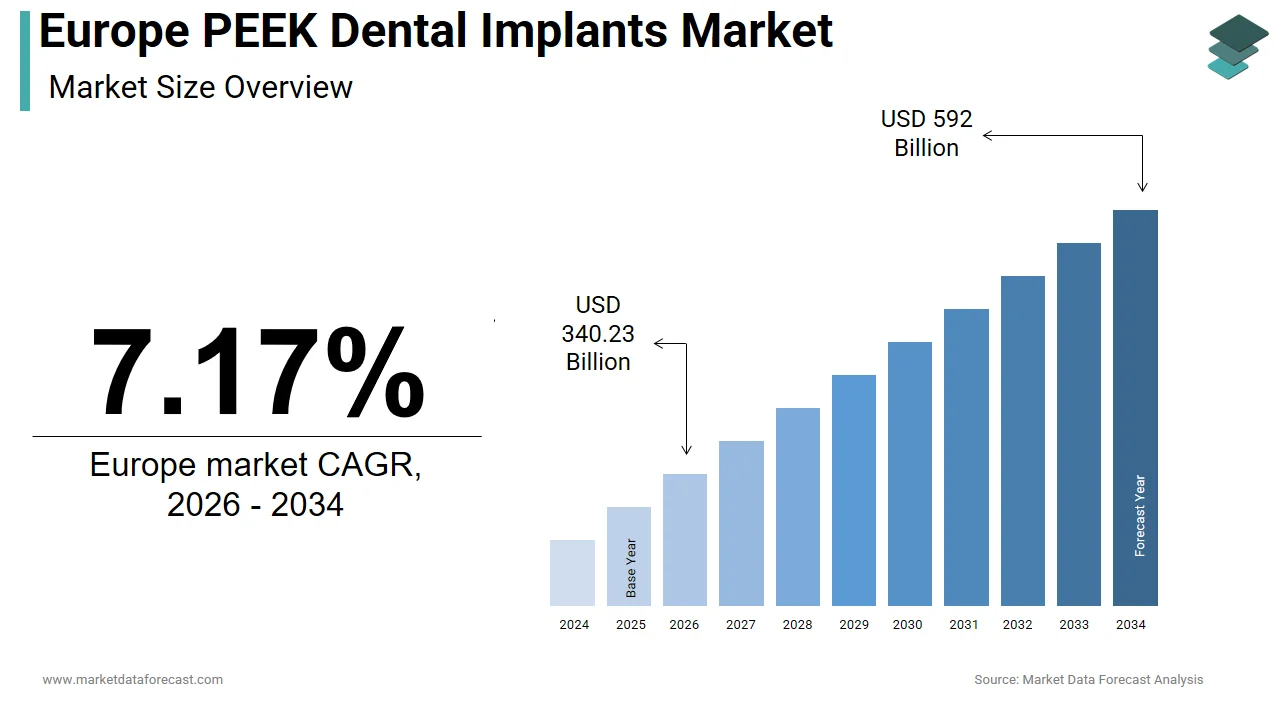
The Europe PEEK dental implants market was valued at USD 317.47 million in 2025, is estimated to reach USD 340.23 million in 2026, and is projected to reach USD 592 million by 2034, growing at a CAGR of 9.85% from 2026 to 2034. Market growth is driven by the rising demand for advanced dental restorative solutions, increasing awareness of aesthetic dentistry, and growing adoption of biocompatible implant materials. Polyether ether ketone (PEEK) dental implants are gaining popularity due to their lightweight structure, excellent mechanical strength, and superior biocompatibility compared to traditional metal implants. Advancements in dental materials technology, increasing dental implant procedures, and the expansion of cosmetic dentistry services are further supporting market expansion across Europe.
Key Market Trends
- Increasing adoption of biocompatible polymer-based dental implant materials.
- Rising demand for aesthetic and metal-free dental restoration solutions.
- The growing popularity of cosmetic dentistry and dental implant procedures.
- Advancements in 3D printing and digital dentistry technologies.
- Expansion of dental tourism and specialized dental clinics across Europe.
Segmental Insights
- Based on product type, the dental crowns segment held the majority share of the Europe PEEK dental implants market in 2025, supported by increasing demand for durable and aesthetically pleasing dental restoration solutions.
- Based on end users, the dental clinics segment was the largest in 2025, driven by the growing number of specialized dental practices offering advanced implant procedures and cosmetic dentistry treatments.
Regional Insights
The Europe PEEK dental implants market is witnessing strong growth across major countries, supported by increasing dental awareness, rising cosmetic dentistry demand, and advancements in dental care infrastructure.
- Germany dominated the regional market in 2025 with 22.5% share, driven by advanced dental technology adoption and strong healthcare infrastructure.
- France followed with 18.3% share in 2025, supported by increasing demand for aesthetic dentistry and expanding dental implant procedures.
- Italy holds a notable position in the market due to a strong culture of personal grooming and a thriving medical tourism sector focused on cosmetic dentistry.
Competitive Landscape
The Europe PEEK dental implants market is characterized by the presence of specialized dental material manufacturers and implant technology providers focusing on innovation and product development. Companies are investing in advanced biomaterials, digital dentistry solutions, and customized implant designs to enhance patient outcomes. Strategic collaborations with dental laboratories and clinics are further strengthening competitive positioning across the region.
Prominent companies operating in the Europe PEEK dental implants market include Dibay, SisoMM, ETGAR, LASAK, MKprecision, Ziacom Medical S.L., Invibio, Victrex, Evonik Industries AG, Juvora Limited, Phoenix Implants GmbH, and Bone System.
Europe PEEK Dental Implants Market Size
The Europe PEEK dental implants market was valued at USD 317.47 million in 2025, is estimated to reach USD 340.23 million in 2026, and is projected to reach USD 592 million by 2034, growing at a CAGR of 9.85% from 2026 to 2034.
PEEK (Polyether Ether Ketone) dental implants are a modern, metal-free alternative to traditional titanium and zirconia implants. PEEK is a high-performance, semi-crystalline thermoplastic polymer that has been used in orthopaedics (such as spinal cages) for decades and is increasingly applied in dentistry due to its unique mechanical properties. This sector is gaining traction as clinicians seek biocompatible alternatives for patients with metal sensitivities or aesthetic concerns regarding gum discoloration. The demographic shift toward an aging population serves as a critical backdrop for this industry evolution. According to Eurostat, individuals aged sixty-five years and older accounted for over twenty-one percent of the total European Union population in recent assessments, creating a substantial base for restorative dental procedures. Furthermore, severe periodontal disease presents a major global health burden, with prevalence rising significantly in older populations, particularly in developed regions, as increased life expectancy leads to more natural teeth being retained for longer periods. As oral health becomes increasingly linked to systemic well-being, the demand for advanced biomaterials like PEEK rises. The regulatory environment under the European Union Medical Device Regulation also shapes this market by enforcing stricter clinical evidence requirements, which favors high-quality polymer solutions that offer verifiable safety profiles alongside their functional advantages in complex maxillofacial reconstructions.
MARKET DRIVERS
Rising Prevalence of Metal Allergies and Biocompatibility Concerns Among Patients
The growing awareness and diagnosis of hypersensitivity reactions to traditional metallic components used in dentistry is a primary factor propelling the growth of the Europe PEEK dental implants market. Titanium, while generally biocompatible, triggers adverse immune responses in a specific subset of the population, leading to inflammation, implant failure, or chronic discomfort. Contact allergies to metal, particularly nickel, remain a widespread chronic condition in industrialized regions, especially among women, often resulting from personal exposure to items like jewelry. Increasing identification of contact allergies in the general population and dental professionals is driving a shift toward using inert materials in dental, oral, and implant procedures. PEEK offers a chemically stable solution that eliminates the risk of ion release and galvanic currents often associated with metal alloys. This material advantage is particularly crucial in countries like Germany and France, where regulatory bodies enforce rigorous safety standards for medical devices. The shift toward personalized medicine further amplifies this driver, as clinicians prioritize materials that align with individual patient physiological profiles. Consequently, the inability of metal implants to serve allergic patients creates a dedicated niche for PEEK technology, ensuring steady demand growth as diagnostic capabilities for metal sensitivities improve throughout the region.
Superior Aesthetic Outcomes and Mechanical Compatibility with Bone Tissue
The exceptional aesthetic potential and biomechanical harmony of PEEK with natural jawbone structure constitute another formidable driver for the expansion of the Europe PEEK dental implants market. Traditional titanium implants can sometimes cause a grayish discoloration of the surrounding gingival tissue, especially in patients with thin gum biotypes, which presents a significant cosmetic drawback in anterior regions. PEEK possesses a tooth colored appearance and translucency that blends seamlessly with natural tissues, addressing the high aesthetic expectations of European consumers who prioritize visible smile perfection. Beyond aesthetics, the modulus of elasticity of PEEK closely matches that of cortical bone, unlike titanium, which is significantly stiffer. This mechanical similarity reduces stress shielding, a phenomenon where the implant bears too much load, causing the surrounding bone to resorb and weaken over time. The long-term success of dental implant restoration is directly tied to the ability to maintain or regenerate alveolar bone, making bone density management essential, especially for older patient populations. In nations such as Italy and Spain, where cultural emphasis on dental aesthetics is profound, the demand for natural-looking results drives clinicians toward polymer-based solutions. The combination of visual appeal and physiological compatibility ensures that PEEK implants are increasingly viewed not merely as an alternative but as a preferred choice for complex cases requiring both functional durability and superior cosmetic integration.
MARKET RESTRAINTS
High Manufacturing Costs and Limited Reimbursement Coverage Across Healthcare Systems
The substantially higher production cost associated with processing this advanced polymer compared to conventional titanium is one of the most significant impediments facing the Europe PEEK dental implants market. The fabrication of PEEK implants requires specialized machining techniques, often involving computer numerical control milling or additive manufacturing processes that demand expensive equipment and highly skilled labor. These elevated operational expenses translate into higher end-user prices, making the final product less accessible to price-sensitive patients and smaller dental clinics operating on tight margins. Furthermore, the reimbursement landscape in many European countries remains skewed toward traditional metallic implants. National health insurance systems in Europe commonly limit reimbursement for high-cost biomaterials, shifting financial responsibility to patients for treatment alternatives deemed non-essential. In economies facing fiscal constraints, such as those in Southern and Eastern Europe, out-of-pocket expenditures for dental care act as a strong deterrent against adopting innovative but costly technologies. The lack of standardized coding and coverage policies for PEEK-specific procedures creates uncertainty for providers who hesitate to invest in inventory that may not be financially viable for their patient base. High pricing will continue to restrict widespread market penetration. This trend will persist until manufacturing scalability improves to lower unit costs or regulatory frameworks evolve to recognize the long-term economic benefits of reduced complication rates.
Limited Long-Term Clinical Data and Conservative Adoption Patterns Among Practitioners
The relative scarcity of extensive long term clinical studies compared to the decades of data available for titanium fixtures further limits the rapid proliferation of these implants and the expansion of the Europe PEEK dental implants market. Dentists and oral surgeons are inherently conservative professionals who rely on proven track records to minimize liability and ensure predictable patient outcomes. Short-term and mid-term studies demonstrate promising results for PEEK. However, the absence of thirty-year survival rate data creates hesitation among practitioners accustomed to the established reliability of metal alloys. According to the European Federation of Periodontology, clinical guidelines heavily emphasize evidence-based practice, and the current literature gap regarding the behavior of PEEK under diverse physiological conditions over extended periods slows its integration into standard treatment protocols. This caution is exacerbated by the steep learning curve associated with handling polymer materials, which require different surgical techniques and surface modification strategies to achieve optimal osseointegration. In countries with rigid medical training curricula, such as the United Kingdom and Scandinavia, the inclusion of new materials in educational programs lags behind technological advancements. There is currently no robust body of longitudinal evidence validating the durability of PEEK in various bone densities and loading scenarios. Because of this, many clinicians prefer familiar metallic solutions, which limits the market volume for polymer-based implants.
MARKET OPPORTUNITIES
Advancements in Surface Modification Technologies to Enhance Osseointegration
The rapid development of innovative surface modification techniques designed to overcome the inherent bioinertness of the polymer provides a transformative opportunity for the Europe PEEK dental implants market. Pure PEEK surfaces historically exhibited slower bone integration rates compared to roughened titanium, but emerging technologies such as plasma spraying, laser texturing, and coating with bioactive substances like hydroxyapatite are changing this paradigm. These enhancements significantly increase surface energy and roughness, promoting faster cellular attachment and accelerating the healing process. Research published by the Society for Biomaterials indicates that modified PEEK surfaces can achieve bone-to-implant contact ratios similar to traditional metals shortly after placement. This technological leap opens doors for broader clinical acceptance, particularly in cases involving poor bone quality where immediate stability is crucial. European research institutions and private enterprises are increasingly collaborating to refine these coatings, positioning the region as a hub for next-generation biomaterial innovation. As these modified surfaces become commercially available, they will allow clinicians to confidently prescribe PEEK implants for a wider range of indications, including full arch reconstructions and immediate loading protocols. The ability to tailor surface topography at the microscopic level provides a competitive edge that can differentiate products in a crowded marketplace, driving adoption among forward-thinking dental practices seeking to offer state of the art restorative options.
Integration of Digital Dentistry and Additive Manufacturing Workflows
The seamless integration of PEEK materials with digital dentistry workflows and additive manufacturing offers a substantial growth avenue for the Europe PEEK dental implants market. The rise of cone beam computed tomography, intraoral scanning, and computer-aided design software has revolutionized how dental implants are planned and placed. PEEK is uniquely suited for three-dimensional printing technologies, allowing for the creation of patient-specific implants that perfectly match individual anatomical contours without the limitations of subtractive manufacturing. The adoption of digital workflows (CAD/CAM and 3D printing) in European dental labs has grown in recent years, creating a fertile environment for customizable polymer solutions. This synergy enables the production of complex geometries and porous structures that mimic trabecular bone, further enhancing biological fixation. Moreover, digital planning reduces surgical time and improves precision, which appeals to both surgeons and patients seeking minimally invasive procedures. Countries leading in digital health infrastructure, such as Switzerland and the Netherlands, are poised to drive early adoption of 3D printed PEEK implants. Manufacturers can offer bespoke solutions that reduce inventory costs and waste while delivering superior clinical outcomes through these digital ecosystems. This approach allows them to capture a significant share of the evolving restorative dentistry sector.
MARKET CHALLENGES
Stringent Regulatory Compliance Requirements Under Updated Medical Device Frameworks
Navigating the complex and rigorous regulatory landscape imposed by the European Union Medical Device Regulation poses a serious challenge for manufacturers and the Europe PEEK dental implants market. The transition from previous directives to the current regulation has intensified scrutiny on clinical evidence, post-market surveillance, and traceability for all Class III medical devices, which includes dental implants. Companies must now provide comprehensive data demonstrating not only safety but also clinical performance over extended periods, a requirement that demands significant investment in time and resources. The European Commission's updated regulatory framework for medical devices focuses on enhancing public health protection, but increases the time to market for innovative, novel materials due to stricter requirements. For PEEK specifically, proving equivalence to existing predicates is difficult due to its distinct material properties, forcing manufacturers to conduct de novo clinical trials that are both costly and lengthy. Small and medium-sized enterprises often struggle to meet these heightened documentation and testing standards, potentially stifling innovation and limiting the diversity of products available to clinicians. The constant evolution of compliance criteria requires continuous adaptation of quality management systems, creating an operational burden that can delay product launches and hinder the ability of companies to respond swiftly to emerging clinical needs within the dynamic European healthcare environment.
Technical Difficulties in Achieving Consistent Surface Bonding and Sterilization Stability
Ensuring consistent and durable bonding of bioactive coatings while maintaining material integrity during sterilization processes is also a persistent technical problem confronting the Europe PEEK dental implants market. Unlike metals that naturally form oxide layers conducive to bonding, PEEK requires aggressive surface treatments to adhere hydroxyapatite or other osteoconductive agents effectively. Variability in these coating processes can lead to delamination or uneven distribution, compromising the biological performance and potentially causing inflammatory reactions. Besides, PEEK exhibits sensitivity to certain sterilization methods commonly used in medical settings, such as gamma irradiation or autoclaving, which can alter its crystalline structure and mechanical strength if not precisely controlled. Additionally, research indicates that certain sterilization methods, particularly radiation-based processes, cause surface degradation in polymers, resulting in diminished fatigue resistance and reduced longevity. Manufacturers must therefore develop specialized protocols that balance sterility assurance with material preservation, a task that adds complexity to the supply chain and increases production costs. Ensuring batch-to-batch consistency in surface characteristics remains a hurdle, as minor deviations can significantly impact clinical outcomes. Standardized industrial processes must be universally adopted to mitigate these risks. Until then, the reliability of coated PEEK implants may remain a point of contention among skeptical clinicians, slowing down universal acceptance across diverse European clinical settings.
REPORT COVERAGE
| REPORT METRIC | DETAILS |
| Market Size Available | 2025 to 2034 |
| Base Year | 2025 |
| Forecast Period | 2026 to 2034 |
| Segments Covered | By Product, End-user, and Country. |
| Various Analyses Covered | Global, Regional, and Country-Level Analysis, Segment-Level Analysis, Drivers, Restraints, Opportunities, Challenges; PESTLE Analysis; Porter’s Five Forces Analysis, Competitive Landscape, Analyst Overview of Investment Opportunities |
| Countries Covered | UK, France, Spain, Germany, Italy, Russia, Sweden, Denmark, Switzerland, Netherlands, Turkey, Czech Republic, and the Rest of Europe. |
| Market Leaders Profiled | Dibay, SisoMM, ETGAR, LASAK, MKprecision, Ziacom Medical S.L., Invibio, Victrex, Evonik Industries AG, Juvora Limited, Phoenix Implants GmbH, and Bone System. |
SEGMENTAL ANALYSIS
By Product Type Insights
The dental crowns segment held the majority share of the Europe PEEK dental implants market in 2025. The supremacy of the segment is attributed to the material's unique ability to combine high mechanical strength with superior aesthetic properties, and the escalating demand for metal-free restorations in the anterior region, where visual appeal is paramount. A major factor that aids this segment is the increasing patient preference for restorations that mimic natural tooth structure without the risk of gingival discoloration associated with metal ceramic options. PEEK offers a translucency and color stability that closely resembles natural dentin and enamel, making it the ideal choice for visible areas of the mouth. According to research, there is a documented and growing preference among European patients for metal-free dental restorations driven by aesthetic desires and concerns regarding biocompatibility. This shift is particularly pronounced in demographics aged thirty to fifty who prioritize cosmetic perfection alongside functional durability. The chemical inertness of PEEK ensures that no metallic ions leach into the surrounding tissues, eliminating the gray halo effect often seen with titanium or cobalt chrome substructures. Clinics adopting modern high-performance polymers often report improved clinical workflows and high patient acceptance, which can lead to a more predictable outcome for restorations. The material's low plaque affinity further supports oral health, reducing the incidence of secondary caries and periodontal inflammation around the crown margin, which is a critical factor for long term success in restorative dentistry. Also, this sector is boosted by the exceptional modulus of elasticity of PEEK, which closely matches that of human bone and natural teeth. This mechanical compatibility allows PEEK crowns to absorb and distribute occlusal forces more effectively than stiffer materials like zirconia or metal, thereby protecting the underlying abutment and opposing dentition from excessive wear or fracture. Research indicates that the low elastic modulus of PEEK helps distribute occlusal forces more evenly, which may protect the underlying tooth structure and the adhesive layer from mechanical stress. This property is especially valuable for patients with bruxism or those requiring long span bridges where flexibility is advantageous. Furthermore, the use of lightweight, high-performance polymers in extensive dental rehabilitations is associated with improved patient comfort and reduced physical burden compared to heavier metal frameworks. The ability to mill PEEK crowns with high precision using computer-aided design and computer-aided manufacturing systems ensures a perfect marginal fit, which is essential for preventing bacterial infiltration. Digital workflows are becoming standard across European dental laboratories. Consequently, the ease of processing PEEK into complex crown geometries continues to solidify its position as the leading product category.
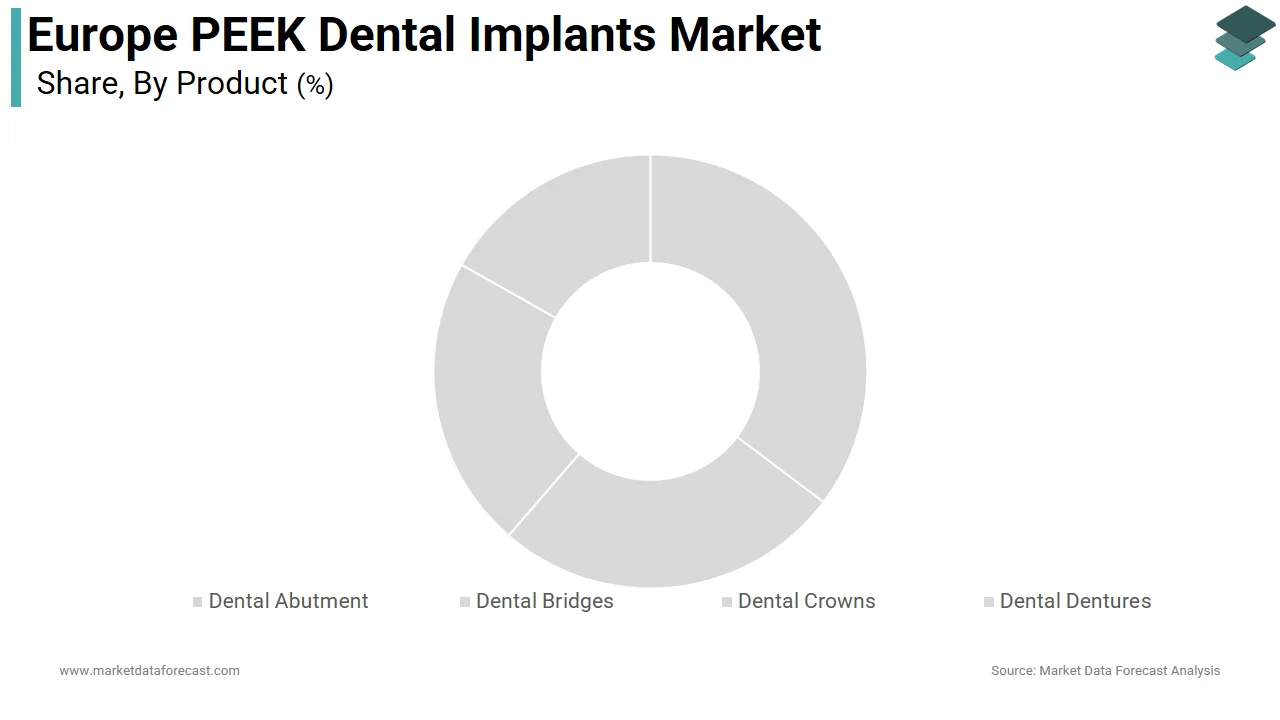
The dental bridges segment is likely to experience the fastest CAGR of 9.8% from 2026 to 2034 due to technological advancements in multi-unit prosthetic fabrication and the rising prevalence of partial edentulism. One more point that adds strength is breakthroughs in surface modification and framework design that have overcome historical limitations regarding the flexural strength of polymer-based long-span restorations. Modern fiber-reinforced PEEK composites now offer enhanced rigidity while maintaining the shock-absorbing benefits of the base polymer, making them viable for replacing multiple missing teeth simultaneously. Clinical data increasingly suggest that high-performance polymers like PEEK can achieve high survival rates that are beginning to be compared favorably to traditional metal-ceramic options. This validation has emboldened prosthodontists to prescribe PEEK bridges for posterior regions where masticatory forces are highest. The integration of continuous fiber reinforcement technology allows for the creation of slender yet robust frameworks that preserve maximum tooth structure during preparation. Modern high-performance polymers demonstrate high fatigue resistance under cyclic loading, suggesting they are capable of maintaining structural integrity over several years of clinical function. This reliability, combined with the aesthetic advantage of avoiding dark metal show through in the pontic area, is driving a paradigm shift in how partially edentulous patients are treated across Europe. Demographic shifts across Europe are creating a surging demand for fixed partial dentures, with PEEK emerging as the preferred material due to its biocompatibility and ease of adjustment. The prevalence of partial tooth loss increases significantly with age, and as the European population ages, the volume of patients requiring bridge work is expanding rapidly. The European Union is experiencing a significant demographic shift toward an older population, which is expected to increase the demand for restorative dental services. Unlike removable partial dentures, which many elderly patients find uncomfortable or stigmatizing, fixed PEEK bridges offer a permanent and natural feeling solution. In geriatric dentistry, there is a strong clinical emphasis on minimally invasive procedures and the use of materials that protect remaining natural teeth from excessive mechanical stress. Additionally, the hypoallergenic nature of PEEK is crucial for this demographic, as older adults often present with increased sensitivity to metal alloys due to prolonged exposure over their lifetimes. The combination of demographic necessity and material suitability positions dental bridges as the fastest-growing segment in the PEEK implant ecosystem.
By End Users Insights
In 2025, the dental clinics segment was the largest in the Europe PEEK dental implants market. The prominence of the segment is supported by the decentralized nature of dental care delivery in Europe and the specific operational advantages clinics offer for adopting new biomaterials. It serves as the primary point of care for routine restorative procedures and elective cosmetic enhancements. The overwhelming majority of PEEK implant placements and restorations occur in private dental clinics due to the high frequency of outpatient restorative treatments compared to hospital settings. These facilities handle the bulk of crown, bridge, and abutment cases, which constitute the core application areas for PEEK materials. The majority of dental care in Europe is delivered through private dental practices, which serve as the primary market for the adoption of new restorative materials. The workflow in clinics is optimized for efficiency and patient throughput, allowing dentists to integrate digital scanning and milling of PEEK restorations within a single visit or short turnaround time. This agility is critical for meeting patient expectations for immediate or rapid results. Furthermore, clinics are often the first adopters of innovative materials that offer competitive differentiation, such as the aesthetic benefits of PEEK, to attract discerning patients. There is a documented increase in the use of metal-free materials in French dental practices, largely influenced by changes in reimbursement structures (such as the "100% Santé" reform) and rising patient demand for aesthetics. The direct relationship between the clinician and the patient in a private setting also facilitates personalized treatment planning where the specific advantages of PEEK can be effectively communicated and justified. Private dental clinics possess the operational flexibility to invest in specialized equipment and training required for PEEK processing without the bureaucratic hurdles often faced by larger institutional hospitals. The ability to control inventory and select specific suppliers allows clinics to optimize costs while maintaining high-quality standards. Private dental clinics are generally observed to adopt digital and cost-effective technologies more rapidly than public institutions to improve operational efficiency and clinical outcomes. The reimbursement environment in many European countries favors outpatient care for dental prosthetics, directing the flow of patients toward clinics rather than hospitals. In nations like Germany and Italy, where a robust network of small to medium-sized dental practices exists, the competition drives continuous innovation in material selection. The expansion of in-house milling capabilities in dental offices has facilitated the immediate production of restorations using high-performance polymers, leading to a broader integration of these materials in daily practice. This self-sufficiency reduces dependency on external laboratories and lowers overall treatment costs, making PEEK a financially viable option for both the provider and the patient in a clinic setting.
The Ambulatory Surgical Centers (ASCs) segment is on the rise and is expected to be the fastest-growing segment in the market by witnessing a CAGR of 10.2% over the forecast period, owing to the shifting trend of complex oral surgical procedures from inpatient hospital settings to specialized outpatient facilities. In addition, the rapid ascent of Ambulatory Surgical Centers is also fueled by a broader healthcare trend favoring minimally invasive procedures that allow for same-day discharge, reducing hospital stays and associated costs. Complex implant surgeries involving PEEK components, such as full arch reconstructions or sinus lifts, are increasingly performed in ASCs due to their specialized infrastructure and focused expertise. There is a documented strategic shift across European health systems to move minor and moderate surgical procedures to ambulatory settings to improve hospital efficiency and reduce waiting lists. PEEK implants are particularly well-suited for these settings because their biocompatibility and reduced inflammatory response often lead to faster recovery times and fewer postoperative complications. This aligns perfectly with the ASC model, which prioritizes efficient patient turnover and rapid rehabilitation. Patients undergoing minor surgical procedures in independent treatment centres generally report high satisfaction scores due to streamlined processes and modern facilities compared to large general hospital environments. The ability of ASCs to offer advanced anesthesia and monitoring capabilities comparable to hospitals, but with greater scheduling flexibility, makes them an attractive option for patients seeking premium implant solutions like PEEK without the institutional atmosphere. Ambulatory Surgical Centers offer a cost-effective alternative to hospitals for performing implant surgeries, driven by lower overheads and streamlined operational processes that benefit both payers and patients. These centers are designed specifically for surgical efficiency, allowing for the optimal allocation of resources such as specialized surgical teams and advanced imaging equipment necessary for precise PEEK implant placement. Health economic evaluations generally show that specialized outpatient clinics operate with lower overhead costs and higher efficiency for routine surgical procedures compared to multi-specialty general hospitals. This economic advantage is becoming increasingly significant in European healthcare systems facing budgetary pressures, prompting insurers and national health services to refer eligible patients to ASCs. The focused nature of these centers also facilitates the rapid adoption of new technologies, including computer-guided surgery and 3D printed PEEK guides, which enhance surgical precision. Outpatient surgical facilities are often early adopters of digital planning and CAD/CAM workflows, which are known to improve the precision and predictability of complex restorative implant procedures. This combination of financial viability and technological agility positions ASCs as the fastest-growing end-user segment for the PEEK dental implants market.
COUNTRY-LEVEL ANALYSIS
Germany PEEK Dental Implants Market Analysis
Germany dominated the Europe PEEK dental implants market and accounted for a 22.5% share in 2025. The dominance of the segment is driven by its world-renowned dental industry infrastructure and high adoption of advanced biomaterials. The country serves as a global hub for dental technology manufacturing and research, fostering an environment where innovation thrives. The strong presence of leading dental implant manufacturers and research institutions in cities like Aachen and Freiburg accelerates the development and commercialization of PEEK-based solutions. Germany maintains a high volume of dental implant procedures and remains a primary market for premium dental materials due to its advanced dental infrastructure and high practitioner density. The rigorous regulatory standards enforced by the Federal Institute for Drugs and Medical Devices ensure that only high-quality products reach the market, which bolsters clinician and patient confidence in PEEK technology. Furthermore, the robust reimbursement framework for certain prosthetic procedures, combined with a culture that values dental aesthetics and functionality, encourages the uptake of metal-free alternatives. There is a documented expansion in the German dental manufacturing sector toward high-performance polymers and digital milling materials, supported by a robust domestic supply chain for CAD/CAM technology. The integration of digital dentistry in German dental laboratories is also among the highest globally, facilitating the precise fabrication of PEEK crowns and bridges. This confluence of manufacturing prowess, clinical expertise, and patient awareness solidifies Germany's position at the forefront of the regional market.
France PEEK Dental Implants Market Analysis
France was the next prominent country in the Europe PEEK dental implants market and captured a 18.3% share in 2025. The demand for these implants in France is propelled by its profound cultural emphasis on dental aesthetics and a sophisticated healthcare system that supports advanced restorative treatments. The French market exhibits a high density of private dental practitioners who are early adopters of cosmetic dental technologies, including PEEK implants. The demand for natural-looking restorations is particularly intense in urban centers like Paris and Lyon, where patients prioritize invisible dentistry. There is a documented and increasing preference among French patients for metal-free dental restorations, driven by a combination of aesthetic demands and a growing public awareness of material biocompatibility. The French government's support for medical device innovation through tax incentives and research grants has also stimulated local development of PEEK applications. Additionally, the country hosts several major international dental trade shows that serve as platforms for launching new PEEK products, keeping French clinicians at the cutting edge of material science. The prevalence of dental tourism within France, attracting patients from neighboring countries seeking high-quality cosmetic work, further amplifies the demand for premium materials. The volume of outpatient dental and maxillofacial procedures in France is increasing as part of a broader national strategy to shift appropriate surgical care from inpatient to ambulatory settings. The combination of aesthetic consciousness, supportive policy, and a strong private practice sector ensures France remains a key growth engine for the market.
Italy PEEK Dental Implants Market Analysis
Italy continues to be a noteworthy player in the Europe PEEK dental implants market due to a deeply ingrained culture of personal grooming and a thriving medical tourism sector focused on cosmetic dentistry. Italian patients are known for their high expectations regarding smile aesthetics, making PEEK an attractive option due to its tooth colored properties and ability to prevent gum discoloration. The country boasts a large network of specialized dental clinics that cater to both domestic and international clients, particularly from the Middle East and Eastern Europe. There is a documented increase in the integration of digital dental workflows across Italy, which has significantly expanded the clinical use of high-performance polymers for both temporary and permanent restorations. The aging population in Italy also contributes significantly to the demand, as older adults seek durable yet comfortable alternatives to traditional metal dentures and bridges. Italy is experiencing a significant demographic shift toward an elderly population, which historically aligns with an increased demand for restorative and prosthetic dental services to maintain oral function. Furthermore, the presence of renowned dental schools and research centers in cities like Bologna and Milan fosters a continuous exchange of knowledge regarding new biomaterials. The Italian regulatory environment, aligned with European Union standards, ensures safety while allowing for the swift introduction of innovative products. This blend of cultural drivers, demographic trends, and educational excellence positions Italy as a vital market for PEEK dental implants.
United Kingdom PEEK Dental Implants Market Analysis
The United Kingdom expanded steadily in the Europe PEEK dental implants market owing to a strong emphasis on evidence-based dentistry and a robust public-private hybrid healthcare system that facilitates access to advanced treatments. The UK market is also driven by high clinical standards and a proactive approach to adopting new technologies that offer proven long-term benefits. British dental professionals are highly engaged in continuing education and research, leading to a cautious but steady uptake of PEEK implants as clinical data accumulates. There is an increasing awareness within the UK dental profession of the need for biocompatible, metal-free alternatives for patients who report hypersensitivity to traditional dental alloys. The National Health Service, while primarily focused on essential care, allows for private top-ups for premium materials, enabling patients to choose PEEK for its aesthetic and biocompatible advantages. The UK is also home to several leading universities conducting pioneering research on polymer biomaterials, which helps validate the use of PEEK in complex cases. The number of registered specialists in restorative dentistry has remained relatively stable, but there is a general shift among these experts toward adopting modern, high-performance polymers for complex cases. The presence of a sophisticated dental laboratory sector capable of high-precision milling further supports the market. Despite Brexit-related challenges, the UK remains a key player due to its strong clinical governance and commitment to patient-centered care.
Switzerland PEEK Dental Implants Market Analysis
Switzerland is likely to grow in the Europe PEEK dental implants market during the forecast period due to its reputation for precision engineering, high disposable income, and a concentration of elite dental clinics. Although smaller in population, the Swiss market exerts significant influence due to its role as a headquarters for major dental implant manufacturers and its status as a destination for luxury medical tourism. Swiss patients and clinicians demand the highest quality materials, and PEEK fits this profile perfectly due to its advanced mechanical properties and biocompatibility. The country's strong tradition in watchmaking and precision mechanics translates into exceptional capabilities in dental milling and CAD CAM technologies, ensuring that PEEK restorations are fabricated with unparalleled accuracy. The close collaboration between Swiss universities and industry partners accelerates the translation of research into clinical practice. Furthermore, the stability of the Swiss economy and currency attracts international patients seeking top-tier dental care, further boosting the demand for PEEK implants. This unique combination of technical excellence and economic power makes Switzerland a critical market despite its size.
COMPETITIVE LANDSCAPE
The competition in the Europe PEEK Dental Implants Market is characterized by a dynamic interplay between established material suppliers and emerging specialized device manufacturers who strive to differentiate through technological innovation. Rivalry is intense as companies race to develop superior surface treatments that enhance osseointegration and prove long-term clinical success comparable to titanium. The market features a mix of large multinational corporations with extensive resources and agile niche players focused exclusively on polymer-based solutions. Competitive advantage is increasingly determined by the ability to integrate seamlessly with digital workflows and offer customizable products for computer-aided design and manufacturing systems. Regulatory compliance under the European Union Medical Device Regulation acts as a significant barrier to entry, favoring incumbents with robust quality management systems. Strategic alliances with dental laboratories and clinics are crucial for gaining market traction and building brand loyalty. Companies continuously invest in clinical studies to generate evidence that addresses practitioner skepticism and validates the biomechanical benefits of PEEK. This environment fosters rapid advancement in material science while pushing firms to maintain high standards of safety and performance to capture share in this evolving sector.
KEY MARKET PLAYERS
The leading companies operating in the Europe PEEK dental implants market include:
- Dibay
- SisoMM
- ETGAR
- LASAK
- MKprecision
- Ziacom Medical S.L.
- Invibio
- Victrex
- Evonik Industries AG
- Juvora Limited
- Phoenix Implants GmbH
- Bone System
TOP PLAYERS IN THE MARKET
- Invibio Ltd stands as a pioneering force in the global high-performance polymer sector and serves as the primary supplier of medical-grade PEEK raw materials. The company contributes significantly to the dental industry by providing specialized biomaterials that enable manufacturers to create advanced implant components. Invibio actively strengthens its market position through continuous research and development focused on surface modification technologies that enhance osseointegration. Recent initiatives include launching new grades of PEEK optimized for additive manufacturing, which allows dental laboratories to produce complex patient-specific implants with greater precision. The company collaborates extensively with European research institutions to validate clinical outcomes and educate clinicians on the benefits of polymer-based solutions. Invibio maintains strict quality control and offers technical support for product design. Through these measures, the company ensures its materials meet the rigorous demands of modern restorative dentistry across the continent.
- Juvora Limited has emerged as a key innovator by developing proprietary surface treatments that transform inert PEEK into a bioactive material capable of bonding directly with bone tissue. This company plays a crucial role in the global market by addressing the historical limitation of poor osseointegration associated with early polymer implants. Juvora recently expanded its commercial footprint in Europe by securing regulatory approvals for its treated PEEK discs and blocks, which are now widely used by dental milling centers. The firm focuses heavily on clinical education and has partnered with leading universities to publish long-term data demonstrating the efficacy of its technology. Their strategic actions include establishing distribution networks across major European markets to ensure rapid availability of their products for dental professionals. Juvora offers a solution that combines the mechanical advantages of PEEK with the biological performance of titanium. This approach is reshaping clinician perceptions and driving the adoption of polymer implants in complex reconstructive cases.
- Evonik Industries AG is a global specialty chemicals leader that supplies high-purity PEEK polymers essential for manufacturing durable and biocompatible dental implants. The company supports the international dental market by providing consistent and reliable raw materials that meet stringent medical device regulations. Evonik recently invested in expanding its production capacity for medical-grade polymers to address the growing demand from dental implant manufacturers in Europe. Their strategy involves close collaboration with device makers to co-develop customized polymer formulations that offer improved wear resistance and aesthetic properties. Evonik also emphasizes sustainability by optimizing its manufacturing processes to reduce environmental impact while maintaining product quality. Through active participation in industry conferences and technical workshops, the company educates stakeholders about the advantages of using advanced thermoplastics in dentistry. These efforts help solidify its reputation as a trusted partner for companies seeking to innovate within the competitive landscape of dental biomaterials.
TOP STRATEGIES USED BY THE KEY MARKET PARTICIPANTS
Key players in the Europe PEEK Dental Implants Market primarily focus on strategic collaborations and partnerships with academic institutions to validate clinical efficacy and accelerate product acceptance. Companies heavily invest in research and development to create advanced surface modifications that improve bone integration and overcome the biological limitations of standard polymers. Expanding manufacturing capabilities through facility upgrades ensures a stable supply chain and meets the rising demand for customized dental solutions. Market participants frequently engage in educational initiatives to train dental professionals on the handling and benefits of PEEK materials, thereby fostering confidence among practitioners. Another prevalent strategy involves securing regulatory approvals in multiple European jurisdictions to facilitate faster market entry and broaden geographic reach. Firms also pursue product portfolio diversification by introducing pre-milled blanks and blocks compatible with popular digital dentistry systems. These combined approaches enable companies to strengthen their competitive positioning and drive widespread adoption of PEEK-based dental implants across the region.
MARKET SEGMENTATION
This research report on the European PEEK dental implants market has been segmented and sub-segmented into the following categories.
By Product
- Dental Abutment
- Dental Bridges
- Dental Crowns
- Dental Dentures
By End Users
- Dental Clinics
- Hospitals
- Ambulatory Surgical Centers
By Country
- United Kingdom
- France
- Spain
- Germany
- Italy
- Russia
- Sweden
- Denmark
- Switzerland
- Netherlands
- Rest of Europe
Frequently Asked Questions
What is the Europe PEEK dental implants market?
The Europe PEEK dental implants market supplies polymer fixtures mimicking bone elasticity for natural feel. Germany dominates with clinics favoring metal-free aesthetic solutions.
Why choose PEEK in the Europe PEEK dental implants market?
PEEK offers radiolucency in the Europe PEEK dental implants market enabling clear peri-implant bone visualization on X-rays unlike metal artifacts obscuring diagnostics.
How does the Europe PEEK dental implants market function?
The Europe PEEK dental implants market functions through CAD/CAM milling high-purity polymers for custom fits. Surface treatments enhance osseointegration, matching patient anatomy precisely.
What drives growth in the Europe PEEK dental implants market?
Cosmetic dentistry demand fuels the Europe PEEK dental implants market as patients reject visible metal. Tooth preservation awareness increases implant procedures continent-wide.
Which countries lead the Europe PEEK dental implants market?
Germany leads the Europe PEEK dental implants market followed by UK and France. Advanced manufacturing and dental tourism accelerate adoption in aesthetic-focused clinics.
What advantages define the Europe PEEK dental implants market?
Lightweight properties distinguish the Europe PEEK dental implants market reducing implant stress on bone. Hypoallergenic nature suits metal-sensitive patients effectively.
How does regulation shape the Europe PEEK dental implants market?
MDR Class III certification governs the Europe PEEK dental implants market ensuring polymer purity. Clinical validation proves long-term stability matching titanium performance.
What role does aesthetics play in the Europe PEEK dental implants market?
Aesthetics drive the Europe PEEK dental implants market as translucent PEEK blends naturally with gums. Anterior zone restorations achieve superior cosmetic integration.
What trends influence the Europe PEEK dental implants market?
Trends in the Europe PEEK dental implants market feature bioactive coatings and 3D-printed custom solutions. Nano-texturing accelerates bone integration rates significantly.
What challenges face the Europe PEEK dental implants market?
Osseointegration concerns challenge the Europe PEEK dental implants market though plasma treatments improve bonding. Long-term studies validate durability against titanium.
Related Reports
Access the study in MULTIPLE FORMATS
Purchase options starting from
$ 2000
Didn’t find what you’re looking for?
TALK TO OUR ANALYST TEAM
Need something within your budget?
NO WORRIES! WE GOT YOU COVERED!
Call us on: +1 888 702 9696 (U.S Toll Free)
Write to us: sales@marketdataforecast.com