Europe Dental Consumables Market Research Report Type (Dental burs, Whitening Materials),Application, End Users and Country (The UK, France, Spain, Germany, Italy, Russia, Sweden, Denmark, Switzerland, Netherlands, Turkey, Czech Republic and Rest of Europe) - Industry Analysis (2026 to 2034)
Market Size, 2025
$6.61 BnMarket Estimate, 2026
$6.80 BnMarket Forecast, 2034
$8.52 BnCAGR, 2026–2034
2.86%Europe Dental Consumables Market Summary
The Europe dental consumables market was valued at USD 6.61 billion in 2025 and is projected to reach USD 8.52 billion by 2034, growing at a CAGR of 2.86% from 2026 to 2034, driven by rising oral disease burden, aging demographics, and expanding restorative and cosmetic dentistry demand.
Market Snapshot
- 2025 Market Size: USD 6.61 billion
- 2026 Market Size: USD 6.80 billion
- 2034 Forecast: USD 8.52 billion
- CAGR (2026–2034): 2.86%
- Base Year: 2025
- Forecast Period: 2026–2034
Quick Growth Drivers
- High prevalence of dental caries and periodontal disease across Europe
- Rising geriatric population increasing demand for implants and prosthodontics
- Shift toward minimally invasive and adhesive dentistry
- Expansion of cosmetic and aesthetic dental procedures
- Growing recognition of oral health’s link to systemic diseases
Principal Restraints
- Stringent EU Medical Devices Regulation (MDR) increasing compliance costs
- Limited capacity of notified bodies delaying CE approvals
- High price sensitivity in publicly funded dental systems
- Restricted reimbursement for premium and innovative consumables
- Two-tier market structure separating public and private dental care
High-Value Opportunities
- Growth of digital dentistry driving demand for scanner- and CAD-CAM-compatible consumables
- Expansion of teledentistry and at-home oral care products
- Rising adoption of bioactive and remineralizing materials
- Increased use of single-use consumables driven by infection control mandates
- Growth in medical tourism-driven dentistry, especially in Southern Europe
Key Market Challenges
- Supply chain volatility for specialty polymers and biomaterials
- Dependence on imported raw materials for composites and resins
- Skills gap in adopting advanced restorative and bioactive materials
- Uneven access to continuing dental education across regions
- Clinical underutilization of advanced materials due to training deficits
Fastest-Growing Segments
- Whitening Materials — driven by aesthetic awareness and social media influence
- Cosmetic Dentistry Applications — fueled by smile design and direct-to-consumer models
- Digital Dentistry Consumables — scan sprays, retraction pastes, CAD-CAM blocks
Regional Leadership & Dynamics
- Germany (21.5%) — strong insurance coverage, high clinic density, strict infection control
- United Kingdom (16.8%) — NHS volume plus expanding private cosmetic demand
- France — universal preventive programs and consistent restorative demand
- Italy — private, high-value prosthodontics and aesthetic dentistry leadership
- Spain — fast growth driven by dental tourism and digital adoption
What Wins Commercially
- Products aligned with EU MDR compliance and infection control standards
- Integration with digital dental workflows
- Consumables supporting minimally invasive and preventive dentistry
- Strong clinical evidence and university partnerships
- Competitive pricing strategies tailored to public vs private systems
Top Strategic Ask for Executives
Prioritize innovation in digital-compatible, bioactive, and preventive dental consumables while balancing EU MDR compliance costs with scalable pricing for public healthcare systems.
Leading Players
Some of the companies that are playing a dominating role in the Europe dental consumables market include
Dentsply Sirona, Straumann, 3M ESPE Dental Solutions, Henry Schein, Inc., Septodont, Nobel Biocare, GC Corporation, Kerr Corporation, Zimmer Dental, Align Technology, Danaher, Heraeus Dental, and Biomet 3I.
Europe Dental Consumables Market Size
The europe dental consumables market was valued at USD 6.61 billion in 2025, is expected to have 2.86 % CAGR from 2026 to 2034, and be worth USD 8.52 billion by 2034 from USD 6.80 billion in 2026.
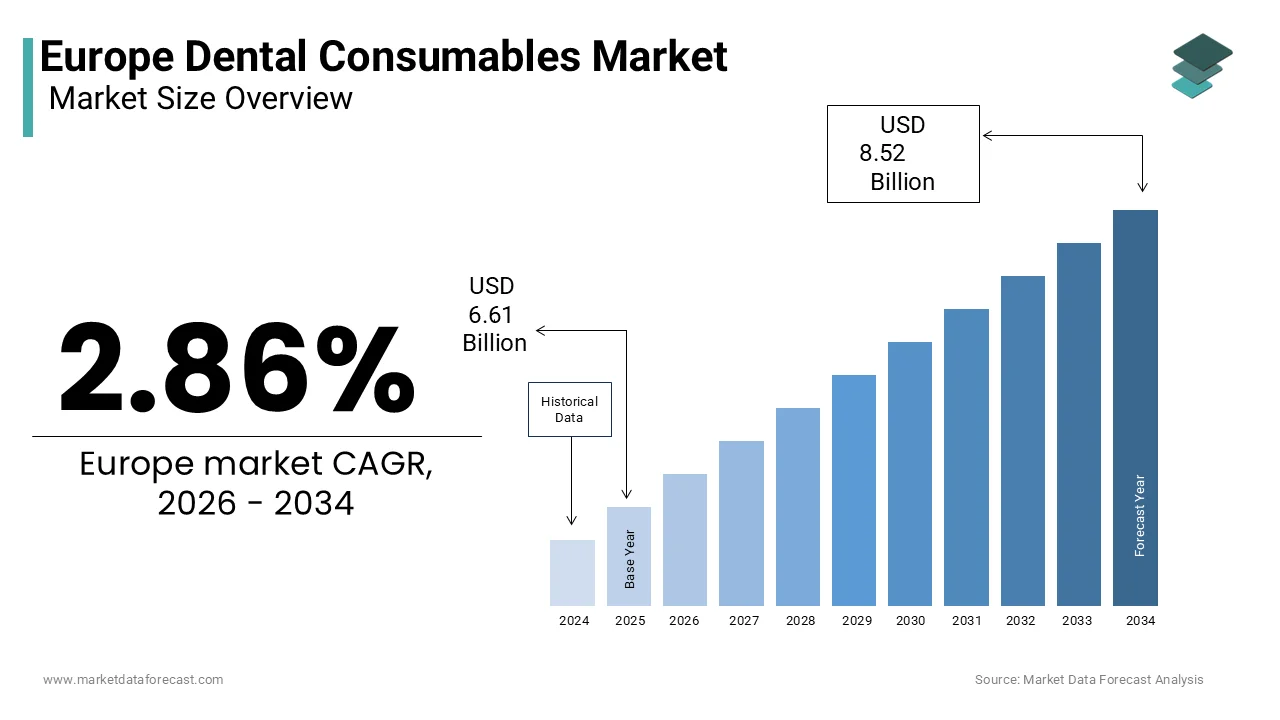
Dental consumables are materials and products used by dental professionals during routine procedures that require regular replenishment because they are used up or discarded after a single use. Unlike capital equipment, these items are characterized by recurring purchase cycles, high turnover, and direct linkage to clinical workflow volume. The sector operates within a tightly regulated healthcare environment where biocompatibility, sterility, and traceability are non-negotiable under the EU Medical Devices Regulation. According to Eurostat, European dental care remains in high demand, though significant disparities persist in access to both routine and advanced treatment based on income, with large portions of the population experiencing unmet needs due to cost or administrative barriers. As reported by European health authorities and the World Health Organization, dental caries remains a leading chronic disease across the continent, necessitating consistent restorative, preventative, and surgical intervention from childhood through adulthood. With Eurostat data indicating that over one-fifth of the EU population is now aged sixty-five or older, the demand for complex, age-related dental treatments, such as prosthodontics, implant rehabilitation, and periodontal care, is rising as the population structure shifts toward a higher median age. This intersection of epidemiological burden, regulatory rigor, and demographic pressure defines the operational and strategic landscape of the European dental consumables market.
MARKET DRIVERS
Rising Prevalence of Dental Caries and Periodontal Diseases Driving Restorative Demand
Dental caries and periodontal diseases remain endemic across the region, which drives the growth of the European dental consumables market. This directly fuels consistent demand for restorative and preventive consumables such as composites, sealants, and scaling instruments. The WHO European Regional Office highlights that untreated dental decay and severe periodontal disease are highly prevalent, affecting a substantial portion of adults and adolescents, with the region experiencing some of the highest oral disease burdens worldwide. Due to a high burden of oral disease, national health systems in Germany, France, and the UK manage a very high volume of dental restorative treatments. A key driver is the shift toward minimally invasive dentistry, which emphasizes early intervention using adhesive composites and bioactive materials rather than amalgam or extractions. Longitudinal research from Sweden indicates that the application of resin-based sealants on molars significantly reduces the incidence of new decay among schoolchildren. Additionally, public health initiatives like the UK’s “Starting Well” program target high-risk communities with preventive kits containing fluoride varnish and disclosing tablets, increasing consumable distribution beyond clinics. The growing recognition of oral health's role in addressing systemic diseases like diabetes and cardiovascular disease is driving early intervention, which in turn guarantees a steady, growing market for dental consumables in both private and public care settings.
Aging Population and Growth in Implant-Supported Prosthetics
The region has a rapidly aging demographic, which further contributes to the expansion of the European dental consumables market. This trend is accelerating demand for advanced dental consumables used in implantology, prosthodontics, and geriatric oral care. Eurostat points out a rising, significant share of elderly citizens within the European Union, with tooth loss remaining a notable health issue among older age groups. This trend drives significant uptake of implant impression trays, gingival retraction cords, temporary abutments, and soft lining materials for denture fabrication. The European Association for Osseointegration observes continued growth in implant dentistry across the continent, with Germany and Italy leading the market due to robust demand and favorable treatment reimbursement structures. Public dental insurance coverage in Sweden has supported a growing trend of elderly patients opting for implant-retained overdentures to improve quality of life. Moreover, elderly patients often require specialized consumables such as antimicrobial sutures, hemostatic agents, and low viscosity impression materials suitable for fragile mucosa. Rising life expectancies and quality-of-life expectations have transformed tooth replacement from a cosmetic luxury into a functional necessity, establishing it as a key pillar of geriatric dentistry across Europe.
MARKET RESTRAINS
Stringent EU MDR Compliance Increasing Certification Burden and Costs
Dental consumables manufacturers now face significantly higher regulatory and financial hurdles due to the implementation of the EU Medical Devices Regulation. This impedes the growth of the European dental consumables market. Small and medium enterprises, in particular, are struggling to manage these increased burdens. The transition to the European Medical Device Regulation has significantly extended the timeline for obtaining CE marking compared to the previous directive, primarily due to heightened demands for clinical evidence, robust post-market surveillance, and unique device identification requirements. Audits by national authorities, such as in Germany, indicate that a significant portion of dental consumable applications face delays due to inadequate documentation regarding biocompatibility and comprehensive risk management, challenging the rapid approval of Class IIa materials. This burden disproportionately affects niche innovators. Consequently, many startups redirect launches to the United States or Asia first, delaying European patient access to improved formulations. Innovation will remain stalled and the market dominated by large, well-resourced players until notified bodies increase capacity and guidance on equivalence becomes clearer.
Price Sensitivity in Publicly Funded Systems: Limiting Premium Product Adoption
Cost containment pressures in European public dental systems restrict widespread adoption of advanced or premium-priced consumables, despite clinical benefits, which favours generic alternatives with lower upfront costs, and thereby limits the expansion of theEuropeane dental consumables market. Publicly funded dental programs across various European regions are struggling with limited statutory coverage, resulting in significant financial burdens for patients and high levels of unmet dental needs. High rates of unmet dental treatment persist in Spain due to substantial out-of-pocket costs, even though the government has recently expanded public coverage. Severe long-term funding declines in public dentistry have created a situation where many dental practices must cross-subsidize NHS care with private work just to remain financially viable. This dynamic creates a two-tier system where private practices offer cutting-edge solutions while public clinics rely on legacy products, potentially increasing long-term treatment costs through higher restoration failure and retreatment rates. European adoption of dental innovations will remain restricted until reimbursement policies prioritize long-term value over itemized expenses.
MARKET OPPORTUNITIES
Integration of Digital Dentistry Expanding Demand for Compatible Consumables
The rapid adoption of intraoral scanners, CAD-CAM systems, and 3D printing is creating new demand for digital workflow-specific consumables such as scan sprays, gingival retraction pastes, and resin blocks for chairside milling, which in turn provides new opportunities for the European dental consumables market. Dental practices in Germany, Switzerland, and the Netherlands have experienced a rapid, widespread shift toward intraoral scanning, moving from a minority to a major, standard technology over the past five years. These technologies require specialized adjuncts; for instance, scan sprays with anti-reflective nanoparticles ensure accurate optical capture, while low viscosity retraction pastes replace traditional cords in digital impressions. Digital workflows in European dental practices significantly reduce the time patients spend in the chair, though this efficiency boost is partially offset by higher recurring costs for, and reliance on, digital, consumable, and software-related materials. Companies like Ivoclar and Dentsply Sirona have responded with integrated consumable kits designed exclusively for their digital platforms, enhancing user lock-in. Furthermore, European regulatory funding for digital health infrastructure is directly enhancing the adoption of advanced, integrated dental technology, creating a supportive environment for digitizing clinical workflows. The shift to digital dentistry is driving high growth in tailored consumables, making them a more lucrative market than traditional analog materials.
Expansion of Teledentistry and At-Home Oral Care Driving Preventive Consumables
The normalization of teledentistry and consumer interest in at-home oral health are opening avenues for preventive and diagnostic consumables used outside clinical settings, which is likely to promote the expansion of the European dental consumables market. Virtual dental consultations and remote diagnostics, including mailed test kits for monitoring, are growing across Europe, particularly in high-maturity markets. E-commerce for professional-grade, dentist-recommended oral care products is also increasing as consumers prioritize direct-to-consumer, high-quality hygiene. Furthermore, younger European adults are increasingly purchasing these products online, heavily influenced by social media, preventative wellness, and subscription-based, at-home dental care routines. Regulatory pathways exist under the EU Cosmetics Regulation for certain preventive items, while diagnostic kits fall under MDR Class I with self-certification. The boundary between clinical and consumer oral products is blurring, providing a scalable, science-backed channel to reduce preventable visits and boost patient self-management.
MARKET CHALLENGES
Supply Chain Fragmentation for Critical Raw Materials Disrupting Production Continuity
Geopolitical tensions and logistical barriers have exposed acute vulnerability in the supply of specialty polymers and rare earth elements, ultimately challenging the growth of the European dental consumables market. These materials are essential for high-performance dental consumables. The European dental industry relies heavily on imports from Asia and North America for essential methacrylate monomers used in composites and 3D printing, reflecting a limited domestic manufacturing base for these raw materials. Continued maritime shipping disruptions in the Red Sea have significantly extended logistics lead times for dental materials arriving from Asia, resulting in supply shortages that require manufacturers and clinics to manage inventory rationing. Even local production faces constraints. European production of critical rare earth elements, specifically those required for high-tech medical components like lasers, remains minimal, creating heavy dependency on imports. The EU Chips Act addresses semiconductor shortages. However, no equivalent exists for dental biomaterials. Ongoing raw material shortages and logistics disruptions have forced European dental manufacturers to halt production lines, affecting the timely delivery of dental products. The European dental sector faces persistent risks to product availability and procedural continuity from external shocks, unless it invests in regional polymer synthesis, secures dual sourcing, and builds strategic stockpiles.
Skills Gap in Adopting Advanced Material Technologies
The rapid evolution of dental consumables, including bioactive cements, self-etching adhesives, and nanohybrid composites, has outpaced structured continuing education programs across the region, which creates a clinical skills deficit that impedes optimal utilization and the expansion of the European dental consumables market. European dental curricula are increasingly adopting digital and advanced restorative techniques, yet mandatory, practical, hands-on training for modern adhesive and digital protocols is not yet uniformly implemented across all national programs. Many French practitioners express a need for manufacturer-led training to confidently adopt new generation bulk-fill composites, often relying on these workshops to gain proficiency in modern restorative techniques. This gap is particularly acute in rural and Eastern European regions where access to simulation labs and live courses remains limited. In Romania, fewer portion of dentists participate in annual continuing education due to cost and travel barriers as per the Romanian Dental Association. Consequently, even when clinics procure advanced materials, suboptimal technique leads to higher failure rates and wasted investment. The full clinical potential of next-generation dental consumables across Europe will remain unrealized without standardized competency frameworks and publicly funded training aligned with material innovation.
REPORT COVERAGE
| REPORT METRIC | DETAILS |
| Market Size Available | 2025 to 2034 |
| Base Year | 2025 |
| Forecast Period | 2026 to 2034 |
| Segments Covered | By Type, Application, End User, and Region. |
| Various Analyses Covered | Global, Regional, and Country-Level Analysis, Segment-Level Analysis, Drivers, Restraints, Opportunities, Challenges; PESTLE Analysis; Porter’s Five Forces Analysis, Competitive Landscape, Analyst Overview of Investment Opportunities |
| Countries Covered | UK, France, Spain, Germany, Italy, Russia, Sweden, Denmark, Switzerland, Netherlands, Turkey, Czech Republic, Rest of Europe |
| Market Leaders Profiled | DENTSPLY International Inc., Biomet 3I, 3M ESPE Dental Solutions, Henry Schein, Inc., Kerr Corporation/Sybron Dental Specialties, Nobel Biocare, Patterson Companies, Inc., Septodont, Zimmer Dental, Straumann, Danaher, Sirona, GC Corporation, Heraeus Dental and Align Technology |
SEGMENTAL ANALYSIS
By Type Insights
The dental burs segment captured the majority share of 42.3% of the European dental consumables market in 2025. The supremacy of the dental burs segment is attributed to its universal necessity across nearly all invasive and restorative dental procedures, including cavity preparation, crown trimming, and implant site osteotomy. One more reason for growth here is the high procedural volume driven by endemic dental caries and periodontal disease. The World Health Organization is highlighting the high burden of oral disease in Europe, prompting a move toward increased restorative care and improved safety, with industry trends indicating higher consumption of rotary instruments in professional settings. Further support for this segment comes from the shift toward single-use burs due to stringent infection control protocols under EU Directive 2017 745. Driven by rigorous infection control guidelines, particularly highlighted by national health authorities in Germany, France, and Sweden, there is a strong shift within European dental practices toward single-use diamond and carbide instruments to mitigate cross-contamination risks. Additionally, the rise of CAD-CAM dentistry has increased demand for specialized finishing burs compatible with zirconia and lithium disilicate restorations. Research into dental workflows suggests that the adoption of digital CAD/CAM technology in restorative dentistry can lead to different, and sometimes higher, instrument usage patterns for finishing and refining restoration margins. Regulatory requirements for single-use devices, coupled with high yearly volume per practitioner, keep the European dental bur segment at the forefront of market demand.
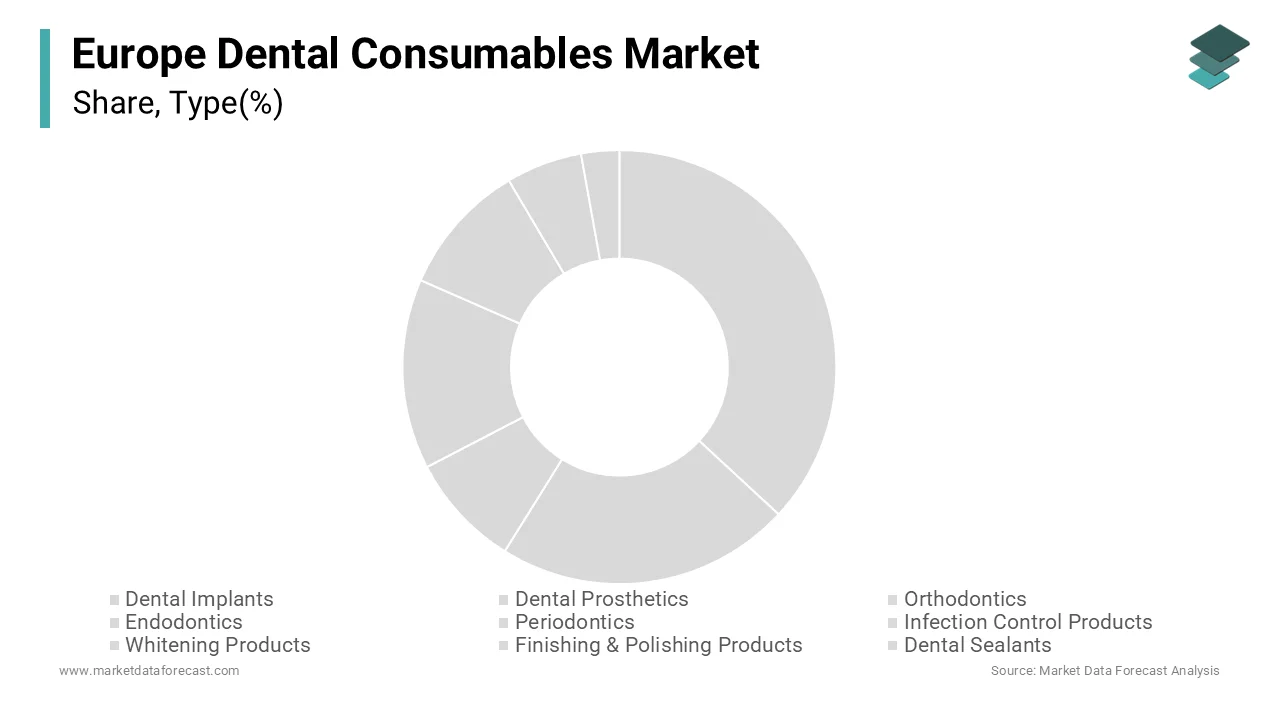
The whitening materials segment is predicted to witness the highest CAGR of 9.6% between 2026 and 2034 due to rising aesthetic expectations, social media influence, and the normalization of professional whitening as a routine preventive service. According to a study, a notable share of adults aged 18 to 45 expressed interest in teeth whitening, with a portion willing to pay out of pocket for in-office treatments. A key enabler is the integration of whitening into comprehensive care plans. Clinics in the UK and Spain now bundle whitening with hygiene visits or orthodontic retention, increasing uptake. Technological advances also drive growth; new formulations using nano hydroxyapatite and low concentration hydrogen peroxide (6 percent) comply with EU Cosmetics Regulation EC No 1223 2009 while reducing sensitivity. Furthermore, teledentistry platforms like SmileDirectClub Europe have expanded access to dentist supervised at home kits containing custom trays and professional gels. Whitening is no longer just for luxury dentistry. It is now a standard, accessible offering in both public and private practices, shifting from an optional extra to a common consumable.
By Application Insights
The restorative dentistry segment was the largest segment in the European dental consumables market by holding a 53.2% share in 2025. The prominence of the restorative dentistry segment is driven by the persistent burden of dental caries, the most prevalent chronic disease in Europe, affecting a significantpercentaget of schoolchildren and nearly all adults, as per the World Health Organization. Also helping this segment is the policy shift toward minimally invasive dentistry, which emphasizes early intervention using adhesive composites, glass ionomers, and sealants rather than extractions or amalgam. National health systems reinforce this trend. Statutory health insurance in Germany provides coverage for tooth-colored posterior fillings for children and individuals with specific health-related contraindications to amalgam, often resulting in widespread utilization of composite materials over traditional amalgam. In addition, this segment is helped by the aging population requiring recurrent restorations due to secondary caries around existing fillings. Innovations further sustain demand. The European dental market is experiencing high growth in the adoption of bioactive restorative materials that release ions to promote remineralization, driven by increasing preference for preventative-based dental treatments. Caries is unlikely to fall without systemic dietary changes and public health programs focusing on prevention, leaving this segment as the cornerstone of European consumable utilization.
The cosmetic dentistry segment is estimated to register the fastest CAGR of 10.2% during the forecast period, due to the convergence of social aesthetics, digital self-presentation, and expanded access to affordable smile enhancement. Growing numbers of young to middle-aged European adults are increasingly prioritizing bright, aligned smiles as vital for their professional and social self-assurance, leading to widespread adoption of cosmetic dental procedures. Key drivers include the rise of direct-to-consumer aligner therapy and the bundling of whitening, bonding,g and veneer-ins into “smile design” packages. General dentists in Scandinavia and the Netherlands are broadening their practice to include routine cosmetic enhancements, aided by the availability of user-friendly composite, restorative, and layering materials. Regulatory alignment also plays a role; the EU’s updated Medical Devices Regulation classifies certain cosmetic bonding materials as Class I devices, enabling faster market entry. Social media amplifies demand; #dentalsmile posts on Instagram in Europe grew. Cosmetic consumables are evolving from a niche luxury to a mainstream clinical staple, driven by the normalization of aesthetic expectations and the democratization of procedures.
By End User Insights
The dental hospitals and clinics segment led the European dental consumables market by occupying a substantial share in 2025. The leading position of the dental hospitals and clinics segment is credited to its role as the primary point of care delivery for millions of annual dental visits across the EU. An additional driver is the procedural intensity of clinical practice. In Germany, the high utilization of dental services and a shift toward preventive care maintain a high, consistent demand for various consumable items, such as burs, bonding agents, and restorative materials, used by general practitioners. Public health mandates further amplify demand. France’s national “M’T dents” program, which was expanded to include early childhood screenings, generates significant, regular demand for preventive pediatric oral care services, including sealants and fluoride applications, by providing free checkups at specific ages. Additionally, the post-pandemic backlog has intensified activity. Following the pandemic, dental services in the UK under the NHS are seeing a continued, steady recovery in patient volume, with a strong focus on addressing the backlog of necessary treatment and preventive services. Private clinics also contribute significantly, particularly in aesthetic and implant services requiring premium consumables. Growing patient numbers and a high density of dentists in Europe make clinics the top source of recurring demand for consumables.
The academic and research institutes segment is anticipated to witness the fastest CAGR of 8.9% between 2026 and 2034. The rapid expansion of this segment is propelled by increased public funding for oral health research and the expansion of hands-on preclinical training programs. European research funding under the Horizon framework is prioritizing advanced biomaterials and regenerative medicine, significantly increasing the demand for experimental, biocompatible, and 3D printable materials in dental research. Leading European dental schools are modernizing curricula by heavily incorporating digital, simulation-based training, requiring extensive pre-clinical practice using specialized consumable kits before students move to direct patient care. Dental institutions across Europe are reporting increased investment in annual consumable budgets, driven by the expansion of digital simulation laboratories and enhanced infection prevention and control protocols. Furthermore, collaborative trials between universities and industry, such as those testing antimicrobial adhesives at the University of Barcelona, generate bulk orders of investigational materials. Academic institutions in Europe are acting as vital testing grounds and volume drivers for next-generation consumables, supporting a regional shift toward precision and sustainable dentistry.
COUNTRY LEVEL ANALYSIS
Germany Dental Consumables Market Analysis
Germany dominated the European dental consumables market by accounting for a 21.5% share in 2025. The dominance of the German market is supported by a high density of dental practices, comprehensive public dental insurance, and strict infection control standards mandating single-use items. Millions of restorative procedures are performed annually under the statutory health insurance system, which covers preventive and basic restorative care for all citizens. The country also hosts Europe’s most advanced dental education infrastructure. Many dental schools require students to use standardized consumable kits during preclinical training, creating consistent institutional demand. Regulatory rigor further shapes consumption. Additionally, Germany is a hub for dental innovation with companies like DMG and VOCO developing next-generation bioactive materials tested in university clinics nationwide. This ecosystem of volume regulation, education,n and R&D ensures Germany remains the benchmark for both scale and sophistication in European dental consumables.
United Kingdom Dental Consumables Market Analysis
The United Kingdom was the second largest country in the European dental consumables market by capturing a 16.8% share in 2025. Despite Brexit, the NHS maintains strong procedural volume through its Band 1 and Band 2 treatment structure covering examination, fillings, gs and extractions for over 25 million patients annually. A key driver is tpost-pandemicmic backlog. NHS England reported an increase in private cosmetic and restorative appointments as patients deferred care during lockdowns. The UK also leads in teledentistry integration. Platforms like Pearl and Dental Monitoring prescribe at-home whitening and preventive kits containing professional-grade consumables shipped directly to patients. Regulatory alignment remains strong. The Medicines and Healthcare products Regulatory Agency MHRA enforces MDR compliance while allowing faster approval of Class I cosmetic items. The UK’s dual-demand model, driven by widespread dental practices and a trend toward supplemental private aesthetic treatments, sustains a reliable market for essential and high-end consumables across both urban and rural areas.
France Dental Consumables Market Analysis
France secures a noteworthy position in the European dental consumables landscape due to its universal preventive care model and high dentist-to-population ratio. The “M’T dents” program provides free checkups and sealants for children at key developmental stages, generating millions of preventive visits annually and consistent demand for fluoride varnishes and fissure sealants. Additionally, France has a strong tradition of aesthetic dentistry. A notable share of general practitioners offer whitening and composite bonding services supported by locally manufactured materials from companies like Septodont. The government’s initiative fully reimburses basic restorative and prosthetic care, reducing out-of-pocket barriers and increasing procedural volume. France maintains a balanced, consistent demand across preventive, restorative, and cosmetic oral care products, driven by comprehensive public insurance, a strong aesthetic focus, and high clinic density.
Italy Dental Consumables Market Analysis
Italy is moving ahead steadfastly in the European dental consumables market, owing to a vibrant private sector complementing limited public coverage. A significant share of dental care is paid out of pocket,t driving demand for premium aesthetic and implant consumables. Italy is a global leader in prosthodontics and ceramic restorations, with clinics in Milan and Bologna, a renowned high-end smile makeovers requiring specialized bonding agents, glaze,s and characterization stains. A major driver is medical tourism. The National Health Service provides only emergency extractions and basic fillings, gs pushing comprehensive care into the private domain where consumers spend per patient is higher than in public systems. Italy's dental ceramics sector thrives on the combination of high-end, discretionary expenditures and technical excellence, underpinned by profound artisanal traditions and a cultural emphasis on appearance.
Spain Dental Consumables Market Analysis
Spain is likely to grow in theEuropeane dental consumables market from 2026 to 2034 due to rapid recovery from pandemic disruptions and growing medical tourism from Northern Europe. A significant influx of foreign visitors to Spain is driven by the substantial cost savings available on advanced dental procedures compared to neighboring European nations. Modern facilities and a high density of skilled practitioners across Spanish regions continue to attract individuals from countries where dental care is less accessible or more expensive. This influx drives demand for high-throughput consumables in implantology and cosmetic dentistry, including surgical guides, temporary abutments, and whitening gels. Domestically, the public system covers only emergencies, but private insurance penetration rose, enabling broader access to restorative care. Additionally, Spain leads in digital adoption. A notable share of clinics in Madrid and Barcelona use intraoral scanners, requiring compatible retraction pastes and scan sprays. Spain's consumables market is growing, utilizing strong regional clusters in Catalonia and Valencia to cater to both local and international patients through cost-effective, tech-ready, and international demand.
COMPETITIVE LANDSCAPE
Competition in tEuropeanope Dental Consumables Market is intense and highly specialized, characterized by a mix of multinational innovators, regional specialists,s and emerging niche brands competing on clinical performance,ce regulatory compliance, and sustainability rather than price alone. The market is shaped by stringent oversight under the EU Medical Devices Regulation,n which demands robust biocompatibility data, post-market surveillance, and unique device identification for most consumables. Leading players differentiate through scientific validation,n offering materials backed bpeer-revieweded studies and university trials. National dental associations and public procurement frameworks exert significant influence, steering adoption toward cost-effective solutions. While large firms dominate high-volume segments like burs and composites, smaller companies thrive in aesthetic or regenerative niches such as bioactive cements or nano whitening gels. Barriers to entry remain high due to certification complexity, established clinician relationships, and distribution networks. However, competition is increasingly focused on lifetime value—balancing upfront cost against clinical longevity, patient satisfaction, and environmental impact—as European dentistry prioritizes prevention, precision, and planetary responsibility.
KEY MARKET PLAYERS
Companies such as these are playing a significant role in the European dental consumables market.
- DENTSPLY International Inc.
- Biomet 3I
- 3M ESPE Dental Solutions
- Henry Schein, Inc.
- Kerr Corporation / Sybron Dental Specialties
- Nobel Biocare
- Patterson Companies, Inc.
- Septodont
- Zimmer Dental
- Straumann
- Danaher
- Sirona
- GC Corporation
- Heraeus Dental
- Align Technology
TOP LEADING PLAYERS IN THE MARKET
- Dentsply Sirona is a global leader in dental technologies with a strong footprint in theEuropeane dental consumables market through its comprehensive portfolio of restorative materials, endodontic file,s, impression systems,s and whitening products. The company supplies both public clinics and private practices across the continent with science-backed solutions aligned with the EU Medical Devices Regulation. It also expanded its digital workflow ecosystem by introducing consumable kits compatible with its PrimeScan intraoral scanner, including specialized retraction pastes and scan sprays. These innovations reinforce its role as an integrated partner in preventive,e minimally invasive, ve and aesthetic dentistry, not only in Europe but across North America and Asia, where its materials set clinical standards.
- Ivoclar Vivadent Switzerland-basedbased pioneer in dental esthetics and restorative materials widely adopted across European dental hospitals and private clinics. The company specializes in ceramic systems, composite resin,s and whitening gel, ls known for color stability and ease of use. It also enhanced its IPS e.max CAD system with new characterization stains and glazes tailored for digital chairside workflows. Ivoclar reinforces its reputation as the premier choice for cosmetic and restorative products across academic and high-end private practices worldwide, uniting material science with artistic precision.
- K,ulzer a subsidiary of Mitsui Chls, is a key contributor to the European dental consumables market through its innovative bonding agents, composites,,s and temporary materials under brands like Visio and Palavit. Headquartered in Germany,ny the company leverages strong ties with European dental schools and public health systems to drive adoptiof evidence-basedsed solutions. It also introduced a sustainable packaging initiative using recyclable blister packs for single-use burs and matrices, reducing plastic wastby thirty-fiveee percent. Kulzer ensures its global relevance in routine and advanced dentistry through continuous improvements in clinical efficiency, regulatory compliance, and environmental responsibility.
TOP STRATEGIES USED BY THE KEY MARKET PARTICIPANTS
Key players in the European Dental Consumables Market develop bioactive and remineralizing materials to align with minimally invasive dentistry trends. They integrate consumables into digital workflows by ensuring compatibility with intraoral scanners and CAD CAM systems. Companies invest in sustainable packaging and single-use sterilized formats to meet infection control and environmental regulations. Strategic collaborations with dental schools and research institutes generate clinical evidence and drive early adoption. Additionally, they expand product portfolios in aesthetic dentistry,y including whitening gels and characterization stains to capture growing consumer demand for smile enhancement.
MARKET SEGMENTATION
This research report on the European Dental Consumables Market has been segmented and sub-segmented into the following categories.
By Type
- Dental Implants
- Dental Prosthetics
- Orthodontics
- Endodontics
- Periodontics
- Infection Control Products
- Whitening Products
- Finishing & Polishing Products
- Dental Sealants
- Dental Burs
- Other Consumables
By Application
- Restorative Dentistry
- Orthodontics
- Endodontics
- Periodontics
- Prosthodontics
- Cosmetic Dentistry
By End User
- Dental Hospitals & Clinics
- Dental Laboratories
- Academic & Research Institutes
By Country
- UK
- France
- Spain
- Germany
- Italy
- Russia
- Sweden
- Denmark
- Switzerland
- Netherlands
- Turkey
- Czech Republic
- Rest of Europe
Frequently Asked Questions
1. What are the main products in the Europe Dental Consumables Market?
Key products in the Europe Dental Consumables Market include dental implants, crowns and bridges, dental biomaterials, orthodontic materials, endodontic materials, periodontic materials, dentures, CAD/CAM devices, and retail dental hygiene essentials. These cater to restorative needs, orthodontics, and prevention, with implants often leading due to aesthetic demands. Materials like composites and adhesives are staples for everyday procedures in European dental practices.
2. Which countries lead the Europe Dental Consumables Market?
Germany leads the Europe Dental Consumables Market with its advanced healthcare, high dental visit rates, and major manufacturers, followed by the UK, France, Italy, and Spain. Eastern Europe sees growth via dental tourism in places like Hungary and Poland. Western Europe's infrastructure drives demand for premium consumables in both public and private sectors.
3. What drives growth in the Europe Dental Consumables Market?
Growth in the Europe Dental Consumables Market stems from rising cosmetic dentistry, aging populations needing prosthetics, and technological advances like CAD/CAM and 3D printing. Increased oral health awareness, dental tourism, and eco-friendly materials also fuel expansion. Government initiatives for preventive care in nations like France enhance accessibility.
4. How does cosmetic dentistry impact the Europe Dental Consumables Market?
Challenges in the Europe Dental Consumables Market include strict EU regulations like CE marking, delaying product launches, and high compliance costs for smaller firms. Economic pressures in public systems and price sensitivity in Eastern Europe hinder adoption. Sustainability demands add complexity to material innovation.
5. What role do dental labs play in the Europe Dental Consumables Market?
Cosmetic dentistry significantly impacts the Europe Dental Consumables Market by boosting demand for tooth-colored composites, ceramics, veneers, and whitening materials. Aesthetic trends across ages drive usage in upscale and general practices, with aligners and veneers popular in Western Europe for smile enhancements.
6. Which companies dominate the Europe Dental Consumables Market?
Dental labs are central to the Europe Dental Consumables Market, using digital tools like CAD/CAM for custom restorations, increasing consumable needs for impressions and materials. They support restorative and cosmetic demands, reducing waste and improving precision for aging patients' prosthetics.
7. What is dental tourism's effect on the Europe Dental Consumables Market?
Leading companies in the Europe Dental Consumables Market include Dentsply Sirona, Straumann, 3M, Henry Schein, Ivoclar Vivadent, Zimmer Biomet, Danaher, Patterson Companies, Benco Dental, and GC Corporation. They innovate in biomaterials and digital products, holding strong shares via trade shows like IDS in Germany.
8. How do regulations affect the Europe Dental Consumables Market?
Dental tourism boosts the Europe Dental Consumables Market, especially in Hungary, Poland, and Turkey, where affordable procedures increase consumable use for implants and restorations. It attracts patients from higher-cost areas, supporting local clinics with high-volume restorative materials.
9. What trends shape the Europe Dental Consumables Market?
Regulations like EU medical device rules impact the Europe Dental Consumables Market by requiring rigorous testing for safety, slowing innovations but ensuring quality. CE approval is mandatory, influencing biodegradable materials like magnesium biomaterials for bone regeneration.
10. Why is preventive care key in the Europe Dental Consumables Market?
Trends in the Europe Dental Consumables Market include sustainable, biodegradable materials, digital dentistry integration, and personalized solutions via 3D printing. Eco-friendly focus and bioresorbable products like NOVAMag cater to environmental concerns and clinical efficacy
Related Reports
Access the study in MULTIPLE FORMATS
Purchase options starting from
$ 2000
Didn’t find what you’re looking for?
TALK TO OUR ANALYST TEAM
Need something within your budget?
NO WORRIES! WE GOT YOU COVERED!
Call us on: +1 888 702 9696 (U.S Toll Free)
Write to us: sales@marketdataforecast.com