- Product Description Description
- Table of Contents TOC
- List of Table & Figure LOT
- Get Free Sample PDF Sample PDF
Market Size, 2025
$69 MnMarket Estimate, 2026
$73.66 MnMarket Forecast, 2034
$109.83 MnCAGR, 2026–2034
5.3%Europe Dental Lasers Market Summary
The Europe Dental Lasers Market is witnessing steady growth, driven by the rising emphasis on minimally invasive dentistry, increasing demand for patient comfort, and the expansion of aesthetic and preventive dental care services. The market is shaped by advancements in diode and Er:YAG laser technologies, growing acceptance in clinical guidelines, and professional training initiatives across Europe. Key growth factors include the shift toward pain-free procedures, growing cosmetic dentistry demand, and integration of lasers into periodontal and conservative treatments, while dental clinics and soft tissue applications are leading adoption across the region.
Market Size & Growth
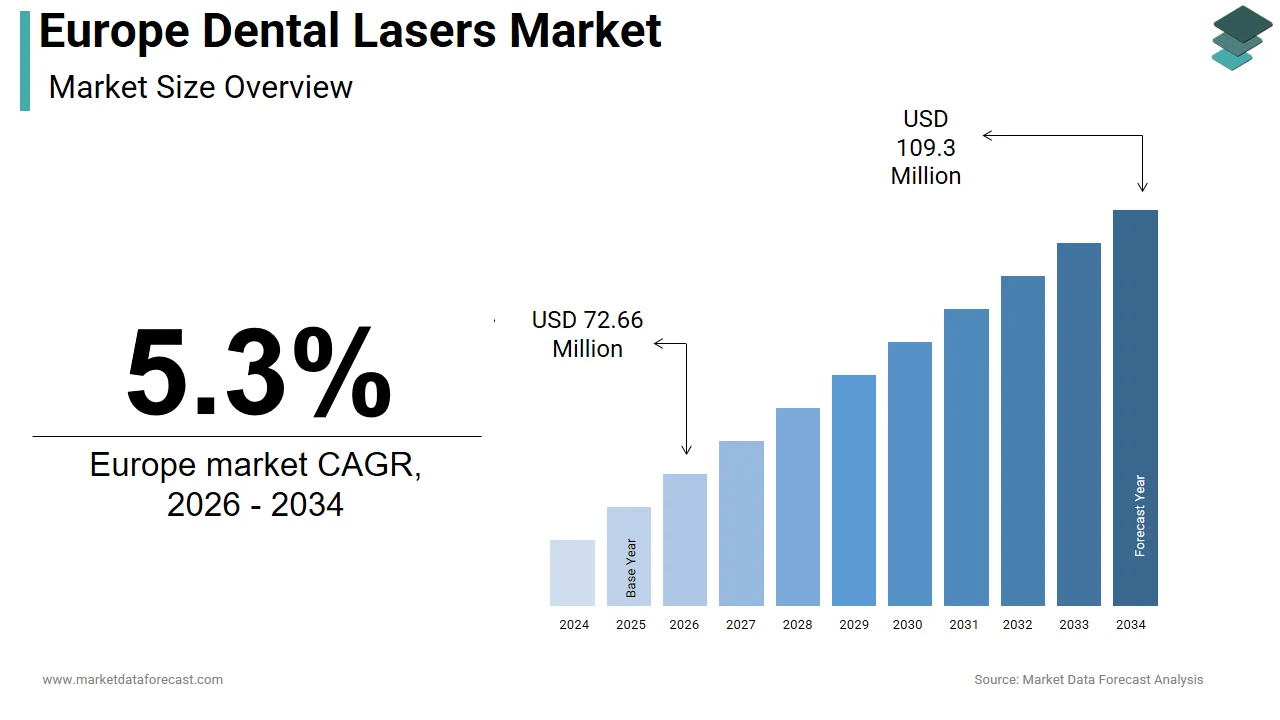
- Valued at USD 69 million in 2025, with projected growth to USD 109.83 million by 2034
- CAGR estimated at 5.3% for the 2026 to 2034 period
- Market expected to reach USD 73.66 million in 2026
Key Drivers
- Minimally Invasive Dentistry: Rising patient preference for pain-free, drill-free procedures
- Aesthetic Dentistry Growth: Increased demand for gum contouring and laser-assisted whitening
- Preventive Care Focus: Use of lasers in periodontal therapy and early caries management
- Professional Training: Inclusion of laser protocols in postgraduate dental curricula
- Patient Comfort: Reduced bleeding, faster healing, and lower anxiety compared to traditional tools
Leading Segments
- Product Type: Soft Tissue Lasers, All-Tissue Lasers
- Application: Periodontitis Treatment, Conservative Dentistry
- End Users: Dental Clinics, Hospitals
- Laser Types: Diode, Er:YAG, Nd:YAG, CO₂
Key Trends
- Photobiomodulation: Use of low-level lasers for healing and pain management
- Pediatric Laser Dentistry: Drill-free caries treatment for children
- Portable Laser Devices: Adoption in public and school dental programs
- Aesthetic Applications: Growing use in cosmetic smile design
- Regenerative Dentistry: Laser-assisted bone and tissue healing
Major Players
- ZOLAR Technology & Mfg Co. Inc., Fotona, The Yoshida Dental Mfg. Co., Ltd., BIOLASE Inc, Deka Laser, KaVo Dental, and Sirona Dental Lasers.
Europe Dental Lasers Market Size
The size of the Europe dental lasers market was valued at USD 69 million in 2025. This market is expected to grow at a CAGR of 5.3% from 2026 to 2034 and be worth USD 109.83 million by 2034 from USD 72.66 million in 2026.
Dental lasers refer to medical devices that use concentrated light energy to perform a range of hard and soft tissue procedures in dentistry, including caries removal, gingivectomy, periodontal therapy, tooth whitening, and biostimulation. These systems, primarily categorized as diode, Er: YAG, Nd: YAG, and CO₂ lasers, offer minimally invasive alternatives to traditional drills and scalpels, with benefits such as reduced bleeding, faster healing, and improved patient comfort. The adoption of dental lasers is embedded within Europe’s broader shift toward precision dentistry and patient-centered care. The number of practicing dentists in the European Union has generally been increasing in most member states, and the dental profession is progressively adopting modern technologies in routine patient care. National dental associations in Germany, France, and the Nordic countries now include laser protocols in postgraduate curricula, signaling institutional acceptance. Furthermore, the European Society for Laser Dentistry has established competency standards and certification programs to ensure safe and effective use. The rise of aesthetic procedures, a greater focus on preventative care, and the quality assurance demands of the EU MDR are transforming dental lasers from optional tools into essential components of modern European dentistry.
MARKET DRIVERS
Growing Emphasis on Minimally Invasive and Patient Comfort-Oriented Dentistry
The European dental community’s strategic pivot toward minimally invasive techniques is a major driver of laser adoption, fueled by patient demand for pain-free and anxiety-reducing care, which in turn propels the growth of the Europe dental lasers market. Dental fear, particularly concerning the dental drill, is a widely acknowledged concern for many adult patients across Europe, indicating a significant desire for less anxiety-inducing treatment alternatives. Dental lasers address this by enabling cavity preparation without vibration or anesthesia in early caries, and soft tissue procedures with minimal bleeding and no sutures. The use of diode lasers as an adjunct to traditional periodontal therapy is increasing in some clinics, with research suggesting potential benefits in reducing inflammation and enhancing the healing process of gum tissues. Lasers are increasingly recognized as an effective adjunctive technology for enhancing the cleaning and disinfection of the root canal system, though they are considered a supplement to, rather than a replacement for, conventional chemical irrigation protocols. National health systems are also recognizing value. The process for obtaining statutory insurance reimbursement for new treatment methods like laser-assisted periodontal therapy remains complex in Germany, and coverage for these procedures is typically not universally available through public insurance funds. This alignment of patient preference, clinical efficacy, and emerging reimbursement is accelerating integration across public and private dental settings.
Integration of Dental Lasers into Aesthetic and Preventive Care Protocols
The rise of aesthetic dentistry and preventive oral health strategies has further contributed to the expansion of the Europe dental lasers market. This has significantly expanded the clinical indications for dental lasers across the region. Diode lasers are increasingly used in tooth whitening procedures to accelerate the bleaching process, allowing for completion in a single office visit rather than requiring many weeks of home treatment. Dental professionals across Europe and elsewhere are adopting laser-assisted whitening techniques as a popular and efficient option for patients seeking rapid cosmetic results. Beyond cosmetics, lasers are central to preventive protocols. Low-level laser therapy (LLLT) is now used to treat dentin hypersensitivity and reduce orthodontic pain. The use of low-level laser therapy is a growing trend among orthodontists to help manage and reduce patient discomfort and sensitivity during treatment. Additionally, the European Federation of Periodontology recommends laser-assisted periodontal therapy as an adjunct to scaling and root planing for chronic periodontitis, citing reduced pocket depth and improved attachment levels. Across Europe, the push for early treatment and a wellness-first approach to oral health is making gentle, precise laser procedures the new standard for modern dental visits.
MARKET RESTRAINTS
High Initial Investment and Limited Reimbursement Coverage
The substantial upfront cost of dental laser systems remains a significant barrier to widespread adoption, particularly among small and solo dental practices across the region, which hampers the growth of the Europe dental lasers market. The purchase price of dental laser technology varies, with mid-range soft-tissue lasers being a considerably smaller investment than sophisticated hard-tissue laser systems. In most EU countries, these devices are not covered under public dental insurance, and private reimbursement is limited or nonexistent. The significant initial investment required for dental laser equipment presents a substantial obstacle to adoption for many dental practitioners across Southern Europe. Obtaining comprehensive insurance reimbursement for laser-assisted periodontal therapy within the German healthcare system remains challenging and inconsistent for both patients and providers. Furthermore, ongoing expenses for maintenance, tips, and calibration add to the total cost of ownership. Limited insurance coverage and outdated government subsidies hinder laser technology adoption for many European practitioners, particularly in the South and East, despite clear clinical advantages.
Shortage of Standardized Training and Certification Pathways
The lack of harmonized education and competency standards for dental laser use across the region impedes safe and consistent clinical application, and thereby hinders the expansion of the Europe dental lasers market. While countries like Germany and the Netherlands offer structured postgraduate laser courses, others have no formal certification requirements, leading to variable skill levels. Many EU member states currently lack a mandatory requirement for specific laser training for clinical dental use. Dentists using lasers in Poland and Greece often report receiving minimal hands-on instruction in the technology. This variability increases the risk of tissue damage, particularly with high-energy hard tissue lasers. The European Board of Laser Dentistry provides a certification recognized across Europe, but few practitioners outside academic centers voluntarily seek it. Inconsistent technique and a lack of EU-wide accreditation standards in dental curricula hinder the full therapeutic potential of lasers, potentially leading to suboptimal patient outcomes.
MARKET OPPORTUNITIES
Expansion into Regenerative and Biostimulatory Applications
Emerging applications of low-level laser therapy in dental tissue regeneration offer new possibilities for the Europe dental lasers market. Photobiomodulation, the use of low-intensity lasers to stimulate cellular activity, is gaining scientific validation for accelerating bone healing after implant placement, reducing post surgical inflammation, and treating oral mucositis in oncology patients. Research indicates that low-level laser therapy shows promise in accelerating dental implant healing and improving bone integration, with specific studies suggesting significant benefits in bone formation and faster recovery times. Dental professional organizations, such as the European Association of Dental Implantology, are increasingly incorporating advanced therapies like low-level laser therapy into recommended treatments for challenging implant cases. Besides, pediatric dentists in Sweden and Denmark use biostimulatory lasers to manage traumatic ulcers and accelerate orthodontic tooth movement. European funding initiatives like Horizon Europe are supporting innovative research into laser technology, specifically for activating stem cells to regenerate dental pulp, reflecting a growing focus on regenerative dentistry. Moving from experimental research to clinical application in Europe, regenerative dentistry will increasingly rely on low-level lasers as essential tools for biologically driven treatments.
Adoption in Public Oral Health and School Dental Programs
The integration of portable diode lasers into public and preventive dental services provides a potential opportunity to improve access and outcomes in underserved populations, which is expected to drive the expansion of the Europe dental lasers market. Compact, battery-operated lasers are increasingly used in mobile dental units and school screening programs for caries detection, fissure sealant activation, and early lesion management without anesthesia, ideal for children and anxious patients. In Finland, public dental services for students have increasingly integrated advanced clinical methods to enhance the longevity of preventive treatments and ensure better oral health outcomes for children. Similarly, the UK’s specialized dental services are exploring minimally invasive technologies to manage gum health in residents of care facilities where traditional mechanical procedures are difficult to perform. These applications align with the EU’s Beating Cancer Plan, which emphasizes early oral lesion detection, and with national strategies to reduce dental anxiety from childhood. Dental lasers, once considered private luxuries, are becoming essential public health tools as health systems adopt cost-effective, child-friendly technologies.
MARKET CHALLENGES
Technological Fragmentation and Interoperability Limitations
A lack of interoperability between laser systems and existing digital dental workflows challenges the growth of the Europe dental lasers market. Most laser units operate as standalone devices with proprietary software that does not integrate with practice management systems, digital imaging platforms, or CAD/CAM workflows. Furthermore, tip compatibility is limited. Handpieces and fibers from one manufacturer rarely work with another’s console, forcing clinics to maintain multiple inventories. This fragmentation discourages multi-laser adoption and complicates training. Unlike intraoral scanners or CBCT systems, which adhere to open standards like DICOM, laser manufacturers have yet to establish common interfaces. The full integration of lasers into seamless digital dentistry will be delayed until the industry adopts interoperability protocols under frameworks such as the EU Medical Device Regulation, hindering clinical synergy and scalability.
Regulatory Complexity Under the EU Medical Device Regulation
The transition to the European Union Medical Device Regulation has introduced significant compliance burdens for dental laser manufacturers. This obstructs the expansion of the Europe dental lasers market. These challenges are delaying market access and increasing costs. Under MDR, all dental lasers are classified as Class IIa or IIb devices requiring rigorous clinical evaluation, post-market surveillance, and unique device identification. The proportion of legacy medical devices, including laser systems, achieving full MDR certification has been a significant challenge, with a substantial number of devices still requiring transition as deadlines approach. The MDR compliance process typically involves lengthy timelines and substantially increased costs for manufacturers compared to previous regulations, presenting significant financial and logistical burdens. Smaller European laser startups, lacking regulatory expertise, have postponed launches or exited the market entirely. Furthermore, notified bodies face backlogs. This regulatory bottleneck not only restricts innovation but also limits dentists access to newer, safer, and more efficient laser technologies, ultimately slowing the modernization of European dental care.
REPORT COVERAGE
| REPORT METRIC | DETAILS |
| Market Size Available | 2025 to 2034 |
| Base Year | 2025 |
| Forecast Period | 2026 to 2034 |
| Segments Covered | By Product, Application, End User, and Region. |
| Various Analyses Covered | Global, Regional, and Country-Level Analysis, Segment-Level Analysis, Drivers, Restraints, Opportunities, Challenges; PESTLE Analysis; Porter’s Five Forces Analysis, Competitive Landscape, Analyst Overview of Investment Opportunities |
| Countries Covered | UK, France, Spain, Germany, Italy, Russia, Sweden, Denmark, Switzerland, Netherlands, Turkey, Czech Republic, and Rest of Europe |
| Market Leaders Profiled | ZOLAR Technology & Mfg Co. Inc., Fotona, The Yoshida Dental Mfg. Co., Ltd., BIOLASE Inc, Deka Laser, KaVo Dental, and Sirona Dental Lasers. |
SEGMENTAL ANALYSIS
By Product Insights
The soft tissue lasers segment led the Europe dental lasers market by accounting for a 64.5% share in 2024. The leading position of the soft tissue lasers segment is driven by the high frequency of gingival and periodontal procedures in general dentistry, where diode lasers (810–980 nm) offer precision, hemostasis, and minimal postoperative discomfort. The utilization of soft tissue lasers is growing in dental practices across Europe for specific procedures like gingivectomy, frenectomy, and crown lengthening, primarily due to benefits such as reduced bleeding and improved patient comfort. In addition, the use of laser-assisted periodontal therapy as an addition to traditional scaling and root planing has gained traction, with some research indicating enhanced outcomes for specific deep pockets when compared to conventional treatment alone. Furthermore, soft tissue lasers are increasingly used in cosmetic dentistry procedures like gingival contouring, as patients in urban centers show a clear preference for these minimally invasive techniques before procedures such as veneer placement. Their relatively low cost, ease of use, and versatility across hygiene, surgery, and aesthetics ensure sustained dominance in daily clinical practice.
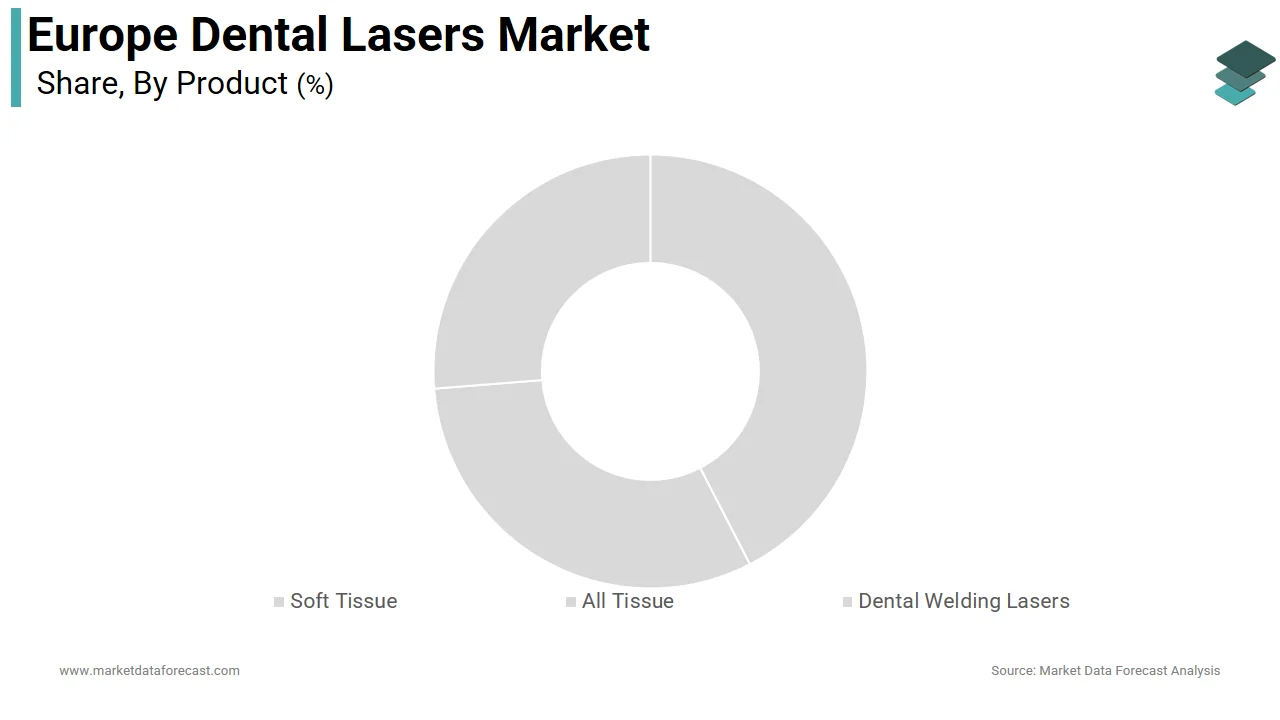
The all tissue lasers segment is on the rise and is expected to be the fastest growing segment in the market by witnessing a CAGR of 9.7% from 2025 to 2033 due to the rising demand for truly drill-free dentistry, particularly in pediatric and anxious adult populations. Er: YAG lasers represent a promising technology for caries treatment, as they have been shown in various clinical studies to reduce patient discomfort and the need for local anesthesia during cavity preparation. The adoption of all-tissue lasers for minimally invasive restorations is gradually increasing within public pediatric dental services in some regions, reflecting a broader trend toward more patient-friendly technologies. Moreover, the European Academy of Pediatric Dentistry is committed to evidence-based caries management guidelines that incorporate new technologies and minimally invasive techniques as supported by clinical evidence. Furthermore, the ability to perform combined procedures, such as bone contouring during implant exposure followed by gingival shaping, enhances workflow efficiency. Driven by a growing demand for pain-free treatment and national health policies favoring early intervention, all-tissue lasers are becoming a standard fixture in modern European dental practices. They are no longer considered just a niche tool.
By Application Insights
The periodontitis treatment segment dominated the Europe dental lasers market by capturing a share of 48.2% in 2024. The dominance of the periodontitis treatment segment is attributed to the high prevalence of periodontal disease, impacting a notable share of adults aged 35 to 74 in the EU, and the proven efficacy of laser therapy as an adjunct to conventional scaling. Diode and Nd: YAG lasers, when used as an adjunct to traditional treatments, are recognized in clinical research for their ability to significantly decrease levels of key pathogenic bacteria associated with periodontal disease. Changes in statutory health insurance policies in various regions, including Germany, are anticipated to influence the integration and increase the use of advanced therapies like laser-assisted periodontal treatment among dental professionals. National prevention plans in France and the Netherlands now include laser protocols in public dental hygiene programs for high-risk patients. The combination of clinical validation, reimbursement support, and alignment with EU oral health strategies ensures periodontitis remains the primary driver of laser utilization across Europe.
The conservative dentistry segment is expected to exhibit a noteworthy CAGR of 10.3% during the forecast period, owing to the shift toward minimally invasive caries management, particularly in children and young adults. Er: YAG lasers enable selective removal of demineralized enamel and dentin while preserving healthy structure, a core principle of modern adhesive dentistry. Research indicates that laser preparation techniques for tooth cavities may offer improved adhesion with composite restorative materials compared to traditional bur preparation methods. These findings suggest a difference in the bond strength achieved by the two techniques when using composite restoratives. The European Board of Pediatric Dentistry now recommends laser use for non-restorative caries treatment in primary teeth, reducing the need for sedation. Furthermore, several Nordic countries have integrated laser technology into their preventative school dental initiatives for sealing tooth surfaces. The use of laser assistance during the application process has been observed to improve the long-term stability of the sealants. Clinical patterns suggest that preparing dental fissures with lasers contributes to a decrease in the frequency of sealant detachment or failure. The shift toward bio-preservation and patient-led demand for non-invasive pediatrics has positioned conservative dentistry at the forefront of the laser technology movement in Europe.
By End User Insights
The dental clinics segment was the largest in the Europe dental lasers market by holding a significant share in 2024. The supremacy of the dental clinics segment is credited to the decentralized nature of European dental care, where a significant share of oral health services are delivered in private or group practices rather than hospital settings. General dentists and specialists increasingly adopt lasers to differentiate their services, enhance patient experience, and expand treatment offerings. In addition, a notable observation in the Netherlands is the majority ownership of lasers within dental clinics. The trend is amplified by rising aesthetic demands. In urban dental clinics located in both Italy and Spain, the use of diode lasers has become common practice for specific gingival contouring procedures during cosmetic smile treatments. Additionally, postgraduate training programs in Germany and France now include hands-on laser modules, accelerating skill acquisition among new practitioners. The shift toward bio-preservation and patient-led demand for non-invasive pediatrics has positioned conservative dentistry at the forefront of the laser technology movement in Europe.
The hospitals segment is estimated to register the fastest CAGR of 8.5% over the forecast period. The rapid growth of the hospitals segment is fuelled by the integration of lasers into complex oral surgery, oncology supportive care, and special needs dentistry within university and public hospitals. UK healthcare providers are increasingly exploring and cautiously adopting photobiomodulation therapy (low-level laser therapy) for managing oral mucositis in cancer patients, with evidence supporting its effectiveness in reducing pain and the severity of this condition. National guidance from NICE points to benefits in particular patient groups, although it hasn't become universal practice in the UK yet. Similarly, specialists in oral and maxillofacial surgery across various countries are increasingly utilizing Er: YAG lasers for precise bone procedures like cyst enucleation and preparing implant sites, a technique recognized for minimizing trauma and promoting rapid bone healing compared to traditional surgical methods. The European Reference Networks for rare craniofacial disorders also mandate laser protocols for delicate soft tissue procedures in pediatric syndromes. The expansion of hospital dentistry into interdisciplinary care and value-based outcomes means that lasers are emerging as vital tools, offering superior precision, safety, and patient comfort in high acuity settings.
COUNTRY-LEVEL ANALYSIS
Germany Dental Lasers Market Analysis
Germany was the top performer in the Europe dental lasers market by accounting for a 22.1% share in 2024. The supremacy of the German market is attributed to its high dentist density, thousands of registered practitioners, and a strong culture of technology adoption in private practice. There is a general inclination in German dental practices towards adopting modern technology, with a majority of clinics utilizing at least one laser for various treatments. This trend is consistent with a focus on both functional therapeutic areas, such as periodontal care, and cosmetic gum procedures. Germany also hosts leading laser training centers in Berlin and Munich, ensuring high competency standards. Germany serves as the gold standard for incorporating laser technology into European dentistry, thanks to strong postgraduate programs, good insurance coverage, and patients requesting modern treatments.
France Dental Lasers Market Analysis
France followed closely in the Europe dental lasers market by capturing a 15.8% share in 2024. The growth of the French market is propelled by high aesthetic demand and strong adoption in urban private practices. A majority of dental professionals in major cities are using a particular type of laser technology for specific cosmetic procedures. Consumer interest in cosmetic dentistry is a key factor driving the adoption of this technology. The national approach to oral health now incorporates specific protocols for using laser technology in ongoing care for certain patients. This integration of new protocols is part of public health initiatives related to dental hygiene. A major educational institution offers a comprehensive training program in the use of laser technology, resulting in a large number of certified practitioners each year. Additionally, French manufacturers like Deka Laser contribute to domestic innovation and accessibility. France maintains its status as a high-adoption, high-value market through a blend of cosmetic dentistry culture, public health integration, and educational depth.
Italy Dental Lasers Market Analysis
Italy is another key player in the Europe dental lasers market due to strong regional variation, with notable laser penetration in northern regions like Lombardy and Emilia Romagna, but lesser in the south. Aesthetic dentistry is a major driver. Italian patients rank among the highest in Europe for cosmetic dental procedures, with lasers used extensively for gum reshaping and bleaching. Government incentives for digital dentistry modernization, part of the PNRR recovery plan, have also subsidized laser purchases for young dentists. Despite economic disparities, Italy’s cultural emphasis on appearance and oral health ensures steady demand, particularly in private and group practices serving urban and tourist populations.
UK Dental Lasers Market Analysis
The United Kingdom is moving ahead steadfastly in the Europe dental lasers market. While private practice adoption is moderate, hospitals and academic centers are emerging as key growth areas. NHS hospital dental departments increasingly use low-level lasers to manage oral mucositis in oncology patients. Clinical evidence and evolving national guidelines are driving the increasing adoption of low-level laser therapy (photobiomodulation) protocols in UK cancer centers for managing oral mucositis. The Royal College of Surgeons now includes laser training in its postgraduate oral surgery curriculum. In private practice, aesthetic applications dominate, particularly in London and Manchester, where diode lasers are standard for gum contouring. The UK’s departure from the EU has not disrupted device approvals. The UK's MHRA is establishing a new, independent regulatory framework for medical devices that incorporates some elements of the EU MDR but introduces distinct post-market surveillance requirements and a proposed international reliance system, signaling a departure from direct alignment with EU standards. The UK's laser market is maturing into a balanced, clinically rigorous sector, driven by advancements in hospital innovation alongside growth in private aesthetic practices.
Sweden Dental Lasers Market Analysis
Sweden is predicted to grow in the Europe dental lasers market from 2025 to 2033. The country is a pioneer in preventive and pediatric laser dentistry, with a notable share of public child dental services using Er: YAG lasers for drill-free caries management. Sweden’s national oral health program emphasizes minimally invasive care, and lasers are integrated into standard protocols for both children and adults with dental anxiety. The Karolinska Institute offers advanced training in laser biostimulation for bone healing and mucosal repair, influencing Nordic practice standards. High public trust in dental care and willingness to invest in technology, supported by tax incentives for practice modernization, drive adoption even in rural clinics. Sweden’s combination of public health integration, preventive focus, and scientific leadership makes it a high-impact, early adopter market in Northern Europe.
COMPETITIVE LANDSCAPE
Competition in the Europe Dental Lasers Market is characterized by a mix of European specialty manufacturers and global players vying for integration into routine clinical workflows. Companies compete on clinical versatility, ease of use, regulatory compliance, and training support rather than price alone. Fotona Deka and BIOLASE lead through technological differentiation with Er: YAG systems for hard tissue and diode lasers for soft tissue applications. The market is highly fragmented by country due to varying reimbursement policies, dental education standards, and practitioner preferences. Regulatory hurdles under the MDR have raised entry barriers favoring established brands with resources for certification. Competition also extends to education as companies invest in accredited courses to build loyalty and ensure safe usage. While private clinics drive volume, hospitals and academic centers influence adoption through evidence-based protocols. Success requires balancing innovation with accessibility and aligning with Europe’s emphasis on minimally invasive patient-centered and preventive dental care.
KEY MARKET PLAYERS
The leading companies operating in the Europe dental lasers market include:
- ZOLAR Technology & Mfg Co. Inc.
- Fotona
- The Yoshida Dental Mfg. Co., Ltd.
- BIOLASE Inc.
- Deka Laser
- KaVo Dental
- Sirona Dental Lasers
TOP PLAYERS IN THE MARKET
- Fotona is a globally recognized European innovator in dental lasers headquartered in Slovenia with a strong footprint across the continent. The company specializes in high-precision Er: YAG and Nd: YAG laser systems used in conservative dentistry, periodontics, and aesthetic procedures. Fotona has reinforced its European presence by achieving full compliance with the EU Medical Device Regulation for its LightWalker and XS platforms. It collaborates with academic institutions such as the University of Ljubljana and the Medical University of Vienna to publish clinical evidence on laser-assisted caries removal and peri-implantitis treatment. Recent initiatives include launching multilingual digital training modules accredited by national dental associations and expanding service networks in Southern Europe to support solo practitioners adopting advanced laser technology.
- Deka Laser, an Italian manufacturer, plays a pivotal role in the Europe dental lasers market through its diode and Er: YAG systems designed for soft tissue surgery and minimally invasive dentistry. The company supplies devices to thousands of clinics across Europe with a focus on user-friendly interfaces and integrated safety protocols. Deka has strengthened its market position by modernizing its production facility in Florence to meet MDR traceability requirements and by introducing cloud-based device monitoring for predictive maintenance. It also partners with the Italian Society of Laser Dentistry to deliver certified training programs and supports national school dental initiatives with portable laser units for pediatric care, demonstrating its commitment to education and public health integration.
- BIOLASE Inc., although US-based, maintains a significant operational and commercial presence in Europe through its Munich office and distribution network. The company’s Waterlase and Epic platforms are widely used for all tissue applications, including caries removal, gum contouring, and endodontic disinfection. BIOLASE has enhanced its European competitiveness by obtaining MDR certification for its entire dental laser portfolio and by launching AI-assisted treatment protocols that guide clinicians through standardized workflows. The company also sponsors hands-on workshops with the European Society for Laser Dentistry and provides financing solutions to small clinics, easing the barrier of high upfront costs. These actions reflect BIOLASE’s strategic focus on accessibility education and regulatory compliance in the European market.
TOP STRATEGIES USED BY THE KEY MARKET PARTICIPANTS
Key players in the Europe Dental Lasers Market prioritize full compliance with the EU Medical Device Regulation through rigorous clinical evaluations and unique device identification systems. They invest in hands-on training programs accredited by national dental associations to build practitioner confidence and competence. Companies develop user-friendly and multifunctional platforms that support both hard and soft tissue applications to maximize clinical utility. Strategic partnerships with academic and professional societies generate clinical evidence and promote best practices. Additionally, they offer flexible financing and service support to lower adoption barriers for small and solo dental practices across diverse European markets.
MARKET SEGMENTATION
This Europe dental lasers market research report is segmented and sub-segmented into the following categories.
By Product
- Soft Tissue
- All Tissue
- Dental Welding Lasers
By Application
- Conservative Dentistry
- Endodontic Treatment
- Periodontitis
By End User
- Hospitals
- Clinics
By Country
- UK
- France
- Spain
- Germany
- Italy
- Russia
- Sweden
- Denmark
- Switzerland
- Netherlands
- Turkey
- Czech Republic
- Rest of Europe