- Product Description Description
- Table of Contents TOC
- List of Table & Figure LOT
- Get Free Sample PDF Sample PDF
Market Size, 2025
$594.37 MnMarket Estimate, 2026
$642.75 MnMarket Forecast, 2034
$1,202.08 MnCAGR, 2026–2034
8.14%Europe Dental Sterilization Market Size
The Europe Dental Sterilization Market Size was valued at USD 594.37 million in 2025, is expected to have 8.14 % CAGR from 2026 to 2034, and be worth USD 1202.08 million by 2034 from USD 642.75 million in 2026.
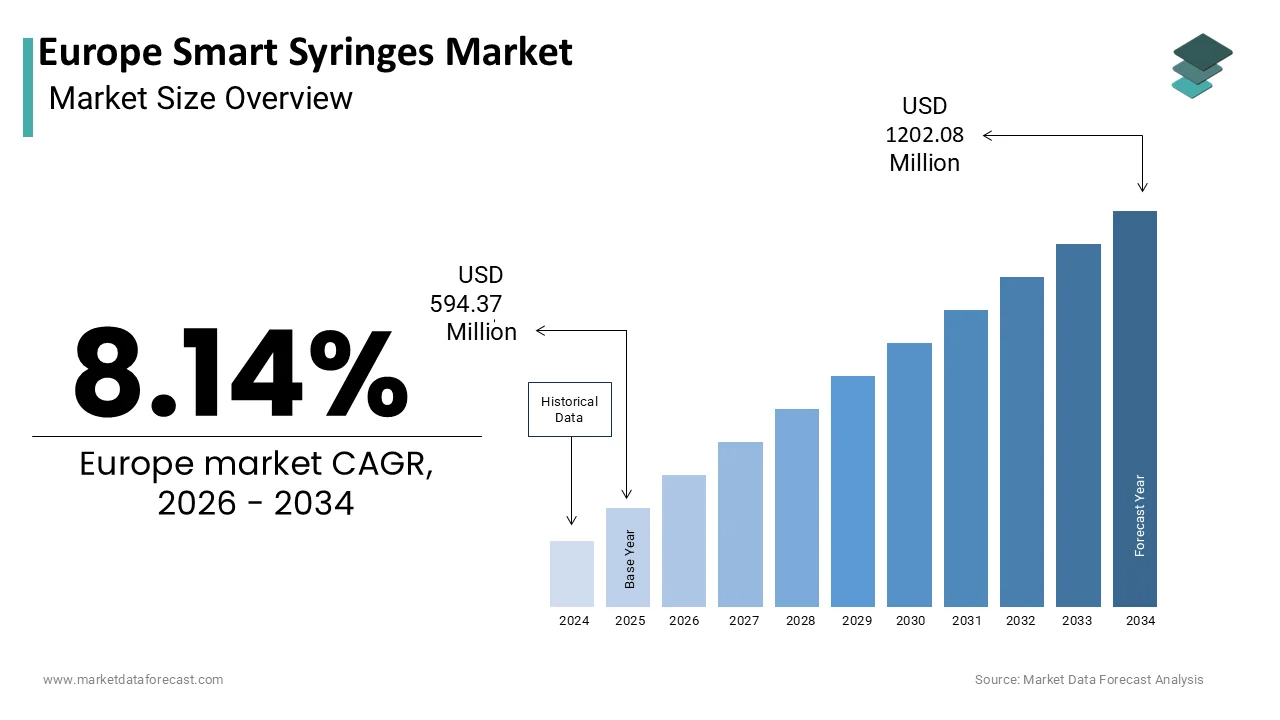
The Europe Dental Sterilization Market refers to the comprehensive range of equipment, consumables, and services used to ensure the elimination of microorganisms from dental instruments, surfaces, and environments to prevent cross-contamination and infection transmission. Dental sterilization encompasses a variety of method,s including autoclaving, dry heat sterilization, chemical disinfection, and emerging technologies such as plasma and UV-based systems. The market includes products like steam sterilizers, sterilization pouches, biological indicators, ultrasonic cleaners, and automated washer-disinfectors.
Europe maintains high standards in healthcare safety, particularly within dental practices, where regulatory compliance and patient safety are prioritized. According to the European Centre for Disease Prevention and Control (ECDC), dental settings are recognized as high-risk environments for microbial transmission, reinforcing the need for rigorous sterilization protocols.
Furthermore, increasing awareness about hospital-acquired infections and growing emphasis on preventive healthcare have led to stronger adherence to sterilization guidelines.
MARKET DRIVERS
Rising Incidence of Healthcare-Associated Infections (HAIs) in Dental Settings
One of the key catalysts accelerating the Europe Dental Sterilization Market is the increasing concern over healthcare-associated infections (HAIs) in dental clinics and hospitals. As dental procedures often involve exposure to blood and saliva, improper sterilization can lead to the transmission of pathogens such as hepatitis B, hepatitis C, and methicillin-resistant Staphylococcus aureus (MRSA).
According to the European Centre for Disease Prevention and Control (ECDC), a significant share of patients undergoing medical interventions in Europe acquire at least one HAI, with dental facilities contributing to a notable share.
This rising risk has prompted stricter enforcement of sterilization protocols by national health authorities. In Germany, according to the Robert Koch Institute, there is an uptick in post-procedural infections linked to insufficient instrument decontamination, leading to enhanced sterilization mandates. Similarly, as per Public Health England (PHE), several dental clinics were subjected to inspections and corrective actions due to non-compliance with infection control measures. These developments have significantly increased the adoption of advanced sterilization equipment and consumables across private and public dental practices, reinforcing the importance of infection prevention and driving sustained growth in the dental sterilization sector.
Stringent Regulatory Frameworks and Compliance Requirements
A key factor fueling the Europe Dental Sterilization Market is the implementation of stringent regulatory frameworks governing infection control in healthcare settings. European Union directives, along with national guidelines from bodies such as the UK Health Security Agency and France’s Haute Autorité de Santé (HAS), mandate regular sterilization audits, validation of sterilization cycles, and continuous monitoring of sterilization efficacy.
According to the European Commission, all EU member states must comply with the Medical Device Regulation (MDR), which enforces standardized sterilization processes for reusable dental instruments.
These regulations require dental practitioners to adopt validated sterilization techniques and maintain detailed records of sterilization cycles, biological indicators, and equipment maintenance.
This regulatory push has not only improved hygiene standards but also stimulated demand for modern sterilization technologies and compliance tools across Europe.
MARKET RESTRAINTS
High Cost of Advanced Sterilization Equipment and Maintenance
A major restraint affecting the Europe Dental Sterilization Market is the high cost associated with acquiring and maintaining advanced sterilization equipment. Modern dental sterilizers, especially those integrated with digital monitoring, data logging, and compliance certification capabilities, often come with significant upfront investment.
In addition, ongoing expenses related to validation tests, calibration, and consumables such as sterilization pouches and indicator strips further increase the operational burden. In Spain, according to the Spanish Society of Primary Care Dentistry (SEPCD), rural and independent clinics frequently delay equipment upgrades due to cost considerations.
Lack of Uniformity in National Sterilization Guidelines Across Europe
Another key restraint influencing the Europe Dental Sterilization Market is the lack of harmonization in sterilization guidelines across different European countries. While some nations enforce strict sterilization protocols aligned with international standards, others maintain less stringent or inconsistently applied regulations, leading to variability in sterilization adoption rates.
According to the European Committee on Infection Control (EUCIC), there is a notable disparity in sterilization requirements between Western and Eastern European countries, affecting market uniformity.
Additionally, as per the Nordic Dental Association, differences in sterilization training programs and inspectorate frequency create uneven implementation of best practices. These inconsistencies result in fragmented market growth, complicating expansion strategies for manufacturers aiming to offer standardized sterilization solutions across Europe.
MARKET OPPORTUNITIES
Integration of Digital Monitoring and Smart Sterilization Technologies
An emerging opportunity for the Europe Dental Sterilization Market lies in the integration of digital monitoring and smart sterilization technologies that enhance process efficiency, compliance tracking, and data management. As dental clinics increasingly embrace digitization, the demand for sterilization equipment equipped with real-time monitoring, cloud connectivity, and automated reporting functions is rising.
Smart sterilizers enable dental practitioners to track sterilization cycles, receive alerts for failed loads, and maintain electronic records for regulatory inspections—an essential feature under the Medical Device Regulation (MDR) framework.
As per the British Dental Association (BDA), nearly 50% of dental clinics in the UK plan to upgrade to connected sterilization systems by 2025 to improve audit readiness and reduce human error. With increasing emphasis on traceability and digital compliance, this trend presents a strong avenue for market expansion.
Expansion of Preventive and Aesthetic Dentistry Practices
The rapid expansion of preventive and aesthetic dentistry practices across Europe is opening new growth opportunities for the dental sterilization market. Unlike surgical or restorative dentistry, which already follows strict sterilization norms, aesthetic treatments such as teeth whitening, veneers, and orthodontic aligner fittings are increasingly performed in boutique-style clinics and beauty centers that may previously have lacked robust sterilization infrastructure. According to the European Dental Industry Association (EDIA), the number of cosmetic dental clinics in Central and Eastern Europe grew notably between 2020 and 2025.
As these newer entrants in the dental care space recognize the necessity of infection control, they are investing in compact yet efficient sterilization units tailored for high-volume outpatient settings.
Besides, as reported by the Polish Dental Chamber, the influx of young dental professionals into aesthetic dentistry has driven interest in user-friendly and technologically advanced sterilization solutions.
MARKET CHALLENGES
Limited Training and Awareness Among Private Practitioners
A crucial challenge facing the Europe Dental Sterilization Market is the limited training and awareness regarding proper sterilization protocols among private dental practitioners, particularly in smaller clinics and rural areas. Despite stringent regulatory expectations, many dentists lack formal education on sterilization validation, spore testing, and the correct usage of sterilization consumables.
In countries like Bulgaria and Croatia, where dental associations report lower engagement with continuing professional development (CPD) modules, compliance with sterilization best practices remains inconsistent. Like, a 2025 survey found that a significant number of small clinics reused sterilization pouches or skipped biological indicator tests to cut costs. These gaps in knowledge and practice pose a serious challenge to achieving universal sterilization standards, limiting the market’s ability to scale uniformly across the continent.
Supply Chain Disruptions and Component Shortages
Supply chain instability represents a persistent challenge for the Europe Dental Sterilization Market, particularly following global disruptions caused by geopolitical tensions and pandemic-related logistics bottlenecks. Many sterilization consumables—such as indicator strips, pouches, and spore test kits—are imported from Asian and North American suppliers, making them vulnerable to delays and price fluctuations.
According to the European Trade Association for Medical Devices (MedTech Europe), supply chain issues affected the availability of sterilization consumables in several EU markets during 2022 and early 2025.
Component shortages, particularly for high-grade filtration materials and specialized polymers used in sterilization pouches, have also impacted production timelines for local manufacturers. Until supply chains stabilize and domestic manufacturing capacities expand, these logistical challenges will remain a constraint on market expansion.
REPORT COVERAGE
| REPORT METRIC | DETAILS |
| Market Size Available | 2025 to 2034 |
| Base Year | 2025 |
| Forecast Period | 2026 to 2034 |
| Segments Covered | By Product, End-User, and Country. |
| Various Analyses Covered | Global, Regional, & Country Level Analysis; Segment-Level Analysis, DROC, PESTLE Analysis, Porter’s Five Forces Analysis, Competitive Landscape, Analyst Overview of Investment Opportunities |
| Country Covered | UK, Germany, Italy, France, Spain, Sweden, Denmark, Poland, Switzerland, Netherlands, Rest of Europe. |
| Market Leaders Profiled | Midmark Corporation, Tuttnauer, Dentsply Sirona, ATACHANA GROUP |
SEGMENT ANALYSIS
By Product Insights
The instruments segment commanded the dominant position in the Europe Dental Sterilization Market, capturing 45.1% of total revenue in 2025. This dominance is primarily attributed to the high capital investment required for purchasing sterilization equipment such as autoclaves, dry heat sterilizers, ultrasonic cleaners, and washer-disinfectors. These factors collectively reinforce the central role of sterilization instruments in ensuring compliance and infection control across dental settings.
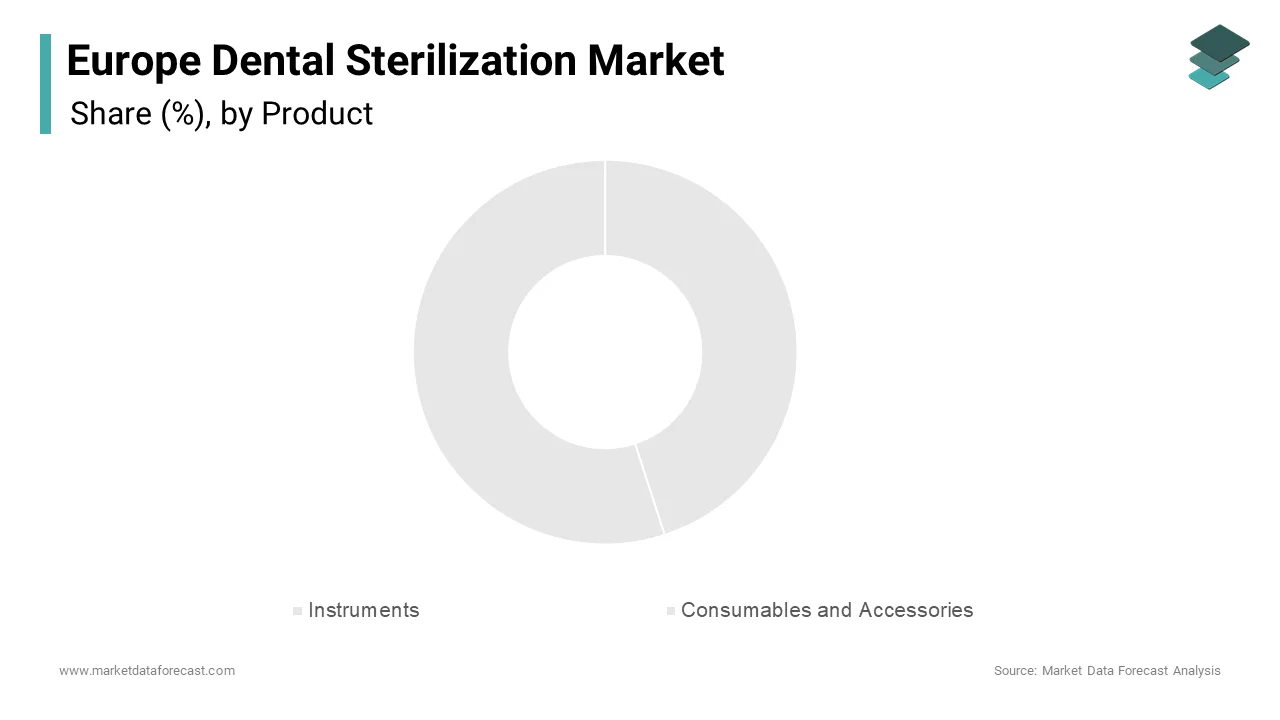
Consumables and accessories are emerging as the fastest-growing segment in the Europe Dental Sterilization Market, projected to expand at a CAGR of around 9.6% through 2033. This growth is driven by the increasing frequency of sterilization procedures and the rising need for disposable items that ensure process integrity and traceability.
One of the key drivers behind this surge is the growing emphasis on biological monitoring and packaging compliance under EU MDR guidelines. With dental practitioners seeking better documentation and regulatory adherence, the demand for consumables continues to accelerate, making this segment a high-growth area within the market.
By End-User Insights
Clinics represented the biggest end-user segment in the Europe Dental Sterilization Market, accounting for a 60.3% of total market revenue in 2025. This dominance is due to the sheer number of private and public dental clinics across the region, all of which require daily sterilization of reusable instruments and surfaces to meet healthcare safety standards.
A primary growth driver is the widespread adoption of sterilization protocols mandated by national health authorities and professional associations.
Dental laboratories are coming up as the booming end-user segment in the Europe Dental Sterilization Market, projected to grow at a CAGR of 8.9% during the forecast period. This growth is being driven by the increasing complexity of dental prosthetics, implants, and restorative devices that require stringent contamination control before patient delivery.
As per the Italian National Institute of Health (ISS), dental labs handling removable prostheses and orthodontic appliances are now subject to stricter hygiene regulations, mandating the use of validated sterilization methods. With rising dental restoration volumes and tighter sterilization mandates, this sector is experiencing accelerated demand for sterilization products.
COUNTRY LEVEL ANALYSIS
Germany had the largest share of the Europe Dental Sterilization Market, contributing a 20.1% of total regional sales in 2025. The country's well-established dental care infrastructure, high density of dental clinics, and strict regulatory environment make it a central hub for sterilization technology adoption. According to the German Federal Institute for Drugs and Medical Devices (BfArM), over 85% of dental practices in Germany follow standardized sterilization cycles using Class B autoclaves.
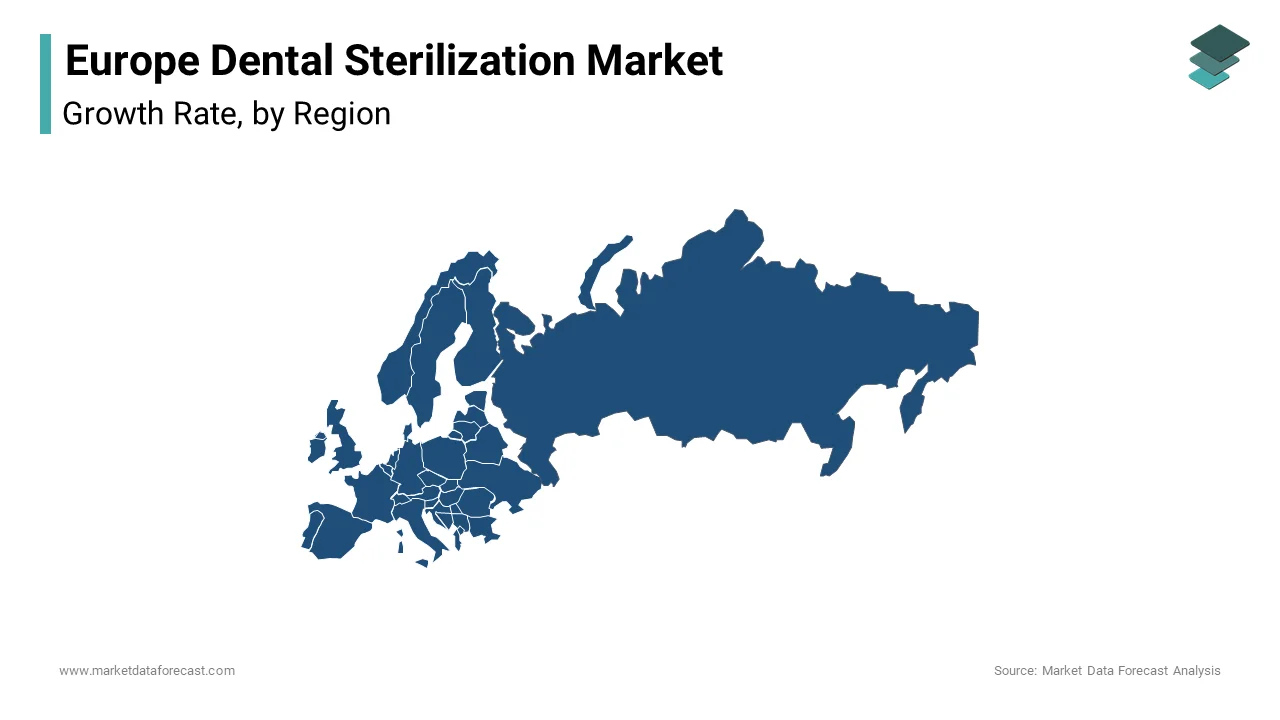
An important growth factor is the country’s emphasis on preventive dentistry and infection control, supported by regular audits and continuing education programs for dental professionals. In addition, the presence of leading manufacturers such as Melag and W&H Dentalwerk has strengthened domestic production and service support.
France benefits from a strong healthcare system, extensive dental coverage under its national insurance scheme, and rigorous infection control policies enforced by the French Health Authority (HAS). A major growth driver is the country’s proactive approach to medical device regulation and compliance training. Also, as reported by the French Ministry of Health, several regional health agencies have launched inspection campaigns targeting small clinics to ensure full sterilization protocol adherence. With increasing awareness and institutional backing, France maintains a strong position in the European dental sterilization landscape.
The United Kingdom is positioning itself as a key player due to its emphasis on hygiene and patient safety. As per the Care Quality Commission (CQC), dental clinics in the UK are subject to routine inspections that include assessments of sterilization practices, compelling providers to invest in compliant equipment and consumables.
A significant growth factor is the integration of sterilization into the National Health Service (NHS) dental care framework, particularly in primary care centers and hospital-based dental units. According to the British Dental Association (BDA), over 50% of NHS-funded dental facilities adopted digital sterilization tracking systems between 2021 and 2025 to enhance accountability and audit readiness. Besides, as per the research, post-pandemic infection control measures have led to increased scrutiny and improved sterilization practices across both private and public dental services.
Italy is reflecting steady growth driven by increasing private dental practice numbers and a rising preference for cosmetic and implant dentistry. A key growth driver is the expansion of aesthetic and orthodontic dental services, which necessitate frequent sterilization of precision tools and impression materials. As per the Italian National Institute of Health (ISS), recent revisions to sterilization guidelines have mandated enhanced record-keeping and periodic validation tests, prompting many clinics to upgrade their sterilization setups. Besides, as per the Italian Ministry of Health, several regions have introduced subsidy programs for small clinics transitioning to MDR-compliant sterilization systems.
Spain captures a notable share of the Europe Dental Sterilization Market, driven by an expanding network of independent dental clinics and a growing emphasis on infection prevention. An important growth factor is the increasing participation of Spanish dental professionals in national and international sterilization certification programs. Like, regional governments have begun promoting sterilization best practices through awareness campaigns and financial incentives for clinic upgrades. With improving technical knowledge and broader regulatory enforcement, Spain is gradually enhancing its position in the European dental sterilization landscape.
The Rest of Europe, including countries such as Sweden, Denmark, Switzerland, the Netherlands, and Russia, collectively represents a notable share of the Europe Dental Sterilization Market. While individual markets vary in maturity, combined efforts toward regulatory modernization, healthcare digitization, and infection control training are driving gradual but consistent growth.
In Sweden, government-backed initiatives have encouraged the adoption of smart sterilization technologies in university clinics and teaching hospitals. With diverse but converging trends in sterilization practices, the broader European region is showing promising potential for long-term market development.
KEY MARKET PLAYERS AND COMPETITIVE LANDSCAPE
Companies playing a vital role in the Europe dental sterilization market are Midmark Corporation, Tuttnauer, Dentsply Sirona, ATACHANA GROUP, W&H Dentalwerk Bürmoos GmbH, Pelton & Crane, M&CC Dental, Belmont Equipment & Technologies, Cantel Medical, DENTALEZ, Inc.
The Europe Dental Sterilization Market is highly competitive, shaped by the coexistence of global medical device giants and specialized regional manufacturers. Established companies dominate due to their extensive product portfolios, advanced technological capabilities, and strong brand recognition within the dental community. However, smaller firms and local suppliers are increasingly gaining traction by offering cost-effective alternatives, modular sterilization units, and customized consumables suited for independent clinics and laboratories. Innovation remains a core battleground, with continuous advancements in digital sterilization tracking, eco-friendly packaging, and rapid-cycle sterilization methods defining market differentiation. Strategic collaborations with dental associations, regulatory consultants, and IT platforms are also playing a crucial role in shaping market dynamics. As infection control becomes an even more integral part of dental practice, competition is intensifying, prompting firms to refine their positioning through enhanced service offerings, regulatory expertise, and targeted educational initiatives aimed at dental professionals across Europe.
Top Players in the Market
Getinge AB
Getinge is a global leader in infection control and sterilization solutions, with a strong presence in the European dental sterilization market. The company offers a wide range of autoclaves, washer-disinfectors, and digital monitoring systems tailored for dental clinics and laboratories. In Europe, Getinge supports healthcare providers with innovative, energy-efficient sterilization technologies that align with regulatory requirements. Its commitment to sustainability, compliance, and customer support has made it a preferred supplier across major dental institutions and private practices.
W&H Group (Winkel & Hölzle GmbH)
W&H Group plays a vital role in the Europe Dental Sterilization Market through its comprehensive portfolio of sterilization equipment, including vacuum autoclaves, ultrasonic cleaners, and instrument reprocessing units. The company emphasizes precision engineering, ease of integration, and user-friendly interfaces, making its products ideal for both large clinics and small private practices. In Europe, W&H collaborates closely with dental associations and regulatory bodies to ensure that its sterilization systems meet the highest standards of safety and efficiency.
DÜRR DENTAL SE
DÜRR DENTAL is a key player in the European dental sterilization landscape, known for its high-performance sterilizers and integrated hygiene management systems. The company provides end-to-end sterilization solutions that cater to dental professionals seeking reliability, traceability, and compliance with EU medical device regulations. With a focus on innovation and digital integration, DÜRR DENTAL enhances process transparency and infection control across dental care settings, reinforcing its reputation as a trusted partner in dental hygiene and sterilization technology.
Top Strategies Used by Key Market Participants
One of the primary strategies employed by leading players in the Europe Dental Sterilization Market is developing smart, digitally integrated sterilization systems allowing for real-time monitoring, data logging, and remote diagnostics. These features enhance compliance with EU MDR guidelines while improving clinic workflow efficiency. Another critical approach is expanding localized training programs and after-sales support services wh ere companies collaborate with dental associations to offer certification courses, validation tools, and maintenance packages tailored to regional needs. Additionally, firms are focusing on strategic partnerships with dental software providers and equipment distributors naenablingeamless integration of sterilization data into electronic health records and strengthening their foothold in diverse national markets across Europe.
RECENT HAPPENINGS IN THE MARKET
In March 2025, Getinge launched a new line of compact Class B sterilizers designed specifically for small dental practices in Germany and Austria, emphasizing portability, reduced energy consumption, and full compliance with Ethe U MMedicalDevice Regulation (MDR).
In July 2025, W&H expanded its technical support network by opening a dedicated sterilization training center in Lyon, France, aimed at improving user competence and ensuring adherence to evolving infection control standards among dental practitioners.
In November 2025, DÜRR DENTAL partnered with a Dutch-based digital health platform to integrate sterilization cycle data into cloud-based dental practice management software, enhancing documentation and audit-readiness for clinics across Western Europe.
In February 2025, SciCan introduced a new sustainable sterilization pouch line made from biodegradable materials in Sweden and Denmark, aligning with national green healthcare policies and appealing to environmentally conscious dental practices.
In September 2025, Planmeca launched an AI-driven sterilization monitoring system in Finland and Norway, allowing dentists to receive automated alerts for failed cycles and perform real-time validation, significantly improving infection control and compliance efficiency.
MARKET SEGMENTATION
This research report on the europe dental sterilization market has been segmented and sub-segmented into the following categories.
By Product
- Instruments
- Consumables and Accessories
By End-User
- Dental Laboratories
- Clinics
By Country
- United Kingdom
- France
- Spain
- Germany
- Italy
- Russia
- Sweden
- Denmark
- Switzerland
- Netherlands and
- Rest of Europe