- Product Description Description
- Table of Contents TOC
- List of Table & Figure LOT
- Get Free Sample PDF Sample PDF
Market Size, 2025
$19.58 BnMarket Estimate, 2026
$20.82 BnMarket Forecast, 2034
$34.02 BnCAGR, 2026–2034
6.33%Europe Medical Plastics Market Report Summary
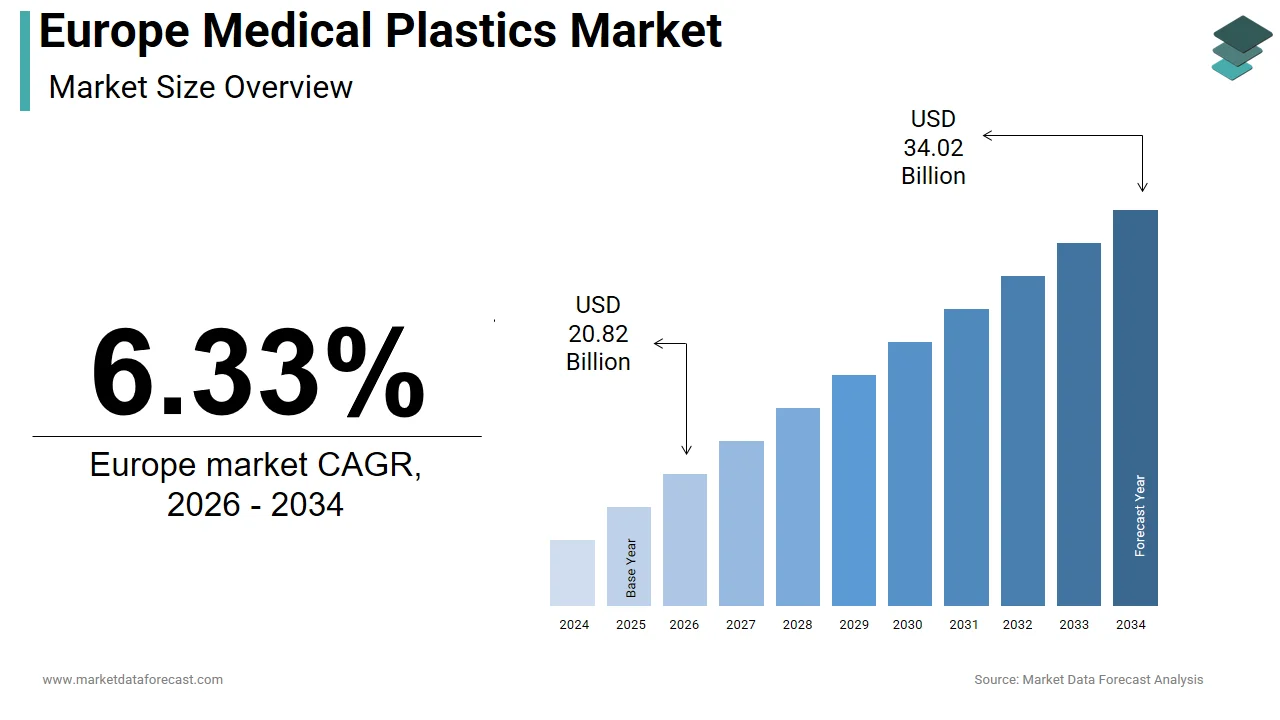
The Europe medical plastics market was valued at USD 19.58 billion in 2025 and is projected to grow from USD 20.82 billion in 2026 to USD 34.02 billion by 2034, expanding at a CAGR of 6.33% from 2026 to 2034. Market growth is driven by rising demand for single-use medical devices, infection control solutions, advanced diagnostic equipment, and minimally invasive surgical tools. Increasing healthcare expenditure, expansion of biopharmaceutical manufacturing, and stringent regulatory standards for medical safety are further accelerating the adoption of high-performance medical-grade polymers across Europe.
Key Market Trends
- Rising use of single-use and disposable medical devices
- Growing demand for lightweight, biocompatible, and sterilizable polymers
- Expansion of biopharmaceutical packaging and delivery systems
- Increased adoption of sustainable and recyclable medical plastics
- Integration of precision molding and automation technologies
Segmental Insights
-
Based on application:
-
The medical components segment dominated the market in 2025, driven by widespread use of precision-molded plastics in syringes, catheters, connectors, housings, and fluid handling systems.
-
High demand from hospitals, diagnostic laboratories, and outpatient facilities continues to reinforce this segment’s leadership.
-
-
Based on process technology:
-
The injection molding segment held the largest share in 2025 due to its high production efficiency, dimensional accuracy, scalability, and suitability for mass manufacturing of medical components.
-
Injection molding supports compliance with stringent medical quality standards and cleanroom manufacturing requirements.
-
-
Based on product:
-
The polypropylene segment accounted for 29.3% share in 2025, supported by its optimal balance of chemical resistance, steam sterilizability, cost efficiency, and regulatory acceptance.
-
Polypropylene is extensively used in syringes, specimen containers, IV bottles, and surgical trays.
-
Regional Insights
The European medical plastics market is highly concentrated in countries with strong medical device and pharmaceutical manufacturing ecosystems.
- Germany led the market in 2025, supported by its world-class medical device industry, advanced polymer processing capabilities, and robust regulatory framework.
- France ranked second, driven by its strong biopharmaceutical sector, centralized healthcare procurement system, and materials science research infrastructure.
- Other major contributors include Italy, the United Kingdom, and Switzerland, which benefit from specialized device manufacturing and export-oriented production.
Competitive Landscape
The Europe medical plastics market is characterized by strong competition among global chemical producers, specialty polymer suppliers, and medical-grade compounders. Competition is centered on material innovation, regulatory compliance, supply reliability, and sustainability performance. Leading players are investing in bio-based polymers, recyclable medical plastics, and high-purity resins to meet evolving environmental and healthcare regulations. Strategic partnerships with medical device manufacturers and contract manufacturers are strengthening market positioning. Companies are also expanding cleanroom production and validation capabilities to support advanced medical applications.
Key market participants include Röchling, Saint-Gobain, BASF, SABIC, Eastman Chemical, Celanese, Covestro, Dow, Solvay, Avantor, Trinseo, and Evonik Industries.
Europe Medical Plastics Market Size
The Europe medical plastics market reached USD 19.58 billion in 2025, is expected to grow to USD 20.82 billion in 2026, and is anticipated to touch USD 34.02 billion by 2034, at a CAGR of 6.33% from 2026 to 2034.
Medical plastics are high-purity polymers, such as polypropylene, polycarbonate, polyethylene, and silicone, engineered for use in devices, diagnostics, packaging, and implants, where biocompatibility, sterility, and regulatory compliance are non-negotiable. These materials serve as the structural and functional backbone of single-use syringes, IV bags, surgical instruments, and advanced drug delivery systems across the continent’s healthcare ecosystem. Unlike commodity plastics, medical-grade variants undergo stringent validation under EU Regulation 2017 745 on medical devices and must meet ISO 10993 standards for biological safety. As per some reports, Europe’s aging population has driven a 22% increase in hospital admissions for chronic conditions since 2020, further accelerating demand for disposable and hygienic medical components. As per the European Commission’s Circular Economy Action Plan, reusable and recyclable medical plastics are now prioritized in public procurement guidelines, reflecting a strategic pivot toward sustainable clinical innovation without compromising patient safety.
MARKET DRIVERS
Rising Prevalence of Chronic Diseases Fuels Demand for Disposable Medical Devices
The escalating burden of chronic conditions in single-use diagnostic and delivery systems is accelerating the growth of Europe medical plastics market. According to the European Centre for Disease Prevention and Control, cardiovascular diseases, diabetes, and respiratory illnesses collectively accounted for over 75% of all deaths in the EU in 2024, necessitating routine monitoring and intervention. This clinical reality has driven widespread adoption of plastic-based autoinjectors, insulin pens, and home testing kits, which rely on precision-molded polymers for sterility, dose accuracy, and user safety. The European Medicines Agency reported that over 820 million prefilled syringes were distributed in the EU in 2023 alone, nearly all manufactured from cyclic olefin copolymer or polypropylene to ensure protein compatibility and clarity. Germany’s Federal Statistical Office noted a 31% year on year increase in home healthcare device usage among patients over 65, reflecting demographic pressure on traditional hospital infrastructure. As chronic disease management shifts toward outpatient and self-administered models, the reliance on certified medical plastics for safe, reliable, and scalable care delivery continues to intensify across the continent.
Stringent EU Medical Device Regulations Elevate Material Quality Standards
The implementation of the European Union Medical Device Regulation has fundamentally reshaped material selection criteria for medical plastics by mandating comprehensive traceability, biocompatibility validation, and post market surveillance. The stringent EU medical device regulations are additionally leveraging the growth of Europe medical plastics market. As per the European Commission, all devices placed on the EU market after May 2024 must include a Unique Device Identification code linking raw material batches to clinical performance data, where a requirement that favors high consistency engineered polymers over variable alternatives. The European Chemicals Agency further restricted over 30 substances of very great concern in medical applications under REACH Annex XIV, including certain phthalates and bisphenols commonly found in legacy plastics. Consequently, manufacturers have accelerated the adoption of USP Class VI and ISO 10993 certified resins such as polyetheretherketone and medical-grade thermoplastic elastomers. This heightened scrutiny has not only raised entry barriers but also reinforced the dominance of established polymer suppliers with robust quality management systems and auditable supply chains aligned with EU governance expectations.
MARKET RESTRAINTS
Regulatory Ambiguity Around Recycled Content in Critical Applications Limits Circular Adoption
The use of recycled plastics in high-risk medical devices remains severely restricted due to unresolved regulatory and safety concerns, which is majorly restricting the growth of Europe medical plastics market. According to the European Medicines Agency, no post-consumer recycled polymer has received approval for use in implantable or invasive devices, citing risks of contamination variability and leachables. Even for low-risk items like packaging, the European Commission’s 2023 guidance on recycled content in medical products requires extensive toxicological revalidation that few recyclers can afford. The German Federal Institute for Risk Assessment reported in 2024 that 92% of medical device manufacturers avoid recycled content entirely due to liability exposure and lack of harmonized testing protocols. This regulatory vacuum stifles innovation in circular medical plastics and forces sustainability efforts toward design for disassembly or reuse rather than material recycling, thereby creating a significant structural restraint on the market’s environmental evolution.
High Cost of Medical Grade Polymer Certification Deters SME Innovation
The extensive validation required to qualify polymers for medical use imposes prohibitive costs on small and medium enterprises seeking to enter or innovate is also hampering the growth of Europe medical plastics market. According to the European Association of Medical Plastics Manufacturers, achieving full ISO 10993 biocompatibility certification for a new resin formulation can cost between 300,000 and 700,000 euros and take 18 to 30 months, resources beyond the reach of most startups. This barrier is exacerbated by the EU Medical Device Regulation’s requirement for continuous material change notifications, which demand ongoing toxicological assessments. The European Commission’s SME Observatory found that only 14% of plastics innovators in Southern Europe pursued medical applications due to these compliance burdens, preferring less regulated sectors like consumer packaging. The large polymer producers like BASF and Covestro maintain dedicated regulatory affairs teams and pre-approved master files, enabling rapid customer onboarding. This asymmetry entrenches market concentration and slows the adoption of novel bio-based or degradable polymers that could align with EU Green Deal objectives but lack the capital for full medical validation.
MARKET OPPORTUNITIES
Expansion of Home Healthcare Drives Demand for Patient-Centric Plastic Devices
The structural shift toward decentralized care models is creating robust demand for ergonomic, portable, and intuitive medical devices made from advanced plastics. According to Eurostat, over 41% of EU citizens aged 65 and older now receive at least one healthcare service at home, a figure projected to rise to 55% by 2030 due to workforce shortages and cost containment pressures. This trend has accelerated the adoption of plastic-based wearable monitors, inhalers, and subcutaneous delivery systems designed for patient self-administration. The UK’s National Health Service reported a 47% increase in home infusion therapy between 2022 and 2024, relying on silicone and polyurethane components for flexibility, biocompatibility, and kink resistance. Similarly, France’s Health Insurance Fund approved reimbursement for over 120 new home-use plastic medical devices in 2023, including glucose monitoring patches and smart pill bottles with integrated adherence tracking. These applications demand polymers that balance sterilizability, skin contact safety, optical clarity, and manufacturability, which position medical plastics as indispensable enablers of Europe’s evolving care delivery paradigm.
Growth in Minimally Invasive Surgical Procedures Boosts High-Performance Polymer Use
The rapid adoption of minimally invasive and robotic-assisted surgeries for ultra-precise high-performance devices capable of withstanding complex mechanical and thermal demands is greatly influencing the growth of Europe medical plastics market. These techniques rely on disposable trocars, end effectors, and catheter shafts made from polymers like polyaryletherketone and liquid crystal polymer that offer dimensional stability, radiolucency, and resistance to repeated sterilization cycles. Furthermore, the European Commission’s Horizon Europe program allocated 220 million euros in 2024 to develop next-generation bioresorbable polymers for temporary implants used in endoscopic repairs.
MARKET CHALLENGES
Chemical Migration and Leachables Risk Undermines Patient Safety Confidence
The stringent testing protocols concerning chemical migration from medical plastics into drugs or bodily fluids are a challenge for the growth of Europe medical plastics market. In 2023, the Dutch Medicines Evaluation Board issued a safety alert after detecting trace levels of cyclic oligomers from polycarbonate IV connectors in monoclonal antibody formulations, with a finding that triggered reformulation costs exceeding 15 million euros for one manufacturer. The European Medicines Agency now requires extractables profiling for all primary drug contact materials, especially with the rise of personalized cell and gene therapies, where even parts per billion contaminants can compromise viability. This ongoing risk necessitates costly material substitutions and redundant testing, slowing time to market and increasing compliance overhead for novel polymer formulations lacking long term clinical history in the European regulatory context.
Supply Chain Fragmentation and Raw Material Volatility Disrupt Production Stability
The persistent operational instability due to fragmented polymer supply chains and exposure to petrochemical price fluctuations is also inhibiting the growth of Europe medical plastics market. According to the European Chemicals Agency, over 80% of medical-grade resins used in the EU are derived from fossil-based feedstocks, making them vulnerable to energy market shocks. The price of medical-grade polypropylene surged by 42% in one quarter due to natural gas shortages in German cracking plants, as documented by Plastics Europe. Simultaneously, the reliance on a limited number of global compounders, fewer than 15 produce ISO 13485 certified grades creates bottlenecks during demand spikes. The European Hospital Association reported in 2023 that 28% of member institutions experienced delays in device procurement due to resin allocation disputes between automotive and medical sectors. Although the EU Chips Act inspired discussions about a Medical Materials Security Initiative, no coordinated strategic reserve or dual sourcing mandate exists. This structural fragility leaves the medical plastics supply chain exposed to geopolitical and macroeconomic disruptions, threatening the continuity of essential healthcare product manufacturing across the region.
REPORT COVERAGE
| REPORT METRIC | DETAILS |
| Market Size Available | 2025 to 2034 |
| Base Year | 2025 |
| Forecast Period | 2026 to 2034 |
| Segments Covered | By Application, Process Technology, Product, and Country. |
| Various Analyses Covered | Global, Regional, and Country-Level Analysis, Segment-Level Analysis, Drivers, Restraints, Opportunities, Challenges; PESTLE Analysis; Porter’s Five Forces Analysis, Competitive Landscape, Analyst Overview of Investment Opportunities |
| Countries Covered | UK, France, Spain, Germany, Italy, Russia, Sweden, Denmark, Switzerland, Netherlands, Turkey, Czech Republic, and the Rest of Europe. |
| Market Leaders Profiled | Röchling SE & Co. KG, Saint-Gobain Group, BASF SE, SABIC (Saudi Arabian Oil Company), Eastman Chemical Company, Celanese Corporation, Covestro AG, The Dow Chemical Company, Solvay SA, Avantor, Inc., Trinseo PLC, Evonik Industries AG (RAG-Stiftung), and Others. |
SEGMENTAL ANALYSIS
By Application Insights
The medical components segment was the largest by holding 38.2% of the Europe medical plastics market share in 2024, owing to the pervasive use of precision molded polymers in syringes, catheters, connectors, housings, and fluid handling systems, across hospitals and diagnostics centers. The European Medicines Agency reported that over 1.2 billion single-use injection devices were distributed in the EU in 2023, with more than 95% constructed from polypropylene or cyclic olefin polymer due to their clarity, chemical resistance, and gamma sterilizability. Additionally, the rise of point-of-care testing has increased demand for microfluidic cartridges made from medical-grade polycarbonate, which enable rapid diagnostics with minimal sample volume.
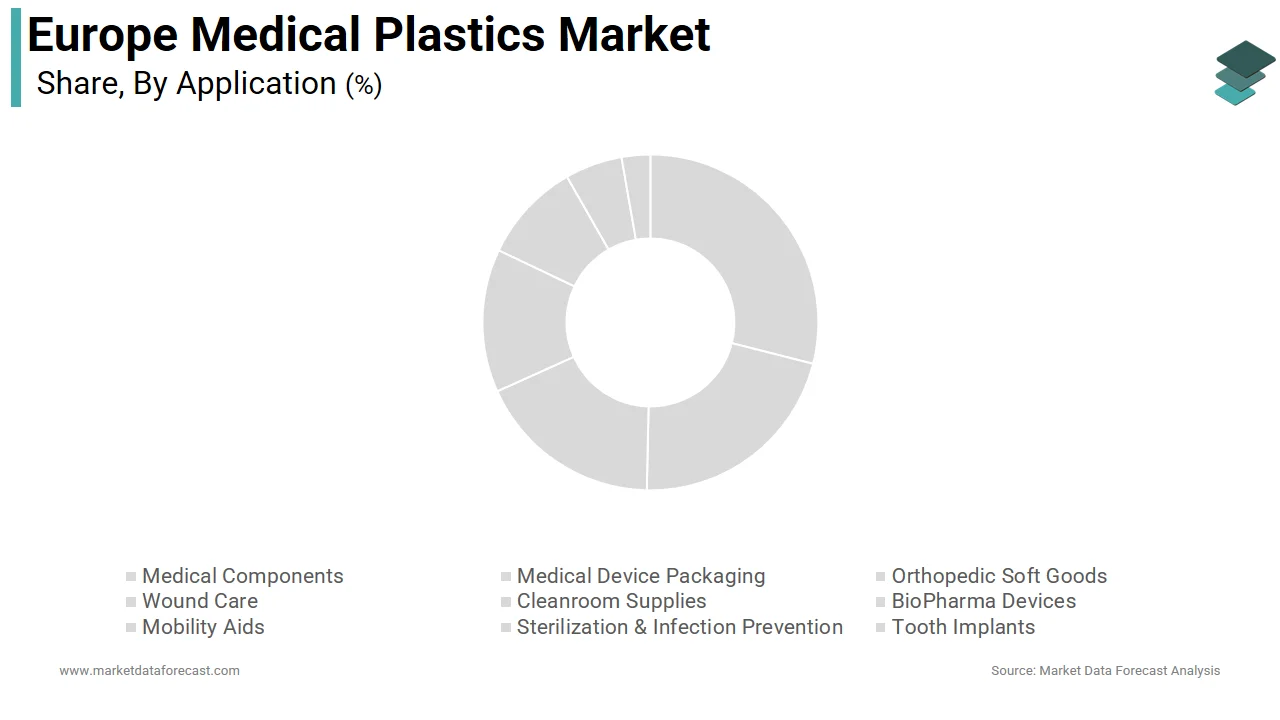
The bioPharma devices segment is likely to grow at the fastest CAGR of 12.3% from 2026 to 2034, owing to the commercialization of advanced therapies, including monoclonal antibodies, cell and gene treatments, and mRNA vaccines, which require single-use fluid pathways made from extractables-controlled polymers. In 2024, the European Commission approved 41 new advanced therapy medicinal products, an all-time high, each dependent on biocompatible plastic assemblies such as bioreactor bags, tubing, connectors, and fill finish systems. The European Directorate for the Quality of Medicines mandates that all primary contact materials for biologics undergo rigorous leachables screening per Ph Eur Chapter 3.2, which has elevated demand for USP Class VI certified polyethylenes and fluoropolymers. Switzerland’s Lonza and Germany’s Sartorius alone invested over 1.8 billion euros in 2024 to expand single-use manufacturing capacity using medical-grade multilayer films.
By Process Technology Insights
The injection molding segment was the largest by holding 62.1% of the Europe medical plastics market share in 2024, owing to the process’s unmatched precision, repeatability, and suitability for high-volume manufacturing of complex geometries, such as surgical instrument housings, valve bodies, and diagnostic device cartridges. Germany’s VDI Society of Mechanical Engineers reported that over 85% of Class II and III medical devices approved in 2023 utilized injection-molded polymer components due to process validation compatibility with ISO 13485 quality systems. Furthermore, the integration of cleanroom molding facilities, over 320 certified ISO Class 7 or better exist in Western Europe, which ensures particulate-controlled production environments required for sterile products. Leading converters like Gerresheimer and Becton Dickinson operate fully automated molding cells with real-time cavity pressure monitoring to guarantee batch consistency.
The extrusion segment is expected to witness the fastest CAGR of 9.8% throughout the forecast period, owing to the rising demand for continuous profile products, including medical tubing, catheters, IV lines, and co-extruded multilayer films used in biopharma fluid handling. The European Society of Cardiology reported a 23% increase in percutaneous coronary interventions in 2024, requiring high-flexibility kink-resistant tubing made from medical-grade polyurethane or Pebax. Additionally, the expansion of home infusion therapy used by over 2.1 million EU patients annually, per Eurostat, relies on extruded silicone and thermoplastic elastomer lines that maintain lumen integrity over weeks of use. In 2024, the Netherlands launched a national initiative to standardize extractables testing for extruded polymers used in parenteral delivery, accelerating material qualification timelines. Advanced capabilities like inline laser micromachining and multi-lumen co-extrusion are also enabling next-generation applications such as neurostimulation leads and dialysis circuits.
By Product Insights
The polypropylene segment accounted in holding 29.3% of the Europe medical plastics market share in 2024, from an optimal balance of chemical resistance, steam sterilizability, cost efficiency, and regulatory acceptance, across a vast array of applications, including syringes, specimen containers, IV bottles, and surgical trays. The European Pharmacopoeia lists polypropylene as a preferred material for primary packaging of aqueous and oily injectables due to its low extractables profile and absence of plasticizers. The German Federal Institute for Risk Assessment certified over 220 new medical devices using homopolymer and copolymer PP grades meeting stringent USP Class VI standards. Furthermore, its compatibility with high-speed injection molding enables mass production of disposables at scale during public health emergencies. This combination of performance versatility and supply chain maturity ensures polypropylene remains the workhorse polymer in Europe’s medical device ecosystem.
The polyethersulfone segment is expected to grow at the fastest CAGR of 11.7% from 2026 to 2034, with its exceptional thermal stability, transparency, and steam autoclavability, making it ideal for reusable surgical instruments, diagnostic housings, and sterilization trays that must endure repeated high-temperature cycles without deformation. The European Committee for Standardization’s EN ISO 11135 now recognizes PES as a reference material for ethylene oxide sterilization validation due to its dimensional stability. In 2024, the UK’s National Health Service mandated PES for all reusable instrument handles in orthopedic theaters after a study by the Royal College of Surgeons showed a 40% reduction in crack formation compared to polycarbonate over 500 autoclave cycles. Additionally, PES’s high purity and low protein-binding characteristics have led to adoption in hemodialysis membranes and bioreactor components for cell therapy manufacturing.
COUNTRY LEVEL ANALYSIS
Germany Medical Plastics Market Analysis
Germany was the largest contributor to the Europe medical plastics market by occupying 23.5% of the share in 2024, with its world-class medical device manufacturing base, robust regulatory infrastructure, and advanced polymer compounding capabilities. Home to global OEMs like B Braun Fresenius and Siemens Healthineers, Germany produces over 40% of Europe’s Class III implantable and diagnostic devices, all requiring high-purity engineered plastics. The Federal Institute for Drugs and Medical Devices approved 1 850 new polymer-based devices in 2023 alone, the highest in the EU. Additionally, Germany hosts Europe’s largest cluster of ISO 13485 certified plastic converters with over 120 facilities operating cleanroom molding lines. The government’s Medical Technology Offensive 2024 allocated 450 million euros to support domestic production of critical medical polymers, reducing reliance on Asian suppliers. This synergy of industrial-scale regulatory rigor and strategic investment ensures Germany remains the undisputed nucleus of Europe’s medical plastics ecosystem.
France Medical Plastics Market Analysis
France medical plastics market was positioned second by accounting for 17.2% of the share in 2024, with its concentrated biopharma sector, strong public health procurement system, and advanced materials research. France is home to Sanofi’s large-scale vaccine and biologic manufacturing plants, which consume over 15,000 tonnes of medical-grade polyethylene and polypropylene annually for single-use systems. The French National Agency for Medicines and Health Products Safety mandated in 2023 that all new infusion devices must use non-DEHP plasticized polymers, accelerating the adoption of thermoplastic elastomers. Public hospitals under the Groupement Hospitalier Public spend over 8 billion euros annually on medical devices, creating a stable demand for compliant plastic components.
United Kingdom Medical Plastics Market Analysis
The United Kingdom medical plastics market growth is likely to grow steadily throughout the forecast period through its world-leading life sciences sector regulatory expertise and innovation in regenerative medicine. The Medicines and Healthcare products Regulatory Agency approved 92 advanced therapy products in 2024, the highest per capita in Europe, driving demand for extractables-controlled polymers in cell processing bags and delivery catheters. The National Health Service’s Innovation Accelerator program fast tracks adoption of novel medical devices, including 3D printed PMMA cranial implants and PEI-based sterilization trays. Companies like Smiths Medical and Convatec rely on UK-based compounders for gamma-stable polypropylene formulations. Moreover, the UK’s Advanced Therapy Treatment Centres network, 14 sites nationwide, uses over 200 tonnes of medical plastics annually for autologous therapies.
Italy Medical Plastics Market Analysis
Italy medical plastics market growth is likely to grow with its dense network of small and medium medical device manufacturers in the Mirandola biomedical district, which produces over 70% of Europe’s disposable dialysis and transfusion sets. These applications rely heavily on flexible PVC alternatives such as polyolefin elastomers due to EU restrictions on phthalates. The Italian Medicines Agency banned DEHP-containing devices in neonatal care, accelerating material substitution across 1 200 hospitals. The government’s PNRR Recovery Plan allocated 320 million euros to modernize medical plastics production with emphasis on cleanroom automation and recyclability. This unique combination of artisanal specialization, regulatory adaptation, and export orientation solidifies Italy’s niche yet vital role in the European supply chain.
Switzerland Medical Plastics Market Analysis
Switzerland medical plastics market growth is likely to grow with its concentration of global life science leaders, including Roche, Novartis, and Straumann, which demand ultra-high purity polymers for diagnostics, implants, and drug delivery systems. Swissmedic requires full material traceability down to monomer batch level, a standard that has elevated the use of certified PPSU and PEI in reusable surgical instruments. Straumann launched a new line of PEEK-reinforced dental implants with integrated PMMA abutments manufactured entirely in Basel using medical-grade resins. Additionally, Switzerland hosts Europe’s most stringent leachables testing facilities with Empa and CSEM offering ISO 10993 compliant analytics that serve the entire EU. The Swiss Innovation Agency also funds polymer startups developing bioresorbable LCP formulations for temporary stents.
COMPETITIVE LANDSCAPE
Competition in the Europe medical plastics market is characterized by a blend of global chemical giants, specialized polymer producers, and regional compounders competing on regulatory expertise, material performance, and sustainability credentials. The market is not driven by price alone but by the ability to provide fully documented biocompatible resins with robust supply continuity and technical support for complex molding processes. Stringent EU Medical Device Regulation has raised entry barriers, favoring established players with dedicated medical quality systems and regulatory affairs teams. At the same time, demand for circular solutions is fostering collaboration between material suppliers, device makers, and reprocessors to develop reusable or recyclable systems. Innovation is increasingly focused on high-performance polymers for advanced therapies, diagnostics, and minimally invasive devices where failure is not an option. This environment rewards deep clinical understanding, stringent quality control, and proactive regulatory engagement over volume scale alone.
KEY MARKET PLAYERS
The leading companies operating in the Europe medical plastics market include:
- Röchling SE & Co. KG
- Saint-Gobain Group
- BASF SE
- SABIC (Saudi Arabian Oil Company)
- Eastman Chemical Company
- Celanese Corporation
- Covestro AG
- The Dow Chemical Company
- Solvay SA
- Avantor, Inc.
- Trinseo PLC
- Evonik Industries AG (RAG-Stiftung)
TOP PLAYERS IN THE MARKET
- BASF SE is a leading supplier of high-performance polymers for medical applications across Europe, offering a comprehensive portfolio including Ultrason PESU and Ultramid polyamides certified to ISO 10993 and USP Class VI standards. The company supports global medical device manufacturers with regulatory documentation, material traceability, and custom compounding for injection molding and extrusion. BASF expanded its medical-grade production line at its Ludwigshafen facility to include gamma-stable polypropylene formulations tailored for syringes and diagnostic cartridges. It also launched a digital material compliance platform enabling real-time access to extractables data and regulatory certificates aligned with EU MDR requirements. These initiatives reinforce BASF’s role as a trusted enabler of safe, sustainable, and compliant medical plastic solutions across Europe and beyond.
- Solvay SA plays a critical role in the Europe medical plastics market through its specialty polymers such as Veradel PPSU and Tecapet PCU, designed for reusable surgical instruments, sterilization trays, and dental applications. The company emphasizes material longevity, chemical resistance, and steam autoclavability to support EU circularity goals in healthcare. Solvay inaugurated a dedicated medical compounding unit in Bollate, Italy, focused on producing color-stable radiolucent grades for orthopedic and imaging devices. It also partnered with major European OEMs to develop phthalate-free flexible compounds as alternatives to traditional PVC in IV and dialysis tubing.
- Covestro AG is a key European producer of medical-grade polycarbonates and thermoplastic polyurethanes used in diagnostic housings, drug delivery systems, and wound care films. Its Makrolon and Desmopan lines meet stringent biocompatibility and sterilization requirements for both single-use and durable applications. Covestro enhanced its traceability systems by integrating blockchain-enabled material passports for all medical batches produced in its Dormagen plant, ensuring full compliance with EU MDR Unique Device Identification mandates. The company also introduced a new generation of gamma-stable polycarbonate with reduced yellowing for transparent surgical devices.
TOP STRATEGIES USED BY THE KEY MARKET PARTICIPANTS
Key players in the Europe medical plastics market are focusing on regulatory alignment, material innovation, circularity initiatives, and digital traceability to maintain a competitive advantage. Companies are investing in full biocompatibility certification and substance disclosure to comply with EU MDR and REACH regulations. They are developing phthalate-free and gamma-stable formulations to meet evolving clinical safety standards. Strategic expansion of cleanroom compounding capacity and partnerships with device OEMs ensure supply chain resilience. Additionally, firms are integrating digital material passports and blockchain systems to support Unique Device Identification requirements. Sustainability strategies include designing for reprocessing, promoting reusable polymers, and advancing recyclable mono material solutions to align with the EU’s Circular Economy Action Plan in healthcare.
MARKET SEGMENTATION
This research report on the Europe medical plastics market has been segmented and sub-segmented into the following categories.
By Application
- Medical Components
- Medical Device Packaging
- Orthopedic Soft Goods
- Wound Care
- Cleanroom Supplies
- BioPharma Devices
- Mobility Aids
- Sterilization & Infection Prevention
- Tooth Implants
- Denture Base Material
- Others
By Process Technology
- Injection Molding
- Extrusion
- Blow Molding & Others
By Product
- Polyphenylsulfone (PPSU)
- Polypropylene (PP)
- Polycarbonate (PC)
- Liquid Crystal Polymer (LCP)
- Polyethersulfone (PES)
- Polymethyl Methacrylate (PMMA)
- Polyethylenimine (PEI)
- Polyethylene (PE)
- Others
By Country
- United Kingdom
- France
- Spain
- Germany
- Italy
- Russia
- Sweden
- Denmark
- Switzerland
- Netherlands
- Rest of Europe