- Product Description Description
- Table of Contents TOC
- List of Table & Figure LOT
- Get Free Sample PDF Sample PDF
Market Size, 2025
$2.13 BnMarket Estimate, 2026
$2.27 BnMarket Forecast, 2034
$3.74 BnCAGR, 2026–2034
6.44%Global Digital Dental Impression Devices Market Report Summary
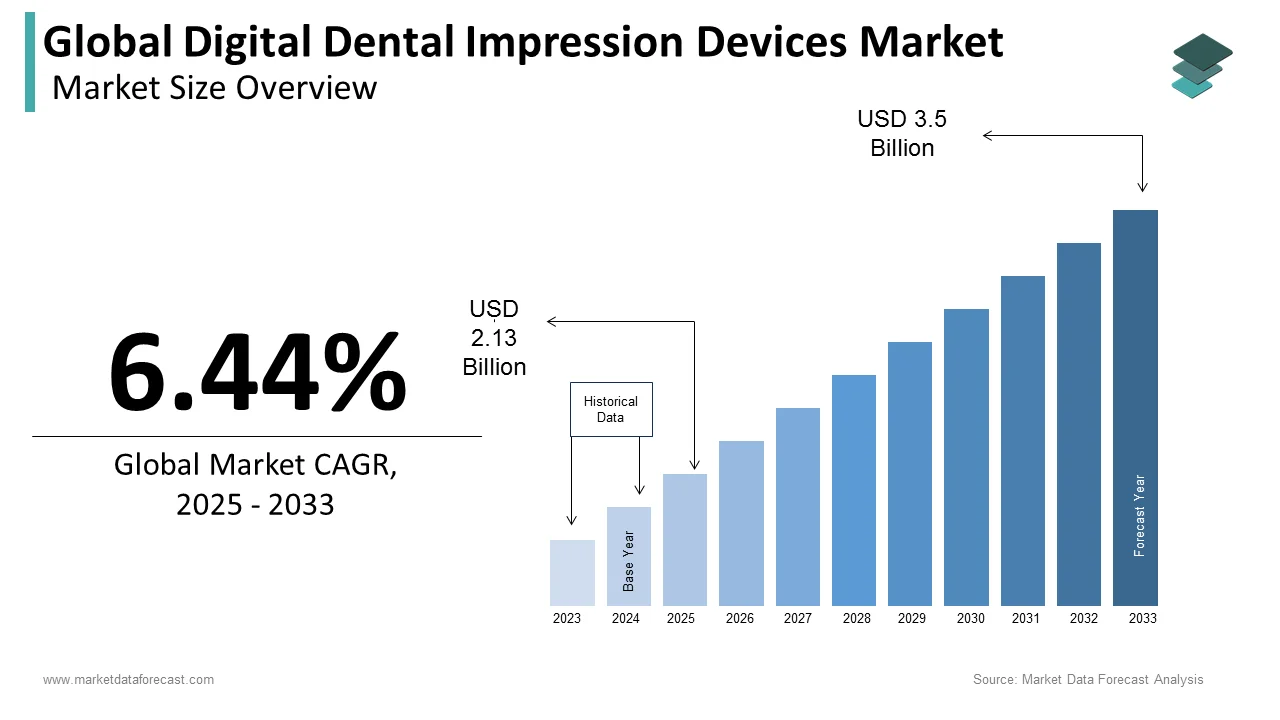
The global digital dental impression devices market was valued at USD 2.13 billion in 2025, is projected to grow from USD 2.27 billion in 2026 to USD 3.74 billion by 2034, registering a CAGR of 6.44% from 2026 to 2034. Market growth is driven by the increasing adoption of digital dentistry, rising demand for accurate and patient-friendly dental procedures, and continuous advancements in intraoral scanning technologies. Digital dental impression devices improve workflow efficiency, enhance treatment precision, and reduce turnaround times for restorative and orthodontic procedures. Growing investments in dental clinics, expanding cosmetic dentistry procedures, and integration of CAD/CAM technologies are further supporting market growth.
Key Market Trends
- Rising adoption of digital dentistry and chairside CAD/CAM workflows.
- Increasing demand for intraoral scanners to replace conventional impression methods.
- Growing popularity of cosmetic and restorative dental procedures.
- Expansion of orthodontic treatments supported by digital impressions.
- Continuous advancements in AI-powered imaging and cloud-based dental workflows.
Segmental Insights
- Based on product type, the optical wand technology segment dominated the global digital dental impression devices market in 2025 by accounting for 49.1% market share, driven by its high scanning accuracy, ease of use, and ability to generate real-time digital impressions.
- Based on end user, the dental clinics segment held the dominant share of the market in 2025, supported by the increasing adoption of digital workflows, growing patient volume, and rising investments in advanced dental equipment.
Regional Insights
The global digital dental impression devices market is experiencing steady growth across major regions, supported by technological innovation, increasing dental care awareness, and expanding adoption of digital dentistry.
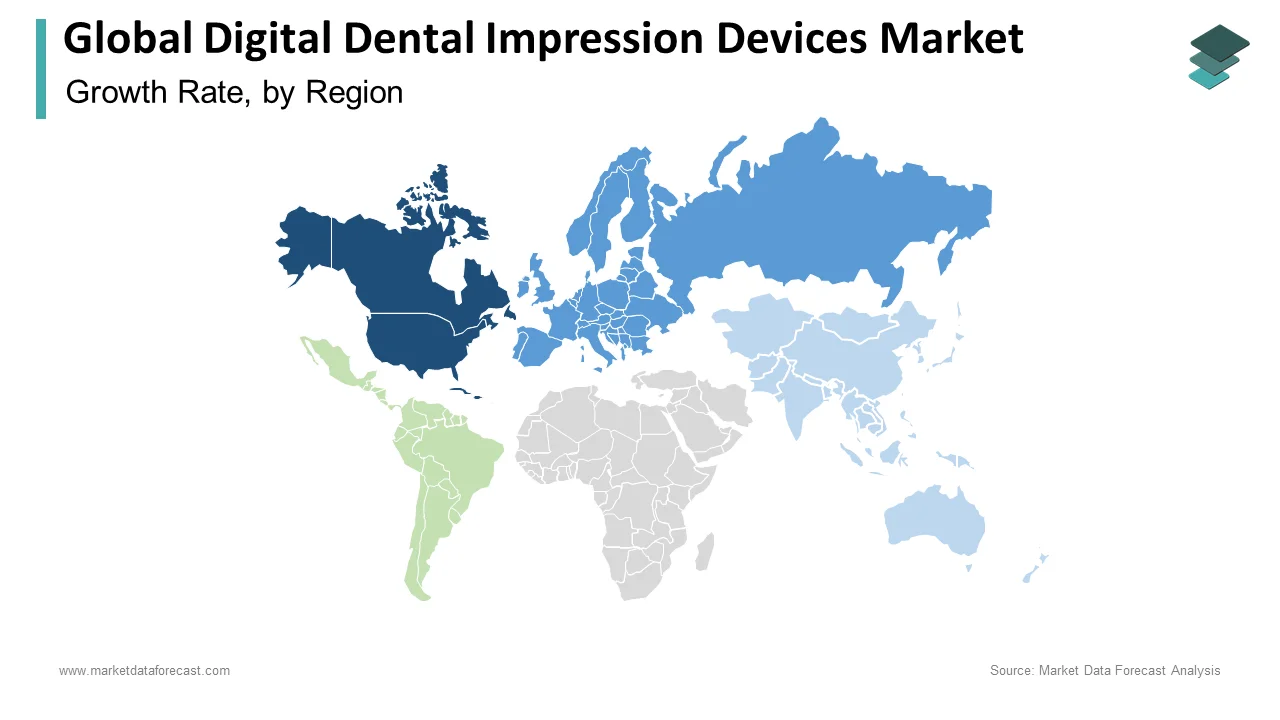
- North America dominated the global market in 2025 with 39.2% share, driven by widespread adoption of digital dental technologies, advanced healthcare infrastructure, and strong demand for cosmetic and restorative dental procedures.
- Europe held the second-largest position with 30.3% share in 2025, supported by a strong tradition of precision dentistry, high standards for medical device safety and performance, and increasing investment in digital dental solutions.
- Asia-Pacific is projected to register the fastest CAGR during the forecast period, driven by expanding dental healthcare infrastructure, rising disposable incomes, increasing awareness of oral health, and growing adoption of advanced digital dentistry technologies.
Competitive Landscape
The global digital dental impression devices market is characterized by the presence of established dental technology companies competing through innovation in intraoral scanning, digital imaging, and integrated CAD/CAM solutions. Market participants are investing in next-generation optical scanning technologies, artificial intelligence-enabled software, and cloud-connected dental workflows to strengthen their market position. Strategic partnerships, product launches, and expansion into emerging markets continue to shape the competitive landscape.
Prominent companies operating in the global digital dental impression devices market include Glidewell Dental Laboratories, Ormco Corporation, Sirona Dental Systems Inc., 3M Company, 3Shape A/S, Align Technology, Inc., Densys3D Ltd., Dentsply Sirona, Carestream Health, Inc., Hint-Els GmbH, and Planmeca Oy.
Global Digital Dental Impression Devices Market Size
The global digital dental impression devices market was worth US$ 2.13 billion in 2025 and is anticipated to reach a valuation of US$ 3.74 billion by 2034 from US$ 2.27 billion in 2026, and it is predicted to register a CAGR of 6.44% during the forecast period 2026 to 2034.
The digital dental impression is a transformative technological advancement in restorative dentistry, replacing traditional physical molds with high-precision optical scanning systems. These intraoral scanners utilize structured light or laser technology to capture three-dimensional images of teeth and soft tissues with micron-level accuracy. The European Federation of Conservative Dentistry notes that digital impressions significantly reduce chair time by approximately 15 minutes per procedure compared to conventional methods. Clinical studies published in peer-reviewed journals indicate that marginal fit accuracy for crowns produced via digital impressions is comparable to or superior to that made from polyvinyl siloxane materials. The integration of these devices with computer-aided design and computer-aided manufacturing systems enables same-day restoration delivery, enhancing patient satisfaction and practice efficiency. The technology supports diverse applications, including implant planning, orthodontic aligner fabrication, and prosthodontic rehabilitation. Modern scanners feature wireless connectivity and intuitive software interfaces that streamline data transfer and case management.
MARKET DRIVERS
Superior patient comfort and reduced procedural anxiety drive adoption
The enhanced patient experience offered by digital dental impression devices for their widespread adoption across clinical practices is accelerating the growth of the digital dental impression devices market. Traditional impression taking involves inserting trays filled with cold, viscous material into the mouth, which often triggers gag reflexes and causes significant discomfort for patients. Digital scanners eliminate the need for these materials, allowing for a non-invasive and rapid scanning process that typically lasts less than two minutes. The absence of unpleasant tastes and textures associated with alginate or silicone materials improves patient cooperation among pediatric and geriatric populations. The ability to visualize the scanned image immediately on a screen allows dentists to verify quality and make adjustments in real time, reducing the need for retakes. This immediacy enhances trust and transparency between the provider and the patient. Furthermore, the reduction in procedure time minimizes the duration patients must keep their mouths open, alleviating jaw fatigue.
Enhanced accuracy and efficiency in restorative workflows fuel market growth
The superior precision and operational efficiency provided by digital dental impression devices is also promoting the growth of the digital dental impression devices market. Intraoral scanners achieve accuracy levels within 10 to 20 microns, which is necessary for ensuring proper fit of crowns, bridges, and implants. According to studies, digital impressions demonstrate lower distortion rates compared to conventional elastomeric materials, which can shrink or expand during setting and transport. This precision reduces the incidence of ill-fitting restorations, thereby decreasing the need for costly and time-consuming adjustments or remakes. The integration of scanning data with computer-aided design software accelerates the fabrication process, enabling same-day crown delivery in many cases. Practices utilizing digital workflows report an average increase in daily patient throughput by 15% due to streamlined processes. The elimination of physical storage requirements for stone models frees up valuable clinic space and reduces material waste. Additionally, digital records facilitate easier case sharing among specialists and insurance providers, improving coordination of care.
MARKET RESTRAINTS
High initial capital investment and maintenance costs restrict accessibility
The substantial financial burden associated with acquiring and maintaining digital dental impression systems is hindering the growth of the digital dental impression devices market. According to financial analyses of dental practice operations, the return on investment for digital scanners may take two to three years to realize, depending on case volume and fee structures. Beyond the initial purchase price, practices must invest in compatible computer hardware, software licenses, and ongoing technical support contracts. Many dental professionals operate on tight margins and may hesitate to allocate funds for technology upgrades when existing analog methods remain functional. The rapid pace of technological obsolescence further complicates purchasing decisions, as newer models with enhanced features are released frequently. Insurance reimbursement policies in some regions do not adequately compensate for the additional costs associated with digital workflows, leaving practices to absorb the financial impact.
Steep learning curve and technical complexity hinder rapid implementation
The technical complexity and steep learning curve associated with digital dental impression devices is also declining the growth of the digital dental impressions devices market. Mastery of intraoral scanning requires proficiency in handling the device, understanding lighting conditions, and managing soft tissue retraction to ensure optimal image capture. During this learning phase, scan times may increase, and error rates can rise, leading to frustration and decreased productivity. Staff members also require training on software navigation, file management, and troubleshooting common technical issues. The transition from analog to digital workflows disrupts established habits and requires a cultural shift within the practice team. Resistance to change among experienced dental assistants and hygienists can slow down adoption and affect team morale. Technical glitches such as software crashes, connectivity issues, or calibration errors can halt clinical operations if immediate support is unavailable. The lack of standardized training protocols across different manufacturers adds to the confusion, as each system has a unique interface design and operational nuances.
MARKET OPPORTUNITIES
Integration with artificial intelligence enhances diagnostic capabilities
The incorporation of artificial intelligence into digital dental impression software opens for improving diagnostic accuracy and treatment planning efficiency, posing a major opportunity for the growth of the digital dental impression devices market. Advanced algorithms can automatically detect caries, identify margin lines, and suggest optimal restoration designs based on vast databases of previous cases. AI assisted scanning reduces manual editing time by up to 50% by allowing clinicians to focus more on patient interaction and complex decision-making, as per the study. Machine learning models continuously improve their performance by analyzing thousands of scans, leading to increasingly precise recommendations for occlusion and aesthetics. This technology enables early detection of subtle structural anomalies that might be missed by the human eye, facilitating preventive interventions. The integration of AI with intraoral scanners also supports automated quality control, flagging incomplete scans or artifacts before data transmission to laboratories. Dental practices leveraging AI-driven tools report higher patient acceptance rates for treatment plans due to visual evidence and predictive outcome simulations. The ability to predict long-term wear patterns and stress distribution helps in designing more durable restorations.
Expansion into teledentistry and remote monitoring creates new revenue streams
The compatibility of digital dental impression data with telehealth platforms for expanding service delivery beyond traditional clinic settings is expected to expand the growth of the digital dental impressions market. High-resolution 3D scans can be securely transmitted to specialists or laboratories for remote consultation by enabling second opinions and collaborative care without patient travel. Orthodontists utilize serial digital scans to track tooth movement and adjust aligner therapy remotely, reducing the frequency of in-office visits. This model improves practice efficiency and allows providers to manage larger patient panels with fewer resources. Home-based scanning kits, though still emerging, offer potential for preliminary assessments and follow-up checks, enhancing patient engagement. Insurance companies are increasingly recognizing the value of digital documentation for claims verification, potentially leading to faster reimbursements. The global reach of digital data facilitates medical tourism and cross-border collaborations, allowing patients to access specialized expertise regardless of location.
MARKET CHALLENGES
Interoperability issues between different software platforms limit workflow efficiency
The lack of seamless interoperability between various digital dental impression devices and third-party software systems is to act as a major barrier for the growth of the digital dental impression devices market. Many scanners produce proprietary file formats that are not fully compatible with all computer-aided design programs or laboratory management systems. This fragmentation forces practices to either stick with a single ecosystem by limiting their choice of tools or invest in expensive middleware solutions to bridge compatibility gaps. The absence of universal standards for data exchange hinders collaboration between dentists, specialists, and laboratories using different equipment. Updates to software versions often introduce new compatibility issues, requiring constant vigilance and technical support. Laboratories frequently complain about receiving incomplete or corrupted files, necessitating rescans and causing frustration for all parties involved. The competitive nature of the market discourages open collaboration among manufacturers, perpetuating closed systems. This siloed approach increases operational complexity and costs for dental practices attempting to build flexible digital workflows.
Data security and privacy concerns raise regulatory compliance burdens
The increasing reliance on digital data storage and cloud-based transmission in workflows raises significant concerns regarding patient data security and privacy is also to slow down the growth of the digital dental impression devices market. Three-dimensional scans contain detailed biometric information that, if breached, could be exploited for identity theft or other malicious purposes. The dental practices are increasingly targeted by ransomware attacks due to perceived vulnerabilities in their IT infrastructure. Compliance with regulations, such as the General Data Protection Regulation in Europe and the Health Insurance Portability and Accountability Act in the United States, imposes strict requirements on data encryption, access controls, and breach notification. Many small dental offices lack the resources to implement robust cybersecurity measures, leaving them exposed to legal liabilities and financial penalties. The use of third-party cloud servers for storing scan data introduces additional risks related to server security and data sovereignty. Patients are becoming more aware of their digital rights and may hesitate to share sensitive health information if they perceive inadequate protection. Manufacturers must continuously update their security protocols to address evolving threats, which increases development costs and complexity.
REPORT COVERAGE
| REPORT METRIC | DETAILS |
| Market Size Available | 2025 to 2034 |
| Base Year | 2025 |
| Forecast Period | 2026 to 2034 |
| Segments Covered | By Product Type, End-User, and Region. |
| Various Analyses Covered | Global, Regional and Country-Level Analysis, Segment-Level Analysis, Drivers, Restraints, Opportunities, Challenges; PESTLE Analysis; Porter’s Five Forces Analysis, Competitive Landscape, Analyst Overview of Investment Opportunities |
| Regions Covered | North America, Europe, Asia Pacific, Latin America, Middle East & Africa |
| Market Leaders Profiled | Glidewell Dental Laboratories, Ormco Corporation, Sirona Dental Systems Inc., 3Shape A/S, Align Technology, Inc., Densys3D Ltd., Care stream Health, Inc., Hint-Els GmbH, and Planmeca Oy, and Others. |
SEGMENTAL ANALYSIS
By Product Type Insights
The optical wand technology segment was the largest by holding 49.1% of the digital dental impression devices market share in 2025 due to its widespread adoption, ease of use, and proven clinical reliability. This technology utilizes structured light or laser triangulation to capture three-dimensional data of the oral cavity, offering a balance between accuracy and operational speed. The ergonomic design of these handheld devices allows dentists to maneuver easily around complex anatomical structures, ensuring comprehensive data capture without patient discomfort. Major manufacturers have invested heavily in refining optical algorithms, resulting in scanning speeds that can complete a full arch scan in under two minutes. The extensive ecosystem of compatible computer-aided design software supports optical wand data, facilitating seamless integration into existing laboratory workflows. The lower maintenance requirements compared to more complex imaging systems further contribute to their dominance. Dental practices prefer optical wands because they require minimal training for staff and offer immediate visual feedback on screen.
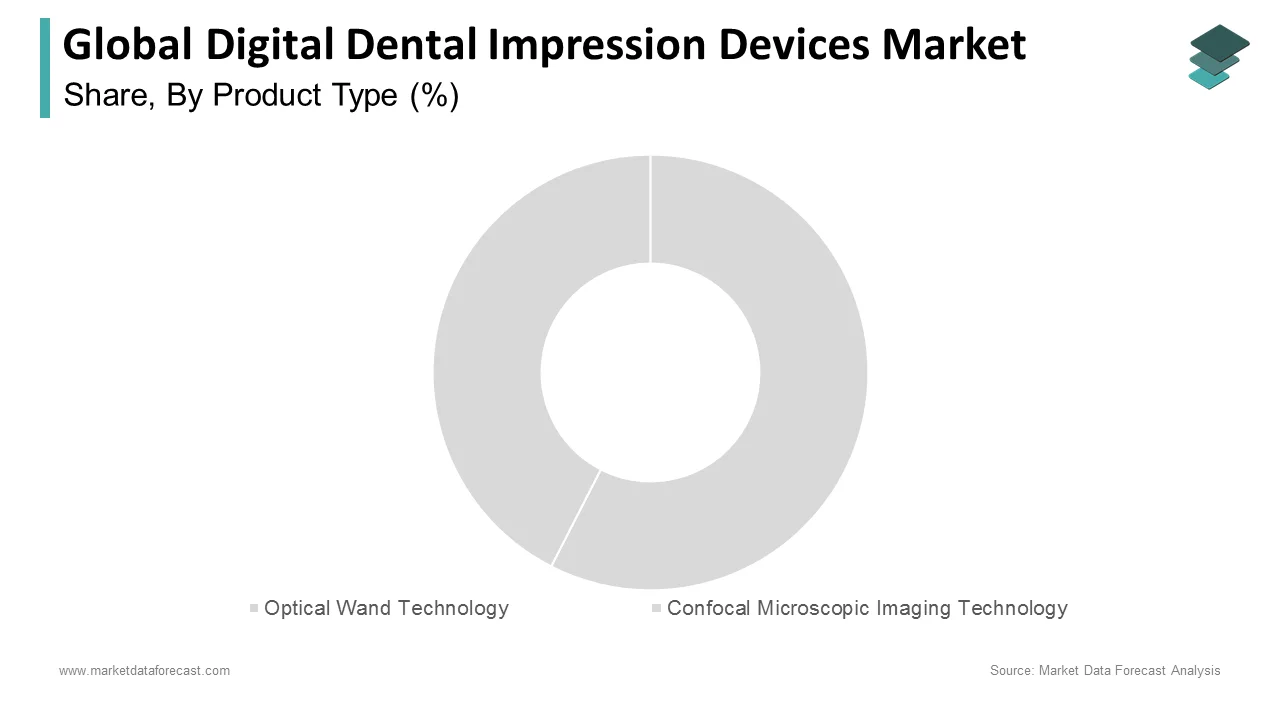
The confocal microscopic imaging technology segment is estimated to witness the fastest CAGR of 12.5% throughout the forecast period with the superior resolution and depth mapping capabilities inherent to confocal optics, which allow for highly detailed surface reconstruction. The technology is particularly valued in academic medical centers and specialized prosthodontic practices where marginal fit is for long-term success. Recent advancements have miniaturized confocal sensors, enabling their integration into handheld wands that maintain the familiar form factor while delivering laboratory-grade precision. Growing demand for same-day ceramics and zirconia restorations, which require exact fits to prevent fracture, fuels the adoption of this high-end technology. Manufacturers are introducing hybrid systems that combine confocal principles with color mapping, enhancing aesthetic planning.
By End User Insights
The dental clinics segment accounted for a significant share of the digital dental impression devices market in 2025, with the high volume of restorative procedures performed in private and group practices, where efficiency and patient satisfaction are paramount. The competitive nature of private practice drives dentists to adopt technologies that enhance patient experience and streamline workflows, such as same-day restorations. The flexibility of dental clinics allows for quicker decision-making regarding equipment purchases compared to larger hospital bureaucracies. Many solo practitioners view digital scanners as essential marketing tools that attract tech-savvy patients seeking modern care. Dental service organizations and corporate chains are standardizing digital workflows across their networks, further boosting clinic-level adoption. The ability to integrate scanning with in-house milling machines creates a closed-loop system that maximizes revenue retention within the clinic.
The hospitals segment is growing at the fastest CAGR of 9.8% from 206 to 2034 with the increasing integration of dental services into multidisciplinary hospital care, particularly in maxillofacial surgery, oncology, and trauma centers. Major academic medical centers are upgrading their dental departments to match the digital standards of other medical specialties. The need for precise pre-surgical planning in complex reconstructive surgeries drives the demand for high-accuracy digital impressions that can be merged with CT and MRI data. Hospitals benefit from the ability to store digital records centrally, improving continuity of care for patients undergoing long-term treatment protocols. The centralization of sterile processing in hospitals makes the elimination of physical impression trays and materials logistically advantageous, reducing infection control burdens. Government initiatives promoting digital health records in public hospitals encourage the adoption of interoperable digital dental systems.
REGIONAL ANALYSIS
North America Digital Dental Impression Devices Market Analysis
North America was the top performer in the global digital dental impression devices market by holding 39.2% of the market share in 2025. The United States digital dental impression devices market growth is driven by high healthcare expenditure, widespread insurance coverage for restorative procedures, and early adoption of innovative technologies. The presence of major device manufacturers and key opinion leaders in the region fosters continuous innovation and rapid dissemination of best practices. High patient expectations for comfort and efficiency push dentists to adopt digital solutions that enhance the care experience. Reimbursement policies from private insurers increasingly recognize the value of digital diagnostics, supporting practitioner investment. The strong network of dental service organizations consolidates purchasing power, accelerating bulk adoption of scanners across multiple locations. Academic institutions in North America lead in research and development, producing evidence that validates clinical efficacy and drives guideline updates.
Europe Digital Dental Impression Devices Market Analysis
Europe digital dental impression market was ranked second by capturing 30.3% of the share in 2025, with a strong tradition of precision dentistry and high standards for medical device safety and performance. Countries such as Germany, Switzerland, and France exhibit high penetration rates of intraoral scanners in private practices. The implementation of the Medical Device Regulation has streamlined approval processes for high-quality digital devices by ensuring patient safety and product reliability. Universal healthcare systems in many European nations support access to restorative care, creating a steady demand for efficient diagnostic tools. The dense population and well-developed infrastructure facilitate easy distribution and service support for device manufacturers. European dentists place a high value on ergonomics and sustainability, driving demand for scanners that reduce material waste and improve workplace conditions. Cross-border collaboration among European dental societies promotes harmonized training and certification programs for digital dentistry.
Asia Pacific Digital Dental Impression Devices Market Analysis
The Asia Pacific digital dental impression devices market is expected to grow at the fastest CAGR from 2026 to 2034. China, Japan, South Korea, and India drive this growth through rising disposable incomes, increasing awareness of aesthetic dentistry, and government initiatives to modernize healthcare infrastructure. The number of dental clinics in urban centers has doubled in the past five years, creating a vast base for technology adoption. Japan leads in technological innovation, with domestic manufacturers developing compact and affordable scanners tailored for local markets. China implements policies promoting digital health, encouraging hospitals and large clinics to upgrade their equipment. South Korea exhibits a high demand for cosmetic dental procedures, driving the adoption of scanners for veneer and aligner fabrication. The growing middle class in Southeast Asia seeks higher-quality dental care and is willing to pay for premium digital experiences. Local manufacturing hubs reduce costs by making digital devices more accessible to smaller practices.
Latin America Digital Dental Impression Devices Market Analysis
Latin America digital dental impression devices market growth is driven by improving economic stability and expanding private healthcare sectors. The growing popularity of medical tourism in countries like Costa Rica and Colombia drives clinics to invest in advanced technologies to attract international patients. Private insurance penetration is increasing in urban areas by enabling more patients to afford restorative treatments that utilize digital impressions. Local dental societies actively promote continuing education in digital dentistry, building a skilled workforce capable of using these devices. Economic challenges and currency fluctuations occasionally slow procurement, but long-term trends indicate sustained interest in modernization. Manufacturers are introducing entry-level scanners priced for emerging markets, lowering barriers to entry for small practices. Partnerships with local distributors improve service availability and spare parts access, addressing previous logistical hurdles.
Middle East and Africa Digital Dental Impression Devices Market Analysis
The Middle East and Africa digital dental impression market growth is driven by rapid development in the Gulf Cooperation Council countries. These nations prioritize digital transformation in healthcare, including dentistry, to improve service quality and efficiency. High prevalence of dental diseases and a young population create strong demand for restorative and orthodontic services. Luxury dental clinics in major cities adopt premium digital scanners to cater to affluent patients seeking state-of-the-art care. Medical tourism hubs in Dubai and Abu Dhabi attract international patients, driving clinics to maintain global standards of technology. In Africa, adoption is limited to major urban centers in South Africa and Kenya, where private practices serve elite demographics. Lack of infrastructure and trained personnel remains a barrier in broader African markets.
COMPETITIVE LANDSCAPE
The competitive landscape of the digital dental impression devices market features established medical device giants and specialized technology firms competing through innovation and ecosystem integration. Market participants differentiate themselves by offering superior scanning speed, accuracy, and user-friendly software interfaces that streamline clinical workflows. The barrier to entry remains moderate due to the need for significant research and development investment and regulatory clearance for medical devices. Companies engage in aggressive marketing campaigns targeting dentists and orthodontists to establish brand loyalty and demonstrate clinical value. Pricing strategies vary significantly between premium full ecosystem providers and cost-effective standalone scanner manufacturers.
KEY MARKET PLAYERS
Noteworthy companies dominating the global digital dental impression devices market profiled are
- Glidewell Dental Laboratories
- Ormco Corporation
- Sirona Dental Systems Inc.
- 3M Company
- 3Shape A/S
- Align Technology, Inc.
- Densys3D Ltd.
- Dentsply Sirona
- Carestream Health, Inc.
- Hint-Els GmbH
- Planmeca Oy
TOP PLAYERS IN THE MARKET
- Align Technology maintains a dominant position in the digital dental impression market through its flagship iTero intraoral scanner ecosystem. The company leverages its extensive experience in clear aligner therapy to drive scanner adoption among orthodontists and general dentists globally. Align recently enhanced its scanning software with artificial intelligence capabilities that automate margin detection and improve scan accuracy significantly. Their strategic focus on integrating scanning data directly with treatment planning platforms streamlines workflows for clinicians managing complex orthodontic cases. The company actively expands its global distribution network to reach emerging markets in Asia and Latin America. Align emphasizes continuous software updates that add new clinical features without requiring hardware changes by ensuring long-term value for users.
- 3M Company contributes significantly to the digital dental impression market through its True Definition Scanner and comprehensive material science expertise. The company combines high precision optical technology with robust industrial manufacturing standards to deliver reliable intraoral scanning solutions. 3M recently focused on enhancing the ergonomics and speed of its scanning wands to improve user comfort during prolonged procedures. Their strategic partnerships with dental laboratories ensure optimized data transfer protocols and consistent restoration quality across different regions. The company invests heavily in clinical education programs to train dentists on best practices for digital workflow implementation. 3M leverages its global brand recognition to penetrate new markets and maintain strong relationships with existing customers.
- Dentsply Sirona stands as a key player in the digital dental impression devices market with its Primescan and Omnicam systems. The company offers a fully integrated digital ecosystem that connects scanning, design, and milling technologies for end-to-end workflow efficiency. Dentsply Sirona recently launched advanced software features that utilize machine learning to predict restoration outcomes and optimize chairside design processes. Their global service network provides comprehensive support and maintenance, ensuring minimal downtime for clinical practices. The company actively collaborates with academic institutions to validate clinical efficacy and promote evidence-based adoption of digital tools. Dentsply Sirona focuses on developing user-friendly interfaces that reduce the learning curve for new users.
TOP STRATEGIES USED BY KEY MARKET PARTICIPANTS
Key players in the digital dental impression devices market primarily focus on technological innovation and software integration to differentiate their offerings. Companies invest heavily in artificial intelligence and machine learning algorithms to enhance scanning accuracy and automate design processes. Strategic partnerships with dental laboratories and material manufacturers enable firms to create seamless end-to-end digital workflows. Expansion into emerging markets represents another crucial strategy as companies seek to capitalize on growing dental healthcare infrastructure in the Asia Pacific and Latin America. Training and education initiatives form an integral part of corporate strategies to address the steep learning curve and build user confidence. Mergers and acquisitions allow larger corporations to integrate complementary technologies and expand their product portfolios comprehensively.
MARKET SEGMENTATION
This global digital dental impression devices market has been segmented and sub-segmented based on product type, end-user, and region.
By Product Type
- Optical Wand Technology
- Confocal Microscopic Imaging Technology
By End-user
- Dental Clinics
- Hospitals
By Region
- North America
- Europe
- Asia Pacific
- Latin America
- Middle East and Africa