- Product Description Description
- Table of Contents TOC
- List of Table & Figure LOT
- Get Free Sample PDF Sample PDF
Market Size, 2025
$121.04 MnMarket Estimate, 2026
$128.83 MnMarket Forecast, 2034
$212.26 MnCAGR, 2026–2034
6.44%Global Digital Stethoscope Market Report Summary
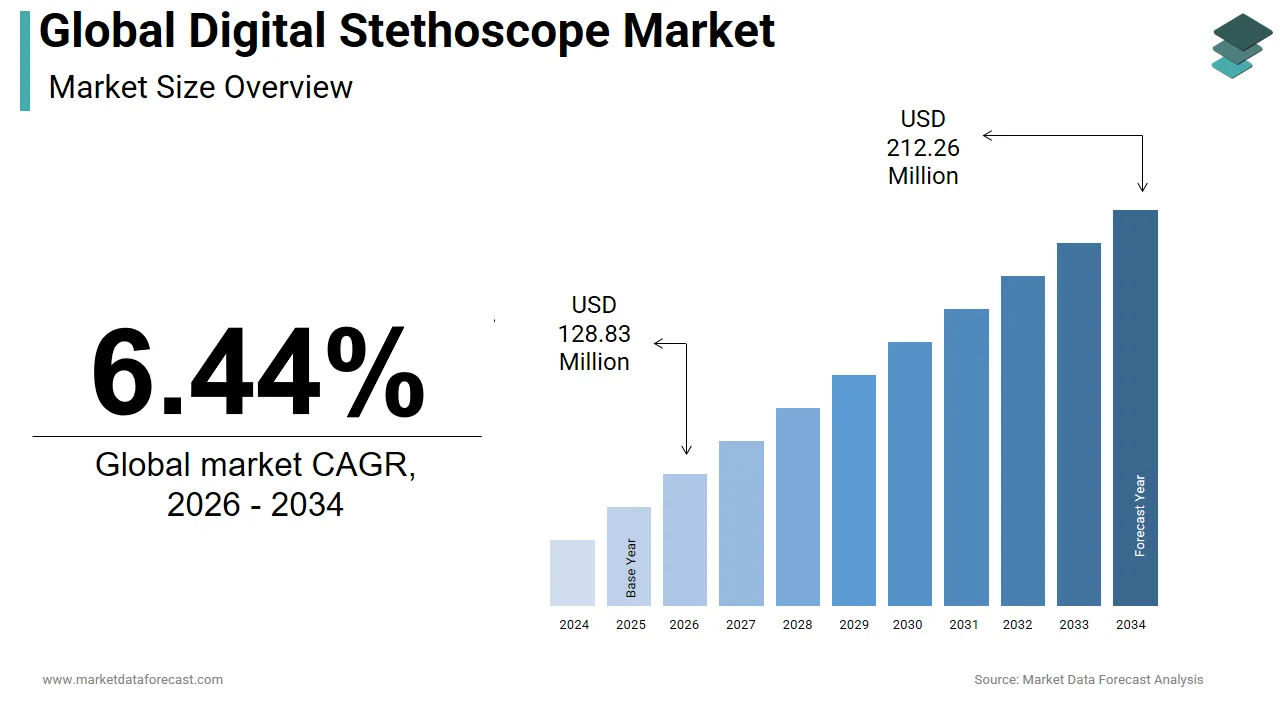
The global digital stethoscope market was valued at USD 121.04 million in 2025 and is projected to grow from USD 128.83 million in 2026 to USD 212.26 million by 2034, registering a CAGR of 6.44% from 2026 to 2034. Market growth is driven by increasing adoption of digital healthcare technologies, rising prevalence of cardiovascular and respiratory disorders, and growing demand for remote patient monitoring solutions. Digital stethoscopes provide enhanced sound amplification, noise reduction, recording capabilities, and integration with telemedicine platforms, enabling more accurate diagnosis and clinical decision-making. The expansion of connected healthcare ecosystems and advancements in artificial intelligence-assisted diagnostics are further supporting market growth globally.
Key Market Trends
- Rising adoption of telemedicine and remote patient monitoring solutions.
- Increasing integration of artificial intelligence and digital auscultation technologies.
- Growing demand for wireless and connected diagnostic devices.
- Expansion of digital healthcare infrastructure across hospitals and clinics.
- Continuous advancements in sound amplification, noise filtering, and data-sharing capabilities.
Segmental Insights
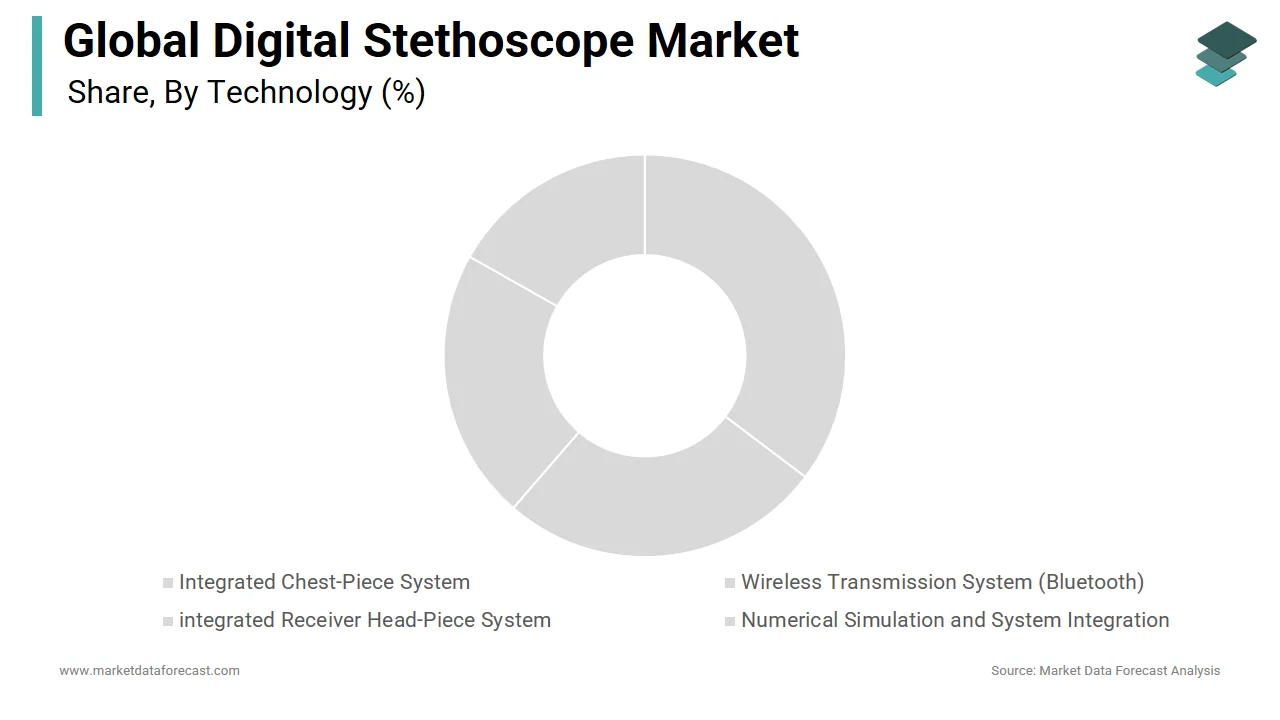
- Based on technology, the wireless transmission system segment dominated the global digital stethoscope market by accounting for 45.1% market share in 2025, driven by the growing need for seamless data transfer, telehealth integration, and real-time clinical collaboration.
- Based on end user, the hospitals segment held the largest share of 40.3% in 2025, supported by high patient volumes requiring cardiac and pulmonary assessments, advanced diagnostic infrastructure, and increasing adoption of digital healthcare technologies.
Regional Insights
The global digital stethoscope market is witnessing steady growth across major regions, supported by healthcare digitalization, increasing chronic disease prevalence, and growing adoption of connected medical devices.
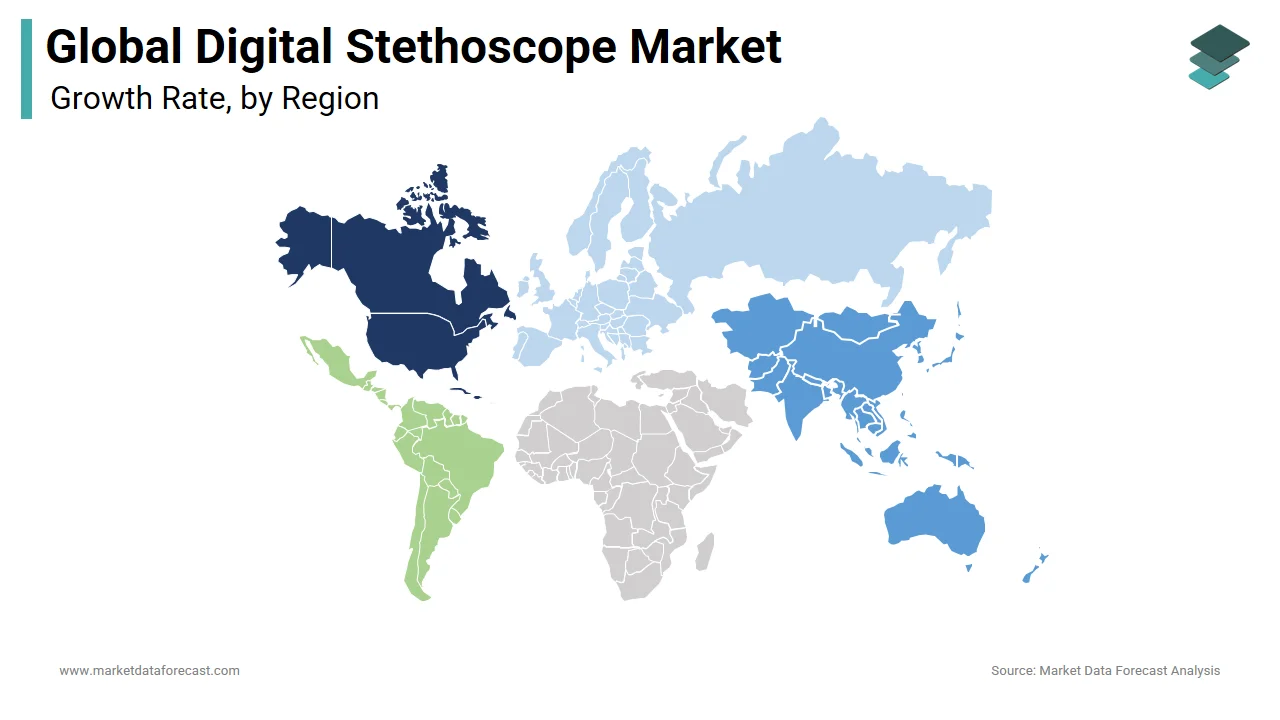
- North America dominated the global market in 2025 with 35.7% share, driven by robust healthcare infrastructure, widespread adoption of advanced diagnostic technologies, and strong investments in digital health solutions.
- Europe held the second-largest position with 28.4% share in 2025, supported by increasing implementation of telemedicine services, favorable healthcare policies, and growing demand for innovative diagnostic tools.
- Asia-Pacific is projected to register the fastest growth during the forecast period, driven by rapid economic development, expanding healthcare access, increasing healthcare expenditures, and growing adoption of digital medical technologies.
Competitive Landscape
The global digital stethoscope market is characterized by the presence of established medical device manufacturers and emerging digital health companies focusing on innovation, connectivity, and diagnostic accuracy. Market participants are emphasizing wireless technologies, AI-powered auscultation tools, cloud-based data integration, and telemedicine compatibility to strengthen market positioning. Strategic collaborations, product launches, and investments in connected healthcare solutions continue to shape competitive dynamics across the market.
Prominent companies operating in the global digital stethoscope market include Eko Health Inc., 3M, Thinklabs Medical, Medtronic, Welch Allyn, Cardionics, HD Medical, CliniCloud, DigiO2 International, American Diagnostic Corporation, eKuore, M3dicine, Steth IO, TytoCare, PCP Medical, Andon Health, Aidtronix, MobileODT, HD Steth, and Nonin Medical.
Global Digital Stethoscope Market Size
The global digital stethoscope market was valued at USD 121.04 million in 2025, is estimated to reach USD 128.83 million in 2026, and is projected to reach USD 212.26 million by 2034, growing at a CAGR of 6.44% from 2026 to 2034.
A digital (or electronic) stethoscope is an advanced medical device that captures internal body sounds like heartbeats and lung activity using electronic sensors rather than relying solely on acoustic tubing. These devices convert sound waves into electrical signals, enabling amplification, noise reduction, and remote sharing of cardiac or pulmonary data. This evolution is critical as healthcare systems globally grapple with an aging demographic and the rising prevalence of chronic respiratory and cardiovascular conditions. According to the World Health Organization, cardiovascular diseases remain the leading cause of death globally, claiming an estimated 19.8 million lives in 2022. This staggering mortality rate underscores the urgent need for precise diagnostic tools that can detect subtle anomalies earlier than traditional methods allow. Furthermore, the integration of artificial intelligence with digital auscultation facilitates automated analysis, reducing diagnostic errors. The European Society of Cardiology indicates that heart failure affects approximately 15 million people in Europe alone, creating a substantial patient base requiring regular monitoring. Digital stethoscopes address this by allowing seamless data storage and longitudinal tracking, which is vital for managing chronic conditions. The technology also supports telemedicine initiatives, bridging the gap between specialists and patients in remote areas. By enhancing diagnostic accuracy and enabling collaborative care, digital stethoscopes are becoming indispensable in modern medical practice, moving beyond simple listening tools to become comprehensive diagnostic platforms that integrate with electronic health records and cloud-based analytics systems.
MARKET DRIVERS
Integration with Telemedicine Infrastructure Drives Adoption
The rapid expansion of telemedicine is driving the growth of the digital stethoscope market. These devices enable remote physical examinations that were previously impossible. Traditional acoustic stethoscopes require physical presence, but digital variants transmit high-fidelity audio and visual data over secure networks, allowing specialists to assess patients hundreds of miles away. This capability is particularly crucial in rural and underserved regions where access to cardiologists or pulmonologists is limited. According to the American Telemedicine Association, telehealth visits have stabilized at levels significantly higher than pre-pandemic baselines, with millions of consultations occurring annually across the United States. This sustained volume necessitates diagnostic tools that can replicate in-person examination quality. Digital stethoscopes facilitate this by integrating with video conferencing platforms and electronic health records, ensuring that remote assessments are documented and actionable. The ability to record and share auscultation sounds allows for second opinions and collaborative diagnosis, enhancing patient outcomes. Moreover, insurance reimbursement policies in several countries are evolving to cover remote diagnostic procedures, further incentivizing healthcare providers to invest in digital auscultation technology. Healthcare systems are increasingly prioritizing cost-effective care delivery models. Consequently, the synergy between telemedicine and digital stethoscopes has become vital, driving demand among hospital networks and independent practitioners seeking to expand their reach without compromising diagnostic rigor.
Rising Prevalence of Cardiovascular and Respiratory Diseases Fuels Demand
The escalating global burden of cardiovascular and respiratory disorders also propels the expansion of the digital stethoscope market. This is because early and accurate detection remains paramount for effective disease management. Chronic conditions such as heart failure, chronic obstructive pulmonary disease, and asthma require continuous monitoring, where subtle changes in heart or lung sounds can indicate deterioration. Digital stethoscopes offer superior sensitivity and noise cancellation features that enhance the detection of low-intensity murmurs or wheezes, which might be missed by conventional devices. According to the Global Burden of Disease Study, chronic respiratory diseases affect over 569 million people worldwide, serving as a massive driver of global illness, mortality, and long-term healthcare expenditure. This vast patient population necessitates efficient diagnostic workflows that digital tools can provide. Additionally, the aging population is more susceptible to these conditions, with the United Nations projecting that the number of persons aged 65 years or older will reach 1.5 billion by 2050. This demographic shift increases the frequency of clinical visits and the need for reliable diagnostic equipment. Healthcare providers are increasingly adopting digital stethoscopes to improve diagnostic confidence and reduce the likelihood of misdiagnosis. The ability to visualize sound waves through accompanying software applications further aids in training and clinical decision-making, making these devices essential in managing the growing caseload of chronic diseases efficiently and effectively.
MARKET RESTRAINS
High Initial Costs and Reimbursement Hurdles Restrain Market Growth
The substantial initial investment required for these stethoscopes is a significant barrier to the digital stethoscope market. This is particularly visible among small clinics and individual practitioners in developing regions. Unlike traditional acoustic stethoscopes, which are relatively inexpensive and durable, digital variants involve complex electronics, software licenses, and regular maintenance, leading to a higher total cost of ownership. Many healthcare facilities operate under tight budget constraints, making it challenging to justify the expenditure on advanced diagnostic tools when basic alternatives suffice for routine checks. Financial indicators from the World Bank establish that annual per capita health expenditure in low-income nations remains drastically low, averaging only $17 per person, which severely restricts the capacity of these health systems to procure advanced medical equipment. Furthermore, reimbursement policies for digital diagnostic tools are inconsistent across different jurisdictions. In many regions, insurance providers do not specifically reimburse for the use of digital stethoscopes, viewing them as optional upgrades rather than essential medical equipment. This lack of financial incentive discourages healthcare providers from investing in the technology. Additionally, the rapid pace of technological obsolescence means that devices may require frequent upgrades to remain compatible with new software platforms, adding to the long-term financial burden. These economic factors collectively restrain market penetration, especially in price-sensitive segments where cost-effectiveness is prioritized over advanced features.
Technical Complexity and User Resistance Impede Widespread Acceptance
The technical complexity associated with these stethoscopes and the resulting learning curve is a notable restraint to their universal acceptance among healthcare professionals, which hampers the expansion of the digital stethoscope market. Many clinicians, particularly those trained extensively on acoustic stethoscopes, are accustomed to the tactile and auditory feedback provided by traditional devices. Transitioning to digital interfaces requires adapting to new workflows, including pairing devices with smartphones or tablets, managing battery life, and navigating software applications. This shift can be perceived as cumbersome and time-consuming, especially in high-pressure emergency settings where speed is critical. As per a survey conducted by the Journal of Medical Internet Research, a significant proportion of physicians report technology fatigue and resistance to adopting new digital tools that disrupt established clinical routines. The reliance on external power sources and connectivity also introduces potential points of failure, such as battery depletion or Bluetooth connectivity issues, which can hinder clinical efficiency. Moreover, the variability in sound quality depending on the device settings and environmental noise can lead to inconsistent user experiences. Training requirements further exacerbate this issue, as healthcare institutions must allocate resources for staff education and support. Manufacturers need to simplify user interfaces and ensure seamless integration into existing clinical workflows. Until they do, end-user resistance will continue to limit the broader adoption of digital stethoscopes across diverse medical settings.
MARKET OPPORTUNITIES
Expansion into Emerging Markets Presents Significant Growth Avenues
Emerging economies in the Asia Pacific, Latin America, and Africa offer substantial growth opportunities for the digital stethoscope market. This is driven by improving healthcare infrastructure and increasing government investments in medical technology. Countries such as India, China, and Brazil are experiencing rapid urbanization and a growing middle class, leading to higher demand for quality healthcare services. Governments in these regions are actively promoting digital health initiatives to enhance accessibility and efficiency in medical care. The Asian Development Bank projects robust economic growth for developing Asia at approximately 4.9% for 2025. In contrast, forecasts for the digital health market in regions like ASEAN predict a notable annual growth rate, driven by investments in medical infrastructure. This trend creates a favorable environment for the introduction of advanced diagnostic tools like digital stethoscopes. Additionally, the rising prevalence of non-communicable diseases in these regions necessitates better diagnostic capabilities. Local manufacturing partnerships and cost-effective product variants can help overcome price barriers, making digital stethoscopes more accessible to a broader range of healthcare providers. Mobile health applications are also gaining traction, enabling remote monitoring and diagnosis in areas with limited specialist availability. Tailoring products to meet the specific needs and budget constraints of emerging markets allows manufacturers to tap into a vast and underserved patient population. Consequently, this helps them drive volume growth and establish a long-term market presence in these dynamic economies.
Integration with Artificial Intelligence Enhances Diagnostic Capabilities
The integration of artificial intelligence with these stethoscopes opens new pathways for enhancing diagnostic accuracy and clinical decision support, which is a major opportunity for the expansion of the digital stethoscope market. AI algorithms can analyze auscultation recordings to identify patterns associated with specific cardiac or pulmonary conditions, providing real-time feedback to clinicians. This capability is particularly valuable in primary care settings where specialists may not be immediately available. A pivotal study published in the European Heart Journal – Digital Health confirmed that AI-assisted auscultation demonstrates significantly higher sensitivity (92.3%) in detecting heart valve disease compared to general practitioners using standard methods (46.2%). Such advancements can reduce referral rates to specialists and lower overall healthcare costs by enabling earlier and more accurate diagnoses. Furthermore, AI-driven analytics can facilitate predictive modeling, helping clinicians anticipate disease progression and tailor treatment plans accordingly. The accumulation of large datasets from digital stethoscope usage also contributes to the refinement of these algorithms, creating a virtuous cycle of improvement. As regulatory bodies begin to approve AI-based diagnostic tools, healthcare providers will gain greater confidence in adopting these technologies. Collaborations between medical device manufacturers and AI software developers can accelerate innovation, leading to more sophisticated and user-friendly solutions. This synergy positions digital stethoscopes not just as listening devices but as intelligent diagnostic partners, unlocking new value propositions for healthcare systems worldwide.
MARKET CHALLENGES
Data Privacy and Security Concerns Pose Significant Challenges
The handling of sensitive patient data generated by these stethoscopes raises significant privacy and security challenges that manufacturers and healthcare providers must address, thereby hindering the growth of the digital stethoscope market. These devices often transmit audio and clinical data to cloud servers or mobile applications, creating potential vulnerabilities to cyberattacks and data breaches. Compliance with stringent regulations such as the General Data Protection Regulation in Europe and the Health Insurance Portability and Accountability Act in the United States requires robust encryption and secure data storage protocols. According to the IBM Cost of a Data Breach Report 2024, the average cost of a healthcare data breach is approximately $9.8 million, remaining the highest of any industry despite dropping from its 2023 peak. Healthcare institutions are increasingly cautious about adopting connected medical devices due to fears of compromising patient confidentiality. Any breach can erode trust and lead to legal liabilities, deterring the adoption of digital health solutions. Manufacturers must invest heavily in cybersecurity infrastructure and regular audits to ensure compliance and protect patient information. Additionally, the interoperability of digital stethoscopes with various electronic health record systems can introduce compatibility issues that may expose data during transfer. Ensuring end-to-end security while maintaining ease of use remains a complex challenge. Hesitation among healthcare providers may persist and slow the pace of market adoption. This will remain true until security concerns are comprehensively addressed.
Interoperability Issues with Existing Healthcare IT Systems Create Barriers
The lack of seamless interoperability between these stethoscopes and existing healthcare information technology systems remains a serious obstacle to their integration into clinical workflows, which slows down the expansion of the digital stethoscope market. Healthcare facilities often utilize diverse electronic health record platforms, each with proprietary data formats and integration standards. Digital stethoscopes must be able to transmit data accurately and efficiently to these systems to ensure that clinical findings are documented and accessible to the care team. However, variations in software protocols and hardware compatibility can lead to data silos, where auscultation records remain isolated from the rest of the patient's medical history. According to the Office of the National Coordinator for Health Information Technology, interoperability remains a top priority yet a persistent challenge in the US healthcare system, with many providers struggling to exchange data effectively. This fragmentation hinders the potential benefits of digital auscultation, such as comprehensive patient monitoring and collaborative care. Manufacturers face the technical hurdle of developing versatile interfaces that can connect with multiple EHR vendors, which requires significant research and development investment. Without standardized data exchange frameworks, healthcare providers may find the integration process cumbersome and costly. Resolving these interoperability issues is crucial for realizing the full potential of digital stethoscopes in enhancing clinical efficiency and patient care coordination across diverse healthcare environments.
REPORT COVERAGE
| REPORT METRIC | DETAILS |
| Market Size Available | 2025 to 2034 |
| Base Year | 2025 |
| Forecast Period | 2026 to 2034 |
| Segments Covered | By Technology, End-User, and Region. |
| Various Analyses Covered | Global, Regional and Country-Level Analysis, Segment-Level Analysis, Drivers, Restraints, Opportunities, Challenges; PESTLE Analysis; Porter’s Five Forces Analysis, Competitive Landscape, Analyst Overview of Investment Opportunities |
| Regions Covered | North America, Europe, Asia Pacific, Latin America, Middle East & Africa |
| Market Leaders Profiled | Eko Devices, 3M Littmann, Thinklabs Medical, Medtronic, Welch Allyn, Cardionics, HD Medical, CliniCloud, DigiO2 International, American Diagnostic Corporation, eKuore, M3dicine, Steth IO, TytoCare, PCP Medical, Andon Health, Aidtronix, MobileODT, HD Steth and Nonin Medical. |
SEGMENT ANALYSIS
By Technology Insights
The wireless transmission system segment dominated the digital stethoscope market by capturing a 45.1% share in 2025. This dominance of the segment was driven by the seamless integration capabilities that wireless technology offers with modern mobile devices and electronic health records. The proliferation of smartphones among healthcare professionals has created a natural ecosystem for Bluetooth-enabled diagnostic tools. According to research, 90% of adults in the United States own a smartphone, creating an expansive infrastructure for mobile health software that integrates with wireless stethoscopes. This connectivity allows for real-time data transmission to specialists, enhancing collaborative care models. The convenience of eliminating tangled wires and the ability to record auscultation sounds directly into patient files drive preference among clinicians. Furthermore, the rise of telemedicine necessitates remote diagnostic capabilities, which wireless systems provide efficiently. Hospitals and clinics are increasingly upgrading their infrastructure to support Internet of Things devices, making wireless transmission the standard for new purchases. The ease of use and compatibility with various operating systems ensure that this segment remains the preferred choice for both individual practitioners and large healthcare networks seeking scalable solutions.
The numerical simulation and system integration segment is projected to register the highest CAGR of 12.5 percent during the forecast period. This rapid expansion of the segment is propelled by the increasing incorporation of artificial intelligence and machine learning algorithms into diagnostic workflows. Healthcare providers are seeking advanced analytical tools that can interpret complex acoustic data beyond human hearing capabilities. Numerical simulation allows for the creation of virtual patient models, enabling medical students and professionals to practice auscultation skills without risking patient safety. This educational application significantly boosts demand in academic institutions. Additionally, system integration facilitates the aggregation of data from multiple sources, providing a holistic view of patient health. The ability to simulate rare cardiac conditions helps in training algorithms for early detection, thereby improving clinical outcomes. As regulatory bodies approve more AI-driven diagnostic aids, the demand for sophisticated simulation and integration capabilities will continue to accelerate, propelling this segment forward.
By End-User Insights
In 2025, the hospitals segment held the majority share of 40.3% of the digital stethoscope market because of the high volume of patients requiring cardiac and pulmonary assessments in acute care settings. Hospitals are equipped with substantial budgets for acquiring advanced medical technologies that enhance diagnostic accuracy and operational efficiency. According to the American Hospital Association, there are over 6000 registered hospitals in the United States alone, each striving to maintain state-of-the-art facilities to attract patients and retain staff. The integration of digital stethoscopes into hospital-wide electronic health record systems streamlines documentation and reduces administrative burdens. Furthermore, teaching hospitals utilize these devices for training residents and medical students, leveraging the recording and playback features for educational purposes. The need for standardized diagnostic protocols across large departments drives the bulk procurement of digital stethoscopes. Collaborative care models within hospitals also benefit from the ability to share auscultation data instantly among multidisciplinary teams. Hospital admissions for chronic diseases are steadily rising. Consequently, the reliance on precise diagnostic tools like digital stethoscopes has become increasingly critical, solidifying the segment's leading position.
On the other hand, the home care settings segment is estimated to register the fastest CAGR of 11.8% from 2026 to 2034 due to the shifting paradigm toward decentralized healthcare and the increasing preference for aging in place. Patients with chronic conditions such as heart failure and chronic obstructive pulmonary disease require regular monitoring, which digital stethoscopes facilitate through remote patient monitoring programs. As per the Centers for Disease Control and Prevention, nearly 60 percent of adults in the United States have at least one chronic disease, creating a vast population eligible for home-based care. Insurance providers are increasingly reimbursing for remote monitoring services, making it financially viable for patients to acquire personal diagnostic devices. The user-friendly design of modern digital stethoscopes allows caregivers and family members to perform basic assessments under professional guidance. Telehealth consultations often include instructions for patients to record their own heart or lung sounds, which are then reviewed by physicians. This empowerment of patients and reduction in hospital readmissions drive the adoption of digital stethoscopes in home environments, marking a significant shift in healthcare delivery models.
REGIONAL ANALYSIS
North America Digital Stethoscope Market Analysis
North America led the global digital stethoscope market and captured a 35.7% share in 2025, owing to robust healthcare infrastructure and high adoption of advanced medical technologies. The region benefits from favorable reimbursement policies and a strong presence of key market players who continuously innovate to meet clinical demands. According to the Organisation for Economic Co-operation and Development, the United States spends nearly 17 percent of its gross domestic product on healthcare, the highest among developed nations, enabling substantial investment in diagnostic equipment. The prevalence of cardiovascular diseases remains high, with the American Heart Association stating that nearly half of all adults in the United States have some form of cardiovascular disease. This epidemiological burden necessitates efficient diagnostic tools. Furthermore, the widespread implementation of electronic health records and telemedicine platforms creates a conducive environment for digital stethoscope integration. Regulatory approvals from the Food and Drug Administration are streamlined for innovative medical devices, encouraging manufacturers to launch new products. The combination of high healthcare expenditure, technological readiness, and a large patient base ensures that North America remains the dominant force in the global market.
Europe Digital Stethoscope Market Analysis
Europe was positioned second in the global market and occupied a 28.4% share in 2025. The region is witnessing steady growth due to the aging population and increasing government initiatives to digitize healthcare systems. Moreover, the regional market reveals stringent regulatory standards and a strong emphasis on quality healthcare delivery. As per Eurostat, the share of people aged 65 and older in the European Union is projected to reach 30 percent by 2050, driving demand for chronic disease management tools. Countries like Germany and the United Kingdom are leading adopters, supported by well-established national health services that prioritize preventive care. The General Data Protection Regulation ensures high standards for patient data security, which builds trust in digital health solutions. Additionally, the European Society of Cardiology actively promotes the use of advanced diagnostic techniques to improve patient outcomes. Reimbursement frameworks in several European countries are evolving to cover digital health interventions, further stimulating market growth. Collaborative research projects between academic institutions and industry players foster innovation, ensuring that Europe remains a critical hub for the development and adoption of digital stethoscope technology.
Asia Pacific Digital Stethoscope Market Analysis
Asia Pacific is the fastest-growing region in the digital stethoscope market due to rapid economic development and expanding healthcare access. Countries such as China, India, and Japan are investing heavily in modernizing their medical infrastructure to cater to growing populations. According to the World Bank, health expenditure in East Asia and the Pacific has been growing at an average annual rate of 9 percent, reflecting increased government commitment. The rising middle class in these nations is demanding higher-quality healthcare services, including advanced diagnostic tools. Government initiatives like Healthy China 2030 aim to improve primary care capabilities, creating opportunities for digital stethoscope manufacturers. The high prevalence of respiratory diseases due to pollution in certain areas also drives demand for accurate pulmonary assessment tools. Mobile health penetration is surging, with millions of users adopting health apps that integrate with wearable and diagnostic devices. Local manufacturing hubs are reducing costs, making digital stethoscopes more affordable. These factors collectively contribute to the dynamic growth trajectory of the Asia Pacific market.
Latin America Digital Stethoscope Market Analysis
Latin America grew moderately in the digital stethoscope market because of improving healthcare accessibility and increasing awareness of digital health benefits. Brazil and Mexico are the primary contributors to regional growth, driven by urbanization and rising healthcare expenditures. As per the Pan American Health Organization, noncommunicable diseases account for nearly 75 percent of deaths in the Americas, highlighting the need for better diagnostic capabilities in primary care settings. Governments are implementing reforms to strengthen public health systems, including the adoption of telemedicine to reach remote areas. Digital stethoscopes offer a cost-effective solution for enhancing diagnostic accuracy in resource-limited settings. Private healthcare sectors in major cities are also adopting advanced technologies to compete for patients. However, economic volatility and uneven distribution of medical resources remain challenges. Despite these hurdles, the increasing focus on preventive care and the expansion of insurance coverage are gradually driving the adoption of digital diagnostic tools across the region.
Middle East and Africa Digital Stethoscope Market Analysis
The Middle East and Africa region is likely to expand in the global market between 2026 and 2034. However, the regional market shows varying levels of healthcare development across countries. Gulf Cooperation Council nations like Saudi Arabia and the United Arab Emirates are leading adopters due to significant investments in healthcare infrastructure and smart city initiatives. According to the World Health Organization, the Eastern Mediterranean Region is facing a double burden of disease, with rising rates of both infectious and non-communicable diseases. This complexity drives the need for versatile diagnostic tools. Government visions such as Saudi Vision 2030 prioritize digital transformation in healthcare, creating opportunities for advanced medical devices. In contrast, sub-Saharan Africa faces challenges related to infrastructure and funding, but mobile health initiatives are gaining traction. Non-governmental organizations and international aid programs are introducing digital health solutions to improve primary care in rural areas. The potential for leapfrogging traditional infrastructure through mobile-based diagnostics offers long-term growth prospects, although current adoption remains concentrated in urban centers and private facilities.
COMPETITIVE LANDSCAPE
The competitive landscape of the digital stethoscope market is characterized by a mix of established medical device giants and agile technology startups vying for dominance through innovation and strategic alliances. Incumbent players leverage their brand reputation and extensive distribution networks to maintain market leadership while introducing digital variants of their trusted acoustic products. New entrants disrupt the status quo by offering advanced software integration and artificial intelligence capabilities that appeal to tech-savvy clinicians. Competition intensifies as companies strive to differentiate their offerings through superior sound quality, ease of use, and seamless interoperability with electronic health records. Strategic partnerships with technology firms and healthcare providers are common as entities seek to enhance their value propositions. Regulatory compliance and data security remain critical differentiators influencing purchasing decisions. The market sees frequent product launches and updates reflecting rapid technological advancements. Price competition is moderate, with value-added services and software subscriptions becoming key revenue streams. Overall, the sector is dynamic with continuous evolution driven by clinical needs and digital health trends shaping future competitive dynamics significantly.
KEY MARKET PLAYERS
Some of the companies that are playing a dominating role in the global digital stethoscope market include
- Eko Health Inc
- 3M
- Thinklabs Medical
- Medtronic
- Welch Allyn
- Cardionics
- HD Medical
- CliniCloud
- DigiO2 International
- American Diagnostic Corporation
- eKuore
- M3dicine
- Steth IO
- TytoCare
- PCP Medical
- Andon Health
- Aidtronix
- MobileODT
- HD Steth
- Nonin Medical
TOP PLAYERS IN THE MARKET
- 3M Company stands as a pivotal entity in the digital stethoscope landscape through its renowned Littmann brand, which has seamlessly transitioned from acoustic excellence to digital innovation. The company leverages its extensive distribution network and strong brand loyalty among healthcare professionals to introduce advanced electronic stethoscopes that feature ambient noise reduction and tunable diaphragms. Recent strategic initiatives include enhancing software compatibility with mobile devices and integrating artificial intelligence capabilities for better sound analysis. 3M focuses on continuous product improvement and educational partnerships to train clinicians on the benefits of digital auscultation. Their commitment to quality and reliability ensures that their digital offerings meet the rigorous demands of hospital environments and private practices alike globally.
- Eko Health Inc operates as a disruptive innovator by combining hardware engineering with sophisticated software algorithms to redefine cardiac care. The company specializes in creating digital stethoscope attachments and standalone devices that connect to smartphones for real-time visualization and recording of heart and lung sounds. Eko has forged significant partnerships with major technology firms and healthcare institutions to integrate its artificial intelligence platform into clinical workflows. Recent actions involve securing regulatory clearances for new AI-driven diagnostic features and expanding its presence in international markets. By focusing on user experience and data analytics, Eko empowers clinicians to detect abnormalities earlier and collaborate more effectively with specialists through secure cloud-based sharing.
- Thinklabs One represents a specialized player focused on high-fidelity digital amplification and recording capabilities for precise diagnostic accuracy. The company distinguishes itself by offering devices that provide exceptional sound clarity and customizable frequency settings tailored to individual clinician preferences. Thinklabs emphasizes direct engagement with medical professionals through targeted marketing and demonstration programs to showcase the superior performance of its digital stethoscopes. Recent efforts include updating firmware to enhance connectivity stability and battery life while maintaining compact and durable designs. By catering to audiophiles within the medical community and those requiring detailed acoustic analysis, Thinklabs maintains a loyal customer base and continues to innovate in the niche segment of premium digital auscultation tools.
TOP STRATEGIES USED BY KEY MARKET PARTICIPANTS
Key players in the digital stethoscope market primarily focus on strategic partnerships and collaborations to expand their technological capabilities and market reach. Companies frequently engage in mergers and acquisitions to integrate artificial intelligence and software expertise into their hardware offerings. Product innovation remains central with continuous upgrades to enhance sound quality, battery life, and connectivity features. Geographic expansion is another vital strategy as firms target emerging markets with customized solutions. Additionally, heavy investment in research and development ensures compliance with evolving regulatory standards while meeting the specific needs of diverse healthcare settings globally.
MARKET SEGMENTATION
This research report on the global digital stethoscope market has been segmented and sub-segmented based on technology, end-user, and region.
By Technology
- Integrated Chest-Piece System
- Wireless Transmission System (Bluetooth)
- Integrated Receiver Head-Piece System
- Numerical Simulation and System Integration
By End-User
- Hospitals
- Clinics
- Healthcare Institutes & Organizations
- Home Care Settings
- Others
By Region
- North America
- Europe
- Asia Pacific
- Latin America
- Middle East & Africa