- Product Description Description
- Table of Contents TOC
- List of Table & Figure LOT
- Get Free Sample PDF Sample PDF
Market Size, 2025
$514 MnMarket Estimate, 2026
$539.29 MnMarket Forecast, 2034
$792 MnCAGR, 2026–2034
4.92%Global Stethoscope Market Report Summary
The global stethoscope market was valued at USD 514 million in 2025 and is projected to grow from USD 539.29 million in 2026 to USD 792 million by 2034, registering a CAGR of 4.92% from 2026 to 2034. Market growth is driven by the increasing prevalence of cardiovascular and respiratory diseases, rising healthcare expenditure, and continuous advancements in diagnostic technologies. Growing adoption of electronic and digital stethoscopes, expanding healthcare infrastructure, and increasing emphasis on early disease detection and point-of-care diagnostics are further supporting market expansion.
Key Market Trends
- Increasing adoption of electronic and digital stethoscopes with enhanced sound amplification.
- Growing integration of artificial intelligence and digital auscultation technologies.
- Rising demand for point-of-care diagnostics and remote patient monitoring.
- Expansion of healthcare infrastructure and medical workforce across emerging economies.
- Continuous innovation in wireless, Bluetooth-enabled, and telemedicine-compatible stethoscopes.
Segmental Insights
- Based on product, the electronic and digital stethoscope segment dominated the global stethoscope market in 2025, driven by superior acoustic performance, digital sound amplification, recording capabilities, and integration with telehealth and electronic medical record systems.
- Based on design, the single-head stethoscope segment held the leading market share in 2025, owing to its lightweight design, ease of handling, and widespread use for routine patient examinations.
- Based on usability, the reusable stethoscope segment accounted for a significant share of the market in 2025, supported by its cost-effectiveness, durability, and extensive adoption across hospitals, clinics, and outpatient healthcare facilities.
Regional Insights
The global stethoscope market continues to expand across major regions, supported by healthcare modernization, increasing diagnostic procedures, and growing adoption of advanced medical devices.
- North America dominated the global market in 2025 by accounting for 35.3% share, driven by advanced healthcare infrastructure, high healthcare expenditure, early adoption of digital diagnostic technologies, and the presence of leading medical device manufacturers.
- Europe held the second-largest position with 28.5% share in 2025, supported by well-established healthcare systems, increasing investments in medical technologies, and growing emphasis on early disease diagnosis and preventive care.
- Asia-Pacific is projected to register the fastest growth during the forecast period, driven by rapid healthcare modernization, expanding healthcare infrastructure, increasing government investments, and rising demand for quality diagnostic equipment across emerging economies.
Competitive Landscape
The global stethoscope market is moderately competitive, with leading medical device manufacturers focusing on digital innovation, AI-assisted auscultation, wireless connectivity, and improved acoustic performance. Market participants are investing in research and development, product innovation, strategic partnerships, and expansion into emerging markets to strengthen their competitive position. The increasing adoption of digital healthcare and telemedicine continues to create new growth opportunities for advanced stethoscope technologies.
Prominent companies operating in the global stethoscope market include 3M, Medline Industries, Inc., Welch Allyn (Hill-Rom Holdings, Inc.), Eko Devices Inc., GF Health Products, Inc., Rudolf Riester GmbH (Halma Plc.), American Diagnostics Corporation, Cardionics Corporation, and Heine Optotechnik GmbH & Co. KG.
 Download Free Sample Report
Global Stethoscope Market Size
The global stethoscope market was worth US$ 514 million in 2025 and is anticipated to reach a valuation of US$ 792 million by 2034, from US$ 539.29 million in 2026, and it is predicted to register a CAGR of 4.92% during the forecast period 2026 to 2034.
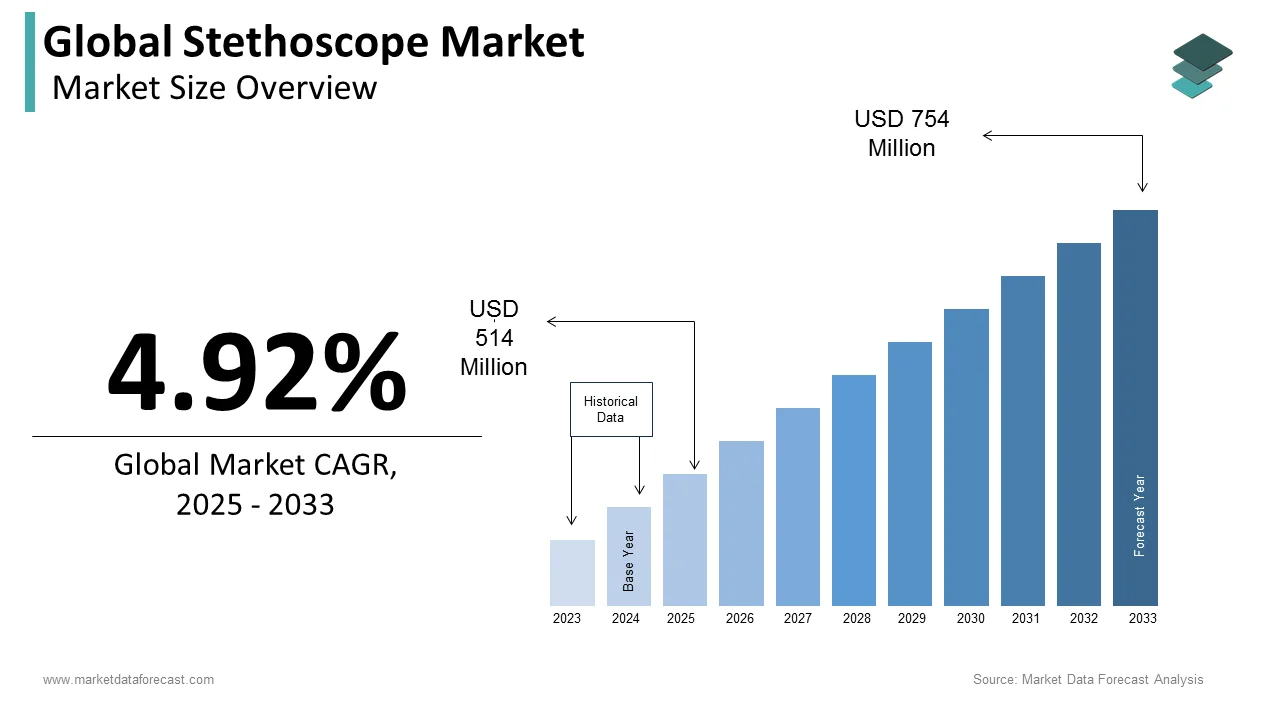
A stethoscope is an acoustic medical instrument used by healthcare professionals to listen to the internal sounds of a human or animal body. This fundamental medical device remains an indispensable tool for initial patient assessment across primary care, emergency medicine, and specialized clinical settings despite the proliferation of advanced imaging technologies. In Europe, the aging demographic profile, where individuals aged 65 and above represent 22.0 percent of the population according to Eurostat data, creates a sustained demand for routine cardiac and pulmonary monitoring. The European Society of Cardiology highlights that cardiovascular diseases affect over 62 million people in the European Union, with heart failure remaining a prominent clinical condition requiring regular evaluations where stethoscopes serve as a primary physical assessment tool. Furthermore, the global burden of chronic obstructive pulmonary disease affects approximately 213.4 million people worldwide according to the Global Burden of Disease Study, necessitating frequent respiratory auscultation assessments. Regulatory standards such as the European Union Medical Device Regulation mandate stringent quality controls for acoustic performance and biocompatibility, ensuring patient safety. The transition from traditional acoustic models to digital and smart stethoscopes equipped with noise cancellation and recording capabilities reflects the evolving clinical needs for telemedicine and remote patient monitoring. These factors collectively define a market driven by clinical necessity, technological innovation, and the enduring role of physical examination in modern healthcare diagnostics.
MARKET DRIVERS
Rising Prevalence of Cardiovascular and Respiratory Diseases
The escalating global burden of cardiovascular and respiratory disorders contributes to the growth of the stethoscope market. This is due to the necessity of routine auscultation for diagnosis and monitoring. Cardiovascular diseases remain the leading cause of death worldwide, accounting for an estimated 17.9 million deaths annually according to the World Health Organization. Conditions such as heart failure, valvular defects, and arrhythmias produce distinct audible murmurs and rhythms that require precise acoustic detection for initial identification. The American Heart Association reports that nearly half of all adults in the United States have some form of cardiovascular disease, creating a vast patient pool requiring regular clinical examinations. Similarly, respiratory conditions including asthma, chronic obstructive pulmonary disease, and pneumonia affect hundreds of millions globally. Stethoscopes enable clinicians to detect wheezing, crackles, and reduced breath sounds, which are critical indicators of respiratory distress. In primary care settings where access to advanced imaging may be limited or cost-prohibitive, the stethoscope remains the most efficient tool for triage. The increasing incidence of these chronic conditions among aging populations ensures consistent demand for high-quality diagnostic instruments. Furthermore, medical guidelines mandate regular physical examinations for patients with known cardiac or pulmonary history, reinforcing the stethoscope as an essential component of standard care protocols. This clinical imperative drives continuous procurement by hospitals, clinics, and individual practitioners seeking reliable tools for accurate bedside diagnosis.
Expansion of Telemedicine and Remote Patient Monitoring
The rapid adoption of telemedicine and remote patient monitoring technologies further boosts the expansion of the stethoscope market. This has created a significant demand for digital and smart stethoscopes capable of transmitting audio data electronically. The pandemic accelerated virtual care adoption, with the Centers for Medicare and Medicaid Services reporting a 63-fold increase in telehealth visits in the United States during 2020 compared to previous years. Traditional acoustic stethoscopes are ineffective in remote consultations as they cannot transmit sounds to distant providers. Digital stethoscopes address this limitation by converting acoustic signals into digital audio files that can be shared via secure platforms for real-time analysis by specialists. Smart stethoscopes equipped with Bluetooth connectivity and noise cancellation algorithms allow clinicians to perform accurate auscultation even in noisy home environments. The Food and Drug Administration has cleared several digital stethoscope models for remote use, validating their clinical utility. Furthermore, integrated artificial intelligence features in advanced models can automatically classify heart and lung sounds, aiding less experienced providers in accurate diagnosis. This technological integration supports decentralized healthcare models where patients receive care at home, reducing hospital readmissions. The ability to record and store auscultation data facilitates longitudinal tracking of patient conditions, enabling proactive interventions. Healthcare systems are placing a greater emphasis on value-based models, Remote Patient Monitoring and Value-Based Care. This shift is bolstered by evolving reimbursement policies for remote monitoring, which are accelerating the transition from analog to digital stethoscopes.
MARKET RESTRAINTS
Limited Reimbursement Policies for Diagnostic Equipment
Stringent reimbursement policies and budget constraints within healthcare systems are significant restraints on the stethoscope market. This hampers the adoption of advanced digital stethoscopes, particularly in public healthcare facilities. Many national health insurance programs and private insurers categorize stethoscopes as basic durable medical equipment with minimal or no separate reimbursement codes, forcing healthcare providers to absorb the costs. The Centers for Medicare and Medicaid Services in the United States does not provide specific reimbursement for standalone diagnostic tools like stethoscopes, considering them part of the general overhead costs of a medical practice. This financial structure discourages smaller clinics and independent practitioners from investing in premium digital models, which can cost between 300 and 500 dollars compared to 20 to 50 dollars for traditional acoustic versions. In Europe, public healthcare systems such as the National Health Service in the United Kingdom operate under tight budgetary controls where procurement decisions prioritize high-volume, high-impact technologies over incremental diagnostic improvements. According to the European Commission, healthcare spending growth has slowed in several member states due to fiscal pressures limiting capital expenditure on non-essential equipment. Additionally, the lack of clear clinical evidence demonstrating superior patient outcomes with digital stethoscopes compared to skilled use of acoustic models makes it difficult for manufacturers to justify higher price points to payers. Hospitals often extend the lifecycle of existing acoustic inventory, replacing units only when physically damaged rather than upgrading to digital alternatives. This cost sensitivity restricts market penetration of advanced technologies to well-funded private institutions and specialty centers, leaving a large segment of the market reliant on basic analog devices.
Subjectivity and Variability in Clinical Interpretation
The inherent subjectivity associated with auscultation and the variability in clinician skill levels is a significant constraint to the expansion of the stethoscope market. This hinders the perceived value and effectiveness of stethoscopes. Clinical studies indicate that inter-observer agreement for detecting heart murmurs using traditional acoustic stethoscopes varies from 40% to 60% depending on the clinician's years of practice and specialization. This variability undermines confidence in stethoscope findings, particularly among younger physicians who may lack extensive training in physical examination techniques due to increased reliance on imaging technologies. Moreover, many clinicians prefer immediate referral for echocardiography or chest radiography, bypassing auscultation entirely, which reduces the perceived necessity for high-fidelity stethoscopes. Furthermore, ambient noise in busy clinical environments can obscure subtle pathological sounds, leading to missed diagnoses or false positives. While digital stethoscopes offer noise cancellation, their adoption is hindered by the learning curve associated with interpreting digital audio outputs. The lack of standardized training protocols for digital auscultation further exacerbates inconsistency. This diagnostic uncertainty leads some healthcare administrators to view advanced stethoscopes as redundant investments when definitive imaging is readily available, thereby restraining market growth for premium diagnostic tools in favor of more objective diagnostic modalities.
MARKET OPPORTUNITIES
Integration of Artificial Intelligence for Automated Diagnosis
The integration of artificial intelligence algorithms into digital stethoscopes offers a substantial opportunity to enhance diagnostic accuracy and expand accessibility in underserved regions, which is likely to promote the growth of the stethoscope market. AI-powered stethoscopes can automatically analyze recorded heart and lung sounds to identify patterns associated with specific pathologies such as atrial fibrillation, pneumonia, or valve disorders. Research published in Nature Medicine demonstrates that machine learning models can detect cardiac abnormalities with sensitivity exceeding 90 percent, surpassing the average performance of general practitioners. This technology enables task shifting, allowing nurses and community health workers to perform initial screenings with expert-level accuracy, reducing the burden on specialist physicians. The World Health Organization advocates for such point-of-care technologies to bridge the gap in healthcare access in low-resource settings where specialist availability is scarce. In Africa, where the ratio of cardiologists to population is less than 1 per 100000 in many countries, AI-enabled stethoscopes can facilitate early detection of rheumatic heart disease and other preventable conditions. Furthermore, cloud-based platforms allow for centralized data analysis and continuous algorithm improvement, creating a scalable diagnostic network. Pharmaceutical companies and clinical trial organizers also utilize these tools for remote monitoring of drug safety profiles related to cardiac toxicity. The ability to generate objective, quantifiable data from auscultation supports evidence-based decision-making and improves patient triage efficiency. Regulatory bodies are actively developing new frameworks for AI medical devices. Consequently, the market for intelligent stethoscopes is poised for significant expansion, driven by improved clinical utility and broader application scenarios beyond traditional hospital settings.
Growing Demand in Emerging Markets and Primary Care Expansion
Emerging nations in the Asia Pacific, Latin America, and Africa pave the way for the expansion of the stethoscope market. This is driven by expanding healthcare infrastructure and government initiatives to strengthen primary care systems. Governments in countries such as India, China, and Brazil are investing heavily in rural health centers to improve access to basic diagnostic services. The Indian Ministry of Health and Family Welfare reports that over 150,000 rural and urban sub-centers have been transformed into functional Ayushman Arogya Mandir facilities, requiring bulk procurement of basic clinical medical diagnostic devices. Similarly, the China Healthy China 2030 initiative aims to upgrade grassroots medical institutions, creating demand for durable and affordable diagnostic tools. In these regions, the prevalence of infectious respiratory diseases and untreated cardiovascular conditions remains high, necessitating robust physical examination capabilities. Local manufacturing hubs in China and India are producing cost-effective acoustic stethoscopes that meet international quality standards, making them accessible to budget-constrained public health programs. Furthermore, non-governmental organizations and international aid agencies frequently distribute stethoscopes as part of medical kits for disaster relief and community health campaigns. The rising middle class in these regions is also driving private healthcare consumption, where patients seek comprehensive checkups including cardiac and pulmonary assessments. As healthcare literacy improves and insurance coverage expands, the volume of outpatient visits increases, directly correlating with stethoscope utilization. Manufacturers who establish local distribution networks and offer products tailored to tropical climates and rugged usage conditions can capture significant market share in these high-growth regions.
MARKET CHALLENGES
Shortage of Skilled Personnel for Physical Examination
The declining proficiency in physical examination skills among newer generations of healthcare professionals is a critical challenge to the stethoscope market. This is due to increased reliance on technological diagnostics. Medical education trends show a shift away from hands-on clinical training, with many residency programs prioritizing interpretation of imaging and laboratory results over bedside auscultation. Studies indicate that fewer than 50% of incoming internal medicine residents display clear confidence or proficiency in their independent ability to distinguish complex cardiac murmurs using basic stethoscopes. This skills gap reduces the effective utilization of high-fidelity stethoscopes, as clinicians may not possess the expertise to distinguish subtle acoustic differences. Consequently, hospitals may hesitate to invest in premium digital models if staff cannot leverage their advanced features effectively. Furthermore, the turnover rate of healthcare workers, exacerbated by burnout, means that continuous training is required to maintain competency levels, which many institutions struggle to fund. In developing nations, the shortage of trained physicians means that community health workers often perform initial assessments but may lack formal training in auscultation techniques. Without adequate education programs, the potential of advanced stethoscopes remains unrealized, leading to underutilization and wasted resources. Addressing this challenge requires manufacturers to collaborate with educational institutions to integrate simulation-based training into curricula. However, the fragmented nature of medical education globally makes standardized skill development difficult. This human capital constraint limits the market potential for sophisticated diagnostic tools that require high levels of operator expertise to deliver optimal clinical value.
Ambient Noise Interference in Clinical Environments
Ambient noise pollution in modern healthcare settings is a significant impediment to the accuracy and reliability of acoustic stethoscopes, which limits their expansion in the global market. This affects diagnostic confidence and patient safety. Hospital environments, particularly emergency departments and intensive care units, often exceed noise levels of 70 to 80 decibels due to alarm equipment operation and staff conversations, according to the Journal of Critical Care. Such high background noise masks low-frequency heart sounds and subtle lung crackles, leading to potential misdiagnosis or missed pathology. Traditional acoustic stethoscopes rely on passive sound transmission, which offers limited protection against environmental interference. While digital stethoscopes offer active noise cancellation, their effectiveness varies depending on the quality of the microphone and algorithm sophistication. High-end models can reduce noise by up to 20 decibels but may introduce audio artifacts or delay signal processing, affecting real-time assessment. Clinicians working in noisy environments may experience auditory fatigue, reducing their ability to concentrate on faint sounds over extended shifts. This occupational hazard impacts diagnostic accuracy and contributes to physician burnout. Furthermore, patients in shared rooms may feel self-conscious about being examined in noisy settings, affecting cooperation during physical exams. Manufacturers face technical challenges in designing lightweight, comfortable devices that effectively isolate body sounds without compromising portability or ease of use. Balancing acoustic performance with ergonomic design in noisy clinical realities remains a persistent engineering hurdle. Until noise interference is adequately addressed, the full diagnostic potential of Stethoscopes may remain compromised in high-acuity care settings. Consequently, this limits their utility in critical decision-making scenarios.
REPORT COVERAGE
| REPORT METRIC | DETAILS |
| Market Size Available | 2025 to 2034 |
| Base Year | 2025 |
| Forecast Period | 2026 to 2034 |
| Segments Covered | By Product, Design, Usability, Tube Type, End-User, and Region. |
| Various Analyses Covered | Global, Regional and Country-Level Analysis, Segment-Level Analysis, Drivers, Restraints, Opportunities, Challenges; PESTLE Analysis; Porter’s Five Forces Analysis, Competitive Landscape, Analyst Overview of Investment Opportunities |
| Regions Covered | North America, Europe, Asia Pacific, Latin America, Middle East & Africa |
| Market Leaders Profiled | 3M, Medline Industries, Inc., Welch Allyn (Hill - Rom Holdings, Inc.)., Eko Devices Inc., Gf Health Products, Inc., Rudolf Riester Gmbh (Halma Plc.), American Diagnostics Corporation, Cardionics, And Heine Optotechnik Gmbh & Co. Kg, and Others. |
SEGMENTAL ANALYSIS
By Product Insights
This electronic and digital stethoscope segment led the global stethoscope market and captured a significant share in 2025. Superior acoustic amplification and noise cancellation capabilities drive the dominance of these stethoscopes in clinical settings. The escalating noise levels in modern healthcare facilities necessitate advanced acoustic solutions that electronic and digital stethoscopes uniquely provide. Electronic models utilize active noise cancellation algorithms and dual microphone arrays to isolate internal body sounds from environmental interference. This technological advantage ensures that clinicians can accurately detect subtle pathological indicators such as faint heart murmurs or early-stage lung crackles without auditory fatigue. Furthermore, the ability to amplify sound up to 40 times allows practitioners to auscultate patients with low-volume physiological sounds or those with high body mass indices. The widespread adoption of these devices in intensive hospital wards directly correlates with improved early detection rates of cardiovascular anomalies. As hospital administrators prioritize patient safety and diagnostic precision, the procurement of electronic and digital stethoscopes continues to outpace other technology types, solidifying their leading position in the global market landscape.
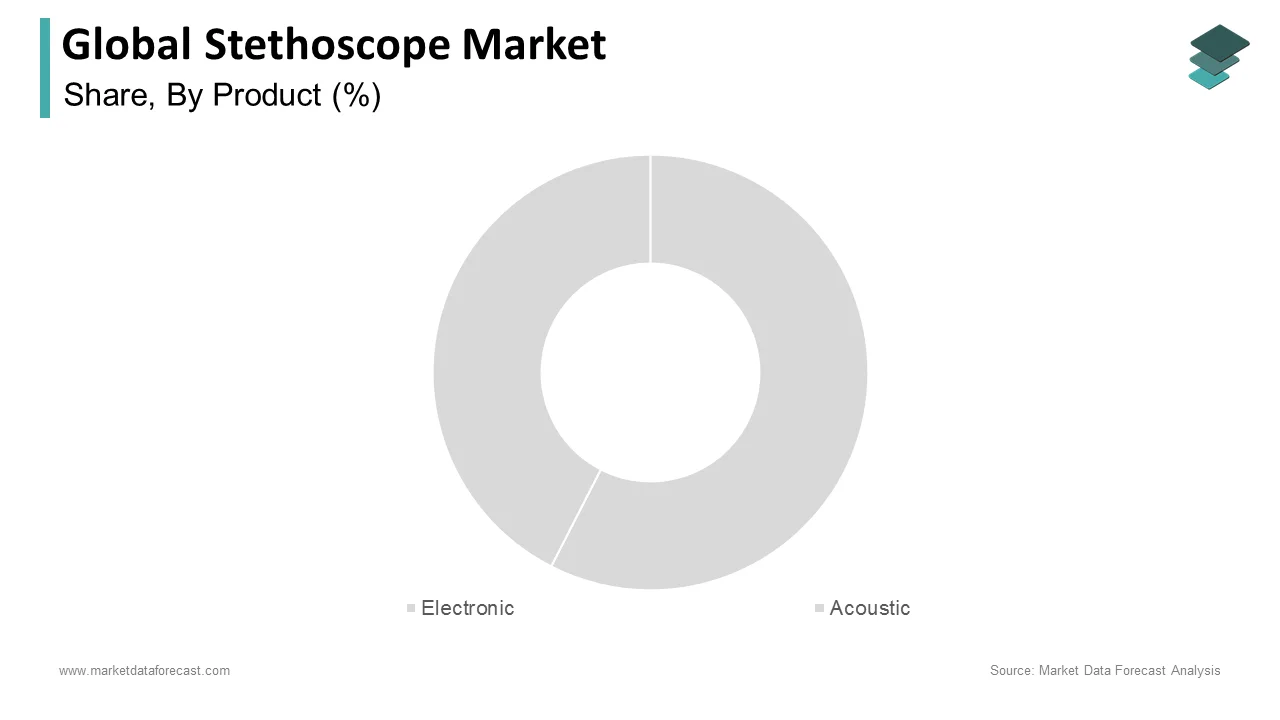
The seamless integration with telemedicine platforms and electronic recording capabilities propels the widespread adoption of electronic and digital stethoscopes. Also, the exponential growth of virtual care models requires diagnostic tools capable of transmitting high-fidelity audio data to remote specialists. Electronic and digital stethoscopes fulfill this critical need by converting acoustic waves into digital signals that can be securely shared via cloud-based platforms. Digital stethoscopes enable primary care physicians to capture lung and heart sounds during a local consultation and instantly transmit the audio files to cardiologists or pulmonologists for expert evaluation. This capability significantly reduces unnecessary patient transfers and accelerates the diagnostic workflow. Additionally, the recording function allows clinicians to save baseline auscultation data for longitudinal monitoring of chronic conditions such as heart failure or chronic obstructive pulmonary disease. The integration of these digital features into routine physical examinations bridges the geographical gap between patients and specialists, making electronic and digital stethoscopes an indispensable asset in modern decentralized healthcare delivery systems.
By Design Insights
The single-head stethoscope is expected to grow at 5.6% CAGR during the forecast period. This stethoscope is pressure-sensitive and has a single-sided chest piece that allows the user to record different frequencies without flipping the chest piece. These products are helpful for cardiovascular doctors and help them in various ways of detecting problems.
Double-head and triple-head stethoscopes have the second and third-largest market share, with positive growth projected in the future. A dual-head stethoscope allows the user to hear different sound frequencies through the cup side and opposite flat sides to listen to low-frequency lung sounds and high-frequency heart sounds, respectively. With the help of the three-headed stethoscope, we can hear heart, lung, and vascular sounds without challenging varying pressure procedures. It is specially intended to highlight critical sounds.
By Usability Insights
The reusable stethoscope has a significant market share, with most equipment being a one-time buy and holding a 90% share in the market. Furthermore, the advantages of the stethoscope in detecting human internal conditions will further accelerate the market. Single-use or disposable stethoscopes are prophesied to show high dominance in the market due to their ability to prevent cross-contamination with the ultra-responsive plastic cover feature for outstanding acoustic performance. They are available in plastic, binaural chrome brass, aluminum chest piece, and optional binaural to provide a comfortable fit for all users and excellent sound transmission to both ears.
By Tube Type Insights
The double tube dominates the segment based on the tube type and is expected to grow reasonably during the forecast period. The double tube provides individual sound to both ears and gives clarity in judging the sounds in a busy outside environment. Therefore, it is expected to grow at a 6% CAGR during the forecast period. On the other hand, the single-tube stethoscope has second place in market share and is expected to grow reasonably as the overall demand increases. Only one tube is connected to the chest piece in a single-tube stethoscope, which then splits into two, going into either ear of the user, whereas dual-tube stethoscopes have two tubes, each running from the chest piece to the ear. Single-tube stethoscopes are for general use, allowing focus on high- or low-frequency sounds with clear, wide-frequency sound output.
By End-User Insights
The hospitals and physician office segments have the largest market share among all the segments. The growth is projected at a reasonable rate during the forecast period. The development is supported by more focus on governments providing healthcare and various initiatives taken at the global level on delivering healthcare services in all parts of the world.
REGIONAL ANALYSIS
North America Stethoscope Market Analysis
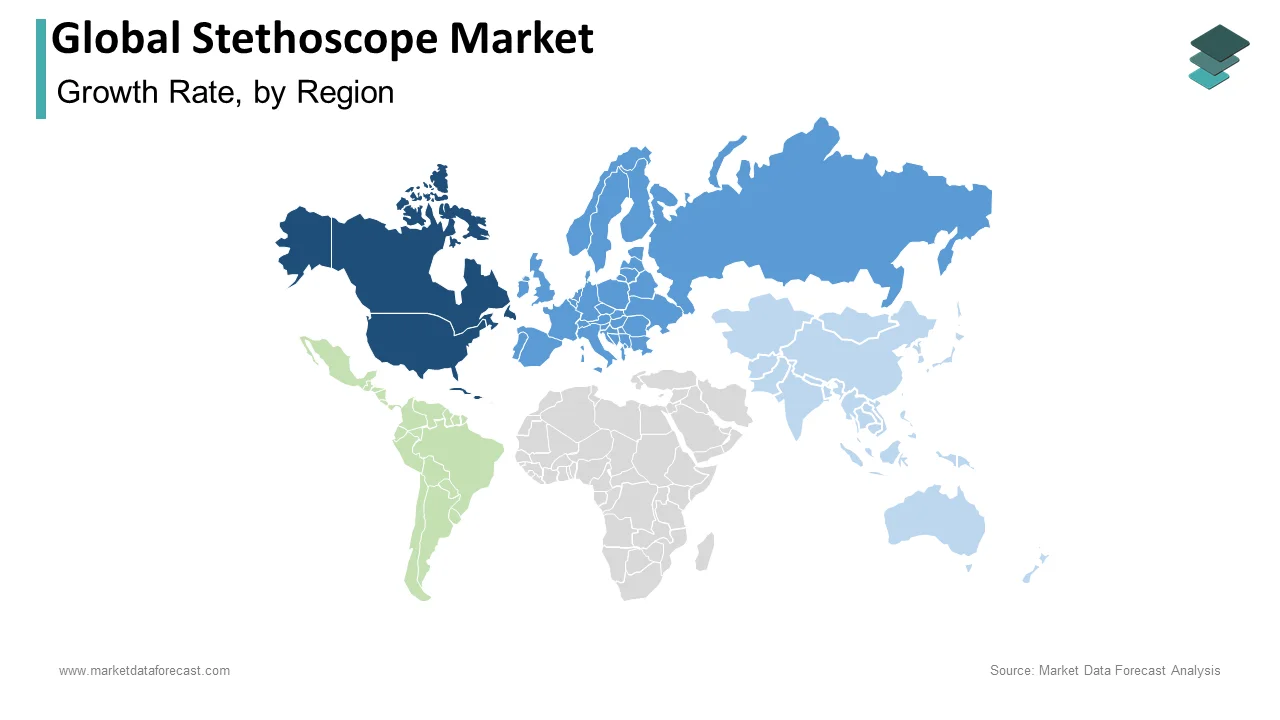
North America dominated the global stethoscope market and accounted for a 35.3% share in 2025. This dominance of the North American market was driven by advanced healthcare infrastructure and high adoption rates of digital diagnostic tools. The United States serves as the primary engine of this regional dominance, characterized by substantial healthcare expenditure and a strong emphasis on technological integration in clinical settings. In addition, the Centers for Medicare & Medicaid Services indicates that U.S. national health spending reached USD 4.3 trillion in 2021, emphasizing the immense financial infrastructure supporting ongoing medical equipment procurement. The widespread implementation of telemedicine following recent global health crises has permanently elevated the demand for electronic and smart stethoscopes capable of remote audio transmission. Moreover, the American Telemedicine Association highlights that virtual care utilization remains firmly integrated into healthcare delivery systems, driving policy and infrastructure changes that accommodate decentralized patient monitoring workflows. Furthermore, the presence of major medical device manufacturers and a highly trained workforce of specialists ensures rapid adoption of advanced auscultation technologies. High reimbursement rates for telehealth services in the United States incentivize clinics to invest in smart stethoscopes that integrate seamlessly with electronic health records. The aging population also contributes to sustained demand as elderly patients require frequent cardiovascular and respiratory monitoring. These converging factors of technological readiness, financial capacity, and demographic trends solidify the leadership of North America in the global stethoscope market, ensuring continuous innovation and premium product adoption across both hospital and ambulatory care settings.
Europe Stethoscope Market Analysis
Europe followed closely behind in the global stethoscope market and captured a 28.5% share in 2025. This growth of the European market was supported by universal healthcare systems and stringent medical device regulations. Countries such as Germany, France, and the United Kingdom lead regional procurement driven by well-funded public health infrastructures and a strong clinical emphasis on physical examination skills. The European Society of Cardiology emphasizes that cardiovascular diseases remain the leading cause of mortality in the region, necessitating continuous auscultation for early detection and management. Eurostat shows that the European population aged 65 and older constitutes 22.0% of the total demographic, establishing an expanding patient base requiring routine cardiac and pulmonary clinical screenings. Public healthcare systems in nations like Germany and France provide comprehensive coverage for diagnostic procedures, which indirectly supports the procurement of high-quality stethoscopes by hospitals and clinics. Furthermore, Europe is a hub for medical research and academic medicine where smart stethoscopes are frequently utilized in clinical trials to gather objective auscultation data. The region also sees a growing trend of international medical tourism, particularly in Eastern European countries where private clinics invest in advanced digital diagnostic tools to attract global patients. This combination of regulatory rigor, aging demographics, and strong public health funding ensures steady and sustainable market growth across the European continent.
Asia Pacific Stethoscope Market Analysis
Asia Pacific is the fastest-expanding region in the global market due to rapid healthcare modernization and massive government investments. Nations such as China, India, and Japan are at the forefront of this regional acceleration driven by initiatives to upgrade grassroots medical facilities and expand insurance coverage. The Chinese government health initiative allocates substantial resources to improve primary care infrastructure, resulting in the bulk procurement of essential diagnostic equipment, including advanced digital stethoscopes for rural clinics. According to the National Health Commission of China, the number of primary healthcare institutions has expanded significantly, requiring standardized and durable medical tools to serve a vast population. In India, the national health scheme aims to provide health coverage to hundreds of millions of citizens, driving the establishment of thousands of new health and wellness centers that necessitate basic and electronic stethoscopes. Japan faces unique demographic pressures as a super-aged society where 29.3% of the population is aged 65 or older, according to the Statistics Bureau of Japan, generating steady clinical demand for cardiopulmonary monitoring devices. Furthermore, the rising affluent class across Southeast Asia is increasingly seeking private healthcare services, prompting clinics to adopt smart stethoscopes to differentiate their offerings. The presence of local manufacturing hubs in China and India also reduces the cost of electronic models, making them highly accessible to budget-constrained public health programs. These dynamic demographic and economic shifts position Asia Pacific as the most lucrative growth engine for the global stethoscope market.
Latin America Stethoscope Market Analysis
Latin America is a rapidly evolving region in the stethoscope market owing to expanding private healthcare networks and a thriving medical tourism sector. Brazil and Mexico serve as the primary economic engines within this region, supported by a growing affluent class and increasing awareness of preventive healthcare. The Brazilian Ministry of Health has implemented various programs to strengthen primary care networks, which require consistent supplies of reliable acoustic and electronic stethoscopes for community health workers. In addition, the Pan American Health Organization tracks healthcare infrastructure development across Latin America, advocating for increased public health expenditures to properly supply and equip regional medical facilities. In Mexico, the proximity to the United States has fostered a booming medical tourism industry where private dental and medical clinics invest heavily in advanced diagnostic technologies, including smart stethoscopes, to attract international patients seeking affordable care. The rising prevalence of chronic respiratory diseases and cardiovascular conditions in the region necessitates routine physical examinations, driving the baseline demand for traditional and digital models. Furthermore, local distributors are increasingly partnering with global manufacturers to provide training on the use of electronic and smart stethoscopes, bridging the gap in specialized clinical skills. Although economic volatility and currency fluctuations occasionally impact large-scale hospital procurement, the continuous expansion of private diagnostic chains and outpatient centers ensures a resilient and growing market for stethoscopes across Latin America.
Middle East and Africa Stethoscope Market Analysis
The Middle East and Africa region is anticipated to grow notably in the global market from 2026 to 2034 due to Gulf nations leading the adoption while southern African countries focus on basic infrastructure development. Countries such as the United Arab Emirates, Saudi Arabia, and South Africa dictate the regional demand driven by massive government healthcare investments and a strong focus on medical excellence. The Dubai Health Authority mandates stringent quality standards for all medical facilities, prompting private hospitals to procure premium electronic and smart stethoscopes to maintain international accreditations. According to World Bank economic data, Gulf Cooperation Council nations have prioritized significant capital investments to build premier diagnostic centers, even while overall health expenditures historically averaged under 5% of their total gross domestic product. In South Africa, the private healthcare sector serves a significant portion of the population and actively adopts digital diagnostic tools to manage the high burden of infectious and chronic diseases. The World Health Organization emphasizes that the African region faces critical shortages of specialized healthcare workers, prompting medical device markets to introduce digital telehealth tools to help optimize remote clinical diagnostics. Non-governmental organizations and international aid agencies also play a crucial role by distributing durable acoustic stethoscopes to rural clinics and training programs in southern Africa. As economic diversification continues in the Middle East and digital health initiatives expand across the African continent, the region is poised for steady growth in both premium and essential stethoscope segments.
COMPETITIVE LANDSCAPE
The competitive landscape of the Stethoscope Market is characterized by a mix of established medical device giants and specialized manufacturers striving for technological differentiation. Leading companies maintain their dominance through strong brand recognition and extensive clinical validation data that assure healthcare professionals of reliability and accuracy. However, emerging competitors are disrupting traditional markets by offering affordable electronic and smart stethoscopes with advanced features such as noise cancellation and mobile app integration. Price competition remains intense in the basic acoustic segment where numerous generic brands offer low-cost alternatives to premium products. Conversely, the high-end market focuses on innovation, with companies investing heavily in research and development to create intelligent diagnostic tools capable of automated sound analysis. Strategic alliances with software developers enable hardware manufacturers to provide comprehensive digital health solutions that integrate seamlessly with electronic health records. Furthermore, companies differentiate themselves through superior customer support, extended warranties, and educational initiatives that foster long-term loyalty among medical practitioners. This dynamic environment drives continuous improvement in product quality and functionality, ensuring that clinicians have access to increasingly sophisticated tools for accurate physical examinations and improved patient outcomes in diverse healthcare settings worldwide.
KEY MARKET PLAYERS
Some of the companies that are playing a dominating role in the global stethoscope market include
- 3M
- Medline Industries, Inc.
- Welch Allyn (Hill-Rom Holdings, Inc.)
- Eko Devices Inc.
- GF Health Products, Inc.
- Rudolf Riester GmbH (Halma Plc.)
- American Diagnostics Corporation
- Cardionics Corporation
- Heine Optotechnik GmbH & Co. KG
TOP PLAYERS IN THE MARKET
- 3M Company remains a cornerstone of the Stethoscope Market through its iconic Littmann brand, which is synonymous with clinical excellence and acoustic precision. The corporation continuously invests in material science to enhance tubing durability and chest piece sensitivity, ensuring superior sound transmission for healthcare professionals. Recently, 3M has focused on integrating digital capabilities into its traditional product lines by launching Bluetooth-enabled models that connect seamlessly with mobile devices. This strategic move allows clinicians to record and share auscultation data, facilitating remote consultations and educational purposes. The company also emphasizes sustainability by reducing packaging waste and optimizing manufacturing processes. By maintaining rigorous quality control standards and offering extensive warranty programs, 3M reinforces trust among medical practitioners globally. Its commitment to innovation ensures that the Littmann brand remains the preferred choice for students and experienced specialists alike, thereby sustaining its leadership position in the competitive diagnostic equipment landscape.
- Welch Allyn Holdings Inc significantly contributes to the Stethoscope Market by providing robust and reliable diagnostic tools designed for high-volume clinical environments. As part of Hillrom, the company leverages its extensive distribution network to deliver high-quality acoustic and electronic stethoscopes to hospitals and clinics worldwide. Welch Allyn focuses on ergonomic design principles to reduce practitioner fatigue during long shifts while maintaining exceptional acoustic performance. Recent initiatives include the expansion of its connected care portfolio, which integrates stethoscope data with electronic health records for streamlined workflow efficiency. The company actively collaborates with nursing and medical associations to provide training resources on proper auscultation techniques. By prioritizing durability and ease of cleaning, Welch Allyn addresses critical infection control needs in healthcare settings. These efforts strengthen its reputation as a trusted partner for frontline healthcare workers who require dependable instruments for accurate patient assessment and effective clinical decision-making in diverse medical specialties.
- Cardionics Corporation distinguishes itself in the Stethoscope Market through its pioneering development of electronic amplification technology that enhances diagnostic accuracy in noisy environments. The company specializes in manufacturing lightweight and durable electronic stethoscopes that offer adjustable frequency response and noise cancellation features. Cardionics actively targets niche segments such as emergency medicine and intensive care where ambient sound interference is a major challenge. Recent actions include the introduction of modular designs that allow users to customize their devices with different ear tips and tubing options for personalized comfort. The corporation also engages in direct marketing strategies to reach individual practitioners and small clinics seeking affordable yet advanced diagnostic solutions. By focusing on user feedback and continuous product refinement, Cardionics ensures its devices meet the evolving needs of modern healthcare providers. Its dedication to technological innovation and customer-centric design solidifies its position as a key player driving the adoption of electronic auscultation tools in global medical practice.
TOP STRATEGIES USED BY KEY MARKET PARTICIPANTS
Key players in the Stethoscope Market primarily focus on product innovation by integrating digital connectivity and artificial intelligence features to enhance diagnostic capabilities. Companies actively pursue strategic partnerships with telemedicine platforms to ensure seamless compatibility and data integration for remote patient monitoring applications. Manufacturers also emphasize ergonomic design improvements to reduce user fatigue and increase comfort during prolonged clinical use. Expanding distribution networks in emerging markets through local collaborations helps firms capture growing demand in developing healthcare systems. Additionally, leading participants invest heavily in educational programs and clinical training to promote proper usage and build brand loyalty among medical students and practitioners. Sustainable manufacturing practices are increasingly adopted to meet environmental regulations and appeal to eco-conscious healthcare institutions. By diversifying product portfolios to include both premium smart devices and cost-effective acoustic models, companies effectively address varied budget constraints across different healthcare settings globally.
MARKET SEGMENTATION
This market research report on the global stethoscope market has been segmented and sub-segmented based on the product, design, usability, tube type, end-user, and region.
By Product
- Electronic/Digital
- Acoustic
By Design
- Single Head
- Double Head
- Triple Head
By Usability
- Reusable
- Disposable
By Tube Type
- Single Tube
- Double Tube
By End-User
- Hospitals
- Physician Office
- Ambulatory Surgical Centers
- Urgent Care Centers
- Academic Institutes
- Others
By Region
- North America
- Europe
- Asia Pacific
- Latin America
- Middle East and Africa