- Product Description Description
- Table of Contents TOC
- List of Table & Figure LOT
- Get Free Sample PDF Sample PDF
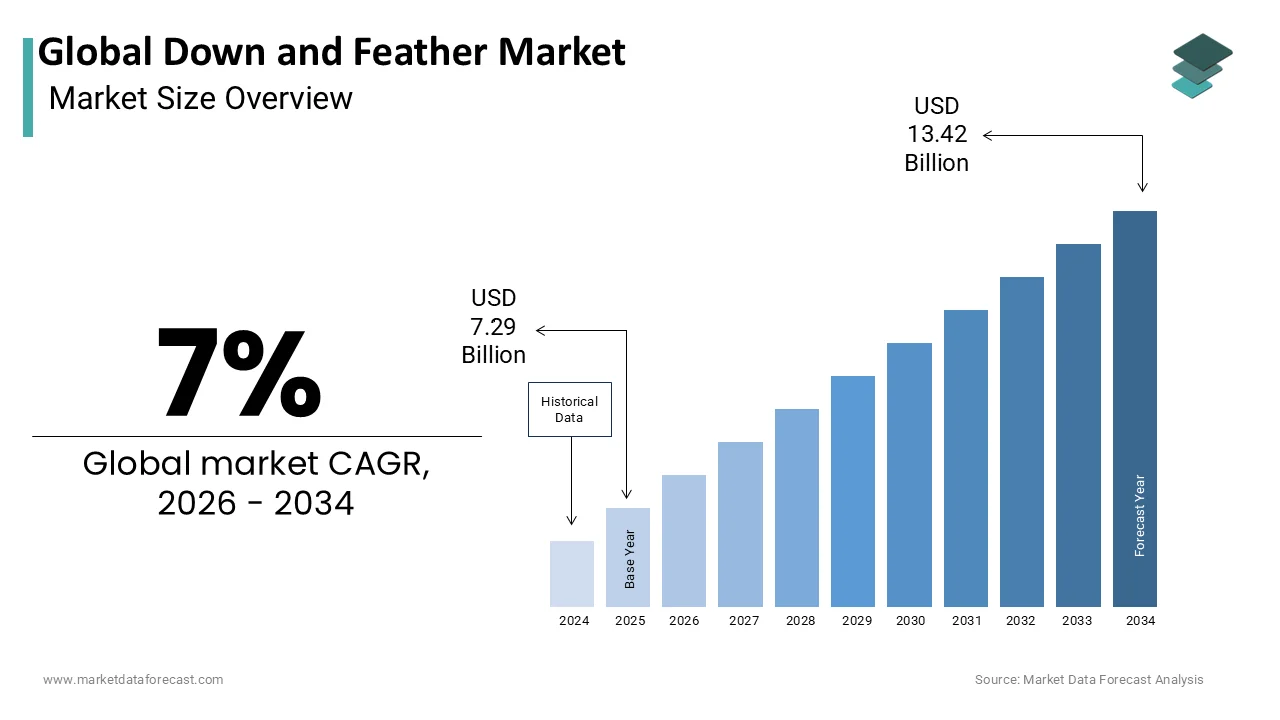
Market Size, 2025
$7.29 BnMarket Estimate, 2026
$7.81 BnMarket Forecast, 2034
$13.42 BnCAGR, 2026–2034
7%Global Down and Feather Market Size
The global down and feather market was valued at USD 7.29 billion in 2025, is expected to have a 7% CAGR from 2026 to 2034, and be worth USD 13.42 billion by 2034 from USD 7.81 billion in 2026.
Down and feathers refer to natural insulating materials derived primarily from waterfowl such as geese and ducks. These materials are valued for their exceptional warmth-to-weight ratio, breathability, and compressibility, making them indispensable in high-performance outdoor apparel, luxury bedding, and automotive insulation. The market operates at the intersection of agriculture, textile manufacturing, and consumer goods, relying on byproducts from the meat industry as well as specialized breeding for premium quality clusters. According to the Food and Agriculture Organization, global poultry meat production exceeded 130 million tons in recent years, providing a substantial raw material base for down extraction. However, only a fraction of this volume yields high fill powder,n which is critical for premium applications. Leading outdoor manufacturers and the International Down and Feather Bureau (IDFB) confirm that high-fill-power down remains the gold standard for extreme cold, offering an unrivaled warmth-to-weight ratio that synthetic alternatives have yet to fully replicate in dry, static conditions. Consumer awareness regarding animal welfare has reshaped sourcing practices, with certifications like the Responsible Down Standard gaining prominence across major retail markets. As climate change drives demand for versatile layering systems, the unique physical properties of down ensure its continued relevance despite the emergence of bio-based synthetics. The market is characterized by complex supply chains originating largely in Asia and terminating in high-value consumption centers in North America and Europe, where quality and ethical provenance dictate purchasing decisions.
MARKET DRIVERS
Rising Demand for High-Performance Outdoor Apparel Driving Premiumization
The escalating popularity of outdoor recreational activities and the subsequent demand for high-performance technical apparel boost the growth of the down and feather market. Consumers increasingly prioritize gear that offers maximum thermal protection without compromising mobility or packability, which are inherent advantages of natural down. The Outdoor Industry Association's Trends Tracking highlights a steady annual expansion in outdoor recreation, driving historic highs in hiking and camping participation. Apparel manufacturing indicators demonstrate that as these consumers graduate into technical segments, the commercial demand for premium, ultra-lightwear outerwear featuring 800 to 900 fill-power insulation has scaled aggressively to capture affluent and athlete demographics. The trend toward urban outdoor wear further amplifies demand as consumers seek stylish yet functional jackets for daily commutes in colder climates. Brands are investing heavily in marketing campaigns that highlight the superior warmth-to-weight ratio of down compared to synthetic fills, reinforcing its status as the gold standard for insulation. The proliferation of e-commerce platforms allows niche brands specializing in premium down products to reach global audiences effectively. Additionally, the rise of adventure tourism in emerging economies creates new customer bases willing to invest in durable, high-quality outerwear. This sustained interest in outdoor lifestyles ensures a robust and growing demand for premium down materials that can withstand harsh environmental conditions while maintaining comfort and aesthetic appeal.
Growth in Luxury Home Textiles and Hospitality Sector Expansion
The expansion of the luxury hospitality sector and increasing consumer expenditure on premium home textiles significantly propel the down and feather market. High-end hotels and resorts globally prefer down-filled duvets, pillows,s and mattress toppers due to their unparalleled softness, durability, comfort, and ability to provide a restful sleep experience. According to sources, the global luxury hotel landscape is projected to grow substantially, driven by rising disposable incomes and increased international travel, ravel particularly in the Asia Pacific region. These establishments frequently replace bedding to maintain high standards, creating a consistent, recurring demand for high-quality down products. In the residential sector, consumers are increasingly viewing bedding as an investment in health and well-being, leading to higher sales of hypoallergenic and ethically sourced down items. The trend toward home improvement and interior decoration has also boosted sales of decorative down-filled cushions and throws. Retailers report that customers are willing to pay a premium for certified organic and traceable down products that align with sustainable living values. The longevity of down products compared to synthetic alternatives appeals to environmentally conscious buyers who prefer durable goods over disposable items. Furthermore, innovations in cleaning and maintenance technologies have extended the lifespan of down bedding, reducing replacement frequency but increasing the initial purchase value. This combination of commercial and residential demand sustains strong growth in the premium segment of the market.
MARKET RESTRAINTS
Stringent Animal Welfare Regulations and Ethical Sourcing Concerns
Increasingly strict animal welfare regulations and heightened consumer sensitivity toward ethical sourcing restrain the growth of the down and feather market. Investigations into live plucking and force-feeding practices have led to widespread backlash, prompting major retailers and brands to adopt zero-tolerance policies. Compliance with standards such as the Responsible Down Standard requires extensive supply chain auditing and certification, which increases operational costs for producers. Many small-scale suppliers struggle to meet these rigorous documentation requirements, leading to consolidation in the industry and reduced raw material availability. Consumers are becoming more discerning,g often refusing to purchase products without clear ethical certification, ns which limits the market fnon-certifiedied down. The negative publicity associated with unethical practices can irreparably damage brand reputation, causing companies to shift toward synthetic alternatives to mitigate risk. This shift is evident in the growing market share of recycled polyester fill,s which offer cruelty-freeee narrative. The complexity of tracing down from farm to final product remains a logistical challenge, especially in regions with fragmented agricultural structures. These ethical and regulatory pressures constrain market growth by limiting supply sources and increasing compliance burdens for all stakeholders involved in the value chain.
Volatility in Raw Material Prices and Supply Chain Disruptions
Fluctuations in the prices of raw materials and frequent supply chain disruptions are considerable barriers to the stability of the down and feather market. Since down is a byproduct of the poultry meat industry, its availability and price are intrinsically linked to meat consumption trends and agricultural cycles. According to the World Bank, the food price indices indicate poultry prices have experienced significant volatility due to factors such as feed costs, ts disease outbreaks,eaks, and geopolitical tensions. Avian influenza outbreaks in major producing countries like China and Poland have periodically decimated flocks, leading to sudden shortages and price spikes. These supply shocks disrupt manufacturing schedules and force manufacturers to absorb higher costs or pass them on to consumers, potentially dampening demand. The concentration of down processing in specific geographic regions creates vulnerability to local economic and political instability. Trade tariffs and import restrictions further complicate international logistics,s increasing lead times and costs. Manufacturers often enter long-term contracts with suppliers, leaving them exposed to spot market fluctuations. The inability to predict raw material costs accurately hinders strategic planning and inventory management. Additionally,y the seasonal nature of down collection means that stockpiling is necessary but costly. These economic uncertainties make it difficult for smaller players to compete with larger corporations that have greater financial resilience and diversified sourcing strategies.
MARKET OPPORTUNITIES
Development of Bio-Based and Recycled Synthetic Alternatives
The rapid advancement of bio-based and recycled synthetic insulation materials offers a significant opportunity for innovation and diversification within the broader insulation landscape, which is predicted to drive the growth of the down and feather market. At the same time, this trend poses a competitive threat to traditional down. However, it also creates an opportunity for down producers to innovate through hybrid products and enhanced sustainability credentials. According to research, the landscape for recycled polyester insulation is growing as brands seek to reduce their carbon footprint and appeal to eco-conscious consumers. Down manufacturers can leverage this trend by developing blended fabrics that combine the warmth of down with the moisture resistance of synthetics, offering superior performance in wet conditions. Partnerships with chemical companies to create bio-based coatings that enhance water repellency without using harmful perfluorinated chemicals open new avenues for product differentiation. Additionally, the circular economy model offers opportunities for down recycling programs where old garments are collected and processed to extract reusable down fibers. This approach reduces waste and appeals to sustainability-focused retailers and consumers. Certifications for recycled content can command premium pricing and enhance brand loyalty. By embracing these technological advancements, the down industry can position itself as part of the solution to environmental concerns rather than a problem. Innovations in cleaning and sterilization technologies also allow for the safe reuse of down, extending its lifecycle and reducing the need for virgin material extraction.
Expansion into Emerging Markets with the Rising Middle Class
The expanding middle class in emerging economies, particularly in the Asia Pacific and Latin America, provides substantial growth prospects for the down and feather market. As disposable incomes rise, consumers in countries like India, Brazil,l and Indonesia are shifting from basic cotton bedding to premium down products for both home and personal use. According to the World Bank, the middle class in developing nations is expected to grow significantly over the next decade, driving demand for higher-quality lifestyle goods. Urbanization in these regions leads to smaller living spaces where lightweight and compressible down bedding is highly practical. Local manufacturing capabilities are improving, allowing for cost-effective production tailored to regional preferences and climate conditions. International brands are entering these markets through joint ventures and e-commerce platforms, increasing accessibility and awareness. The growing tourism sector in these countries also boosts demand for high-quality hotel bedding. Cultural shifts toward Western-style sleeping habits and outdoor recreation further stimulate market growth. Government initiatives to support local textile industries provide incentives for investment in down-processing facilities. By targeting these underserved markets, companies can diversify their revenue streams and reduce dependence on saturated mature markets. Tailoring marketing strategies to local cultural nuances and price points will be key to capturing this burgeoning consumer base effectively.
MARKET CHALLENGES
Complexity of Supply Chain Transparency and Traceability
Achieving full supply chain transparency and traceability remains a major challenge for the down and feather market. This is due to its fragmented and multi-tiered structure. Down passes through numerous hands from farms, collectors, processors, traders,s and manufacturers before reaching the final consumer, making it difficult to verify origin and handling practices. According to the Textile Exchange, implementing comprehensive traceability systems requires significant investment in technology and coordination among disparate stakeholders, rs many of whom operate in informal sectors. Small-scale farmers often lack the resources or incentive to maintain the detailed records required for certification schemes. The lack of standardized global tracking protocols leads to inconsistencies in data quality and reliability. Counterfeit certificates and mislabeling remain persistent issues undermining consumer trust and regulatory compliance. Brands face reputational risks if any link in their supply chain is found to be non-compliant with animal welfare standards. The cost of implementing blockchain or other digital tracking solutions can be prohibitive for smaller suppliers, creating barriers to entry. Regulatory requirements vary by country,y complicating international trade and compliance efforts. Ensuring that every batch of down can be traced back to its source requires continuous monitoring and auditing, ng whichresource-intensivesive. The industry lacks the robust traceability mechanisms needed to fully address ethical concerns. Thus, it struggles to meet modern consumers' evolving expectations for transparent and responsible sourcing.
Impact of Climate Change on Waterfowl Habitats and Production
Climate change poses a long-term structural limitation to the down and feather market. This affects waterfowl habitats and agricultural productivity. Changes in temperature, precipitation patterns,s and extreme weather events impact the health and breeding cycles of ducks and geese, which are the primary sources of down. Droughts and floods disrupt feed supply,s increasing farming costs and reducing flock sizes. Disease vectors may expand their range due to warmer temperatures, thereby increasing the risk of avian illnesses that require culling and disrupt supply. These environmental pressures threaten the consistency and quality of raw material production. Additionally, ally the carbon footprint of down production is under scrutiny as consumers and regulators demand more sustainable practices. Water usage and waste management in processing facilities face stricter environmental regulations, increasing operational costs. The industry must adapt to these changing conditions by investing in resilient farming practices and sustainable processing technologies. Failure to address these environmental impacts could lead to resource scarcity and increased volatility in the future. Proactive measures to mitigate climate risks are essential for ensuring the long-term viability of the downstream supply chain and maintaining consumer confidence in the sustainability of natural insulation materials.
REPORT COVERAGE
| REPORT METRIC | DETAILS |
| Market Size Available | 2025 to 2034 |
| Base Year | 2025 |
| Forecast Period | 2026 to 2034 |
| Segments Covered | By Type, Application, Distribution Channel, End User, and Region |
| Various Analyses Covered | Global, Regional, and Country Analysis, Segment-Level Analysis, DROC, PESTLE Analysis, Porter’s Five Forces Analysis, Competitive Landscape, Analyst Overview of Investment Opportunities |
| Regions Covered | North America, Europe, Asia Pacific, Latin America, Middle East & Africa |
| Market Leaders Profiled | United Feather & Down, Karl Sluka GmbH, ROHDEX, Bettfedern GmbH & Co. KG, Anhui Yahua Feather Down Co. Ltd, KL DOWN, Moonlight Feather, ELEKEEN LTD Sustainable Down Source, and Down-Lite International, Inc. |
SEGMENTAL ANALYSIS
By Type Insights
The down segment dominated the Down and Feather Market and accounted for a 48.7% share in 2025. This dominance of the segment was driven by its superior thermal insulation properties, lightweight nature,e and high compressibility,ity which are unmatched by feathers or synthetic alternatives. The main factor fueling this dominance is the critical demand for high-performance insulation in extreme weather conditions where weight and packability are paramount. According to the Outdoor Industry Association, down-filled gear remains the preferred choice for mountaineers and polar explorers because it offers the highest warmth-to-weight ratio available. A single ounce of high-quality goose down can trap significantly more air than synthetic fibers, providing exceptional loft that retains heat even in sub-zero temperatures. This physical superiority commands a premium price point, setting the standard for luxury outdoor apparel and high-end bedding. The hospitality sector also drives demand as luxury hotels prefer down duvets for their cloud-like comfort and durability, which withstands frequent industrial laundering better than many synthetics. Furthermore, re the longevity of down products appeals to sustainability-conscious consumers who view them as long-term investments rather than disposable goods. The scarcity of high-fill-power down clusters compared to common feathers ensures its value remains elevated. Manufacturers prioritize down for technical applications where performance cannot be compromised, solidifying its market leadership despite higher costs.
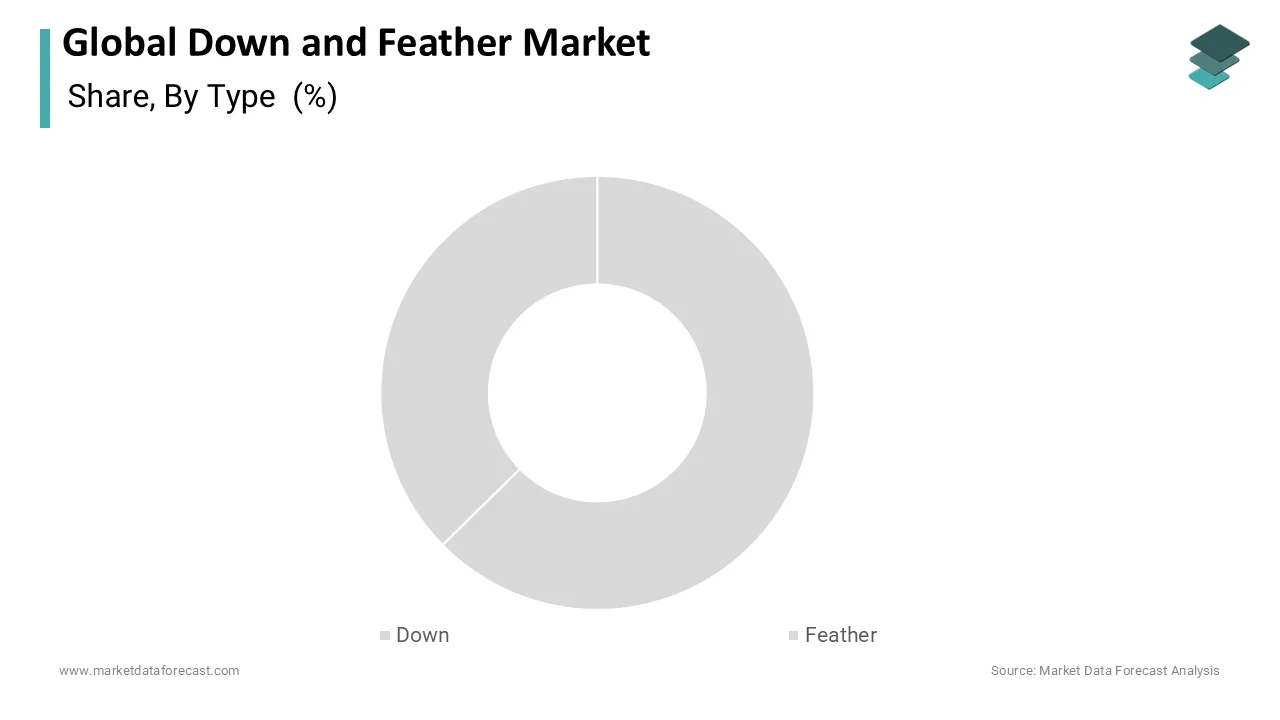
On the other hand, the feathers segment is predicted to witness the highest CAGR of 5.8% from 2026 to 2034. This accelerated growth of the segment is propelled by the increasing use of feathers as a cost-effective and sustainable filling material in mid-range home textiles and fashion accessories. According to a study, feathers provide necessary structure and support in pillows and cushions where the extreme loft of down is not required. The rising cost of pure down has prompted manufacturers to create blended products using higher percentages of feathers to maintain affordability while retaining some natural benefits. The global expansion of the middle class, particularly in the Asia Pacific and Latin America, increases demand for affordable natural bedding options, where feather-filled products offer a viable alternative to expensive pure down. Additionally, the fashion industry utilizes feathers for decorative purposes in garments and accessories, driven by trends in maximalist design and ceremonial wear. Innovations in cleaning and sterilization technologies have improved the hygiene and odor control of feather fillings, addressing previous consumer concerns. The abundance of feathers as a byproduct of the poultry industry ensures a stable and scalable supply chain. Consumers are increasingly seeking natural materials over plastics. As a result, feathers benefit from the broader shift toward bio-based products in the home decor and apparel sectors.
By Source Insights
The duck down and feathers segment led the global market and captured a 65.5% share in 2025. This leading position of the segment was attributed to the massive scale of global duck meat production, which provided a consistent and abundant supply of raw materials. According to the Food and Agriculture Organization, ducks account for a significant portion of global poultry meat output, particularly in Asia, which is the world’s largest producer and consumer of duck meat. This agricultural volume ensures that duck down is more readily available and generally more affordable than goose down, making it the default choice for mass market apparel and bedding. Major manufacturing hubs in China and Vietnam rely heavily on duck down for their export-oriented textile industries, serving global brands that require large volumes of standardized insulation. While goose down is perceived as premium, duck down with high fill power ratings above 600 is increasingly recognized for its excellent performance-to-price ratio. The versatility of duck down allows it to be used in a wide range of applications, from everyday winter jackets to hotel bedding. Improvements in processing techniques have enhanced the cleanliness and odor neutrality of duck down, reducing historical stigmas. The established supply chains and economies of scale in duck farming make it the backbone of the global down industry, ensuring steady availability for manufacturers worldwide.
However, the goose down segment is estimated to register the fastest CAGR of 6.4% during the forecast period due to the rising demand for ultra-premium luxury products where consumers are willing to pay significantly higher prices for the superior cluster size and longevity of goose down. According to the luxury retail trend, high-end outdoor brands and designer fashion houses are increasingly specifying 800 fill power or higher goose down to differentiate their products in a crowded market. Goose down clusters are larger and more resilient than duck down, providing better loft retention over time, which appeals to discerning buyers seeking lifetime quality items. The expansion of the affluent consumer base in emerging markets such as China and India drives demand for prestigious branded goods that signal status and quality. Certification programs like the Responsible Down Standard have helped rebuild trust in goose down sourcing by ensuring ethical treatment of birds, which was previously a concern. Marketing campaigns emphasizing the heritage and exclusivity of European and Hungarian goose down further stimulate desire among wealthy consumers. As the gap between rich and poor widens,s the luxury segment expands faster than the mass market, et benefiting premium sources like goose. This trend toward premiumization sustains the robust growth of the goose down segment.
By Application Insights
In 2025, the bedding products segment held the majority share of 55.3% of the Down and Feather Market because of the universal need for comfortable sleep solutions and the replacement cycle of home textiles. According to the National Sleep Foundation, quality bedding is increasingly viewed as essential for health and well-being, prompting consumers to invest in high-quality down duvets, pillows, and mattress toppers. The hospitality industry is a major contributor, with thousands of new hotels opening each year globally,r requiring bulk purchases of durable and luxurious down bedding to meet guest expectations. Down’s ability to regulate temperature and wick moisture makes it ideal for year-round comfort, appealing to a broad demographic. The trend toward home improvement and interior design has boosted sales of decorative down-filled cushions and throws. Consumers prefer natural materials for bedding due to breathability and hypoallergenic properties when properly cleaned. The longevity of down bedding means that while replacement frequency is lower, the initial transaction value is high,h contributing significantly to market revenue. E-commerce platforms have made it easier for consumers to compare fiber power and origin transparency by driving informed purchasing decisions. The cultural significance of gifting high-quality bedding in many Asian countries also supports steady demand. These factors ensure that bedding remains the cornerstone of down consumption globally.
On the contrary, the apparel segment is anticipated to witness the fastest CAGR of 7.2% between 2026 and 2034. This rapid expansion of the segment is fueled by the global popularity of outdoor recreational activities and the integration of technical outerwear into everyday urban fashion. According to research, the athleisure trend has blurred the lines between performance gear and casual wear, leading to increased sales of down jackets, vests, and parkas for daily use. Climate change, resulting in more unpredictable and severe winter weather in temperate regions,s drives consumers to seek reliable insulation. Brands are innovating with lighter and more packable down garments that appeal to commuters and travelers. The rise of e-commerce has enabled niche outdoor brands to reach global audiences, expanding the customer base beyond traditional geographic strongholds. Sustainability initiatives promoting recycled down and ethical sourcing resonate with younger consumers who prioritize environmental responsibility in their clothing choices. Fashion collaborations between outdoor brands and luxury designers have elevated the status of down apparel,l making it a style statement. The durability and versatility of down jackets ensure they remain wardrobe staples for multiple seasons. These dynamics drive sustained double-digit growth in the apparel sector, outpacing other applications.
COUNTRY LEVEL ANALYSIS
North America Down And Feather Market Analysis
North America holds a significant share of the global Down and Feather Market and accounted for a 40.2% share in 2025. This supremacy of the North American market was driven by a strong culture of outdoor recreation and high consumer spending on premium home goods. The United States is the largest consumer market where brands like Patagonia and The North Face have normalized the use of high-performance down gear. In addition, the Outdoor Foundation's Participation Trends Report confirms that outdoor recreation participation has hit record highs, with over 14 million Americans engaging in camping and hiking annually. This broad base of active outdoor participants directly expands the addressable target consumer market for technical and high-performance outerwear brands. The region is characterized by a high awareness of ethical sourcing, with the Responsible Down Standard widely adopted by major retailers. Cold winters in Canada and the northern United States necessitate heavy insulation, driving seasonal sales spikes. The luxury bedding market is robust,t with consumers willing to invest in high fill power goose down for superior sleep quality. Regulatory frameworks regarding labeling and truth in advertising ensure product integrity. The presence of major distribution networks facilitates easy access to diverse down products. Innovation in waterproof down treatments is particularly popular in this region due to wet climate conditions. These factors combine to make North America a mature yet dynamic market for down and feather products.
Europe Down And Feather Market Analysis
Europe followed closely behind in the global down and feather market and occupied a 28.9% share in 2025. This growth of the European market was fuelled by stringent regulatory standards and a strong preference for sustainable and ethically sourced materials. Countries like Germany, France, and Italy are key markets where consumers prioritize quality and environmental responsibility. In line with the European Commission's Ecodesign for Sustainable Products Regulation (ESPR), new statutory frameworks force the European fashion and apparel sector to design for durability and circularity. This regulatory shift has accelerated industrial brand transition towards certified recycled down fills and digital product passports to satisfy legally binding supply chain transparency targets. The European Union’s strict animal welfare laws influence sourcing practices, forcing suppliers to adhere to high ethical standards. Luxury fashion houses in Italy and France utilize premium goose down for high-end collections, maintaining demand for top-tier materials. The hospitality sector in tourist destinations across the continent requires high-quality bedding, enhancing commercial demand. Winter sports tourism in the Alps drives seasonal apparel sales. Consumer education campaigns by non-governmental organizations have raised awareness about live plucking, leading to widespread adoption of certified down. The market is mature with steady growth driven by replacement cycles and premiumization. Regulatory compliance is a key competitive advantage for suppliers operating in this region.
Asia Pacific Down And Feather Market Analysis
Asia Pacific is a rapidly growing region in the down and feather market due to industrial capacity and rising disposable incomes. China is the world’s largest producer of Dow,n accounting for a significant majority of global supply due to its massive poultry industry. According to the Chinese Feather and Down Industrial Association, domestic consumption is rising as the middle class expands and adopts a Western lifestyle habit, including outdoor sports and luxury bedding. Japan and South Korea are mature markets with high demand for premium quality due to cold winters and sophisticated consumer preferences. The region benefits from integrated supply chains where processing, manufacturing,g and consumption occur in proximity, reducing logistics costs. Government initiatives to upgrade textile manufacturing capabilities support the industry. Urbanization leads to smaller living spaces where compact down bedding is practical. The growth of e-commerce platforms facilitates direct-to-consumer sales, bypassing traditional retail barriers. Environmental regulations are tightening,g pushing processors to adopt cleaner technologies. These dynamics ensure Asia Pacific remains central to the global down industry both as a supplier and a consumer.
Middle East and Africa Down And Feather Market Analysis
The Middle East and Africa region witnessed a steady expansion in the Down and Feather Market owing to the luxury hospitality sector and specific climatic needs. Gulf Cooperation Council countries like the United Arab Emirates and Saudi Arabia imporhigh-qualityty down for five-star hotels and luxury residential projects where comfort and prestige are paramount. According to industry reports, the booming tourism industry in these nations creates steady demand for premium bedding and furnishings. In African countries with cooler highland climates,s such as Ethiopia and Ken, ya there is local consumption of down and feather products,cts although the market is less developed. The region relies heavily on imports from Asia and Europe due to limited local processing infrastructure. Rising awareness of international quality standards among affluent consumers drives demand for certified products. The hot climate in most of the region limits apparel demand, mand but air-conditioned environments create a need for lightweight bedding. Economic diversification efforts in the Middle East support infrastructure development, including hotels, which boosts commercial demand. The market is small compared to other regions but offers growth potential as luxury consumption expands.
COMPETITIVE LANDSCAPE
The competition in the Down and Feather Market is characterized by a mix of large integrated processors and specialized suppliers vying for contracts with major apparel and bedding brands. Established players leverage economies of scale, extensive distribution networks, and strong relationships with poultry producers to maintain dominance. However, er the market faces increasing pressure from synthetic insulation alternatives,s which offer lower costs and easier maintenance. Differentiation is achieved through ethical certifications such as the Responsible Down Standard, which assures consumers of animal welfare compliance. Price volatility due to fluctuating poultry production levels creates a dynamic environment where supply chain stability is a key competitive advantage. Innovation in cleaning technologies and water repellent treatments helps companies offer superior performance products. Brand reputation for quality and transparency is crucial as consumers become more discerning about sourcing practices. Regional players compete on cost while global leaders focus on premium segments and sustainability. The entry of recycled down products adds another layer of competition, appealing to environmentally conscious markets. Strategic alliances with retailers and manufacturers help secure market share in a fragmented industry.
KEY MARKET PLAYERS
Some of the companies that are playing a dominating role in the Global Down and Feather Market include
- United Feather & Down, Inc.
- Karl Sluka GmbH
- ROHDEX Bettfedern GmbH & Co. KG
- Anhui Yahua Feather & Down Co., Ltd.
- KL DOWN
- Moonlight Feather, Inc.
- ELEKEEN LTD
- Sustainable Down Source
- Down-Lite International, Inc.
TOP LEADING PLAYERS IN THE MARKET
- Allied Feather and Down is a global leader in sourcing and processing high-quality down and feathers for the apparel and bedding industries. The company is renowned for its commitment to ethical sourcing and transparency through its Traceable Down Standard. Recent strategic initiatives include expanding its processing facilities in North America and Europe to reduce lead times and enhance supply chain resilience. Allied actively collaborates with major outdoor brands to develop innovative water-resistant down treatments that improve performance in wet conditions. The company invests heavily in research and development to create sustainable insulation solutions that meet evolving environmental regulations. Allied prioritizes animal welfare and strict quality control. Through these commitments, we have built a trusted reputation among premium global brands seeking reliable, responsible raw materials.
- Pacific Coast Feather Company is a prominent manufacturer of down and feather bedding products serving both retail and hospitality sectors globally. The company distinguishes itself through vertical integration, controlling every step from raw material sourcing to final product manufacturing. Recent actions include launching new lines of hypoallergenic and organic down bedding to cater to health-conscious consumers. Pacific Coast has expanded its distribution network in Asia and Europe to capture growing demand in emerging markets. The company emphasizes sustainability by implementing energy-efficient processing methods and recycling programs for textile waste. Strategic partnerships with luxury hotel chains ensure consistent bulk orders and brand visibility. These efforts reinforce its position as a premier provider of high comfort and durable down bedding solutions worldwide.
- Hefei Hongyuan Animal Husbandry Group is one of the largest producers and exporters of down and feather products based in China. The company leverages its proximity to major poultry farming regions to secure a stable and cost-effective supply of raw materials. Recent strategies include upgrading its washing and sterilization technologies to meet stringent international hygiene standards such as the Responsible Down Standard. Hefei Hongyuan has diversified its product portfolio to include high fill power goose down for premium outdoor apparel markets in Europe and North America. The company actively participates in global trade fairs to build relationships with international buyers and showcase its quality certifications. The company is investing in automated processing lines to improve efficiency and consistency. As a result, this strengthens their competitive edge in the global export market.
TOP STRATEGIES USED BY THE KEY MARKET PARTICIPANTS
Key players in the Down and Feather Market predominantly focus on ethical sourcing and certification to build consumer trust and comply with regulatory standards. Companies invest in traceability systems such as blockchain to verify the origin and welfare conditions of their raw materials. Product innovation centers on developing water-resistant and hypoallergenic down treatments to enhance performance and appeal to sensitive users. Vertical integration allows manufacturers to control quality and reduce costs by managing the supply chain from farm to finished product. Strategic partnerships with outdoor brands and hospitality groups ensure steady demand and long-term contracts. Sustainability initiatives, including recycling programs and energy-efficient processing, reduce environmental impact and attract eco-conscious buyers. Expansion into emerging markets through local distribution networks drives growth in regions with rising disposable incomes. These comprehensive strategies enable companies to navigate ethical concerns and maintain competitiveness in an evolving global landscape.
GLOBAL DOWN AND FEATHER MARKET NEWS
-
In March 2025, Allied Feather + Down introduced a new jacket capsule collection in the United States. This launch was made possible with the support of Mitsui & Co. and Pertex, both companies operating in the textile industry.
- In January 2025, Emma unveiled the Motion intelligent mattress, available under the brands Dunlopillo and Emma. The mattress features a technology called Contour Interaction, which automatically measures pressure points and adjusts the surface to accommodate changes in sleeping positions. This adjustment is done smoothly and silently.
MARKET SEGMENTATION
This research report on the global down and feather market has been segmented and sub-segmented based on type, application, distribution channel, end-user, and region.
By Type
- Down
- Feather
By Application
- Pillows
- Bedding
- Comforters
- Apparel
- Blankets
- Sleeping Bags
By Distribution Channel
- Online
- Offline
By End User
- Residential
- Commercial
- Hospitality
By Region
- North America
- Latin America
- Europe
- Asia Pacific
- Middle East & Africa