- Product Description Description
- Table of Contents TOC
- List of Table & Figure LOT
- Get Free Sample PDF Sample PDF
Market Size, 2025
$32.4 BnMarket Estimate, 2026
$34.15 BnMarket Forecast, 2034
$52.01 BnCAGR, 2026–2034
5.40%Executive Summary: Global Electric Power Steering Market
- Market Scope: Comprehensive global electric power steering (EPS) market analysis covering types, components, propulsion systems, regional leadership frameworks, and advanced safety integration metrics.
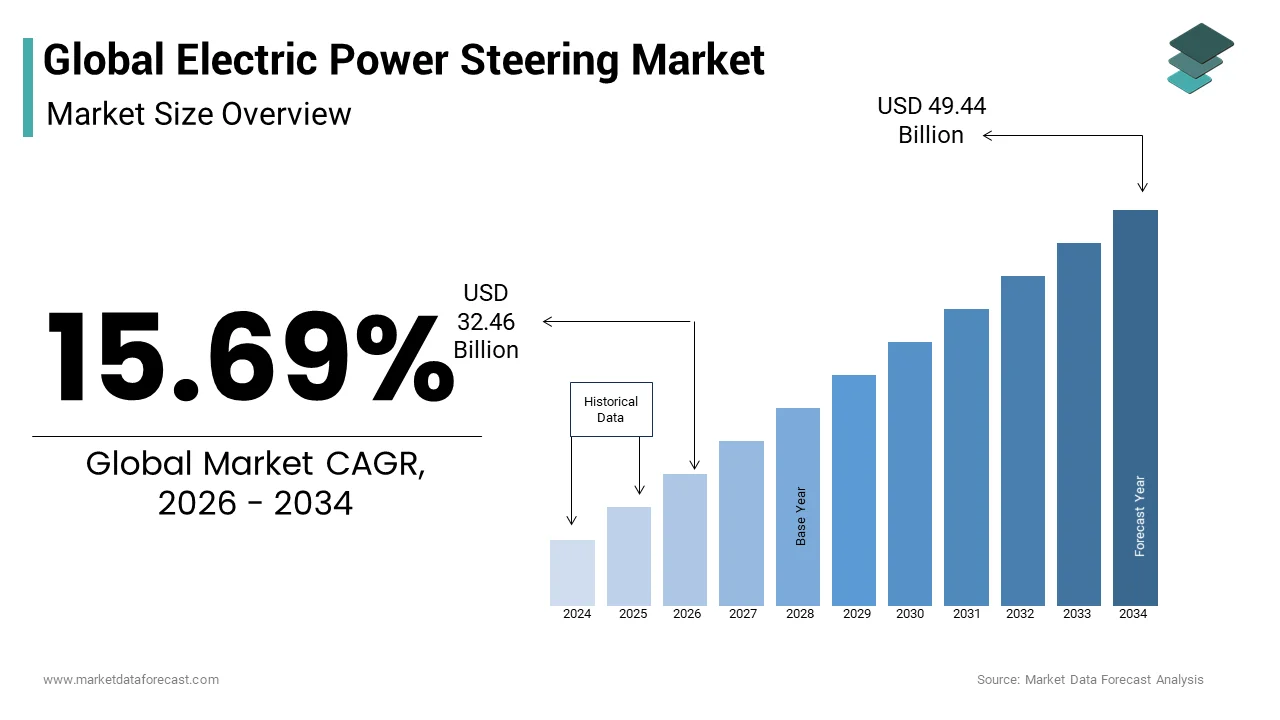
- Market Valuation: Valued at USD 32.40 billion (2025), estimated at USD 32.46 billion (2026), and projected to reach USD 49.44 billion by 2034, registering a CAGR of 5.40% (2026–2034).
- Primary Growth Drivers: Stringent emission regulations (such as Euro 7 and EPA standards) compelling automakers to adopt lightweight steering systems, rising integration of Advanced Driver Assistance Systems (ADAS) like lane-keeping assist and automated parking, and the shift toward electric and autonomous vehicle architectures. Restraints include high initial development costs and supply chain vulnerabilities for critical electronic components.
Key Market Segment Metrics (2026–2034)
| Category | Leading Segment (2025 Position) | Fastest-Growing Segment |
|---|---|---|
| By Type | Column EPS (dominated by holding 44.7% of the global market share in 2025 due to cost-effective solutions for small/medium vehicles) | Rack EPS (predicted to record a CAGR of 9.1% due to high adoption in luxury vehicles, SUVs, and sports cars requiring precision torque) |
| By Component | Steering Motor (led the market by capturing the highest share as the primary actuator generating assistive torque) | Sensors (estimated to grow at a CAGR of 10.5% driven by complex dual-channel architecture and functional safety standards) |
| By Propulsion | ICE Vehicles (led the market by accounting for 68.5% share in 2025 due to high global production volumes) | Battery Electric Vehicles (BEVs) (predicted to register a CAGR of 15.2% due to critical need to minimize energy consumption and maximize range) |
| By Region | North America (held 29.4% of market share in 2025, supported by high light truck/SUV sales and advanced safety mandates) | Europe (maintaining leadership in sophisticated, energy-efficient steering tech amid rapid EV and ADAS rollout) |
Major Market Players & Market Structure
Market Structure: Highly competitive automotive steering ecosystem featuring prominent tier-one suppliers and global manufacturers competing intensely on brushless motor efficiency, sensor precision, software calibration, steer-by-wire technology, and functional safety compliance.
Key Companies: Robert Bosch Automotive Steering GmbH, Mitsubishi Electric Corporation, ZF Friedrichshafen Group, Nexteer Automotive, NSK Global, JTEKT Corporation, SHOWA Corporation, Thyssenkrupp Presta AG, Mando Corporation, Hyundai Mobis, and Zhuzhou Elite Electro Mechanical Co. Ltd.
Global Electric Power Steering Market Size
The global electric power steering market size was valued at USD 32.4 billion in 2025 and is predicted to reach USD 32.46 billion in 2026 and USD 49.44 billion by 2034, growing at a CAGR of 5.40% during the forecast period from 2026 to 2034.
Electric power steering systems replaces traditional hydraulic mechanisms with electric motors to assist driver steering input. This transition eliminates the need for hydraulic pumps, belts, and fluid reservoirs, thereby reducing vehicle weight and improving fuel efficiency while enabling sophisticated driver assistance features. The European automotive sector has witnessed a decisive shift toward electrification as regulatory pressures intensify and consumer preferences evolve toward sustainable mobility solutions. According to the European Automobile Manufacturers Association, passenger car registrations in the European Union reached 10.5 million units in 2024, with over 65% of new models featuring electric power steering as standard equipment. As per data from the International Energy Agency, the average carbon dioxide emissions from new cars sold in Europe decreased to 98 grams per kilometer in 2024, reflecting the industry commitment to lightweight, efficient components. The integration of electric power steering facilitates advanced safety technologies such as lane keeping assist, automated parking, and collision avoidance systems, which require precise electronic control over wheel orientation. Major automakers, including Volkswagen, BMW, and Stellantis, have standardized these systems across their portfolios to meet stringent Euro 7 emission standards and enhance overall vehicle dynamics. The technological maturity of brushless DC motors and torque sensors has improved reliability while reducing manufacturing costs, making electric power steering ubiquitous in both compact vehicles and luxury segments. This widespread adoption underscores the pivotal role of electric steering in modern vehicle architecture, supporting the broader transition toward autonomous driving capabilities and energy efficient transportation networks.
MARKET DRIVERS
Stringent Emission Regulations Driving Adoption of Lightweight Steering Systems
Global governments are implementing increasingly rigorous emission standards that compel automakers to reduce vehicle weight and improve fuel efficiency across all segments, which is a key factor propelling the growth of the global electric power steering market. According to the European Commission, the Euro 7 regulation mandates a 35% reduction in nitrogen oxide emissions compared to previous standards, forcing manufacturers to eliminate energy draining hydraulic systems. Electric power steering consumes power only when steering input is detected, unlike hydraulic pumps that operate continuously, resulting in fuel savings of up to 3% per vehicle, as per data from the Society of Automotive Engineers. This efficiency gain is crucial for meeting corporate average fuel economy targets, which require fleet wide improvements of 4.5% annually in major markets. According to the United States Environmental Protection Agency, light duty vehicles must achieve an average of 49 miles per gallon by 2026, which is creating strong incentives for component lightweighting. Automakers respond by replacing heavy hydraulic assemblies with compact electric motors, saving approximately 2 to 4 kilograms per vehicle. This weight reduction contributes directly to lower rolling resistance and improved aerodynamic performance. Additionally, the elimination of hydraulic fluid removes environmental hazards associated with leaks and disposal, aligning with circular economy principles promoted by the European Green Deal. The regulatory landscape thus creates a non-negotiable demand for electric power steering as it serves as a proven method to enhance vehicle efficiency without compromising performance or safety standards required for modern transportation.
Rising Integration of Advanced Driver Assistance Systems Enhancing Demand
The proliferation of advanced driver assistance systems requires precise electronic control over vehicle steering that electric power steering uniquely provides through its digital interface, which is further contributing to the electric power steering market expansion. According to the National Highway Traffic Safety Administration, level 2 autonomy features such as lane centering and adaptive cruise control were present in 45% of new vehicles sold in 2024, requiring seamless integration with steering actuators. Electric power steering systems enable rapid torque adjustments measured in milliseconds, allowing vehicles to maintain lane position accurately during high speed highway driving. As per research from the Insurance Institute for Highway Safety, vehicles equipped with automated steering interventions experienced 20% fewer single vehicle crashes compared to those with manual systems. The ability to overlay computer generated steering commands onto driver input is fundamental for features like automated parking, emergency steer assist, and traffic jam pilot. Modern electric power steering units incorporate redundant sensors and dual winding motors to ensure fail safe operation meeting ISO 26262 functional safety standards. Automakers prioritize these systems because they serve as the primary actuator for lateral vehicle control in semi-autonomous architectures. The growing consumer expectation for convenience and safety features drives original equipment manufacturers to specify electric power steering even in entry level segments. This trend accelerates market penetration as advanced driver assistance systems become regulatory requirements in regions such as Europe and Japan, further cementing the indispensable role of electric steering in next generation vehicle platforms.
MARKET RESTRAINTS
High Initial Development Costs Limiting Market Penetration in Budget Segments
The complex engineering requirements of electric power steering systems result in substantial research and development expenditures that pose barriers for cost sensitive vehicle segments, which is significantly hampering the global market growth. According to industry analysis from Deloitte, the development cost for a new electric power steering platform ranges from 15 million to 25 million dollars, including software validation and hardware prototyping. These expenses stem from the need to integrate sophisticated control algorithms, torque sensors, and brushless motors that must operate reliably under extreme temperature and vibration conditions. As per data from the American Chemistry Council, the price of rare earth materials used in permanent magnet motors increased by 18% in 2024 due to supply chain constraints affecting production economics. Small and medium sized automakers struggle to absorb these costs, leading to delayed adoption or reliance on older hydraulic technologies in entry level models. The complexity of software calibration requires extensive testing cycles to ensure smooth steering feel and noise reduction, adding months to development timelines. Tier one suppliers pass these costs to original equipment manufacturers, who face pressure to maintain competitive pricing in saturated markets. Consequently, budget conscious consumers in emerging economies may encounter vehicles with inferior steering systems lacking advanced features. The high capital intensity also discourages new entrants from developing proprietary solutions, forcing dependence on established suppliers. This financial barrier slows universal adoption, particularly in regions where price sensitivity outweighs feature preference, limiting the overall market expansion rate despite clear technical advantages.
Supply Chain Vulnerabilities for Critical Electronic Components
The production of electric power steering systems relies heavily on specialized semiconductors and rare earth magnets, which is creating exposure to global supply chain disruptions and impeding the electric power steering market growth. According to the Semiconductor Industry Association, the automotive sector faced a 12 month delay in microcontroller deliveries in 2024 due to concentrated manufacturing capacity in Asia and geopolitical tensions. Electric power steering units require specific application specific integrated circuits for motor control and sensor processing, which are subject to allocation priorities favoring high margin sectors. As per data from the US Geological Survey, China controls approximately 60% of global rare earth processing capacity, creating strategic dependencies for magnet suppliers. Trade restrictions and export controls can abruptly limit access to neodymium and dysprosium essential for high performance motors. The just in time manufacturing model adopted by automakers leaves minimal inventory buffers, exacerbating the impact of component shortages. Recent logistics bottlenecks at major ports increased freight costs by 25%, further straining procurement budgets. Suppliers struggle to secure long term contracts for critical materials, leaving production schedules vulnerable to spot market volatility. The lack of diversified sourcing options means that any disruption in key producing regions immediately halts assembly lines. Automakers are forced to redesign systems using alternative components, which requires revalidation and delays product launches. This structural vulnerability undermines production stability and increases operational risks for manufacturers seeking to scale electric power steering output to meet growing demand.
MARKET OPORTUNITIES
Expansion into Commercial Vehicle Applications Offering Growth Potential
The commercial vehicle sector is poised for significant growth as fleets prioritize electric power steering to optimize performance and driver comfort in the coming years, which is a notable opportunity for the electric power steering market. According to the American Trucking Associations, the average long haul truck driver spends 11 hours behind the wheel daily, making reduced steering effort critical for preventing fatigue and enhancing safety. Traditional hydraulic systems in trucks consume considerable engine power, reducing payload capacity and increasing operational costs. As per data from the Federal Motor Carrier Safety Administration, fleets adopting electric power steering reported a 2% improvement in fuel economy due to reduced parasitic load on the engine. Electric systems enable variable assist levels that adjust based on vehicle speed and load, providing optimal handling characteristics whether the truck is empty or fully loaded. The integration of electric steering facilitates advanced safety features such as lane departure warning and automatic emergency steering, which are becoming mandatory for commercial vehicles in Europe. Original equipment manufacturers are developing robust high torque electric power steering units capable of handling the immense forces generated by large tires. The electrification of bus fleets in urban environments further drives demand as cities prioritize quiet, efficient public transportation. Government incentives for green commercial vehicles encourage adoption of technologies that reduce emissions and improve operational efficiency. This segment expansion diversifies revenue streams for suppliers and reduces dependence on the volatile passenger car market while addressing critical ergonomic and economic needs in the logistics industry.
Development of Steer by Wire Technology Creating New Architectures
The emergence of steer by wire technology represents a prominent opportunity for the electric power steering market. According to SAE International, steer by wire systems eliminate the steering column, reducing vehicle weight by up to 5 kilograms and freeing up interior space for enhanced cabin designs. This architecture enables fully customizable steering ratios and haptic feedback profiles, allowing drivers to select different handling characteristics via software updates. As per announcements from major automakers, several manufacturers plan to introduce steer by wire in production vehicles by 2026, leveraging the flexibility of electric power steering components. The removal of mechanical connections simplifies vehicle assembly and improves crash safety by eliminating intrusion risks from the steering column. Steer by wire facilitates seamless integration with autonomous driving systems, as computers can directly control wheel angle without mechanical interference. The technology supports innovative interior layouts such as retractable steering wheels for autonomous modes, enhancing user experience in shared mobility services. Regulatory bodies in Japan and Europe have begun updating standards to accommodate steer by wire systems, paving the way for commercialization. Suppliers are investing heavily in redundant electronic systems and fail safe mechanisms to meet safety requirements. This technological leap positions electric power steering as the foundation for next generation vehicle architectures, offering superior design freedom and functional capabilities those traditional systems cannot match.
MARKET CHALLENGES
Cybersecurity Risks Threatening System Integrity and Safety
The increasing connectivity of electric power steering systems exposes them to cyber threats that could compromise vehicle control and passenger safety, which is one of the significant challenges to the electric power steering market. According to the Upstream Security Global Automotive Cybersecurity Report, the number of cyber-attacks on connected vehicles increased by 38% in 2024, with steering systems identified as high value targets due to their direct influence on vehicle trajectory. Hackers could potentially inject malicious code into the electronic control unit, causing unintended steering inputs or disabling assist functions entirely. As per data from the National Highway Traffic Safety Administration, manufacturers must comply with strict cybersecurity regulations requiring regular software updates and intrusion detection systems. The complexity of securing wireless communication channels between the steering module and other vehicle networks creates multiple attack vectors. Ensuring real time protection against evolving threats requires continuous investment in encryption protocols and secure boot mechanisms. The lack of standardized cybersecurity frameworks across the industry leads to inconsistent protection levels among different vehicle models. Consumers remain unaware of these vulnerabilities, potentially leading to liability issues for manufacturers if breaches occur. The need for over the air update capabilities introduces additional risks if update servers are compromised. Suppliers must balance functionality with security, ensuring that protective measures do not degrade system performance or latency. Addressing these cybersecurity challenges requires collaboration between automakers, software developers, and regulatory bodies to establish robust defense mechanisms that safeguard critical steering functions against malicious interference.
Technical Complexity in Calibration and Tuning Processes
Achieving optimal steering feel and responsiveness in electric power steering systems requires intricate calibration processes that vary significantly across vehicle platforms and driving conditions, which is another considerable challenge to the electric power steering market. According to engineering studies from the University of Michigan, the tuning of torque assist curves involves balancing driver preference, safety limits, and energy efficiency, which demands extensive subjective and objective testing. Each vehicle model requires unique calibration parameters to account for differences in tire characteristics, suspension geometry, and weight distribution. As per data from automotive testing firms, the calibration process can take up to 6 months per vehicle program, involving thousands of test miles on diverse road surfaces. The subjective nature of steering feel makes it difficult to standardize metrics, leading to inconsistencies between different manufacturers and even within the same brand. Drivers accustomed to hydraulic steering often perceive electric systems as artificial or numb, requiring careful tuning to replicate natural feedback. The integration of active safety features adds another layer of complexity, as the system must seamlessly transition between driver input and automated interventions without causing confusion or discomfort. Noise, vibration, and harshness issues must be minimized through precise motor control algorithms, preventing unwanted sounds during low speed maneuvers. The lack of universal calibration tools forces suppliers to develop proprietary software, increasing development costs and time. This technical hurdle limits the ability to rapidly deploy standardized electric power steering units across multiple vehicle lines, requiring dedicated engineering resources for each application.
REPORT COVERAGE
| REPORT METRIC | DETAILS |
| Market Size Available | 2024 to 2033 |
| Base Year | 2024 |
| Forecast Period | 2025 to 2033 |
| CAGR | 5.40% |
| Segments Covered | By Type, Component, Vehicle Type, Mechanism, and Region. |
|
Various Analyses Covered | Global, Regional and Country Level Analysis, Segment-Level Analysis; DROC, PESTLE Analysis; Porter’s Five Forces Analysis; Competitive Landscape; Analyst Overview of Investment Opportunities |
| Regions Covered | North America, Europe, APAC, Latin America, Middle East & Africa |
| Market Leaders Profiled | Robert Bosch Automotive Steering GmbH, Mitsubishi Electric Corporation, ZF Friedrichshafen Group, Nexteer Automotive, NSK Global, JTEKT Corporation, SHOWA Corporation, Thyssenkrupp Presta AG, Mando Corporation, Hyundai Mobis, and Zhuzhou Elite Electro Mechanical Co. Ltd., and Others. |
SEGMENTAL ANALYSIS
By Type Insights
The column electric power steering systems segment dominated the market by holding 44.7% of the global market share in 2025. The dominance of column electric power steering systems segment in the global market is primarily because they offer a cost effective solution for small and medium sized vehicles. According to data from the Society of Automotive Engineers, column mounted systems reduce manufacturing costs by 20% compared to rack assisted variants due to their simplified mechanical architecture and fewer components. As per industry analysis from IHS Markit, over 60% of compact cars produced in Asia and Europe utilize column electric power steering because it fits easily within existing vehicle platforms without requiring major structural modifications. The compact size of the motor and gear assembly allows automakers to maximize interior cabin space, which is a critical selling point in urban vehicles. These systems provide adequate assist levels for lightweight vehicles where high torque output is not necessary, ensuring smooth low speed maneuvering while maintaining road feel at higher speeds. The ease of integration with existing hydraulic free designs enables rapid deployment across multiple model lines, reducing development time and engineering expenses. Manufacturers prefer column systems for entry level segments because they meet basic safety and performance requirements without the premium price tag associated with more complex architectures. The maturity of supply chains for column units ensures consistent quality and availability, further reinforcing their dominance in volume driven markets where price sensitivity dictates component selection strategies for original equipment manufacturers seeking to maintain competitive pricing structures.
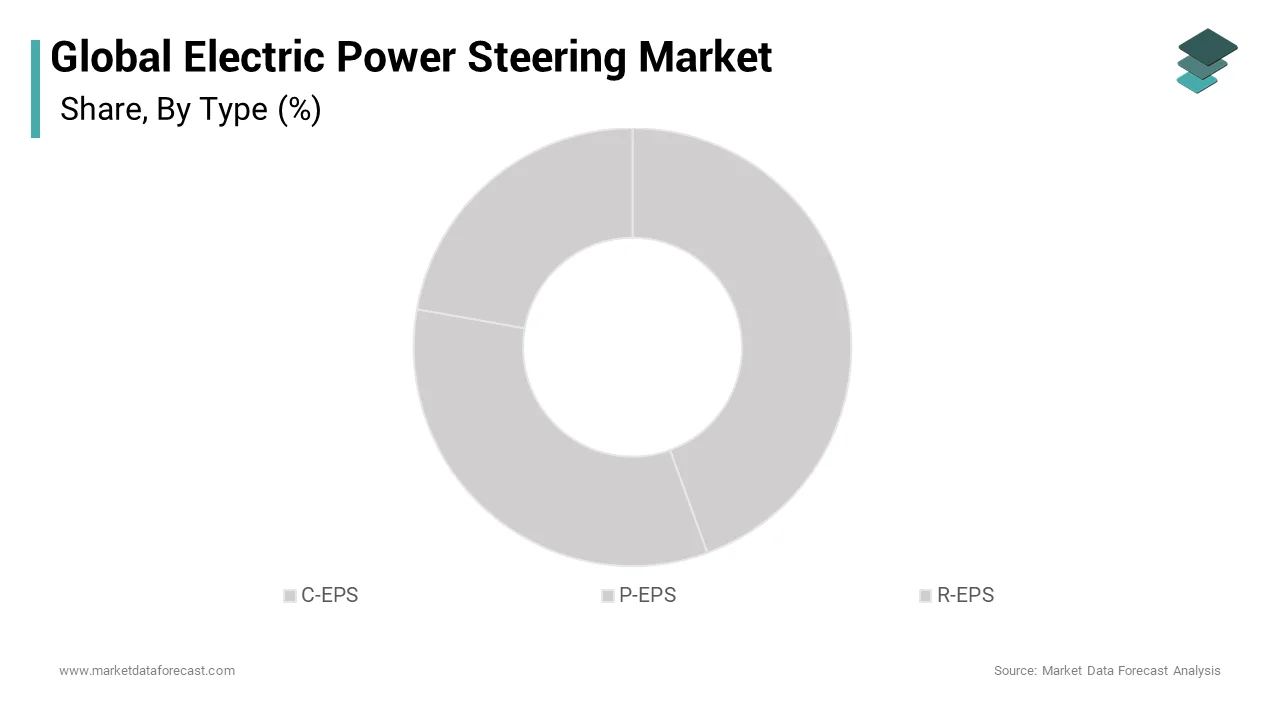
On the other end, the rack electric power steering segment represents the fastest growing segment and is predicted to record a CAGR of 9.1% during the forecast period owing to the increasing adoption in luxury vehicles, sports cars, and larger SUVs that require higher steering precision and torque capacity. According to data from JD Power, premium vehicle buyers prioritize driving dynamics and responsive handling, which rack mounted systems deliver through direct force application at the steering rack rather than the column. As per technical reports from Bosch, rack electric power steering systems can generate up to 1500 Newton meters of assist torque, enabling effective control of heavy vehicles equipped with large tires and advanced suspension systems. The direct drive mechanism eliminates energy losses associated with intermediate shafts and universal joints, improving overall system efficiency by 10% compared to column types. This segment growth is fueled by the rising popularity of sport utility vehicles, which accounted for 40% of global car sales in 2024, according to the International Organization of Motor Vehicle Manufacturers. Rack systems support advanced driver assistance features such as automated lane keeping and parking assist more effectively due to their faster response times and higher bandwidth control capabilities. Automakers are increasingly specifying rack electric power steering for electrified platforms where weight distribution and precise wheel control are critical for maximizing battery range and stability. The ability to integrate redundant motors for fail safe operation also makes rack systems attractive for autonomous driving applications where reliability is paramount.
By Component Insights
The steering motor segment led the market by capturing the highest share of the global market in 2025 because it serves as the primary actuator responsible for generating the assistive torque required for effortless steering. According to data from the Electrical and Electronic Manufacturing Association, global production of brushless DC motors for automotive applications reached 120 million units in 2024, with steering motors constituting a significant portion of this volume. As per specifications from major suppliers like Mitsubishi Electric and Hitachi, modern steering motors achieve efficiency levels exceeding 90%, minimizing energy consumption from the vehicle battery or alternator. The demand for high power density motors has increased as vehicles become heavier and require greater assist forces, particularly in electric vehicles where every watt of power impacts driving range. Manufacturers are investing in advanced magnetic materials and winding techniques to reduce motor size and weight while maintaining torque output. The reliability of the steering motor is critical, since failure results in complete loss of power assist, prompting strict quality control measures and extensive testing protocols. According to warranty data from Consumer Reports, steering motor failures account for less than 1% of total repairs, indicating high durability but necessitating robust design margins. The transition toward three phase permanent magnet synchronous motors offers smoother operation and reduced noise, vibration, and harshness, enhancing driver comfort. As electric power steering systems evolve to support higher automation levels, the precision and responsiveness of the steering motor become even more vital, ensuring seamless interaction between human input and automated control algorithms.
However, the sensor segment is experiencing the fastest growth and is estimated to grow at a CAGR of 10.5% during the forecast period owing to the increasing complexity of electric power steering systems that rely on precise data for torque, angle, and speed measurement. According to data from Yole Développement, the automotive sensor market for steering applications is expected to reach 2.5 billion dollars by 2028 as vehicles incorporate multiple redundant sensors to meet functional safety standards. As per ISO 26262 guidelines, level D safety integrity requires dual channel sensing architectures to detect faults and ensure continuous operation even if one sensor fails. Modern electric power steering units integrate torque sensors, angle sensors, and current sensors that provide real time feedback to the electronic control unit, enabling accurate assist calculation. The rise of steer by wire technology further accelerates sensor demand as these systems eliminate mechanical links and depend entirely on electronic signals for steering input interpretation. High resolution magnetic encoders and hall effect sensors are preferred for their durability and resistance to environmental factors such as temperature extremes and vibration. According to industry analysis from Sensata Technologies, the adoption of non contact sensing technologies has increased by 30% in recent years due to their longer lifespan and lower maintenance requirements. The integration of sensor fusion algorithms allows the system to cross verify data from multiple sources, enhancing accuracy and reliability. This technological evolution supports advanced driver assistance systems that require millisecond level response times and precise wheel positioning, making high performance sensors indispensable for next generation steering architectures.
By Propulsion Insights
The ICE vehicles segment led the market by accounting for 68.5% of the global market share in 2025 due to their continued high production volumes globally. According to data from the International Energy Agency, internal combustion engine vehicles still represented 85% of global car sales in 2024, despite the rapid growth of electric vehicles, ensuring sustained demand for compatible steering systems. As per manufacturing reports from major automakers, legacy platforms designed for internal combustion engines are being updated with electric power steering to improve fuel efficiency and meet emission norms without redesigning the entire chassis. The replacement of hydraulic pumps with electric motors in internal combustion engine vehicles reduces parasitic load on the engine, improving fuel economy by 2 to 4%, which is crucial for meeting corporate average fuel economy standards. Many emerging markets continue to rely heavily on affordable internal combustion engine vehicles, where cost effective column electric power steering systems are widely adopted. The extensive service network and familiarity with internal combustion engine maintenance practices support continued production and sales in regions with limited charging infrastructure. According to data from OICA, global production of internal combustion engine vehicles remained above 70 million units in 2024, providing a stable base for electric power steering suppliers. While the share of electric vehicles is growing, the absolute number of internal combustion engine vehicles produced ensures that this segment remains the primary revenue source for steering component manufacturers for the foreseeable future.
However, the battery electric vehicles segment is predicted to register a CAGR of 15.2% during the forecast period in the global market owing to the critical need to minimize energy consumption and maximize driving range. According to data from BloombergNEF, global sales of battery electric vehicles reached 14 million units in 2024, representing a 35% increase from the previous year. As per engineering studies from Tesla and other EV manufacturers, electric power steering systems consume significantly less energy than hydraulic alternatives, preserving battery charge for propulsion. The absence of an engine driven accessory belt in electric vehicles makes electric power steering the only viable option for steering assist, necessitating its universal adoption in this segment. Electric vehicles often feature heavier batteries, requiring robust steering systems capable of handling increased weight while maintaining agile handling characteristics. Rack electric power steering is particularly popular in premium electric vehicles due to its ability to provide high torque assist and support advanced driver assistance features. According to data from the European Alternative Fuels Observatory, over 50% of new electric vehicles registered in Europe in 2024 were equipped with advanced electric power steering systems supporting level 2 autonomy. The integration of electric power steering with vehicle thermal management systems allows for optimized energy usage, further extending range. As governments worldwide implement stricter emission regulations and incentivize electric vehicle adoption, the demand for specialized electric power steering solutions tailored to electric vehicle architectures will continue to accelerate rapidly.
REGIONAL MARKET ANALYSIS
North America Market Analysis
North America held 29.4% of the global market share in 2025 and is expected to see a consistent rise in adoption of advanced steering systems as connectivity and autonomy features become standard in the coming years. According to data from the Alliance for Automotive Innovation, the United States automotive industry invested 18 billion dollars in research and development in 2024, with a substantial portion allocated to electrification and autonomous driving technologies. As per reports from the National Highway Traffic Safety Administration, federal mandates requiring automatic emergency braking and lane keeping assist have accelerated the adoption of electric power steering systems capable of precise electronic control. The popularity of light trucks and SUVs, which account for over 75% of US vehicle sales, drives demand for high torque rack electric power steering systems. Major suppliers such as Nexteer and JTEK have established strong manufacturing presence in the region to serve domestic automakers including General Motors, Ford, and Stellantis. The shift toward electric vehicles in California and other states with zero emission mandates further boosts demand for efficient steering solutions. According to data from Argonne National Laboratory, the average weight of new vehicles in the US has increased by 10% over the last decade, necessitating more powerful steering assist systems. The region mature regulatory framework and high disposable income support the adoption of premium steering technologies, enhancing driver comfort and safety. Continued investment in smart infrastructure and connected vehicle initiatives creates opportunities for integrated steering systems that communicate with traffic management networks.
Europe Market Analysis
Europe is anticipated to maintain its leadership in adopting sophisticated, energy-efficient steering technologies as it transitions toward a fully electrified transportation ecosystem over the next few years. According to data from the European Automobile Manufacturers Association, over 20% of new car registrations in the EU in 2024 were fully electric vehicles, all of which require electric power steering systems. As per the Euro 7 emission standards, automakers are compelled to reduce vehicle weight and energy consumption, making electric power steering an essential component for compliance. The region strong focus on pedestrian safety and active crash avoidance systems drives demand for sophisticated steering units that support automated emergency steering interventions. Germany, France, and the United Kingdom are key markets, with major automakers like Volkswagen, BMW, and Renault standardizing electric power steering across their fleets. According to data from the European Commission, the fitment rate of advanced driver assistance systems in new European cars exceeded 60% in 2024, requiring reliable electric steering actuators. The presence of leading tier one suppliers such as Bosch, ZF, and Thyssenkrupp ensures continuous innovation in steering technology. Government incentives for electric vehicle purchases and bans on internal combustion engine sales in certain cities further accelerate market growth. The region emphasis on sustainability and circular economy principles promotes the development of recyclable steering components and energy efficient manufacturing processes.
Asia Pacific Market Analysis
Asia Pacific is projected to rapidly expand its technological capabilities and production scale to cater to both domestic and international demand for electric steering in the near future. According to data from the China Association of Automobile Manufacturers, China produced over 25 million vehicles in 2024, with a significant proportion featuring electric power steering to meet national fuel consumption standards. As per reports from the Japan Automobile Manufacturers Association, Japanese automakers have pioneered compact and efficient column electric power steering systems widely exported to global markets. The rapid urbanization and rising middle class in India and Southeast Asia are increasing demand for affordable passenger cars equipped with basic electric power steering for improved drivability. Government policies in China mandating new energy vehicle quotas have spurred local production of electric.
COMPETITIVE LANDSCAPE
The competitive landscape of the electric power steering market features intense rivalry among established tier one suppliers and emerging technology firms striving to dominate the transition toward software defined vehicles. Major corporations leverage extensive global networks and deep engineering expertise to offer comprehensive solutions that integrate steering with braking and suspension systems for holistic vehicle dynamics control. Innovation centers on developing steer by wire technologies that eliminate mechanical links enabling new interior designs and higher levels of automation. Price pressure from automakers forces suppliers to optimize manufacturing efficiency and reduce component costs without compromising reliability or performance. Intellectual property rights regarding control algorithms and sensor fusion techniques become critical differentiators as companies seek to protect their technological advantages. Strategic partnerships with semiconductor manufacturers ensure stable supply of essential chips amidst global shortages. The entry of new players specializing in electric drivetrains adds complexity as they bundle steering systems with broader electrification packages. Regulatory compliance across diverse regions requires adaptable platforms that meet varying safety and emission standards. Customer loyalty depends on consistent quality timely delivery and collaborative development capabilities making service excellence as important as product innovation in securing long term contracts.
KEY MARKET PLAYERS
These are playing a dominant role in the global electric power steering market.
- Robert Bosch Automotive Steering GmbH
- Mitsubishi Electric Corporation
- ZF Friedrichshafen Group
- Nexteer Automotive
- NSK Global,
- JTEKT Corporation
- SHOWA Corporation
- Thyssenkrupp Presta AG
- Mando Corporation
- Hyundai Mobis
- Zhuzhou Elite Electro-Mechanical Co. Ltd
Top Players In The Market
- Robert Bosch GmbH stands as a global leader in automotive technology providing comprehensive electric power steering solutions that integrate seamlessly with advanced driver assistance systems. The company focuses on developing energy efficient rack and pinion systems that support autonomous driving functions through precise torque control and rapid response times. Recent strategic initiatives include expanding production capacity in Asia to meet rising demand from electric vehicle manufacturers and investing heavily in software defined steering architectures. Bosch collaborates closely with original equipment manufacturers to create customized steering modules that enhance vehicle dynamics and safety. Their commitment to innovation is evident in the development of redundant steering systems designed for high level autonomy ensuring fail safe operation. The firm actively participates in industry consortia to establish standards for steer by wire technology strengthening its position as a key enabler of future mobility solutions.
- JTEKT Corporation maintains a strong presence in the electric power steering sector by leveraging its expertise in precision machining and mechatronics to deliver high quality steering components. The company specializes in column and rack type electric power steering units known for their durability and smooth performance across various vehicle segments. Recent actions include establishing new research and development centers focused on lightweight materials and advanced motor technologies to improve system efficiency. JTEKT has strengthened partnerships with major Asian automakers to supply integrated steering modules for hybrid and electric vehicles. The corporation emphasizes cost effective manufacturing processes while maintaining strict quality standards to remain competitive in price sensitive markets. Their investment in automated production lines enhances scalability allowing them to respond quickly to fluctuating global demand and secure long term supply contracts with leading automotive brands.
- Nexteer Automotive is a specialized supplier dedicated exclusively to steering and driveline systems offering a wide range of electric power steering products for passenger and commercial vehicles. The company distinguishes itself through innovative designs that reduce weight and improve fuel efficiency while delivering superior handling characteristics. Recent strategic moves include acquiring technological assets to accelerate the development of steer by wire systems and expanding manufacturing facilities in North America and Europe. Nexteer collaborates with technology firms to integrate artificial intelligence into steering control algorithms enhancing predictive maintenance and personalized driving experiences. The firm focuses on sustainability by implementing eco friendly manufacturing practices and designing recyclable components. Their agile approach to product development allows rapid customization for diverse global platforms reinforcing their reputation as a reliable partner for automakers seeking advanced steering solutions that meet evolving regulatory and consumer requirements.
Top Strategies Used By Key Market Participants
Key players in the electric power steering market primarily focus on strategic collaborations with technology companies to integrate artificial intelligence and machine learning into steering control systems for enhanced autonomy. Manufacturers invest heavily in research and development to create lightweight compact designs that improve vehicle efficiency and accommodate electric vehicle architectures. Expansion into emerging markets through local production facilities helps reduce costs and mitigate supply chain risks while meeting regional content requirements. Companies prioritize vertical integration by producing critical components such as motors and sensors in house to ensure quality control and protect proprietary technology. Product differentiation through customizable software features allows suppliers to offer tailored solutions that enhance driver experience and brand identity. Sustainability initiatives drive the adoption of recyclable materials and energy efficient manufacturing processes aligning with global environmental regulations. Continuous improvement in functional safety standards ensures compliance with rigorous automotive security protocols building trust among original equipment manufacturers and consumers alike.
MARKET SEGMENTATION
This research report on the global electric power steering market has been segmented and sub-segmented into the following categories.
By Type
- C-EPS
- P-EPS
- R-EPS
By Component
- Steering Column
- Steering Wheel
- Sensors
- Electronic Control Unit
- Electric Motor
- Bearings Wheat
By Vehicle Type
- Passenger Car
- Medium & Heavy Commercial Vehicles
- Light Commercial Vehicles
- Off-the-Road Vehicles
By Mechanism
- Collapsible EPS
- Rigid EPS
By Region
- North America
- Europe
- Asia Pacific
- Latin America
- Middle East and Africa