- Product Description Description
- Table of Contents TOC
- List of Table & Figure LOT
- Get Free Sample PDF Sample PDF
Market Size, 2025
$30.5 BnMarket Estimate, 2026
$31.62 BnMarket Forecast, 2034
$42.15 BnCAGR, 2026–2034
3.66%Global Emergency Ambulance Vehicle Market Report Summary
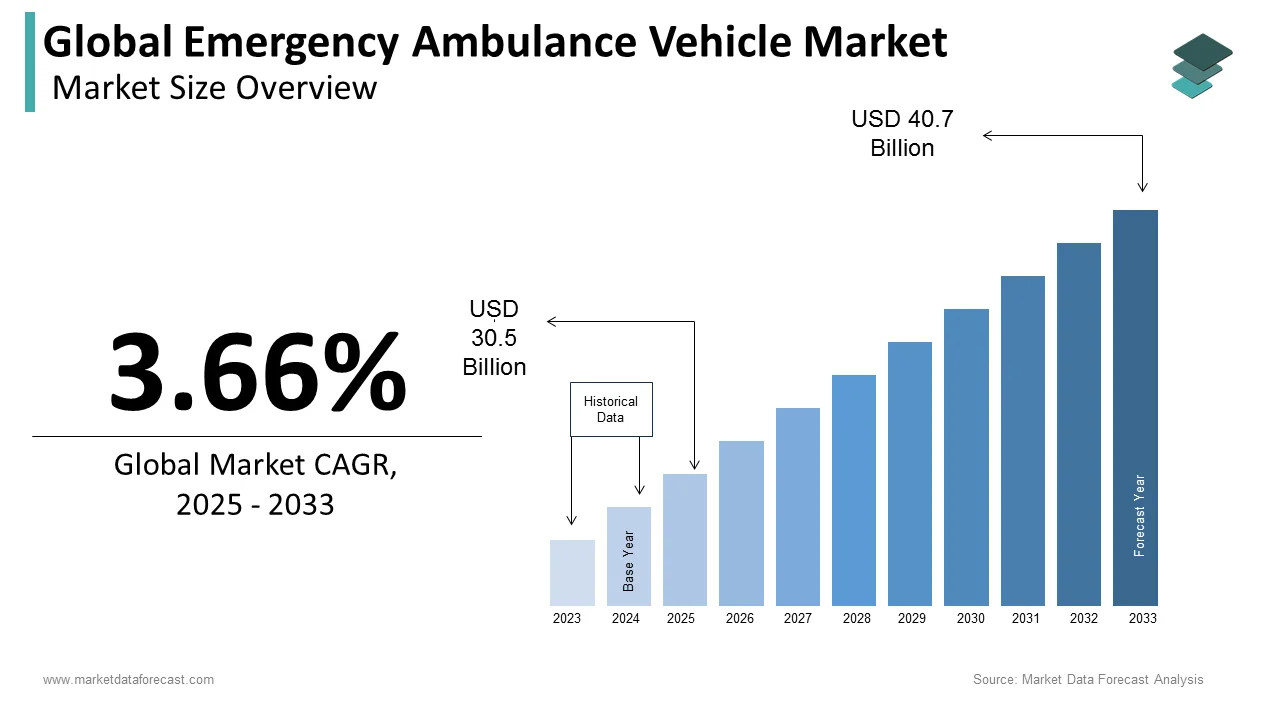
The global emergency ambulance vehicle market was valued at USD 30.5 billion in 2025 and is projected to grow from USD 31.62 billion in 2026 to USD 42.15 billion by 2034, registering a CAGR of 3.66% from 2026 to 2034. Market growth is driven by rising emergency healthcare demand, increasing road accidents and trauma cases, and expanding investments in healthcare infrastructure worldwide. Emergency ambulance vehicles play a critical role in pre-hospital care, patient transportation, and rapid emergency response services. Growing adoption of advanced life support systems, integration of telemedicine technologies, and modernization of emergency medical service (EMS) fleets are further supporting market expansion globally.
Key Market Trends
- Increasing demand for advanced life support (ALS) ambulance services.
- Rising investments in modern emergency medical service (EMS) infrastructure.
- Growing integration of telemedicine and connected healthcare technologies in ambulances.
- Expansion of air ambulance and critical care transportation services.
- Increasing adoption of fuel-efficient and technologically advanced ambulance vehicles.
Segmental Insights
- Based on vehicle type, the vans segment dominated the global emergency ambulance vehicle market in 2025 by capturing a substantial share, driven by operational flexibility, cost efficiency, and widespread use in urban and rural emergency response services.
- Based on end use, the hospitals segment led the market by accounting for 63.1% share in 2025, supported by increasing hospital-based emergency transportation services and expanding healthcare facility networks.
- Based on equipment, the advanced life support (ALS) ambulance services segment held the majority share in 2025, driven by growing demand for specialized emergency care and critical patient monitoring capabilities during transportation.
Regional Insights
The global emergency ambulance vehicle market is witnessing steady growth across major regions, supported by healthcare infrastructure modernization, increasing emergency care demand, and government investments in public health systems.
- North America dominated the global market in 2025 with 37.1% share, driven by advanced EMS infrastructure, high healthcare spending, and widespread adoption of technologically advanced ambulance fleets.
- Europe held the second-largest position with 28.4% share in 2025, supported by well-established public emergency response systems and strong healthcare regulations.
- Asia-Pacific is projected to register the fastest growth over the forecast period, driven by rapid healthcare infrastructure development, rising disposable incomes, and increasing government investments in emergency medical services.
Competitive Landscape
The global emergency ambulance vehicle market is characterized by strong competition among ambulance service providers, vehicle manufacturers, and emergency healthcare transportation companies focusing on fleet modernization and advanced patient care technologies. Market participants are emphasizing integration of connected healthcare systems, expansion of emergency response capabilities, and development of technologically advanced ambulance vehicles to strengthen market positioning. Strategic partnerships, acquisitions, and investments in emergency healthcare infrastructure are shaping competitive dynamics across the market.
Prominent companies operating in the global emergency ambulance vehicle market include Envision Healthcare, London Ambulance Service NHS Trust, BVG India Limited, Acadian Ambulance Service, America Ambulance Services, Inc., REV Group Inc., Daimler AG Mercedes-Benz, Air Medical Group Holdings, Inc. (AMGH), Falck Denmark A/S, Ford Motor Company, Air Methods Corporation, Ziqitza Healthcare Limited, and Medivac Aviation.
Global Emergency Ambulance Vehicle Market Size
The size of the global emergency ambulance vehicle market was worth USD 30.5 billion in 2025. The global market is anticipated to grow at a CAGR of 3.66% from 2026 to 2034 and be worth USD 42.15 billion by 2034 from USD 31.62 billion in 2026.
An Emergency Ambulance Vehicle is a specialized transport unit designed to provide rapid, life-saving medical care and transport for individuals facing sudden, life-threatening injuries or illnesses. These vehicles integrate advanced life support systems, real-time monitoring equipment, and compliant structural frameworks aligned with standards. According to Eurostat, the median age of the European Union population reached 44.9 years in 2025, reflecting a demographic shift that intensifies demand for responsive emergency medical infrastructure. As per the Eurostat Population Projections, the share of those aged 65–79 will remain stable (rising slightly from 16% in 2025 to 17% in 2100), but the share of those aged 80 and over will more than double, jumping from 6% to 16%. Additionally, the EU's old-age dependency ratio (people aged 65+ compared to working-age individuals) is projected to nearly double, rising from 31% to 57% by 2100. According to the OECD, more than one-third of adults in the EU reported living with a longstanding illness or health problem in 2023, with prevalence rising to 60 percent among those aged over 65. Road collision response remains critical as the European Transport Safety Council emphasizes that fast coordinated emergency care significantly influences survival outcomes for seriously injured individuals. Urbanization trends further shape operational requirements, with approximately 75 percent of Europeans now residing in cities where traffic density and population concentration demand optimized ambulance deployment strategies. These contextual factors establish a foundational framework for understanding the evolving landscape of emergency ambulance vehicle procurement, specification, and deployment across European healthcare systems.
MARKET DRIVERS
Escalating Geriatric Population Demands Specialized Emergency Transport Solutions
The accelerating aging trajectory across European nations is a key growth enabler for the emergency ambulance vehicle market expansion. According to Eurostat, the median age in the EU increased by 2.1 years since 2015, reaching 44.9 years in 2025, with Italy recording the highest median age at 49.1 years. This demographic transformation directly correlates with elevated emergency medical service utilization, as older populations exhibit higher incidence rates of acute cardiovascular events, respiratory complications, and mobility-related injuries requiring immediate intervention. As per the OECD, 60 percent of individuals aged over 65 in the EU reported at least one chronic condition in 2023, substantially increasing the frequency of emergency dispatches. The old age dependency ratio is projected to rise from 34.4 percent in 2025 to 61.9 percent by 2100, indicating that emergency response systems must accommodate nearly double the dependent elderly population relative to working age citizens. Ambulance fleets require enhanced configurations, including bariatric capacity, advanced cardiac monitoring, and geriatric-specific immobilization equipment to address these evolving clinical needs. Healthcare authorities across Germany, France, and Italy are prioritizing fleet modernization programs to ensure response capabilities align with demographic realities. The sustained expansion of the senior cohort ensures long-term demand for purpose-built emergency transport vehicles equipped for complex geriatric care scenarios throughout European territories.
Rising Chronic Disease Burden Amplifies Pre-Hospital Care Requirements
The prevalence of chronic health conditions propels the expansion of the emergency ambulance vehicle market. This fuels consistent demand for advanced vehicles capable of delivering sophisticated pre-hospital interventions. According to the OECD, more than one-third of adults in the EU reported living with a longstanding illness or health problem in 2023, with cardiovascular disease, diabetes, and chronic respiratory conditions representing the most frequently cited ailments. As per the World Health Organization European Region report, chronic obstructive pulmonary disease and asthma account for nearly 80 percent of chronic respiratory disease mortality, necessitating ambulances equipped with advanced ventilatory support and oxygen therapy systems. The European chronic disease landscape reveals that 37 percent of Europeans aged 65 and over manage multiple concurrent conditions, creating complex clinical presentations that require ambulances with comprehensive diagnostic and therapeutic capabilities. Emergency medical services increasingly deploy vehicles featuring telemedicine connectivity, point of care testing, and medication administration systems to stabilize patients during transit. According to Eurostat, the proportion of people aged 80 and older increased from 3.8 percent to 6.1 percent between 2004 and 2024, further intensifying the need for ambulances configured for frail elderly care. Healthcare systems across Spain, Poland, and the Netherlands are investing in next-generation ambulance platforms that integrate real-time hospital communication and advanced life support modules to address the growing chronic disease emergency burden.
MARKET RESTRAINTS
Healthcare Workforce Shortages Constrain Ambulance Service Operational Capacity
The acute deficit of qualified emergency medical personnel is a significant constraint on the effective utilization of these vehicles and the growth of the emergency ambulance vehicle market. According to the OECD, Europe faced a shortage of 1.2 million doctors and healthcare professionals in 2022, with emergency medicine specialties experiencing particularly severe recruitment challenges. According to the European Union of Medical Specialists, over one-third of EU doctors were aged 55 or older in 2022, indicating an impending wave of retirements that will further deplete emergency response staffing levels. The World Health Organization reports that workforce shortages now affect all countries in the European Region, with rural and peripheral areas experiencing the most critical gaps in emergency medical technician availability. Even with advanced ambulance fleets equipped with sophisticated medical technology, operational effectiveness remains dependent on adequately trained personnel to operate equipment and deliver pre-hospital care. According to the European Public Services Union, the shortage of nurses, paramedics, and emergency physicians continues to rise, limiting the number of ambulances that can be actively deployed despite available vehicle inventory. Healthcare budget allocations increasingly prioritize staff retention and training over fleet expansion, creating a mismatch between vehicle procurement and operational readiness. This workforce constraint fundamentally limits market growth potential as ambulance manufacturers face demand that cannot be fully realized due to human resource limitations within emergency medical service organizations across European territories.
Stringent Regulatory Compliance Requirements Increase Procurement Complexity and Costs
The rigorous regulatory framework governing emergency ambulance design, equipment, and performance across the jurisdictions creates substantial barriers to market entry and fleet expansion within the emergency ambulance vehicle market. According to the EN 1789 European Standard, road ambulances must satisfy comprehensive requirements for structural integrity, crashworthiness, medical equipment mounting, and electrical system safety, significantly elevating manufacturing complexity and unit costs. According to the European Committee for Standardization, compliance with EN 1789 2020 necessitates specialized engineering validation, certified component sourcing, and extensive documentation that extends procurement timelines and increases total cost of ownership. National variations in implementation further complicate cross-border procurement, as individual member states may impose additional specifications beyond the baseline European standard. According to the European Transport Safety Council, ambulance vehicles must also satisfy separate regulations for emergency lighting, audible warning systems, and vehicle dynamics, creating layered compliance obligations that challenge manufacturers and purchasers alike. The certification process for each ambulance configuration requires substantial investment in testing facilities and technical expertise, limiting the number of qualified suppliers capable of meeting European requirements. Healthcare authorities face extended lead times and elevated capital expenditure when procuring compliant emergency vehicles, constraining fleet renewal cycles and limiting market volume growth despite underlying demand drivers across European emergency medical service systems.
MARKET OPPORTUNITIES
Integration of Telemedicine and Digital Health Technologies in Ambulance Platforms
The convergence of emergency transport vehicles with advanced telemedicine capabilities offers a transformative opportunity for the emergency ambulance vehicle market. According to research published in BMC Emergency Medicine, the median emergency physician response time in Europe is 11.1 minutes, creating a critical window where remote specialist consultation can significantly improve patient outcomes. As per the European Commission Health Emergency Preparedness and Response Authority initiatives, digital health integration in pre-hospital care represents a strategic priority for strengthening cross-border health threat response capabilities. Modern ambulance platforms equipped with high bandwidth connectivity, real-time vital sign transmission, and video consultation interfaces enable emergency physicians to guide on-scene interventions before hospital arrival. According to a study in Nature Scientific Reports, optimizing emergency medical service coverage through technology-enhanced dispatch and routing can increase service area coverage to 90.21 percent in metropolitan environments. Manufacturers developing ambulances with modular digital health architectures position themselves to capture growing demand from healthcare systems seeking to maximize clinical impact per vehicle deployment. The European Union digital health strategy encourages interoperable emergency care systems, creating favorable policy conditions for technology-integrated ambulance procurement. This opportunity extends beyond vehicle hardware to encompass software platforms, data analytics, and remote care protocols that generate recurring revenue streams and deepen customer relationships across European emergency medical service networks.
Expansion of Specialized Ambulance Configurations for Rural and Remote Service Areas
The geographic diversity of European territories provides a clear path for purpose-built emergency ambulance vehicles designed for rural, mountainous, and island service environments. This development is anticipated to fuel the growth of the emergency ambulance vehicle market. According to the European Transport Safety Council, post-collision emergency response effectiveness varies significantly between urban and rural settings, with remote areas experiencing longer response intervals and limited access to advanced care facilities. As per Eurostat demographic projections, while urbanization continues, approximately 25 percent of Europeans reside in rural communities where conventional ambulance configurations face operational limitations related to terrain, weather, and infrastructure. Manufacturers developing all-terrain capable ambulances, compact units for narrow village access, and vehicles with extended range power systems address unmet needs in underserved European regions. According to research in Emergency Medicine International, 51 percent of European countries maintain maximum ambulance response time targets of 30 minutes or less, creating performance pressure that drives demand for specialized rural deployment vehicles. National healthcare authorities in countries such as Norway, Sweden, and Greece increasingly prioritize procurement of ambulances configured for challenging geographic conditions. The European Union cohesion policy supports infrastructure development in less developed regions, potentially subsidizing specialized ambulance acquisition for remote service areas. This opportunity enables manufacturers to differentiate offerings through terrain-specific engineering, extended autonomy systems, and modular equipment packages that address the unique operational requirements of rural European emergency medical services.
MARKET CHALLENGES
Balancing Advanced Technology Integration with Cost Containment Pressures
The imperative to incorporate sophisticated medical technology into these vehicles while maintaining fiscal sustainability is a fundamental challenge for the emergency ambulance vehicle market. According to Eurostat, current healthcare expenditure in the EU totaled 1720 billion euros in 2023, representing 10.0 percent of gross domestic product, with budget constraints intensifying pressure on emergency service procurement decisions. As per the World Health Organization European report, up to 20 percent of households across Europe experience catastrophic health spending, primarily driven by out-of-pocket payments, creating political sensitivity around healthcare capital investments. Advanced ambulance configurations featuring telemedicine systems, advanced life support modules, and real-time data connectivity significantly elevate unit costs compared to basic transport vehicles. According to the European Committee for Standardization, compliance with evolving EN 1789 requirements necessitates ongoing engineering investment that manufacturers must balance against competitive pricing expectations. Healthcare authorities face difficult trade-offs between acquiring fewer highly capable vehicles versus maintaining larger fleets of basic units, complicating procurement strategy and market forecasting. The challenge intensifies as technology cycles accelerate, requiring frequent upgrades to maintain clinical relevance while public budgets remain constrained. Manufacturers must develop modular architectures that enable incremental capability enhancement without complete vehicle replacement, yet this approach increases initial design complexity and supply chain management demands across European emergency ambulance vehicle markets.
Ensuring Interoperability Across Diverse National Emergency Response Systems
The fragmentation of emergency medical service protocols, communication standards, and operational procedures creates significant interoperability issues for ambulance vehicle deployment and cross-border coordination, which slows down the expansion of the emergency ambulance vehicle market. According to the World Health Organization European Region assessment, emergency medical services systems in the EU still require enhanced integration within disaster preparedness and response mechanisms, limiting seamless cross-border emergency vehicle utilization. As per the European Emergency Data Project, substantial variation exists in emergency response metrics between countries, with ambulance dispatch protocols, clinical guidelines, and equipment specifications differing across national jurisdictions. This heterogeneity complicates the development of standardized ambulance platforms that can operate effectively throughout European territories. According to research in the European Journal of Emergency Medicine, important differences exist in Emergency Medical Service systems and cardiac arrest response approaches throughout Europe, affecting vehicle configuration requirements and crew training needs. Manufacturers face the challenge of designing vehicles that accommodate diverse national regulations while maintaining production efficiency and cost effectiveness. Cross-border emergency operations, such as major incident response or patient repatriation, require vehicles capable of interfacing with multiple communication networks and clinical documentation systems. The European Union Health Emergency Preparedness and Response Authority initiatives aim to enhance coordination, yet implementation across 27 member states progresses at varying paces. This interoperability challenge constrains market scalability and increases customization requirements for emergency ambulance vehicle suppliers serving the diverse European landscape.
REPORT COVERAGE
| REPORT METRIC | DETAILS |
| Market Size Available | 2025 to 2034 |
| Base Year | 2025 |
| Forecast Period | 2026 to 2034 |
| Segments Covered | By Device, Technique, End User, and Region |
| Various Analyses Covered | Global, Regional & Country Level Analysis, Segment-Level Analysis, Drivers, Restraints, Opportunities, Challenges; PESTLE Analysis; Porter's Five Forces Analysis, Competitive Landscape, Analyst Overview of Investment Opportunities |
| Regions Covered | North America, Europe, Asia Pacific, Latin America, Middle East & Africa |
| Market Leaders Profiled | Envision Healthcare, London Ambulance Service NHS Trust, BVG India Limited |
SEGMENTAL ANALYSIS
By Vehicle Type Insights
The vans segment led the global emergency ambulance vehicle market and captured a substantial share in 2025. This leading position of the segment was attributed to the inherent versatility and operational efficiency that van-based platforms deliver across diverse emergency medical service scenarios. Vans provide expansive interior configurations that accommodate advanced life support equipment, multiple stretcher systems, and medical personnel movement during patient transport. According to sources, the commercial vehicle foundation of ambulance vans ensures durability across varied road conditions while maintaining cost effectiveness compared to purpose-built specialty vehicles. Healthcare systems prioritize van-based ambulances because they support modular customization for bariatric transport, pediatric care, and mobile intensive care unit applications. As per research, the ability to reconfigure van interiors for disaster response or mass casualty events enhances their strategic value for emergency service providers. The widespread availability of van chassis from global automotive manufacturers ensures reliable supply chains and standardized maintenance protocols. According to a study, van-based ambulances represent the most practical solution for urban and suburban emergency response, where rapid deployment and equipment capacity are critical priorities.
However, the motorcycles segment is on the rise and is expected to be the fastest-growing segment in the market by witnessing a CAGR of 12.8% over the forecast period, owing to the increasing adoption of motorcycle-based emergency response units for congested urban environments and remote terrain access, where conventional ambulances face mobility constraints. According to Emergency Medicine International research, motorcycle ambulances reduce average response times by 40 percent in high-density metropolitan areas compared to van-based units. As per European Transport Safety Council data, motorcycle emergency vehicles demonstrate superior maneuverability during peak traffic conditions, enabling faster arrival at accident scenes and cardiac emergency locations. The compact footprint of motorcycle ambulances allows deployment in narrow alleyways, pedestrian zones, and disaster-affected infrastructure where larger vehicles cannot operate effectively. According to BMC Emergency Medicine studies, motorcycle paramedic units equipped with automated external defibrillators and trauma stabilization kits achieve comparable clinical outcomes to traditional ambulances for time-sensitive interventions. Healthcare authorities in India, Indonesia, and Brazil are expanding motorcycle ambulance fleets to address emergency coverage gaps in underserved communities. According to World Health Organization regional reports, motorcycle-based emergency response represents a cost-efficient strategy for extending pre-hospital care access in resource-constrained settings.
By End Use Insights
The hospitals segment dominated the emergency ambulance vehicle market and accounted for a 63.1% share in 2025. This dominance of the segment was driven by the central role hospitals play as primary destinations for emergency medical transport and as operational hubs for ambulance service coordination. According to OECD health statistics, hospital emergency departments across developed nations manage over 150 million patient arrivals annually, creating sustained demand for reliable ambulance fleet capacity. As per Eurostat healthcare infrastructure data, European hospital networks maintain formal partnerships with emergency medical service providers, ensuring continuous ambulance availability for acute care transfers. Hospitals invest in dedicated ambulance vehicles to support inter-facility patient transfers, specialized trauma transport, and discharge coordination for complex care cases. According to World Health Organization European Region assessments, hospital-owned ambulance fleets demonstrate higher compliance with equipment standards and clinical protocol adherence compared to third-party providers. The integration of hospital electronic health records with ambulance communication systems enhances care continuity and reduces treatment delays during patient handoff. According to stroke care studies, ambulance networks utilizing pre-hospital notification protocols and digital telemetry integration achieve a 15 to 25-minute reduction in door-to-treatment intervals for acute cardiovascular and stroke patients. This performance advantage reinforces hospital sector leadership in ambulance vehicle procurement across European healthcare systems.
On the other hand, the home healthcare settings segment is anticipated to register the highest CAGR of 11.4% from 2026 to 2034 due to shifting care delivery models and the preferences of an aging population. According to OECD long-term care reports, over 70 percent of adults aged 65 and older in European nations express a preference for receiving medical care in home environments rather than institutional settings. As per Eurostat demographic projections, the proportion of Europeans aged 80 and older will reach 12.3 percent by 2050, intensifying demand for home-based emergency response capabilities. Home healthcare ambulance services require specialized vehicle configurations featuring compact dimensions for residential access, advanced telemedicine connectivity for remote physician consultation, and equipment for in-home stabilization procedures. According to Nature Scientific Reports analysis, technology-enabled home emergency response systems reduce unnecessary hospital admissions by 28 percent while maintaining patient safety outcomes. Healthcare systems across Germany, the Netherlands, and Sweden are investing in dedicated home care ambulance fleets to support aging in place initiatives and reduce emergency department overcrowding. According to European Commission health policy documents, home-based emergency transport represents a strategic priority for sustainable healthcare financing as hospital-based acute care costs continue rising. Manufacturers developing ambulances optimized for residential deployment with quiet operation systems and minimal environmental impact position themselves to capture this rapidly expanding market segment.
By Equipment Insights
The advanced life support ambulance services segment held the majority share of the emergency ambulance vehicle market in 2025 because of the critical clinical capabilities that ALS-configured vehicles deliver for time-sensitive emergency interventions, including cardiac arrest, severe trauma, and respiratory failure management. According to World Health Organization European Region data, cardiovascular emergencies account for nearly 40 percent of all ambulance dispatches requiring advanced monitoring, medication administration, and procedural interventions only available in ALS-equipped units. As per European Resuscitation Council guidelines, ALS ambulances must carry defibrillators, advanced airway equipment, intravenous therapy supplies, and cardiac monitoring systems to meet regional clinical standards. Healthcare authorities prioritize ALS vehicle procurement because these units enable paramedics to initiate definitive care during transport rather than delaying treatment until hospital arrival. According to BMC Emergency Medicine research, patients receiving ALS-level interventions during ambulance transit demonstrate 22 percent higher survival rates for out-of-hospital cardiac arrest compared to basic life support transport alone. The growing prevalence of complex chronic conditions among aging European populations further intensifies demand for ALS-capable emergency vehicles. According to OECD health statistics, over 60 percent of individuals aged 65 and older manage multiple concurrent conditions requiring sophisticated pre-hospital stabilization capabilities.
On the contrary, the basic life support ambulance services segment is expected to exhibit a noteworthy CAGR of 8.7% during the forecast period. This quick surge of the segment is propelled by increasing utilization of BLS configured vehicles for non-critical patient transport, inter-facility transfers, and community-based emergency response, where advanced interventions are not immediately required. According to European Emergency Data Project assessments, approximately 45 percent of ambulance dispatches involve patients with stable vital signs who benefit from efficient transport rather than complex pre-hospital procedures. As per Eurostat healthcare utilization data, BLS ambulances deliver cost-effective solutions for scheduled medical appointments, dialysis transport, and discharge coordination, reducing pressure on advanced life support fleet capacity. Healthcare systems across Southern and Eastern Europe are expanding BLS ambulance networks to improve emergency coverage in rural and underserved communities where ALS unit deployment faces resource constraints. According to World Health Organization regional reports, BLS-configured vehicles equipped with automated external defibrillators, oxygen therapy, and basic monitoring achieve excellent outcomes for common emergency presentations when paired with effective dispatch protocols. Manufacturers developing modular BLS platforms that enable rapid upgrade to ALS configuration provide healthcare authorities with flexible procurement options aligned with evolving community needs.
REGIONAL ANALYSIS
North America Emergency Ambulance Vehicle Market Analysis
North America was the top performer in the global emergency ambulance vehicle market and accounted for a 37.1% share in 2025. This regional dominance was driven by robust healthcare infrastructure investment, comprehensive emergency medical service regulations, and high per capita healthcare expenditure that supports advanced ambulance fleet procurement. According to OECD health statistics, the United States allocates approximately 17.8 percent of gross domestic product to healthcare, creating substantial resources for emergency response system modernization. As per National Highway Traffic Safety Administration data, over 6 million emergency medical service responses occur annually in the United States, driving consistent demand for reliable ambulance vehicle replacement and expansion. North American manufacturers lead global innovation in ambulance design, incorporating telematics, telemedicine integration, and advanced safety systems that set international performance benchmarks. According to American Ambulance Association reports, regulatory requirements for vehicle crashworthiness, equipment certification, and crew training establish high-quality standards that influence procurement decisions across the region. The aging North American population intensifies demand for ambulances configured for geriatric care, bariatric transport, and chronic disease management. According to the United States Census Bureau projections, individuals aged 65 and older will represent 22 percent of the population by 2040, ensuring sustained market growth for specialized emergency transport solutions.

Europe Emergency Ambulance Vehicle Market Analysis
Europe was the next prominent regional market and occupied a 28.4% share in 2025 because of standardized regulatory frameworks and coordinated emergency response protocols across member states. This market position reflects mature healthcare systems that prioritize emergency medical service quality, vehicle safety standards, and cross-border operational compatibility. According to Eurostat demographic data, Europe experiences the world's most rapid population aging, with a median age reaching 44.9 years in 2025, creating sustained demand for emergency transport services. As per European Committee for Standardization documentation, EN 1789 compliance requirements establish comprehensive specifications for ambulance design, equipment mounting, and electrical systems that influence procurement across the region. European healthcare authorities increasingly invest in ambulance fleets featuring telemedicine connectivity, real-time hospital communication, and advanced life support modules to address the growing chronic disease emergency burden. According to European Transport Safety Council assessments, coordinated emergency response systems with optimized ambulance deployment achieve significantly improved survival outcomes for trauma and cardiac patients. The European Union health emergency preparedness initiatives encourage interoperable ambulance platforms capable of supporting cross-border crisis response. According to the World Health Organization European Region reports, standardized training protocols and equipment specifications facilitate efficient ambulance utilization across diverse national healthcare systems.
Asia Pacific Emergency Ambulance Vehicle Market Analysis
Asia Pacific is the fastest-growing regional market. This expansion trajectory shows rapid healthcare infrastructure development, rising disposable income levels, and increasing government investment in emergency medical service systems across emerging economies. According to the World Health Organization Western Pacific Region data, road traffic injuries represent a leading cause of mortality in Asia Pacific nations, driving urgent demand for reliable ambulance response capabilities. As per OECD development reports, countries including India, Indonesia, and Vietnam are implementing national ambulance service programs with substantial fleet procurement targets to improve emergency coverage in rural and urban communities. Asia Pacific manufacturers increasingly collaborate with global technology providers to integrate advanced monitoring systems, telemedicine platforms, and fuel-efficient powertrains into regionally optimized ambulance designs. According to Emergency Medicine International research, motorcycle and compact van-based ambulances demonstrate particular effectiveness in high-density Asian urban environments where traffic congestion challenges conventional emergency response. Government initiatives such as India's National Ambulance Service and China's Emergency Medical Service modernization programs create structured procurement opportunities for domestic and international ambulance suppliers. According to Asian Development Bank infrastructure assessments, improved road networks and communication systems enhance ambulance deployment efficiency across the region.
Latin America Emergency Ambulance Vehicle Market Analysis
Latin America is moving ahead steadfastly in the global emergency ambulance vehicle market due to healthcare system modernization and expanding emergency medical service coverage. This regional market position reflects ongoing investments in public health infrastructure, increasing urbanization, and rising awareness of emergency care importance across diverse national contexts. According to the Pan American Health Organization reports, cardiovascular diseases and road traffic injuries represent the leading causes of emergency medical service utilization in Latin American nations, creating sustained demand for reliable ambulance fleets. As per World Bank healthcare financing data, several Latin American governments are implementing universal health coverage initiatives that include emergency transport components, expanding procurement opportunities for ambulance suppliers. Regional manufacturers such as Agrale in Brazil and local assembly operations for global brands provide cost-effective ambulance solutions optimized for varied terrain and climate conditions. According to Emergency Medicine International assessments, compact and all-terrain ambulance configurations demonstrate particular value in Latin American settings where infrastructure challenges limit conventional vehicle access. Public-private partnership models for emergency medical service delivery are gaining traction across the region, enabling more efficient ambulance fleet management and maintenance. According to Inter American Development Bank infrastructure reports, improved emergency response coordination and ambulance deployment protocols enhance clinical outcomes while optimizing resource utilization.
Middle East and Africa Emergency Ambulance Vehicle Market Analysis
The Middle East and Africa region is likely to expand significantly in the global emergency ambulance vehicle market from 2026 to 2034, owing to healthcare infrastructure expansion and emergency preparedness initiatives. This regional market position exhibits varying levels of healthcare system development, resource availability, and emergency service prioritization across diverse national contexts. According to the World Health Organization Eastern Mediterranean Region data, conflict-affected areas and rapidly urbanizing communities create urgent demand for reliable emergency transport capabilities. As per African Union health strategy documents, several nations are implementing national emergency medical service frameworks with ambulance procurement components to improve pre-hospital care access. Gulf Cooperation Council countries demonstrate advanced ambulance fleet specifications featuring telemedicine integration, advanced life support systems, and climate-adapted designs suitable for extreme environmental conditions. According to Emergency Medicine International research, motorcycle and compact ambulance configurations provide cost-effective solutions for extending emergency coverage in resource-constrained African settings. International development partnerships and humanitarian organizations support ambulance procurement and training initiatives across the region, enhancing emergency response capacity. According to United Nations Office for the Coordination of Humanitarian Affairs assessments, standardized ambulance specifications and interoperable communication systems improve coordination during cross-border health emergencies.
COMPETITIVE LANDSCAPE
The emergency ambulance vehicle market features a competitive landscape characterized by established automotive manufacturers, specialty vehicle converters, and regional emergency service providers pursuing distinct strategic positions. Global automotive companies leverage manufacturing scale, engineering expertise, and distribution networks to supply chassis and powertrain solutions for ambulance applications. Specialty converters focus on medical equipment integration, regulatory compliance, and customized configurations that address specific clinical and operational requirements. Regional players compete through localized manufacturing, cost-effective solutions, and a deep understanding of community emergency response needs. Competition intensifies around technology differentiation, including telemedicine connectivity, advanced monitoring systems, and data integration capabilities that enhance pre-hospital care quality. Regulatory compliance represents a significant barrier to entry as manufacturers must demonstrate adherence to diverse regional standards for vehicle safety, equipment certification, and clinical functionality. Price sensitivity varies across market segments, with public sector procurement emphasizing total cost of ownership while private operators prioritize performance features and service support. Innovation cycles accelerate as manufacturers incorporate emerging technologies, including artificial intelligence, predictive analytics and autonomous driving capabilities, into next-generation ambulance platforms. Strategic collaborations between vehicle manufacturers, technology providers, and healthcare systems enable the development of integrated emergency response solutions that improve patient outcomes while optimizing resource utilization across diverse operational environments.
KEY MARKET PLAYERS
Some of the companies that are playing a dominating role in the global emergency ambulance vehicles market include
- Envision Healthcare
- London Ambulance Service NHS Trust
- BVG India Limited
- Acadian Ambulance Service
- America Ambulance Services, Inc.
- REV Group Inc
- Daimler AG Mercedes-Benz
- Air Medical Group Holdings, Inc. (AMGH)
- Falck Denmark A/S
- Ford Motor Company
- Air Methods Corporation
- Ziqitza Healthcare Limited
- Medivac Aviation
TOP PLAYERS IN THE MARKET
- REV Group Inc maintains a prominent position in the global emergency ambulance vehicle market through its comprehensive portfolio of ground ambulance solutions serving public and private emergency medical service providers. The company leverages manufacturing expertise across multiple brands, including Horton Emergency Vehicles and Wheeled Coach, to deliver customized ambulance configurations aligned with regional clinical and regulatory requirements. REV Group invests in research and development focused on vehicle safety enhancements, fuel efficiency improvements, and technology integration, including telematics and telemedicine connectivity. Recent strategic initiatives include expanding production capacity for electric and hybrid ambulance platforms to support sustainability objectives while maintaining operational performance standards. The company collaborates with emergency medical service agencies to optimize vehicle specifications for specific deployment scenarios, including urban response, rural coverage, and disaster preparedness applications.
- Ford Motor Company contributes significantly to the emergency ambulance vehicle market through its commercial vehicle platforms that serve as the foundation for numerous ambulance configurations globally. The company provides chassis and powertrain solutions optimized for emergency service demands, including enhanced durability, reliability, and performance under continuous operational conditions. Ford collaborates with specialty vehicle modifiers to ensure seamless integration of medical equipment, communication systems, and safety features into ambulance bodies built on Ford chassis. Recent developments include advancing electrification options for commercial vehicles that enable ambulance manufacturers to develop zero-emission emergency response platforms. The company supports emergency service providers through comprehensive fleet management services, maintenance programs, and technical training to maximize vehicle uptime and operational effectiveness across diverse geographic and climatic conditions.
- Daimler AG, through its Mercedes-Benz brand, delivers premium commercial vehicle platforms that serve as preferred bases for advanced ambulance configurations across European and global markets. The company emphasizes engineering excellence, safety innovation, and technological sophistication in vehicles designed for emergency medical service applications. Mercedes-Benz collaborates with certified ambulance converters to ensure optimal integration of medical equipment, patient care systems, and communication technologies into vehicles meeting stringent regional standards. Recent strategic focus includes developing alternative powertrain solutions, including hybrid and electric drivetrains, that support environmental sustainability goals while maintaining the performance characteristics required for emergency response. The company provides comprehensive support services, including predictive maintenance, remote diagnostics, and operator training, to enhance ambulance fleet reliability and operational efficiency for emergency medical service providers worldwide.
TOP STRATEGIES USED BY KEY MARKET PARTICIPANTS
Key participants in the emergency ambulance vehicle market employ strategic approaches focused on technology integration, regulatory compliance, and market expansion to strengthen competitive positioning. Manufacturers prioritize research and development investments to incorporate advanced medical equipment, telemedicine capabilities, and connectivity features into ambulance platforms. Strategic partnerships with healthcare systems and emergency service providers enable customized vehicle configurations aligned with specific clinical protocols and operational requirements. Companies pursue geographic expansion through local manufacturing facilities, distribution networks, and service centers to enhance market access and customer support. Sustainability initiatives drive the development of alternative powertrain options, including hybrid and electric ambulance platforms that reduce environmental impact while maintaining emergency response performance. Regulatory expertise and certification capabilities represent critical competitive advantages as manufacturers navigate complex regional standards for vehicle safety, equipment mounting, and clinical functionality.
MARKET SEGMENTATION
This market research report on the global emergency ambulance vehicle market has been segmented and sub-segmented based on vehicle type, equipment, end-user, and region.
By Vehicle Type
- Vans
- Cars
- Motorcycles
- Others
By End Use
- Hospitals
- Emergency centers
- Home healthcare settings
- Others
By Equipment
- Advance life support ambulance services (ALS)
- Essential life support ambulance services (BLS)
By Region
- North America
- Europe
- Asia-Pacific
- Latin America
- Middle East and Africa