- Product Description Description
- Table of Contents TOC
- List of Table & Figure LOT
- Get Free Sample PDF Sample PDF
Market Size, 2025
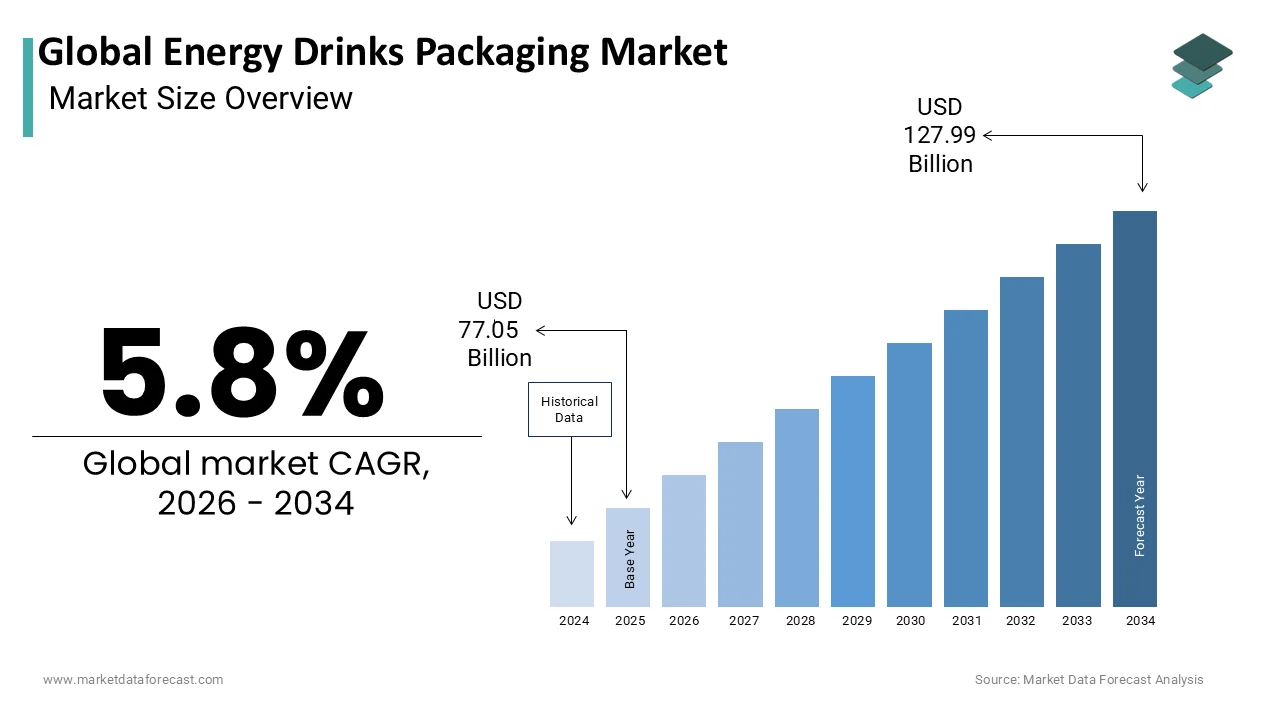
$77.05 BnMarket Estimate, 2026
$81.52 BnMarket Forecast, 2034
$127.99 BnCAGR, 2026–2034
5.8%Global Energy Drinks Packaging Market Size
The global energy drinks packaging market was valued at USD 77.05 billion in 2025, is expected to have a 5.8% CAGR from 2026 to 2034, and be worth USD 127.99 billion by 2034 from USD 77.05 billion in 2026.
The energy Drinks Packaging Market encompasses the specialized containers and materials designed to preserve the quality, safety,y and aesthetic appeal of energy beverages, which are characterized by high acidity and carbonation. As per Eurostat data, approximately 76% of all packaging waste in the European Union was recycled in 2022, with metal packaging achieving a recycling rate of 81%, reflecting strong infrastructure support. Furthermore, the International Aluminium Institute states that aluminum is infinitely recyclable without loss of quality, making it the preferred material for 90% of energy drink manufacturers globally. The rise of on-the-go consumption patterns has also shaped packaging design, with the World Health Organization reporting that 40% of adults engage in physical activity requiring quick hydration solutions.
MARKET DRIVERS
Surging Demand for Portable and On-the-Go Consumption Formats Drives Can Adoption.
The increasing prevalence of active lifestyles and the need for convenient hydration solutions, particularly favoring aluminum cans and lightweight plastic formats, is fuelling the growth of the energy drinks packaging market. Consumers prioritize portability, durability,y and ease of opening when selecting beverages for commuting, exercising, or working,g leading to a significant shift away from bulky glass containers. The lightweight nature of modern cans reduces transportation costs and carbon emissions, ns aligning with corporate sustainability goals. Additionally, the slim and sleek design of contemporary cans appeals to younger demographics who view them as fashion accessories or lifestyle statements. The ability of aluminum to block light and oxygen ensures product freshness and extends shelf life,ife which is critical for preserving the potency of ingredients like taurine and caffeine. Manufacturers are investing in advanced printing technologies to create vibrant tactile finishes that stand out on crowded shelves,lves further driving demand for premium can designs. This emergence of function,ality aest, aesthetics, and environmental benefits solidifies the dominance of portable packaging formats in the energy drinks sector.
Stringent Environmental Regulations and Sustainability Mandates Accelerate Material Innovation
The governmental policies and regulatory frameworks aimed at reducing plastic waste and promoting the circular economy principles are additionally fuelling the growth of the energy drinks packaging market. Legislation, such as the European Union’s Packaging and Packaging Waste Regulation, mandates that all packaging must be reusable or recyclable by 2030, forcing manufacturers to rethink material choices. According to the European Commission, member states must achieve a 70% recycling rate for all packaging waste by 2030, creating urgent demand for compliant solutions. This regulatory pressure has led to a surge in the adoption of recycled aluminum and bio-based plastics, which offer lower carbon footprints compared to virgin materials. Additionally, extended producer responsibility schemes require brands to finance the collection and recycling of their packaging,g incentivizing design for recyclability-friendly packaging solutions, ensuring compliance, and enhancing brand reputation.
MARKET RESTRAINTS
Volatility in Raw Material Prices Impacts Production Costs and Profit Margins
Fluctuating prices of key raw materials, such as aluminum resin and glass, create uncertainty in production costs and pricing strategies. The global supply chain for these materials is susceptible to geopolitical tensions, energy price spikes,s and trade policies, which directly affect manufacturing expenses. According to the London Metal Exchange, aluminum prices experienced a 25% volatility index in 2023 due to supply constraints and increased demand from other industries, such as automotive and construction. Such instability forces packaging manufacturers to either absorb higher costs or pass them on to beverage brands, which can erode profit margins in a competitive market. Small and medium-sized packaging suppliers are particularly vulnerable, as they lack the hedging capabilities of larger corporations. Additionally, the reliance on imported materials exposes manufacturers to currency exchange risks and tariff fluctuations.
Complexities in Recycling Infrastructure and Consumer Behavior Limit Circular Economy Goals
The inadequate recycling infrastructure and inconsistent consumer participation in waste separation programs. While many packaging materials are technically recyclable, the actual recovery rates depend heavily on local collection systems and public awareness. According to the Organisation for Economic Co-operation and Development, only 9% of plastic waste globally is successfully recycled, with the rest ending up in landfills or incinerators. In many regions, the lack of standardized sorting facilities leads to contamination of the recyclable stream, reducing the quality of recovered materials. Additionally, the presence of mixed materials in energy drink packaging, such as plastic caps on aluminum cans or multi-layer labels, complicates the recycling process. These infrastructural gaps discourage brands from investing in advanced recyclable designs if the end-of-life management is not guaranteed. Furthermore, greenwashing concerns arise when companies claim sustainability without verifiable recycling outcomes, damaging consumer trust.
MARKET OPPORTUNITIES
Adoption of Smart Packaging Technologies Enhances Consumer Engagement and Traceability
The integration of smart packaging technologies, such as QR codes, near field communication tags, GS, and temperature-sensitive inks, offers substantial opportunities for the energy drinks packaging market by enhancing consumer engagement and supply chain transparency. These digital features allow brands to provide interactive experiences,s including augmented reality games, nutritional information, and loyalty rewards directly through smartphone scanning. Energy drink manufacturers leverage these tools to gather real-time consumer insights and personalize marketing campaigns, thereby strengthening brand loyalty. Additionally, smart packaging enables traceability throughout the supply chain,n ensuring authenticity and preventing counterfeiting, ng which is crucial for premium brands. The Internet of Things sensors can monitor temperature and humidity during transit, ensuring product quality and reducing spoilage.
Expansion into Emerging Markets with Growing Middle Class Populations Offers Untapped Potential
The expansion into emerging countries with rising disposable incomes and changing lifestyle preferences to capture customersomeexpectednally to fuel the growth of the energy drinks packaging market. Many countries are experiencing rapid urbanization and increased participation in sports and fitness activities, driving demand for convenient energy beverages. According to the World Bank,nk the middle class in developing nations is projected to grow by 200 million people by 2,030 creating a larger base of consumers who can afford premium packaged goods. Local manufacturers are increasingly investing in modern packaging lines to meet international quality standards and compete with global brands. Data from the Asian Development Bank indicates that per capita consumption of packaged beverages in Southeast Asia has increased by 8% annually over the past five years. The introduction of smaller, affordable pack sizes caters to price-sensitive consumers while maintaining brand visibility. Additionally, governments in these regions are improving waste management infrastructure, supporting the adoption of recyclable packaging solutions. Partnerships with local distributors and retailers facilitate entry and ensure widespread availability.
MARKET CHALLENGES
Counterfeit Products and Brand Imitation Undermine Consumer Trust and Revenue
The prevalence of counterfeit energy drinks and imitation packaging, by undermining brand integrity, consumer safety, and revenue streams, ms is quietly acting as a major barrier for the growth of the energy drinks packaging market. Counterfeiters often replicate popular packaging designs with substandard materials and unverified ingredients, posing health risks to unsuspecting consumers. These illicit products damage brand reputation and erode consumer trust, leading to decreased loyalty and sales. The lack of robust anti-counterfeiting measures in some markets exacerbates the problem, em allowing fake products to circulate freely. Additionally, legal enforcement against counterfeiters is often weak or inconsistent across borders, making it difficult for brands to protect their intellectual property. The cost of implementing advanced security features such as holograms and unique serial numbers adds to production expenses.
Supply Chain Disruptions and Logistical Bottlenecks Impede Timely Delivery and Availability
The persistent supply chain disruptions and logistical hurdles are impeding timely delivery and increasing operational uncertainties, which are also inhibiting the growth of the energy drinks packaging market. The global logistics network faces ongoing challenges, including port congestion, labor shortages, es and geopolitical tensions that delay the movement of raw materials and finished packaging. According to the World Bank Logistics Performance Index, shipping delays increased by 20% in 202,,3 affecting industries reliant on just-in-time inventory models. For energy drink manufacturers, packaging shortages can lead to production halts and missed opportunities,s particularly during peak seasons. The reliance on single-source suppliers for specialized components such as printed cans or custom caps exacerbates vulnerability. Additionally, rising freight rates and fuel surcharges inflate distribution expenses, squeezing profit margins. The lack of visibility in the supply chain hinders effective planning and responsiveness to demand fluctuations.
REPORT COVERAGE
| REPORT METRIC | DETAILS |
| Market Size Available | 2025 to 2034 |
| Base Year | 2025 |
| Forecast Period | 2026 to 2034 |
| Segments Covered | Based on Material, Product Type, Distribution Channel, and Region |
| Various Analyses Covered | Global, Regional & Country Level Analysis, Segment-Level Analysis, DROC, PESTLE Analysis, Porter’s Five Forces Analysis, Competitive Landscape, Analyst Overview on Investment Opportunities |
| Regions Covered | North America, Europe, Asia Pacific, Latin America, Middle East & Africa |
| Market Leaders Profiled | Mondi (U.K.), Amcor plc (Switzerland), ProAmpac. (U.S.), Ardagh Group S.A. (Luxembourg), BALL CORPORATION (U.S.), Berry Global Inc. (U.S.), Tetra Laval Group (Switzerland), Saint-Gobain (France), O-I Glass (U.S.), Vetreria Etrusca (Italy), Encore Glass (U.S.), Brick Packaging (U.S.), Nampak Ltd. (South Africa), and Krones AG (Germany) |
SEGMENTAL ANALYSIS
By Material Insights
The tinplate containers segment was the largest by holding 22.3% of the energy drinks packaging market share in 2025 due to their exceptional ability to preserve product quality and their high recyclability rates. These containers provide an impermeable barrier against light, oxygen, and moisture, which is for maintaining the potency of active ingredients, such as caffeine, taurine, and B vitamins found in energy drinks. The aluminum cans protect beverages from spoilage and maintain carbonation levels effectively,ely ensuring consistent taste and efficacy over extended shelf lives. The lightweight nature of tinplate also reduces transportation costs and carbon emissions, aligning with corporate sustainability goals. This circular economy attribute appeals to environmentally conscious consumers and regulators alike. Furthermore, the rapid cooling properties of metal containers enhance consumer experience by providing a refreshing cold drink qu,ickly, which is a key purchasing driver for energy beverage consumers. The structural integrity of tinplate allows for efficient stacking and storage,e optimizing retail shelf space and logistics. Manufacturers leverage advanced printing technologies on metal surfaces to create vibrant and durable branding that stands out in competitive retail environments.
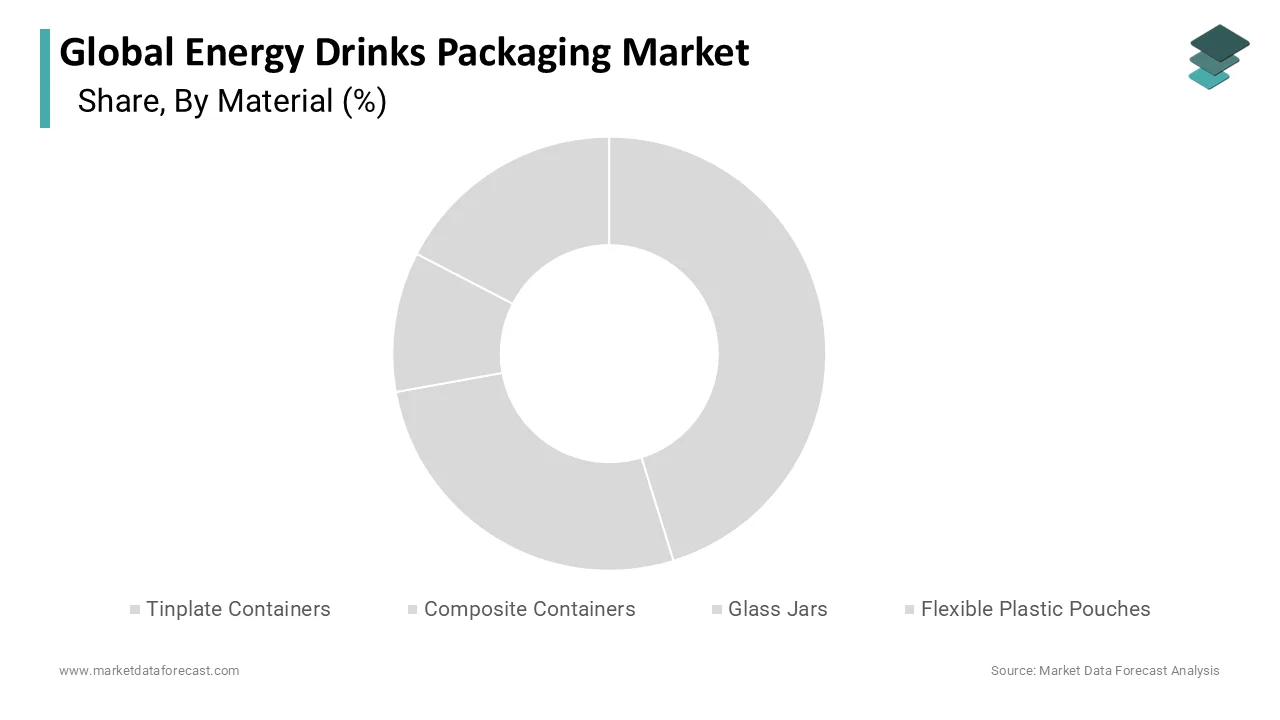
The flexible plastic pouches segment is expected to register the fastest CAGR of 6.8% throughout the forecast period, owing to the innovation in material science and demand for ultra-portable formats. These pouches offer significant weight and volume reductions compared to rigid containers, rs lowering shipping costs and storage requirements for both manufacturers and retailers. The development of multi-layer barrier films has enhanced the protective qualities of pouches,hes allowing them to safeguard sensitive ingredients from degradation while extending shelf life. Consumer preference for convenience fuels this growth as pouches are easy to carry open and dispose of, making them ideal for on-the-go consumption during sports activities or travel. Additionally, advancements in resealable zippers and spouts have improved usability, addressing previous concerns about spillage and freshness after opening. Brands are increasingly adopting stand-up pouches for premium positioning and unique shelf presence.
By Product Insights
The ready-to-drink energy beverages segment accounted in holding 22.3% of the energy drinks packaging market share in 2025 due to their widespread availability, diverse flavor profiles,s and immediate consumption convenience. This category includes standard cans, bottles, and multipacks that cater to a broad consumer base ranging from students and athletes to professionals seeking mental alertness. The extensive distribution networks of major brands ensure that these products are accessible in virtually every retail channel, from vending machines to supermarkets. The standardization of can sizes, such as 250 milliliters and 473 milliliters, facilitates efficient manufacturing and inventory management for producers. Marketing campaigns heavily focus on lifestyle associations linking energy drinks with performance gaming and extreme sports, which resonates strongly with target audiences. The immediacy of ready-to-drink formats eliminates the need for preparation, making them the default choice for quick energy boosts.
The energy shots segment is deemed to grow at the fastest CAGR of 7.5% from 2026 to 2034, due to the demand for high-potency concentrated energy in compact formats. These small-volume beverages typically range from 50 to 60 milliliters and deliver intense caffeine and nutrient doses appealing to consumers who seek maximum effect with minimal liquid intake. The popularity of energy shots has surged among busy professionals and drivers, who require quick and discreet energy boosts without the bulk of traditional cans. The portability of shots allows them to fit easily into pockets, bags, and cup holders, enhancing their appeal for on-the-go usage. Manufacturers are introducing premium formulations with added nootropics and adaptogens to differentiate their products and justify higher price points. The smaller packaging size also reduces material usage and shipping weights, aligning with sustainability objectives. Retailers favor shots due to their high margin potential and efficient shelf space utilization.
By Distribution Channel Insights
The supermarkets and hypermarkets segment held a significant share of the energy drinks packaging market in 2025 due to their extensive reach, high foot traffic,c and ability to offer bulk purchasing options. These retail giants provide prominent shelf space and end cap displays that maximize product visibility and encourage impulse buys among shoppers stocking up on household essentials. The availability of multipacks and variety bundles in these stores appeals to families and group consumers looking for value and convenience. Large retailers leverage their bargaining power to secure favorable pricing and promotional support from manufacturers, which drives volume sales. Additionally, the controlled environment of supermarkets ensures proper stock rotation and product freshness, which is necessary for maintaining brand reputation. Loyalty programs and digital coupons offered by supermarket chains further incentivize repeat purchases and brand switching. The comprehensive assortment of brands and flavors available in one location allows consumers to compare and choose according to their preferences.
The online retail stores segment is expected to witness the fastest CAGR of 9.2% from 2026 to 2034, with the digital convenience, home delivery and access to niche products. E-commerce platforms enable consumers to browse extensive catalogs,s compare prices, and read reviews before making informed purchasing decisions from the comfort of their homes. The ability to purchase specialized or imported energy drinks that are not available in local stores attracts enthusiasts and health-conscious buyers seeking specific formulations. Direct-to-consumer models allow brands to engage directly with customers, offering exclusive bundles and limited-edition flavors that drive loyalty. Advanced logistics and cold chain solutions have improved delivery reliability, ensuring that products arrive in optimal condition. Social media integration facilitates seamless discovery where influencer endorsements drive traffic to online stores. As internet penetration deepens and digital payment systems become more secure, the online retail channel will continue to expand rapidly, capturing a larger share of the energy drinks market, particularly among tech-savvy and urban demographics.
COUNTRY LEVEL ANALYSIS
North America Energy Drinks Packaging Market Analysis
North America was the outperformer in the global energy drinks packaging market by accounting for 35.4% of the market share in 2025, with the high per-capita consumption and a strong preference for premium packaging formats. The United States was the largest contributor, with consumers demonstrating a willingness to pay for innovative and sustainable packaging solutions, such as slim cans and matte finishes. The region is characterized by strict environmental regulations and corporate sustainability commitments, which drive the adoption of recycled aluminum and biobased plastics. Major brands invest heavily in marketing and packaging design to differentiate their products in a saturated market. The prevalence of convenience culture and active lifestyles further fuels demand for portable and durable packaging options. Additionally, the rise of craft energy drink brands introduces unique packaging aesthetics that appeal to niche audiences.
Europe Energy Drinks Packaging Market Analysis
Europe's energy drinks packaging market was ranked second with a share of 30.3% in 2025, with the stringent sustainability mandates and regulatory leadership in circular economy practices. The European Union’s Packaging and Packaging Waste Regulation sets ambitious targets for recycling and reusable packaging,g forcing manufacturers to innovate with eco-friendly materials. Countries, such as Germany, France, and the United Kingdom, om lead in adopting lightweight and recyclable packaging solutions to minimize environmental impact. Single-use plastic restrictions have accelerated the shift toward aluminum and paper-based alternatives in the beverage sector. Consumers in Europe are highly aware of environmental issues and prefer brands that demonstrate a genuine commitment to sustainability through transparent labeling and certified materials. The presence of major global energy drink headquarters in Europe drives continuous investment in packaging research and development. Additionally, the region’s dense urban population supports efficient collection and recycling infrastructure.
Asia Pacific Energy Drinks Packaging Market Analysis
The Asia Pacific energy drinks packaging market is likely to grow at the fastest CAGR during the forecast period, driven by the rapid urbanization, rising disposable incomes, and expanding youth populations. Countriess, such as China, India, Japan, and South Korea, are experiencing unprecedented growth in energy drink consumption driven by increasing participation in sports gaming and long working hours. Local manufacturers are investing in modern packaging lines to meet international quality standards and compete with global brands. The preference for affordable and convenient packaging formats, such as small cans bottlesttle,s drives volume sales. Additionally, governments in the region are improving waste management infrastructure, supporting the adoption of recyclable materials. The influence of global trends and social media accelerates the adoption of new packaging designs and flavors.
Latin America Energy Drinks Packaging Market Analysis
Latin America energy drinks packaging market growth is expected to grow with the cultural shifts toward active lifestyles and urbanization. Brazil and Mexico are the primary countries in the region, leveraging their large populations and growing interest in fitness and sports to drive energy drink consumption. The region benefits from local aluminum production, which supports cost-effective packaging solutions. International brands compete with strong local players who understand regional taste preferences and price sensitivities. The rise of modern retail chains in major cities improves distribution efficiency and product availability. However, currency fluctuations and political instability pose challenges for importers, affecting pricing strategies.
Middle East and Africa Energy Drinks Packaging Market Analysis
The Middle East and Africa energy drinks packaging market is driven by a youthful demographic profile and a robust hospitality sector in the Gulf states. Countries such as Saudi Arabia, the United Arab Emirates, and South Africa are key contributors, with consumers showing a growing appetite for international and localized energy drink brands. The hospitality industry in the Middle East, particularly in luxury hotels and resorts,s drives significant demand for premium canned energy drinks for guests and events. The infrastructure improvements are enhancing supply chain connectivity, allowing better distribution of perishable and packaged goods. Religious and cultural festivals also contribute to seasonal spikes in consumption. While economic disparities and logistical challenges exist, the increasing penetration of mobile commerce and social media marketing enables brands to reach broader audiences.
COMPETITIVE LANDSCAPE
The competition in the energy drinks packaging market is characterized by intense rivalry among established global manufacturers and regional suppliers who compete on price, innovation,n, and sustainability credentials. Major players leverage their scale and technological expertise to offer high-quality aluminum cans and specialized closures that meet strict safety and aesthetic standards. However, smaller niche providers often differentiate themselves through custom design capabilities and flexible minimum order quantities that appeal to craft energy drink brands. Price competition remains fierce, particularly for standard can sizes, where margins are thin due to volatile raw material costs. Established companies invest heavily in recycling infrastructure and circular economy initiatives to comply with regulations and attract environmentally conscious clients. Innovation in lightweighting and digital printing serves as a key differentiator, allowing firms to reduce material usage while enhancing visual appeal. Supply chain reliability and speed to market are critical factors influencing buyer decisions. Mergers and acquisitions are common as companies seek to consolidate capacity and expand geographic reach.
KEY MARKET PLAYERS
Some of the companies that are playing a dominating role in the Global Energy Drinks Packaging Market include
- Mondi plc (U.K.)
- Amcor plc (Switzerland)
- ProAmpac (U.S.)
- Ardagh Group S.A. (Luxembourg)
- Ball Corporation (U.S.)
- Berry Global Inc. (U.S.)
- Tetra Laval Group (Switzerland)
- Saint-Gobain S.A. (France)
- O-I Glass, Inc. (U.S.)
- Vetreria Etrusca S.p.A. (Italy)
- Encore Glass (U.S.)
- Brick Packaging (U.S.)
- Nampak Ltd. (South Africa)
- Krones AG (Germany)
TOP LEADING PLAYERS IN THE MARKET
- Ball Corporation is a global leader in sustainable aluminum packaging, providing innovative can solutions for major energy drink brands worldwide. The company focuses on lightweighting technologies and advanced printing capabilities to enhance brand visibility and reduce environmental impact. Ball has recently expanded its manufacturing footprint in emerging markets to meet rising demand for portable beverage containers. The corporation invests heavily in recycling infrastructure partnerships to promote circular economy principles and ensure a steady supply of recycled aluminum. By developing slim and sleek can designs that appeal to younger people, Ball strengthens its position as a preferred partner for energy drink manufacturers seeking premium and eco-friendly packaging options that align with modern consumer preferences and regulatory standards.
- Crown Holdings Inc significantly contributes to the energy drinks packaging market through its diverse portfolio of metal packaging solutions, including two-piece cans and specialty closures. The company leverages its extensive global network to provide reliable and high-quality packaging for leading beverage brands. Crown has recently introduced innovative closure technologies that improve resealability and product freshness, addressing consumer convenience needs. The corporation prioritizes sustainability by increasing the use of recycled materials and optimizing production processes to lower carbon emissions. Strategic investments in digital printing technologies allow for vibrant and customizable designs that help energy drink brands stand out on crowded shelves.
- Ardagh Group S.A. plays a vital role in the energy drinks packaging sector by offering a comprehensive range of metal and glass packaging solutions tailored to the beverage industry's needs. The company focuses on design innovation and supply chain efficiency to deliver high-performance containers that protect product integrity. Ardagh has recently enhanced its recycling capabilities and launched initiatives to increase the circularity of its metal packaging products. The corporation collaborates closely with energy drink brands to develop unique shapes and finishes that enhance shelf appeal and brand identity. These strategic actions strengthen its market position by meeting the evolving demands for aesthetic differentiation and environmental stewardship in the competitive global beverage packaging landscape.
TOP STRATEGIES USED BY KEY MARKET PARTICIPANTS
Key players in the energy drinks packaging market primarily focus on sustainability innovation and lightweighting to maintain a competitive advantage. Companies invest heavily in research and development to create recyclable aluminum cans and biobased materials that reduce environmental footprints. Strategic expansion into emerging markets allows firms to capture growing demand from urbanizing populations with rising disposable incomes. Partnerships with beverage brands facilitate the co-development of unique packaging designs that enhance brand visibility and consumer engagement. Digital printing technologies are increasingly adopted to offer customizable and vibrant graphics that stand out on retail shelves. Efficiency improvements in manufacturing processes help lower production costs and minimize waste.
RECENT HAPPENINGS IN THE MARKET
- The Greenest Aluminium Can Ever Be Released, Transforming Beverage Packaging Energy. The World’s Greenest Beverage Can Be Unveiled By Hell Energy Group, a well-known manufacturer of energy and soft drinks, along with Hydro, a producer of aluminum.
- Hydro Circle, a premium-quality recycled aluminum with a certified content of at least 75% recycled post-consumer scrap, is what HELL has committed to using for the body sheet of their beverage cans. This commitment represents a significant sustainability milestone for the entire industry and establishes a standard for other multinational brands.
MARKET SEGMENTATION
This research report on the global energy drinks packaging market has been segmented and sub-segmented based on material, product type, distribution channel, and region.
By Material
- Tinplate Containers
- Composite Containers
- Glass Jars
- Flexible Plastic Pouches
By Product Type
- Shots
- Drinks
- Mixers
By Distribution Channel
- Supermarkets/Hypermarkets
- Specialty Stores
- Convenience Stores
- Online Retail Stores
- Specialist Retailers
By Country
- North America
- Europe
- Asia Pacific
- Latin America
- Middle East and Africa