- Product Description Description
- Table of Contents TOC
- List of Table & Figure LOT
- Get Free Sample PDF Sample PDF
Market Size, 2025
$3.27 BnMarket Estimate, 2026
$3.53 BnMarket Forecast, 2034
$6.43 BnCAGR, 2026–2034
7.80%Executive Summary: Europe Agricultural Micronutrients Market
- Market Scope: Comprehensive Europe agricultural micronutrients market analysis covering product types, application methods, regional leadership frameworks, precision agriculture trends, and sustainable farming policies.
- Market Valuation: Valued at USD 3.27 billion (2025), estimated at USD 4.29 billion (2026), and projected to reach USD 9.35 billion by 2034, registering a robust CAGR of 8.34% (2026–2034).
- Primary Growth Drivers: Widespread soil micronutrient deficiencies, precision agriculture adoption, strict EU Farm to Fork regulations promoting nutrient efficiency, chelated nutrient bioavailability demand, and organic farming expansion. Key challenges include raw material price volatility and complex regulatory compliance.
Key Market Segment Metrics (2026–2034)
| Category | Leading Segment (Position) | Fastest-Growing Segment |
|---|---|---|
| By Product Type & Application | Chelated micronutrients (dominated in 2025 due to superior bioavailability) & Foliar application (held largest share for immediate nutrient uptake) | Non-chelated segment (steady growth for cost-sensitive operations) & Variable-rate digital nutrient delivery |
| By Region / Country | France (led the European market in 2025, followed by Germany and Spain) | Eastern European countries (emerging high-growth markets via input modernization and EU subsidy alignment) |
Major Market Players & Market Structure
Market Structure: Highly competitive European agricultural input landscape featuring multinational fertilizer companies and specialty chemical providers driving chelation chemistry innovations, Mediterranean expansions, and digital agronomy platforms.
Key Companies: Yara International ASA, Nutrien Ltd., BASF SE, Haifa Group, ICL Group Ltd., UPL Limited, Coromandel International Limited, Nufarm Limited, FMC Corporation, and Compass Minerals International Inc.
 Download Free Sample Report
Europe Agricultural Micronutrients Market Size
The European agricultural micronutrients market size was valued at USD 3.27 billion in 2025 and is anticipated to reach a valuation of 3.53 billion in 2026 and USD 6.43 billion by 2034, growing at a CAGR of 7.8% from 2026 to 2034.
Introduction of the Europe Agricultural Micronutrients Market
Agricultural micronutrients are essential trace minerals (like Zinc, Iron, Manganese, Boron, Copper, and molybdenum) needed in small amounts for healthy plant growth, enzyme activation, photosynthesis, and fixing nutrient deficiencies in depleted soils. These micronutrients, required in minute but critical concentrations, address physiological deficiencies that impede plant growth even when macronutrients are abundant. Europe’s intensifying focus on sustainable intensification and nutrient use efficiency under the European Green Deal and Farm to Fork Strategy has elevated the strategic importance of targeted micronutrient supplementation. Soils in Europe sometimes have low levels of certain essential nutrients like zinc and boron, which can limit how much some common crops produce. Europe grows a significant amount of high-value fruits and vegetables, and in these cases, getting the nutrient levels just right is important for the final quality of the produce and how long it lasts. National soil monitoring programs in Germany, France, and the Netherlands now routinely integrate micronutrient testing into agronomic advisory services, reflecting a policy-driven shift toward holistic soil fertility management rather than reactive correction. This evolving agronomic paradigm positions micronutrients as indispensable tools in achieving both climate-resilient agriculture and nutritional security across the region.
MARKET DRIVERS
Soil Degradation and Declining Native Micronutrient Reserves
Progressive depletion of bioavailable micronutrients in European croplands constitutes a primary driver of the Europe agricultural micronutrients market. This is rooted in decades of intensive cultivation without adequate replenishment. Soils in various regions show signs of reduced organic matter, which appears to affect the soil's ability to retain essential nutrients for plant growth. Continuous cultivation of the same crops without replenishing nutrients has been observed to lead to a decrease in the concentration of specific nutrients within the harvested grain. Across a number of agricultural areas, low levels of certain micronutrients have been noted, and these levels have been linked to potential impacts on crop yields and plant stability. In southern Europe, alkaline calcareous soils prevalent in Spain and Italy inherently limit iron and zinc availability, exacerbating deficiency symptoms in sensitive crops like citrus and legumes. These geochemical and agronomic constraints compel farmers to adopt exogenous micronutrient applications not as optional inputs but as essential corrective measures to maintain baseline productivity. National soil health initiatives under the Common Agricultural Policy now encourage the assessment of micronutrients in soil, integrating this practice into sustainable cropping systems across European agricultural landscapes.
MARKET RESTRAINTS
Stringent Environmental Regulations on Fertilizer Composition and Application
The European Union’s rigorous regulatory framework governing agrochemical use significantly constrains the formulation, labeling, and field application of agricultural micronutrients, which in turn restricts the growth of the Europe agricultural micronutrients market. A number of micronutrient-based product registrations have been withdrawn or restricted following evaluations related to heavy metal impurities present in some source materials. Directives governing nutrient loading impose limits on total nutrient inputs in vulnerable zones, which tends to discourage undifferentiated micronutrient applications that may lack specific site justification. In some regions, farmers are now required to submit nutrient management plans that incorporate micronutrient balances alongside nitrogen and phosphorus. This adds to both the administrative workload and the technical complexity of farm management. These measures, while essential for environmental protection, elevate compliance costs and delay market entry for new formulations. Consequently, manufacturers face extended development timelines and reduced product portfolios, limiting farmer access to innovative delivery systems such as chelated or micronutrient nano particles that could otherwise enhance efficiency and reduce environmental load.
MARKET OPPORTUNITIES
Integration of Precision Agriculture and Variable Rate Application Technologies
The convergence of digital agronomy and micronutrient delivery provides a major opportunity to optimize input use while enhancing crop response, which is anticipated to drive the growth of the Europe agricultural micronutrients market. Advanced sensing platforms, including satellite remote sensingdrone-baseded multispectral imaging, and on-farm soil electrical conductivity mapping, now enable real-time identification of micronutrient deficiency zones within fields. A notable increase in the use of variable rate technology for nutrient application has been observed on large-scale farms in France and Germany over a recent period. This precision approach allows targeted application of zinc or boron only where needed, reducing overall usage while maintaining or improving yield outcomes. Trials conducted on potato fields indicated that using specialized foliar sprays resulted in improved tuber quality compared with traditional uniform application methods. Funding has been provided to support the development and integration of AI-driven systems designed to aid nutrient management decisions by incorporating various data sources. Such innovations not only improve agronomic efficiency but also align with Farm to Fork targets for reduction in fertilizer use by 2030, creating a synergistic pathway for sustainable micronutrient adoption across European agriculture.
Expansion of Biofortification Initiatives for Human Nutrition Security
Public health-driven biofortification programs offer a potential opportunity for the Europe agricultural micronutrients market. They do so by linking soil and plant nutrition to human dietary outcomes. The European Union’s Horizon Europe research agenda explicitly supports agronomic biofortification as a cost-effective strategy to combat widespread micronutrient malnutrition, particularly in vulnerable populations. Dietary intake of essential minerals may be insufficient for a notable percentage of adults in some regions, and deficiencies in specific nutrients affect a significant number of women of reproductive age. The use of an application method involving nutrient solutions on certain wheat crops has demonstrated the ability to substantially increase the concentration of those nutrients within the grain. This process enhances the nutritional value of the crop without negatively impacting the overall yield. Additionally, using specific compounds to enrich spring wheat has effectively raised the nutrient levels in the grain to a point where a small portion of the final product can meet daily human requirements. The practice of enriching staple crops with essential nutrients has been successfully incorporated into national nutrition strategies in some countries, demonstrating its long-term viability. These evidence-based interventions position agricultural micronutrients not merely as yield enhancers but as public health tools, opening new funding streams, policy incentives, and market differentiation avenues for responsible producers across the European food system.
MARKET CHALLENGES
Limited Farmer Awareness and Technical Knowledge on Micronutrient Management
Inconsistent understanding of micronutrient functions among European farmers remains a major challenge impeding widespread adoption, despite scientific consensus on their importance, which is among the various challenges to the Europe agricultural micronutrients market. Small and medium-scale farmers in certain regions frequently struggle to distinguish specific micronutrient deficiencies from damage caused by environmental factors or biological threats. This knowledge gap is exacerbated by the decline of publicly funded agronomic extension services. The availability and reach of professional guidance regarding soil health and nutrient application have experienced a notable decline in several areas. In Western Europe, even where technical services exist, the complexity of interactions between soil pH, organic matter, and micronutrient availability discourages proactive management. For instance, manganese becomes phytotoxic in acidic soils yet deficient in alkaline conditions, requiring precise calibration that many farmers lack the tools to execute. Moreover, the delayed and subtle nature of deficiency symptoms, such as reduced flowering or poor grain fill, fails to trigger timely corrective action. European agriculture will continue to miss out on the benefits of micronutrients unless farm advisors prioritize accessible and field-ready education.
Supply Chain Volatility for Critical Raw Materials
Geopolitical instability and concentrated global sourcing of essential micronutrient raw materials pose significant operational risks to European suppliers and end users. This further obstructs the expansion of the Europe agricultural micronutrients market. The region obtains essential materials from a restricted number of external suppliers. This creates a significant supply concentration pattern. High energy costs within the region caused temporary closures of local production sites for specific compounds. This situation disrupted the supply chain for particular chelated formulations. Export limitations implemented by a key global supplier on a specific industrial chemical led to a sharp increase in its market price within the region. This price volatility directly affected the economic viability of the necessary inputs for certain agricultural products. Recycling streams for micronutrient metals remain underdeveloped, with a smaller share of agricultural zinc derived from secondary sources. This heavy reliance on virgin imports from geopolitically sensitive regions creates vulnerability to trade policy shifts, logistics bottlenecks, and currency fluctuations. The Europe agricultural micronutrients market's exposure to external shocks impacting the availability and price of essential trace elements will persist until circular economy models and diversified sourcing strategies are fully scaled.
REPORT COVERAGE
|
| DETAILS |
| Market Size Available | 2025 to 2034 |
| Base Year | 2025 |
| Forecast Period | 2026 to 2034 |
| CAGR | 7.8% |
| Segments Covered | By Type, Mode of Application, Form, Crop Type, And By Country |
| Various Analyses Covered | Global, Regional & Country Level Analysis; Segment-Level Analysis, DROC, PESTLE Analysis, Porter’s Five Forces Analysis, Competitive Landscape, Analyst Overview of Investment Opportunities |
| Regions Covered | UK, France, Spain, Germany, Italy, Russia, Sweden, Denmark, Switzerland, Netherlands, Turkey, Czech Republic, & Rest of Europe |
| Market Leaders Profiled | Agrium Inc., BASF SE, Mosaic, Cheminova, Aries Agro Ltd., Coromandel International Ltd., Yara International, Valagro, AkzoNobel, Gujarat State Fertilizers & Chemicals, Trade Corp International. |
SEGMENTAL ANALYSIS
By Type Insights
The zinc segment held the leading share of the Europe agricultural micronutrients market in 2025. The leading position of the zinc segment is primarily due to widespread soil deficiency and its critical role in plant enzyme systems, protein synthesis, and stress tolerance. Zinc deficiency directly impairs cereal grain development, reducing yields in wheat and maize. The European Food Safety Authority further notes that zinc biofortification of staple crops is a priority under the EU’s food security and nutrition strategy, linking agricultural application to public health outcomes. National soil testing programs in Germany and France now routinely recommend zinc supplementation for intensive cropping systems, especially in regions with high phosphorus fertilization, which antagonizes zinc uptake. Additionally, zinc sulfate remains the most cost-effective and widely registered source under EU fertilizer regulations, ensuring accessibility across diverse farm sizes. This confluence of agronomic necessity, policy endorsement, and economic viability solidifies zinc’s market leadership across European agriculture.
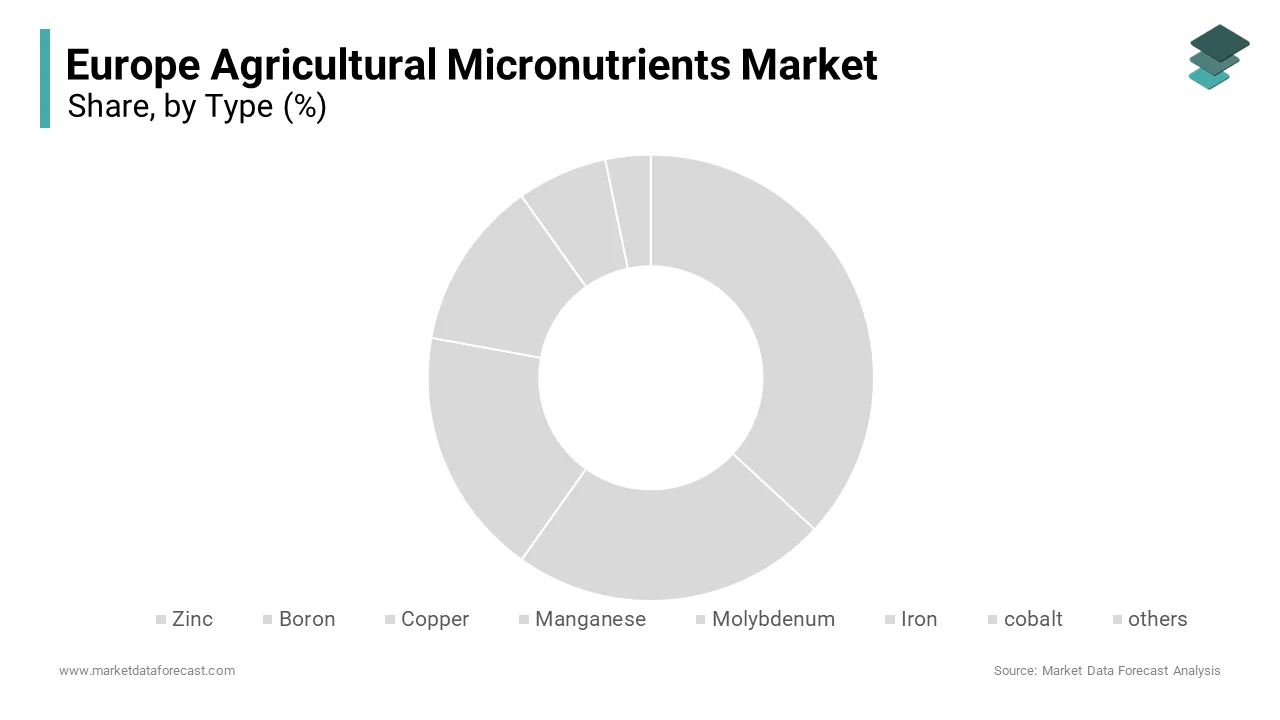
The iron segment is anticipated to witness the fastest CAGR of 6.9% from 2025 to 2033, owing to the increasing cultivation of high-value horticultural crops on alkaline soils where iron becomes chemically insoluble and unavailable to plants. The practice of using protected cultivation for horticulture has expanded in certain European regions, specifically Spain and Italy. A significant portion of tomato and citrus orchards in these areas is now impacted by nutrient deficiency issues, notably iron chlorosis. The use of specific iron products, such as Fe EDDHA chelated iron products, has seen an increase in consumption across Europe. This rise in consumption is largely due to the effectiveness of these products in managing nutrient availability in alkaline soils. Regulatory changes within the European framework have made the approval process for new, more environmentally favorable iron solutions easier, supporting their more rapid introduction into the market. Furthermore, research from Wageningen University confirms that foliar iron application in vineyards improves grape phenolic content and wine quality, creating premium market incentives. The intersection of expanding horticulture, soil chemistry constraints, and regulatory innovation propels iron as the most dynamic micronutrient segment in the European agricultural landscape.
By Mode Of Application
The soil application segment remained the largest segment in the Europe agricultural micronutrients market. The supremacy of the soil application segment is driven by its integration into standard tillage and fertilization practices. A significant portion of micronutrient applications in cereal and oilseed systems in specific regions occurs through broadcast or banded soil incorporation during the initial stages of soil preparation. This method aligns with the EU’s Common Agricultural Policy requirements for nutrient management planning, which mandate soil testing before any fertilizer application. The German Fertiliser Ordinance explicitly requires farmers to document baseline micronutrient levels, reinforcing soil-based correction as a regulatory norm. Additionally, the practice of blending zinc or boron into NPK compound fertilizers is widespread among producers, which improves how easily these products can be moved and ensures the nutrients are spread evenly. Long-term field trials indicate that when zinc sulfate is applied to certain types of soil, it remains available to crops for multiple growing seasons. This institutional, logistical, and agronomic alignment ensures soil application retains dominance despite advances in alternative delivery methods.
The foliar application segment is likely to experience the fastest CAGR of 7.4% over the forecast period. The rapid expansion of the foliar application segment is propelled by the rising adoption of precision horticulture and the need for rapid correction of deficiency symptoms without soil interaction constraints. Vegetable growers are increasingly adopting foliar micronutrient applications to improve the quality and shelf life of their produce rather than focusing solely on total volume. The application of chelated iron and manganese during key growth phases, such as flowering and fruit development, enhances the quantity of marketable crops. Foliar delivery methods are being utilized as an alternative to soil applications to lower overall nutrient loading and meet environmental sustainability goals. The integration of drone-based spraying technology allows for more precise nutrient delivery and reduces resource waste. This convergence of technological accessibility, quality demands, and sustainability policy accelerates foliar adoption across high-value cropping systems.
By Crop Insights
The fruits and vegetables segment dominated the Europe agricultural micronutrients market in 2025. The supremacy of the fruits and vegetables segment is credited to its high nutritional sensitivity, intensive management, and premium market positioning. Boron deficiencies directly impair fruit set in apples and pears, while manganese insufficiency in leafy greens triggers interveinal chlorosis that renders produce unmarketable. The European Food Safety Authority mandates strict aesthetic and nutritional standards for fresh produce, compelling growers to apply micronutrients preventively. In Italy, a notable share of kiwifruit orchards receive annual foliar boron sprays to prevent cavity spot, as per sources. Similarly, Dutch greenhouse tomato producers routinely apply chelated iron and zinc to maintain fruit firmness and lycopene content. The economic value of these crops justifies targeted micronutrient investments that would be uneconomical in extensive field crops. This combination of physiological vulnerability, quality thresholds, and high returns cements fruits and vegetables as the leading micronutrient-consuming segment in Europe.
The oilseeds segment is on the rise and is expected to be the fastest-growing segment in the market by witnessing a CAGR of 6.7% from 2025 to 2033 due to the European Union’s strategic push to enhance domestic protein and oil production under the Protein Crop Strategy and reduce import dependency. The land area dedicated to rapeseed and sunflower cultivation has expanded, particularly within Eastern European regions. Boron is critically required for pollen viability and pod formation in rapeseed. Inadequate boron levels are observed to negatively impact the development of seed sets. The absence of sufficient manganese hinders the enzymatic processes necessary for the synthesis of oil within the seeds. Agricultural policy frameworks have begun to encourage the monitoring of micronutrient levels in soil through specialized incentive programs. Furthermore, the EU’s Renewable Energy Directive promotes domestically grown oilseeds for biodiesel, indirectly boosting demand for yield-maximizing inputs. This policy-driven expansion of oilseed area, coupled with high physiological micronutrient demand, positions this segment for sustained and accelerated market growth.
COUNTRY ANALYSIS
Germany Agricultural Micronutrients Market Analysis
Germany led the European agricultural micronutrients market by accounting for a share of 19.2% share in 2025, with its advanced agronomic infrastructure, stringent soil management laws, and high adoption of compound fertilizers. The country’s Fertiliser Ordinance mandates regular soil testing for all arable land, revealing that a notable share of cropland exhibits zinc or boron levels below agronomic thresholds. Germany hosts Europe’s largest network of fertilizer blenders, with most integrating micronutrients into NPK formulations as standard practice. The Federal Ministry of Food and Agriculture actively promotes micronutrient use through its Soil Health Initiative, which includes funding for on-farm deficiency diagnostics. Additionally, German research institutions such as the Julius Kühn Institute have developed region-specific micronutrient recommendation tables that are embedded in national farm management software. This regulatory, scientific,c and industrial alignment ensures consistent anevidence-baseded micronutrient deployment across one of Europe’s most productive agricultural systems.
France Agricultural Micronutrients Market Analysis
France followed closely in the Europe agricultural micronutrients market and held a 15.8% share in 2025. The expansion of the French market is propelled by its vast cereal and oilseed belt and proactive public investment in soil fertility monitoring. A notable practice involves the use of specific micronutrients, such as zinc or manganese, in certain agricultural areas. The application of these substances covers a significant expanse of land used for growing winter wheat. Observations indicate an increase in this particular type of nutrient application over a few years. This practice appears to be a response to the general understanding that certain nutrient deficiencies might be affecting crop yields. The French National Institute for Agricultural Research operates a nationwide soil micronutrient mapping program that updates deficiency risk zones every two years, directly informing regional fertilizer guidelines. France also leads EU adoption of organic chelates, with a notable share of vineyards in Bordeaux and Champagne using foliar iron to combat chlorosis on calcareous soils. The Ecophyto Plan II further supports micronutrient use by classifying them as non-pesticide plant health enhancers, easing regulatory barriers. This blend of public data infrastructure, crop diversity, and supportive policy frameworks sustains France’s central role in European micronutrient demand.
Spain Agricultural Micronutrients Market Analysis
Spain grew steadily in the Europe agricultural micronutrients market because of its extensive horticultural sector and chronic micronutrient deficiencies induced by arid, alkaline soils. Farms in some regions frequently apply chelated iron and zinc to manage soil conditions that affect nutrient availability. Protected agriculture areas, particularly those using advanced irrigation methods, routinely incorporate soluble micronutrients as a standard practice. The nature of certain irrigated soils means that specific micronutrients need regular reapplication to support fruit development in some crops. Spain also benefits from EU co-funded programs like LIFE SURE+ that demonstrate micronutrient efficiency in water-stressed systems. The convergence of soil constraints, high-value crops, and irrigation infrastructure creates unparalleled per-hectare micronutrient intensity, solidifying Spain’s position as a high-demand and high-innovation market in Southern Europe.
Italy Agricultural Micronutrients Market Analysis
Italy is another key player in the European micronutrient market owing to its diverse horticulture, viticulture, and persistent boron and iron deficiencies. Fruit orchards frequently receive annual boron applications to mitigate physiological disorders such as cracking and premature drop. Vineyards situated on calcareous soils often exhibit symptoms of iron chlorosis. Italy’s National Rural Development Program allocates specific subsidies for micronutrient soil analysis and targeted application in permanent crops. The domestic manufacturing sector maintains a significant role in the production and supply of organic chelates within the regional market. Moreover, the export of high-value horticultural crops drives the adoption of quality-focused micronutrient programs. This integration of traditional crop systems, export orientation, and technical adaptation ensures Italy remains a cornerstone of micronutrient consumption in Mediterranean Europe.
Netherlands Agricultural Micronutrients Market Analysis
The Netherlands is predicted to expand in the Europe agricultural micronutrients market from 2025 to 2033 due to its globally influential greenhouse horticulture and precision agriculture ecosystem. Protected cultivation systems in the Netherlands employ closed-loop fertigation for high micronutrient use efficiency and utilize real-time nutrient monitoring to adjust mineral concentrations in irrigation water based on plant uptake and drainage analysis. The Dutch government’s Mineral Policy Programme mandates strict nutrient balances, encouraging micronutrient optimization to minimize waste. Additionally, the Netherlands serves as a European hub for agrochemical innovation, hosting R and D centers for major micronutrient producers that pilot new chelate formulations under realistic growing conditions. This fusion of technological sophistication, regulatory stringency, and export intensity positions the Netherlands as a high-value, high-efficiency micronutrient market despite its modest land area.
COMPETITIVE LANDSCAPE
Competition in the Europe agricultural micronutrients market is shaped by a combination of multinational agrochemical corporations, specialized fertilizer producers, and emerging biotech firms focused on nutrient delivery efficiency. Unlike commodity fertilizer segments, competition here revolves around technical expertise, formulation stability, regulatory compliance, and integration with digital farming ecosystems rather than price alone. The European Union’s strict regulatory framework under the Fertilising Products Regulation creates high entry barriers, favoring established players with robust compliance infrastructure and R and D capabilities. Innovation in chelate chemistry—particularly biodegradable alternatives to traditional EDTA—has become a key differentiator. Companies also compete through agronomic support services, offering soil diagnostics and application guidance to build trust with distributors and large-scale growers. The market features moderate consolidation, with larger firms acquiring niche players to expand formulation portfolios or geographic reach. Sustainability credentials, including low heavy metal content and circular sourcing, increasingly influence procurement decisions by cooperatives and government programs. This environment rewards scientific rigor, regulatory agility, and close alignment with Europe’s farm-level sustainability transitions.
KEY MARKET PLAYERS
Some of the major players in the market are
- Agrium Inc.
- BASF SE
- Mosaic and Cheminova
- Aries Agro Ltd.
- Coromandel International Ltd.
- Yara International
- Valagro
- AkzoNobel
- Gujarat State Fertilizers & Chemicals
- Tradecorp International.
Top Players In The Market
- BASF SE plays a pivotal role in the Europe agricultural micronutrients market through its comprehensive portfolio of chelated and sulfate-based trace elements integrated into its broader crop nutrition and protection offerings. The company supplies advanced formulations such as chelated iron and zinc tailored for high pH soils common across Southern and Central Europe. BASF has recently expanded its technical service network to support precision nutrient diagnostics in partnership with agronomic advisory firms in France and Spain. Globally, BASF leverages its R and D centers in Germany and Belgium to develop next-generation biodegradable chelates that meet stringent European environmental standards, reinforcing its leadership in sustainable micronutrient innovation.
- Yara International ASA significantly influences the European agricultural micronutrients landscape by embedding trace elements into its NPK compound fertilizers and water-soluble specialty products. The company operates multiple production facilities across Norway, Germany, and the Netherlands that blend zinc, boron, and manganese into granular and liquid formulations aligned with regional soil needs. It also co-funded a Horizon Europe project on micronutrient recycling from organic waste streams, supporting the circular economy agenda. Yara’s global supply chain ensures consistent availability of certified micronutrient products across 150 countries, with Europe serving as both a key market and innovation hub for its sustainable nutrient strategies.
- K+S AKTIENGESELLSCHAFT contributes extensively to the Europe agricultural micronutrients market through its production of specialty sulfate-based micronutrient fertilizers under the KALI+ brand. The company sources raw materials from its German potash mines and refines them into high-purity zinc sulfate, manganese sulfate, and copper sulfate products compliant with the EU Fertilising Products Regulation. It also expanded its logistics network to ensure timely delivery to distributors in Italy and Spain during peak planting seasons. Globally, K+S exports its micronutrient products to North America and Latin America, while using European regulatory standards as a benchmark for quality and sustainability in all markets.
Top Strategies Used By The Key Market Participants
Key players in the Europe agricultural micronutrients market prioritize formulation innovation to develop chelated and complexed trace elements that remain bioavailable in diverse soil conditions while meeting EU environmental safety thresholds. Companies invest heavily in digital agronomy platforms that integrate soil testing dat,a satellite image,ry and weather forecasting to enable precision micronutrient recommendations. Strategic partnerships with national agricultural advisory services and research institutions facilitate localized product validation and farmer education. Regulatory compliance is central to strat,egy with firms aligning product registrations under the EU Fertilising Products Regulation to ensure market access. Addition,ally leading participants actively engage in circular economy initiatives such as recovering micronutrients from industby-productsducts or organic waste to support sustainability mandates and secure long term raw material supply.
MARKET SEGMENTATION
This research report on the Europe agricultural micronutrients market is segmented and sub-segmented into the following categories.
By Type
- Zinc
- Boron
- Copper
- Manganese
- Molybdenum
- Iron
- cobalt
- others
By Mode of Application
- Soil
- Fertigation
- seed treatment
- Foliar
- Others
By Form
- Chelated
- Ethylenediaminetetraacetic Acid (EDTA)
- Diethylene Triamine Pentaacetic Acid (DTPA)
- Ethylenediamine Di-2-Hydroxyphenyl Acetate (EDDHA)
- D,L-Aspartic Acid N-(1,2-Dicarboxyethyl) Tetrasodium Salt (IDHA)
- Hydroxybenzyl Ethylenediamine Diacetic Acid(HBED)
- Non-Chelated Agricultural Micronutrients
By Crop Type
- Fruits and Vegetables
- Cereals
- Pulses
- oilseeds
- others
By Country
- UK
- France
- Spain
- Germany
- Italy
- Russia
- Sweden
- Denmark
- Switzerland
- Netherlands
- Turkey
- Czech Republic
- Rest of Europe